
城市建设

Search documents
国家砸下城市发展“新规矩”!房地产不扛旗了,你家门口要变样?
Sou Hu Cai Jing· 2025-09-02 01:45
Core Viewpoint - The recent national policy marks a significant shift in China's urban development paradigm, moving away from real estate as the main driver of growth towards a focus on enhancing quality of life, convenience, and resilience for citizens [1][5][40]. Group 1: Policy Shift - The document titled "Opinions on Promoting High-Quality Urban Development" emphasizes a transition from a material-centric approach to a people-centric one, prioritizing education, healthcare, and social welfare over real estate and land finance [5][31]. - The real estate sector is being repositioned as a tool for social welfare rather than a profit-driven industry, indicating a fundamental change in its role within the economy [7][9]. Group 2: Urban Development Focus - The new urban development strategy aims to create a "15-minute living circle," ensuring essential services like markets, schools, and healthcare facilities are within a short walking distance from residents' homes [15][17]. - The policy encourages community participation in urban renewal and emphasizes the importance of improving urban resilience, including infrastructure upgrades to prevent flooding and enhance emergency response [19][21]. Group 3: Evaluation Metrics - New assessment criteria for urban governance will focus on residents' happiness, convenience, community service quality, and population inflow, moving away from traditional metrics like GDP and land sales [25][40]. - The document highlights the need for a balanced distribution of educational and healthcare resources to alleviate issues like "school seat grabbing" and improve overall community well-being [23][31]. Group 4: International Comparison - The policy document contrasts Western capital-driven urban models and Hong Kong's high-turnover real estate approach, advocating for a unique Chinese path that prioritizes human investment over speculative real estate practices [27][29]. - This comparison serves as a reminder for China to avoid pitfalls seen in other urban models, focusing instead on sustainable and inclusive urban development [29][40]. Group 5: Implementation Challenges - The transition to this new urban model faces challenges, including local government capacity to execute the central government's vision and potential conflicts arising from urban renewal processes [38][40]. - The shift from a growth-at-all-costs mentality to a more sustainable approach reflects a commitment to long-term urban quality and livability [38][42].



新一轮城市竞争,开始了
虎嗅APP· 2025-08-29 10:10
Core Viewpoint - The article discusses the new direction of urban development in China, emphasizing a shift from rapid urbanization to stable development and from expansion to quality improvement in existing urban areas. This marks the beginning of a new era of urban competition, characterized by collaboration among cities rather than individual competition [4][5][6]. Group 1: Urban Development Strategy - The Central Government has issued guidelines to promote high-quality urban development, focusing on the integration of urban clusters and metropolitan areas, enhancing the competitiveness of mega cities, and improving the capacity of small and medium-sized cities and towns [5][6][7]. - The previous model of urban competition, which relied on individual cities, is being replaced by a collaborative approach where urban clusters and metropolitan areas are prioritized [9][10]. Group 2: Key Urban Clusters and Metropolitan Areas - China has identified five major urban clusters: Beijing-Tianjin-Hebei, Yangtze River Delta, Guangdong-Hong Kong-Macau Greater Bay Area, Chengdu-Chongqing, and the Central Yangtze River region, which are expected to drive high-quality development [12][14]. - There are 19 national-level urban clusters planned, with the Beijing-Tianjin-Hebei, Yangtze River Delta, and Guangdong-Hong Kong-Macau Greater Bay Area designated as world-class urban clusters [13][14]. Group 3: Metropolitan Area Development - The strong provincial capital strategy is being questioned, with a shift towards a "strong metropolitan area" model that redefines the influence of major cities [15][16]. - Currently, there are over 30 large metropolitan areas in China, with 17 approved as national-level metropolitan areas, including key cities like Guangzhou, Shenzhen, and Chengdu [15][16]. Group 4: Urban Expansion and Management - The article highlights a halt in the expansion of mega cities, with a focus on rationally managing urban functions and optimizing administrative divisions in small cities [34][35]. - The government is promoting urban renewal rather than large-scale construction, emphasizing the transformation of old neighborhoods and housing [41][44]. Group 5: Real Estate Market Implications - The transition from rapid urbanization to stable development will impact the real estate market, shifting the focus from new construction to the renovation and improvement of existing properties [44][45]. - The article suggests that the future of real estate will involve more self-managed renovations by communities rather than government-led large-scale redevelopment [46][47].
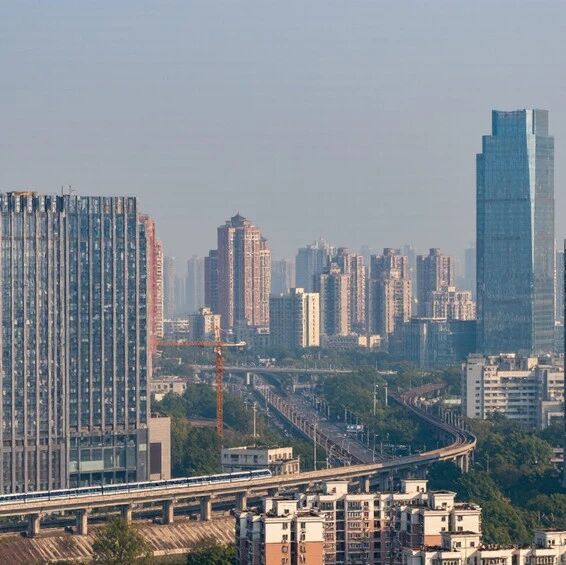
住房城乡建设部部长倪虹率团访问哈萨克斯坦
Zheng Quan Shi Bao Wang· 2025-08-28 01:45
Group 1 - The core viewpoint of the article highlights the consensus reached between China and Kazakhstan on enhancing practical cooperation in housing and urban construction [1] - The visit by the Minister of Housing and Urban-Rural Development of China, Ni Hong, included discussions with Kazakhstan's Minister of Industry and Construction, Nagaspaev [1] - The delegation conducted research on urban construction projects in Astana, specifically inspecting the light rail project undertaken by Chinese companies [1]
“十四五”期间 黄浦城市更新、消费、民生服务亮点频现 经济密度最高地持续挖掘消费潜力
Jie Fang Ri Bao· 2025-08-28 01:42
Economic Performance - By the end of 2024, the GDP of Huangpu District is projected to reach 334.4 billion yuan, with an average comparable growth rate of approximately 4.5% during the first four years of the 14th Five-Year Plan [1] - The regional economic density is expected to reach 163 billion yuan per square kilometer, maintaining the top position in the city and ranking among the best in the country [1] - The district's general public budget revenue is anticipated to reach 29.9 billion yuan, with an average annual growth rate exceeding 6% [1] Urban Renewal Projects - The "Bund Central" project has achieved an overall occupancy and opening rate of over 70%, attracting an average of over 470,000 visitors per month [2] - Huangpu has completed the renovation of over 37,000 households during the 14th Five-Year Plan, marking the successful conclusion of a large-scale urban renewal initiative [3] - The "Bund Old City Hall" project has hosted 11 significant cultural and commercial events in the first half of 2025, despite not being fully opened [2][3] Consumer Economy - Huangpu is focusing on various consumer segments, including youth, seniors, and inbound tourism, to stimulate economic growth [4] - The district has seen a 56% year-on-year increase in foreign visitors staying in hotels, with over 940,000 visitors in the first half of the year [4] - The scale of tax refunds for outbound tourists has increased significantly, with over 30,000 applications processed, representing a nearly 300% year-on-year growth [4] Social Services and Community Development - Huangpu has established a community-based elderly care service center that offers a variety of services, including health stations and community dining [5] - The district has implemented a "Five-Sided Elderly Care" service brand, focusing on comprehensive support for the elderly population, which constitutes 44.8% of the local demographic [6][7] - Huangpu has been recognized as one of the "most livable cities in China" for two consecutive years, reflecting its commitment to enhancing the quality of life for residents [7]
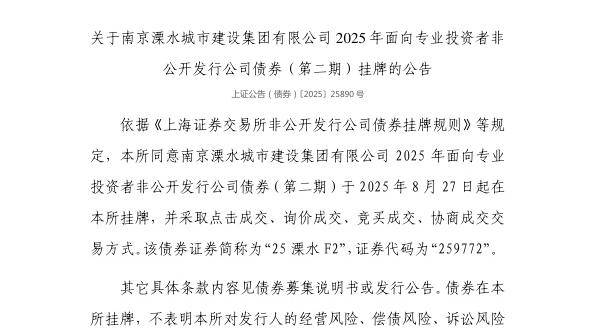
上交所:南京溧水城市建设集团有限公司债券8月27日挂牌,代码259772
Sou Hu Cai Jing· 2025-08-26 03:05
Group 1 - The Shanghai Stock Exchange announced the listing of Nanjing Lishui Urban Construction Group Co., Ltd.'s non-public issuance of corporate bonds (Phase II) aimed at professional investors [1][2] - The bonds will be listed on August 27, 2025, and will be traded through various methods including click transaction, inquiry transaction, bidding transaction, and negotiated transaction [2] - The bond is designated with the short name "25 Lishui F2" and the security code "259772" [2]
中国电建(601669) - 中国电力建设股份有限公司2025年1月至7月主要经营情况公告
2025-08-22 09:01
证券代码:601669 股票简称:中国电建 公告编号:临 2025-050 中国电力建设股份有限公司 2025 年 1 月至 7 月主要经营情况公告 本公司董事会及全体董事保证本公告内容不存在任何虚假记载、误导性陈述或 者重大遗漏,并对其内容的真实性、准确性和完整性承担法律责任。 现将中国电力建设股份有限公司2025年1月至7月主要经营情况公布如下,供投 资者参阅。 一、按业务类型统计 | 业务类型 | 新签项目数量(个) | 新签合同金额 | 同比增减 | | --- | --- | --- | --- | | 能源电力 | 3230 | 4720.68 | 12.94% | | 水电 | 630 | 1130.88 | 70.03% | | 其中:抽水蓄能 | 326 | 427.69 | 3.78% | | 风电 | 723 | 1572.26 | 68.40% | | 太阳能发电 | 656 | 1185.09 | -29.96% | | 火电 | 287 | 199.15 | -63.82% | | 新型储能 | 115 | 285.04 | / | | 其他 | 819 | 345.25 | / ...

市属国企全员劳动生产率增至39万元/人
Nan Fang Du Shi Bao· 2025-08-21 23:12
Core Insights - The Huizhou State-owned Assets Supervision and Administration Commission has implemented significant reforms leading to a notable increase in the number of high-tech enterprises from 3 to 15 over three years, with a completion rate of over 90% for core tasks [1][4]. Group 1: Digital Transformation and Innovation - The Huizhou State-owned Assets Supervision and Administration Commission has introduced over 20 reform supporting policies to accelerate the digital transformation of state-owned enterprises, focusing on six core areas: water management, transportation, urban construction, ports, capital operations, and industrial investment [2]. - A digital transformation alliance has been established, with significant data trading activities reported, including 52 data trading items covering various sectors such as finance and transportation [2]. Group 2: Talent Development and Workforce Optimization - The Huizhou State-owned Assets Supervision and Administration Commission is enhancing its workforce by prioritizing the recruitment of highly qualified professionals, with a 4% increase in employees holding a bachelor's degree or higher since the implementation of new hiring standards [3]. - Labor productivity has increased from 310,000 RMB per person at the beginning of 2023 to 390,000 RMB per person currently [3]. Group 3: Credit Rating Improvements - The credit ratings of state-owned enterprises have significantly improved, with the Huizhou Transportation Investment Group becoming the first state-owned enterprise in Huizhou to receive an AAA credit rating and the first in Eastern Guangdong to achieve ratings from three major international agencies [5]. Group 4: Asset Management and Efficiency - The Huizhou State-owned Assets Supervision and Administration Commission has streamlined operations by merging 60 similar enterprises and reducing over 100 non-compliant entities, resulting in a 20% reduction in labor costs [4]. - The establishment of an asset management platform has led to the revitalization of 930,000 square meters of idle real estate, with rental income increasing from 7.48 million RMB per year to 26.14 million RMB per year [4]. Group 5: Investment in Infrastructure and Social Development - State-owned enterprises have participated in 32 key provincial and municipal construction projects with a total investment of 96.5 billion RMB, focusing on transportation, urban development, and social welfare [6][7]. - The Huizhou State-owned Assets Supervision and Administration Commission is committed to innovation in development, breakthroughs in reform, and effective regulation to further advance the reform of state-owned enterprises [7].
从“智”的突破到“质”的跃升 中国能建安徽电建二公司以数智引擎驱动高质量发展
Zhong Guo Jin Rong Xin Xi Wang· 2025-08-15 12:49
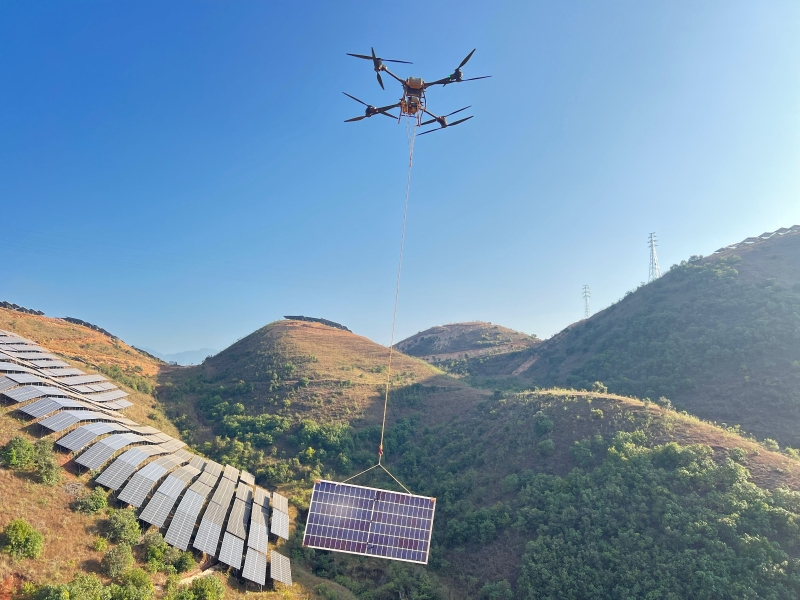
Core Viewpoint - The company is leveraging digital intelligence to enhance project construction efficiency and quality, focusing on innovation and strategic development in the energy sector [3][8]. Group 1: Digital Transformation and Innovation - The company utilizes drones equipped with laser radar for high-precision surveying, creating 3D digital twin models for solar panel layout [1]. - A self-developed AI platform covers over 40 applications, enhancing safety management and construction efficiency [5]. - The company has established a comprehensive digital management platform that integrates various core functions, enabling real-time project monitoring [6]. Group 2: Strategic Development and Focus Areas - The company is optimizing its business structure and focusing on dual main businesses: energy construction and urban development, while ensuring seamless integration of traditional and new energy sectors [3][4]. - It aims to strengthen its capabilities in four key areas: new energy, new infrastructure, new industries, and new materials, with significant investments in R&D [3][4]. Group 3: Project Management and Quality Control - The company has implemented advanced monitoring systems and technologies, such as 3D laser scanning and robotic welding, to enhance construction precision and efficiency [6]. - It has achieved notable project management milestones, including the development of 14 national patents and 4 provincial engineering standards [6]. Group 4: Commitment to Sustainable Development - The company is actively pursuing projects that align with carbon neutrality goals, such as integrated renewable energy bases and zero-carbon supply chain initiatives [4][8]. - It is investing in strategic emerging industries like hydrogen and energy storage, positioning itself for future growth in the clean energy sector [8]. Group 5: Talent Development and Employee Empowerment - The company has implemented targeted talent development programs to enhance employee skills and prepare them for critical roles in project execution [8]. - A smart learning platform is in place to provide customized training for employees, fostering a culture of continuous improvement and innovation [8].

低碳场馆、低碳能源、低碳交通……成都世运会有哪些绿色“碳”点?
Si Chuan Ri Bao· 2025-08-15 01:16
Core Viewpoint - The Chengdu World Games 2025 is actively implementing low-carbon measures across various domains to achieve carbon neutrality during the event [1] Group 1: Low-Carbon Venue Construction - The water sports center at Xinglong Lake, covering over 4,500 acres, has achieved a water quality standard of Class III, suitable for international competitions [2] - All 27 competition venues for the event are temporary constructions, with 9 venues built using green materials from lakeside parks, minimizing ecological impact [2] Group 2: Green Transportation Initiatives - The event features panda-themed electric vehicles providing low-carbon shuttle services between venues [3] - A seamless transportation system combining rail, cycling, and walking has been established to encourage green travel among attendees [4] Group 3: Clean Energy Utilization - The main power supply for the opening ceremony is sourced from two clean energy bases, ensuring the use of renewable energy [4] - The event promotes the use of clean energy across various venues, including the athletes' village and competition sites [4] Group 4: Circular Economy and Resource Utilization - The medals for the event are made from recycled metals, showcasing the potential of resource recycling [5] - Infrastructure improvements, such as energy-efficient streetlights and green pathways, will continue to benefit the community post-event [5] - A digital recycling management system has been implemented to ensure traceable waste recycling, contributing to carbon reduction efforts [5]
长春、昆明都市圈争取入围,“国家级都市圈”有望扩容
Di Yi Cai Jing· 2025-08-07 07:49
Core Insights - The article discusses the ongoing efforts to develop modern urban agglomerations in China, highlighting the push for Longcheng and Kunming to join the national-level urban agglomeration club [1][4][5] Group 1: Urban Agglomeration Development - As of now, 17 urban agglomerations have been approved by the National Development and Reform Commission (NDRC), including major cities like Nanjing, Chengdu, and Shenzhen [2][3] - The development of urban agglomerations began in 2019, aimed at enhancing regional competitiveness and supporting high-quality urban growth [2][3] - Urban agglomeration construction is seen as a new growth driver for regional economies, facilitating infrastructure and public service development, which in turn boosts investment and consumption [2][3] Group 2: Longcheng and Kunming's Efforts - Longcheng and Kunming are actively seeking approval for their urban agglomerations, with significant emphasis on high-quality development and regional collaboration [1][4][5] - Longcheng's GDP is projected to be 7632.19 billion yuan in 2024, accounting for 53.1% of Jilin province's total GDP, indicating its dominant economic position [5][6] - Kunming's GDP is expected to reach 8275.22 billion yuan in 2024, representing 26.2% of Yunnan province's GDP, showcasing its leading role in the region [6]