
港口物流

Search documents
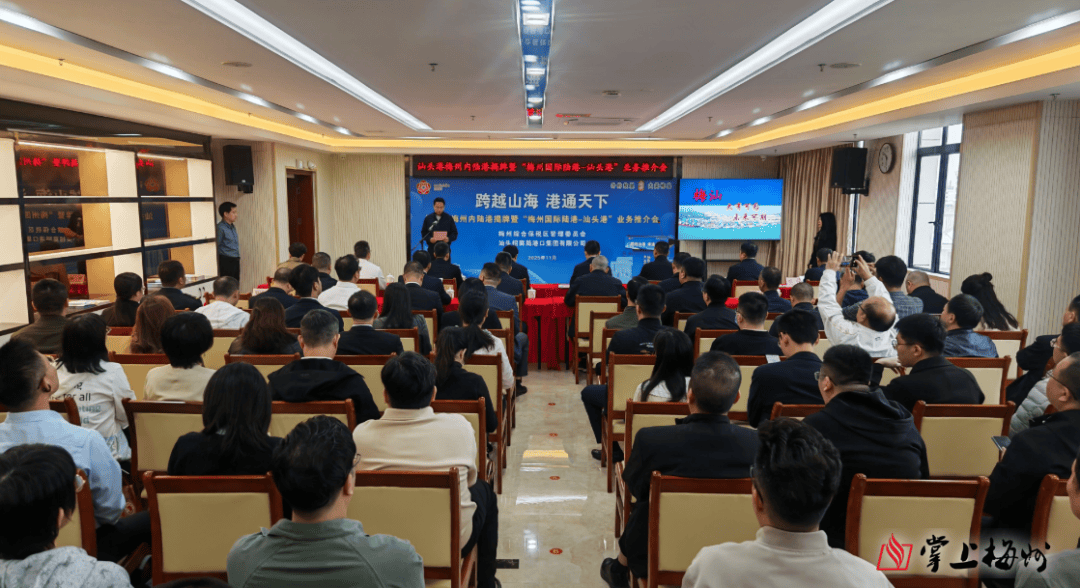
汕头港梅州内陆港揭牌!“梅州国际陆港-汕头港”业务推介会同步举行
Sou Hu Cai Jing· 2025-11-19 09:58
Core Points - The unveiling ceremony of the Shantou Port Meizhou Inland Port took place on November 18, marking a significant development in regional logistics and trade [1] - The Meizhou International Inland Port has been operational since December 2023 and has now become the third inland port collaborating with coastal ports, following Yantian Port and Guangzhou Port [3] - The port has opened 8 sea-rail intermodal transport routes, completing over 9,000 TEUs and transporting goods valued at over 1.6 billion yuan, establishing a robust logistics framework for regional trade [3] Group 1 - The collaboration between Meizhou International Inland Port and Shantou Port represents a strategic alignment of "port + hinterland" and "channel + industry," enhancing logistics efficiency and reducing costs for Meizhou enterprises [3] - This partnership leverages the policy advantages of Meizhou Comprehensive Bonded Zone and the port advantages of Shantou, creating a more interconnected logistics network [3] - The initiative aims to facilitate the global reach of "Meizhou manufacturing" while expanding the inland market for Shantou Port, promoting a win-win situation for both parties [3] Group 2 - Attendees at the event witnessed the signing and unveiling of the Shantou Port Meizhou Inland Port, gaining insights into the business advantages of Shantou Port and the construction of sea-rail intermodal transport channels [4] - The event included experience sharing from enterprises and a Q&A session, highlighting the development opportunities arising from this collaboration [4]

“十四五”期间三峡综合交通运输体系加快完善
Zhong Guo Xin Wen Wang· 2025-11-17 05:30
Core Viewpoint - The article highlights the rapid development of the comprehensive transportation system in the Three Gorges area during the 14th Five-Year Plan period, focusing on the construction of railways, highways, and logistics hubs to enhance connectivity and efficiency in the region [1][3][5]. Group 1: Railway Development - The construction bidding for the Yichang to Changde Railway (Hubei section) has officially started, with expected commencement by the end of this year, serving as a crucial segment of the Hunan-Guangdong high-speed railway [1]. - Yichang has entered the "high-speed rail era" with the operation of the Zhengzhou-Wanzhou high-speed railway since June 2022, and several high-speed rail projects are accelerating, forming a "井" shaped high-speed rail network [3]. Group 2: Comprehensive Transportation Hub - Yichang is focusing on a multi-modal transportation strategy, integrating rail, water, road, air, and pipeline transport to create a high-level comprehensive transportation hub that connects eastern and western regions and facilitates trade [3][5]. - The city aims to complete four high-speed rail lines, four Yangtze River bridges, and ten expressways during the 14th Five-Year Plan, enhancing its transportation infrastructure significantly [5]. Group 3: Investment and Future Projections - By the end of this year, Yichang is expected to complete over 160 billion yuan in comprehensive transportation investments, with plans to expand inland waterways to 678 kilometers and road mileage to 38,000 kilometers by the end of the 14th Five-Year Plan [8]. - The cargo throughput at Yichang Port is projected to reach nearly 150 million tons in 2024, supported by the development of a multi-modal transport system [7].

通讯|中马“两国双园”升级提速 跨境协作激发新动能
Xin Hua Wang· 2025-11-17 04:17
Core Insights - The "Two Countries, Twin Parks" initiative between Malaysia and China is enhancing cross-border collaboration and driving economic growth in both nations [1][5] - The project has led to the establishment of a robust cross-border industrial and supply chain system, significantly improving regional economic cooperation [1][3] Group 1: Project Development - The Malaysia-China Kuantan Industrial Park and the China-Malaysia Qinzhou Industrial Park are expanding their cooperation, focusing on port connectivity and industrial collaboration [1] - New projects in the Kuantan Industrial Park cover sectors such as food, metallurgy, and silicon materials, with plans to introduce AI and green industries [1][3] - The Kuantan Port has established direct shipping routes to Guangxi, significantly reducing transportation times for Southeast Asian tropical fruits and enhancing customs efficiency [2] Group 2: Economic Impact - The cargo throughput between Beibu Gulf Port and Kuantan Port increased by 136% year-on-year, with a focus on chemical products, metal ores, and agricultural products [2] - The Qinzhou Industrial Park has attracted 23 companies, with 13 obtaining qualifications for importing raw bird's nests, showcasing the park's role in the full industrial chain [3] - The completion of the integrated refining and chemical project at Qinzhou Port is expected to enhance the green chemical new materials industry cluster, benefiting downstream industries [3] Group 3: Future Prospects - The "Two Countries, Twin Parks" model is evolving from point-to-point cooperation to chain-to-chain collaboration, expanding its industrial reach and operational capabilities [4] - Recent investment agreements signed during the China-ASEAN Expo cover various sectors, including AI, food processing, logistics, and new energy materials, injecting new momentum into the initiative [3][4]
纳米比亚加速打造区域贸易交通枢纽
Shang Wu Bu Wang Zhan· 2025-11-15 03:15
Core Viewpoint - Namibia is positioning itself as a strategic hub for imports and exports in Southern Africa, focusing on enhancing port capacity and infrastructure to address regional logistics challenges [1] Group 1: Port Infrastructure - South African ports have faced congestion, rising costs, and social unrest, leading neighboring countries to seek new trade routes [1] - The Namibian government has granted a 25-year concession to the Namibia Port Authority (TIN) to upgrade the Walvis Bay port, aiming for long-term stable operations [1] - The Walvis Bay project plans to raise $123 million for modernizing container terminals, enhancing throughput capacity, and improving operational efficiency [1] Group 2: Regional Logistics Development - In addition to port infrastructure, Namibia is actively advancing cross-border road and rail network construction [1] - If these strategies are successfully implemented, Namibia is expected to transform the regional logistics landscape and enhance its significance in African trade and international markets [1]
渝桂携手推动西部陆海新通道与长江经济带联动发展
Zhong Guo Xin Wen Wang· 2025-11-14 09:21
Group 1 - The high-level promotion conference for the construction of the Western Land-Sea New Corridor was held in Chongqing, aiming to deepen cooperation between Guangxi and Chongqing and promote the integration of the corridor with the Yangtze River Economic Belt [1][2] - The conference showcased the achievements of the Western Land-Sea New Corridor, including logistics organization models and policy benefits, attracting over 200 participants from relevant departments, enterprises, and industry associations [1][2] - The launch of the first test train for the "river-rail-sea" intermodal transport (Australia-Guangxi Qinzhou-Chongqing-Sichuan Yibin) marked a significant step in connecting the Yangtze River Economic Belt with the Western Land-Sea New Corridor [1] Group 2 - Guangxi will enhance digital empowerment and optimize corridor operation organization to improve connectivity and build "AI+" industrial parks, collaborating with Chongqing to create high-value and secure supply chains [1][2] - The Vice Mayor of Chongqing emphasized the importance of seizing the economic value of the Western Land-Sea New Corridor and fostering industrial synergy to build an efficient logistics system and promote digital transformation [2] - Strategic cooperation agreements were signed between various local governments and companies to enhance collaboration in trade, ports, logistics, and industry, with the establishment of the Southwest Logistics Service Center by Guangxi Beibu Gulf International Port Group [2][3] Group 3 - The construction of the Western Land-Sea New Corridor has shown significant results, with the North Bay International Port's capabilities continuously improving and the volume of sea-rail intermodal trains steadily increasing, effectively driving regional economic development [3] - The promotion conference served as a bridge for communication between Chongqing and Guangxi, facilitating deeper cooperation in transportation logistics, industrial integration, and policy coordination [3]
Ultra(UGP) - 2025 Q3 - Earnings Call Presentation
2025-11-13 14:00
Ultrapar Consolidated Performance - Ultrapar's total EBITDA increased by 27% from R$ 1,537 million in 3Q24 to R$ 1,946 million in 3Q25[10] - Ultrapar's operating cash flow increased significantly from R$ 780 million in 3Q24 to R$ 2,129 million in 3Q25[17, 18] - Ultrapar's net income increased by 11% from R$ 698 million in 3Q24 to R$ 772 million in 3Q25[14, 15] - Ultrapar's net debt decreased from R$ 12,635 million in 2Q25 to R$ 12,043 million in 3Q25, resulting in a leverage reduction from 1.9x to 1.7x[20, 21] Segment Performance - Ipiranga's recurring EBITDA increased by 12% from R$ 892 million in 3Q24 to R$ 1,085 million in 3Q25[28] - Ultragaz's EBITDA decreased by 6% from R$ 473 million in 3Q24 to R$ 446 million in 3Q25[32, 33] - Ultracargo's EBITDA decreased by 20% from R$ 168 million in 3Q24 to R$ 134 million in 3Q25[44, 45] - Hidrovias' recurring EBITDA increased by 114% from R$ 169 million in 3Q24 to R$ 361 million in 3Q25[52] Strategic Moves - Ultracargo completed the expansion of its Santos terminal, adding 34 thousand m³ of capacity in October 2025[5] - Hidrovias closed the sale of its cabotage operation for R$ 715 million on November 1st[5] - Ultrapar acquired a 37.5% stake in Virtu Participações for R$ 102 million[5]

增长势头强劲,长沙港铜官港区前10月吞吐量超237万吨
Chang Sha Wan Bao· 2025-11-13 09:20
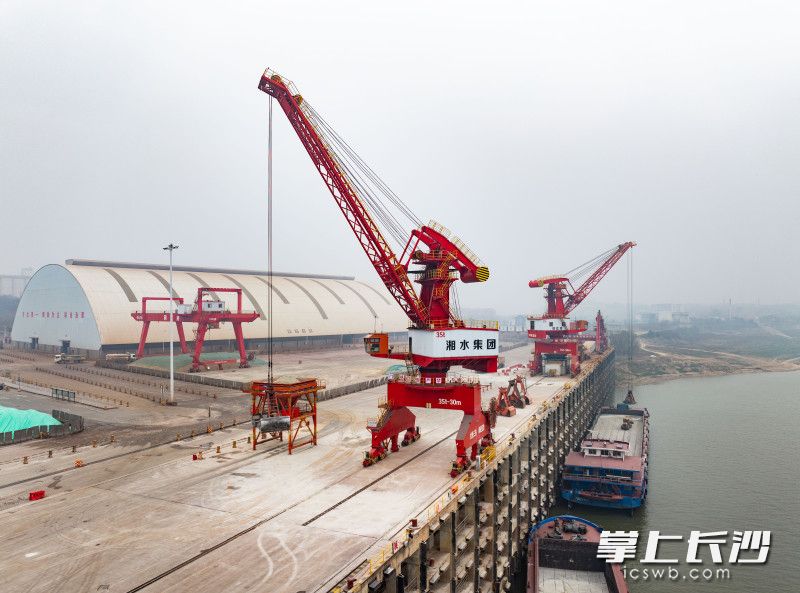
Core Insights - Hunan Port and Shipping Logistics Investment Co., Ltd. reported that from January to October this year, Changsha Port's Copper Official Port area achieved a total cargo throughput of 2.3761 million tons, with the third quarter seeing a throughput of 1.0901 million tons, marking an 18.84% year-on-year increase [1][3] - The Copper Official Industrial Zone, adjacent to the port, is the main source of cargo for the Copper Official Port, housing over 70 industrial enterprises and achieving an industrial output value of 19 billion yuan last year [3][4] Industry Overview - The Copper Official Industrial Zone is characterized by a leading industry structure focused on new materials and biomedicine, with major enterprises like Yongshan Lithium Industry and Yihai Kerry contributing to stable local cargo volumes, maintaining over 50% of local sourcing [3] - Yongshan Lithium Industry, with a total investment of 2 billion yuan, and Yihai Kerry's food processing base, with an investment of 3 billion yuan, are key players in the region, with the latter expected to exceed an annual output value of 10 billion yuan upon full production [3] Infrastructure Development - The construction of a dedicated railway line, 2.1 kilometers long, is underway to connect Copper Official Port with the Jingguang Railway, expected to be operational by 2026, enhancing the logistics network and facilitating efficient multimodal transport [4] - This railway connection will enable seamless integration of water, road, and rail transport, significantly promoting the development of the modern port industry and supporting the strategic vision of the Copper Official Industrial Zone as a modern logistics hub [4]

古巴圣地亚哥港恢复物流作业
Shang Wu Bu Wang Zhan· 2025-11-12 15:15
Core Viewpoint - The logistics operations at Santiago de Cuba port have resumed following the impact of Hurricane Melissa, which will facilitate the transportation of essential goods and aid for post-disaster recovery [1] Group 1: Logistics Operations - Santiago de Cuba port has restarted its logistics operations after the restoration of electricity supply [1] - The port's cranes and other technical equipment are back in operation, which will significantly accelerate the unloading and transportation of rice, medicines, roofing tiles, and humanitarian aid [1] Group 2: Disaster Recovery - The resumption of operations at the port is crucial for supporting the disaster recovery efforts in the eastern region of Cuba [1]
2025海外华文媒体海南行活动探访海南自贸港“二线口岸”
Hai Nan Ri Bao· 2025-11-12 01:58
Core Points - The Hainan Free Trade Port will officially start its full island closure operation on December 18, 2025, enhancing the efficiency of cargo clearance at "second-line ports" [2][3] - The Haikou Meilan International Airport has successfully passed national-level acceptance for its "second-line port" operation project, indicating improved construction and operational mechanisms [2] - The cargo clearance process at Meilan Airport will transition from a paper-based model to a digital and efficient model, increasing overall clearance efficiency by 30% and reducing peak-time queuing [2][3] Group 1 - The centralized inspection area at Haikou New Port and South Port will handle over 80% of the province's cargo and express mail clearance tasks, implementing an efficient clearance model of "one declaration, one inspection, one release" [3] - The expected increase in production factors and enterprises gathering in Hainan post-closure will lead to a rise in goods sent to other domestic regions [3] - Customs will implement supervision on "zero tariff," relaxed trade management measures, and tax exemption for processing and value-added goods at the "second-line ports" after the closure operation [3] Group 2 - The customs smart supervision platform is connected with the Hainan International Trade "single window," allowing for rapid approval and data analysis of all outbound goods [3] - Low-risk goods can clear customs in about one minute, while high-risk goods will undergo further inspection [3] - Comprehensive pressure tests are ongoing at various ports to ensure smooth and orderly operations of the Hainan Free Trade Port [4]
天津港股份有限公司十一届三次临时董事会决议公告
Shang Hai Zheng Quan Bao· 2025-11-10 20:29
Group 1 - The company held its 11th third temporary board meeting on November 10, 2025, via communication voting, with all 9 directors present, ensuring the meeting's legality and effectiveness [2][5] - The board approved the proposal for Tianjin Port Logistics Development Co., Ltd. to transfer 60% of its equity in Tianjin China Railway Storage and Transportation Co., Ltd. to optimize asset structure and integrate resources, with the assessed value of the equity at 37.54 million yuan and the transfer price set at 22.52 million yuan [3][12][13] - The transaction will be conducted through public listing, with uncertainties regarding the counterparty and whether it constitutes a related party transaction, and it does not qualify as a major asset restructuring under relevant regulations [3][12][22] Group 2 - The board also approved the performance assessment and salary determination results for the company's professional managers for the year 2024, based on the completion of various performance indicators [6][8] - The transaction is expected to enhance the company's focus on its core port logistics business, improve operational efficiency, mitigate risks associated with the coal trade industry, and recover funds for equipment upgrades, potentially increasing the company's gross margin by approximately 7.57 percentage points [23]
