粮油食品

Search documents
国泰海通|策略:原油链持续涨价,出海制造景气提升
国泰海通证券研究· 2026-03-20 09:20
Group 1 - The core viewpoint of the article highlights the differentiated economic conditions, with rising prices in the oil and chemical chain, an upward shift in emerging technology sectors, and strong growth in travel and consumer goods in the first quarter [1][2]. Group 2 - The oil chain continues to see price increases due to disruptions in oil transportation through the Strait of Hormuz, with Brent crude oil futures settling at a +11.3% increase as of March 13, and domestic chemical prices rising by +12.5% [2]. - Emerging technology sectors, particularly in semiconductors, show significant growth, with South Korea's semiconductor exports increasing by +40.0% year-on-year as of February 2026, and domestic machinery exports rising by +27.1% [3]. - Traditional consumer sectors are experiencing a slight decline, with real estate transactions in 30 major cities down by -3.8% year-on-year, while tourism remains strong, evidenced by a +281.9% increase in visitor numbers at Shanghai Disneyland [4]. Group 3 - Passenger transport volume in major cities has increased by +5.5% year-on-year, indicating robust travel activity, while freight transport also shows growth with national road and rail freight volumes up by +0.6% and +4.3% respectively [4].


1-2月投资消费数据点评:内生动能渐次回归,弱复苏格局深化
金融街证券· 2026-03-18 11:07
Consumption Insights - In January-February 2026, the total retail sales of consumer goods increased by 2.8% year-on-year, a significant rebound from 0.86% in December 2025[1] - Core consumption, excluding automobile sales, grew by 3.7%, returning to levels seen in the second half of 2024[1] - Current potential consumption growth is estimated to be in the range of 4%-5%, with core consumer goods growth nearing the lower bound of this range[5] Investment Trends - Fixed asset investment increased by 1.8% year-on-year in January-February 2026, with infrastructure investment rising by 11.4% and manufacturing investment by 3.1%, while real estate development investment fell by 11.1%[2] - The share of private investment in fixed asset investment has been declining, dropping to 50.1% in 2024, and is expected to fall below 50% in 2025[4] - Private fixed asset investment decreased by 2.6% year-on-year, but the decline is less severe compared to a 6.4% drop in 2025, indicating a gradual accumulation of internal growth momentum[10] Policy and Financial Support - Special bonds for local governments are expected to maintain a high issuance quota of 4.4 trillion yuan in 2026, with 82.42 billion yuan issued in January-February, a 38.1% increase year-on-year[13] - The government is focusing on using special bonds for project investment rather than resolving existing risks, which may alleviate funding constraints for local investments[3] - Policy tools such as long-term special bonds and structural monetary policy are being utilized to support infrastructure and manufacturing investments[11] Risks and Outlook - Risks include potential unexpected declines in consumption, insufficient policy support, and weak recovery of internal growth momentum[20] - The overall investment environment is in a weak recovery phase, with the sustainability of effective investments relying on internal growth dynamics[19]
商贸零售行业定期报告:社零+2.8%,开局良好
CAITONG SECURITIES· 2026-03-17 12:41
Investment Rating - The industry investment rating is maintained as "Positive" [2] Core Insights - The total retail sales for January-February 2026 reached 86,079 billion yuan, with a nominal year-on-year increase of 2.8%, exceeding market expectations; retail sales excluding automobiles increased by 3.7% year-on-year [4][12] - In January-February, the retail sales of catering amounted to 10,264 billion yuan, with a year-on-year increase of 4.8%, while commodity retail sales were 75,815 billion yuan, with a year-on-year increase of 2.5% [4][13] - Essential goods showed strong performance due to holiday effects and increased return migration, with year-on-year growth in food and oil (+10.2%), beverages (+6.0%), tobacco and alcohol (+19.1%), and daily necessities (+6.6%) [4][20] - For discretionary goods, textiles and clothing, as well as communication equipment, led the growth, with cosmetics (+4.5%), gold and silver jewelry (+13.0%), textiles and clothing (+10.4%), and communication equipment (+17.8%) showing significant increases [4][22] - The real estate chain remained relatively flat, while the automotive chain continued to be weak, with retail sales of passenger cars declining by 18.9% year-on-year [4][25] - Online retail sales grew by 9.2% in January-February, totaling 32,546 billion yuan, with physical online retail sales reaching 20,812 billion yuan, up 10.3% year-on-year [4][35] Summary by Sections Overall Retail Data - The total retail sales for January-February 2026 were 86,079 billion yuan, with a nominal year-on-year increase of 2.8%, and a 3.7% increase excluding automobiles [4][12] - Urban and rural retail sales increased by 2.7% and 3.2% year-on-year, respectively [4][13] Limited Above Data - The retail sales of limited above units reached 32,218 billion yuan, with a year-on-year increase of 2.7% [4][20] - Retail sales of limited above commodities and catering increased by 2.5% and 4.7% year-on-year, respectively [4][20] Classification Data - Essential consumption categories showed significant growth: food and oil (+10.2%), beverages (+6.0%), tobacco and alcohol (+19.1%), daily necessities (+6.6%) [4][22] - Discretionary consumption categories included textiles and clothing (+10.4%), cosmetics (+4.5%), gold and silver jewelry (+13.0%), and communication equipment (+17.8%) [4][22] Online Retail Data - Online retail sales totaled 32,546 billion yuan, with a year-on-year increase of 9.2% [4][35] - Physical online retail sales reached 20,812 billion yuan, with a year-on-year increase of 10.3% [4][35] - Online service retail sales amounted to 11,734 billion yuan, with a year-on-year increase of 7.3% [4][35]
数据点评 | 经济开门红的“预期差”(申万宏观·赵伟团队)
申万宏源宏观· 2026-03-16 15:17
Core Viewpoints - The improvement in domestic demand is more significant than external demand, with a notable "expectation gap" observed in early 2026 [2][10][90] Consumption - The retail sales growth rate for January-February increased by 1.9 percentage points year-on-year to 2.8%, driven by a longer Spring Festival holiday and government subsidy policies [2][10][88] - Key categories such as tobacco, alcohol, and staple foods saw significant improvements, with year-on-year growth rates rising to 19.1% and 10.2% respectively [10][88] - Service consumption also showed positive recovery, with restaurant income growth rising to 4.8% [2][10][88] Investment - Fixed asset investment rebounded significantly, with a year-on-year increase of 1.8%, up 16.9 percentage points from the previous month, marking a historically rare rebound [2][10][13] - Infrastructure investment improved notably, with a year-on-year increase of 11.4%, while manufacturing investment rose to 3.1% [7][52][57] - The decline in real estate investment narrowed to -11.1%, reflecting improvements in corporate cash flow and a reduction in the issuance of special refinancing bonds [2][10][13] Real Estate - Despite low levels of sales, new construction, and completions, real estate investment showed a significant rebound, with sales area and amount improving slightly [3][24][89] - The credit financing growth rate for real estate companies increased, contributing to the rebound in investment [3][24][89] - However, new construction and completion growth rates remain low, indicating uncertainty in future investment recovery [3][24][89] Production - Industrial value-added growth for January-February rose to 6.3%, reflecting the combined effects of the Spring Festival timing and improved demand [2][10][32] - Labor-intensive industries, such as food manufacturing, saw significant production increases, indicating a recovery in consumer demand [32][90] - The production of intermediate and capital goods also improved, likely due to stronger exports and investment recovery [32][90] Summary - The easing of pressures from debt and real estate is expected to lead to significant improvements in domestic demand, which may represent the largest expectation gap for the economy in 2026 [4][90][41]

春节假期云南消费市场全面升温
Xin Lang Cai Jing· 2026-02-19 20:57
Core Insights - The consumption market in Yunnan has shown significant growth during the Spring Festival holiday, with retail sales increasing by 14.5% compared to the previous year [1] - Online retail sales surged by 49.6% year-on-year, indicating a strong shift towards e-commerce [3] - Key promotional activities, including the distribution of over 500,000 consumption vouchers, have effectively stimulated consumer spending [3] Retail Performance - Retail sales from February 15 to 17 reached a notable increase of 14.5% compared to the same period last year [1] - Specific categories such as home appliances, furniture, and communication devices saw sales growth of 25.6%, 17.3%, and 12.1% respectively [2] - The sales of sports and entertainment products experienced a remarkable increase of 54.5% [3] Consumer Incentives - The "I Celebrate the New Year in Yunnan" campaign included a lottery for consumers spending over 100 yuan, with prizes up to 800 yuan [2] - A total of 897,000 applications for subsidies on old-for-new purchases in automobiles and home appliances were recorded, driving consumption by 5.47 billion yuan [2] E-commerce and Vouchers - The distribution of various types of consumption vouchers, exceeding 1 billion yuan in total, has been a key strategy to boost spending [3] - The average daily outbound volume for popular products like flowers and blueberries reached 1 million and 250,000 units respectively [3] Local Events and Consumer Engagement - Local governments organized over 50 "Colorful Cloud Market" events to enhance consumer engagement and promote local culture [4] - Major shopping districts reported an average daily foot traffic of 1.771 million, with specific areas like Kunming's South Ping Street attracting 364,000 visitors daily [5] - The restaurant sector also thrived, with some cities reporting restaurant revenue growth of 103.9% year-on-year [5]
春节假期前三天云南消费市场全面升温
Xin Lang Cai Jing· 2026-02-19 13:46
Core Insights - The consumption market in Yunnan has shown a significant increase during the first three days of the Spring Festival holiday, with retail sales rising by 14.5% compared to the same period last year [1] Group 1: Consumer Activities and Promotions - The "I Celebrate the New Year in Yunnan" campaign launched on February 11, offering consumers a chance to win up to 800 yuan by submitting invoices for purchases over 100 yuan in various sectors [2] - A total of 89.7 million applications for subsidies for replacing old automobiles, home appliances, and digital products were recorded, driving consumption by 5.47 billion yuan [2] Group 2: Sales Performance by Product Category - Sales of home appliances and audio-visual equipment, furniture, communication devices, and automobiles increased by 25.6%, 17.3%, 17.3%, and 12.1% respectively during the first three days of the holiday compared to last year [2] - The online retail sales surged by 49.6% year-on-year, with significant sales in flowers and blueberries, averaging 1 million and 250,000 units shipped daily [3] Group 3: Local Events and Consumer Engagement - Various local events, such as the "Colorful Cloud Market" series, were organized to enhance consumer engagement, featuring local delicacies and cultural performances [4] - The average daily foot traffic in monitored shopping streets reached 1.771 million, with Kunming's South Ping Street attracting 364,000 visitors [4] - Retail sales in Kunming, Lincang, and Yuxi increased by 39.6%, 14.6%, and 13.3% respectively, while restaurant revenues in Yuxi, Pu'er, and Lincang grew by 103.9%, 25.2%, and 22% [4]
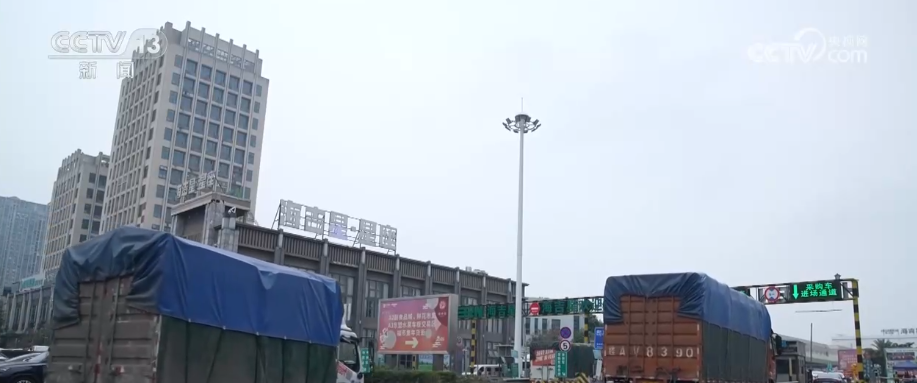
从新鲜果蔬到特色礼品 繁忙货运折射春节消费市场强劲活力
Yang Shi Wang· 2026-02-19 03:53
Core Insights - The Chinese New Year market is experiencing robust activity, with a significant increase in the transportation of goods, reflecting strong consumer demand during the holiday season [1][3] Group 1: Market Activity - The logistics for the Spring Festival are busy, with a notable rise in the demand for various goods, particularly in the first four days of the holiday [3] - Orders for small commodities surged by 50.9% year-on-year, marking the highest growth among categories [3] - Fresh fruits and vegetables saw a 31.8% increase in order volume, while clothing and fabric orders rose by 24.4% [3] - Grain and oil products also experienced a 7.4% increase in orders [3] Group 2: Logistics Support - To ensure smooth logistics during the Spring Festival, transportation departments have implemented supportive measures for truck drivers across the country [6] - Over 2,000 "Driver Homes" have been established, providing essential services such as parking, meal heating, hot water supply, and shower facilities for drivers [6] - Some locations also offer discounted meals, convenient vehicle maintenance, and emergency rescue services [6]
云南省消费品市场规模扩大活力释放
Xin Lang Cai Jing· 2026-02-12 20:33
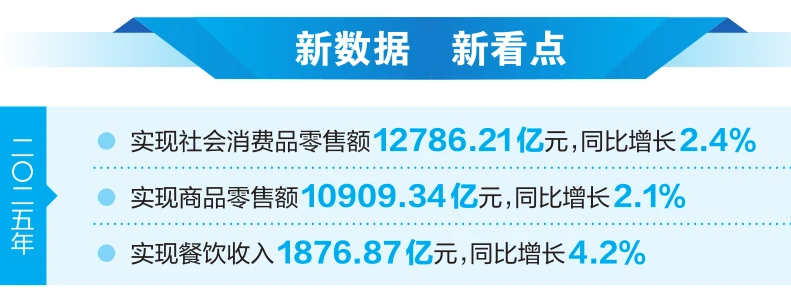
Group 1 - The province implemented a series of policies to boost consumption, including the issuance of 1 billion yuan in consumption vouchers, leading to a stable growth in social retail sales, which reached 12,786.21 billion yuan, a year-on-year increase of 2.4% [1] - Urban and rural markets expanded, with rural consumption growing faster than urban, achieving retail sales of 2,209.48 billion yuan in rural areas, a 3.1% increase, compared to 2.2% in urban areas [1] - Upgraded consumption categories saw significant growth, with retail sales of goods reaching 10,909.34 billion yuan, a 2.1% increase, and specific categories like mobile phones and home appliances experiencing double-digit growth [1] Group 2 - The province's catering revenue reached 1,876.87 billion yuan, growing by 4.2%, while retail sales in food, tobacco, and daily necessities also saw positive growth [2] - New retail formats, such as discount stores and unmanned shops, showed rapid growth, with sales increasing by 13.6% and 13.7% respectively [2] - Online sales continued to thrive, with retail sales through public networks growing by 30.9%, indicating a strong consumer demand and a significant increase in e-commerce activity [2]
图说2025年经济数据丨增速全国第二!河北社会消费品零售总额超1.5万亿
Xin Lang Cai Jing· 2026-01-31 04:02
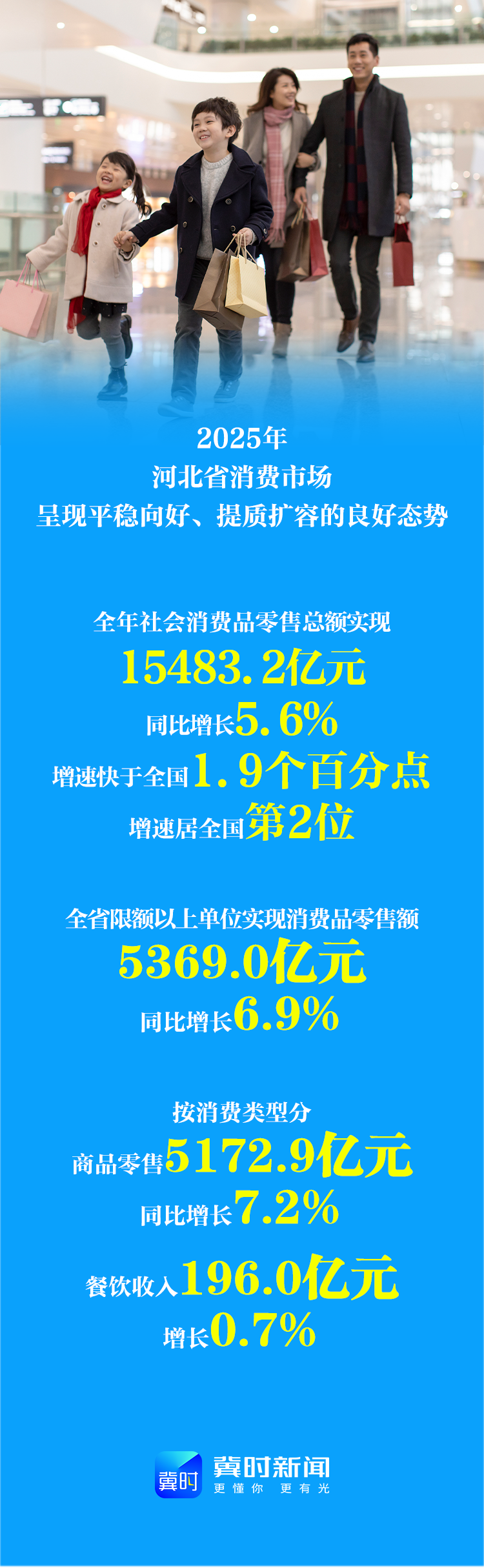
Group 1 - The total retail sales of consumer goods in the province reached 1,548.32 billion yuan, with a year-on-year growth of 5.6%, outpacing the national growth rate by 1.9 percentage points, ranking second in the country [4] - Retail sales of goods amounted to 536.9 billion yuan, growing by 6.9% year-on-year, with retail sales of goods at 517.29 billion yuan increasing by 7.2% and catering revenue at 19.6 billion yuan growing by 0.7% [4] - The retail sales of grain and oil food products increased by 19.3% year-on-year, with specific categories such as grain and oil up by 21.8%, meat and poultry by 6.9%, aquatic products by 21.7%, vegetables by 13.3%, and dried and fresh fruits by 23.6% [7] Group 2 - The province's consumer goods replacement program received 17.238 billion yuan in subsidies, driving total sales of 128.033 billion yuan, with retail sales of household appliances and audio-visual equipment growing by 12.6% and furniture by 36.3% [9] - Retail sales of new energy vehicles increased by 7.8% year-on-year, reflecting a growing demand for digital and intelligent products [11] - Retail sales of smartphones surged by 55.2%, while energy-efficient products with levels 1 and 2 saw a remarkable growth of 91.6%, and sales of computers and related products increased by 57.9% [12] Group 3 - The province's express delivery business volume exceeded 10 billion pieces, making it the fourth province in the country to achieve this milestone, with rapid development in e-commerce and online sales activities [15] - The online retail sales target for the province is set to reach 510.06 billion yuan by 2025, with an expected growth rate of 8.9% [15]
GDP同比增长3.8%,中山发布2025年经济运行简况
Nan Fang Du Shi Bao· 2026-01-30 07:37
Economic Overview - In 2025, the GDP of Zhongshan reached 426.06 billion yuan, with a year-on-year growth of 3.8% at constant prices [2] - The primary industry added value was 9.818 billion yuan, growing by 6.3%; the secondary industry added value was 218.906 billion yuan, growing by 3.9%; and the tertiary industry added value was 197.332 billion yuan, growing by 3.6% [2] Agricultural Performance - The total output value of agriculture, forestry, animal husbandry, and fishery in Zhongshan was 16.08 billion yuan, with a year-on-year increase of 6.3% [3] - Key agricultural products showed stable growth, with fruit production at 128,100 tons (up 2.8%) and vegetable and edible fungus production at 373,000 tons (up 0.8%) [3] - Aquaculture production improved, totaling 447,000 tons, with a year-on-year growth of 7.1% [3] Industrial Growth - The industrial added value above designated size in Zhongshan grew by 5.4% year-on-year [3] - Manufacturing sector growth was 5.9%, while the electricity, heat, gas, and water production and supply sector saw a decline of 3.5% [3] - Among 34 industrial sectors, 61.8% experienced growth, with notable increases in pharmaceutical manufacturing (46.3%), instrument manufacturing (31.8%), and computer and communication equipment manufacturing (10.2%) [3] Service Sector Development - The added value of the service industry in Zhongshan increased by 3.6% year-on-year [4] - Key sectors such as information transmission, software, and IT services grew by 8.6%, while accommodation and catering services grew by 4.0% [4] - Revenue from large-scale service enterprises increased by 0.5% year-on-year [4] Investment Trends - Fixed asset investment in Zhongshan decreased by 22.6% year-on-year [5] - Industrial investment fell by 14.6%, with advanced manufacturing investment down by 27.0% and high-tech manufacturing investment down by 22.6% [5][6] - Infrastructure investment also saw a decline of 26.0%, while real estate development investment dropped by 30.5% [6] Consumer Market Insights - The total retail sales of consumer goods in Zhongshan grew by 3.4% year-on-year [6] - Significant growth was observed in categories such as household appliances and audio-visual equipment (78.2%), communication equipment (61.1%), and food and oil (16.0%) [6] - Online retail remained active, with a year-on-year increase of 56.8% in sales through public networks [6] Income and Price Levels - The per capita disposable income in Zhongshan was 66,837 yuan, reflecting a year-on-year growth of 2.7% [7] - Urban residents had a per capita disposable income of 69,138 yuan (up 2.5%), while rural residents had 50,326 yuan (up 4.6%) [7] - The consumer price index (CPI) in Zhongshan decreased by 0.4% year-on-year, with service prices down by 0.5% and consumer goods prices down by 0.3% [7]