
综合

Search documents
近五年,滨州市改革开放全面突破,连续多年入选全国外贸百强市
Qi Lu Wan Bao· 2025-12-19 14:09
效益呈现新提升。成功创建全国文明城市,跻身中国百强城市。产业结构由2020年的9.3:41.8:48.9调整 为2024年的9.2:45.5:45.3,实现一产稳、二产进、三产优。 强化内外联动,改革开放全面突破 聚焦中心任务,用好关键一招,持续深化重要领域和关键环节改革,不断提高对外开放水平,为高质量 发展蓄势赋能。 12月18日,记者从市政府新闻办举行的滨州市高质量完成"十四五"规划新闻发布会—发展品质更高专场 上获悉,"十四五"时期是滨州市发展进程中极不寻常、极不平凡的五年。五年来,滨州市坚定"走在 前、挑大梁",聚焦品质滨州建设,把握大势、抢抓机遇,勠力同心、锐意进取,全面提升八大品质, 经济社会发展取得开创性进展、突破性变革、历史性成就。 总量站上新起点。地区生产总值从2020年的2614.25亿元增长到2024年的3404.74亿元,年均增长6%。规 上工业营收破万亿,全社会消费品零售总额、进出口总额双双破千亿,一般公共预算收入、税收收入分 别突破300亿元、200亿元。 人均实现新突破。人均地区生产总值从2020年的6.66万元增长到2024年的8.75万元,今年预计达到9万元 以上,连上7、8 ...
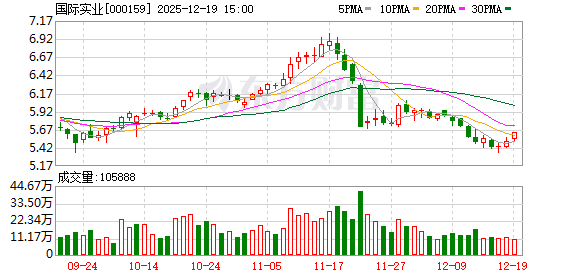
国际实业:关于拟变更会计师事务所的公告
Zheng Quan Ri Bao· 2025-12-19 12:22
(文章来源:证券日报) 证券日报网讯 12月19日晚间,国际实业发布公告称,公司第九届董事会第十一次临时会议审议通过 《关于拟更换会计师事务所的议案》,董事会同意拟聘任北京中名国成会计师事务所(特殊普通合伙) 为公司2025年度审计机构,本议案尚需提交公司2026年第一次临时股东会审议通过。 ...


综合行业今日净流入资金3.65亿元,红棉股份等6股净流入资金超千万元
Zheng Quan Shi Bao Wang· 2025-12-19 09:38
Group 1 - The Shanghai Composite Index rose by 0.36% on December 19, with 28 industries experiencing gains, led by retail and comprehensive sectors, which increased by 3.66% and 2.22% respectively [1] - The banking, electronics, and coal industries saw the largest declines, with decreases of 0.44%, 0.29%, and 0.29% respectively [1] - The net inflow of capital in the two markets was 7.025 billion, with 18 industries experiencing net inflows, particularly the machinery equipment sector, which had a net inflow of 3.884 billion and a daily increase of 1.18% [1] Group 2 - The comprehensive sector saw a daily increase of 2.22%, with a net inflow of 365 million, and all 15 stocks in this sector rose, including 3 that hit the daily limit [2] - Among the stocks in the comprehensive sector, Hongmian Co. had the highest net inflow of 126 million, followed by Sanmu Group and Tiancai Co. with net inflows of 118 million and 44.67 million respectively [2] - The stocks with the largest net outflows in the comprehensive sector included Yueda Investment, Ningbo United, and Nanjing Public Utility, with net outflows of 3.32 million, 2.85 million, and 2.72 million respectively [2]


【盘中播报】沪指涨0.40% 商贸零售行业涨幅最大
Zheng Quan Shi Bao Wang· 2025-12-19 06:48
| 申万行业 | 行业涨跌(%) | 成交额(亿元) | 比上日(%) | 领涨(跌)股 | 涨跌幅(%) | | --- | --- | --- | --- | --- | --- | | 商贸零售 | 3.79 | 528.27 | 46.79 | 德必集团 | 19.99 | | 综合 | 2.07 | 26.97 | 22.15 | 三木集团 | 10.04 | | 有色金属 | 1.97 | 845.27 | 11.54 | 利源股份 | 10.14 | | 轻工制造 | 1.92 | 251.49 | 35.43 | 创源股份 | 19.98 | | 钢铁 | 1.91 | 89.88 | 27.10 | 甬金股份 | 6.74 | | 房地产 | 1.86 | 159.24 | 19.64 | 广宇集团 | 10.16 | | 环保 | 1.82 | 122.87 | 8.10 | 海峡环保 | 10.06 | | 美容护理 | 1.71 | 34.63 | 27.32 | 依依股份 | 5.55 | | 社会服务 | 1.68 | 130.92 | 9.77 | 中钢天源 | 5.80 | | ...
万泽股份:债券持有人换股后T+1日可进行交易
Zheng Quan Ri Bao Wang· 2025-12-18 12:41
证券日报网讯12月18日,万泽股份(000534)在互动平台回答投资者提问时表示,根据可交换公司债券 的有关规则,债券持有人换股后T+1日可进行交易。 ...

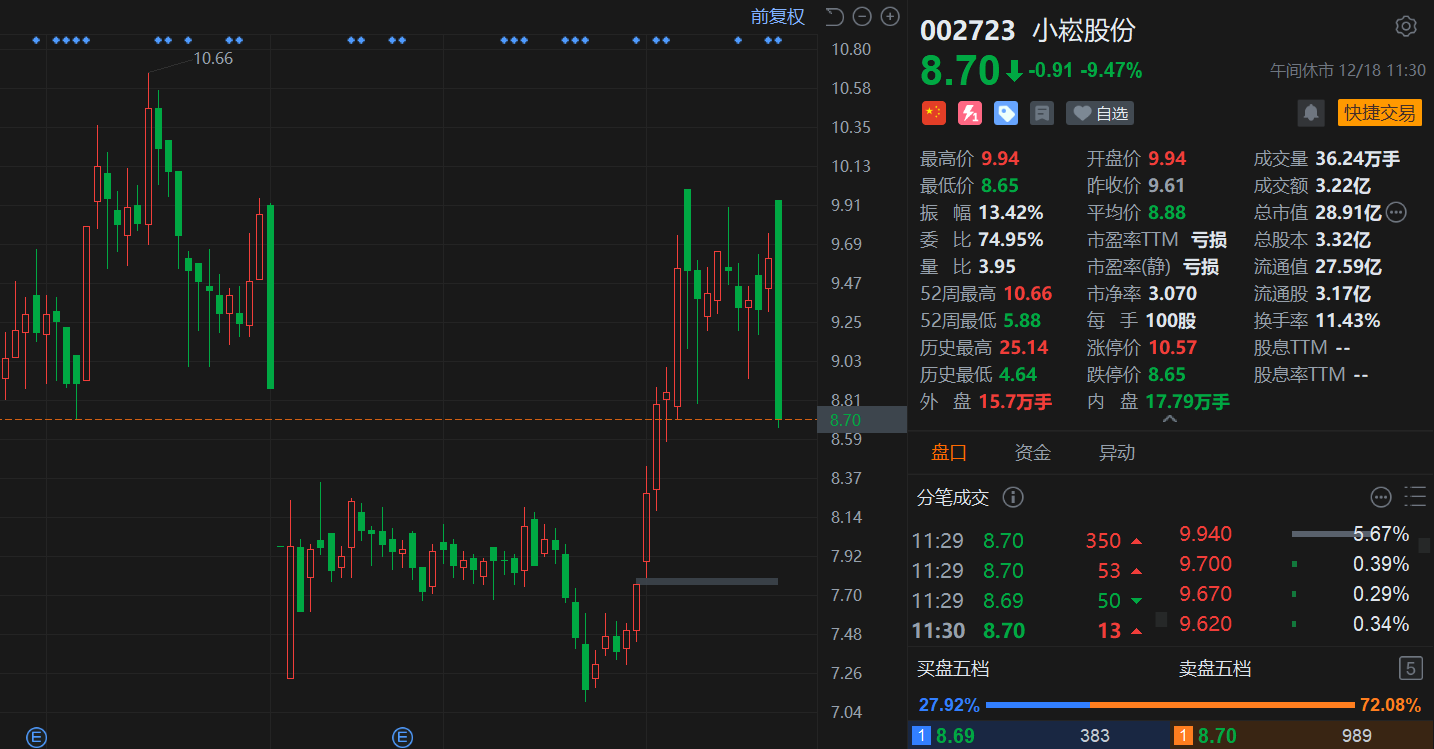
A股异动丨实控人拟变更,小崧股份高开低走,午间大幅收跌9.47%
Ge Long Hui A P P· 2025-12-18 04:02
MACD金叉信号形成,这些股涨势不错! 格隆汇12月18日|小崧股份(002723.SZ)呈现高开低走行情,午间大幅收跌9.47%,报8.7元,市值不足30亿元。消息上,短剧公司老板强势进驻A股市场,拿 下一家上市公司。小崧股份12月17日晚间披露,其控股股东华欣创力与上海嘉晟时代企业管理合伙企业(有限合伙)(下称"嘉晟时代")签署了《股份转让 协议》。华欣创力拟向嘉晟时代协议转让其持有的小崧股份3073.79万股股份(占公司总股本的9.25%)。上述股份转让项下标的股份的转让价格为9.32元/ 股,股权转让价款总额为2.86亿元。 ...

去美元化加速!外资集体对华加仓,已吸纳5737亿,疯狂逃离美市场
Sou Hu Cai Jing· 2025-12-17 05:13
Group 1 - The core viewpoint of the article emphasizes the significance of overseas capital increasing its allocation in China, signaling a potential stock market rebound, while also highlighting the importance of the 2026 Central Political Bureau meeting's focus on "deepening the construction of a unified national market" [1][3] - The article notes that by September 2025, foreign investment in China has exceeded 573.7 billion, indicating a growing recognition of the long-term logic of the Chinese market among overseas investors [3] - It mentions that investors from France, Germany, and South America have begun to increase their positions in Chinese assets, reflecting a rising confidence and interest in the Chinese market [5] Group 2 - The Central Political Bureau meeting on December 8 outlined a strategic framework for the economy in 2026, emphasizing "deepening the construction of a unified national market" as a focus for policy [8] - The meeting's shift from "preventing external shocks" to "coordinating domestic economic work and international economic struggles" indicates a proactive approach to external challenges while prioritizing internal order [10] - The article discusses the "regional economic fragmentation" issue in China, where administrative divisions create barriers that hinder cross-province operations and lead to inefficiencies [12][14] Group 3 - The article explains that the fragmented market results in high circulation costs and difficulties for enterprises to expand across provinces, ultimately suppressing domestic demand [20] - It argues that a unified market is essential for activating development potential by breaking down regional barriers, reducing circulation costs, and lowering product prices, thereby unleashing consumer potential [24] - The ongoing reforms aim to tighten tax regulations, eliminate administrative barriers, and unify industry standards, which are crucial for establishing a "national chessboard" approach [26]
万泽股份:控股股东因可交换债换股致持股比例降至30.95%
Xin Lang Cai Jing· 2025-12-16 12:02
万泽股份公告称,控股股东万泽集团2023年、2025年非公开发行的可交换公司债券分别于2024年5月27 日、2025年11月24日进入换股期。截至2025年12月15日,债券持有人累计换股374.4410万股,导致万泽 集团及其一致行动人合计持股比例由31.69%降至30.95%,变动达1%,此次为被动减持。 ...
山东国企改革板块12月16日跌1.32%,宝鼎科技领跌,主力资金净流出10.44亿元
Sou Hu Cai Jing· 2025-12-16 09:24
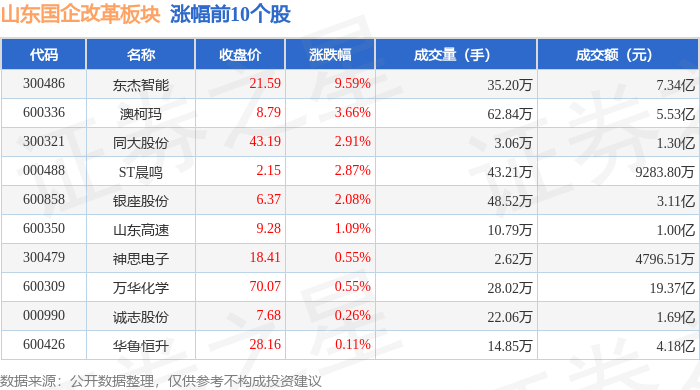
Market Overview - On December 16, the Shandong state-owned enterprise reform sector fell by 1.32% compared to the previous trading day, with Baoding Technology leading the decline [1] - The Shanghai Composite Index closed at 3824.81, down 1.11%, while the Shenzhen Component Index closed at 12914.67, down 1.51% [1] Stock Performance - Notable gainers in the Shandong state-owned enterprise reform sector included: - Dongjie Intelligent (300486) with a closing price of 21.59, up 9.59% and a trading volume of 352,000 shares, totaling 734 million yuan [1] - Aokema (600336) closed at 8.79, up 3.66% with a trading volume of 628,400 shares, totaling 553 million yuan [1] - Tongda Co. (300321) closed at 43.19, up 2.91% with a trading volume of 30,600 shares, totaling 130 million yuan [1] - Conversely, Baoding Technology (002552) led the declines with a closing price of 15.98, down 5.94% and a trading volume of 90,800 shares, totaling 147 million yuan [2] - Other significant decliners included: - Xingri Co. (002083) down 5.22% to 10.71 with a trading volume of 1,345,500 shares [2] - Qingdao Double Star (000599) down 4.93% to 5.98 with a trading volume of 296,700 shares [2] Capital Flow - On the same day, the Shandong state-owned enterprise reform sector experienced a net outflow of 1.044 billion yuan from institutional investors, while retail investors saw a net inflow of 796 million yuan [2] - The capital flow for specific stocks showed: - Wanhua Chemical (600309) had a net inflow of 1.05 billion yuan from institutional investors, but a net outflow of 94.08 million yuan from retail investors [3] - Dongjie Intelligent (300486) saw a net inflow of 81.92 million yuan from institutional investors, with a net outflow of 69.01 million yuan from retail investors [3]




综合板块12月16日跌2.68%,三木集团领跌,主力资金净流出3.71亿元
Zheng Xing Xing Ye Ri Bao· 2025-12-16 09:06
Market Performance - The comprehensive sector declined by 2.68% compared to the previous trading day, with Sanmu Group leading the decline [1] - The Shanghai Composite Index closed at 3824.81, down by 1.11% [1] - The Shenzhen Component Index closed at 12914.67, down by 1.51% [1] Capital Flow - The comprehensive sector experienced a net outflow of 371 million yuan from main funds, while retail funds saw a net inflow of 368 million yuan [2] - Speculative funds had a net inflow of 3.1759 million yuan [2]
