
邮政快递

Search documents
国家邮政局:9月邮政行业业务收入1525.7亿元 同比增长6.8%
智通财经网· 2025-10-23 07:35
Core Insights - The postal industry in China reported a business revenue of 152.57 billion yuan in September 2023, marking a year-on-year growth of 6.8% [1] - The express delivery business revenue reached 127.37 billion yuan in September, with a year-on-year increase of 7.2% [1] - Cumulatively, from January to September 2023, the postal industry generated a total revenue of 1,313.63 billion yuan, reflecting a growth of 7.7% compared to the same period last year [1] Revenue and Volume Performance - In September, the total volume of postal delivery services reached 18.34 billion pieces, up 11.2% year-on-year, with express delivery volume at 16.88 billion pieces, increasing by 12.7% [1] - For the first nine months, the cumulative delivery volume was 158.26 billion pieces, a 15.0% increase, while express delivery volume totaled 145.08 billion pieces, growing by 17.2% [1] Segment Analysis - The express delivery business accounted for 83.5% of the total postal business revenue in the first nine months [1] - The volume of same-city express deliveries was 11.87 billion pieces, up 4.3%, while intercity express deliveries surged to 130.17 billion pieces, marking an 18.6% increase [1][2] - International and Hong Kong/Macau/Taiwan express deliveries reached 3.04 billion pieces, reflecting a year-on-year growth of 13.7% [1] Regional Performance - In terms of revenue distribution, the eastern region contributed 73.8%, the central region 15.6%, and the western region 10.6% of the total express delivery revenue [6] - The eastern region saw a slight decline in both revenue and volume share compared to the previous year, while the central and western regions experienced increases [6] Market Concentration - The concentration index (CR8) for express and parcel service brands stood at 86.9, remaining stable compared to the previous month [9] Detailed Breakdown by Province - The express delivery revenue for major provinces included Guangdong at 223.48 billion yuan (1.0% growth), Jiangsu at 77.8 billion yuan (7.5% growth), and Zhejiang at 109.57 billion yuan (5.3% growth) [11] - Notably, Hebei province showed significant growth in express delivery revenue at 49.31 billion yuan, with a year-on-year increase of 19.9% [11] City-Level Insights - Shanghai led the express delivery revenue with 195.99 billion yuan, followed by Guangzhou at 68.34 billion yuan and Shenzhen at 46.96 billion yuan [12] - In terms of processing volume, Guangzhou also topped the list with 1,656,335.3 million pieces, indicating a robust logistics network [13]


奋进的河南——决胜“十四五”丨快递面单里的循环脉动
He Nan Ri Bao· 2025-10-21 23:33
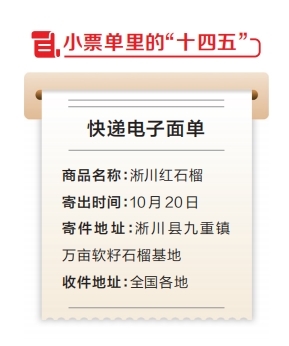
Core Insights - The integration of technology in logistics is enhancing the efficiency of agricultural product distribution and urban industrial goods delivery, exemplified by the use of electronic waybills for tracking shipments [2][5] - The "Yunong Youpin" brand initiative in Henan Province is promoting local agricultural products through e-commerce platforms, significantly increasing the volume of agricultural goods being shipped [3][4] Group 1: Agricultural Product Distribution - The postal service in Xichuan County is facilitating the sale of local pomegranate products through e-commerce platforms like JD.com and Pinduoduo, improving the reach of these products nationwide [2] - In Nanyang, the express delivery of mugwort products has seen a shipment volume exceeding 80 million pieces in the first half of 2025, marking a 36% year-on-year increase and creating over 250,000 jobs [3] - The logistics solutions provided for local chili pepper distribution in Shangqiu include dedicated collection points and direct delivery services [3] Group 2: Logistics Infrastructure - The coverage rates for postal delivery centers in Henan Province are high, with 85% for county-level centers, 99.38% for township delivery points, and 78.23% for village logistics service stations, ensuring efficient logistics channels for agricultural products [3] - The Zhengzhou Postal District Center processes an average of 2.9 million mail items daily, serving as a crucial hub for the province's postal operations [3][4] Group 3: Technological Advancements - The implementation of automated sorting systems in logistics facilities is enhancing operational efficiency, allowing for real-time tracking and management of production progress [4] - The development of a comprehensive logistics system in Zhengzhou integrates air, express, e-commerce, and warehousing logistics, creating a robust network for global distribution [5] - The "one-stop" transportation model being explored in Henan aims to streamline the logistics process by integrating various transport modes and enhancing information sharing [5]
财联社10月16日早间新闻精选
Sou Hu Cai Jing· 2025-10-16 00:28
Group 1 - The People's Bank of China reported that the cumulative increase in social financing scale for the first three quarters of 2025 reached 30.09 trillion yuan, an increase of 4.42 trillion yuan compared to the same period last year [2] - The broad money (M2) balance at the end of September was 335.38 trillion yuan, with a year-on-year growth of 8.4% [2] - The increase in RMB loans for the first three quarters was 14.75 trillion yuan [2] Group 2 - The European Union is considering forcing Chinese companies to transfer technology to European firms, with China's Foreign Ministry opposing such measures as violations of WTO rules [3] - The National Development and Reform Commission announced plans to build 28 million charging facilities nationwide by the end of 2027, including 40,000 "super fast combined" charging guns in highway service areas [4] Group 3 - The Ministry of Industry and Information Technology met with Apple's CEO Tim Cook to discuss Apple's business development in China and cooperation in the electronic information sector [5] - The State Post Bureau emphasized the importance of the postal and express delivery industry in modern logistics during a recent inspection in Shanghai [6] Group 4 - The National Bureau of Statistics announced the establishment of seven national digital economy innovation development pilot zones, with 158 reform measures focusing on market-oriented data element allocation and deep integration of technology and industry [7] Group 5 - New Kai Lai's subsidiary Qi Yun Fang launched a domestically produced EDA industrial software at the Bay Area Semiconductor Industry Ecological Expo [8] - Wan Li Yan, a subsidiary of New Kai Lai, announced the release of a new generation of ultra-high-speed real-time oscilloscopes at the "2025 Bay Chip Exhibition" [9] Group 6 - Sanhua Intelligent Control announced that recent rumors regarding large robot orders were untrue [10] - Junpu Intelligent announced plans to raise no more than 1.161 billion yuan for smart robot R&D and industrialization projects [11] - Yangyuan Beverage announced a capital increase of 1 billion yuan to private equity fund Quan Hong Investment [11] Group 7 - Chip Origin announced plans to acquire control of Zhudian Semiconductor [12] - Nair announced plans to acquire at least 51% of Feilai Testing [12] Group 8 - Shuo Bei De announced a projected net profit increase of 2837%-3204% for the third quarter [13] - Guanghua Technology reported a 1234% year-on-year increase in net profit for the first three quarters [13] - Haiguang Information announced a third-quarter net profit of 760 million yuan, a 13% year-on-year increase [13] - Zhongke Shuguang reported a 24% year-on-year increase in net profit for the first three quarters [13] - Tailin Micro announced a projected net profit increase of 118% for the first three quarters [13] Group 9 - Dingsheng Technology signed a strategic cooperation framework agreement with Boyuan Co., aiming to collaborate on solid-state lithium battery material technology [14] - Tianpu Co. announced the completion of its suspension for verification and will resume trading on the 16th [15] - *ST Zhengping announced the completion of its suspension verification and will resume trading [15] Group 10 - Demingli announced that its second-largest shareholder plans to reduce holdings by no more than 1.32% [16] - Huizhiwei announced that its second-largest shareholder plans to reduce holdings by no more than 1% [16] - Huada Jiutian reported that its fourth-largest shareholder reduced holdings by 2.7147 million shares from September 15 to October 15 [16] - Western Gold announced that its second-largest shareholder plans to reduce holdings by no more than 18.22 million shares [16] Group 11 - Guoguang Chain reported a third-quarter net loss of 8.41 million yuan, marking a shift to a loss compared to the previous year [17] Group 12 - The three major U.S. stock indices closed mixed, with the Dow down 0.04%, the Nasdaq up 0.66%, and the S&P 500 up 0.4% [18] - The Nasdaq Golden Dragon China Index rose by 1.7%, with most popular Chinese concept stocks increasing [18] Group 13 - Federal Reserve Governor Milan stated that the divergence in policy views among colleagues is more about the pace of interest rate cuts rather than the final target [19] - U.S. Treasury Secretary Bessent emphasized the need for the Federal Reserve to use quantitative easing cautiously and not to reduce its balance sheet or abandon a robust reserve system [20] Group 14 - COMEX gold futures rose by 1.48% to $4224.9 per ounce, while COMEX silver futures increased by 3.76% to $52.525 per ounce, both reaching new closing highs [21]





【早报】事关电动汽车充电设施,利好来了;9月金融数据出炉
财联社· 2025-10-15 23:10
Industry News - The National Development and Reform Commission and other departments issued a notice for the "Three-Year Doubling Action Plan for Electric Vehicle Charging Facilities (2025-2027)", aiming to establish 28 million charging facilities nationwide by the end of 2027 [4] - The State Data Bureau announced that China will launch 158 reform measures in seven national digital economy innovation development pilot zones, focusing on market-oriented allocation of data elements, technological innovation, and deep integration of industrial innovation [5] - AI technology is penetrating all aspects of drug development, as reported in KPMG's "Third Bio-innovation Leading 50 Enterprises Report" [5] - The Chongqing Medical Security Bureau has initiated the preparation phase for centralized procurement of urological medical consumables, covering 26 provinces [5] - The State Post Bureau emphasized the importance of smooth circulation and promoting logistics in the modern logistics industry during a recent inspection of the postal and express delivery industry [5] Company News - Haiguang Information announced a net profit of 760 million yuan for the third quarter, representing a year-on-year increase of 13% [6] - Guanghua Technology reported a net profit growth of 1234% year-on-year for the first three quarters [8] - Hainan Huatie completed a shareholding increase plan, accumulating 6.448 million shares [9] - Guizhou Bailing's subsidiary received approval for clinical trials of a new traditional Chinese medicine for type 2 diabetes [10] - China Ruilin plans to establish a tungsten and rare earth mining fund with a total scale of 2 billion yuan [10] - Junpu Intelligent plans to raise no more than 1.161 billion yuan for smart robot research and industrialization projects [10]

国家邮政局局长赵冲久赴上海调研邮政快递业发展情况
Zheng Quan Shi Bao Wang· 2025-10-15 11:57
Core Viewpoint - The National Postal Service emphasizes the importance of the postal and express delivery industry in promoting circulation and supporting local economic and social development [1] Group 1 - The head of the National Postal Service, Zhao Chongjiu, conducted research on the development of the postal and express delivery industry in Shanghai [1] - The focus is on enhancing the role of the postal and express delivery sector as a leader in modern logistics [1] - The initiative aims to improve service to local economies and communities [1]
郑州邮政快递业新规下月起施行
Zheng Zhou Ri Bao· 2025-10-15 01:09
Core Points - The new regulations aim to enhance postal and express delivery services in Zhengzhou, ensuring convenience for residents and promoting healthy industry development [1] Group 1: Infrastructure Development - The regulations require the integration of postal and express delivery services into urban planning, ensuring the establishment of logistics parks and processing centers [2] - New residential areas and commercial buildings must include smart parcel boxes, with a push to upgrade traditional mailboxes [2] - A three-tiered logistics system will be developed in rural areas to address delivery challenges, promoting the integration of postal and express services [2] Group 2: User Information Security - The regulations emphasize the importance of user information security, mandating companies to establish systems to protect personal data [3] - Companies are responsible for maintaining confidentiality and are prohibited from selling or leaking user information [3] Group 3: Employee Rights Protection - Companies must sign labor contracts with employees, ensuring their rights to rest, fair wages, and social insurance [4] - Temporary workers must also have agreements that outline rights and responsibilities, including safety protections [4] - The regulations prohibit disruptions to postal and express services and require support for delivery personnel in various facilities [4] Group 4: Dispute Resolution - A mechanism for handling user complaints is mandated, allowing users to escalate unresolved issues to postal management authorities [5] - Postal and express companies are required to address complaints and provide feedback on resolutions [5]
传邮万里通天下 服务城乡惠民生
Ren Min Ri Bao· 2025-10-08 22:11
Core Viewpoint - The postal industry plays a crucial role in national public services and modern circulation systems, significantly contributing to economic and social development, with a focus on high-quality growth and enhanced connectivity [1][2]. Group 1: Industry Achievements - The postal sector has achieved remarkable accomplishments under the leadership of the central government, emphasizing new development concepts and high-quality growth [1]. - The express delivery business volume in China surpassed 1 trillion items this year, 35 days earlier than in 2024, showcasing the industry's support for consumption upgrades and economic growth [2]. Group 2: Service Quality and Consumer Satisfaction - The quality of postal and express services has improved, with domestic express service timeliness, accuracy, and stability ranking among the world's best, and a complaint rate of only 0.00002 [2]. - The satisfaction rate for express services in major cities has increased, alongside a rise in the 72-hour delivery rate [2]. Group 3: Safety and Environmental Initiatives - The industry is transitioning to green production methods, with new regulations emphasizing eco-friendly packaging and the construction of green facilities [3]. - The annual photovoltaic power generation in the industry exceeds 200 million kilowatt-hours, and over 95% of e-commerce packages no longer require secondary packaging [3]. Group 4: Infrastructure and Connectivity - The postal industry is enhancing its infrastructure, particularly in rural and western regions, to support the transfer of industries from the east and promote regional coordination [3]. - Efforts are being made to improve international delivery services and support cross-border e-commerce through various logistics models [3]. Group 5: Cost Reduction and Industry Collaboration - The industry is developing a new model of "delivery hubs + industrial clusters" to attract related industries and promote collaborative development [4]. - Various service models, including factory logistics and reverse logistics, are being promoted to integrate production services with the supply chain [4]. Group 6: Technological Advancements - The industry is focusing on integrating artificial intelligence to enhance operational efficiency and promote the transition to smart logistics [4]. - Upgrades in sorting equipment and transportation tools are being accelerated to support the development of comprehensive logistics service systems [4]. Group 7: Universal Service Enhancement - Strengthening the universal postal service network to improve accessibility and equity in service delivery is a priority [5]. - Continuous monitoring and enforcement of postal service standards are being implemented to address consumer complaints and ensure fair market practices [5].
新华财经早报:10月7日
Xin Hua Cai Jing· 2025-10-07 00:57
Group 1 - During the "14th Five-Year Plan" period, China's rural infrastructure is steadily improving, with rural road mileage reaching 4.64 million kilometers by the end of 2024, achieving a road classification ratio of 97.3% and a good and medium road rate of 94.8% [1][1] - The comprehensive production capacity of China's fisheries has significantly increased, with the market transaction volume of aquatic products reaching 9.7691 million tons and a transaction value of 278.126 billion yuan in 2024, representing growth of 2.45% and 9.13% compared to 2021 [1][1] - The logistics data from the Ministry of Transport indicates that from September 29 to October 5, civil aviation operated 133,000 flights, with a 10.93% increase in cargo flights compared to the previous period [1][1] Group 2 - The French Prime Minister's resignation has caused volatility in the French stock and bond markets, with the 10-year government bond yield rising over 9 basis points to exceed 3.6%, nearing levels seen during the 2011 European debt crisis [1][1] - The global manufacturing PMI for September 2025 is reported at 49.7%, a slight decrease of 0.2 percentage points from the previous month, remaining within the 49%-50% range for seven consecutive months [1][1] - The number of funds announcing or implementing dividends this year has reached 5,989, with a total dividend amount increasing from 143.084 billion yuan to 183.974 billion yuan, marking a growth of 28.58% compared to the same period last year [1][1]

交通运输部:过去7天民航保障航班13.3万班
Bei Ke Cai Jing· 2025-10-06 14:17
Core Insights - The Ministry of Transport reported logistics operation data for the week from September 29 to October 5, highlighting various transportation metrics across the country [1] Transportation Metrics - National railway freight transport reached 80.43 million tons, a month-on-month increase of 0.95% [1] - The number of freight trucks on national highways was 44.14 million, showing a month-on-month decrease of 27.55% [1] - Port cargo throughput was 272.18 million tons, reflecting a month-on-month increase of 4.69%, with container throughput at 6.61 million TEUs, up by 8.84% [1] - Civil aviation supported 133,000 flights, including 4,536 cargo flights (3,046 international and 1,490 domestic), marking a month-on-month increase of 10.93% [1] - Postal and express delivery saw a collection volume of approximately 3.27 billion items, down by 19.15% month-on-month, and a delivery volume of about 3.52 billion items, down by 11.16% [1]
9月22日—9月28日国家铁路运输货物7967.3万吨
Zhong Guo Xin Wen Wang· 2025-09-29 06:26
Core Insights - The logistics operation data from September 22 to September 28 indicates mixed performance across various transportation sectors in China [1] Group 1: National Railway - National railway transported 79.67 million tons of goods, showing a month-on-month decrease of 1.16% [1] Group 2: Highway Transportation - Nationwide highway freight traffic reached 60.92 million vehicles, reflecting a month-on-month increase of 3.57% [1] Group 3: Port Operations - Monitored ports completed a cargo throughput of 259.99 million tons, which is a month-on-month decrease of 1.76% - Container throughput was 6.07 million TEUs, experiencing a month-on-month decline of 8.88% [1] Group 4: Civil Aviation - Civil aviation supported 120,000 flights, including 4,980 cargo flights (3,197 international and 1,783 domestic), marking a month-on-month decrease of 2.37% [1] Group 5: Postal and Express Services - The volume of postal express collection was approximately 4.04 billion items, with a month-on-month increase of 3.96% - The delivery volume was about 3.96 billion items, reflecting a month-on-month growth of 2.99% [1]