
电动汽车

Search documents
特斯拉股东批准马斯克万亿薪酬方案
Xin Hua Wang· 2025-11-07 05:25
Core Points - Tesla's shareholders approved a compensation incentive plan for CEO Elon Musk with over 75% support, potentially worth up to $1 trillion [1] - The plan, approved by the board in September, will pay Musk based on Tesla's market value and operational performance over the next 10 years [1] - Current market value of Tesla is approximately $1.5 trillion, with stock rewards triggered by increases in market value [1] - The plan includes performance targets such as achieving $400 billion in profit, delivering 20 million vehicles, and having 10 million active full self-driving subscription users [1][2] Summary by Sections - **Compensation Plan Details** - The incentive plan allows for stock rewards to be issued in 10 tranches as Tesla's market value increases by $500 billion, up to $6.5 trillion [1] - Additional rewards will be granted if the market value reaches $8.5 trillion [1] - **Performance Targets** - Key targets include achieving $400 billion in profit, delivering 20 million vehicles, and having 10 million active full self-driving subscription users [1] - The plan also includes selling 1 million "Optimus" humanoid robots and commercializing 1 million self-driving taxis [1] - **Challenges and Implications** - Achieving the targets set in the compensation plan is considered highly challenging, requiring Musk to remain with the company long-term [2] - If fully realized, Musk's stock holdings could increase by approximately 423.7 million shares, valued at around $1 trillion, raising his ownership stake to about 25% [2]

25 年特斯拉股东大会全文(3w 字):8780亿美元的薪酬计划通过,马斯克紧握控制权,目标市值8.5万亿美元
美股IPO· 2025-11-07 04:32
Core Points - The article discusses Tesla's 2025 Annual Shareholder Meeting, highlighting the company's achievements, future strategies, and shareholder proposals [1][4][6] Group 1: Business Overview - Tesla's Model Y has once again become the best-selling vehicle globally, and the company's energy deployment capacity has doubled, reaching 31 GWh in 2024, more than double that of 2023 [1][8] - The company emphasizes safety, reporting that its vehicles under Autopilot have an accident rate ten times lower than the average driver, with one accident occurring for every 6.8 million miles driven [9][10] - Tesla's energy business is expected to create value through services like RoboTaxi and virtual power plants, powered by real-world AI [8] Group 2: Future Strategies - Elon Musk introduced a new mission for the company: "sustainable prosperity," emphasizing the potential of the Optimus robot to eliminate poverty and provide exceptional healthcare [3][38] - The company plans to produce the CyberCab without pedals or steering wheels starting in April next year, utilizing a manufacturing system similar to high-capacity consumer electronics [3][35] - Musk discussed advancements in Full Self-Driving (FSD) technology, with version 14.3 expected to enable "sleeping driving" [3][41] Group 3: Shareholder Proposals - Shareholders voted on several proposals, including the authorization for investment in XAI, incorporating sustainability metrics into executive compensation, and conducting audits for child labor in the supply chain [1][13][17] - The board opposed several shareholder proposals, including those related to sustainability metrics in executive pay and child labor audits, citing existing policies and practices [13][17][19] - The proposal to eliminate supermajority voting requirements was not approved by shareholders, while the executive compensation plan received support [32]

环球市场动态:最高法院质疑特朗普关税合法性
citic securities· 2025-11-07 04:21
Market Overview - A-shares rose collectively on Thursday, with the Shanghai Composite Index returning to 4,000 points, closing at 4,004, up 0.97%[16] - The Hang Seng Index increased by 2.12%, closing at 26,485 points, driven by strong performances in technology and materials sectors[11] - U.S. job cuts in October reached the highest level in over 20 years, raising concerns about the economic outlook, leading to a decline in U.S. stocks[9] Commodity and Currency Insights - Saudi Arabia lowered December crude oil prices for Asian buyers, contributing to a drop in oil prices, with WTI crude down 0.29% to $59.43 per barrel[27] - International gold prices remained stable, with a slight decrease of 0.05% to $3,991 per ounce[27] - The Bank of England maintained its benchmark interest rate at 4%, with expectations for a rate cut in December, while the British pound rose 0.7% to $1.314[27] Fixed Income Market - U.S. Treasury yields fell by 5-8 basis points, reflecting increased risk aversion due to weak labor market data[28] - The yield on the 10-year U.S. Treasury bond decreased to 4.08%, down 7.6 basis points[30] - In Asia, Chinese investment-grade bond spreads narrowed by 1-3 basis points, indicating improved market sentiment[28] Corporate Highlights - Tesla's shareholders approved CEO Elon Musk's controversial compensation plan, potentially worth up to $1 trillion if performance targets are met, with over 75% support[8] - China’s Huahong Semiconductor reported strong recovery trends, with significant increases in gross margins and ASP, benefiting from demand recovery[14] Economic Indicators - The Challenger job cuts report indicated 153,000 layoffs in October, raising concerns about the U.S. labor market[30] - U.S. holiday season spending is expected to exceed $1 trillion, setting a new record[6]
突发!全线大跌,美联储大消息!
天天基金网· 2025-11-07 01:16
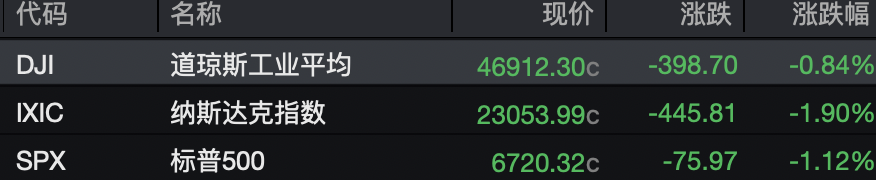
牛市来了还没上车?上天天基金APP搜索777注册即可领500元券包,优选基金10元起投!限 量发放!先到先得! 人工智能正加速美国就业市场降温,叠加AI公司寻求美国政府"担保"等误解,美股三大指数齐跌。 当地时间11月7日,纳斯达克指数下跌1.9%,标普500指数下跌1.12%,道琼斯工业平均指数下跌 0.84%。个股方面特斯拉股价下跌超3%,但随着特斯拉股东批准了首席执行官马斯克价值1万亿美元的 薪酬协议,盘后股价一度有所回升。 | 代码 | 名称 | 现价 | 涨跌 | 涨跌幅 | | --- | --- | --- | --- | --- | | DJI | 道琼斯工业平均 | 46912.30c | -398.70 | -0.84% | | IXIC | 纳斯达克指数 | 23053.99c | -445.81 | -1.90% | | SPX | 标普500 | 6720.32c | -75.97 | -1.12% | "AI担忧"加剧,三大指数集体收跌 美股大型科技股出现普跌,英伟达和特斯拉跌幅均超3%,英特尔、亚马逊、Meta跌超2%,微软跌超 1%,奈飞、苹果股价也小幅下跌。据了解,微软已经连 ...

超75%股东支持,马斯克万亿薪酬方案获批
Sou Hu Cai Jing· 2025-11-07 00:45
Core Viewpoint - Tesla shareholders approved Elon Musk's compensation plan with a 75% majority, supporting his vision to transform the company into an AI and robotics giant [1] Group 1: Compensation Plan Details - Musk could earn up to $878 billion from Tesla stock over the next 10 years, contingent on achieving specific milestones [3] - The compensation package includes up to $1 trillion in stock, but Musk must pay certain amounts to Tesla [3] - The plan is seen as beneficial for shareholders, as Musk must ensure Tesla meets a series of milestones to receive compensation [3] Group 2: Future Goals and Milestones - Musk's targets for the next decade include delivering 20 million vehicles, operating 1 million Robotaxis, selling 1 million humanoid robots, and achieving core profits of $400 billion [3] - For Musk to receive compensation, Tesla's stock value must increase from approximately $1.5 trillion to $2 trillion, and ultimately to $8.5 trillion [3][4] Group 3: Stock Ownership and Voting Rights - The compensation plan consists of 12 tranches of stock, and Musk currently holds about 13% of Tesla's shares [4] - If all performance targets are met, Musk could receive 423 million new shares, increasing his ownership stake to approximately 25% [4] - Musk will gain voting rights with the shares but cannot sell them for 7.5 to 10 years after unlocking [4]
昨夜,全线大跌!
Zheng Quan Shi Bao· 2025-11-07 00:27
Core Points - The U.S. job market is cooling down due to the acceleration of artificial intelligence, leading to a collective decline in major U.S. stock indices [1] - The Nasdaq index fell by 1.9%, the S&P 500 by 1.12%, and the Dow Jones Industrial Average by 0.84% on November 7 [2] - Major tech stocks, including Nvidia and Tesla, experienced declines of over 3%, with Microsoft facing its longest losing streak since 2022 [3] Employment Market - In October, U.S. companies announced layoffs of 153,000, marking the highest number for that month since 2003, with a year-on-year increase of 175% and a month-on-month increase of 183% [3] - By the end of October 2025, the total number of layoffs announced by U.S. companies is expected to exceed 1,099,000, a 65% increase year-on-year, setting a new record since 2020 [3] AI Companies and Government Support - OpenAI's CFO indicated a desire to create an ecosystem involving private equity, banks, and federal government support for funding, which led to misunderstandings about AI companies needing government guarantees [3] - OpenAI's CEO clarified that the company does not seek government guarantees for its data centers but advocates for a national strategic computing reserve [4] Tesla and Executive Compensation - Tesla shareholders approved Elon Musk's compensation plan, allowing him to earn up to $1 trillion in stock based on achieving specific operational goals [5] - The plan includes 12 operational targets, such as selling 12 million electric vehicles and 1 million AI robots, with Musk needing to lead Tesla to a market cap of $2 trillion within ten years to qualify for the full compensation [5] Market Reactions - The Nasdaq China Golden Dragon Index saw mixed results, with notable gains in stocks like XPeng and Yika Tong, while others like Xiaoma Zhixing and Zhaoding Pharmaceutical faced declines [4]
昨夜,全线大跌!
证券时报· 2025-11-07 00:23
人工智能正加速美国就业市场降温,叠加AI公司寻求美国政府"担保"等误解,美股三大指数齐跌。 当地时间11月7日,纳斯达克指数下跌1.9%,标普500指数下跌1.12%,道琼斯工业平均指数下跌0.84%。个股方面特斯拉股价下跌超 3%,但随着特斯拉股东批准了首席执行官马斯克价值1万亿美元的薪酬协议,盘后股价一度有所回升。 | 代码 | 名称 | 现价 | 涨跌 | 涨跌幅 | | --- | --- | --- | --- | --- | | DJI | 道琼斯工业平均 | 46912.30c | -398.70 | -0.84% | | IXIC | 纳斯达克指数 | 23053.99c | -445.81 | -1.90% | | SPX | 标普500 | 6720.32c | -75.97 -1.12% | | "AI担忧"加剧,三大指数集体收跌 美股大型科技股出现普跌,英伟达和特斯拉跌幅均超3%,英特尔、亚马逊、Meta跌超2%,微软跌超1%,奈飞、苹果股价也小幅下 跌。据了解,微软已经连续七个交易日股价下跌,创下了2022年以来最长连跌天数。 当地时间周四,OpenAI联合创始人兼CEO萨姆·奥尔特 ...
财经早报:谷歌最强芯片来袭 英伟达“烧钱”散热丨2025年11月7日
Xin Lang Zheng Quan· 2025-11-07 00:22
【跟踪牛人动态】超3000名"专业选手"如何调仓?最牛选手单只标的浮盈超400% 【头条要闻】 保障金融市场稳健运行!央行探索流动性管理新工具 向非银机构提供流动性支持 近日,中国人民银行行长潘功胜表示,央行正探索在特定情景下向非银机构提供流动性的机制性安排。 业内人士认为,这一探索意味着央行正补齐货币政策传导的"最后一公里",推动流动性支持从以银行体 系为中心的间接投放模式,迈向覆盖更多金融机构的直接投放机制。此举有望在极端市场情况下发 挥"稳定器"作用,也标志着我国货币政策正在从"总量调节"向"结构优化"、从"银行中心"向"市场全覆 盖"转型。 速度快4倍多,谷歌"最强芯片"来袭,A股概念股已大涨! OpenAI高管言论引发风暴!科技股再遭"血洗",特朗普顾问:AI公司倒了政府不会救 周三OpenAI首席财务官Sarah Friar暗示美国政府可以担保数据中心融资。随后周四特朗普政府的AI顾问 David Sacks回应:"美国至少有5家主要前沿AI模型公司,如果一家倒闭,其他公司将取而代之。"事件 愈演愈烈,OpenAI CEO Altman回应:"我们不需要也不想要美国政府为OpenAI数据中心提供担 ...



马斯克万亿美元薪酬方案获批准,十年内特斯拉市值需达到8.5万亿美元
Xin Lang Cai Jing· 2025-11-07 00:16
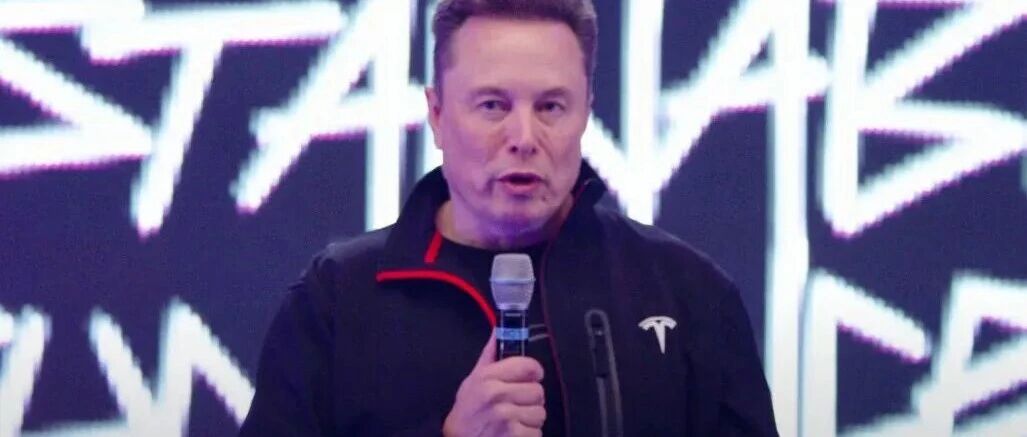
来源:环球市场播报 人们普遍预计马斯克会获胜,因为在特斯拉从特拉华州搬到德克萨斯州后,这位亿万富翁被允许行使他 大约15%的股份的全部投票权。 当地时间周四,特斯拉CEO埃隆·马斯克赢得了一次巨大胜利,股东们批准了他未来十年高达8780亿美 元的薪酬方案,支持了他将这家电动汽车制造商转变为AI和机器人巨头的愿景。 一些主要投资者反对该计划,包括挪威主权财富基金和代理公司Glass Lewis及Institutional Shareholder Services(ISS),他们认为马斯克的天价薪酬可能会降低股东价值。 分析师们认为,这次投票对特斯拉的股票有利,因为特斯拉的估值取决于马斯克的愿景,即让汽车自动 驾驶,在美国扩大机器人出租车,销售人形机器人,尽管他的政治言论今年已经对特斯拉品牌造成了损 害。 特斯拉董事会此前警告称,如果薪酬方案未获批准,马斯克可能会辞职。 在周四的股东大会上,马斯克和跳舞的机器人一起登上了德克萨斯州奥斯汀的舞台。"我们即将开始的 不仅仅是特斯拉未来的新篇章,而是一本全新的书,"他说,"这真的会是一个很精彩的故事。" 股东们还重新选举了特斯拉董事会的三名董事,并投票赞成对所有董事会成 ...