公用事业

Search documents
帮主郑重:美联储突然集体放鹰!鲍威尔讲话前夜,A股要小心这把“双刃剑”?
Sou Hu Cai Jing· 2025-08-22 01:49
Group 1 - The U.S. stock market experienced a decline, with the S&P 500 facing five consecutive days of losses, while Chinese electric vehicle stocks like Xpeng and NIO saw significant gains, indicating foreign investors' long-term confidence in China's new energy vehicles [3] - The recent hawkish comments from three Federal Reserve officials have reduced the probability of a rate cut in September from 80% to 75%, highlighting concerns over inflation due to increased tariffs [3] - The Atlanta Fed's report suggests that tariffs could lead to "secondary inflation," and the Cleveland Fed's president warned of a potential price increase wave, complicating the Fed's decision-making regarding interest rates [3] Group 2 - In the A-share market, the Shanghai Composite Index stabilized at 3,771 points, with net inflows of 3.86 billion from northbound funds, indicating foreign capital's search for certainty amid market volatility [4] - Domestic capital is shifting from high-tech stocks to defensive sectors like utilities and liquor, suggesting a strategy of risk management among local investors [4] - The Chinese government has initiated a third batch of 83 billion long-term special bonds focused on new energy and infrastructure, which is a positive signal for sectors like new energy vehicles and smart grids [5] Group 3 - Long-term investors are advised to focus on opportunities in hard technology sectors supported by policy, such as new energy vehicles and semiconductors, viewing pullbacks as buying opportunities [5] - Defensive sectors like liquor and utilities are recommended for risk-averse investors due to their stability and dividend potential [5] - Short-term trading strategies should consider catalysts like the computing power conference and potential interest rate cuts from the central bank, as seen with the record trading volume in ZTE [5]


郴电国际2025上半年毛利率下滑3.2个百分点,经营现金流同比减少0.87亿元
Sou Hu Cai Jing· 2025-08-22 01:00
Core Insights - The core viewpoint of the news is that Chendian International has shown a mixed performance in its financial results for the first half of 2025, with revenue growth but declining profitability metrics [1][3]. Financial Performance - Chendian International achieved an operating revenue of 1.957 billion yuan in the first half of 2025, representing a year-on-year increase of 1.26% [1]. - The net profit attributable to shareholders was 26 million yuan, reflecting a significant year-on-year growth of 29.55% [1]. Profitability Metrics - The company's net profit margin decreased from 2.49% in the first half of 2024 to 2.29% in 2025, a decline of 0.20 percentage points [3]. - The gross profit margin also fell from 11.38% in the first half of 2024 to 8.18% in 2025, a decrease of 3.20 percentage points [3]. - The return on equity (ROE) for the first half of 2025 was 0.72%, which is an increase of 0.16 percentage points year-on-year [3]. Operational Efficiency - The inventory turnover days were recorded at 6.74 days, a decrease of 0.77 days compared to the first half of 2024, indicating improved operational efficiency [5]. - The net cash flow from operating activities was 465 million yuan, down 0.87% from 552 million yuan in the same period of 2024 [5]. - The debt-to-asset ratio for the first half of 2025 was 71.83%, a decrease of 2.15 percentage points year-on-year, suggesting a reduction in the proportion of total liabilities to total assets [5]. Institutional Holdings - As of the first half of 2025, the number of institutions holding Chendian International's stock decreased to 8, down from 12 in the same period of 2024, indicating a decline in institutional investor confidence [7]. - The company's market capitalization peaked at 7.879 billion yuan on June 15, 2015, and the current market cap stands at 2.809 billion yuan, requiring a 180.54% increase in stock price to reach its historical high [7]. - The utility industry is characterized by stability, suggesting that market capitalization fluctuations are relatively mild [7].


转债投资机构行为分析手册
Tianfeng Securities· 2025-08-22 00:42
1. Report Industry Investment Rating No relevant content provided. 2. Core Viewpoints of the Report The report conducts a detailed analysis of the convertible bond investment strategies and preferences of different types of investment institutions, aiming to form a handbook for analyzing the behavior of convertible bond investment institutions. It focuses on an overview and the public fund section, considering the significant differences in investment strategies and information disclosure mechanisms between public funds and non - public funds [1][9]. 3. Summary According to Relevant Catalogs 3.1 Convertible Bond Investment Institutions and Analysis Method Overview - **Investor Structure and Proportion**: As of the end of July 2025, public funds and enterprise annuities are the "main forces" in direct convertible bond investment. Public funds hold a significant proportion, with 35.56% of the face value of Shanghai - listed convertible bonds and 33.31% of the market value of Shenzhen - listed convertible bonds. Enterprise annuities are the second - largest investment institutions, holding 18.41% of Shanghai - listed convertible bonds and 13.23% of Shenzhen - listed convertible bonds. Insurance institutions, securities self - operation also occupy important positions. Other professional institutional investors hold a relatively small proportion [10]. - **Changes in Investor Structure**: Compared with the end of 2021, the "influence" of public funds and insurance institutions has increased, while the proportion of enterprise annuities has decreased. The investment proportions of securities self - operation, private funds, and trust institutions have increased, and the proportion of general institutional investors represented by listed company shareholders has significantly decreased [13]. - **Differences in Investment Strategies**: Different types of professional institutional investors have differences in convertible bond investment restrictions, preferences, and investment strategies. Public funds generally have fewer restrictions on convertible bond ratings and focus on relative returns. Pension funds, insurance institutions, and social security funds have clear rating restrictions and focus on absolute returns [19]. - **Analysis Data Sources**: For public funds, quarterly reports can be used to analyze their convertible bond investment preferences. For other investment institutions, the top ten holders of convertible bonds disclosed in the semi - annual and annual reports of convertible bond issuers provide detailed analysis materials [20]. 3.2 What are the Characteristics of Public Funds' Convertible Bond Investment? 3.2.1 Overview of Public Funds' Convertible Bond Holdings - **Scale and Proportion Changes**: Since Q4 2023, the market value and proportion of convertible bonds held by public funds have been slightly decreasing. The number of public funds investing in convertible bonds has decreased overall, but their participation in the convertible bond market has increased [24]. - **Industry Distribution Preference**: As of Q2 2025, public funds significantly over - allocate convertible bonds in industries such as metals, chemicals, transportation, automobiles, agriculture, forestry, animal husbandry, and banking, and under - allocate those in industries such as petrochemicals, steel, construction decoration, public utilities, environmental protection, and power equipment [29]. - **Price, Valuation, and Rating Preferences**: As of the end of Q2 2025, public funds over - allocate convertible bonds in the 120 - 130 yuan range and above 150 yuan, and AA and AA - rated convertible bonds; they under - allocate other convertible bonds [29]. - **Differences in Sub - investor Structure**: Public funds account for about 30% in the overall convertible bond investor structure, but their influence varies in different industries, price ranges, and rating segments [35]. 3.2.2 Differences in Convertible Bond Holdings among Various Funds - **Differences in Convertible Bond Holdings by Fund Type**: Secondary bond funds, the main force in convertible bond allocation, have significantly reduced their convertible bond holdings since Q3 2023. Convertible bond funds and primary bond funds are important holders. The convertible bond positions of convertible bond funds have reached a historical high, while those of secondary bond funds, primary bond funds, and partial - debt hybrid funds have decreased [44][46]. - **Characteristics of Convertible Bond Funds' Holdings**: In Q2 2025, convertible bond funds increased their holdings in industries such as petrochemicals, public utilities, and communications, and decreased their holdings in upstream energy materials and mid - stream manufacturing industries. They stably over - allocate convertible bonds in the 120 - 130 yuan range and under - allocate those in the 100 - 120 yuan range [48][57]. 3.2.3 Characteristics of Convertible Bond Holdings of High - performing Funds - **Scale and Quantity of Convertible Bond Holdings**: Different high - performing funds have different scales and quantities of convertible bond holdings. For example, Fuguo Jiuli Stable Allocation has a relatively concentrated holding, while Huashang Fengli Enhancement has a large number of holdings but a small average holding per bond [73]. - **Industry, Rating, and Price Preferences**: Different high - performing funds have different preferences in terms of industry, rating, and price. For example, Fuguo Jiuli Stable Allocation prefers convertible bonds in the power equipment, banking, and pharmaceutical industries, while Huashang Fengli Enhancement prefers high - priced and manufacturing - related convertible bonds [74]. 3.3 How to Analyze Non - public Fund Convertible Bond Investments? 3.3.1 Starting from the "Top Ten Holders" of Individual Bonds - **Investor Classification**: Convertible bond investors are divided into 11 major categories and 24 sub - categories based on the names of bondholders. The top ten holders' data accounts for about 40% of the convertible bond market, and public funds, pension products, etc. frequently appear in the list [86][87]. - **Data Representativeness**: The data of the top ten holders is representative for analyzing the convertible bond investment preferences and characteristics of various investors. After excluding the "repurchase pledge special account" and "company - related institutions", the data (referred to as "top ten holders 2") can more objectively present the data conclusions [88][89]. 3.3.2 Preliminary Exploration of Non - public Fund Institutions' Convertible Bond Investments - **Industry Distribution of Convertible Bond Holdings**: As of the end of 2024, "private asset management" institutions hold more convertible bonds in the power equipment industry but less in pro - cyclical industries. "Securities self - operation" has a relatively high proportion of holdings in the steel, non - ferrous metals, and power equipment industries. "Insurance" has a relatively dispersed convertible bond portfolio [97]. - **Rating and Price Distribution of Convertible Bond Holdings**: "Private asset management" and "QFII" have a higher tolerance for low - rated convertible bonds. "Insurance" and "securities self - operation" have a relatively high proportion of AAA - rated convertible bonds. In terms of price, "private asset management" has a high proportion of convertible bonds below 100 yuan, while "insurance", "social security funds", and "QFII" mainly hold convertible bonds in the 110 - 120 yuan range [97][98].
佛山“上市军团”逐风口促增长
Sou Hu Cai Jing· 2025-08-22 00:16
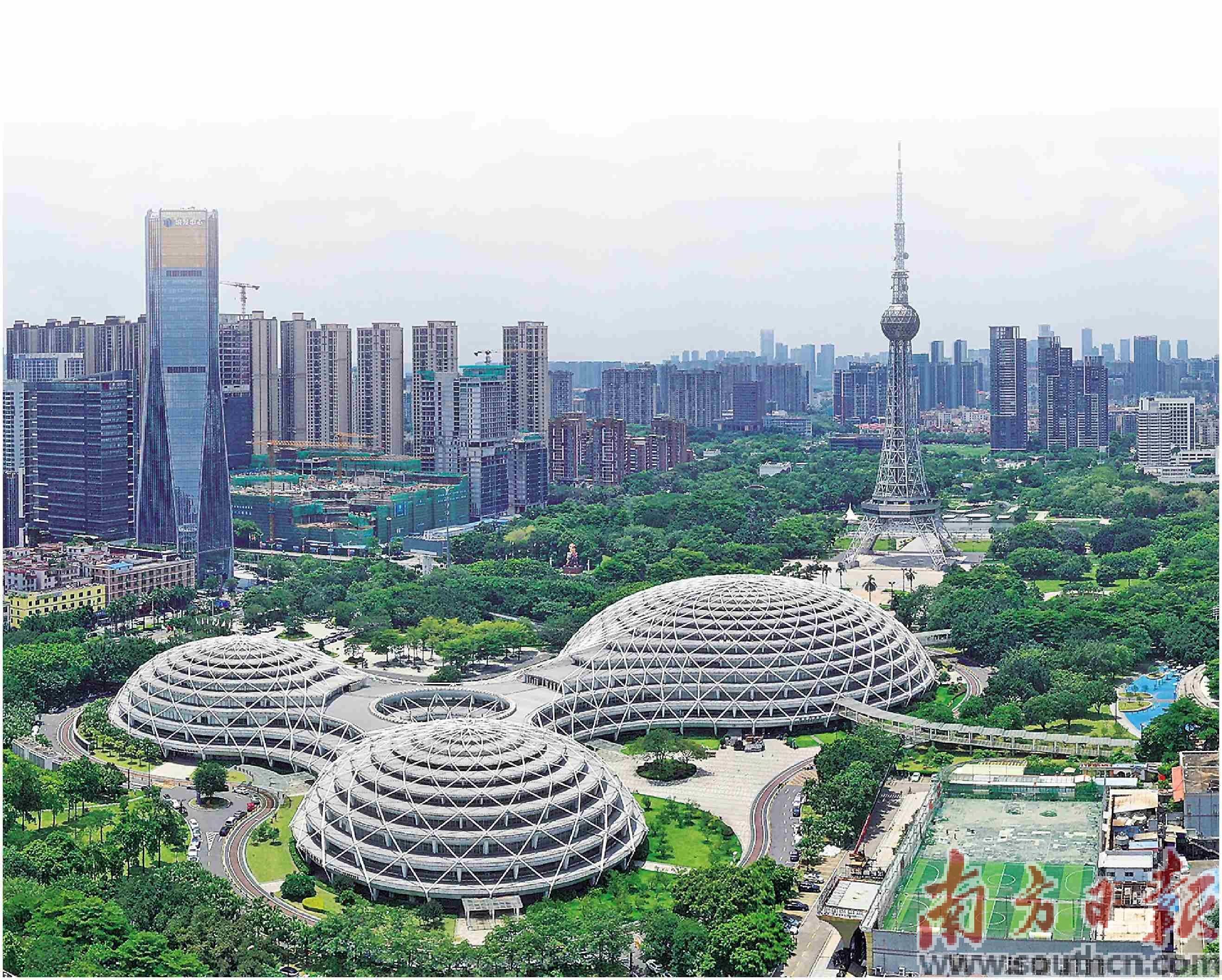
Core Insights - The article highlights the performance of listed companies in Foshan, showcasing their ability to leverage macroeconomic policies and emerging industries for growth [6][7][8]. Group 1: Company Performance - As of August 21, 2023, 13 listed companies from Foshan have released their semi-annual reports, with 6 companies reporting year-on-year revenue growth [6]. - Hisense Home Appliances reported a revenue of 49.34 billion yuan, with a year-on-year growth of 1.44%, while Shunwei Co. achieved a revenue of 1.585 billion yuan, growing by 14.27% [7]. - Foshan's listed companies are capitalizing on the "old-for-new" policy, particularly benefiting the home appliance sector, which is a key industry in Foshan [7]. Group 2: Emerging Industries - New emerging industries such as renewable energy, semiconductors, and big data are becoming significant growth drivers for Foshan's listed companies [8]. - Shunwei Co. reported a revenue of 1.073 billion yuan, with a year-on-year increase of 1.05%, by focusing on power engineering services and products related to the renewable energy sector [8]. - Fuxin Technology achieved a revenue of 270 million yuan, growing by 6.94%, driven by the rapid development of data communication and the demand for high-speed optical modules [9]. Group 3: Challenges and Adaptation - The semi-annual reports also indicate challenges faced by Foshan's listed companies, such as international trade fluctuations and the downturn in the ceramics industry affecting Tianan New Materials, which saw a revenue decline of 6% [10]. - Companies are adapting by transforming their core businesses; for instance, Tianan New Materials is enhancing its distribution network and utilizing social media for brand engagement [11]. - Foshan Energy is expanding its supply chain services, achieving a total revenue of 15.338 billion yuan, with a year-on-year growth of 8.59%, driven by new supply chain initiatives [12].


市场全天高位震荡,三大指数涨跌不一
Dongguan Securities· 2025-08-21 23:31
Market Overview - The A-share market experienced high volatility with mixed performance across major indices, with the Shanghai Composite Index closing at 3771.10, up by 0.13%, while the Shenzhen Component Index fell by 0.06% to 11919.76 [1][2] - The total market capitalization of A-shares reached 101.31 trillion yuan, marking an increase of 15.63 trillion yuan from the end of last year, when it was approximately 85.68 trillion yuan [3] Sector Performance - The top-performing sectors included Agriculture, Forestry, Animal Husbandry, and Fishery, which rose by 1.50%, and Oil and Petrochemicals, which increased by 1.39% [1] - Conversely, sectors such as Machinery Equipment and Defense Industry saw declines of 1.08% and 0.69% respectively [1][2] Concept Indices - Notable concept indices included significant gains in sectors like Combustible Ice and Digital Currency, which rose by 3.12% and 2.38% respectively [2] - In contrast, sectors such as Rare Earth Permanent Magnet and Military Restructuring Concept experienced declines of 2.14% and 2.11% [2][3] Trading Volume and Market Sentiment - The trading volume in the Shanghai and Shenzhen markets reached 2.42 trillion yuan, an increase of 158 billion yuan from the previous trading day, marking the seventh consecutive day of trading volume exceeding 2 trillion yuan [4] - Despite the high trading volume, there was a net outflow of funds, indicating cautious market sentiment among investors [4] Future Outlook - The report suggests that as long as there are no significant fluctuations in the macroeconomic environment, optimistic market sentiment is likely to continue [4] - Recommended sectors for investment focus include Technology, Media, Telecommunications (TMT), Financials, Public Utilities, and Consumer sectors [4]
0821A股日评:上证指数横盘震荡,行业轮动趋势延续-20250822
Changjiang Securities· 2025-08-21 23:30
Core Insights - The A-share market experienced a narrow fluctuation after a high opening, with overall trading volume slightly decreasing. The three major indices showed mixed performance, with the Shanghai Composite Index rising by 0.13% and the Shenzhen Component Index falling by 0.06% [2][12] - Key sectors leading the market included agricultural products (+1.42%), oil and gas petrochemicals (+1.41%), and public utilities (+0.81%), while the electricity and new energy equipment sector saw a decline of 0.99% [12][12] - The market's driving factors included a recovery in the pig farming industry's prosperity, which boosted the agricultural products sector, and rising international oil prices that strengthened the oil and gas petrochemical sector [12][12] Market Performance - As of August 21, 2025, the major indices showed varied performance: Shanghai Composite Index increased by 0.13%, Shenzhen Component Index decreased by 0.06%, and the ChiNext Index fell by 0.47%. The Shanghai 50 Index rose by 0.53%, while the CSI 300 Index increased by 0.39% [12][12] - The market's total transaction volume was approximately 2.46 trillion yuan [12][12] Sector Analysis - On August 21, 2025, the leading sectors in the A-share market included agricultural products (+1.42%), oil and gas petrochemicals (+1.41%), and public utilities (+0.81%). In contrast, the electricity and new energy equipment sector led the declines with a drop of 0.99% [12][12] - Concept-wise, the network security sector rose by 2.08%, and oil and gas extraction increased by 1.61%, while sectors like liquid cooling servers (-3.70%) and copper-clad laminates (-2.83%) faced declines [12][12] Future Outlook - The report maintains a bullish outlook on the Chinese stock market, suggesting that monetary and fiscal support policies may still be forthcoming. Historical experiences indicate that domestic policy initiatives can help the stock market withstand external risks and volatility [12][12] - Investment directions include focusing on non-bank sectors in a "slow bull" market, benefiting from the "anti-involution" trend in metals, transportation, chemicals, lithium batteries, photovoltaics, and pig farming [12][12]
大摩闭门会-关税将造成多大损害;股市将遭遇强风暴还是夏季短暂风暴;对中国 A 股及日本市场的看法
2025-08-21 15:05
Summary of Key Points from Conference Call Records Industry Overview - The records discuss the impact of tariffs on Asian exports and the overall economic growth in the region, particularly focusing on the effects of U.S.-China trade relations and the performance of various markets including India, Japan, and China [1][2][3]. Core Insights and Arguments 1. **Asian Export Performance**: Asian exports have shown limited improvement after a brief rebound, with exports to the U.S. stagnating and non-tech sector exports fluctuating within a narrow range, indicating significant impacts from global economic slowdown [1][2][3]. 2. **Tariff Impact**: Tariffs have had a notable negative effect on both Asian and U.S. economic growth, with U.S. GDP growth expected to slow from 2% in Q2 to 1% in Q4 of 2025, while global growth is projected to decline from 3.9% to 3.5% [2][9]. 3. **Capital Expenditure Stagnation**: U.S. capital expenditures have stagnated, with capital goods imports showing zero growth, which poses challenges for Asian economies, particularly in tech and non-tech sectors [5][9]. 4. **India-U.S. Trade Tensions**: Trade tensions between India and the U.S. may lead to a reduction in Indian exports to the U.S., but the overall impact is deemed manageable, with Indian corporate revenue expected to improve by Q3 2025 due to government policy actions [6][7][25]. 5. **Market Dynamics**: Recent market volatility suggests a significant directional change, with high valuations and risks of downturns in both U.S. and Chinese markets. Financial stocks have outperformed hardware companies, while AI-driven software firms have shown better performance [8][9]. 6. **China's Market Performance**: The onshore Chinese market has outperformed offshore markets, driven by rising long-term bond yields and positive liquidity indicators, with the Shanghai Composite Index reaching its highest level since 2015 [12][13][14]. 7. **Japan's Market Outlook**: Japan's stock market has rebounded strongly but may be overbought, with potential short-term correction risks. Long-term factors supporting the market include U.S. tax reforms and political changes in Japan [18][19]. 8. **Sector Performance in Japan**: Attractive sectors in Japan include construction software, information communication, real estate, and utilities, while the automotive sector faces uncertainties due to trade policies [19][20]. Additional Important Insights 1. **CPI and Deflationary Pressures**: Deflationary pressures from China are spreading across the region, contributing to downward pressure on CPI, which has remained below central bank targets [21][22]. 2. **Investment Strategy in A-shares**: Increasing positions in A-shares can effectively reduce portfolio risk due to their low correlation with global markets, especially during periods of significant volatility [16]. 3. **Monitoring Indicators for China**: Investors should focus on financing balance ratios, government bond yields, and upcoming policy events to assess the sustainability of the Chinese market [15]. 4. **Political Landscape in Japan**: The political situation in Japan remains uncertain, with potential leadership changes that could impact economic policies and market dynamics [27][28]. This summary encapsulates the critical insights and data points from the conference call records, providing a comprehensive overview of the current economic landscape and market dynamics in Asia.
开源晨会-20250821
KAIYUAN SECURITIES· 2025-08-21 14:41
Group 1: Banking Industry - The estimated high-interest time deposits maturing in 2025 amount to approximately 39.7 trillion yuan, with 42% maturing in Q1 [6][7] - The interest rate reduction for 3-year deposits maturing in 2025 is projected to be between 125 to 150 basis points [8] - The average deposit cost rate for listed banks is expected to decrease to 1.61% in 2025 due to the repricing of time deposits [10][11] - The report recommends several banks, including CITIC Bank and Agricultural Bank of China, as beneficiaries of the favorable conditions [12] Group 2: Chemical Industry (Spandex) - The demand for spandex is driven by its increasing penetration in the textile and apparel sectors, with 76% of spandex used for clothing production in 2024 [14][15] - The spandex market is experiencing a significant oversupply, leading to negative profit margins, with average gross profit at -5,217 yuan/ton as of August 2025 [15][16] - The report suggests that leading companies like Huafeng Chemical and Xinxiang Chemical are likely to benefit from the ongoing capacity clearance in the spandex industry [16] Group 3: Public Utilities (Pinggao Electric) - Pinggao Electric reported a revenue of 5.696 billion yuan in H1 2025, a year-on-year increase of 13.0%, with a net profit of 666 million yuan, up 24.6% [17][19] - The company has a strong order backlog, with contract liabilities amounting to 1.715 billion yuan as of June 2025 [19][20] - The report maintains a "buy" rating for Pinggao Electric, citing its solid position in the power grid market [18] Group 4: Pharmaceutical Industry (Prolo Pharmaceutical) - Prolo Pharmaceutical's revenue for H1 2025 was 5.444 billion yuan, reflecting a decline of 15.31% year-on-year, while net profit decreased by 9.89% [21][22] - The CDMO business segment showed rapid growth, achieving a revenue of 1.236 billion yuan, up 20.32% [22] - The report maintains a "buy" rating for Prolo Pharmaceutical, highlighting its strong valuation despite the overall decline in revenue [21] Group 5: Retail Industry (Runben Co., Ltd.) - Runben Co., Ltd. achieved a revenue of 895 million yuan in H1 2025, a year-on-year increase of 20.3%, with a net profit of 188 million yuan, up 4.2% [30][31] - The company plans to distribute a cash dividend of 2.00 yuan per share, with a payout ratio of 43.15% [30] - The report maintains a "buy" rating, emphasizing the company's strong market position in the mosquito repellent and baby care segments [30] Group 6: Technology Industry (Kangguan Technology) - Kangguan Technology launched the KTCAI smart glasses, priced at 1,499 yuan, featuring advanced AI capabilities [34][35] - The global smart glasses market is expected to grow significantly, with a projected CAGR of 119% by 2028 [34] - The report maintains a "buy" rating for Kangguan Technology, forecasting substantial growth in net profit over the next few years [34] Group 7: Overseas Companies (Weimeng Group) - Weimeng Group's revenue for H1 2025 was 775 million yuan, a year-on-year decline of 10.6%, but the adjusted net profit was better than expected [26][27] - The company is focusing on optimizing its SaaS business and expanding its advertising channels [26][28] - The report maintains a "buy" rating, anticipating recovery in the SaaS business and growth from AI applications [26]
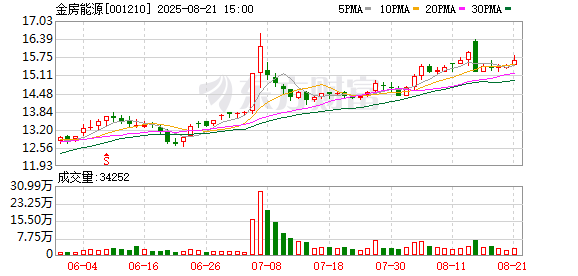
金房能源公布2025半年度分配预案 拟10派2元
Zheng Quan Shi Bao Wang· 2025-08-21 14:27
Company Overview - Jin Fang Energy announced a semi-annual distribution plan for 2025, proposing a cash dividend of 2 yuan per 10 shares (including tax), with a total cash payout of 31.36 million yuan [2] - The cash payout represents 26.17% of the company's net profit, marking the sixth cumulative cash distribution since its listing [2] Financial Performance - For the first half of 2025, Jin Fang Energy reported revenue of 671 million yuan, reflecting a year-on-year growth of 11.06% [2] - The net profit for the same period reached 120 million yuan, showing a year-on-year increase of 36.09% [2] - The basic earnings per share (EPS) stood at 0.76 yuan [2] Industry Context - Within the public utility sector, 10 companies have announced their semi-annual distribution plans for 2025, with Guodian Power leading with a cash payout of 1.784 billion yuan [3] - Jin Fang Energy's cash distribution ranks among the lower end of the spectrum in the industry, with a total payout of 31.36 million yuan [4]
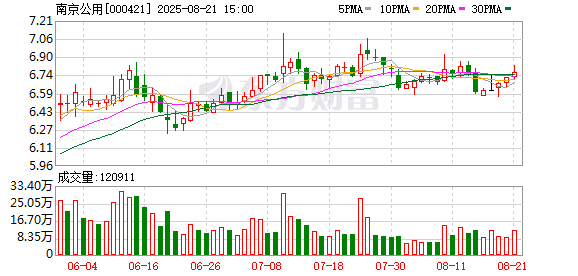
南京公用:2025年半年度报告
Zheng Quan Ri Bao· 2025-08-21 13:46
Core Viewpoint - Nanjing Public Utilities reported a revenue of 2,866,764,488.20 yuan for the first half of 2025, reflecting a year-on-year growth of 16.07% [2] Financial Performance - The company achieved a revenue of approximately 2.87 billion yuan in the first half of 2025 [2] - This represents a growth rate of 16.07% compared to the same period last year [2]