
核电

Search documents
日本公布5500亿美元对美投资“大礼包”细节,涵盖能源、AI等21个战略项目
Guan Cha Zhe Wang· 2025-10-28 14:54
Group 1 - The core of the US-Japan trade agreement includes a potential investment list of $550 billion, with Japan announcing 21 strategic projects valued over $400 billion [1][2] - Japanese companies such as SoftBank and Toshiba are interested in projects in energy, AI, and critical minerals, with individual project investments ranging from $350 million to $100 billion [1][2] - Major projects include investments in nuclear power and small modular reactors led by Westinghouse Electric, with total investments reaching $100 billion for each project [1][2] Group 2 - The agreement includes financial backing from Japanese government-affiliated financial institutions for the listed projects [2] - The investment framework aims to focus on sectors critical to national security, including semiconductors, pharmaceuticals, metals, and energy [5][6] - The US retains the final decision-making power on which projects receive funding, raising concerns among Japanese officials about the strategic significance of selected projects [6]

美国核电扩张计划迈出关键一步:西屋电气获800亿美元大单,全美核电容量目标2050年翻两番
Hua Er Jie Jian Wen· 2025-10-28 14:25
Group 1 - The U.S. government has reached an $80 billion agreement with the owner of Westinghouse Electric to utilize funds from a trade agreement with Japan to build a series of nuclear reactors [1][2] - The investment is sufficient to construct approximately eight Westinghouse AP1000 nuclear power plants, or a combination of large facilities and small modular reactors [1] - The funding is part of a larger $550 billion agreement reached by former President Trump with Japan, which includes up to $100 billion allocated for Westinghouse reactors [1][2] Group 2 - The U.S. government is expected to assist Westinghouse Electric in obtaining land and permits for reactor construction, and may provide loan guarantees or help the company secure new international business [2] - A profit-sharing mechanism is included in the deal, allowing the U.S. government to potentially acquire a significant equity stake in Westinghouse Electric and have the right to force the company to go public [2] - If the value of Westinghouse Electric exceeds $30 billion by 2029, the U.S. government can request an IPO and convert its profit share into a 20% equity stake [2] Group 3 - The nuclear industry faces construction challenges, with a goal of achieving 400 GW of capacity by mid-century, which has led to significant funding efforts [3] - The last two reactors built in the U.S. faced delays and cost overruns, leading to Westinghouse filing for Chapter 11 bankruptcy protection in 2017 [3] - Westinghouse claims that its AP1000 reactor design is validated and can now be scaled for mass production [3]
美国核电复兴提速:谷歌与NextEra签25年购电协议,关闭5年的核电站"起死回生"
美股IPO· 2025-10-28 14:02
Core Viewpoint - The revival of idle nuclear power plants is seen as a cost-effective and quicker solution compared to building new facilities, driven by the explosive demand for electricity from AI infrastructure and carbon neutrality goals [3][6]. Group 1: Project Details - NextEra will lead the restart project of the Duane Arnold Energy Center, a 615 MW nuclear power plant, with an estimated cost exceeding $1.6 billion, aiming to begin power generation in 2029 [1][3]. - Google has signed a 25-year power purchase agreement with NextEra to procure electricity from the Duane Arnold plant, which has been closed for five years [3][4]. - The Duane Arnold plant will be the third U.S. nuclear plant to initiate a restart process, following the Palisades and Three Mile Island plants [3]. Group 2: Industry Trends - The trend of restarting nuclear power plants is supported by similar agreements, such as Microsoft's partnership with Constellation Energy to restart the Three Mile Island plant and the expected reoperation of the Palisades plant this year [5]. - The dual pressures of AI-driven electricity demand and carbon neutrality targets are pushing the industry towards reviving old nuclear reactors rather than waiting for new nuclear technologies to commercialize [6]. Group 3: Safety Concerns - Critics caution that efforts to restart decommissioned nuclear plants must not be rushed and should adhere to strict regulatory standards [7]. - Concerns have been raised regarding the safety of the Duane Arnold plant, which has a design similar to the Fukushima reactor and suffered significant damage during a storm in 2020 [7].


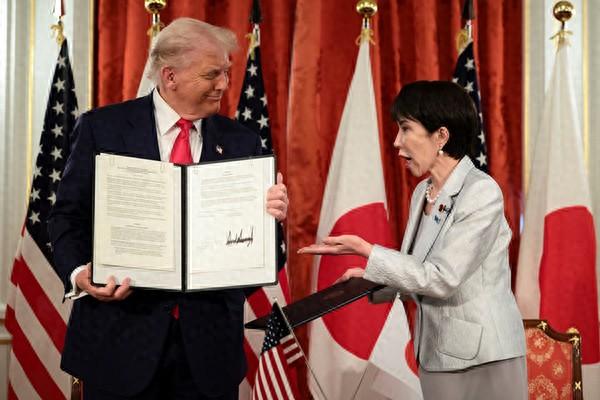
美日首脑会晤:为“美国核电超级大单”买单,高市成功取悦特朗普
Hua Er Jie Jian Wen· 2025-10-28 12:18
Core Viewpoint - The meeting between Japanese Prime Minister Suga Yoshihide and U.S. President Trump focused on mutual economic interests, highlighting a $550 billion investment plan from Japan to the U.S. in key sectors such as energy, AI, and critical minerals [1][2]. Group 1: Investment Agreements - Two agreements were signed, one promoting Japan's $550 billion investment plan in the U.S., focusing on energy, AI, and critical minerals [1]. - The second agreement centers on cooperation in the mining and processing of rare earth and other critical minerals to ensure supply chain security [1]. Group 2: Investment Project Details - The Japanese Ministry of Economy, Trade and Industry released a list of potential investment projects, with participating companies including SoftBank, Toshiba, Mitsubishi Heavy Industries, and Hitachi GE, covering projects ranging from $3.5 million to $100 billion [2]. - Major energy projects include a collaboration with Westinghouse to build AP1000 nuclear reactors and small modular reactors, with total investments expected to reach $100 billion [3][4]. Group 3: Political Dynamics - Analysts noted that Trump did not publicly pressure Japan during the meeting, indicating that Suga successfully managed the relationship, which may lead to smoother economic cooperation [5]. - Suga's commitment to increase Japan's defense spending to 2% of GDP by 2025 was acknowledged positively by the White House, contributing to a favorable atmosphere for discussions [5].
美股异动丨核电股盘前上涨 Cameco涨近16%
Ge Long Hui A P P· 2025-10-28 12:08
格隆汇10月28日|Cameco美股盘前涨近16%,此前美国政府与西屋电气公司(Westinghouse)签署800亿美 元的协议来建造核电反应堆,这个战略伙伴关系涉及博枫资产管理公司和Cameco Corp. ...
中国广核:前三季度净利润同比下降14.14% 核电机组总上网电量同比增长3.17%
Xin Lang Cai Jing· 2025-10-28 12:05
Core Viewpoint - China General Nuclear Power Corporation (CGN) reported a decline in net profit for the first three quarters of 2025, attributed to the overall electricity market conditions and a decrease in market electricity prices [1] Financial Performance - In Q3 2025, CGN's revenue was 20.556 billion yuan, a decrease of 10.21% year-on-year [1] - The net profit for Q3 2025 was 2.624 billion yuan, down 8.81% compared to the same period last year [1] - For the first three quarters of 2025, CGN's revenue totaled 59.723 billion yuan, reflecting a decline of 4.09% year-on-year [1] - The net profit attributable to shareholders for the first three quarters was 8.576 billion yuan, a decrease of 14.14% year-on-year [1] Operational Metrics - The total electricity generated by CGN's operational nuclear power units for the first three quarters was approximately 172.179 billion kilowatt-hours, representing a year-on-year increase of 3.17% [1] - The electricity generated by CGN's subsidiaries was about 135.746 billion kilowatt-hours, which is a year-on-year increase of 4.15% [1]
中国广核:第三季度营收205.6亿元人民币。
Xin Lang Cai Jing· 2025-10-28 11:50
Core Viewpoint - China General Nuclear Power Corporation reported a revenue of 20.56 billion RMB in the third quarter [1] Group 1 - The company's revenue for the third quarter reached 20.56 billion RMB, indicating a significant financial performance [1]
中国广核:第三季度净利润26.24亿元,下降8.81%
Xin Lang Cai Jing· 2025-10-28 11:36
中国广核公告,第三季度营收为205.56亿元,同比下降10.21%;净利润为26.24亿元,同比下降8.81%。 前三季度营收为597.23亿元,同比下降4.09%;净利润为85.76亿元,同比下降14.14%。 ...
亚太股市集体飘绿,金价跌破3930美元关口,国内金饰跌破1200元
2 1 Shi Ji Jing Ji Bao Dao· 2025-10-28 08:29
Market Overview - The A-share market experienced a high and then a pullback, with the Shanghai Composite Index briefly surpassing 4000 points, reaching a ten-year high, while the ChiNext Index rose over 1% at one point. By the end of the trading day, all three major indices closed lower. The total trading volume in the Shanghai and Shenzhen markets was 2.17 trillion yuan, a decrease of 191.3 billion yuan from the previous trading day [1] Sector Performance - The market saw rapid rotation of hotspots, with the Fujian sector experiencing a surge, leading to over ten stocks hitting the daily limit. Pingtan Development achieved six consecutive limit-ups in eight days, while Xiamen Port and Xiamen Airport also saw limit-ups. The nuclear power sector was active, with Dongfang Tantalum achieving three limit-ups in four days, and Antai Technology achieving two consecutive limit-ups. The robotics sector also performed well, with Qingdao Double Star and Yashihua both achieving three consecutive limit-ups, and several other stocks hitting the daily limit. The military industry sector saw a sharp rise, with Jianglong Shipbuilding hitting the daily limit with a 20% increase [1] Declining Sectors - The non-ferrous metals sector collectively declined, with Tongling Nonferrous Metals hitting the daily limit down. Other sectors that saw significant declines included wind power equipment and oil and gas [2] Gold Market Dynamics - International gold prices experienced a sharp drop, with spot gold briefly falling below $3921 per ounce, and both spot and COMEX gold prices declining over 1% [4] - Domestic gold jewelry prices were significantly reduced, with some brands' prices falling below 1200 yuan per gram. Notable price changes included Lao Miao Gold at 1192 yuan per gram (down 28 yuan), Chow Sang Sang at 1199 yuan per gram (down 24 yuan), and Chow Tai Fook at 1198 yuan per gram (down 25 yuan) [5] Factors Influencing Gold Prices - The recent gold price correction is attributed to three main factors: changes in the macro environment, including the easing of the U.S. government shutdown crisis and reduced expectations of trade friction and geopolitical conflicts, which have weakened gold's safe-haven demand; technical selling pressure due to an overbought condition; and changes in the U.S. dollar and Treasury yields, with a slight increase in the 10-year U.S. Treasury yield reflecting enhanced market risk appetite [6]
A股收评:沪指跌0.22%盘中站上4000点,福建板块掀涨停潮
2 1 Shi Ji Jing Ji Bao Dao· 2025-10-28 07:53
Market Overview - The market experienced a pullback after an initial rise, with all three major indices turning negative. The Shanghai Composite Index fell by 0.22%, the Shenzhen Component Index decreased by 0.44%, and the ChiNext Index dropped by 0.15% [1][2] - The Shanghai Composite Index briefly surpassed the 4000-point mark, reaching a ten-year high during the trading session [1][2] - The total trading volume in the Shanghai and Shenzhen markets was 2.15 trillion yuan, a decrease of 192.3 billion yuan compared to the previous trading day [1][2] Sector Performance - The Fujian sector saw a surge, with over ten stocks hitting the daily limit, including Pingtan Development, which achieved six consecutive limit-ups in eight days. Other stocks like Xiamen Port Development and Xiamen Airport also reached their daily limits [1][2] - The nuclear power sector was active, with Dongfang Tantalum Industry achieving three limit-ups in four days, and Antai Technology securing two consecutive limit-ups [1][2] - Robotics concept stocks strengthened, with Qingdao Double Star and Yashichuangneng both achieving three consecutive limit-ups, alongside other stocks like Ningbo Jingda and Fangzheng Electric also hitting their daily limits [1][2] - The military industry sector saw a rapid increase, with Jianglong Shipbuilding hitting the maximum limit of 20% [1][2] Declining Sectors - The non-ferrous metals sector experienced a collective decline, with Tongling Nonferrous Metals hitting the daily limit down [1][2] - Sectors with notable declines included non-ferrous metals, wind power equipment, and oil and gas [1][2]