信托

Search documents
信托业持续推进风险处置
Jin Rong Shi Bao· 2025-08-19 01:17
Core Viewpoint - Huaxin Trust is making progress in risk resolution by announcing the acquisition of trust beneficiary rights from individual investors by Dalian Anding, with a deadline for signing by September 25, 2025 [1][2] Group 1: Company Developments - Dalian Anding, established on July 31, 2023, will acquire eligible individual investors' trust beneficiary rights and is fully controlled by Dalian State-owned Financial Capital Management and Operation Co., Ltd. [1] - Since September 2020, Huaxin Trust has issued 17 announcements regarding delayed payments, involving 27 trust products, indicating ongoing risk management efforts [2] - Earlier in 2023, Huaxin Trust signed agreements with beneficiaries of specific trust plans, committing to pay within seven working days after signing [2] Group 2: Industry Context - The trust industry has faced risks due to rapid growth, mismanagement, and regulatory changes, prompting companies to explore risk resolution strategies [2][3] - Other trust companies, such as Xinda Trust and Jianyuan Trust, have also implemented risk resolution plans, indicating a broader trend in the industry [3][4] - Regulatory bodies are emphasizing the need for improved business norms and a comprehensive supervision system to enhance the industry's risk resilience [5][6]
北上广后厦门接棒!带来哪些新尝试?
Jin Rong Shi Bao· 2025-08-18 14:07
Core Viewpoint - Xiamen has achieved two significant breakthroughs in real estate trust registration, marking the establishment of China's first trust property transfer registration during the trust's duration and the first dual-trustee family service trust in the country [1][2]. Group 1: Innovations in Trust Registration - The "Xiamen Trust - Tonghui No.1 Special Trust" allows for the addition of real estate as trust property during its duration, addressing a previously unmet need due to policy gaps [2][3]. - The pilot scheme broadens the definition of trust property registration and includes innovative measures such as adding real estate to trust property, purchasing real estate with trust funds, changing trustees, and altering beneficiaries [3]. Group 2: Family Wealth Management - The dual-trustee model in Xiamen caters to family wealth inheritance needs, allowing shared property to generate stable income for elderly care while ensuring property distribution to children under certain conditions [3]. - This model not only supports the elderly's quality of life but also facilitates orderly wealth transfer within families [3]. Group 3: Broader Implications for Trust System - Xiamen's approach exemplifies how policy innovation can translate into public welfare, potentially inspiring other cities to explore differentiated practices in trust property registration [4][6]. - The reform aims to democratize trust services, making them accessible to ordinary families, thus expanding the application of trust systems beyond high-net-worth individuals [5][6].
广发银行一年25次“甩卖”不良资产,谁受益?
Xin Lang Cai Jing· 2025-08-18 06:31
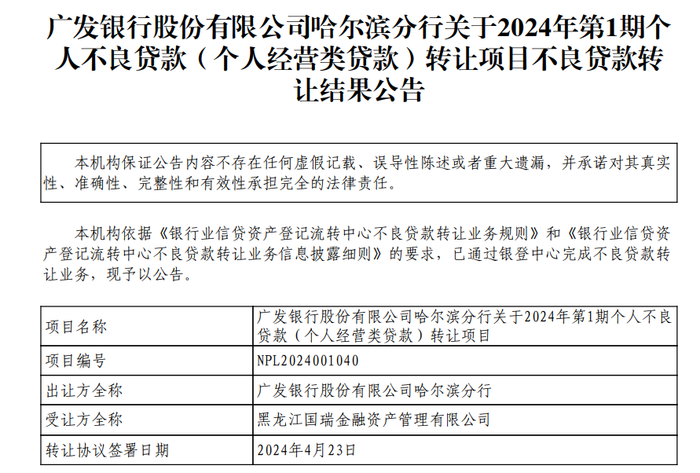
Core Viewpoint - Guangfa Bank is actively seeking buyers for its non-performing assets, having transferred a total of 327 billion yuan in non-performing asset rights in 2024, with a final transaction value of 21 billion yuan, indicating a strong focus on asset cleanup and risk management [1][12]. Group 1: Non-Performing Asset Transfers - In 2024, Guangfa Bank conducted 11 transfers of non-performing asset rights, with 7 of these being acquired by Guangdong Yuecai Trust, totaling an original asset amount of 267.47 billion yuan, and final transaction value of 14.57 billion yuan, reflecting a significant discount of approximately 50% [2][3]. - The bank's non-performing asset rights transfer to Huaneng Guicheng Trust involved an original amount of 4.86 billion yuan, sold for 2.14 billion yuan, equivalent to 44% of the original value, marking it as a notable transaction among the 11 transfers [3][12]. - Guangfa Bank's strategy includes batch transfers of non-performing asset debts, with a total original amount of 32.27 billion yuan, further diversifying its asset disposal methods [3][12]. Group 2: Financial Performance and Asset Quality - As of the end of 2023, Guangfa Bank reported a non-performing loan rate of 1.58%, a decrease of 6 basis points from the previous year, with non-performing loans amounting to 326.1 billion yuan, down by 10.4 billion yuan [13][14]. - The bank's total assets reached 3.51 trillion yuan, with a year-on-year growth of 2.68%, and net profit increased by 3.16% to 160.19 billion yuan [13][14]. - The bank's approach to managing non-performing assets has included significant provisions for credit impairment, with amounts of 254.85 billion yuan, 286.96 billion yuan, and 227.11 billion yuan from 2021 to 2023, indicating a proactive stance on risk management [14][16]. Group 3: Industry Context - The non-performing loan transfer market has seen a significant increase, with a reported 598 projects in the first three quarters of 2024, a year-on-year increase of 54.9%, and total amounts reaching 1.627 trillion yuan, double that of the previous year [6][12]. - The real estate sector continues to exhibit high non-performing loan rates, with Guangfa Bank's real estate-related non-performing loan rate at 6.21%, the highest among 11 major joint-stock banks [8][9]. - In response to the challenges in the real estate sector, Guangfa Bank approved loan extensions and adjustments totaling 353.59 billion yuan for qualifying real estate companies in 2023 [12][14].

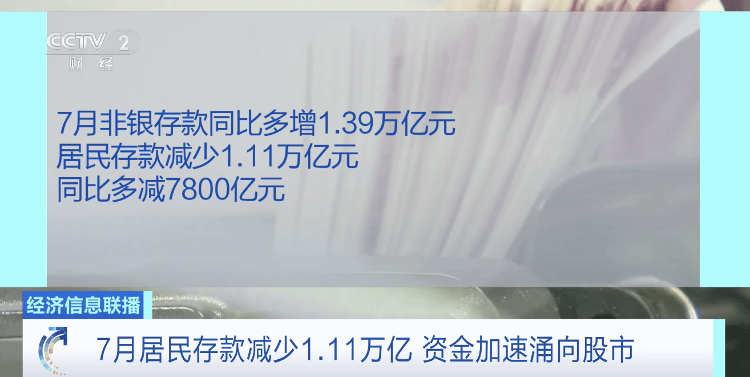
7月居民存款减少1.11万亿 资金加速涌向股市
Sou Hu Cai Jing· 2025-08-18 03:16
Group 1 - Non-bank deposits increased significantly in July, with a year-on-year increase of 1.39 trillion yuan, while resident deposits decreased by 1.11 trillion yuan, indicating a clear "seesaw effect" [3] - The continuous decline in deposit rates, a strong stock market, and rising demand for wealth management among residents have driven funds from resident deposits to non-bank institutions [3] - The balance of resident deposits in China has exceeded 160 trillion yuan, and with the recent rate cuts, maturing fixed-term deposits are less likely to be renewed, potentially flowing into bank wealth management products or directly into the capital market [5] Group 2 - The A-share market has been steadily rising since the beginning of the year, with the Shanghai Composite Index increasing by 3.74% in July and trading volume surging over 40% month-on-month, indicating a significant increase in market activity [7] - As the "slow bull" market becomes a consensus among investors, there is an acceleration in the reallocation of resident wealth, with funds likely to flow more into institutional equity products or directly into the stock market [7] - Long-term trends suggest that the shift of deposits will become a norm, providing continuous liquidity to the capital market, while more quality innovative enterprises will be listed for financing, creating wealth for residents [9]
助贷新规前夜资金大迁徙:银行拒高息资产 信托资金走俏
2 1 Shi Ji Jing Ji Bao Dao· 2025-08-18 01:07
Core Viewpoint - The implementation of the new regulations on internet lending by the National Financial Regulatory Administration is causing a significant shift in the lending landscape, leading to a migration of funds within the industry as banks and consumer finance companies adjust their strategies to comply with the new rules [1][2][3]. Group 1: Regulatory Impact - The new regulations explicitly require banks to clarify the cost structure in their agreements with lending platforms, aiming to control the overall financing costs and prevent hidden fees [2][3]. - The regulations have created a tiered funding landscape, where platforms with over 60 billion yuan in scale can offer rates below 24%, while smaller platforms often resort to higher rates, leading to increased credit risk [2][3][4]. Group 2: Funding Migration - As banks tighten their funding, trust companies and commercial factoring firms are emerging as alternative funding sources for lending platforms, filling the gaps left by traditional banks [5][6]. - Trust funds, previously sidelined due to cost disadvantages, are becoming more active in the consumer finance market as they seek new growth opportunities amid reduced funding from smaller banks [6][7][8]. Group 3: Competitive Landscape - The competition among lending platforms has intensified, particularly for quality assets with rates below 24%, as larger platforms leverage their customer base and data advantages to dominate negotiations with funding sources [3][4]. - Smaller lending platforms are facing significant challenges in securing funding as they are increasingly excluded from the lists of approved partners by banks and consumer finance companies [4][10]. Group 4: Alternative Funding Channels - In addition to trust funds, commercial factoring and financing leasing companies are being considered as potential funding sources, although their capacity to fill the funding void is limited due to regulatory constraints [10][12]. - The regulatory environment is tightening around commercial factoring, with new guidelines expected to restrict their involvement in consumer lending, further complicating the funding landscape for smaller platforms [12][13].
入市步伐加快 7月标品信托成立显著回暖
Shang Hai Zheng Quan Bao· 2025-08-17 23:59
Core Viewpoint - The trust funds are accelerating their entry into the market amid a structural market trend, with significant growth in the establishment of trust products, particularly in bond and equity investments [1] Group 1: Trust Fund Market Trends - In July, the number of established standard trust products increased by over 17% month-on-month [1] - Both bond investment and equity investment trust products saw significant month-on-month growth in establishment numbers [1] Group 2: Investment Strategies - Leading trust companies are actively promoting "fixed income plus" strategies, increasing allocations to convertible bonds, REITs, and other rights-related assets [1] - The decline in risk-free interest rates is creating continuous structural opportunities in the capital market, prompting institutional funds to accelerate their market entry [1] Group 3: Asset Allocation - Equity assets are becoming a necessary option for asset allocation as institutional funds seek to capitalize on emerging opportunities [1]
入市步伐加快 七月标品信托成立显著回暖
Shang Hai Zheng Quan Bao· 2025-08-17 13:36
Group 1 - The trust fund market is experiencing a structural shift, with an increase in the number of trust products established, particularly in the "standard product" category, which saw a 17.55% month-on-month growth in July [2][3] - The total number of asset management trusts established in July reached 2,295, marking a 10.5% increase from the previous month, although the total disclosed scale decreased by 6.88% to 77.682 billion [2] - The bond and equity investment trust products also showed significant growth, with bond investment trusts increasing by 15.59% to 1,142 products and equity investment trusts rising by 19.57% to 55 products [2] Group 2 - The trend of shifting focus from traditional fixed income to "fixed income plus" products is becoming mainstream among trust institutions, driven by the decline in risk-free interest rates [3] - Trust companies are diversifying their portfolios by investing in REITs and convertible bonds, indicating a strategic shift to adapt to current market conditions [3] - The overall market risk appetite is expected to increase, with sectors like technology and innovative pharmaceuticals showing global competitiveness, making "fixed income plus" products attractive for investors seeking stable returns [3] Group 3 - There is a long-term trend of increasing trust fund participation in the capital market, supported by regulatory guidance encouraging banks and trust funds to engage more actively [4][5] - Trust companies are optimistic about the future of the Chinese capital market, planning to leverage their long-term investment advantages to increase their capital market allocations [4] - The shift of trust funds towards the securities market is anticipated to accelerate, driven by regulatory policies and the evident profitability of capital markets [5]
“踩雷”建元信托5年后,千红制药两度和解,仅收回半数投资款
Hua Xia Shi Bao· 2025-08-16 11:11
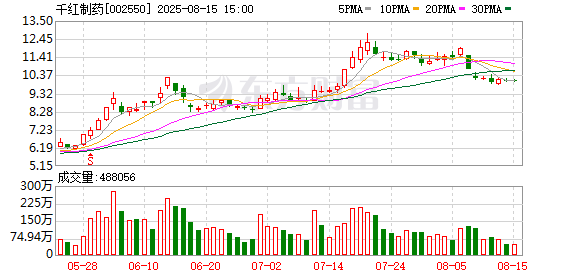
Core Viewpoint - Qianhong Pharmaceutical has reached a settlement with Jianyuan Trust to recover half of its investment in the "Chuangying 51" trust plan after a five-year dispute, highlighting the ongoing challenges faced by companies in managing trust investments and the impact of external economic conditions on asset performance [2][3][4]. Group 1: Settlement Details - On August 14, Qianhong Pharmaceutical announced it had reached a settlement with Jianyuan Trust regarding the "Chuangying 51" trust plan, resulting in a one-time payment of 56.9943 million yuan, which will be recognized as approximately 48.45 million yuan in profit for the 2025 fiscal year [2][5]. - The total investment in the two trust products purchased in 2018 amounted to 340 million yuan, with both products experiencing overdue payments [3][4]. - The settlement allows Qianhong to retain part of the trust beneficiary rights, indicating a strategy to balance risk while recovering some capital [6]. Group 2: Background of Trust Products - The "Chuangying 51" trust plan was set to mature on December 29, 2019, while the "Ruiying 64" plan was due on August 15, 2019, but both faced overdue payments due to the underlying assets' lack of liquidity and the borrower's financial difficulties [3][4]. - The total amount involved in the lawsuits against Jianyuan Trust was approximately 376.1866 million yuan, with overdue principal totaling 340 million yuan [4]. Group 3: Industry Context - The trend of companies facing challenges with trust investments is not isolated, as evidenced by other firms like Hengyin Technology and Chengdu Road and Bridge, which have also reported significant overdue amounts from trust products [7]. - The current economic environment has led to a preference for lower-risk fixed-income products among listed companies, with 36 companies reportedly investing a total of approximately 8.9 billion yuan in trust products since early 2025, reflecting a shift in investment strategy [7].


保险和信托在资产规划上有哪些差异?
Sou Hu Cai Jing· 2025-08-15 16:38
Core Insights - The article discusses the differences between insurance and trust as important tools in asset planning, highlighting their unique characteristics and functions [1][2][3] Group 1: Basic Concepts - Insurance is described as a risk transfer mechanism where policyholders pay premiums to transfer specific risks to the insurance company, which provides financial support upon the occurrence of insured events [1] - Trust is characterized as a property management system based on trust, where the grantor entrusts their property rights to a trustee, who manages the trust assets for the benefit of the beneficiaries [1] Group 2: Functional Analysis - The core function of insurance in asset planning is risk protection, providing financial support in cases of health issues, accidents, or death, while some savings-type insurance can offer limited capital appreciation [2] - Trust primarily focuses on asset management and inheritance planning, allowing for flexible arrangements regarding beneficiaries' rights and distribution conditions [2] Group 3: Control and Flexibility - In insurance, policyholders have limited control over the insurance assets, as payouts are contingent on contract terms, while trust allows grantors to retain some control through trust provisions [2] - Insurance contracts typically have fixed terms, whereas trusts offer more flexibility in determining the duration of the trust, which can be short-term or long-term [3] Group 4: Tax Treatment - Insurance payouts often enjoy tax benefits, such as life insurance death benefits being exempt from personal income tax, while premium payments generally do not receive direct tax deductions [3] - Trust taxation is more complex, with various tax regulations applicable to different types of trusts and their management, potentially requiring income tax on investment earnings [3]
助贷行业出现资金大迁徙
2 1 Shi Ji Jing Ji Bao Dao· 2025-08-15 13:17
Core Viewpoint - The implementation of the new regulations on internet lending by the National Financial Regulatory Administration is causing a significant shift in the lending landscape, with banks and consumer finance companies reallocating resources towards compliant platforms while trust and commercial insurance funds are stepping in to fill the funding gaps left by traditional lenders [2][4][6]. Group 1: Regulatory Impact - The new regulations require banks to clearly define service fees and comprehensive financing costs in their agreements with lending platforms, directly addressing the high-cost lending issues in the industry [4][5]. - The regulations have led to a clear segmentation in the lending market, with high-interest lending platforms facing rejection from banks and consumer finance companies, while those with lower rates are experiencing intense competition [6][7]. Group 2: Funding Sources - Trust funds, previously sidelined due to cost disadvantages, are becoming increasingly active in the consumer finance market as traditional funding sources tighten [9][10]. - Trust companies are focusing on high-quality asset packages, particularly those associated with leading lending platforms, as they seek to mitigate risks while capitalizing on competitive returns [11][12]. Group 3: Alternative Financing Channels - In addition to trust funds, commercial factoring and financing leasing companies are being considered as alternative funding sources, although their capacity to fill the gaps is limited due to regulatory constraints [14][15]. - The regulatory environment is tightening around commercial factoring and financing leasing, which may further restrict their ability to engage in consumer lending activities [16][17].