低空经济

Search documents
亿航智能联合Allur开拓中亚市场,头部厂商订单批量落地中 | 投研报告
Zhong Guo Neng Yuan Wang· 2025-09-29 07:16
Core Viewpoint - The low-altitude economy sector has shown resilience, outperforming the Shanghai Composite Index during the period from September 15 to September 28, with various indices reflecting mixed performance in comparison to major benchmarks [1][2]. Market Review - The Wind Low Altitude Economy Index increased by 0.38%, outperforming the Shanghai Composite Index by 1.47 percentage points, but underperformed the CSI 300 Index by 0.24 percentage points and the ChiNext Index by 3.96 percentage points [1][2]. - The National General Aviation Index decreased by 0.20%, outperforming the Shanghai Composite Index by 0.90 percentage points, but underperformed the CSI 300 Index by 0.82 percentage points and the ChiNext Index by 4.54 percentage points [1][2]. Policy Developments - The Ministry of Industry and Information Technology and six other departments released a work plan for the petrochemical industry focusing on emerging industries such as new energy and low-altitude economy [3]. - The Shanghai Hongqiao International Central Business District announced support policies for the high-quality development of the low-altitude economy, aiming to build a robust industrial ecosystem [3]. Company Developments - EHang signed a cooperation agreement with Kazakhstan's Allur Group to explore the Central Asian market, planning to procure 50 eVTOL aircraft and establish a local assembly base [3]. - Zero Gravity successfully completed a strategic financing round of nearly 100 million yuan and received orders for 200 aircraft, including a strategic cooperation agreement with Anhui Jinzhong Leasing for 150 aircraft [4]. - WoFei ChangKong established strategic partnerships with Chuanfa Leasing and Jinshi Leasing, totaling 300 aircraft orders [5]. - Lanying Aviation secured 120 aircraft orders from multiple clients, bringing its total to 480 aircraft orders from nine clients [5]. Investment Recommendations - The national strategy is focusing on the low-altitude economy, with various regions implementing development policies and state-owned enterprises establishing low-altitude economy companies [6]. - Key application scenarios include low-altitude logistics and tourism, with leading eVTOL manufacturers receiving significant orders, indicating a clear trend towards scaled development in the industry [6]. - Relevant companies in the sector include those involved in power/energy systems, complete aircraft manufacturing, air traffic control, and maintenance services [6].

法治筑基,民营经济扬帆起航〡粤商向新
Sou Hu Cai Jing· 2025-09-29 06:27
Core Points - The World Bank's recent survey indicates that over 97% of businesses view China's courts as fair and reliable in resolving commercial disputes, placing it at the forefront among over 100 economies surveyed [1] - The implementation of the "Private Economy Promotion Law" in May signals a commitment to enhancing the legal business environment, which is crucial for the healthy and high-quality development of the private economy [1][4] - Guangdong province has introduced a series of policies to support the development of the private economy, including measures to optimize the business environment and stimulate market vitality [3][6] Legal Framework - The "Private Economy Promotion Law" is the first foundational law specifically addressing the development of the private economy in China, establishing its legal status and emphasizing the importance of a fair competitive environment [4][5] - The law encourages the government to support and guide private economic development, ensuring that legal frameworks provide long-term stability and predictability for businesses [4] Policy Measures - Guangdong has launched multiple initiatives, such as the "20 Measures to Optimize the Business Environment" and "12 Measures to Stimulate Market Vitality," aimed at enhancing the operational landscape for private enterprises [1][6] - The establishment of the Private Economy Development Bureau in Guangdong is intended to coordinate efforts and ensure the effective implementation of policies supporting private sector growth [5] Economic Development Initiatives - Guangdong's government has introduced specific policies to foster innovation in key industries, including artificial intelligence and robotics, with financial incentives for top-performing companies [6][7] - The province has also implemented measures to reform the investment and financing system, aiming to clarify government responsibilities and broaden financing channels for businesses [6] Business Environment - Guangdong has been recognized for four consecutive years as having the best business environment in China, reflecting its commitment to creating a market-oriented, law-based, and international business climate [8] - Recent initiatives have been introduced to combat online infringement issues affecting private enterprises, ensuring a supportive network for business growth [8] Reform and Efficiency - The province has streamlined the process for starting a business, allowing for company registration to be completed in just one working day, significantly enhancing market access [9] - Legal protections for businesses and entrepreneurs have been strengthened, with measures in place to ensure fair competition and timely resolution of disputes [9][10]

【财经分析】政策利好和市场需求双轮驱动,“低空+文旅”如何激活消费新引擎
Xin Hua Cai Jing· 2025-09-29 03:31
Core Insights - The integration of low-altitude airspace and cultural tourism ("low-altitude + cultural tourism") is emerging as a significant trend, driven by favorable policies and market demand, creating substantial growth opportunities in the consumer market [1][4][5] Group 1: Industry Trends - The 2025 World Manufacturing Conference highlighted "low-altitude + cultural tourism" as a hot topic, showcasing new experiences such as drone performances and helicopter sightseeing [1] - The low-altitude economy is undergoing transformative changes in technology, scenarios, and regulations, with drones becoming the mainstay and electric vertical takeoff and landing (eVTOL) vehicles leading development [2][3] - McKinsey predicts that the global urban air traffic market will reach $300 billion by 2030, with cultural tourism scenarios accounting for over 25% [4] Group 2: Investment and Financing - Zero Gravity Aircraft Industry (Hefei) Co., Ltd. successfully completed a strategic financing round of nearly 100 million yuan, indicating strong capital interest in the "low-altitude + cultural tourism" sector [2][3] - The introduction of cultural tourism capital into the company is expected to accelerate breakthroughs in core product development and the commercialization of green aviation flight camps [3] Group 3: Challenges and Opportunities - The low-altitude tourism sector faces challenges such as inadequate infrastructure, airspace management issues, and a shortage of skilled personnel, which could hinder sustainable development [6][7] - There is a pressing need for suitable low-altitude products tailored to tourist attractions, as many scenic spots currently lack the capacity to invest in low-altitude projects due to poor profitability [6][7] Group 4: Policy and Ecosystem Development - The establishment of a flexible and dynamic airspace resource management mechanism is crucial for enhancing the efficiency of low-altitude airspace management [8] - Industry experts emphasize the importance of a collaborative ecosystem involving policy, technology, scenarios, and market dynamics to facilitate the large-scale development of "low-altitude + cultural tourism" [7][8]
【毕马威深化国资国企改革系列】国资国企发展低空经济正当时——第五篇
Sou Hu Cai Jing· 2025-09-29 03:02
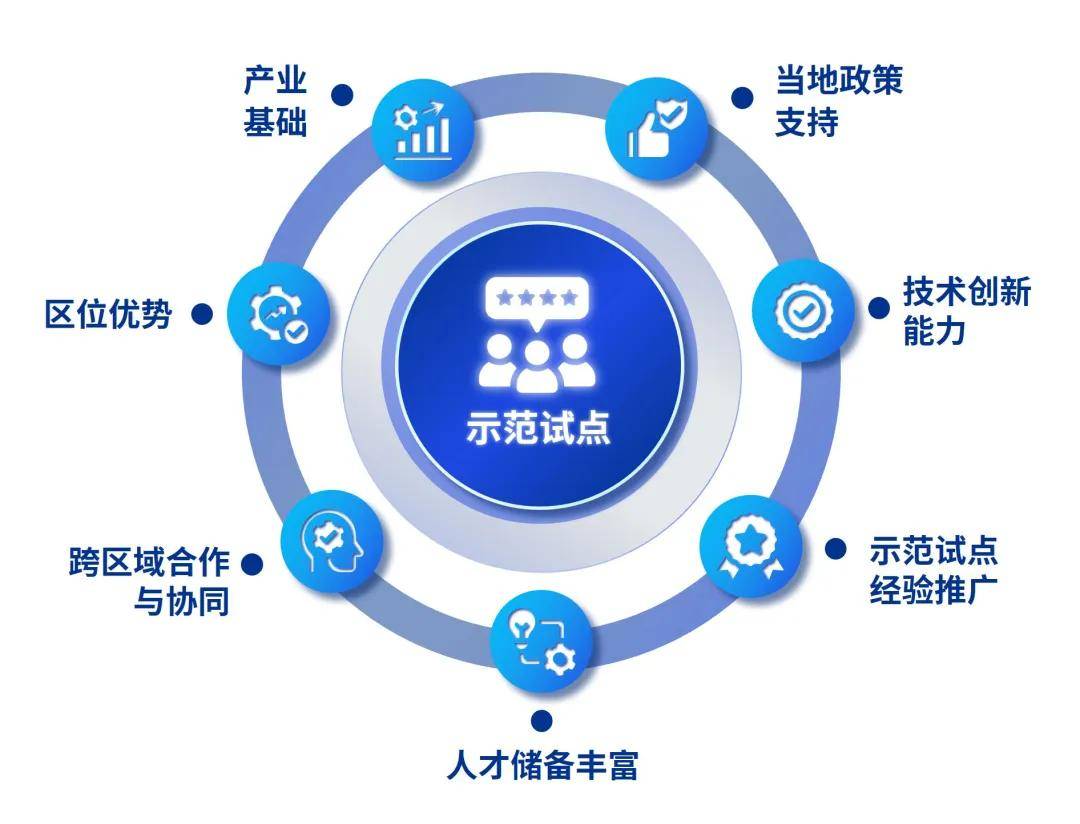
Core Viewpoint - The article emphasizes the importance of state-owned enterprises (SOEs) in developing the low-altitude economy, focusing on enhancing core functions and competitiveness while exploring differentiated development strategies and collaborative models [1]. Group 1: Low-altitude Economy Demonstration Pilot - The demonstration pilot can break traditional airspace usage restrictions through airspace management reform and regulatory innovation, providing clear institutional guarantees for enterprises [2]. - It promotes the centralized construction and operation of infrastructure, allowing companies in drone logistics and eVTOL manufacturing to share facilities, significantly reducing operational costs [2]. - The pilot encourages technological innovation and product iteration by promoting benchmark application scenarios and providing platforms for technical validation and commercialization [2]. Group 2: Recommendations for SOEs - SOEs should enhance research and development in key technology areas such as low-altitude aircraft manufacturing and intelligent control, leveraging their advantages in information technology and big data [6]. - Collaboration with local governments, private enterprises, universities, and research institutions is essential to build a low-altitude economic ecosystem and integrate resources for large-scale development [7]. - Establishing a comprehensive safety management system and risk warning mechanism is crucial for monitoring low-altitude flight risks and improving emergency response capabilities [9]. Group 3: Talent Development and Policy Engagement - SOEs are encouraged to deepen cooperation with educational and research institutions to develop a talent training system that supports the low-altitude economy [10]. - Active participation in the formulation of policies and regulations is vital for SOEs to enhance the scientific and practical applicability of the legal framework governing the low-altitude economy [11]. - The establishment of the Low-altitude Economy Development Department by the National Development and Reform Commission in December 2024 highlights the government's commitment to this sector [12].
专论 || 张永伟:从出口“新三样”到聚合“三大件”
Zhong Guo Qi Che Bao Wang· 2025-09-29 02:27
Group 1 - The core idea of the article emphasizes the importance of "aggregated thinking" in driving the collaborative development of three key sectors: smart vehicles, smart robots, and low-altitude economy, which are interconnected through technology, supply chains, and application fields [1][3][4] - The article outlines that the current fourth industrial revolution is characterized by the convergence of various technologies, such as artificial intelligence and new energy, which were previously developed independently [1][2] - The potential of the "three key components" (smart vehicles, power batteries, and new energy represented by photovoltaics) is highlighted as a significant driver for export and economic growth, especially in the post-pandemic context [3][4] Group 2 - The shared industrial chain among smart vehicles, smart robots, and low-altitude flying is crucial for the aggregation effect, with over 60% of the automotive supply chain being applicable to these sectors [4][5] - The article discusses the rapid development of the perception field, where costs have significantly decreased, exemplified by the price drop of automotive laser radar from over 100,000 yuan to around 800 yuan within five years [5][6] - The demand for computing power in vehicles has increased, with modern cars requiring 300 to 400 chips, indicating a trend towards a unified operating system across vehicles, robots, and drones [6][7] Group 3 - The article suggests that the manufacturing sector must establish advantages quickly, drawing parallels with the electric vehicle industry, which saw a dramatic increase in sales from 1 million to 10 million units in five years due to a 50% reduction in component costs [9][10] - It is anticipated that the robotics sector may experience a similar "electric vehicle moment" in the near future, with prices potentially dropping from over 1 million yuan to 100,000 or 200,000 yuan [10][11] - The article emphasizes the need for component manufacturers to expand into the aggregation field, leveraging existing supply chains and fostering cross-industry collaborations to accelerate market entry [11][12] Group 4 - The internationalization of the autonomous and automated driving industry is highlighted, with increasing global demand for Chinese components and solutions, particularly in the robotics sector [12] - The article calls for a shift in thinking from single-industry development to a coordinated approach that breaks down barriers between industries, technologies, and policies [12][13] - It stresses the importance of infrastructure integration and policy adaptation to support the rapid development of industries like autonomous driving, low-altitude economy, and smart robotics [12][13]
“十四五”中国累计就业补助超4700亿 五大举措打造稳就业全链条支持体系
Chang Jiang Shang Bao· 2025-09-28 22:57
Group 1 - The Ministry of Human Resources and Social Security (MoHRSS) reported that during the "14th Five-Year Plan" period, China has spent over 470 billion yuan on employment support, with 138.9 billion yuan allocated for job retention subsidies [1][2] - The number of participants in the basic pension insurance has reached 1.072 billion, an increase of over 73 million compared to the end of the "13th Five-Year Plan," with the participation rate rising from 91% to over 95% [1] - The total scale of three social insurance funds has reached 69.27 trillion yuan, with a cumulative surplus of 9.81 trillion yuan, indicating a stable support capacity for social security [1] Group 2 - The MoHRSS emphasized improvements in social security services, making them more accessible and efficient, with over 60 billion instances of non-face-to-face services provided during the "14th Five-Year Plan" [2] - The social security fund is projected to reach 3.22 trillion yuan by August 2025, with 2.26 trillion yuan transferred from state-owned capital to bolster the fund [2] - A systematic policy framework has been established to support employment, including fiscal incentives, tax reductions, and financial support, with an average annual entrepreneurial guarantee loan balance of 300 billion yuan [2] Group 3 - China is focusing on market-oriented and socialized employment directions, enhancing employment policies, and expanding employment channels, particularly for youth [3] - A comprehensive public employment service system has been established, with nearly 9,000 labor markets created to extend services to grassroots and rural areas [3] - The emergence of new industries and occupations has been significant, with 72 new professions announced over five years, driven by advancements in digital technology and green economy initiatives [3][4] Group 4 - The introduction of new professions has broadened employment opportunities for workers, allowing for diverse career choices [4] - The MoHRSS is actively developing new occupational standards and enhancing training efforts to facilitate young people's entry into these new fields [4]
低空经济“飞入”西部之城
Zheng Quan Ri Bao· 2025-09-28 16:06
Core Viewpoint - Qinghai is leveraging its natural advantages in renewable energy to develop a low-altitude economy, attracting numerous technology companies and fostering various intelligent computing projects [1][5]. Group 1: Low-altitude Economy Development - The launch of the Xining Low-altitude Intelligent Flight Application Platform aims to integrate low-altitude economic activities with urban management, ecological monitoring, and emergency rescue [1][2]. - The platform consists of multiple operational interfaces, including a dispatch center and an algorithm center, which enhance the safety and intelligence of low-altitude flights [2][3]. - The establishment of a comprehensive Beidou satellite navigation system provides precise positioning services across Xining, supporting the low-altitude economy's safety and operational efficiency [3][4]. Group 2: Infrastructure and Technological Support - The "Digital Tower" model developed by China Tower Corporation in Qinghai is designed to support various low-altitude applications, including communication and navigation, and has been rapidly deployed across the province [4][6]. - Qinghai's unique geographical location and abundant clean energy resources facilitate the construction of zero-carbon data centers, providing stable and low-cost energy for the computing industry [5][6]. Group 3: Application Scenarios and Challenges - The low-altitude economy in Qinghai presents diverse application scenarios, such as ecological monitoring, highland logistics, emergency rescue, and tourism, benefiting from the region's low population density and favorable airspace conditions [6][7]. - Challenges remain in adapting drone technology to the complex high-altitude environment, necessitating collaboration among government, enterprises, and research institutions to refine development strategies [7].
【晶采观察·解码“十四五”】5年72个新职业“落地” !照见中国经济新活力
Yang Guang Wang· 2025-09-28 13:56
Core Insights - The Ministry of Human Resources and Social Security has announced 17 new occupations and 42 new job types, reflecting the ongoing evolution of the job market in China [1] - During the 14th Five-Year Plan period, a total of 72 new occupations have been released, indicating a trend towards innovation-driven development and structural optimization of the economy [1][2] Group 1: New Occupations - New occupations such as "Barbecue Chef" and "Coffee Processing Worker" highlight the adaptation to technological advancements and changing consumer demands [1] - Over half of the newly announced occupations are directly related to new technologies and industries, such as "Drone Swarm Flight Planner," which is linked to the low-altitude economy [1] - Occupations like "Sleep Health Manager" and "Travel Photography Customizer" reflect the increasing consumer focus on quality of life and personalized services [1] Group 2: Economic and Employment Implications - The emergence of new jobs is a response to the upgrading of industrial structures, exemplified by the role of "New Energy Vehicle Maintenance Worker" in the rapidly growing electric vehicle sector [2] - New occupations are creating broader and more diverse career choices, which are essential for stimulating innovation and shaping new economic advantages [2] - The Ministry emphasizes the importance of skill training related to new occupations, indicating a high demand for training programs that often sell out quickly [2]
安徽宣布:进入经济大省行列
Zheng Quan Shi Bao Wang· 2025-09-28 13:10
Group 1 - The total economic output of Anhui Province has crossed two trillion thresholds, with GDP rising from 3.87 trillion yuan at the end of the 13th Five-Year Plan to an expected 5.06 trillion yuan in 2024, marking an increase of 1.4 trillion yuan over five years [1] - The number of high-tech enterprises in the province has increased by 1.7 times, and the number of specialized and innovative "little giant" enterprises has grown by 7.6 times compared to the end of the 13th Five-Year Plan [1] - Over 80% of R&D funding and technology projects, as well as over 90% of provincial industrial innovation research institutes, are led by enterprises [1] Group 2 - Anhui Province ranks first in both automobile and new energy vehicle production in China, and it also leads the nation in automobile exports [2] - The province holds the largest global market share in driver chips and ranks first in DRAM memory production capacity in China [2] - The development evaluation of the artificial intelligence industry in Anhui has risen to the fifth position nationwide [2] - Anhui is at the forefront of quantum technology industry concentration and is leading the commercialization process of fusion energy [2] - The low-altitude economy development level of Anhui is among the top in the country [2]
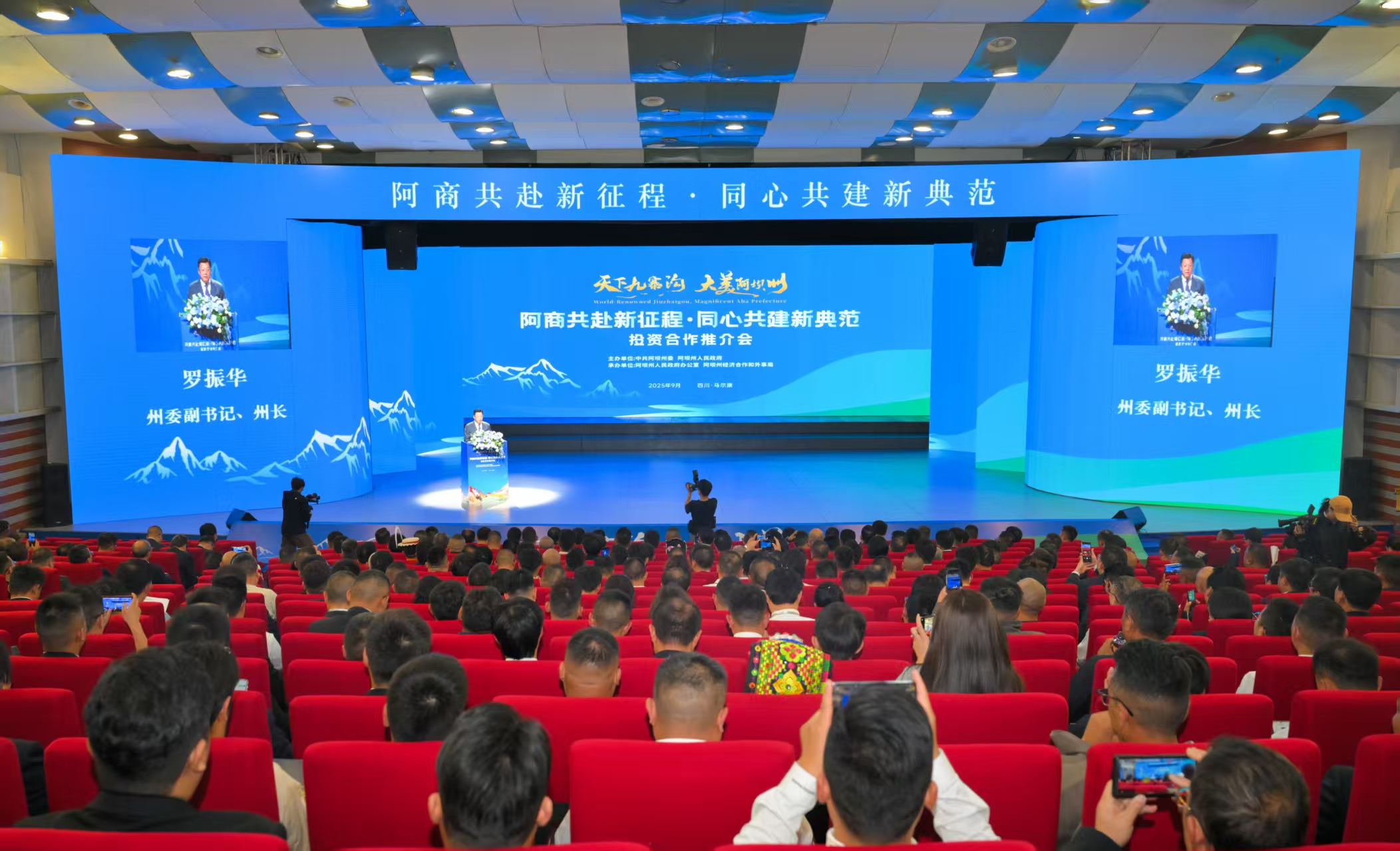
四川阿坝州举办“阿商共赴新征程·同心共建新典范”投资合作推介会
Zhong Guo Fa Zhan Wang· 2025-09-28 09:32
Group 1 - The investment promotion conference in Aba, hosted by the Aba Prefectural Committee and the local government, aimed to attract investment and cooperation in various sectors [2][3] - Aba is recognized as a significant clean energy base in China, with planned development of nearly 100 million kilowatts in hydropower, photovoltaic, and wind energy [2] - The region is also a strategic reserve for lithium resources, with proven lithium ore reserves of 165 million tons [2] - Aba is an international ecological and cultural tourism destination, featuring 4 national 5A scenic spots, 29 4A scenic spots, and 77 3A scenic spots [2] - The conference introduced over 100 advantageous projects across various industries, including cultural tourism, specialty agriculture and animal husbandry, clean energy, medical tourism, low-altitude economy, ecological drinking water, modern logistics, and intelligent computing [2] Group 2 - The local government committed to implementing national and provincial policies to support enterprise development, including financial support, investment incentives, and retention of electricity [3] - Specific measures such as "12 incentive and subsidy policies," "28 relief measures," and "15 main body cultivation policies" were highlighted to ensure direct benefits to enterprises [3] - The government aims to enhance the business environment by focusing on financial, talent, land, and technology support, as well as optimizing governance, market, legal, and social conditions [3] - The introduction of "Huiqi Tong" allows enterprises to access Aba's policies and services conveniently [3]