
农药

Search documents
利尔化学:长江证券、中信证券等多家机构于7月25日调研我司
Zheng Quan Zhi Xing· 2025-07-25 09:35
Core Viewpoint - The company has reported strong performance in the first half of 2025, driven by increased sales and prices of certain products, as well as cost reduction and efficiency improvements. However, the competitive landscape in the pesticide industry remains challenging, necessitating close monitoring of industry trends [2][11]. Group 1: Company Performance - The company's revenue for Q1 2025 reached 2.086 billion, a year-on-year increase of 49.99%, while net profit rose to 153 million, up 219.9% year-on-year [11]. - The company aims to enhance performance through timely completion of key projects, optimization of existing processes, and strengthening strategic customer collaborations [3]. Group 2: Market Outlook - The company is optimistic about the future of glyphosate and refined glyphosate, anticipating continued market demand growth despite ongoing industry competition [4][6]. - The refined glyphosate project in Hunan has commenced production, with normal operational conditions reported [5]. Group 3: International Expansion - The company plans to establish international trade subsidiaries to accelerate product registration and expand local marketing channels, while also enhancing the role of its formulation division in international markets [7]. Group 4: Future Projects - The company is actively working on the cyanide project at the Jingzhou base, which is currently in the preliminary stages pending board approval [8]. - The company is optimistic about the market prospects for chlorantraniliprole, with ongoing efforts in market layout and production process optimization [9]. Group 5: Shareholder Changes - The company is in communication with its controlling shareholder regarding potential changes, which will require a series of operations and state-owned asset approvals [10].



国光股份(002749) - 002749国光股份投资者关系管理信息20250725
2025-07-25 09:28
Group 1: Company Overview - Sichuan Guoguang Agricultural Chemical Co., Ltd. has a technical service model that requires a significant number of terminal promotion personnel, leading to the recruitment of over 300 recent university graduates in 2025, primarily from agricultural colleges [3][4] - The company's technical marketing and service team exceeds 1,000 personnel [3] Group 2: Industry Landscape - The plant growth regulator industry consists of approximately 450 companies, with around 110 being registered pharmaceutical companies. As of the end of 2024, there are 1,734 registered certificates in China, with 33 companies holding 10 or more certificates, totaling 632 certificates [4] - The industry is characterized by small and dispersed enterprises, which is favorable for the development of leading companies [4] Group 3: Financial Performance and Shareholder Returns - The company approved a mid-term dividend plan for 2025 at the 2024 annual general meeting, aligning with the three-year shareholder return plan (2024-2026) [5] - The gross profit margin in Q1 2025 increased due to a higher sales volume of high-margin products and lower prices of some raw materials compared to the previous year [10] Group 4: Market Trends and Growth Potential - The plant growth regulator industry is expected to grow faster than the average growth rate of the pesticide industry, driven by the relatively recent application of these products in China and the presence of many untapped markets and crops [6] - The prices of raw materials required for the company's main plant growth regulator products have remained stable throughout the year [7] Group 5: Market Share Expansion Strategies - The company aims to enhance market share through continuous new product development, optimization of existing products, increasing the number of product registration certificates, and conducting field efficacy trials [8] - Quality management and supply capacity improvements are prioritized in production, while marketing strategies include matching technical service personnel with marketing plans and optimizing the distributor system [8]

东海证券晨会纪要-20250725
Donghai Securities· 2025-07-25 08:19
Group 1: Equipment Manufacturing Industry - The equipment manufacturing industry has shown robust growth in the first half of the year, with industrial added value increasing by 10.2%, outpacing the overall industrial growth by 3.8 percentage points [5][6] - Key sectors such as railway, shipbuilding, aerospace, and other transportation equipment manufacturing saw a significant increase of 16.6% in industrial added value [5] - The government plans to implement new growth stabilization activities in the equipment manufacturing sector, focusing on intelligent and green transformation [6] Group 2: Agricultural Chemical Industry (Guangxin Co., Ltd.) - Guangxin Co., Ltd. is a major player in the agricultural chemical sector, focusing on an integrated production chain utilizing phosgene, with a licensed capacity of 320,000 tons/year [11] - The agricultural chemical prices are currently at a relatively low point, but there is potential for recovery as global inventory levels decrease and outdated capacities are eliminated [12] - The company has a strong cash flow, with total liquid assets projected to be 8.685 billion yuan in 2024, supporting its capacity upgrades and cost optimization [12][13] Group 3: Investment Recommendations - The report suggests focusing on innovation and technology investment in emerging fields, while traditional sectors may see improved competitive dynamics [8] - Guangxin Co., Ltd. is expected to achieve total revenue of 5.021 billion yuan, 5.449 billion yuan, and 5.967 billion yuan for the years 2025 to 2027, with corresponding net profits of 939 million yuan, 1.118 billion yuan, and 1.226 billion yuan [13]

美国EPA提议批准麦草畏,产品有望底部反转!
Tebon Securities· 2025-07-25 07:58
Investment Rating - The industry investment rating is "Outperform the Market" (maintained) [2] Core Viewpoints - The report highlights the potential reopening of the market for the herbicide glyphosate in the U.S. following the EPA's proposal to approve three glyphosate-containing products, which is expected to drive new demand [4][5] - Glyphosate's demand is anticipated to grow due to the elimination of high-toxicity pesticides and the promotion of glyphosate-resistant crops, particularly in the U.S. market [5] - The report suggests that glyphosate's price has reached a historical low, indicating significant potential for price increases in the future [5] Market Performance - The report provides a market performance comparison, indicating a decline of 17% for the basic chemical sector compared to the CSI 300 index [3] Supply and Demand Analysis - The supply side is concentrated, with major producers like BASF and domestic companies in Jiangsu and Zhejiang provinces [5] - The report notes that the demand for glyphosate is expected to benefit from the promotion of glyphosate-resistant crop seeds [5] Price Outlook - The report expresses optimism regarding the future price increase potential for glyphosate, with current prices at approximately 54,000 yuan per ton, significantly lower than the peak price of 145,000 yuan per ton in 2014, suggesting a potential increase of about 169% [5] Recommended Stocks - The report recommends关注标的: Yangnong Chemical, Changqing Co., Zhongnong United, and Runfeng Co. as potential investment opportunities in the glyphosate market [5]


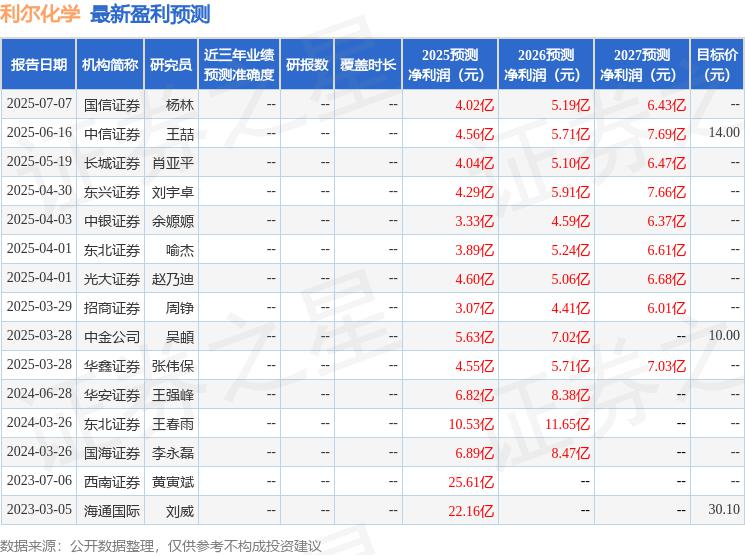
利尔化学(002258) - 002258利尔化学投资者关系管理信息20250725
2025-07-25 07:40
Group 1: Company Performance - The company's performance in the first half of 2025 improved due to increased sales and prices of certain products, as well as cost reduction and efficiency gains [2] - The agricultural pesticide industry is showing signs of improvement in supply and demand, although competition remains fierce and prices are still low [2] Group 2: Future Strategies - Key measures to enhance performance include completing key projects on time, optimizing existing processes, improving product quality, and reducing production costs [3] - The company plans to strengthen strategic customer cooperation, accelerate new product registration, and establish an international trade subsidiary to expand local marketing channels [3] Group 3: Market Outlook - The company remains optimistic about the future of glyphosate prices, anticipating continued market demand despite intense competition [3] - The 20,000 tons/year enzymatic glyphosate project in Hunan has been put into production and is operating normally [3] Group 4: International Expansion - The company aims to enhance strategic customer cooperation, expedite new product registration, and develop international formulation business [4] - Plans include building a market intelligence network in key global markets such as North America and South America to inform future product strategies [4] Group 5: Project Developments - The cyanide project at the Jingzhou base is still in the preliminary stages, pending board approval [4] - The company is optimistic about the market prospects for chlorantraniliprole and is currently optimizing production processes [4]
2025年中国茶皂素行业发展背景、产业链、产量、市场规模及发展趋势研判:行业产量基本维持在2万吨左右,未来生产工艺有望进一步优化[图]
Chan Ye Xin Xi Wang· 2025-07-25 01:17
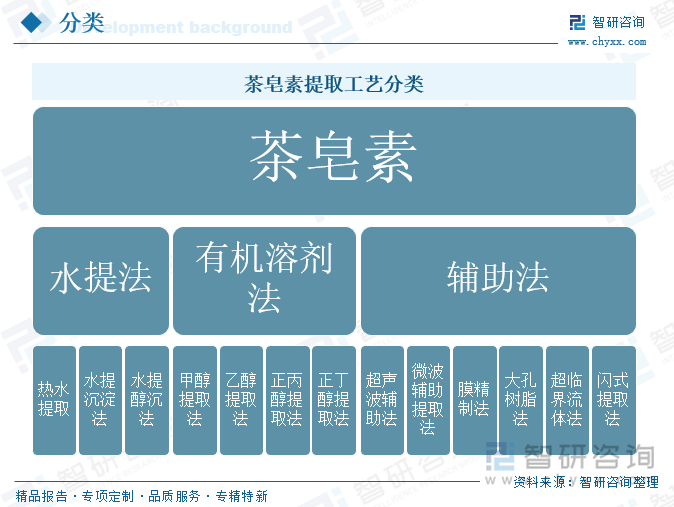
Core Viewpoint - The tea saponin industry is experiencing steady growth due to increasing market demand across various sectors such as pharmaceuticals, cosmetics, and agriculture, with production expected to rise from 20,000 tons to 27,700 tons by 2024, reflecting a year-on-year increase of 1.5% [1][12]. Industry Overview - Tea saponin, also known as tea saponin glycoside, is derived from the Camellia family plants and exhibits multiple surface-active properties, making it suitable for applications in daily chemicals, agriculture, and pharmaceuticals [3][4]. - The extraction methods for tea saponin include water extraction, organic solvent extraction, and assisted methods, with advancements in technology expected to enhance purity levels significantly [4][22]. Production and Supply Chain - The primary production regions for tea saponin in China include Hunan, Jiangxi, and Zhejiang, which are rich in tea resources and have established processing technologies [1][12]. - The cultivation area for tea trees is projected to grow from 4.598 million acres in 2019 to 5.250 million acres by 2024, driven by rising consumer demand for tea [8]. Market Dynamics - The market size for the tea saponin industry is anticipated to grow from 1.2 billion yuan in 2019 to 2.7 billion yuan by 2024, with a compound annual growth rate (CAGR) of 17.6% [14]. - The chemical pesticide industry in China is also expanding, with raw material production increasing from 2.1181 million tons in 2019 to 3.675 million tons by 2024, further driving the demand for tea saponin as a pesticide additive [10]. Competitive Landscape - The tea saponin industry is primarily composed of small to medium-sized enterprises, with key players including Hangzhou Jiusheng Biotechnology Co., Ltd., Jiangxi Green Sea Oil Co., Ltd., and Guangdong New Dadi Biotechnology Co., Ltd., leveraging regional resource advantages [16][18]. Future Trends - There is an expected increase in the supply of high-purity tea saponin products due to advancements in extraction technologies, which will enhance production efficiency and purity [22]. - The demand for tea saponin is projected to rise across various sectors, including personal care, agriculture, and healthcare, as it serves as a natural alternative to synthetic products [23]. - The industry is also moving towards greener practices, with a focus on sustainable production methods and the replacement of traditional petrochemical products with natural alternatives [24].
周期行业“反内卷”联合电话会议
2025-07-25 00:52
Summary of Conference Call Notes Industry Overview - The conference call focused on the chemical and coal industries, discussing the impact of government policies and market dynamics on various sectors within these industries [1][2][4]. Key Points and Arguments Chemical Industry - The Ministry of Industry and Information Technology (MIIT) is conducting assessments of outdated production capacity, particularly in Hunan, where the lifespan has been reduced to 20 years. This could lead to significant elimination of outdated capacity in the chemical sector, enhancing market confidence in future profit reversals [1][2]. - In the soda ash industry, natural soda ash is expected to increase its market share to 60% due to environmental advantages, aiding in price recovery. Companies to watch include Yuanxing Energy and Zhongyan Chemical [1][2]. - The urea industry has an operating rate exceeding 80%, with about 30% of old facilities over 20 years old. The elimination of outdated capacity is expected to benefit supply-demand balance, with a focus on companies like Hualu Hengsheng and Hubei Yihua [1][2]. - Glyphosate and glufosinate prices are showing signs of bottoming out, driven by low overseas inventory and seasonal demand peaks. Domestic and international companies are voluntarily halting production, which may lead to price increases. Key companies include Jiangshan Co., Xingfa Group, and Lier Chemical [1][3]. - The organic silicon sector is experiencing strong demand, with DMC apparent demand growth exceeding 20% year-on-year from January to May. The industry operating rate is around 70%, and if this growth continues, rates may exceed 80% in the second half of the year. Companies to monitor include Xin'an Chemical and Xingfa Group [1][3]. Coal Industry - The coal industry is responding to overproduction issues through regulatory measures. A recent document from the Energy Bureau indicates that production exceeding approved capacities will be scrutinized, marking the beginning of a "de-involution" phase aimed at reducing excessive competition and improving resource utilization [4][5]. - The coal market has seen a relatively loose supply-demand balance this year, with prices declining until a slight rebound in late June due to seasonal demand. The current price range of 600-650 RMB/ton is seen as a price floor, with expectations that further declines are unlikely [5][7][8]. - The policies implemented are primarily focused on managing production rather than capacity, similar to past measures taken to address severe oversupply issues. The current market is not in a state of excess, with overproduction mainly observed in Xinjiang [6]. Construction Materials Industry - The construction materials sector is experiencing a "de-involution" phenomenon, characterized by overcapacity leading to intensified price competition. Companies are collaborating to limit production and stabilize prices, particularly in the cement and glass industries [9][10]. - The future focus for the cement industry includes strict enforcement of production limits and carbon emission management, with expectations for stricter policies starting in 2026 [12]. Lithium Carbonate Market - The lithium carbonate market is facing significant internal competition, with production costs varying widely. Prices have dropped from a peak of 600,000 RMB/ton to a low of 60,000 RMB/ton, leading to many hard rock lithium mines operating at a loss. The government aims to increase self-sufficiency in strategic resources, which may lead to supply-side adjustments [15][16]. - Companies to watch in the current market environment include Zhongkuang Resources, which is expected to stabilize its business valuation as prices recover. Other companies with lighter historical burdens, like Shenxinfu, are also worth monitoring [17]. Other Important Insights - The overall sentiment in the chemical and coal industries is cautiously optimistic, with expectations for price recovery and improved profitability as outdated capacities are phased out and regulatory measures take effect [1][2][4][8]. - The construction materials sector is anticipated to benefit from economic recovery and demand rebound, presenting potential investment opportunities [14].
诺 普 信(002215) - 深圳诺普信作物科学股份有限公司投资者关系活动记录表
2025-07-24 11:42
Group 1: Company Strategy and Brand Development - The company focuses on a single specialty crop industry chain strategy to meet high-end fresh food consumption demands, aiming to become a world-class agricultural enterprise [1] - The brand "爱莓庄" is positioned as the leading blueberry brand, with plans to expand into second and third-tier cities while maintaining a unified market brand image [1][2] - The company emphasizes the importance of delivering high-quality blueberries to consumers and increasing the proportion of key accounts (KA) while actively exploring the Southeast Asian market [1] Group 2: Market Analysis and Competitive Advantage - The fresh blueberry market in China has seen rapid growth, with Yunnan's unique climate allowing for winter and spring harvests, filling the domestic seasonal fruit gap [3] - Yunnan's blueberries have high barriers to entry due to unique climate, seedling patents, capital investment requirements, land scarcity, and complex technology, ensuring a competitive market advantage [3][7] - Imported blueberries primarily come from Chile and Peru, which supply the market in the second half of the year, creating a year-round supply structure [3] Group 3: Business Operations and Product Development - The company’s juice deep processing business is centered on fresh fruit research, production, and sales, with the Guangdong Yunfu factory focusing on NFC and HPP juice production [4] - The pesticide business is stable, focusing on endogenous growth and industry capacity reduction, with a shift towards crop-oriented strategies and integrated product and service offerings [5] - The company faces challenges in land acquisition for blueberry cultivation in Yunnan, emphasizing the importance of land quality standards and management [6] Group 4: Risk Management and Talent Development - Blueberry cultivation risks include extreme natural disasters and long-term insufficient sunlight, which can impact production [7] - The company prioritizes talent management and education, fostering a sense of identity among "farmers" and establishing a gradual partnership system for farm managers [7]

美邦股份跌9.30%,上榜营业部合计净卖出834.97万元
Zheng Quan Shi Bao Wang· 2025-07-24 11:01
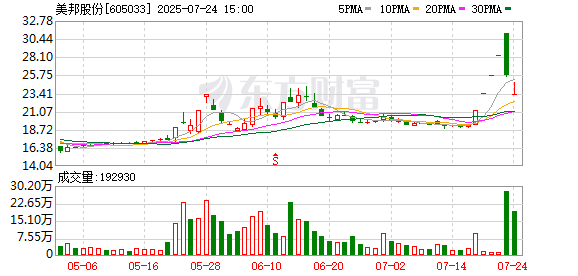
Group 1 - The stock of Meibang Co., Ltd. (605033) fell by 9.30% today, with a turnover rate of 14.27% and a trading volume of 454 million yuan, showing a fluctuation of 7.17% [2] - The stock was listed on the Shanghai Stock Exchange's watchlist due to a daily price deviation of -9.95%, with a total net sell of 8.35 million yuan from brokerage seats [2] - The top five brokerage seats accounted for a total transaction of 57.88 million yuan, with a buying amount of 24.76 million yuan and a selling amount of 33.11 million yuan, resulting in a net sell of 8.35 million yuan [2] Group 2 - In the past six months, the stock has appeared on the watchlist six times, with an average price drop of 1.00% the day after being listed and an average drop of 7.06% over the following five days [3] - Today, the stock saw a net inflow of 9.77 million yuan from main funds, including a net inflow of 7.38 million yuan from large orders and 2.39 million yuan from medium orders, with a total net inflow of 81.44 million yuan over the past five days [3] - The company's Q1 report indicated a revenue of 289 million yuan, a year-on-year decrease of 7.27%, and a net profit of 29.95 million yuan, down 32.60% year-on-year [3]

开源证券:草甘膦供给优化、需求稳增 国内反内卷+海外供给扰动有望助力景气反转
Zhi Tong Cai Jing· 2025-07-24 02:37
Core Viewpoint - The report from Kaiyuan Securities indicates a positive outlook for the glyphosate industry, driven by sufficient order backlogs and low inventory levels among major companies since May 2025, leading to continuous price increases for new orders [1] Supply Side - Global glyphosate production capacity is approximately 1.18 million tons per year, with Monsanto's overseas capacity at 370,000 tons (31.4%) and China's capacity at 810,000 tons (68.6%). Major producers include Xingfa Group, Fuhua Chemical, Xin'an Chemical, and Jiangshan Chemical, with the top four companies accounting for 70.7% of the total capacity, indicating a high concentration in the industry [2] - New glyphosate production facilities in China are classified as restricted projects, suggesting limited new capacity in the future [2] Demand Side - Glyphosate's downstream markets include agricultural (over 90%) and non-agricultural sectors, primarily for genetically modified crops. Non-agricultural uses include lawn care, forestry, and shrub weed control. Since May 2025, there has been a significant increase in orders from South America, with major companies reporting strong order intake. The market demand for glyphosate is expected to grow due to the increase in genetically modified crop planting areas and the ban on other herbicides like paraquat [3] Price Review - Since 2020, global agricultural price fluctuations due to the Russia-Ukraine conflict and significant cost increases in raw materials like yellow phosphorus, liquid chlorine, and caustic soda have led to a substantial rise in glyphosate prices from Q4 2021 to mid-2022. However, since the second half of 2022, as major manufacturers have gradually restored production and the overseas market has digested previous inventory, glyphosate prices have entered a downward cycle. Since May 2025, major companies have maintained a strong pricing stance, with new order prices continuing to rise [4] Industry Outlook - In 2023, the EU's renewal of glyphosate regulations has imposed higher purity standards. A special meeting on the "anti-involution" phenomenon in the glyphosate industry was held in Beijing on March 13, 2025, aimed at addressing issues of excessive competition, resource duplication, and shrinking profit margins to promote sustainable industry development [5]