铁路运输

Search documents
陕西铁路2026年春运今日启动 预计发送旅客1863万人次
Xin Lang Cai Jing· 2026-02-02 04:36
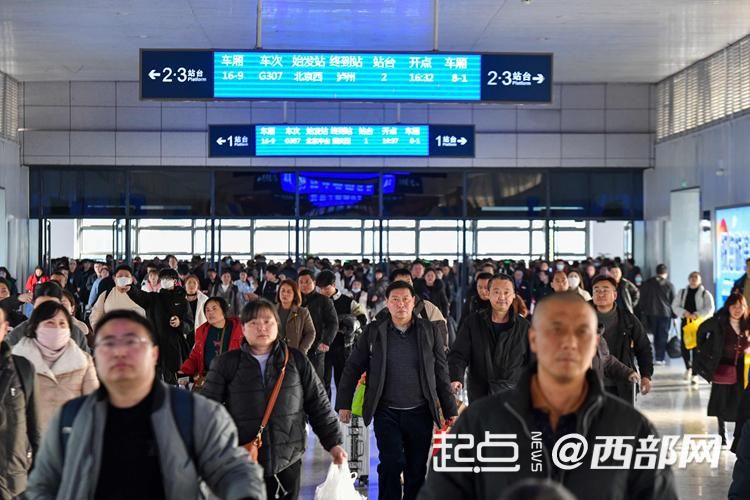
2月2日,2026年铁路春运正式拉开帷幕。本次春运自2月2日起至3月13日止,节前15天、节后25天,共计 40天。中国铁路西安局集团有限公司(以下简称西安铁路局)预计累计发送旅客1863万人次,日均46.6万 人次,较2025年增长7%,创历年新高。 结合售票数据及出行需求分析,2026年陕西铁路春运客流将稳步增长,预计累计发送旅客1863万人次,日 均46.6万人次,较2025年增长7%;高峰日预计出现在春运期间,当日发送旅客有望达到66.5万人次。从客 流方向看,节前客流集中于北京、广深、沪宁杭地区,节后则聚焦成渝、武汉、南昌等地以及湖南地区, 京沪高铁、京广高铁、西成客专等干线及西安、西安北站为核心客流集中区域。 陕西铁路2026年春运今日启动 西安火车站 春运期间,西安铁路局将加开旅客列车共计126.5对。其中,日常线32对,包含西安北至上海虹桥 G4070/67、G4068/9次、西安至南阳D288/7次等热门线路;高峰线34对,涵盖西安北至青岛北G4218/9/8、 G4217/20/17次、西安北至峨眉山D4191/2次等方向;夜间动车组60.5对,涉及西安北至北京丰台G4462/1 次、西安 ...

运能扩容、服务升级,长三角铁路多措并举打造暖心春运之旅
Xin Lang Cai Jing· 2026-02-02 04:35
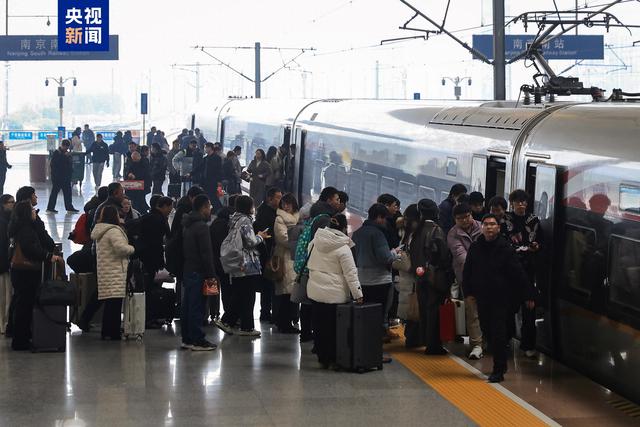
Core Viewpoint - The Spring Festival travel rush in 2026 will begin at midnight on February 2, with the Yangtze River Delta railway department planning to increase train services to meet passenger demand, including the addition of 437.5 pairs of trains and over 1,700 pairs on peak days [1] Group 1: Train Services and Capacity - The Yangtze River Delta railway department will enhance the supply of hard sleeper seats on regular trains to improve comfort for medium and long-distance travelers during the Spring Festival [3] - The ticket price discounts will be expanded this year, covering certain regular and additional trains, with discounts as low as 20% for some tickets, and an increase in the number of return empty trains with discounts to 64 compared to last year [3] Group 2: Passenger Services and Amenities - The railway will continue to provide universal and inclusive services, enhancing personalized and differentiated services to improve the travel experience for passengers [5] - Stations with an average daily passenger volume of over 10,000 will set up priority channels for vulnerable groups and provide optimized transfer services, including improved signage and organization for transferring passengers [7] - Smart services will be upgraded at multiple stations and trains, including AI digital assistants for 24-hour inquiries and navigation, as well as sign language robots for hearing-impaired passengers [7] Group 3: Additional Services and Innovations - Starting February 1, the "quiet carriage" service will be expanded to include certain types of trains, and a new verification and inspection model will be implemented at 273 stations to enhance passenger flow efficiency [8] - The "light travel" service pilot will be launched at 21 stations to reduce the burden of carrying large luggage for travelers [8]
运能扩容、服务升级 长三角铁路多措并举打造暖心春运之旅
Jing Ji Guan Cha Wang· 2026-02-02 04:17
Core Viewpoint - The Spring Festival travel rush in 2026 will begin at midnight on February 2, with the Yangtze River Delta railway department planning to increase train services to meet passenger demand, including adding 437.5 pairs of trains and operating over 1,700 pairs daily during peak periods [1]. Group 1: Train Services and Capacity - The Yangtze River Delta railway will enhance the supply of hard sleeper seats on regular trains to improve comfort for medium and long-distance travelers [4]. - The ticket discount range has been expanded, with discounts on certain regular and high-speed trains, offering discounts as low as 20% [4]. - A total of 64 return empty trains will have discounted tickets, an increase compared to the previous year's Spring Festival [4]. Group 2: Passenger Services and Amenities - The railway will continue to provide universal and inclusive services, enhancing personalized and differentiated services to improve the travel experience [6]. - Initiatives like the "One Bowl of Good Rice" program will be implemented, with online meal ordering services available at 19 internet-connected stations, offering delivery to trains and self-pickup options [6]. - Stations with an average daily passenger volume exceeding 10,000 will set up priority channels for vulnerable groups, providing expedited security checks and services for urgent travelers [9]. Group 3: Technological Enhancements - Multiple stations and trains will upgrade their smart services, including expanding AI digital human service coverage for 24-hour inquiries and navigation [9]. - Special services like sign language robots will be installed at key passenger service areas to assist hearing-impaired travelers [10]. - The "Quiet Carriage" service will be expanded to more train types, and a unified verification and inspection model will be implemented at 273 stations to enhance boarding efficiency [10].
今年春运云南铁路预计发送旅客1545万人次,线上可自助办理免费退票
Xin Lang Cai Jing· 2026-02-02 04:12
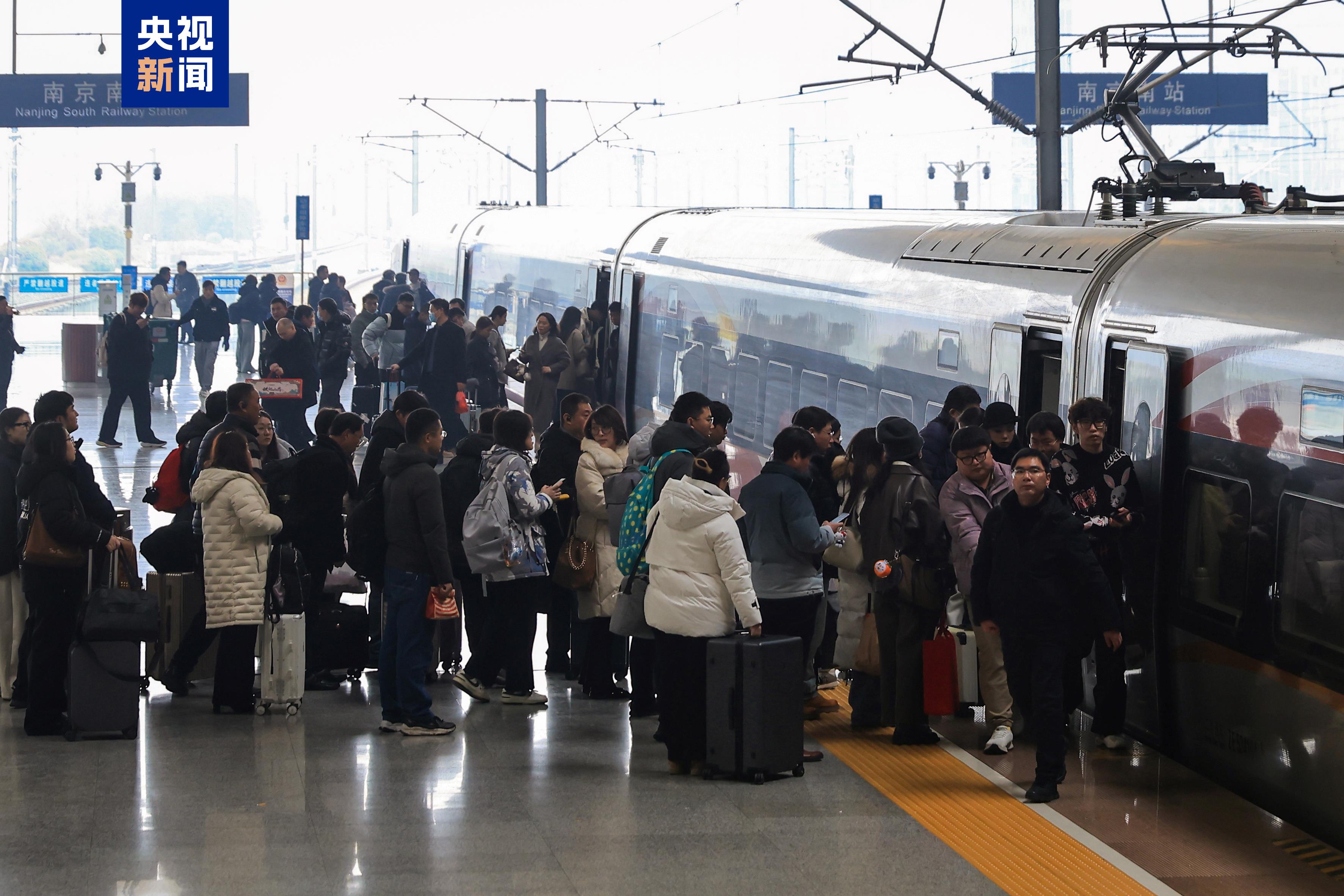
Core Insights - The 2026 Spring Festival travel season in China will run from February 2 to March 13, lasting 40 days, with an expected increase in passenger volume to 15.45 million, indicating significant growth compared to previous years [1] Group 1: Passenger Flow Characteristics - The main passenger flows during the Spring Festival will include family visits, labor migration, tourism, and students, characterized by long duration, high volume, and concentrated but uneven distribution [1] - The peak travel period before the festival is expected from February 12 to 15, primarily driven by family visits, while the post-festival peak will occur from February 21 to March 1, with a focus on family visits, labor migration, tourism, and students [1] Group 2: Train Operations and Services - A total of 64 temporary passenger trains will be arranged, including 13 inter-provincial and 51 within Yunnan, with 39 night trains added to meet personalized travel needs [2] - New direct high-speed trains will connect cities such as Shantou, Guangzhou, and Zhuhai, expanding the coverage of high-speed rail services [2] - The introduction of quiet carriages on 128 trains aims to enhance passenger comfort and promote a civilized travel environment [3] Group 3: Ticketing and Refund Policies - The railway department will implement a trial for free ticket refunds through the 12306 platform, allowing passengers to self-process refunds for mistakenly purchased tickets within 30 minutes of payment [4] - A dedicated phone booking service for seniors over 60 will be available to facilitate ticket purchases, alongside expanded discounts for train fares [4] Group 4: Enhanced Passenger Experience - Key stations will see the installation of charging facilities, including 108 power outlets and USB/Type-C charging ports, to address passenger concerns about device battery life [5] - The "Light Travel" service will be expanded to additional stations, allowing travelers to enjoy a more convenient experience while exploring Yunnan [6] - The introduction of pet transportation services on select high-speed trains aims to cater to pet owners, further enhancing service offerings [6]
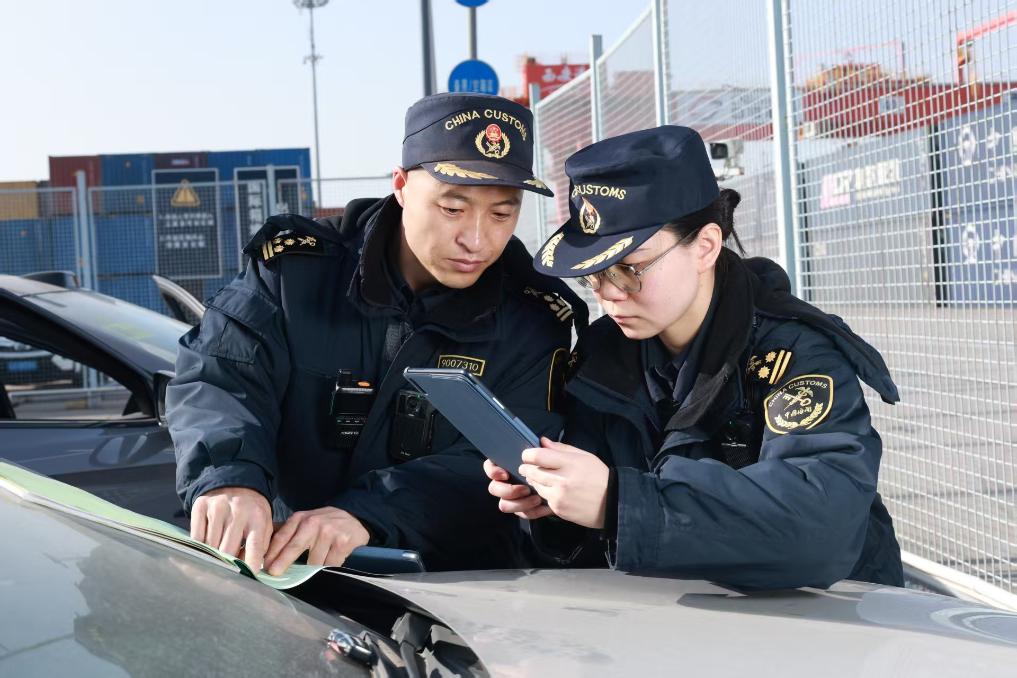
西安车站海关创新模式护航中欧班列高效运行
Xin Hua Wang· 2026-02-02 03:26
Group 1 - The core viewpoint is that Xi'an Customs has significantly improved logistics efficiency and customs clearance processes through smart supervision and innovative models, supporting the efficient operation of the China-Europe Railway Express [1][2] Group 2 - Xi'an Customs has established a "1+3" cross-border cooperation mechanism with Kazakhstan, creating a digital platform for data interconnectivity, enabling online collaboration with domestic and foreign customs and railway departments [1] - More than 90% of regular cargo for Central Asia is subject to document review before arrival, allowing for "direct release" upon arrival at the port [1] - The upgraded smart logistics monitoring system, combined with the "advance declaration and intelligent distribution" model, has reduced the cargo transshipment process from 3-4 days to as fast as 3 hours [1] Group 3 - In terms of exports, the "zone-port linkage, pre-inspection, and direct loading upon arrival" model allows for simultaneous railway security checks and customs inspections at the Xi'an Comprehensive Bonded Zone, facilitating direct transport to the Xi'an International Port Station [2] - For imports, Xi'an Customs has upgraded facilities for designated supervision of imported grain, creating a "green channel" for high-quality agricultural products from Central Asia to enter the Chinese market [2] - By 2025, the China-Europe Railway Express (Xi'an) is expected to operate 6,037 trains, a year-on-year increase of 21.1%, with a significant 60.6% increase in trains heading to Central Asia, totaling 1,291 trains and transporting over 120,000 TEUs, a 65.6% increase [2]
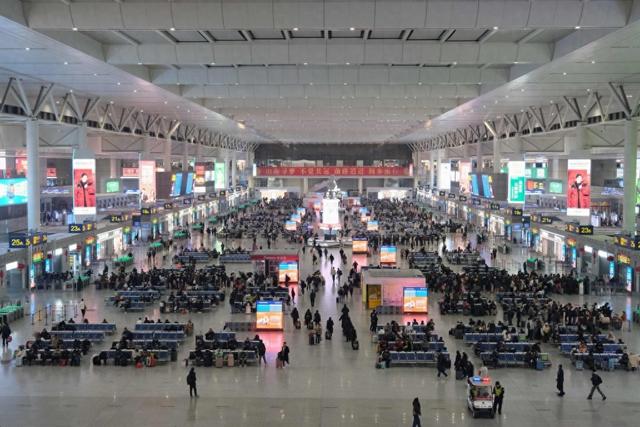
95亿人次在路上 春运服务再升级——多部门有关负责人介绍2026年春运工作安排
Zhong Guo Fa Zhan Wang· 2026-02-02 02:45
Core Viewpoint - The 2026 Spring Festival travel rush will begin on February 2 and is expected to see a record high of 9.5 billion trips, with various measures implemented to ensure safety and efficiency during this period [1][2]. Group 1: Capacity Assurance and Transportation Organization - The Spring Festival travel period will last for 40 days, with an anticipated 9.5 billion trips, marking a historical peak. Self-driving will account for approximately 80% of travel [2]. - Railways will implement a new train operation schedule, with over 14,000 passenger trains expected on peak days, and a 5.3% increase in seating capacity year-on-year [2]. - Civil aviation will increase flights to key airports and popular tourist destinations, with an average of 19,400 flights per day, a 5% increase from the previous year [2]. - Road transport will enhance capacity for popular tourist areas and rural passenger transport, while water transport will focus on key routes like the Qiongzhou Strait between Hainan and Guangdong [2]. Group 2: Safety Measures - Safety is prioritized, with all departments responsible for risk management and safety inspections, particularly in high-risk areas [4]. - A collaborative mechanism with meteorological departments will be established to share weather warnings and ensure proactive measures against adverse weather conditions [4]. - Emergency response teams and equipment will be pre-positioned to handle severe weather events such as freezing rain and heavy snow [4]. Group 3: Service Enhancement - Various transportation sectors will improve service quality at hubs, optimizing ticket purchasing, security checks, and transfers to enhance the travel experience [5]. - New initiatives include a telephone ticket booking service for seniors, free limited-time refunds for mistakenly purchased tickets, and enhancements to the ticketing system [5][6]. - Airlines will introduce services catering to elderly and child travelers, such as special meals, toys, and play areas at airports [5][6]. - Charging infrastructure for electric vehicles will be improved, with a focus on busy service areas and real-time information available through an upgraded app [6].
春运启幕上海首趟列车已出发,铁路上海站今日预计发送41.6万人次
Xin Lang Cai Jing· 2026-02-02 02:44
2月2日,2026年春运正式启动。 当日5时23分,铁路上海站2026年春运首趟临客列车G4021次临时旅客列车从上海虹桥站始发开往贵阳 北站,载着204名旅客踏上春运返乡路。该趟列车沿途停靠杭州东、金华、南昌西、长沙南等站,随车 旅客目的地多为杭州、凯里、贵阳等地,这也是今年春运长三角首趟高铁临时旅客列车。 站 供图 铁路上海 智通财经(www.thepaper.cn)记者从铁路上海站获悉,2月2日该站预计发送旅客41.6万人次。其中上海 站11.1万人次,上海南站5.2万人次,上海虹桥站21.6万人次,上海松江站3.3万人次。为满足旅客出行需 求,车站增开至安徽、江苏、云贵等方向列车18列。 当天,在上海虹桥火车站出发层心尚服务工作室前,一场主题为"'送福暖途·接福归途'暨'我们的节日·欢 乐中国年'迎新送福活动"正在举行,书法家们挥毫泼墨,将一幅幅寓意吉祥的春联和"福"字赠予旅客。 蔡阿姨 (右)与外孙女在现场拿到墨迹未干的福字和春联。智通财经记者 俞凯 图 "没想到赶火车还能收到手写春联,年味一下子浓了。"即将回辽宁沈阳的蔡阿姨在现场拿到墨迹未干的 福字和春联,直言很开心。只见春联上写着:"家和人旺春 ...
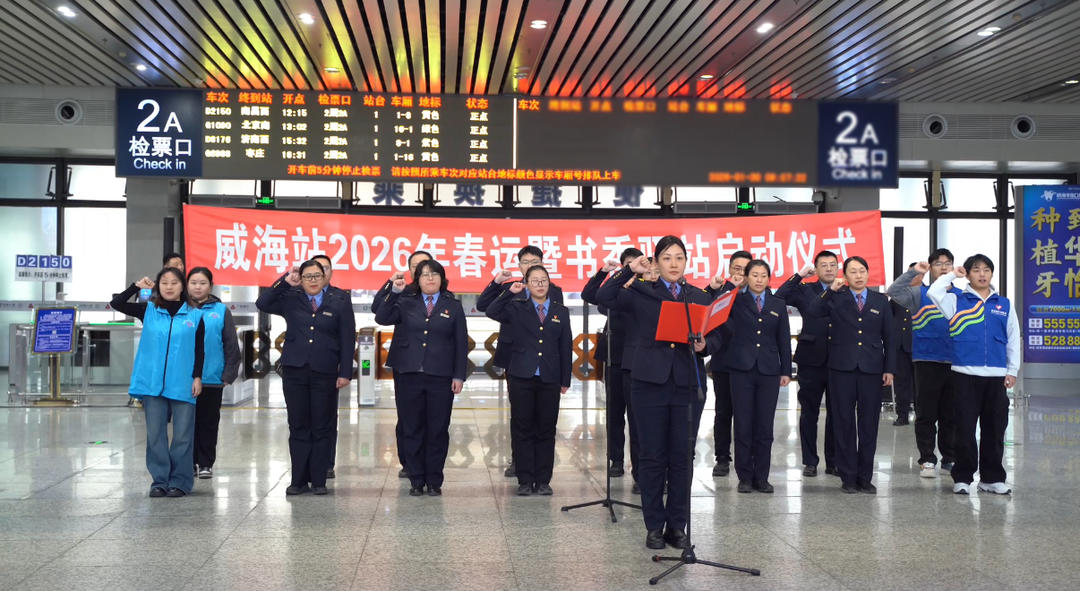
威海站2026春运今日启幕
Qi Lu Wan Bao· 2026-02-02 02:12
齐鲁晚报.齐鲁壹点于佳霖 2月2日,威海站2026年春运大幕正式拉开,为期40天的运输保障工作全面启动,直至3月13日结束。今年春运恰逢春节较往年延后,叠加9天长假与天气回 暖利好,旅游流与探亲流将形成集中叠加态势,铁路部门预计节前出行高峰集中在2月11日-12日,节后则将迎来2月21日-22日的返程高峰及2月27日-28日 的学生开学高峰,两波客流高峰将持续考验运输保障能力。 国铁济南局威海站党支部书记马宏伟在接受记者采访时介绍到,今年由于春节较晚,春运前夕主要的学生放假高峰已经过去,所以客流总体是平稳的。 "其中,今年春节已经到了2月17日,天气已不再寒冷,威海站旅游流将高位叠加探亲流,会在整个春节假期的后6天形成反复的高峰。预计春运期间整体 客流还将进一步上涨。"马宏伟表示,今年春运运行图中,南线车站在四季度图基础上完成新优化,车次更密集便捷,优质南线旅游资源将更好地呈现在 各地游客眼前。同时,此次春运图不仅在高铁方面开行高峰线、重联列车强化运力保障,还对普速列车实施加开、加挂举措,精准满足不同层次旅客的出 行需求。 启动仪式现场,文化与春运的碰撞为归途增添了别样暖意。京剧表演轮番上演,书法家现场挥毫泼 ...
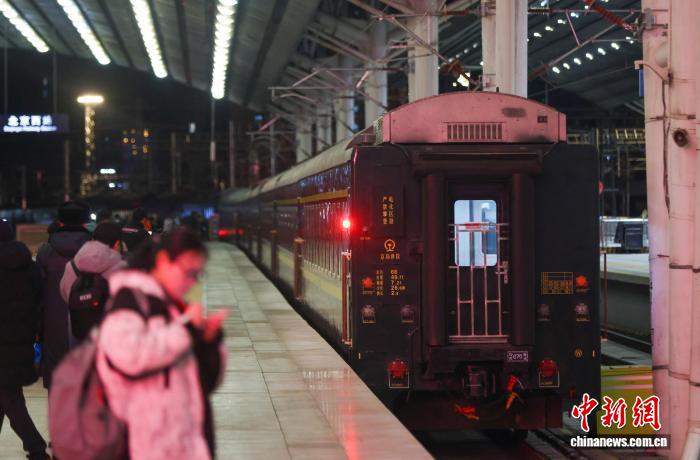
(新春见闻)2026年春运启幕 北京发出首趟“归乡”列车
Zhong Guo Xin Wen Wang· 2026-02-02 02:06
Core Viewpoint - The 2026 Spring Festival travel season in Beijing has commenced with the first train K4069 departing from Beijing West Station, marking the beginning of a significant travel period for millions of passengers [1][3]. Group 1: Travel Volume and Trends - The 2026 Spring Festival travel period spans from February 2 to March 13, lasting 40 days, with an expected total passenger flow in and out of Beijing reaching 110 million, setting a new historical record [3]. - During this Spring Festival, the Beijing area is projected to send 19.947 million passengers, an increase of 392,000 compared to 2025 [4]. Group 2: Services and Innovations - The Beijing Railway Bureau is expanding its "Light Travel" service across 14 stations, offering convenient luggage delivery from door to station and vice versa [5]. - To cater to the growing demand for traveling with pets, high-speed train pet transportation services are being offered at 11 stations and on 39 designated trains [5]. - The "Snow Equipment Convenience Travel" service has also been expanded, particularly on the Beijing-Zhangjiakou high-speed railway, to accommodate winter sports enthusiasts [5].
2026春运大幕开启 交通部门下好“先手棋”保障出行平安畅通
Yang Shi Wang· 2026-02-02 02:06
Core Viewpoint - The 2026 Spring Festival travel rush in China is set to begin on February 2, with transportation departments preparing for an expected 9.5 billion person trips over the next 40 days [1] Group 1: Train Services - A total of 64.61 million train tickets have been sold from January 19 to February 1, 2026, indicating strong demand for travel during the Spring Festival [1] - The national railway is increasing capacity, with a maximum of over 14,000 passenger trains scheduled per day, representing a year-on-year increase of 5.3% [3] - The Beijing Railway Bureau anticipates sending 41.47 million passengers during the Spring Festival, a 2.5% increase from last year, with popular destinations including Harbin, Shenyang, and Changchun [6] Group 2: Road Transportation - The average daily flights during the Spring Festival are expected to reach 19,400, a 5% increase year-on-year, to meet travel demand [5] - Self-driving trips are projected to account for around 80% of travel, with highway traffic expected to reach historical highs [5] - To support electric vehicle charging needs, mobile emergency charging devices will be deployed, and drivers can use the "e路畅通" app to check charging station availability [5] Group 3: Local Measures - In Wuxi, Jiangsu Province, measures have been implemented to ensure safe and smooth travel, including the establishment of priority lanes for vulnerable passengers at train stations [9] - Local traffic management has intensified enforcement and monitoring on major highways to ensure safe and orderly traffic flow during the travel rush [11] - In Jiangxi Province, several highway expansion projects have been completed to enhance traffic efficiency and support the increased travel demand during the Spring Festival [13]