
战略性新兴产业

Search documents
上半年浦东新区地区生产总值增长5.8%
Guo Ji Jin Rong Bao· 2025-08-21 02:06
Core Insights - The Shanghai government held a press conference to discuss the achievements of the "14th Five-Year Plan" in the Pudong New Area, emphasizing the theme of creating an open, innovative, and high-quality Pudong [1] Economic Performance - Pudong's GDP is projected to reach 1.78 trillion yuan in 2024, which is 1.34 times that of 2020, accounting for 32.9% of the city's total [3] - The total industrial output value of above-scale enterprises is expected to be 1.32 trillion yuan, 1.27 times that of 2020, making up 33.6% of the city's total [3] - Above-scale service industry revenue is anticipated to reach 1.25 trillion yuan, 1.61 times that of 2020, representing 21.2% of the city's total [3] - The total import and export volume is projected to be 2.61 trillion yuan, 1.25 times that of 2020, constituting 61.1% of the city's total [3] - Retail sales of consumer goods are expected to reach 5.88 trillion yuan, 1.34 times that of 2020, accounting for 37.3% of the city's total [3] Economic Structure and Industry Development - The economic structure of Pudong is undergoing optimization and upgrading, with a stable increase in the industrial proportion, expected to be 22.1% in 2024, up by 0.2 percentage points from 2020 [3] - Knowledge-intensive industries are rapidly developing, with the information transmission, software, and IT service sector's GDP share increasing by 2.1 percentage points to 10.3% [3] - The share of strategic emerging industries in industrial output value has risen from 48.4% to 53.6% [3] Recent Economic Trends - In the first half of the year, Pudong's GDP grew by 5.8%, while the industrial output value of above-scale enterprises increased by 10.5% [4] - Revenue from above-scale service industries rose by 5.9%, and actual foreign investment surged by 36.1% [4] - The total import and export volume saw a modest growth of 0.5%, and the number of newly established enterprises increased by 28.1% [4]

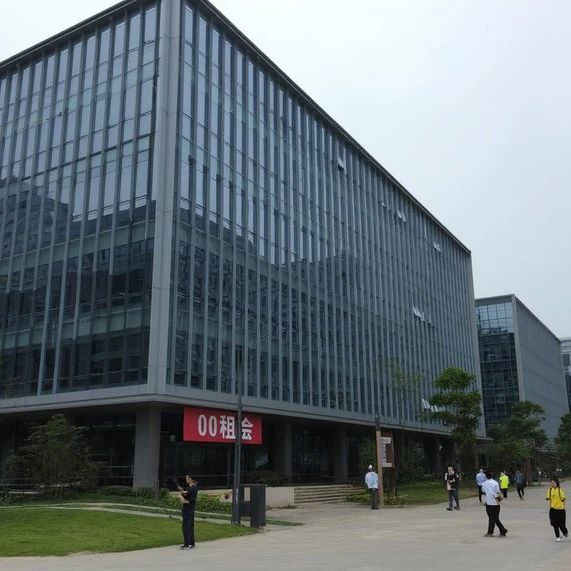
越来越多的园区,开始“0租金”了
虎嗅APP· 2025-08-19 10:00
Core Viewpoint - The article discusses the recent trend of "zero rent" industrial parks in China, highlighting the motivations behind this phenomenon, including macroeconomic pressures, policy shifts, and regional competition [4][7][9]. Group 1: Reasons for the Emergence of "Zero Rent" - The rise of "zero rent" industrial parks is attributed to the challenges of economic recovery post-pandemic, where local governments face dual pressures of stabilizing growth and promoting innovation [10][11]. - Policy changes, such as the decline of land finance and the introduction of regulations against unfair competition, have prompted local governments to seek new, compliant support tools [12][13]. - Intense regional competition among major cities like Guangzhou, Shenzhen, and Hangzhou has led to aggressive "zero rent" initiatives to attract high-quality projects and talent [15]. Group 2: New Operational Models - The "zero rent" model is not merely about waiving rent; it signifies a transformation in the operational model of industrial parks, where state-owned enterprises (SOEs) take on roles beyond traditional landlords [17][18]. - SOEs are increasingly acting as both landlords and investors, providing capital support through venture funds and equity investments, thus aligning their interests with the success of tenant companies [20][21]. - The relationship between parks and enterprises is evolving into a partnership model, where the success of the enterprise directly benefits the park [22]. Group 3: Eligibility for "Zero Rent" Benefits - Access to "zero rent" benefits is highly selective, focusing on strategic emerging industries and high-growth potential companies, while traditional and low-value industries are largely excluded [29][30]. - The selection criteria for companies include high-tech firms, "little giants," unicorns, and winners of innovation competitions, ensuring that only the most promising enterprises benefit from these policies [31][33]. Group 4: Economic Assessment - The short-term economic impact of "zero rent" policies is positive, attracting numerous companies and significantly reducing their operational costs, which can lead to job creation and innovation [36][37]. - Long-term, the government aims to recoup lost rental income through increased tax revenue and job creation as these companies grow, with historical examples demonstrating the potential for substantial returns on such investments [39][40]. Group 5: Challenges and Future Outlook - The "zero rent" model faces challenges, including financial sustainability for park operators and the risk of creating "ghost towns" if companies fail to establish a competitive edge [41][42]. - The evolution of this model represents a significant shift in China's industrial policy, moving towards a more integrated approach that combines space, capital, and services to foster innovation ecosystems [44][46].
深圳外贸保持较强韧劲,前7个月规模仍居内地外贸城市首位
Nan Fang Du Shi Bao· 2025-08-19 05:09
Core Insights - Shenzhen's foreign trade has shown resilience in 2023, with total imports and exports reaching 2.58 trillion yuan in the first seven months, maintaining the same level as the previous year and ranking first among mainland cities in foreign trade [1][2] Group 1: Trade Performance - Exports totaled 1.56 trillion yuan, while imports reached 1.02 trillion yuan, marking a 9.4% increase [1] - In July alone, Shenzhen's total trade was 415.94 billion yuan, a 6.2% increase year-on-year, with exports hitting a record monthly high of 255.62 billion yuan, up 4.7% [1] Group 2: Trade Composition - General trade accounted for over half of the total trade, with 1.42 trillion yuan in imports and exports, representing 54.9% of the total [1] - Bonded logistics saw a 13.7% increase, totaling 699.28 billion yuan, making up 27.1% of the total trade [1] - Processing trade contributed 451.19 billion yuan, accounting for 17.5% [1] Group 3: Trade Partners - Trade with major partners such as Hong Kong, Taiwan, the EU, South Korea, and Japan grew, totaling 1.22 trillion yuan, a 10% increase, representing 47.2% of total trade [1] Group 4: Enterprise Contributions - Private enterprises accounted for 1.8 trillion yuan in trade, making up 69.8% of the total [2] - Foreign-invested enterprises saw an 11.3% increase in trade, totaling 678.58 billion yuan, representing 26.3% [2] - State-owned enterprises contributed 99.14 billion yuan [2] Group 5: Export Highlights - The traditional electronics and strategic emerging industries maintained strong export performance, with mechanical and electrical products totaling 1.17 trillion yuan, a 4.4% increase, accounting for 74.7% of exports [2] - Key products included computers and components (179.51 billion yuan, up 10.8%) and audio-visual equipment (50.27 billion yuan, up 5.5%) [2] - Emerging industries like lithium batteries and pure electric vehicles saw exports grow by 37.9% and 21.7%, respectively, while integrated circuits reached 133.93 billion yuan, a 40.9% increase [2] Group 6: Import Highlights - Imports of mechanical and electrical products reached 836.56 billion yuan, a 14.7% increase, accounting for 82.1% of total imports [2] - Integrated circuits were imported at 454.69 billion yuan, up 19.6%, while computer components like graphics cards and servers surged by 47.8% to 184.4 billion yuan [2] - Agricultural product imports totaled 59.16 billion yuan, a 7.7% increase, representing 5.8% of total imports [2]
“科技变量”如何变为强劲动能(人民观点)
Ren Min Ri Bao· 2025-08-10 22:00
Group 1 - The core viewpoint emphasizes the importance of technology innovation as a key variable in reshaping global dynamics and driving high-quality development in the context of China's modernization [1][2][4] - The integration of technology innovation and industrial innovation is highlighted as a crucial method for accelerating the development of new productive forces [3][4] - The establishment of a robust innovation ecosystem is essential for fostering continuous technological advancements, characterized by a diverse range of enterprises from large corporations to startups [12][13] Group 2 - The article discusses the role of government in facilitating market efficiency and supporting innovation through strategic initiatives, such as forming advisory committees with experts [7][8] - Various regions in China, such as Anhui and Jiangsu, are showcased for their innovative practices, including collaborative research centers and technology transfer mechanisms that enhance industrial application [5][9] - The development of a comprehensive innovation environment is illustrated through examples of successful ecosystems in cities like Hangzhou and Shenzhen, which promote a full-chain incubation model [14][15] Group 3 - The narrative includes success stories of companies like Chery Automobile, which exemplify resilience and innovation in the face of challenges, contributing to China's global leadership in sectors like new energy vehicles [16][17] - The article underscores the significance of nurturing a diverse innovation landscape, where large enterprises lead, while small and medium-sized enterprises contribute to filling gaps in the industrial chain [13][14] - The call for a high-level self-reliance in technology is presented as a pathway to creating new development momentum and advantages for China's modernization efforts [17]
紧扣“新质提质”主线 浙江谋划下半年国资国企创新改革“路线图”
Shang Hai Zheng Quan Bao· 2025-08-07 18:28
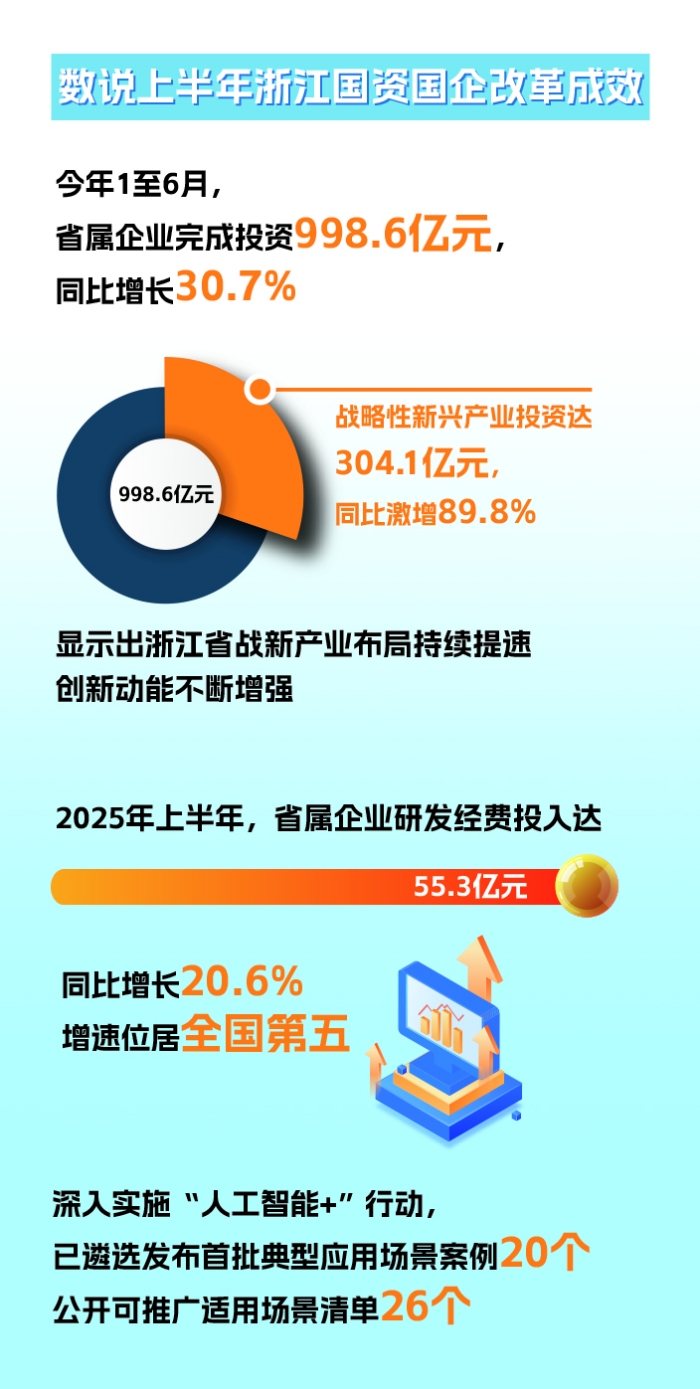
Group 1 - The core message indicates that Zhejiang Province's state-owned enterprises are accelerating their transition towards high-quality development through innovation and structural optimization [6][7] - In the first half of the year, state-owned enterprises in Zhejiang completed investments of 998.6 billion yuan, representing a year-on-year increase of 30.7% [7][8] - Investment in strategic emerging industries reached 304.1 billion yuan, showing a significant year-on-year surge of 89.8% [2][7] Group 2 - The R&D expenditure of state-owned enterprises in Zhejiang for the first half of 2025 reached 55.3 billion yuan, with a year-on-year growth of 20.6%, ranking sixth nationwide [4][8] - The provincial government has implemented a "1+5+17" innovation work system to support technological innovation in state-owned enterprises [8] - The focus will be on supporting leading enterprises to form task-oriented, systematic innovation coalitions, enhancing the integration of state-owned enterprises into regional innovation systems [9]
金融支持新型工业化路径明确!优化资金供给结构 提供贷款、债券、股权等融资支持
Mei Ri Jing Ji Xin Wen· 2025-08-05 14:20
Core Viewpoint - The People's Bank of China and seven other departments have jointly issued guidelines to enhance financial support for new industrialization, aiming to provide high-quality financial services to accelerate the development of new productive forces while preventing excessive competition [1][2]. Financial Support Structure - The guidelines emphasize optimizing the funding supply structure at the macro level, providing loans, bonds, and equity financing to support new industrialization [1][2]. - By 2027, the financial system supporting the high-end, intelligent, and green development of the manufacturing industry is expected to be fundamentally mature, with a richer array of products and improved service adaptability [2][3]. Technology and Innovation Financing - The guidelines advocate for the introduction of long-term funds and patient capital to accelerate the transformation of technological achievements, encouraging collaboration between financial institutions and technology intermediaries [3][4]. - A "technology-industry finance integration" initiative is proposed to enhance investment in hard technology and support small and medium-sized enterprises in going public [3][4]. Supply Chain and Regional Financial Services - The guidelines call for improved financial services for supply chains, encouraging financial institutions to provide financing services based on "data credit" and "physical credit" for small and medium-sized enterprises [3][4]. - Financial institutions are urged to optimize resource allocation to support the transfer of industries to central and western regions, enhancing information sharing and service coordination [4][5]. Cross-Border Financial Services - The guidelines aim to enhance the convenience of cross-border financial services and expand the scope of high-level bilateral open development [5][6]. - Support for small and medium-sized enterprises in overseas operations is emphasized, along with the facilitation of cross-border fund pooling and trade settlement [5][6]. Long-term Mechanism for Financial Support - The guidelines propose strengthening the capacity and long-term mechanisms for financial services, ensuring a reasonable investment ratio in the manufacturing sector [6][7]. - Financial institutions are encouraged to develop differentiated credit policies tailored to specific industries and stages of enterprise growth [6][7].
产学研协同培养高素质人才
Jing Ji Ri Bao· 2025-08-03 22:00
Core Insights - The integration of industry, academia, and research is crucial for achieving high-level technological self-reliance and innovation in China [1] - A significant 41.0% of invention patents by Chinese enterprises are completed in collaboration with universities or research institutions, with strategic emerging industries exceeding 60% in collaboration [1] - Despite notable progress in industry-academia-research integration, challenges such as talent mobility, unclear responsibilities, and vague training objectives remain [1] Group 1 - The establishment of partnerships between universities and enterprises, such as the collaboration between Peking University and Huawei, has led to breakthroughs in foundational research and innovation [1] - The creation of specialized research institutes, like the Guangdong-Hong Kong-Macao Greater Bay Area Precision Medicine Research Institute, demonstrates the push towards applied research and technology transfer [1] - The formation of high-end talent training bases, such as the large aircraft research institute by Beihang University and COMAC, highlights the focus on cultivating skilled professionals in cutting-edge fields [1] Group 2 - Breaking down barriers related to geography, identity, and age is essential for facilitating the dual flow of talent and skills between academia and industry [2] - Encouraging faculty from universities to engage in industry roles and allowing industry experts to teach in academic settings can enhance collaboration and knowledge transfer [2] - A focus on a collaborative education model that integrates industry needs with academic training is necessary to cultivate innovative and versatile talent [2]
“五年规划”的前世今生
Haitong Securities International· 2025-08-01 05:02
Group 1: Five-Year Plan Overview - The Five-Year Plan has evolved through various stages since the founding of New China, focusing on innovation, livelihood, and safety[2] - The planning process follows a fixed cycle, including seven steps from research to evaluation[8] - The structure of the Five-Year Plan is divided into three main parts: overall goals, sector-specific discussions, and implementation mechanisms[10] Group 2: Economic Goals and Trends - GDP growth targets have shifted from hard constraints to flexible ranges, with the "14th Five-Year Plan" aiming to maintain growth within a reasonable range[14] - The focus of planning goals has diversified, with economic growth targets decreasing from 33% in the "13th Five-Year Plan" to 20% in the "14th Five-Year Plan," while social goals increased from 67% to 80%[15] - The emphasis on innovation, livelihood improvement, and safety has become more pronounced in recent plans[15] Group 3: Industry and Infrastructure Focus - The industrial policy is dynamically adjusting between manufacturing and services, with a growing emphasis on the service sector as a key focus for future planning[19] - Major engineering projects are increasingly concentrated in the fields of livelihood, ecology, and infrastructure, with fixed asset construction projects rising to 51% in the "14th Five-Year Plan"[28] - The green and low-carbon transition is accelerating, driven by the 2030 carbon peak target, with a focus on industries like artificial intelligence and biotechnology[24]
逐“新”向“高” 动能澎湃
Shan Xi Ri Bao· 2025-08-01 00:57
Group 1: Economic Growth and Innovation - The economy of Shaanxi is showing continuous enhancement in "new power," with high-tech manufacturing investment increasing by 20.1% year-on-year, accelerating by 16.3 percentage points compared to the first quarter [1] - The added value of strategic emerging industries grew by 7.5% year-on-year, surpassing the GDP growth rate by 2 percentage points, indicating a stronger driving force of technological innovation in economic development [1] - Shaanxi has achieved significant innovation milestones, including setting a world record for silicon solar cell conversion efficiency and overcoming core technology challenges in high-power laser fields [2] Group 2: Industrial Development - The new energy and digital creative industries in Shaanxi grew by 16.8% and 9.7% year-on-year, respectively, with the combined output value of the passenger vehicle (new energy) and commercial vehicle (heavy truck) industries reaching 316.944 billion yuan, accounting for 27.66% of the total output value of 34 industrial chains in the province [3] - Shaanxi is in a critical phase of structural adjustment and transformation, actively building a tiered development pattern for industrial chains, focusing on strategic emerging industries and future key sectors [3] Group 3: Private Sector Growth - In the first half of the year, Shaanxi added 3,952 new "five above" enterprises, a year-on-year increase of 18.1%, with the private economy's added value reaching 837.48 billion yuan, accounting for 49.8% of GDP, an increase of 0.3 percentage points compared to the same period last year [5] - Private investment in the province grew by 13.8% year-on-year, making up 43.5% of total investment, which is an increase of 1.9 percentage points from the previous year [5] - The growth of the private sector is attributed to technological innovation, digital transformation, and upgrading of business models, showcasing the resilience and dynamism of private enterprises in Shaanxi [5]
发挥资本市场枢纽作用 以科技创新引领新质生产力发展
Zheng Quan Ri Bao· 2025-07-31 16:06
Group 1 - The core viewpoint emphasizes the importance of technological innovation in driving new quality productivity and fostering high-quality economic development [1][3] - The meeting held by the Central Political Bureau on July 30 highlighted the need to integrate technological innovation with industrial innovation to create new competitive advantages [1][3] - The National Bureau of Statistics reported that in 2024, the value added of China's "three new" (new industries, new business formats, new business models) economy reached 242.908 billion yuan, growing by 6.7% year-on-year, which is 2.5 percentage points higher than the GDP growth rate [2] Group 2 - The capital market plays a crucial role in supporting both large technology giants and small innovative companies, facilitating the transformation of technological breakthroughs into industrial applications [4] - Capital markets provide a full chain of services from venture capital to public financing, catering to the needs of companies at different stages of development [4] - The integration of capital and technology is essential for the continuous leadership in industry technological transformation, as demonstrated by companies like Lens Technology, which has diversified into multiple fields through capital market engagement [5] Group 3 - The acceleration of technological innovation in China is moving towards multi-field system integration, improving the efficiency of converting technological achievements into market applications [6] - Recent reforms in the capital market aim to support technological innovation, including the introduction of over 300 billion yuan in new insurance funds into the technology sector [6] - The government's top-level design for capital market reform is increasingly emphasizing the strategic role of capital markets in national economic transformation [6]