智能装备

Search documents
开年加速跑外贸企业“焕新”出发
Zhong Guo Zheng Quan Bao· 2026-01-09 20:52
Group 1: Order Growth - The beginning of 2026 has seen a surge in export orders for companies, with new customer inquiries reaching around 70 to 80 within the first 10 days after New Year's Day [1] - Jiangsu New Niudun Intelligent Equipment Co., Ltd. reported an annual export growth rate of 18%-20% for forklifts, with over 10,000 units exported in 2025, indicating confidence in new order signings [1][2] - Shenzhen Haishitongda Technology Co., Ltd. has around 500,000 orders queued, with established relationships with old customers ensuring timely order placements before the holiday [2] Group 2: Production Capacity Expansion - Companies are ramping up production to meet the influx of orders, with Shenzhen Haishitongda working overtime to ensure timely delivery by early February [2] - New Niudun has optimized its supply chain and ordered new smart welding equipment, expected to be operational by March 2026, aiming for full automation in welding processes [2] Group 3: Policy Support - Recent policies from various regions, such as Henan and Shandong, aim to support foreign trade enterprises by enhancing services and organizing international exhibitions [3] - The Ministry of Commerce is committed to implementing stable foreign trade policies, promoting market diversification, and supporting new business models like cross-border e-commerce [3][4]
从研发到量产不到一年,武汉无人洗扫机器人批量上岗
Chang Jiang Ri Bao· 2026-01-09 11:19
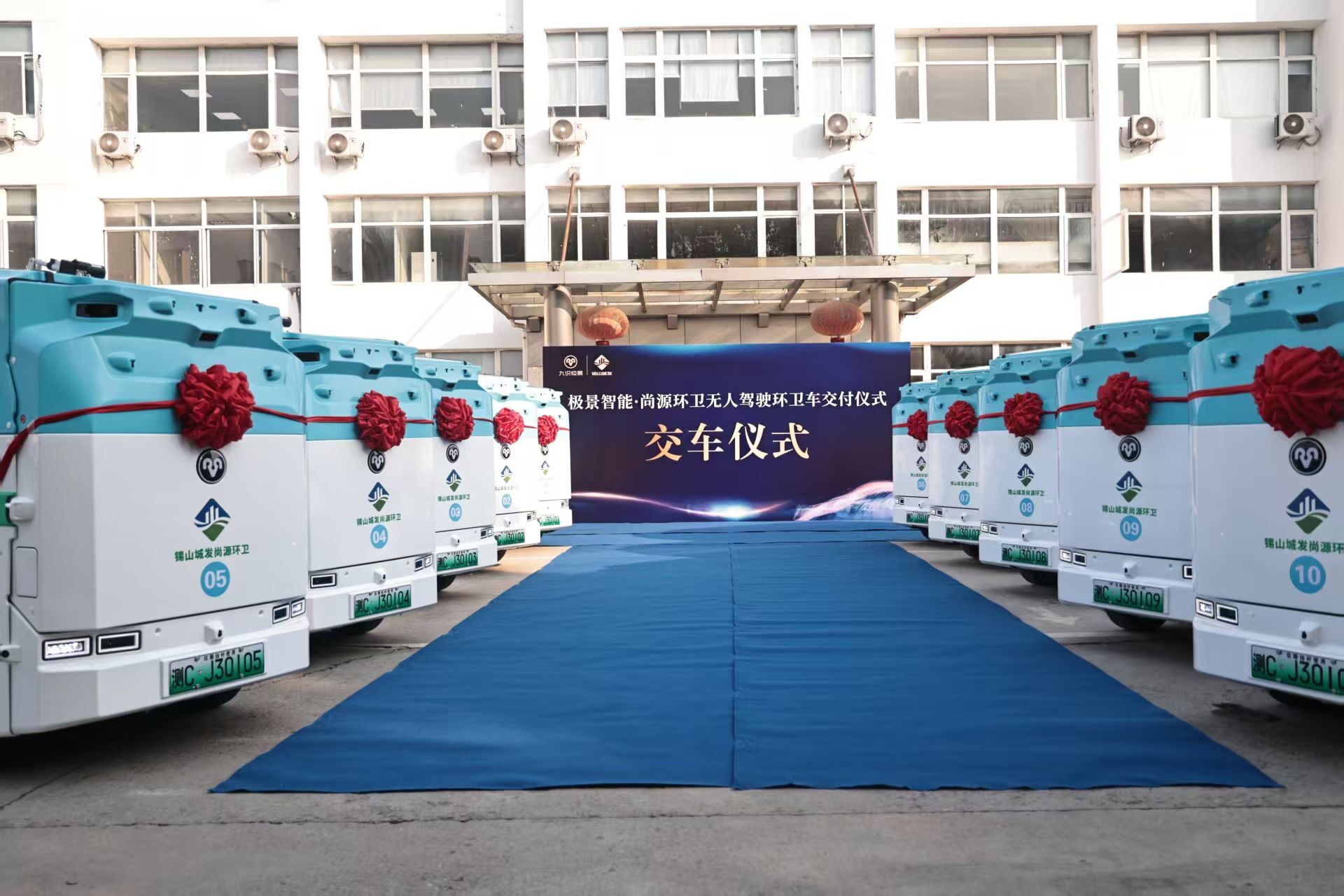
Core Insights - The article highlights the introduction of L4 autonomous cleaning robots, named "Lu You," developed by Jijing (Wuhan) Intelligent Technology Co., Ltd., which have been delivered to Wuxi for urban sanitation tasks [1][4]. Group 1: Product Features and Capabilities - The "Lu You" robots can autonomously plan routes, avoid obstacles, and perform precise cleaning tasks with centimeter-level accuracy, including spraying, washing, and vacuuming [4]. - Each robot can clean approximately 18,000 square meters per hour, equivalent to 2.5 soccer fields, and operates at about three times the efficiency of traditional manual labor [4]. - The robots are equipped with an L4 autonomous driving system and various sensors, allowing them to operate safely and independently on public roads [5]. Group 2: Operational Efficiency and Support - The robots can autonomously return to charge when battery levels are low and can dispose of waste when full, ensuring continuous operation without human intervention [5]. - A support robot, "Yang Doctor," is provided for real-time diagnostics and maintenance, ensuring the efficient operation of the robot fleet [5]. Group 3: Market Impact and Future Plans - The deployment of "Lu You" in Wuxi serves as a benchmark for smart sanitation construction and showcases Wuhan's innovation in high-end intelligent equipment [5]. - Future collaborations are planned between the companies to enhance smart sanitation systems and data platforms, aiming to create a replicable "Wuxi model" [5].


八部门联合印发《意见》——促进人工智能技术与制造业应用“双向赋能”
Ke Ji Ri Bao· 2026-01-09 00:56
Core Viewpoint - The "Artificial Intelligence + Manufacturing" initiative aims to deeply integrate AI technology with the manufacturing industry, enhancing innovation and application capabilities by 2027 [1] Group 1: Key Objectives - By 2027, China aims to achieve reliable supply of key AI technologies, maintain a leading position in industry scale and empowerment, and promote the application of 3-5 general large models in manufacturing [1] - The initiative plans to launch 1000 high-level industrial intelligent entities and create 100 high-quality datasets in industrial fields, along with promoting 500 typical application scenarios [1] - The goal includes nurturing 2-3 globally influential ecosystem-leading enterprises and a number of specialized small and medium-sized enterprises, while establishing 1000 benchmark enterprises [1] Group 2: Key Tasks - The initiative outlines seven key tasks including innovation foundation, intelligence upgrade, product breakthroughs, entity cultivation, ecosystem expansion, safety protection, and international cooperation [1] - In the area of innovation foundation, there will be a focus on enhancing AI computing power, supporting the development of high-end training chips, and creating high-performance algorithm models tailored for manufacturing [2] - The intelligence upgrade will involve empowering key industries, promoting smart factory development, and encouraging leading enterprises to implement AI applications [2] Group 3: Product Development - The initiative emphasizes the iteration of smart equipment, integrating AI technology into the development and manufacturing of major technical equipment like aircraft and ships, and advancing smart low-altitude equipment [3] - There will be a push for upgrading smart terminals, fostering innovation in AI-enabled products such as smartphones and smart home devices, and establishing testing bases for humanoid robots [3] - Policies will be reinforced to guide enterprises in differentiated development, prevent "involution" competition, and attract more social capital for investment in AI and manufacturing technologies [3]
海南自贸港举办政银企对接活动 力促民间投资“开门红”
Xin Lang Cai Jing· 2026-01-08 13:53
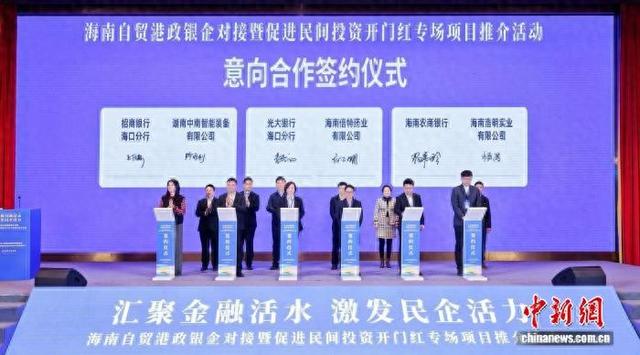
Core Viewpoint - The Hainan Free Trade Port is actively promoting private investment opportunities, with a focus on key sectors such as education, healthcare, tourism, and high-tech industries, aiming to attract significant financial support for various projects [1][4]. Group 1: Investment Opportunities - Hunan Zhongnan Intelligent Equipment Co., Ltd. plans to invest in the industrialization of energy key equipment intelligent robots in Haikou and is seeking financial support from institutions [1]. - A total of 37 private investment projects with a financing demand of 17.2 billion yuan (approximately 2.4 billion USD) have been identified, with a total investment requirement of 46.3 billion yuan (approximately 6.5 billion USD) [1]. - An additional 35 projects aimed at attracting private capital have a total investment of 118.6 billion yuan (approximately 16.8 billion USD), covering infrastructure, public services, and advanced manufacturing [2]. Group 2: Government Initiatives - The Hainan Provincial Development and Reform Commission has established a dual-platform support system to facilitate efficient matching of projects and funding, aiming to transition government-business cooperation from occasional events to a more regular and effective process [4]. - The government plans to implement policies to support private enterprises, including enhancing financial product services and increasing credit availability for private businesses [5].
金融如何助力农业提质和农民增收
Jin Rong Shi Bao· 2026-01-08 01:03
Core Insights - The Central Rural Work Conference held on December 29-30, 2025, in Beijing, analyzed the current challenges in the "three rural issues" and outlined the work for 2026, focusing on improving agricultural quality and increasing farmers' income [1] - Key initiatives include promoting integrated efficiency in agricultural resources, implementing a new round of grain production capacity enhancement actions, and establishing a mechanism to ensure farmers' income from grain production [1] Financial Support for Agriculture - Financial innovation is essential to support high-standard farmland construction, modern seed industry revitalization, advanced agricultural machinery development, and the promotion of green and efficient technologies [1] - A multi-faceted agricultural insurance system is needed to enhance risk management capabilities for grain farmers, focusing on precision insurance and expanding coverage to include both commodity and ecological values [2] Support for County-Level Industries - Financial institutions are encouraged to optimize credit resource allocation in counties, focusing on high-value industries such as agricultural processing, rural tourism, e-commerce, and cold chain logistics [3] - A supply chain finance model involving "core enterprises + cooperatives + farmers" is proposed to ensure farmers' deep participation and sharing of value-added benefits [3] Poverty Alleviation Mechanisms - Financial support for poverty alleviation should transition from "preferential" to "inclusive," maintaining targeted assistance for impoverished populations and underdeveloped regions [4] - A financial monitoring and early warning system for poverty prevention should integrate various data sources from rural digital transformation [4] Support for Agricultural Innovation - Financial support for cutting-edge agricultural technologies like bio-manufacturing, smart agriculture, and digital technologies requires a higher risk tolerance from financial organizations [4] - Innovative financing methods such as equity risk investment and technology loans are suggested to address the financing challenges faced by agricultural innovation enterprises [4] Diversified Food Production - Financial support for diversified food production systems should be tailored to local resources and market characteristics, with specialized financial products designed accordingly [6] - Local governments are encouraged to support the development of local industries and motivate local financial institutions to serve these industries effectively [6]
做好八个方面工作 开好局起好步
Xin Lang Cai Jing· 2026-01-07 17:13
Group 1: Economic Development Initiatives - In 2026, Qixia District will focus on upgrading pillar industries, promoting new industrial clusters, and gathering future industries, particularly in sectors like petrochemical energy and electronic information [2] - The district aims to enhance the manufacturing sector by supporting intelligent equipment manufacturing, biomedicine, and key components for new energy vehicles, while also planning for cutting-edge fields such as brain-machine interfaces and synthetic biology [2] Group 2: Consumer Market Enhancement - Qixia District plans to upgrade commercial areas like Xianlin Golden Eagle and North City Vientiane, focusing on first-store and first-product economies to boost consumption in automobiles and home goods [3] - The district will cater to diverse consumer demands across all age groups and develop new business models integrating AI, IP, and services to stimulate consumption [3] Group 3: Business Environment Improvement - The district will implement a regular communication mechanism between government and enterprises, enhancing support for innovative and growth-oriented private enterprises [4] - Efforts will be made to streamline project services and deepen financial empowerment, with plans to establish sub-funds for advanced manufacturing and strategic emerging industries [4] Group 4: Ecological Sustainability - Qixia District will adhere to the principle of "green mountains and clear waters are gold and silver mountains," focusing on ecological protection and strict pollution control measures [5] - The district aims to achieve 100% compliance with water quality standards in key areas and enhance the management of volatile organic compounds (VOCs) [5]
利好!八部门联合发布
Zhong Guo Ji Jin Bao· 2026-01-07 12:31
Core Insights - The document outlines the implementation opinions for the "Artificial Intelligence + Manufacturing" initiative, aiming to enhance the integration of AI technologies in the manufacturing sector by 2027, ensuring that China remains a global leader in AI technology and application [1][7]. Group 1: AI Technology Development - The initiative emphasizes the need to strengthen AI computing power supply, promoting the development of intelligent chips and key technologies such as AI servers and cloud operating systems [2][8]. - It aims to develop high-performance algorithm models tailored for the manufacturing industry, enhancing real-time, reliability, and safety features [2][8]. - The plan includes the establishment of a public service platform for models, providing high-level models and supporting tools [8]. Group 2: Industry Application Empowerment - The initiative focuses on accelerating AI empowerment in key manufacturing sectors, including raw materials, equipment manufacturing, and consumer goods, by promoting benchmark solutions and experiences [2][10]. - It encourages leading enterprises and state-owned enterprises to pioneer AI applications in manufacturing, facilitating the digital transformation of small and medium-sized enterprises [12][10]. - The document outlines the need for a systematic approach to transform the entire manufacturing process, from R&D to production and marketing, through AI integration [11][12]. Group 3: Innovation and Ecosystem Building - The initiative aims to cultivate 2-3 globally influential enterprises and a number of specialized small and medium-sized enterprises, creating a robust ecosystem for AI applications [1][7]. - It emphasizes the importance of building a national AI innovation center and key laboratories to explore cutting-edge technologies [16][4]. - The document highlights the need for a collaborative ecosystem involving AI companies, industrial enterprises, and service providers to enhance the overall service capacity [17][18]. Group 4: Safety and Security Measures - The initiative stresses the importance of enhancing safety and security measures in AI applications, including data protection and risk management [20][19]. - It proposes the establishment of a safety governance mechanism to monitor and mitigate risks associated with AI technologies [20][19]. Group 5: International Cooperation and Market Expansion - The document encourages enterprises to tailor AI products and solutions for different international markets, promoting the global expansion of Chinese AI technologies [21][20]. - It supports participation in international forums and cooperation platforms to enhance global collaboration in AI development [21][20].
智能装备产业创新中心在两江新区成立
Xin Lang Cai Jing· 2026-01-07 10:52
Core Viewpoint - The Shanghai Jiao Tong University Chongqing Research Institute has established an Intelligent Equipment Industry Innovation Center, focusing on applications in automotive, military, and environmental sectors [1][7]. Group 1: Center Establishment and Collaboration - The center is a joint initiative between the Shanghai Jiao Tong University Chongqing Research Institute and Zhejiang Linhu Zhishu Technology Co., Ltd. [1][8]. - The Chongqing Research Institute provides technical and talent support, focusing on machine learning data analysis, model training, and core algorithm support [8][16]. - Linhu Zhishu aims to create a smart manufacturing product matrix that integrates data, communication, and security from R&D to mass production [9][16]. Group 2: Product Applications - The center has developed a closed-loop product system, including: - An autonomous driving data recording device, also known as a vehicle-grade "black box," which supports multi-channel data collection and meets national standards for traffic accident evidence [12][13]. - A vehicle communication DBC encryption controller, which is the first of its kind to provide real-time encryption and control at the gateway level, enhancing vehicle network security [12][13]. - A navigation positioning terminal box designed for L4 autonomous vehicles, ensuring high precision in complex environments [13][14]. - An intelligent data collection system that supports multi-channel sampling and provides real-time data for AI applications [14][16]. Group 3: Strategic Partnerships - The Chongqing Research Institute has formed a strategic partnership with Hangzhou Changwang Zhichuang Technology Co., Ltd. to collaborate on national defense technology projects and share research resources [16][17]. - This partnership aims to leverage the research institute's technological advantages in simulation and control platforms to promote the industrialization of research outcomes [16][17].
最高补助1亿元,北京市发改委14条措施提升中试服务能级
仪器信息网· 2026-01-07 09:02
Core Viewpoint - Beijing has introduced 14 policies aimed at enhancing the capacity of pilot testing services, with a goal to establish 10 national-level and 50 municipal-level pilot testing platforms by 2030, promoting the integration of technology and industry, and fostering new productive forces [1][4]. Background of Policy Issuance - Pilot testing is a transitional testing phase for new products moving towards production, crucial for the industrialization of technological achievements. Pilot testing platforms provide specialized services and systematic solutions to support the engineering breakthroughs and industrial applications of technological results [4]. Main Considerations of Measures - Beijing has made significant progress in integrating technological and industrial innovation, forming a "leading talent + new R&D institution" model. However, existing pilot testing platforms do not fully meet the demand for technological achievement transformation, leading to resource fragmentation. The new measures aim to address these issues through a combination of effective market and proactive government actions [6]. Specific Measures - The measures outline 14 policies focusing on four areas: layout of pilot testing platforms, continuous enhancement of service capabilities, optimization of the service ecosystem, and strengthening of support measures. The goal is to establish a pilot testing system that meets the requirements of the capital's modern industrial system by 2030 [7]. Key Initiatives - The measures emphasize the establishment of independent legal entities for pilot testing platforms, particularly in key industries such as artificial intelligence, healthcare, and green low-carbon technologies. New projects will receive financial support based on a percentage of total investment, with a maximum cap [8][9]. Enhancing Service Capabilities - The measures propose initiatives to improve the sustainability of pilot testing platforms, including open sharing of internal testing capabilities and enhancing full-chain service capabilities. This aims to expand the functions of pilot testing platforms to cover the entire industrial chain [10]. Optimizing the Service Ecosystem - The measures focus on strengthening the necessary support for pilot testing platforms, including space, information, finance, talent, and standards. They aim to build a collaborative pilot testing transformation base in the Beijing-Tianjin-Hebei region and enhance the matching of supply and demand through upgraded industrial mapping [11]. Implementation Organization - The measures call for coordinated efforts between city and district levels to ensure effective policy implementation. This includes leveraging the advantages of city-district collaboration and promoting the establishment of pilot testing service platforms in industrial clusters and parks [12].

常德本月将推出80余场招聘活动
Xin Lang Cai Jing· 2026-01-07 00:40
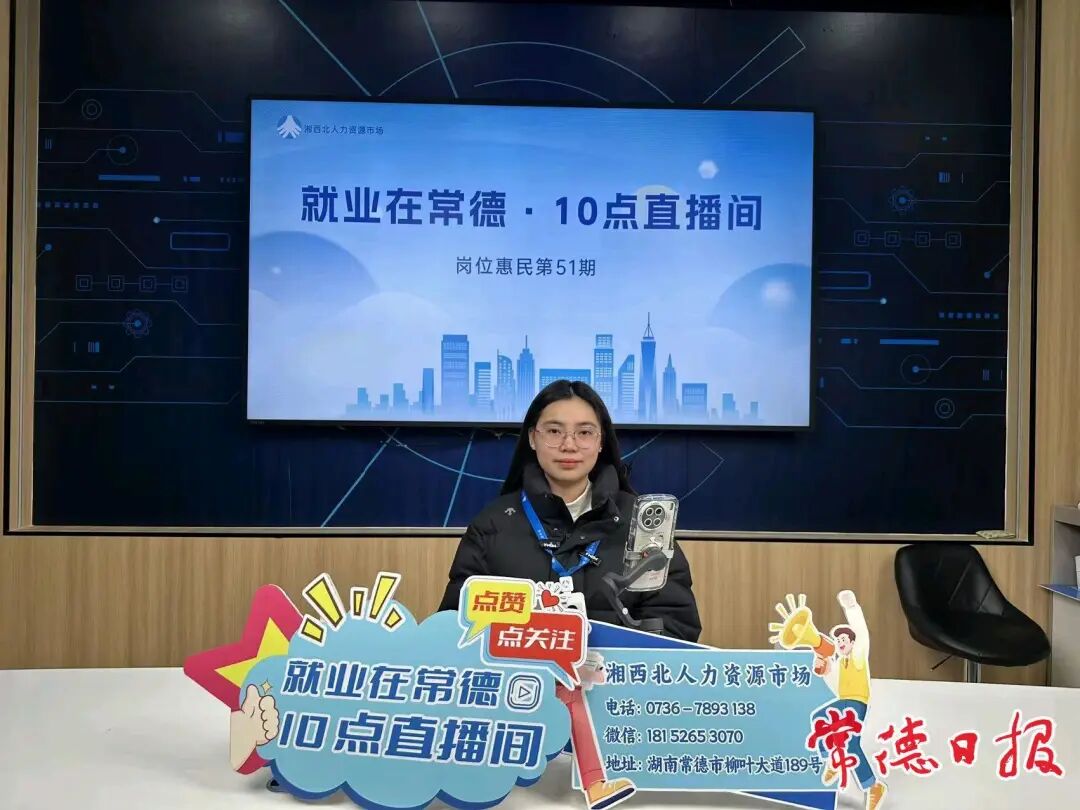
Group 1 - The event "Employment in Changde: 10 o'clock Live Broadcast" was launched on January 5, aiming to provide an immersive job-seeking experience for job seekers through live streaming, facilitating direct understanding of companies and job details [1] - The city plans to hold over 80 online and offline recruitment events this month, including regular recruitment and specialized activities targeting key groups such as college graduates and employment assistance month [3] - Recruitment positions will cover multiple key industries and livelihood sectors, including mechanical manufacturing, biotechnology, intelligent equipment, new energy, and housekeeping, to meet diverse job-seeking needs of various skill levels and industry backgrounds [3] Group 2 - The city has established an efficient online job information network, allowing job seekers to follow official platforms like "Xiangxi North Human Resources Market" on Douyin or video accounts to receive real-time updates on recruitment events and job information [3]