服装制造业

Search documents
浪莎股份:全资子公司签订厂房出租合同
Mei Ri Jing Ji Xin Wen· 2025-08-04 09:31
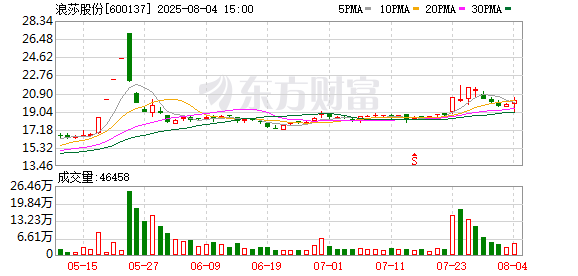
2024年1至12月份,浪莎股份的营业收入构成为:服装制造业占比99.88%,其他业务占比0.12%。 浪莎股份(SH 600137,收盘价:20.23元)8月4日晚间发布公告称,四川浪莎控股股份有限公司全资子 公司浙江浪莎内衣有限公司于2025年7月28日,与义乌市煦合企业管理有限公司签订了厂房《出租合 同》。本次厂房出租面积12,663平方米,租赁期限6年。为盘活资产,增加公司收入,浪莎内衣本次将 闲置厂房进行出租。公司将根据本合同履约义务以及收入确认原则在相应的会计期间确认收入,具体利 润金额以及对公司经营业绩的影响情况,以年度审计确认后的结果为准。四川浪莎控股股份有限公司董 事会2025年8月4日。 (文章来源:每日经济新闻) ...


酷特智能(300840.SZ):公司境外销售主要在美国、加拿大、欧盟、英国等
Ge Long Hui· 2025-08-04 07:21
Core Viewpoint - The company,酷特智能, provides a comprehensive one-stop service for B-end customers globally through its C2M clothing industry internet platform, covering various aspects from smart ordering to digital logistics [1] Group 1 - The company offers services including smart ordering, intelligent research and development, smart fitting, procurement of smart materials, intelligent production, and digital logistics [1] - The company's overseas sales are primarily focused on markets in the United States, Canada, the European Union, and the United Kingdom [1]
际华集团上涨6.4%,报4.49元/股
Jin Rong Jie· 2025-08-04 03:57
Core Viewpoint - On August 4, Jihua Group's stock price increased by 6.4%, reaching 4.49 CNY per share, with a trading volume of 1.041 billion CNY and a turnover rate of 5.48%, resulting in a total market capitalization of 19.718 billion CNY [1] Company Overview - Jihua Group Co., Ltd. is a significant producer of military supplies, police uniforms, workwear, and related products in China, responsible for approximately 50% of military and police uniform production tasks [1] - The company has an annual production capacity of 56 million sets of various clothing, 28 million pieces of accessories, 75 million pairs of shoes, 1.78 million tons of yarn, 57 million meters of grey fabric, and 74 million meters of dyed fabric [1] - Jihua Group operates over 50 wholly-owned and controlled subsidiaries across 23 provinces, municipalities, autonomous regions, Hong Kong, and Europe, with total assets exceeding 31 billion CNY [1] Shareholder Information - As of March 31, Jihua Group had 109,300 shareholders, with an average of 40,200 circulating shares per shareholder [1] Financial Performance - For the first quarter of 2025, Jihua Group reported a revenue of 1.631 billion CNY, a year-on-year decrease of 37.35%, while the net profit attributable to shareholders was 7.3961 million CNY, reflecting a year-on-year increase of 128.02% [1]

“轻量级”“小而美”优势明显!借数字经济“东风” 泳装产业全球化2.0蓝图已展开
Yang Shi Wang· 2025-08-03 07:58
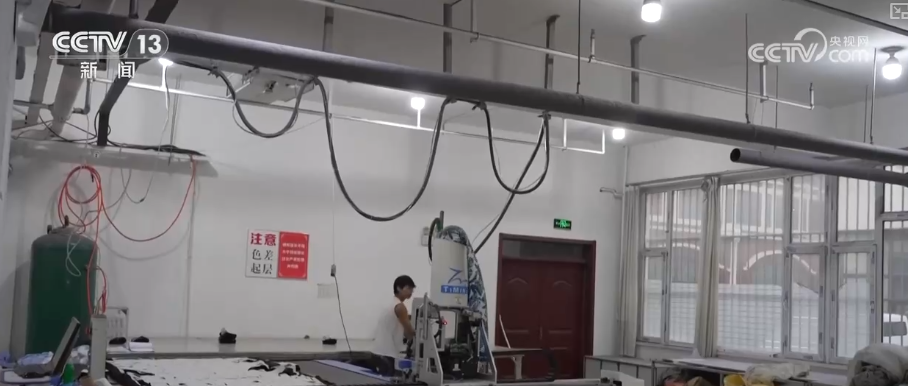
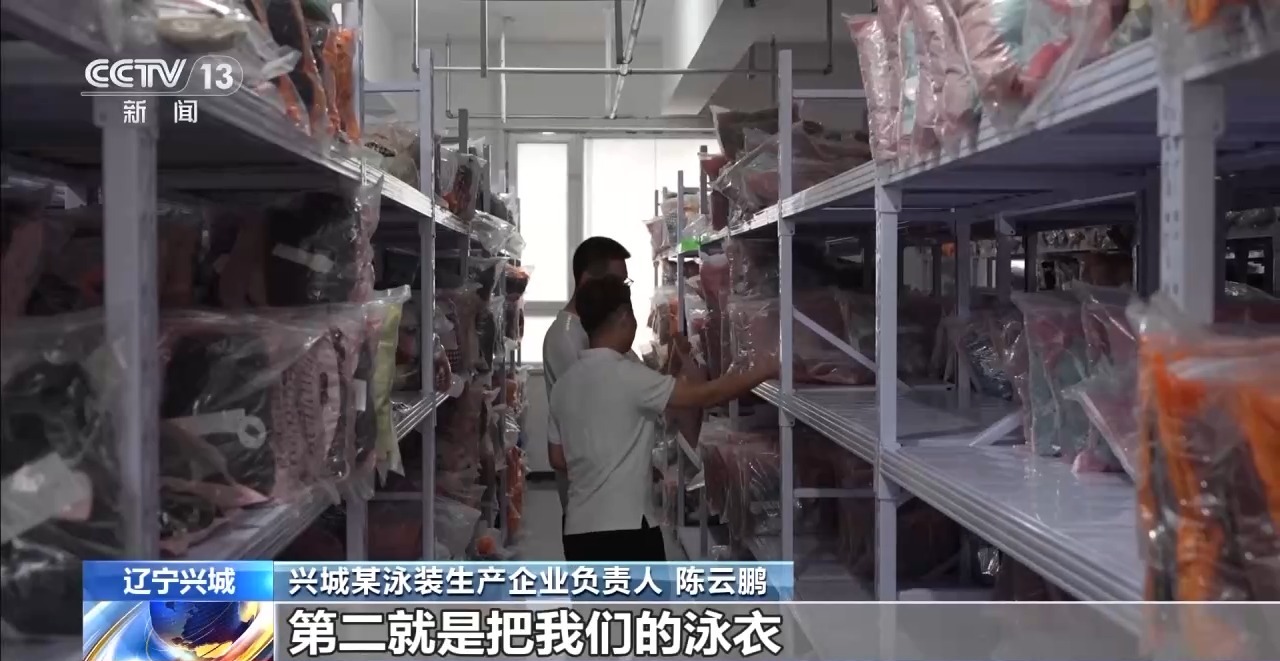
Core Insights - The swimming suit market is experiencing a sales peak during the summer, with Xingcheng, a small coastal city in Liaoning, being a significant player, producing one out of every four swimming suits sold globally [1][12] - Xingcheng's swimming suit industry has evolved over 40 years from small workshops to a global production hub, supported by local government initiatives [8][14] Industry Overview - Xingcheng has approximately 1,300 swimming suit manufacturing companies, with 17 of them being large-scale enterprises, and around 300 supporting companies in fabric, dyeing, and digital printing [8] - The local government is actively promoting the swimming suit industry towards clustering, high-end development, and globalization [8] Sales and Marketing Strategies - To combat seasonal sales fluctuations, companies are exploring various methods, including live streaming and collaborations with water parks [3][6] - The swimming suit wholesale market in Xingcheng hosts nearly 200 stores, primarily catering to external buyers [5] Production and Employment - Many swimming suit companies are located in suburban areas to attract more rural workers, with over half of the 237 administrative villages in the county having swimming suit processing facilities [11] - Most companies operate with around 50 employees, allowing for flexible production capabilities [11] Technological Advancements - The trend towards smart manufacturing is evident, with over 30% of the 33,000 production devices in Xingcheng utilizing advanced international technology [13] - The use of automated cutting, digital printing, and automated fabric laying in large-scale enterprises has reached 90% [13] Global Expansion - Xingcheng's swimming suit industry has initiated overseas brand acquisition strategies since around 2010, acquiring seven foreign R&D companies to enhance its global presence [18] - The annual production volume of swimming suits in Xingcheng has reached 170 million pieces, making it one of China's three major swimming suit production bases [18] Future Directions - The local government plans to drive industry upgrades through technological innovation, introducing smart manufacturing and establishing flexible production lines to meet global customization demands [18] - There are initiatives to integrate global designer resources for cross-border design collaboration and rapid sampling, aiming to shorten international order delivery times [18]
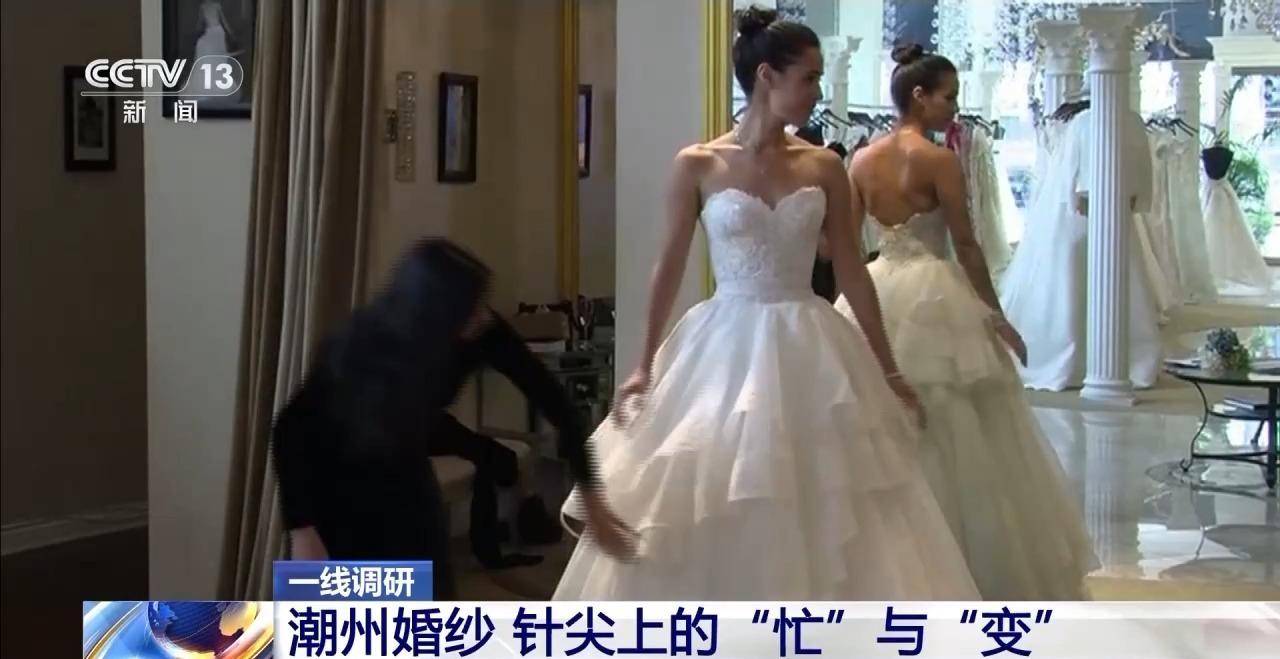
一线调研丨90%以上销往海外 潮州婚纱为何难以替代?
Sou Hu Cai Jing· 2025-08-03 05:35
Core Insights - Chaozhou, Guangdong is a globally recognized production base for wedding dresses and formal attire, producing over 20 million sets annually, with over 90% for export [1][8] - Despite external challenges, Chaozhou wedding dresses remain the preferred choice for many overseas clients, particularly from the United States [1][3] Industry Overview - The wedding dress market in the U.S. predominantly favors purchasing over renting, with strict timelines for orders that cannot be delayed or increased in price [3][12] - Chaozhou factories are currently fulfilling significant orders from the U.S., Europe, Latin America, and the Middle East, with specific design requirements based on regional preferences [5][8] Production and Craftsmanship - The production of wedding dresses involves intricate craftsmanship, with skilled artisans in Chaozhou, such as embroiderers, contributing to the high-quality output that is difficult to replicate elsewhere [10][12] - The production process remains in China despite trade tensions, as the craftsmanship and quality are unmatched compared to lower-cost regions like Southeast Asia [8][12] Market Dynamics - The wedding dress industry is seasonal, with major trade shows occurring from July to August, leading to new orders that align with U.S. market demands [14] - A well-established supply chain for raw materials in China supports the industry, ensuring timely access to necessary components [16] Innovation and Sales Channels - Chaozhou wedding dress companies are innovating by integrating technology into their production processes, significantly reducing labor time and costs [17][19] - The rise of cross-border e-commerce has opened new sales channels, with many companies reporting substantial increases in sales volume and revenue [19][21][22] - A shift from high-volume production to small-batch, customized orders is becoming prevalent in the industry [25]
滨海小城出圈有“密码” 全球四分之一的泳装来自这里
Yang Shi Xin Wen· 2025-08-03 01:25
Core Insights - The swimming suit market is experiencing a peak sales season, with a significant portion of global production originating from Xingcheng, a small coastal city in Liaoning, China, which produces one out of every four swimming suits sold globally [1][9]. Industry Overview - Xingcheng's swimming suit industry has evolved over 40 years from small workshops to a robust production base, with approximately 1,300 manufacturing companies and 17 large-scale enterprises [6][9]. - The annual output of the swimming suit industry in Xingcheng has reached 150 billion yuan, capturing 40% of the domestic market share and over 25% of the international market share, exporting to more than 140 countries and regions [8][26]. Production and Sales Dynamics - During peak months (June, July, August), a single company can produce over 1 million swimming suits, with efforts underway to diversify sales channels to mitigate seasonal downturns [2][4]. - The local government actively supports the industry by organizing job fairs and attracting cross-border companies to establish operations in Xingcheng, enhancing the local workforce and production capabilities [6][10]. Technological Advancements - Over 30% of the production equipment in Xingcheng is internationally advanced, with 90% of large-scale enterprises utilizing automated cutting, digital printing, and automated fabric laying technologies [18]. - The industry is increasingly adopting smart manufacturing techniques to meet global customization demands and reduce production cycles [26]. E-commerce and Global Expansion - The integration of e-commerce has allowed local companies to sell over 200 million units annually to more than 100 countries, with a notable increase in sales to South America [22][24]. - Xingcheng's companies have initiated overseas brand acquisition strategies, with 80% of local firms now owning their own brands, enhancing their competitive edge in the global market [24]. Future Directions - The industry aims to drive innovation through technology, focusing on flexible production lines and global design collaboration to shorten international order delivery times [26]. - There is a strategic emphasis on utilizing big data to analyze consumer preferences in Europe and Southeast Asia, fostering the development of niche brands and promoting capacity sharing among small and medium-sized manufacturers [26].
上海永太服装董事长李长虹:专注实业二十年,打造全球优秀工厂
Sou Hu Cai Jing· 2025-07-30 02:02
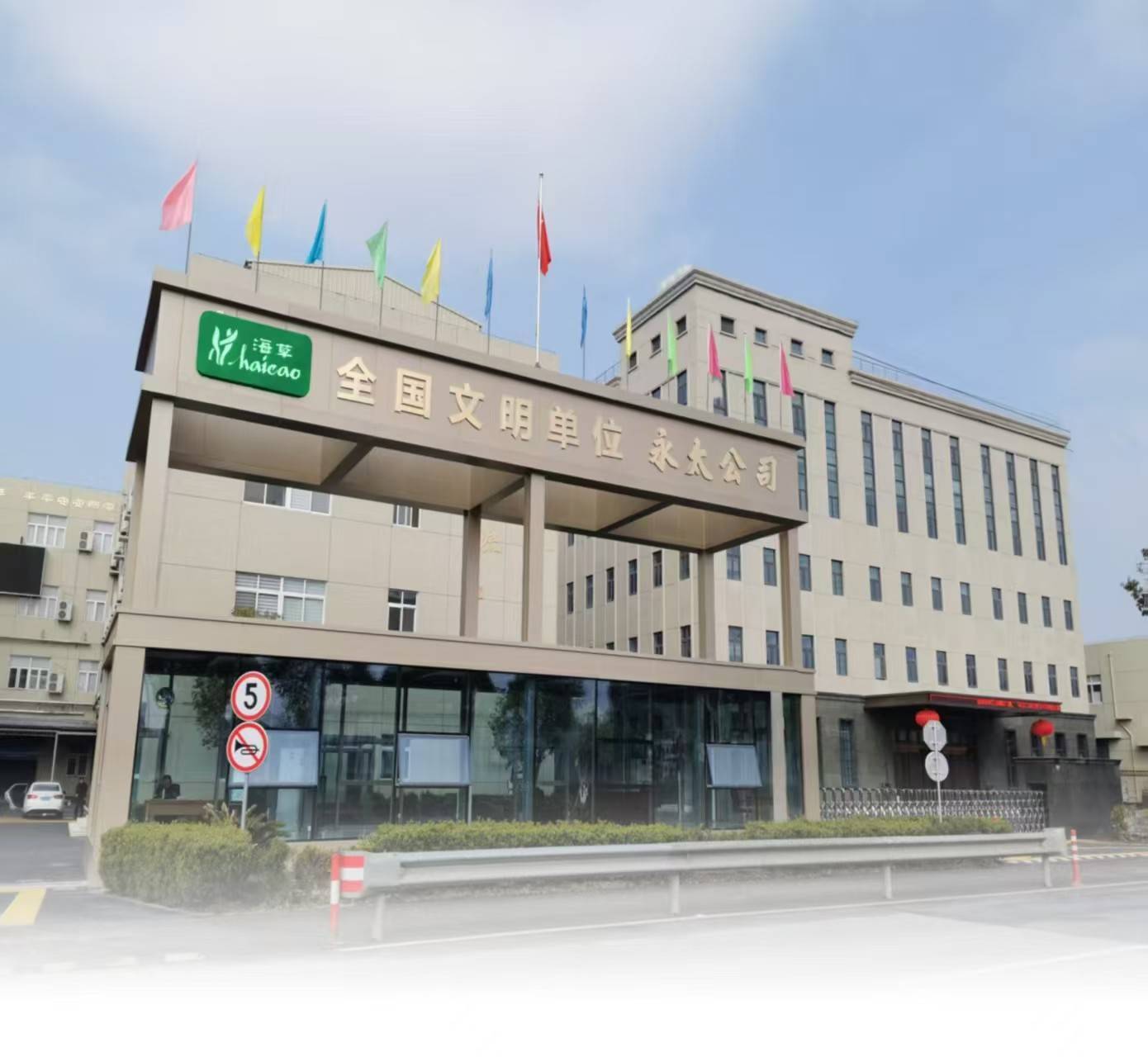
Core Viewpoint - The article highlights the success story of Shanghai Yongtai Garment Jinshan Co., Ltd., led by Chairman Li Changhong, who transformed the company from a small rural factory into a leading high-end suit manufacturer in Shanghai and one of Uniqlo's six global excellent factories [1][3]. Group 1: Company Development - Li Changhong founded Shanghai Yongtai Garment in 1997, initially focusing on women's shirts before shifting to men's suits due to market fluctuations [1]. - The company has an annual production capacity of 1.4 million pieces, ranking first in men's suit production in Shanghai, and has achieved a quality target of zero defects, complaints, and delays for two consecutive years [1][4]. - In the first quarter of 2025, the company's output value increased by 21% year-on-year, and employee income has steadily risen, contributing to local employment and economic growth [4]. Group 2: Quality Management - Yongtai implements an 8S management system and a quality responsibility tracing system, ensuring that all employees understand the importance of quality [4][6]. - The company has maintained a 100% customer satisfaction rate with zero returns on 2.8 million exported suits over the past two years, setting a quality benchmark in high-end suit manufacturing [4]. Group 3: Innovation and Employee Welfare - The "Li Changhong Garment R&D Model Innovation Studio" has developed standards that reduce labor production costs by 15% and improve production efficiency by 10%, serving as a model for the industry [6]. - The company emphasizes employee welfare, with a philosophy that prioritizes employee happiness over profits, leading to continuous growth in average employee income and a stable local employment ratio [7][9]. - Yongtai actively participates in social responsibility initiatives, including poverty alleviation and education support, and has been recognized for its integrity and harmonious labor relations [10].
克罗地亚5月平均月净工资1451欧元
Shang Wu Bu Wang Zhan· 2025-07-29 15:19
(原标题:克罗地亚5月平均月净工资1451欧元) 克罗地亚统计局7月21日报告称,2025年5月法人实体每位员工的每月平均净工资为 1,451 欧元,与 2024年5月相比名义增长 9.6%,实际增长 5.9%。与今年4月份相比,5月份平均净工资名义增长0.8%, 实际增长0.5%。五月份平均月净工资最高的是航空运输业,为 2,280 欧元,最低的是服装制造业,为 921 欧元。 ...
情趣内衣,彻底改变苏北县城
36氪· 2025-07-20 09:27
Core Viewpoint - The article highlights the unique economic transformation of Guanyun County in Jiangsu, which has become a hidden champion in the production of lingerie, specifically adult lingerie, contributing to a significant portion of China's market share in this niche industry [3][7][9]. Summary by Sections Economic Overview - Jiangsu is recognized as a strong economic province in China, with a balanced distribution of wealth across its cities and counties, where Guanyun County, despite its low GDP ranking, has emerged as a leader in a specific industry [3][4][7]. Industry Development - Guanyun County produces 60-70% of China's adult lingerie, with over 1,000 factories dedicated to this sector, and more than 80% of its output is for export [9][22]. - The county's annual sales in this industry have reached nearly 8 billion yuan, showcasing a significant economic impact [22]. Historical Context - Initially an agricultural county known for soybean production, Guanyun transitioned to lingerie manufacturing due to market opportunities identified by local entrepreneurs [11][16][19]. Key Figures - The rise of the lingerie industry in Guanyun is attributed to local youth like Lei Congrui, who capitalized on e-commerce platforms to establish a successful business model [17][20]. - Approximately 20,000 of the county's 1 million residents are involved in the lingerie industry, indicating a substantial local workforce dedicated to this sector [21]. Market Challenges - The industry faced challenges due to the US-China trade war, which affected export dynamics and profit margins due to increased tariffs [25][31]. - The cancellation of the small parcel tax exemption in the US has led to a shift in business strategies, with local companies adapting to new market conditions [34][36]. Government Support - The local government has recognized the lingerie industry as a legitimate economic sector, implementing development plans and establishing an industrial park to support growth [41][44]. Cultural Shift - There is a notable cultural shift in the perception of adult lingerie in China, moving from taboo to a more accepted form of self-expression and fashion, as evidenced by the evolving designs and marketing strategies [46][50].

美国突然变卦!特朗普单方面对越南改变关税协议,让越南领导层措手不及?越南企业坐不住了
Sou Hu Cai Jing· 2025-07-17 13:36
Group 1 - The core point of the article highlights the unexpected announcement by President Trump regarding tariffs on Vietnamese goods, which has created significant uncertainty for Vietnam's economy and businesses [1][4][6] - Vietnam has become the 10th largest trading partner of the U.S., with exports exceeding $130 billion, making any changes in trade agreements particularly impactful [3][6] - The sudden increase in tariffs, particularly the 20% on exports to the U.S. and 40% on re-exported goods, poses a challenge for Vietnamese manufacturers who rely heavily on imported materials from China [4][6] Group 2 - The textile industry in Vietnam, exemplified by companies like Thanh Cong Garment, faces a potential increase in costs due to the new tariffs, which could lead to a significant reduction in orders from U.S. clients [4][6] - Vietnam's economy is highly dependent on exports, with nearly 90% of its GDP coming from trade, and one-third of its exports going to the U.S., making the tariff changes a direct threat to economic growth [6][8] - The ambiguity surrounding the definition of "transshipment" in the new trade agreement raises concerns for Vietnamese businesses that depend on Chinese raw materials, potentially leading to further economic repercussions [6][8]