
煤炭加工

Search documents
2025年9月份核心CPI同比涨幅持续扩大 PPI同比降幅继续收窄
Xin Hua Cai Jing· 2025-10-15 02:47
Group 1: CPI Analysis - The Consumer Price Index (CPI) increased by 0.1% month-on-month in September, while year-on-year it decreased by 0.3%, with the core CPI (excluding food and energy) rising by 1.0%, marking the fifth consecutive month of growth [1][2][3] - Food prices rose by 0.7% month-on-month, contributing approximately 0.13 percentage points to the CPI increase, with seasonal price increases observed in fresh vegetables, eggs, fresh fruits, lamb, and beef, ranging from 0.9% to 6.1% [2] - Year-on-year, food prices fell by 4.4%, primarily driven by significant declines in pork, fresh vegetables, eggs, and fresh fruits, which collectively impacted the CPI by approximately 0.78 percentage points [3] Group 2: PPI Analysis - The Producer Price Index (PPI) remained flat month-on-month, with a year-on-year decline of 2.3%, but the rate of decline has narrowed by 0.6 percentage points compared to the previous month [4][5] - The stabilization of prices in certain industries is attributed to improved supply-demand dynamics, with notable month-on-month price increases in coal processing (3.8%) and black metal smelting (0.2%) [4] - The ongoing development of a unified national market has led to a reduction in the year-on-year price decline in several industries, including coal processing and black metal smelting, with the downward impact on PPI decreasing by approximately 0.34 percentage points [5]
积极信号!统计局最新公布
Sou Hu Cai Jing· 2025-10-15 02:38
Group 1 - The core CPI excluding food and energy prices increased by 1.0% year-on-year, marking the first return to a 1% increase in nearly 19 months, with the growth rate expanding for the fifth consecutive month [1][4] - In September 2025, the national consumer price index (CPI) decreased by 0.3% year-on-year, with urban areas down 0.2% and rural areas down 0.5% [1][4] - Food prices fell by 4.4%, significantly impacting the CPI decline, while non-food prices rose by 0.7% [1][2] Group 2 - In September, the prices of food, tobacco, and alcohol decreased by 2.6% year-on-year, contributing approximately 0.74 percentage points to the CPI decline [1][2] - Specific food items saw significant price drops: fresh vegetables down 13.7%, eggs down 11.9%, and pork down 17.0% [1][4] - The average CPI for January to September 2025 was down 0.1% compared to the same period last year [1] Group 3 - The PPI (Producer Price Index) decreased by 2.3% year-on-year, with the decline narrowing by 0.6 percentage points compared to the previous month [7] - The industrial producer purchase prices also fell by 3.1% year-on-year, with a 0.1% increase month-on-month [4][7] - The prices of coal processing and black metal smelting industries showed signs of stabilization, with coal processing prices up by 3.8% month-on-month [5][7]
国家统计局公布重要数据
Zhong Guo Zheng Quan Bao· 2025-10-15 02:35
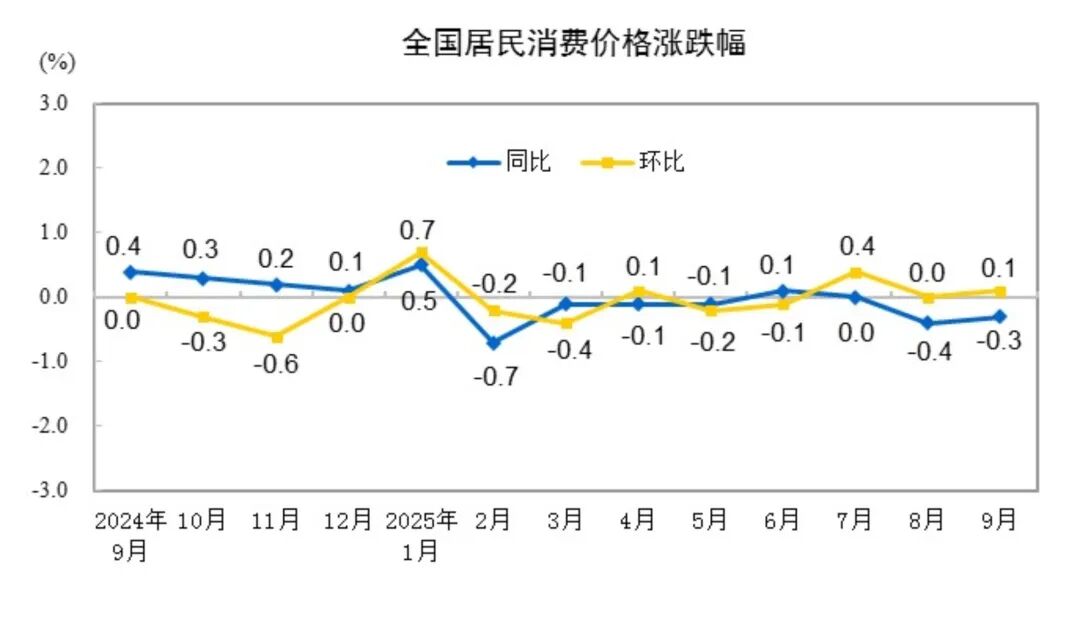
Group 1: Consumer Price Index (CPI) Insights - In September, the Consumer Price Index (CPI) showed a month-on-month increase of 0.1%, reversing from the previous month where it was flat [1][3] - Year-on-year, the CPI decreased by 0.3%, but the decline was narrower by 0.1 percentage points compared to the previous month [6] - The core CPI, excluding food and energy, rose by 1.0% year-on-year, marking the first return to a 1% increase in nearly 19 months [6] Group 2: Producer Price Index (PPI) Insights - The Producer Price Index (PPI) remained flat month-on-month for the second consecutive month [7] - Year-on-year, the PPI decreased by 2.3%, with the decline narrowing by 0.6 percentage points from the previous month [11] - Factors contributing to the PPI trends include improved supply-demand structures in certain industries and the impact of international oil prices on domestic oil-related industry prices [9][10]

积极信号!统计局最新公布
证券时报· 2025-10-15 02:24
Core Viewpoint - The article discusses the trends in China's Consumer Price Index (CPI) and Producer Price Index (PPI), highlighting a decline in CPI and a narrowing decline in PPI, indicating a complex economic environment with varying price movements across different sectors [2][5][7]. CPI Analysis - In September 2025, the national CPI decreased by 0.3% year-on-year, with urban areas down 0.2% and rural areas down 0.5% [2]. - Food prices fell by 4.4%, significantly impacting the CPI, while non-food prices increased by 0.7% [2]. - The core CPI, excluding food and energy, rose by 1.0%, marking the first return to this level in 19 months [5]. - Specific food price declines included fresh vegetables down 13.7%, eggs down 11.9%, and pork down 17.0%, collectively influencing the CPI negatively [2][5]. PPI Analysis - The PPI decreased by 2.3% year-on-year, but the decline was narrower than the previous month, indicating some stabilization in industrial prices [7]. - The PPI's performance was influenced by improved supply-demand structures in certain industries, with coal processing prices up 3.8% and black metal smelting prices up 0.2% [6][7]. - The article notes that the construction of a unified national market is helping to optimize market competition and reduce price declines in various sectors [7]. Price Movements - In September, the CPI increased by 0.1% month-on-month, with food prices rising by 0.7% and non-food prices slightly declining [3][4]. - The article highlights that the prices of services decreased due to seasonal factors, such as the end of summer and the timing of the Mid-Autumn Festival, which affected travel and accommodation costs [4]. Conclusion - Overall, the article presents a mixed picture of the economic landscape in China, with declining CPI driven by food prices and a stabilizing PPI reflecting improvements in certain industrial sectors [5][7].

核心CPI同比涨幅连续5个月扩大,“反内卷”带动相关行业价格改善
Di Yi Cai Jing· 2025-10-15 02:16
Core Insights - The Consumer Price Index (CPI) and Producer Price Index (PPI) have shown a narrowing decline in September, benefiting from low base effects and the effectiveness of anti-involution and consumption promotion policies [1][3]. CPI Analysis - In September, the CPI increased by 0.1% month-on-month, while the year-on-year decline was 0.3%, a reduction of 0.1 percentage points from the previous month [1]. - The core CPI, excluding food and energy, rose by 1.0% year-on-year, marking the first return to a 1% increase in nearly 19 months [1][3]. - Food prices fell by 4.4%, contributing significantly to the overall CPI decline, with the tail effect accounting for approximately -0.8 percentage points of the CPI change [3]. PPI Analysis - The PPI remained flat month-on-month for two consecutive months, with a year-on-year decline of 2.3%, narrowing by 0.6 percentage points from the previous month [1][5]. - Factors contributing to the PPI's performance include improved supply-demand structures and the impact of international oil price declines on domestic oil-related industries [5]. - Certain industries, such as coal processing and black metal smelting, saw reduced year-on-year price declines, contributing to a decrease in the overall PPI decline by approximately 0.34 percentage points [5]. Industry Trends - The modernization of the industrial system and the release of consumption potential have led to price increases in related industries, with aircraft manufacturing prices rising by 1.4% and electronic materials by 1.2% year-on-year [6]. - Policies aimed at boosting consumption are showing effects, with significant price increases in high-quality and upgraded consumer goods, such as a 14.7% rise in arts and crafts products [6]. - Analysts predict that the year-on-year decline in PPI may narrow to below -2.0% in the fourth quarter due to various supportive policies and market conditions [6].
2025年9月份核心CPI同比涨幅持续扩大PPI同比降幅继续收窄
Guo Jia Tong Ji Ju· 2025-10-15 02:06
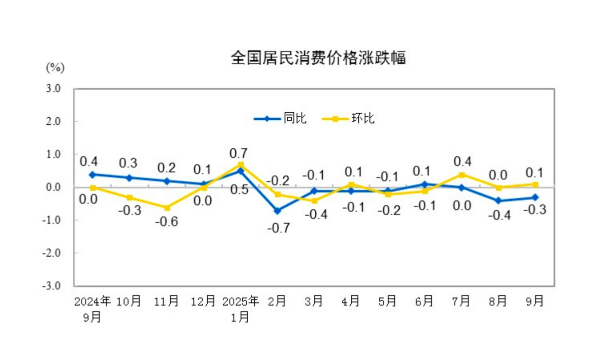
Group 1: CPI Analysis - The Consumer Price Index (CPI) increased by 0.1% month-on-month in September, while year-on-year it decreased by 0.3% [1][2] - Core CPI, excluding food and energy, rose by 1.0% year-on-year, marking the fifth consecutive month of growth [1][3] - Food prices increased by 0.7% month-on-month, with seasonal price rises in fresh vegetables, eggs, fresh fruits, lamb, and beef, while pork and aquatic products saw price declines [2][3] Group 2: PPI Analysis - The Producer Price Index (PPI) remained flat month-on-month, with a year-on-year decline of 2.3%, but the rate of decline narrowed by 0.6 percentage points compared to the previous month [4][5] - Improvements in supply-demand structure led to price stabilization in certain industries, such as coal processing and black metal smelting, which saw price increases [4][5] - Input factors, particularly the decline in international oil prices, contributed to lower prices in domestic oil-related industries [4][5]
国家统计局:9月CPI同比下降0.3%!食品和能源价格同比下降,金饰品价格大涨!专家:消费市场运行总体平稳
Mei Ri Jing Ji Xin Wen· 2025-10-15 02:03
Group 1: CPI Analysis - The Consumer Price Index (CPI) increased by 0.1% month-on-month in September, reversing from the previous month’s flat performance, with food prices rising by 0.7% [2] - Year-on-year, the CPI decreased by 0.3%, but the decline was narrower by 0.1 percentage points compared to the previous month, primarily due to the tail effect [3] - Core CPI, excluding food and energy, rose by 1.0% year-on-year, marking the fifth consecutive month of growth and the first time in 19 months that it returned to a 1% increase [3] Group 2: PPI Analysis - The Producer Price Index (PPI) remained flat month-on-month for two consecutive months, with improvements in supply-demand structure stabilizing prices in certain industries [4] - Year-on-year, the PPI decreased by 2.3%, but the decline was reduced by 0.6 percentage points compared to the previous month, influenced by macroeconomic policies and market competition [5] - Specific industries such as coal processing and black metal smelting showed reduced price declines, contributing positively to the PPI [5]

国家统计局:9月份核心CPI同比涨幅持续扩大 PPI同比降幅继续收窄
Sou Hu Cai Jing· 2025-10-15 01:51
Group 1: CPI Analysis - The Consumer Price Index (CPI) increased by 0.1% month-on-month in September, marking a shift from the previous month where it was flat [2] - Year-on-year, the CPI decreased by 0.3%, with the decline narrowing by 0.1 percentage points compared to the previous month [3] - Core CPI, excluding food and energy, rose by 1.0% year-on-year, marking the fifth consecutive month of growth [3] Group 2: PPI Analysis - The Producer Price Index (PPI) remained flat month-on-month, continuing a trend for two months [4] - Year-on-year, the PPI decreased by 2.3%, with the decline narrowing by 0.6 percentage points compared to the previous month [5] - Improvements in supply-demand structure have stabilized prices in certain industries, such as coal processing and black metal smelting, which saw price increases [4][5]
核心CPI同比上涨1.0%,涨幅连续第5个月扩大
Guo Jia Tong Ji Ju· 2025-10-15 01:50
Group 1: CPI Analysis - The Consumer Price Index (CPI) increased by 0.1% month-on-month in September, marking a shift from the previous month where it was flat [2] - Year-on-year, the CPI decreased by 0.3%, with the decline narrowing by 0.1 percentage points compared to the previous month [3] - Core CPI, excluding food and energy, rose by 1.0% year-on-year, marking the fifth consecutive month of growth and the first time in 19 months that it returned to a 1% increase [3] Group 2: Food and Energy Prices - Food prices rose by 0.7% month-on-month, contributing approximately 0.13 percentage points to the CPI increase, with seasonal price increases observed in fresh vegetables, eggs, fresh fruits, lamb, and beef [2] - Year-on-year, food prices fell by 4.4%, primarily driven by significant declines in pork, fresh vegetables, eggs, and fresh fruits, which collectively impacted the CPI by approximately 0.78 percentage points [3] - Energy prices decreased by 2.7% year-on-year, contributing to a 0.20 percentage point decline in the CPI [3] Group 3: PPI Analysis - The Producer Price Index (PPI) remained flat month-on-month for two consecutive months, with a year-on-year decline of 2.3%, which is a reduction of 0.6 percentage points compared to the previous month [4][5] - The stabilization in PPI is attributed to improved supply-demand dynamics in certain industries, with notable price increases in coal processing and black metal smelting [4] - Input factors, particularly the decline in international oil prices, have led to decreased prices in domestic oil-related industries [5] Group 4: Industry-Specific Insights - The ongoing construction of a unified national market has contributed to a narrowing of price declines in various sectors, with significant improvements noted in coal processing, black metal smelting, and photovoltaic equipment manufacturing [5] - Upgrading industrial structures and releasing consumer potential have led to price increases in high-end manufacturing sectors, such as aircraft manufacturing and electronic materials [5]
解读:9月核心CPI同比涨幅持续扩大,PPI同比降幅继续收窄
Guo Jia Tong Ji Ju· 2025-10-15 01:48
9月份,消费市场运行总体平稳,居民消费价格指数(CPI)环比上涨0.1%,同比下降0.3%,扣除食品 和能源价格的核心CPI同比上涨1.0%,涨幅连续第5个月扩大。全国统一大市场建设纵深推进,市场竞 争秩序持续优化,工业生产者出厂价格指数(PPI)环比继续持平;同比下降2.3%,降幅比上月收窄0.6 个百分点。 一、CPI环比由平转涨,核心CPI同比涨幅回升至1% 二、PPI环比持平,同比降幅继续收窄 PPI环比连续两个月持平。本月PPI环比运行的主要特点:一是供需结构改善带动部分行业价格明显企 稳。煤炭加工价格环比上涨3.8%,煤炭开采和洗选业价格上涨2.5%,黑色金属冶炼和压延加工业价格 上涨0.2%,均连续两个月上涨,光伏设备及元器件制造价格由上月下降0.2%转为上涨0.8%;非金属矿 物制品业、锂离子电池制造价格分别下降0.4%和0.2%,降幅比上月分别收窄0.6个和0.3个百分点。二是 输入性因素影响国内石油相关行业价格环比下降。国际油价下行带动国内石油相关行业价格环比下降。 其中石油开采价格下降2.7%,精炼石油产品制造价格下降1.5%,有机化学原料制造价格下降0.6%,化 学纤维制造业价格下降0 ...