
矿产

Search documents
刚刚买下星巴克中国,博裕又募新基金了
投中网· 2025-12-07 07:04
以下文章来源于LP波谱 ,作者黎曼 LP波谱 . 本账号专注LP市场报道。"波浪、谱系"是识别市场的维度,也是定义市场的坐标;此外,波谱(Pop Art)也意为放低意义与史诗的执念,认同商业的日常之美。 将投中网设为"星标⭐",第一时间收获最新推送 三家产业巨头的同时入局。 作者丨黎曼 来源丨LP波谱 宁德时代、洛阳钼业、伊泰煤炭三家产业巨头,各自将 5 亿元资金托付给一家刚刚接管星巴克中国 运营权的私募机构。 这家机构就是中国知名 PE ,博裕资本。博裕资本凭借其成功投资阿里巴巴、美团、小红书、蜜雪 冰城等企业的往绩,以及在消费领域收购星巴克中国和 SKP 的近期动作,进一步巩固了头部 PE 的 位置。 三大产业 LP 出手 博裕新基金将募集 80-100 亿元 博裕新基金的具体消息是: 公告明确,基金管理人为博裕陶然(上海)股权投资管理有限责任公司,普通合伙人为博裕天枢(宁 波)自有资金投资有限责任公司。 三家产业资本参与私募股权基金投资,反映出的动机和战略意图各有侧重。 次日,洛阳钼业发布关联交易公告,其全资子公司西藏施莫克商贸有限公司认购 5 亿元基金份额。 由于宁德时代间接持有洛阳钼业 24.91% ...

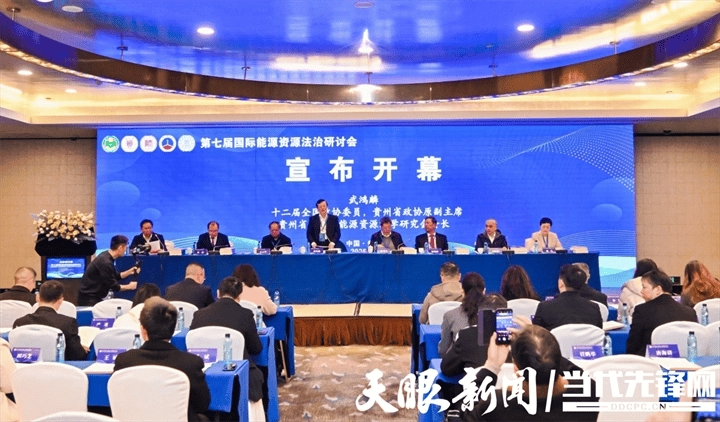
服务高质量发展!第七届国际能源资源法治研讨会在贵阳举行
Sou Hu Cai Jing· 2025-12-07 02:18
Core Viewpoint - The seventh International Energy Resources Law Forum was held in Guiyang, focusing on the theme of strengthening the modernization of energy resource legal systems to promote high-quality socio-economic development [1]. Group 1: Event Overview - The forum was organized by various legal and academic institutions, including the Guizhou Law Society and Guizhou University, and aimed to create a high-level academic exchange platform [3]. - Nearly 200 experts and scholars from universities, research institutions, judicial bodies, government departments, law firms, and energy resource companies participated in the discussions [1]. Group 2: Key Discussion Topics - The forum featured five major discussion panels covering critical areas of energy resource law, including comprehensive legal research, mineral resource law, energy law, land resource law, and the law of forests, water, oceans, biodiversity, and climate resources [5]. - The "Mineral Resource Law Research" panel addressed practical issues following the implementation of the new Mineral Resource Law, focusing on policies for efficient mining and the definition of illegal mining responsibilities [5]. - The "Energy Law Research" panel discussed legal pathways for achieving carbon neutrality and energy transformation, emphasizing multi-energy complementarity and clean coal utilization [5]. - The "Land Resource Law Research" panel explored land system reforms in rural revitalization, including collective land use rights and the transfer of homestead rights [5]. - The panel on "Forests, Water, Oceans, Biodiversity, and Climate Resource Law" covered global issues such as judicial practices for forest carbon sinks and benefit-sharing of marine genetic resources [5]. Group 3: Future Directions - Participants expressed a commitment to using the forum as a catalyst for enhancing theoretical research and practical innovation in energy resource law, aiming to elevate the legal framework to support high-quality socio-economic development [7]. - The publication of "Research on Energy and Resource Law" during the forum aims to provide academic support for constructing a legal system in this field and offers practical references for legislative improvement, law enforcement optimization, and judicial practice [7]. - The Guizhou Law Society's Energy Resource Law Research Association has developed into a professional academic platform with over 500 members, contributing to the integration of energy security and green transformation [8].
矿业股普涨 美国雅保(ALB.US)涨8%
Zhi Tong Cai Jing· 2025-12-05 16:41
Core Viewpoint - U.S. mining stocks experienced a significant rally, driven by government plans to increase stakes in key mineral companies, which has historically boosted stock prices [1] Group 1: Market Reaction - U.S. mining stocks saw a broad increase, with notable gains including an 8% rise for Albemarle (ALB.US), over 4% for Trilogy Metals (TMQ.US), and over 2% for MP Materials (MP.US) [1] Group 2: Government Actions - The U.S. government has invested over $1 billion in acquiring stakes in key mineral and mining companies over the past year, which has contributed to rising stock prices [1] - Specific transactions include a $400 million investment for a 15% stake in MP Materials (MP.US), a $670 million stake in magnet producer VMC (VMC.US), and a $35.6 million stake in Trilogy Metals (TMQ.US) for 10% [1] - In September, the government announced plans to acquire shares in Lithium Americas (LAC.US), which is developing the largest lithium deposit in the U.S., as part of a restructuring of a $2.23 billion existing loan agreement with the Department of Energy [1]


美股异动 矿业股普涨 美国雅保(ALB.US)涨8%
Jin Rong Jie· 2025-12-05 16:05
Core Viewpoint - U.S. mining stocks experienced a broad rally, driven by government plans to increase stakes in key mineral companies, which has historically boosted stock prices [1] Group 1: Market Reaction - U.S. mining stocks saw significant gains, with Albemarle (ALB.US) rising by 8%, Trilogy Metals (TMQ.US) increasing by over 4%, and MP Materials (MP.US) up by over 2% [1] Group 2: Government Actions - The U.S. government has invested over $1 billion in acquiring stakes in key mineral and mining companies over the past year, which has led to increased stock prices for these companies [1] - Notable transactions include a $400 million investment for a 15% stake in MP Materials (MP.US), a $670 million investment in magnet producer VMC (VMC.US), and a $35.6 million investment for a 10% stake in Trilogy Metals (TMQ.US) [1] - In September, the government announced plans to acquire shares in Lithium Americas (LAC.US), which is developing the largest lithium deposit in the U.S., as part of a restructuring of a $2.23 billion existing loan agreement with the Department of Energy [1]
2025中国(普洱)茶咖博览会签约项目超7亿元
Zhong Guo Xin Wen Wang· 2025-12-05 14:00
Core Viewpoint - The 2025 China (Pu'er) International Coffee and Tea Expo has successfully signed contracts worth over 729 million yuan, indicating strong investment interest in the region's coffee and tea industries [1] Group 1: Event Overview - The expo opened on December 5 in Pu'er City, Yunnan Province, featuring a signing ceremony for investment projects [1] - The theme of the expo is "Chinese Tea and Coffee: A Fragrant Encounter with the World," marking the first dual event combining a coffee and tea expo [1] Group 2: Investment Details - A total of 18 projects were signed, with a combined investment amount of 729 million yuan [1] - The projects cover various sectors, including cultural tourism, urban development, major infrastructure investment, mineral resource exploration, and deep processing of highland specialty agricultural products [1] - Among the signed projects, 11 were signed during the event with an investment of 495 million yuan, while 7 projects were signed outside the event totaling 234 million yuan [1] Group 3: Participation and Impact - The expo attracted over 100 domestic and international companies, more than 5,000 guests, and around 2,000 buyers [1]
中国大宗商品价格指数连续七个月环比回升
Zhong Guo Xin Wen Wang· 2025-12-05 11:37
中国大宗商品价格指数连续七个月环比回升 中新社北京12月5日电 (记者 阮煜琳)中国物流与采购联合会5日发布数据显示,2025年11月份,中国大 宗商品价格指数(CBPI)为114.1点,环比上涨0.8%,同比上涨1.6%,保持稳中向好态势。 编辑:付健青 广告等商务合作,请点击这里 本文为转载内容,授权事宜请联系原著作权人 中新经纬版权所有,未经书面授权,任何单位及个人不得转载、摘编或以其它方式使用。 关注中新经纬微信公众号(微信搜索"中新经纬"或"jwview"),看更多精彩财经资讯。 分行业看,有色价格指数继续走高,能源价格指数止跌反弹,农产品价格指数小幅上涨,矿产价格指数 继续回升,黑色系价格指数跌幅收窄,化工价格指数继续下行。 分商品看,在中国物流与采购联合会重点监测的50种大宗商品中,11月价格与上月相比,25种(50%)大 宗商品价格上涨,25种(50%)大宗商品价格下跌。11月涨幅前三的大宗商品为碳酸锂、焦炭和瓦楞纸, 环比分别上涨15%、7.2%和7.1%;跌幅前三的为甲醇、玻璃和棕榈油,环比分别下跌8.3%、7.1%和 6%。 分析认为,总体来看,中国大宗商品市场景气水平继续回升,保持稳中 ...
斯塔默涉华表态
Xin Lang Cai Jing· 2025-12-03 14:35
Core Viewpoint - UK Prime Minister Starmer emphasizes the need for a serious approach to UK-China relations, criticizing the previous Conservative government's negligence in managing the relationship, and advocating for a cautious yet cooperative stance to enhance the UK's international standing and protect national interests [1][16][27]. Summary by Relevant Sections UK-China Relations - Starmer describes the historical fluctuations in UK-China relations, noting a transition from a "golden era" to a "frozen era," and rejects a binary approach to engagement, asserting that cooperation and trade can coexist with self-protection [3][17][27]. - He criticizes the previous government's passive attitude towards China, highlighting China's significant role in technology, trade, and global governance, and labels the failure to manage this relationship as "dereliction of duty" [3][17][27]. - Starmer points out that since 2018, French and German leaders have made multiple visits to China, while the last UK leader to visit was Theresa May in 2018, indicating a need for renewed engagement [3][17][27]. Economic Cooperation - Starmer emphasizes that after ensuring national security, the UK can pursue cooperation with China in various sectors, including financial services, creative industries, pharmaceuticals, and luxury goods, which present significant export opportunities [3][17][27]. - He expresses a commitment to support UK businesses in seizing these opportunities, indicating a proactive approach to economic engagement with China [3][17][27]. Government Actions - Since the Labour Party took office, at least four cabinet ministers have visited China, reflecting a sustained effort to improve relations, and Starmer is reportedly planning a visit to China next year [3][17][27]. - The Labour government's approach is seen as a systematic reflection on the Conservative Party's long-term policies, signaling a willingness to enhance cooperation with China [4][18][29].

安宁股份:收购经质矿产有利于提高公司资源储量等
Zheng Quan Ri Bao Wang· 2025-12-03 13:44
Core Viewpoint - The acquisition of Jingzhi Minerals by Anning Co., Ltd. (002978) is expected to enhance the company's resource reserves, business scale, market share, and profitability [1] Group 1 - The acquisition is beneficial for increasing resource reserves [1] - The deal will contribute to the expansion of business scale [1] - It is anticipated to improve market share [1] - The acquisition is expected to enhance profitability [1]
强化AI领域竞争力,美国拉8国加强关键矿产供应链
Huan Qiu Shi Bao· 2025-12-02 22:55
Core Points - The U.S. is seeking to strengthen its competitiveness in the AI sector by forming agreements with eight allied nations to enhance the supply chain for essential computer chips and critical minerals [1][2] - A meeting is scheduled for December 12 at the White House, involving officials from the U.S., Japan, South Korea, Singapore, the Netherlands, the UK, Israel, the UAE, and Australia to discuss collaboration in energy, critical minerals, advanced semiconductor manufacturing, AI infrastructure, and logistics [1] - The initiative is seen as a continuation of previous U.S. efforts to secure supply chains for critical minerals, dating back to the Trump administration's Energy Resources Governance Initiative and the Biden administration's Mineral Security Partnership [1] Industry Insights - The selected allied countries possess complementary strengths in relevant fields, such as Japan and the Netherlands in semiconductor equipment, and South Korea and Singapore as leading chip manufacturers and logistics hubs [2] - The plan is characterized as a U.S.-centric strategy rather than a direct response to China, although it acknowledges the competitive landscape between the U.S. and China in the AI domain [2] - Despite the U.S. efforts, challenges remain in altering the existing global supply chain dynamics, particularly given China's dominance in rare earth supply chains, holding over 90% of global refining capacity for rare earth and permanent magnet materials [2]
下先手棋打主动仗 更好统筹发展和安全
Liao Ning Ri Bao· 2025-11-30 00:48
维护国家国防安全、粮食安全、生态安全、能源安全、产业安全,是党中央赋予东北的重要使命, 辽宁责无旁贷。从推进兴边富民、强边固防,夯实国家粮食稳产保供"压舱石",到加强生态保护和修 复,打造清洁能源强省,再到构建以先进制造业为骨干的现代化产业体系……我们始终锚定维护国 家"五大安全",坚定不移贯彻总体国家安全观,勇于争先、攻坚克难,努力形成对国家重大战略的坚强 支撑。面向"十五五",我们要持之以恒在提升维护国家"五大安全"能力上下功夫,继续牢牢牵住责任制 这个"牛鼻子",落实党委(党组)国家安全责任制,全面加强各领域安全能力建设,巩固基础领域、聚 焦重点领域、发力新兴领域,切实筑牢国家安全的辽宁屏障。 安全是发展的前提,发展是安全的保障。党的二十届四中全会把"坚持统筹发展和安全"列为"十五 五"时期经济社会发展必须遵循的一条重要原则。省委十三届十次全会着眼更好统筹发展和安全,就守 住安全发展底线,加快建设更高水平的平安辽宁提出明确要求、作出工作部署。这不仅是我们克难关、 战风险、迎挑战的现实需要,更是推动经济行稳致远、服务国家发展大局的重要保障。 社会治理是建设更高水平平安辽宁的关键一环。抓好安全生产,深入推进 ...