可再生能源

Search documents
三部门:鼓励各地区对零碳园区建设给予资金支持,通过地方政府专项债券资金等支持符合条件的项目
news flash· 2025-07-08 06:16
Core Viewpoint - The National Development and Reform Commission, Ministry of Industry and Information Technology, and National Energy Administration have issued a notice to promote the construction of zero-carbon parks, aiming to support regions in achieving carbon peak and carbon neutrality goals through various measures and funding channels [1][2]. Group 1: Key Tasks - Accelerate the transformation of energy structure in parks by enhancing the development and utilization of renewable energy and promoting green electricity supply models [2][3]. - Promote energy conservation and carbon reduction in parks by establishing energy and carbon emission management systems and encouraging enterprises to adopt advanced energy-efficient practices [3][4]. - Optimize the industrial structure of parks by developing low-energy, low-pollution, and high-value-added industries, and exploring green manufacturing models [3][4]. - Enhance resource conservation and intensive use in parks by improving spatial planning and promoting recycling networks for industrial waste [3][4]. - Upgrade park infrastructure by optimizing planning and construction of energy supply systems and promoting low-carbon transportation [3][4]. Group 2: Support Measures - The National Development and Reform Commission will utilize existing funding channels to support zero-carbon park construction, encouraging local governments and policy banks to provide financial backing [6][7]. - Support for enterprises to issue bonds for zero-carbon park construction and the introduction of external talent and technology for energy-saving and carbon reduction efforts [6][7]. - Explore a "single-window" approval system for multi-energy complementary projects within zero-carbon parks [6][7]. Group 3: Implementation Organization - The National Development and Reform Commission will coordinate the construction of zero-carbon parks and support pilot projects and funding arrangements [7][8]. - Local development and reform commissions will recommend qualified parks for national-level zero-carbon park construction based on various factors such as energy endowment and carbon reduction potential [8]. - A thorough evaluation process will be established for the construction of national-level zero-carbon parks, with successful parks receiving formal recognition [8].
美能源部报告预警:AI致2030年停电次数或增100%,提议重振煤炭业
Huan Qiu Wang· 2025-07-08 05:22
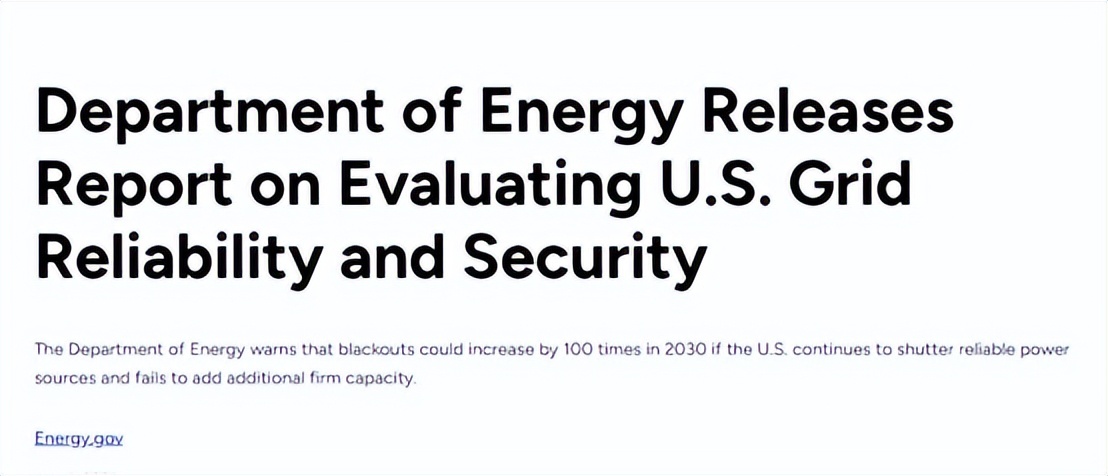
报告将预期能源短缺归咎于煤炭和天然气发电厂关闭以及对可再生能源过度依赖,是对白宫加强电网可靠性行政命令的回应,旨在确定易停电区域以实 施"联邦可靠性干预"。报告支持特朗普支持煤炭发电、反对可再生能源发电的观点,称风能和太阳能不可靠,是"过去激进绿色议程"产物。 能源部还利用紧急权力延长燃煤等电厂寿命,部长克里斯·赖特称,美国需释放能源以维持照明、赢得AI竞赛并防止电价飙升。该分析或为用《联邦电力 法》紧急权力命令煤、天然气电厂继续运营提供依据,政府已借此挽救两座计划退役电厂。 此前,特朗普"大而美"法案上线,计划逐步取消风力涡轮机和太阳能电池板税收抵免,阻碍美国清洁能源转型。而美国能源情报署曾预计可再生能源将成为 未来主要能源供应者,但能源部称到2030年约100个核反应堆等效电厂将退役,不利天气下或致严重停电。 【环球网财经综合报道】当地时间周一,美国能源部发布报告称,受人工智能(AI)推动电力需求激增影响,若按计划关闭电厂且无新电厂替代,到2030 年美国停电次数可能五年内增加100%。此报告被视为助力特朗普重振煤炭业更广泛干预措施的前兆。 报告引发诸多批判。自然资源保护委员会董事总经理Kit Kenne ...

特朗普寻求终止风能和太阳能补贴
news flash· 2025-07-07 23:59
Core Viewpoint - The article discusses President Trump's directive to federal agencies to strengthen the repeal or modification of tax credits for solar and wind energy projects, labeling renewable energy as unreliable and expensive [1] Group 1: Policy Changes - President Trump has issued an executive order to gradually eliminate tax credits for wind and solar energy projects [1] - The directive is part of a broader legislative effort, as Congress has already cut funding for these projects in a recently signed budget bill [1] Group 2: Criticism of Renewable Energy - Trump claims that renewable energy sources are unreliable and costly, suggesting they replace more reliable energy sources [1] - The administration argues that reliance on renewable energy is detrimental to the environment and the electrical grid [1] Group 3: Supply Chain Concerns - The executive order highlights concerns over foreign control of supply chains related to renewable energy [1]

国家级零碳园区申报开启!科学配置储能,鼓励参与电力市场
中关村储能产业技术联盟· 2025-07-07 10:37
Core Viewpoint - The article discusses the launch of a national-level zero-carbon park application process by the National Development and Reform Commission, the Ministry of Industry and Information Technology, and the National Energy Administration, emphasizing the importance of transitioning to renewable energy and reducing carbon emissions in industrial parks [1][8]. Group 1: Key Tasks for Zero-Carbon Park Construction - Accelerate the transformation of energy use structure by enhancing the development and utilization of renewable energy in parks and surrounding areas, supporting the matching of parks with non-fossil energy generation resources, and promoting green electricity supply models [9][10]. - Promote energy conservation and carbon reduction by establishing energy and carbon emission management systems, conducting energy efficiency assessments, and encouraging the construction of ultra-efficient and zero-carbon factories [10][11]. - Optimize the industrial structure of parks by developing low-energy, low-pollution, and high-value-added emerging industries, and exploring green energy manufacturing [10][12]. Group 2: Support and Funding Measures - The National Development and Reform Commission will utilize existing funding channels to support zero-carbon park construction, encouraging local governments to provide financial backing through special bonds and long-term credit support from policy banks [6][13]. - Support for enterprises to issue bonds for zero-carbon park construction and the introduction of external talent and technology for energy-saving and carbon reduction initiatives [6][13]. Group 3: Basic Conditions for Application - The construction entity for national-level zero-carbon parks must be a provincial-level or above development zone, with the possibility of including newly established emerging industrial parks or high-tech parks [3][20]. - The application can cover the entire park or a "park within a park" model, requiring clear boundaries and management responsibilities [3][20]. - Parks must have a certain foundation in energy consumption and carbon emission statistics, and must not have experienced major safety or environmental incidents in the past three years [4][5][20]. Group 4: Evaluation and Implementation - After the construction period, provincial development and reform commissions will conduct self-assessments, and those meeting requirements will undergo evaluations by the National Development and Reform Commission to officially become national-level zero-carbon parks [5][15]. - The article outlines a structured approach for the application process, including the need for comprehensive feasibility analysis and economic, environmental, and social benefit assessments [15][22]. Group 5: Indicators for Zero-Carbon Parks - Core indicators include a unit energy consumption carbon emission target of ≤0.2 tons per ton of standard coal for parks with an annual energy consumption of 20-100 million tons, and ≤0.3 tons for those with ≥100 million tons [28][30]. - Guiding indicators include a clean energy consumption ratio of ≥90% and an industrial solid waste comprehensive utilization rate of ≥80% [28][30].

线上研讨会回放 | BNEF独家分享亚太市场前景:《2025年新能源市场长期展望报告》
彭博Bloomberg· 2025-07-07 10:01
Core Viewpoint - The article discusses the complexities faced by investors and companies in the energy transition process due to increasing policy risks and geopolitical tensions, highlighting the strong momentum of clean energy technologies and the cost-competitive solutions that will drive global energy transition [1]. Group 1: Market Insights - The Bloomberg New Energy Finance report projects that electricity demand in Asia, the Middle East, and Africa will significantly contribute to global electricity consumption growth, with data center electricity demand expected to increase 6-16 times, reaching 260 TWh by 2035 [5]. - The report indicates that the total investment potential for renewable energy from 2025 to 2035 is nearly $6 trillion, and from 2025 to 2050, it is projected to be $10.55 trillion [6]. Group 2: Investment and Policy Implications - The report outlines that large-scale investments and rapid deployment of clean energy technologies are crucial for achieving transformative change, emphasizing the need for policymakers and investors to leverage existing solutions in renewable energy, storage, and electric vehicles [6]. - The economic transition scenario predicts widespread electrification of clean power and road transport, with a long-term decline in coal and oil usage, potentially leading to a 22% reduction in overall emissions by 2050 [7]. Group 3: Required Investments - The required investment for achieving the baseline economic transition scenario and the net-zero scenario is estimated at $185 trillion and $213 trillion, respectively, indicating a mere 15% difference between the two pathways [7].

踔厉奋发新征程 | 能源向新 发展逐绿
Zhong Yang Ji Wei Guo Jia Jian Wei Wang Zhan· 2025-07-07 00:08
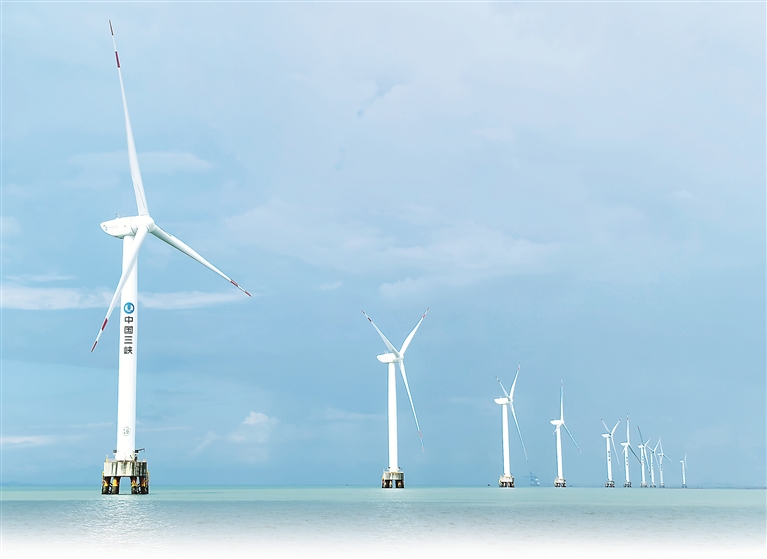
Core Insights - China has established the world's largest clean power system, with renewable energy generation capacity exceeding 2.017 billion kilowatts, a year-on-year increase of 58% [6][9] - The country has achieved significant milestones in renewable energy, including surpassing 1 billion kilowatts in solar power capacity, accounting for nearly half of the global total [6][9] - The development of renewable energy is a key focus of China's energy revolution, contributing to high-quality economic growth and a reduction in carbon emissions [6][9] Renewable Energy Capacity - As of April 2023, China's renewable energy generation capacity reached 2.017 billion kilowatts, with wind and solar power installations exceeding 1.5 billion kilowatts, surpassing thermal power capacity [9] - The cumulative power generation from the Three Gorges Fuzhou Xinghua Bay offshore wind farm has exceeded 6.2 billion kilowatt-hours, reducing coal consumption by approximately 1.89 million tons and CO2 emissions by about 4.65 million tons [7][8] Industry Development - China provides 70% of the world's solar photovoltaic components and 60% of wind power equipment, showcasing its dominance in the renewable energy supply chain [10][11] - The domestic photovoltaic industry has over 1 million enterprises, generating an annual output value exceeding 1 trillion yuan, with significant advancements in technology and production efficiency [12][13] Energy Storage and Utilization - The new energy storage project in Yunnan Province, with a capacity of 200 megawatts, is designed to stabilize the grid and enhance the utilization of renewable energy [15][16] - By the end of 2024, the cumulative installed capacity of new energy storage projects in China is expected to reach 73.76 million kilowatts, reflecting a year-on-year growth of over 130% [16] Technological Advancements - The development of intelligent technologies, such as virtual power plants and integrated energy management platforms, is enhancing the stability of the grid and improving the utilization rate of renewable energy [17] - The overall utilization rate of renewable energy in China remains above 90%, indicating effective integration into the energy system [17]
ESG热点周聚焦(7月第1期):核聚变商用迈入新阶段
Guoxin Securities· 2025-07-06 07:43
Core Insights - The report highlights significant global ESG developments, including the approval of $5.2 billion in funding for 16 sustainable development projects across 10 countries by the Development Bank of Latin America and the Caribbean [2][17] - The European Union and the European Investment Bank launched a €5 billion flexible guarantee to promote clean energy and green infrastructure projects [2][6] - Google signed the largest fusion energy agreement in corporate history, supporting the development of commercial fusion technology [2][20] Global ESG Developments - In carbon neutrality, the European Commission proposed tax incentives to accelerate the transition to clean industries, while JPMorgan's Kinexys is piloting blockchain applications in carbon markets [2][6] - Nokia secured a €1.5 billion credit line linked to its emissions reduction targets, demonstrating corporate governance advancements [2][6] - The European Climate Law was amended to include carbon credit quotas in the 2040 emissions targets, aiming for a 90% reduction in greenhouse gas emissions compared to 1990 levels [8] Domestic ESG Developments - The implementation of the "Management Measures for Information Disclosure of Listed Companies" aims to standardize disclosure requirements for listed companies in China [21] - China's clean energy investment continues to grow, with solar and wind power installations leading globally for ten consecutive years [21] - The green finance reform innovation conference in Huzhou, Zhejiang, released a report indicating that the contribution of green finance to China's GDP is expected to rise to 4.01% by 2030 [21] Academic Frontiers - Research published in the Journal of Environmental Management found that green public procurement significantly enhances corporate ESG performance [4] - A study in Applied Economics Letters indicated that green inventor CEOs notably improve corporate ESG performance, particularly in environmental and governance dimensions [4] - Financial inclusion and development were found to positively impact ESG readiness in low- and middle-income countries, according to a study in the International Journal of Financial Studies [4]
专访|中国有力助推全球能源转型——访世界经济论坛专家尼古拉斯·瓦格纳
Xin Hua She· 2025-07-05 04:14
新华社日内瓦7月5日电 专访|中国有力助推全球能源转型——访世界经济论坛专家尼古拉斯·瓦格纳 "中国在推动全球能源转型方面的表现既令人印象深刻又至关重要。"瓦格纳说。他补充道,这表明在保 持强劲经济增长的同时,实现大规模能源转型是可行的。 世界经济论坛报告指出,尽管全球在推动安全、公平和可持续性的能源系统方面进展加速,但发展势头 仍面临包括资金和地缘政治在内的诸多挑战,造成全球低碳能源系统投资增速放缓。发达经济体和新兴 经济体之间融资条件的差距,是今年能源转型指数反映的最关键挑战之一。 瓦格纳表示,得益于强大的创新生态系统,中国在全球清洁能源投资领域的领先地位进一步加强。他援 引报告数据说,2024年中国在清洁能源领域吸引了8180亿美元投资,比上一年增长了20%。 瓦格纳指出,与许多面临投资放缓的经济体不同,中国不仅继续向太阳能和风能等成熟技术投入大量资 金,而且越来越多地投资于电动汽车和储能等新兴解决方案。 世界经济论坛能源与材料中心专家尼古拉斯·瓦格纳日前接受新华社记者书面采访时表示,得益于长期 规划和有效投资,中国已成为推动全球能源转型的关键力量。 瓦格纳说,目前中国可再生能源新增产能领跑全球。中国近 ...
综述丨中国经验助力巴西东北部地区能源转型
Xin Hua Wang· 2025-07-05 02:40
Group 1 - China's experience in renewable energy and smart city development provides valuable references for Brazil's green development, particularly in the northeastern region [1] - The northeastern region of Brazil has become the fastest-growing area for new energy installed capacity, driven by abundant wind and solar resources [1] - Chinese companies such as State Power Investment Corporation, China General Nuclear Power Group, Three Gorges Group, BYD, and State Grid are continuously expanding investments in the region, accelerating the development of the clean energy industry chain [1] Group 2 - The northeastern region is becoming a key area for leading Brazil's energy transition, which will serve as an important engine for industrialization [2] - The state of Piauí, known as the "Sunshine State," currently derives 99.75% of its energy from renewable sources, with ongoing projects from Chinese enterprises injecting strong momentum into local revitalization [2] - China General Nuclear Power Group plans to build a multi-energy complementary base with an installed capacity of over 1,400 megawatts in Piauí, with additional investments expected to exceed 30 billion Brazilian Reais (approximately 5.4 million USD) [2] Group 3 - The development of clean energy is not only an economic issue but also a livelihood issue, providing new development opportunities for northeastern Brazil [3] - The push for energy transition by Chinese companies in northeastern Brazil is crucial for promoting local industrialization and improving residents' quality of life [3]
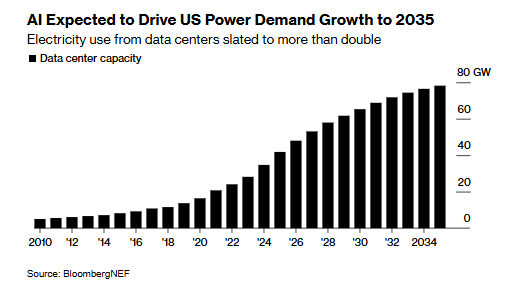
特朗普“大而美”法案卡住绿能咽喉 AI狂潮突遇“电力饥渴”
智通财经网· 2025-07-04 13:51
太阳能发展前景原本更为广阔:它不仅是美国最经济的电力来源,配套的储能电池技术也已成为主流解 决方案,其建设周期更远短于天然气电厂或核反应堆。 可再生能源本有望成为供电主力。据美国能源信息署数据,去年公用事业规模太阳能占全美新增发电能 力的61%,达30吉瓦。 智通财经APP获悉,当特朗普提出的3.4万亿美元财政方案在国会通过时,可再生能源行业曾因提案中 针对风电和太阳能项目的消费税被取消而稍感宽慰。然而,随着白宫准备举行法案签署仪式,毫无疑问 的是,这位美国总统的胜利标志着清洁能源转型遭遇重大挫折。新法案将逐步取消对风力发电机和太阳 能电池板的税收抵免政策,此举将威胁众多可再生能源项目。 气候政策智库"Energy Innovation"预测,在美国国会刚刚通过的"大而美"减税与支出法案将严重制约可 再生能源的扩张。本周发布的分析报告显示,到2035年,预计将有约200吉瓦的风电和150吉瓦的太阳能 项目无法按原计划建成。 这一时段恰逢美国电力需求将迎来持续十年的激增期,彻底扭转了过去三十年增长乏力的局面。以清洁 能源投资大州得克萨斯为例,到2030年,该州可能需要相当于30座核反应堆(即30吉瓦)的发电能力 ...