脑机接口

Search documents
港股异动 | 南京熊猫电子股份(00553)涨近7% 2025脑机接口大会开幕 国内临床转化进入关键阶段
智通财经网· 2025-12-05 02:29
Core Viewpoint - Nanjing Panda Electronics Co., Ltd. (00553) saw a nearly 7% increase in stock price, reaching HKD 4.86 with a trading volume of HKD 71.7075 million, following news about the upcoming 2025 Brain-Computer Interface Conference in Shanghai [1] Group 1: Event Overview - The Shanghai Municipal Science and Technology Commission held a press conference for the 2025 Brain-Computer Interface Conference, scheduled for December 4-5, themed "Brain Link World · Intelligence Gathering in Shanghai" [1] - The conference will feature one main forum, eight sub-forums, one product launch, one developer forum, and four competitive events, showcasing the latest advancements and application prospects in brain-computer interface technology [1] Group 2: Industry Development - The conference will take place in the "Brain Intelligence World" future industry cluster area located in the Minhang District, near Fudan University Huashan Hospital [1] - The local government and the Science and Technology Commission are establishing platforms for concept validation, testing certification, and pilot processing to attract outstanding domestic and international teams and companies, aiming to make Shanghai a globally influential innovation source and industrial hub for brain-computer interfaces [1] Group 3: Clinical Trials and Research - The first domestic implantable brain-computer interface GCP clinical trial, the world's first real-time Chinese language decoding IIT trial, the first domestic cerebrospinal interface IIT trial, and the first domestic invasive brain-computer interface system prospective clinical trial have been launched, receiving significant attention from international journals such as "Nature" and "MIT Technology Review" [1]

创新主体密集发力 上海构建脑机接口产业竞争新优势
Zhong Guo Xin Wen Wang· 2025-12-04 13:34
Core Insights - Shanghai has made significant breakthroughs in brain-computer interface (BCI) technology, with several innovative products entering clinical trials, indicating a shift from basic research to clinical application [1][2] Group 1: Industry Developments - The BCI sector in Shanghai is characterized by its complexity, integrating micro-nano manufacturing, integrated circuits, wireless transmission, and intelligent algorithms, surpassing traditional medical devices [1] - Shanghai has achieved multiple global or national firsts in the invasive and semi-invasive BCI fields, with three invasive products currently undergoing special review by national authorities [1][2] Group 2: Innovations and Technologies - The second-generation 256-channel wireless implanted BCI system, developed by Shanghai Ladder Medical Technology Co., significantly enhances neural signal acquisition precision and device compatibility, providing reliable "brain control" solutions for patients with motor function disorders [2] - The "brain-spinal interface" concept introduced by Shenfu Rehabilitation (Shanghai) Medical Device Co. aims to create a "neural bridge" between the brain and spinal cord, enabling paralyzed patients to control their lower limbs autonomously [2] Group 3: Industry Leadership - Shanghai's key players in the BCI sector have increased their influence, setting records for the highest single financing in invasive BCI in China, initiating the world's first clinical cohort study for BCIs, and leading the development of the first domestic medical device standards for BCIs [2]

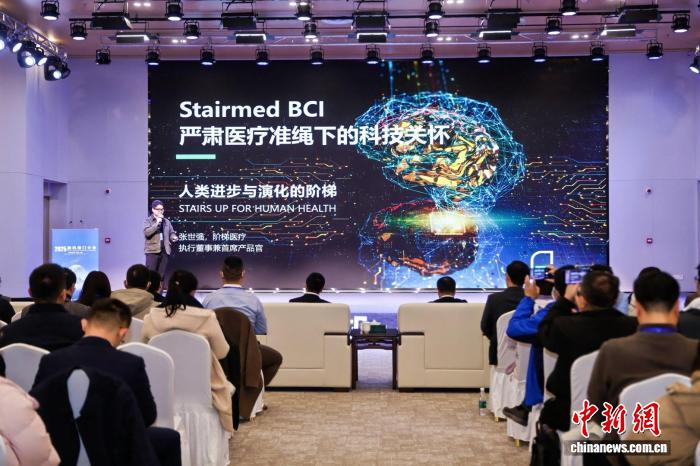
上海在脑机接口技术领域取得了系列阶段性突破
Ge Long Hui· 2025-12-04 13:32
Core Insights - Shanghai has achieved significant breakthroughs in brain-computer interface (BCI) technology, marking a transition from basic research to clinical applications [1] - The city has developed multiple globally or nationally pioneering invasive and semi-invasive BCI products, with three invasive products currently undergoing special review procedures for innovative medical devices [1] - Several leading domestic BCI companies in China showcased their latest achievements at the 2025 BCI Conference, highlighting advancements in areas such as neural modulation, visual reconstruction, motor function recovery, and sleep intervention [1]
无法短期变现的脑机接口,如何先活下去?
Sou Hu Cai Jing· 2025-12-04 12:13
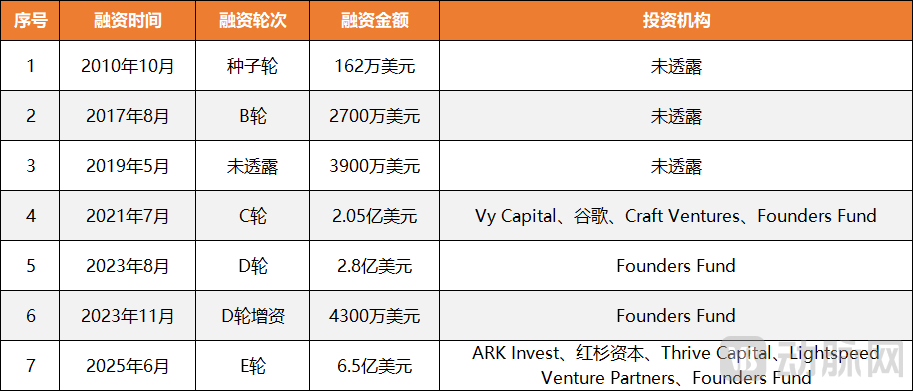
Core Insights - Neuralink has completed a $650 million Series E funding round, setting a new record in the brain-computer interface (BCI) sector, bringing its total funding to over $1.3 billion, which is significant compared to the global BCI market size of $2.6 billion in 2024 [1][2] - Despite substantial funding, Neuralink faces high operational costs, burning several hundred million dollars annually without a clear path to commercialization [2][3] - The BCI industry is experiencing a funding boom, with nearly 100 financing events in the past five years in China alone, totaling over 10 billion yuan, indicating strong investor interest [3][4] Funding Landscape - Neuralink's funding history includes multiple rounds, with significant contributions from major investors like ARK Invest and Sequoia Capital in the latest round [2] - The BCI sector has seen a 30% increase in financing events in China from January to November 2025, with notable records set by companies like JieTi Medical [5] - Government funding is becoming increasingly important, with various local and national policies supporting BCI development, including a 10 billion yuan fund in Tianjin [6][7] Market Dynamics - The BCI market is characterized by a lack of stable commercialization and profitability, leading many companies to face survival challenges [3][4] - Investors are shifting focus from upstream technology to practical clinical applications and commercialization capabilities, indicating a maturation of the investment landscape [6] - The potential applications of BCI technology, such as restoring vision or mobility, present significant market opportunities, attracting early investments [4] Product Development and Commercialization - Companies are adopting a "laying eggs along the way" strategy, focusing on both research and consumer applications to maintain cash flow [9][10] - Non-invasive BCIs are targeting consumer healthcare markets, while invasive BCIs are focusing on research applications due to the complexity of clinical scenarios [10][12] - Successful commercialization examples include products like the intelligent bionic hand from QiangNerve Technology, which has seen rapid sales growth [11] Future Outlook - 2025 is anticipated to be a pivotal year for the BCI industry in China, with significant clinical advancements expected [15] - Challenges remain in signal processing, material compatibility, and market education, which could delay widespread commercialization [16] - Companies must balance short-term survival with long-term innovation to thrive in the evolving BCI landscape [18][19]
脑机接口,利好频频!从实验室走向应用场景
Zhong Guo Zheng Quan Bao· 2025-12-04 04:36
Core Insights - The 2025 Brain-Computer Interface (BCI) Conference opened in Shanghai, focusing on developer events, competitions, and investment forums to enhance the connection of technology, industry, and capital resources [1] - The BCI industry is recognized for its social and commercial value, with McKinsey projecting the global medical application market to reach $40 billion by 2030 and potentially exceed $145 billion by 2040 [1] - The industry is entering a critical phase of large-scale application driven by strong policy support, continuous technological breakthroughs, and the implementation of medical insurance payments [1] Event Highlights - The conference features several "firsts," including the first large-scale multi-track BCI competition, the establishment of a BCI developer forum, and a dedicated investment cooperation sub-forum [1] - The BCI competition includes four tracks: emotion perception, fatigue monitoring, brain-controlled robotic arms, and brain-controlled racing cars, with 63 teams participating and 40 advancing to the finals [1][2] Policy Support - There has been a surge in favorable policies for the BCI sector, including a joint implementation opinion from seven departments in July and the inclusion of BCI in the 15th Five-Year Plan by the Central Committee in October [3] - Various regions, including Beijing, Shanghai, Sichuan, and Shandong, are actively promoting BCI technology and industry development, with Jiangxi Province recently issuing measures to accelerate clinical trials [3] Company Developments - The BCI industry is at a pivotal growth stage, with several companies, including A-share listed firms, actively investing in the BCI value chain [4] - Xiangyu Medical has identified BCI as a key strategic research direction, integrating BCI technology into rehabilitation equipment [4] - Chengdu Huayi is leveraging its integrated circuit design advantages to provide foundational hardware components for BCI technology, collaborating with universities on key projects [5] - Companies are also pursuing strategic investments in the BCI space, such as Dao's Technology investing in Qiang Brain Technology to enhance its capabilities in medical rehabilitation and human-computer interaction [5]
马斯克脑机接口意念控制机械臂!演示者获得钢铁之吻,理论上可控制一切
创业邦· 2025-12-04 04:34
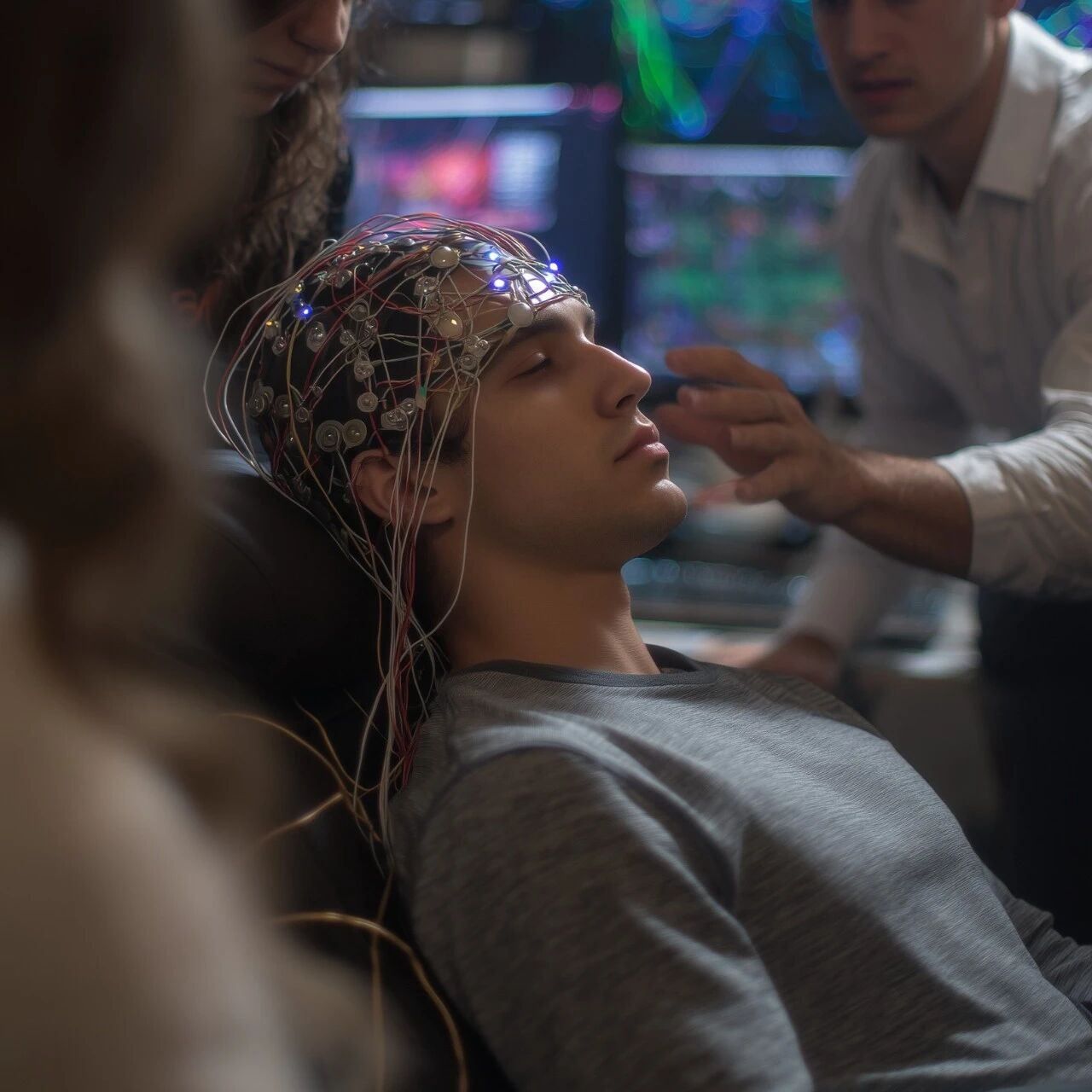
图源丨Midjourney 来源丨 量子位(ID:QbitAI) 作者丨克雷西 马斯克脑机接口,又有新动态。 Neuralink官方视频当中,一名演示者已经实现了机械臂的意念控制。 只见机械臂稳步抬起,然后伸向演示者嘴边,然后献上了一吻。 马斯克还表示,理论上通过电脑或手机,Neuralink将能够间接控制一切。 指令并直接刺激肢体神经,从而绕过受损的生物通路,试图让瘫痪患者重新恢复行走能力。 在硬件稳定性方面,技术团队已针对初代产品暴露出的"电极线回缩"问题完成了关键迭代。 与此同时,Neuralink正在推进一项升级试验。 首位受试者或将收到更新 Neuralink的升级实验将采用"双植入"的方案,首位人类受试者Noland Arbaugh预计将成为首个接受 二次手术的患者。 该方案计划在他保留现有颅骨植入物的基础上,在脊髓位置新增第二个接口。 这一架构的目的是建立"数字神经桥梁",大脑端的芯片负责解码运动意图,脊髓端的芯片则负责接收 针对首位患者因颅内气隙导致电极线松脱、信号减弱的情况,在针对第二位受试者Alex及后续患者的 手术中,团队改进了手术方案,通过严格控制植入物与大脑表面的间隙(Gap Red ...
马斯克脑机接口意念控制机械臂!演示者获得钢铁之吻,理论上可控制一切
Sou Hu Cai Jing· 2025-12-03 16:03
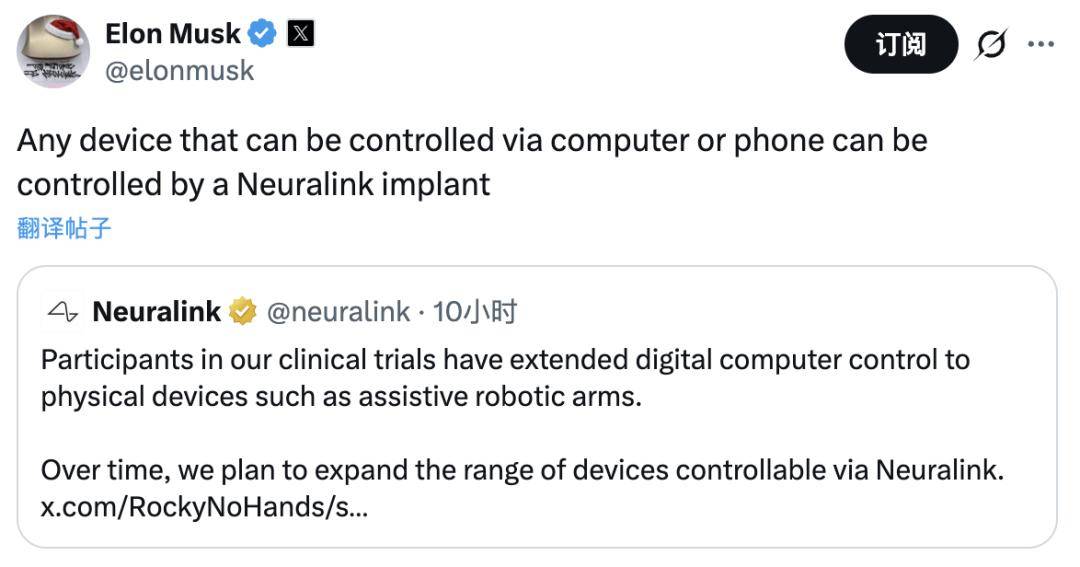
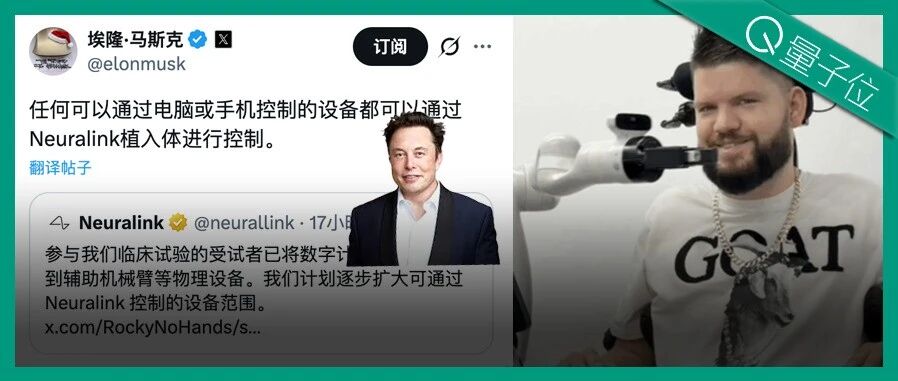
马斯克脑机接口,又有新动态。 Neuralink 官方视频当中,一名演示者已经实现了机械臂的意念控制。 只见机械臂稳步抬起,然后伸向演示者嘴边,然后献上了一吻。 马斯克还表示,理论上通过电脑或手机,Neuralink 将能够间接控制一切。 与此同时,Neuralink 正在推进一项升级试验。 首位受试者或将收到更新 Neuralink 的升级实验将采用"双植入"的方案,首位人类受试者 Noland Arbaugh 预计将成为首个接受二次手术的患者。 该方案计划在他保留现有颅骨植入物的基础上,在脊髓位置新增第二个接口。 这一架构的目的是建立"数字神经桥梁",大脑端的芯片负责解码运动意图,脊髓端的芯片则负责接收指令并直接刺激肢体神经,从而绕过受损的生物通 路,试图让瘫痪患者重新恢复行走能力。 在硬件稳定性方面,技术团队已针对初代产品暴露出的"电极线回缩"问题完成了关键迭代。 针对首位患者因颅内气隙导致电极线松脱、信号减弱的情况,在针对第二位受试者 Alex 及后续患者的手术中,团队改进了手术方案,通过严格控制植入 物与大脑表面的间隙(Gap Reduction),并优化了手术中的防脑组织位移策略。 这些措施有效消 ...
马斯克脑机接口意念控制机械臂!演示者获得钢铁之吻,理论上可控制一切
量子位· 2025-12-03 13:06
Core Viewpoint - Neuralink is making significant advancements in brain-machine interface technology, focusing on enabling paralyzed patients to regain mobility and enhancing user interaction with technology through thought control [20][29]. Group 1: Technological Developments - Neuralink has successfully demonstrated thought-controlled robotic arm movements, showcasing the potential for direct brain control over devices [2][3]. - The company is implementing a "dual implant" strategy, where a second interface will be added to the spinal cord of the first human subject, aiming to create a "digital neural bridge" to bypass damaged biological pathways [8][9]. - Recent improvements have addressed issues with electrode stability, ensuring long-term signal reliability and shifting focus from unidirectional brain signal reading to complex bidirectional communication between the brain and spinal cord [9]. Group 2: User Experiences and Innovations - Users of Neuralink's technology are actively exploring additional applications beyond official functionalities, such as controlling everyday devices [10][11]. - A user named Brad Smith has successfully integrated a consumer webcam with the Neuralink system to overcome physical limitations caused by his condition, demonstrating the adaptability of the technology [12][15]. - Another user, Nathan Copeland, emphasizes the importance of combining the brain-machine interface with common devices to enhance daily life, illustrating the practical utility of the technology [19]. Group 3: Clinical Progress and Future Directions - Neuralink has achieved its first human implant in January 2024, marking a significant milestone in its clinical trials [21][29]. - The company has received FDA breakthrough device designations for projects aimed at restoring vision and aiding speech, indicating regulatory support for its innovative approaches [27][28]. - As of September 2024, Neuralink has completed implants for 12 subjects, with over 15,000 hours of device operation and no major rejection issues, paving the way for broader clinical applications [29].
重磅大会密集召开 脑机接口从“单点突破”转向“全链条攻坚”
Bei Jing Shang Bao· 2025-12-03 12:57
Core Insights - The brain-computer interface (BCI) industry in China has entered a critical phase of "clinical value verification and early industrialization" with significant policy support and upcoming major conferences [2][3][4] - The industry is characterized by three parallel paths: "invasive" breakthroughs, "non-invasive" popularization, and "semi-invasive" exploration, with a focus on integrating AI with non-invasive technologies [7][8] - The market for brain-computer interfaces is expected to reach 5.58 billion yuan by 2027, with a growth rate of 20% as applications expand beyond healthcare into various sectors [7] Industry Developments - The "2025 Brain-Computer Interface Conference" will take place in Shanghai on December 4-5, featuring competitions that demonstrate the transition of BCI technology from laboratory to application [3] - Following this, additional conferences in Hangzhou and Shenzhen will further explore BCI applications and innovations [3] - The industry is transitioning from a focus on technical novelty to meeting specific clinical needs and establishing quantifiable clinical endpoints [4] Technological Landscape - BCI technology is categorized into three types: invasive, non-invasive, and semi-invasive, with non-invasive methods being the mainstream due to their safety and ease of use [5][6] - Invasive methods are seen as the future competitive edge due to their ability to capture higher quality neural signals, essential for functional restoration [6][7] - AI is opening new commercial opportunities for non-invasive BCIs, particularly in diagnosing and monitoring brain diseases [6][7] Challenges and Solutions - The BCI industry faces a "technology-cost-ethics" triangle dilemma, requiring solutions that address technical challenges, cost reduction, and ethical concerns regarding data privacy [8][9] - Proposed solutions include developing a data governance framework, promoting open-source communities for algorithm development, and creating collaborative networks among government, industry, academia, and medical sectors [9]

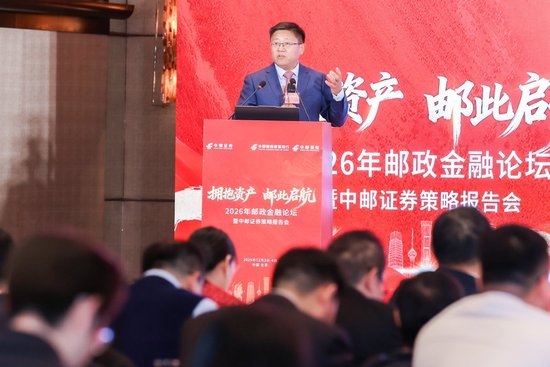
中邮证券黄付生:制造业“K”型分化,居民财富将迎修复
Xin Lang Cai Jing· 2025-12-03 12:25
Core Insights - The report presented by Huang Fusheng at the "2026 Postal Financial Forum" highlights China's economic recovery, driven by the "14th Five-Year Plan" focusing on modern industrial systems and high-tech sectors [3][8]. Group 1: Economic Recovery and Industrial Policy - China is building a modern industrial system under the "14th Five-Year Plan," with a focus on high-tech sectors showing significant performance [3][8]. - The plan prioritizes the construction of a modern industrial system and strengthening the real economy, aiming to "recreate a Chinese high-tech industry" over the next decade [3][8]. - Key strategies include enhancing traditional industries, addressing core technology challenges, and fostering strategic emerging industries like new materials and quantum technology [3][8]. Group 2: Manufacturing Sector Performance - The manufacturing sector exhibits a K-shaped recovery, with high-tech product exports growing faster than the overall export growth rate of 5.3% in the first ten months of 2025 [4][9]. - Profit growth in upstream manufacturing sectors like transportation equipment and non-ferrous metal smelting significantly outpaces that of downstream industries such as furniture and apparel [4][9]. - A-share non-financial companies reported a revenue increase of 0.9% year-on-year in Q3 2025, with net profits rising by 3.29% [4][10]. Group 3: Consumer Wealth and Spending Trends - Recovery of resident wealth is projected to take 3-5 years, with service consumption identified as a future growth area [5][10]. - In 2025, there remains a significant gap in resident wealth compared to the peak in 2021, but optimistic scenarios suggest recovery to previous levels by 2028 [5][10]. - The consumption structure indicates a saturation in goods consumption (15% of GDP) compared to major Western countries, while service consumption in healthcare and education is below global averages, indicating substantial growth potential [5][10].