
玩具

Search documents
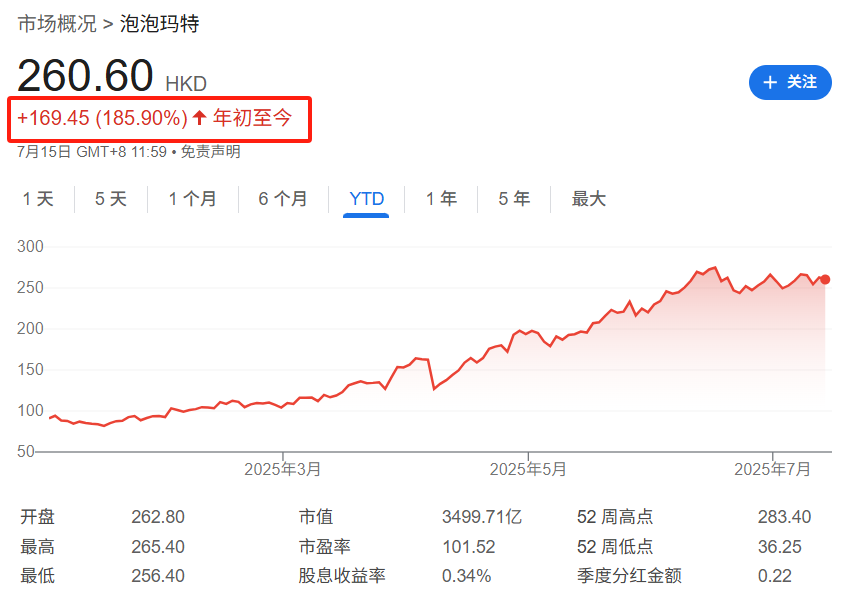
大涨180%之后,泡泡玛特估值过高了么?
华尔街见闻· 2025-07-15 10:16
Core Viewpoint - The article highlights the significant growth and profitability of Pop Mart, driven by the popularity of Labubu, with a 180% increase in stock price this year and a projected cash flow return on investment (CFROI) of 24% in 2024, potentially exceeding 40% in 2025/2026. However, market pricing suggests a cautious outlook, expecting CFROI to decline to 32% by 2029, indicating skepticism about the company's ability to sustain high growth and profit margins [1][5][10]. Financial Performance - Pop Mart's profitability is exceptional compared to global toy and character brand companies, with a 2024 CFROI of 24% driven by doubled sales and recovering EBITDA margins. The company's profit margin reached 42%, significantly higher than the industry median of approximately 20% [2][4]. - The asset turnover ratio has improved to the industry average due to accelerated sales growth over the past two years [2]. Market Expectations - Despite strong financial forecasts, the market's implied expectations are conservative, predicting a decline in CFROI to 32% by 2029 [5][6]. - There is a notable discrepancy between analysts' optimistic forecasts and the cautious market pricing, suggesting a lack of confidence in Pop Mart's ability to maintain high profitability levels over the long term [8]. Valuation Analysis and Scenarios - The UBS HOLT model outlines three potential scenarios for Pop Mart: - **Market Implied Scenario**: Current pricing reflects a slight sales growth slowdown to 24% and a return of EBITDA margins to a five-year median of 35%, still outperforming industry averages of 6% sales growth and 20% profit margins [9]. - **Optimistic Scenario**: If Pop Mart maintains recent growth levels of 28% and profit margins of 40%, the stock could see a potential increase of approximately 43% [9]. - **Pessimistic Scenario**: If the popularity of the company's IP declines, leading to a sales growth slowdown to 20% and profit margins dropping to around 25%, the stock could face a decline of about 42% [9]. Strategic Positioning - Pop Mart is at a critical juncture, with impressive financial data and growth momentum. The key for investors lies in assessing whether the company's strong IP creation and brand appeal can endure through market cycles and establish itself as a globally successful consumer brand [10][11].



大涨180%之后,泡泡玛特估值过高了么?
Hua Er Jie Jian Wen· 2025-07-15 04:19
Core Insights - UBS research indicates that Pop Mart has surged by 180% this year, driven by the popularity of Labubu, with a projected cash flow return on investment (CFROI) of 24% in 2024 and expected to exceed 40% in 2025/2026, significantly outperforming global peers [1][4] Financial Performance - The company's CFROI has improved to 24% due to a doubling in sales and a recovery in EBITDA margins, with a historical profit margin of 42%, far exceeding the industry median of approximately 20% [4][6] - Asset turnover has gradually reached the industry average, benefiting from accelerated sales growth over the past two years [4] Market Sentiment - Despite strong financial forecasts, the current market pricing model suggests a decline in CFROI to 32% by 2029, indicating skepticism about Pop Mart's ability to sustain high growth and profit margins [3][6] - There is a notable discrepancy between analysts' optimistic forecasts and the cautious market pricing, reflecting a lack of confidence in the company's long-term profitability [9] Valuation Scenarios - UBS's HOLT model outlines three potential scenarios for Pop Mart's stock performance: - **Current Market Scenario**: Implies a slight sales growth slowdown to 24% and a return of EBITDA margins to a five-year median of 35%, still outperforming peers [10] - **Optimistic Scenario**: If the company maintains a 28% sales growth and 40% profit margin, there is approximately 43% upside potential in stock price, positioning it as a "structural winner" [11] - **Pessimistic Scenario**: If the popularity of its IP declines, leading to a sales growth slowdown to 20% and profit margins dropping to around 25%, the stock could face a 42% downside risk, suggesting a "flash in the pan" perception [11] Strategic Positioning - Pop Mart is at a crossroads, with impressive financial metrics and growth momentum, but the critical question for investors is whether its strong IP creation and brand appeal can endure through market cycles and establish itself as a globally successful consumer brand [12]
扭蛋机,日本最抽象的“全民盲盒”
3 6 Ke· 2025-07-15 01:28
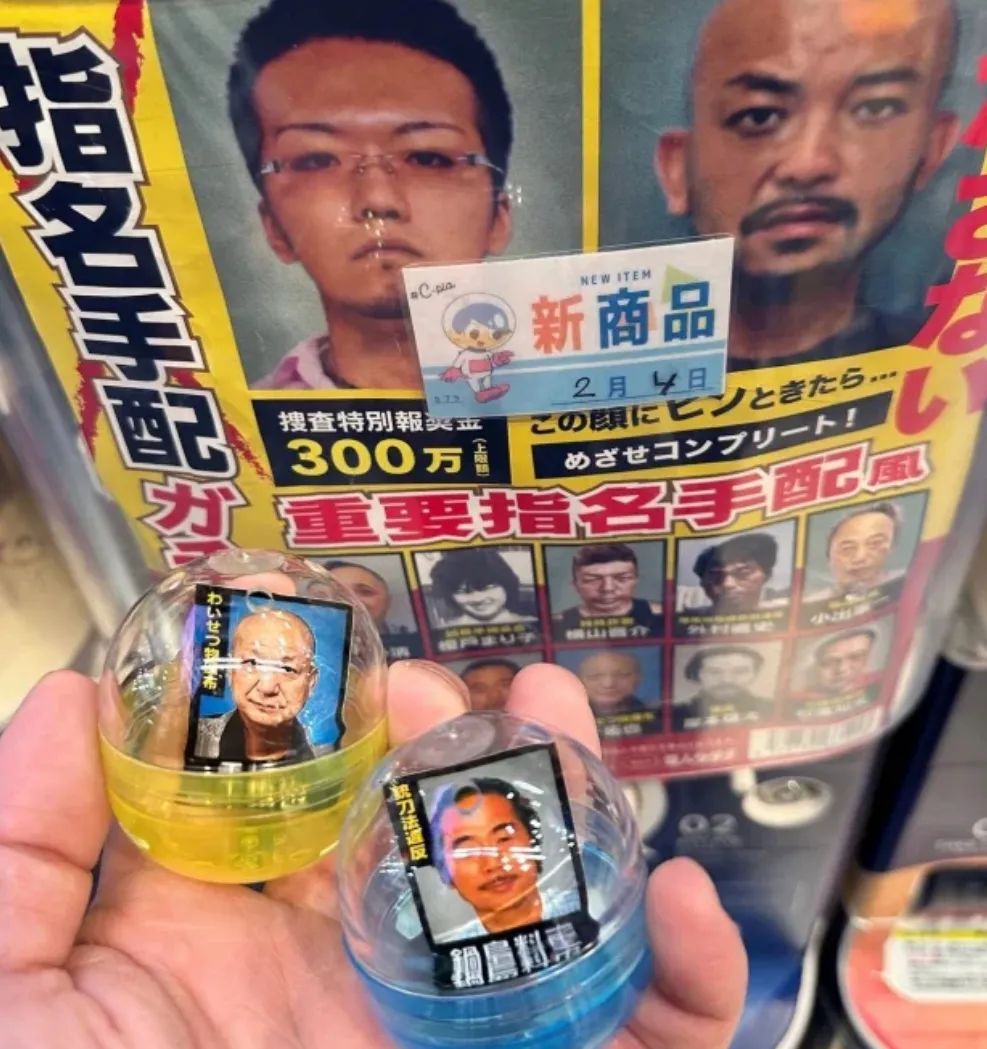
Group 1 - The article discusses the unique and humorous nature of Japanese gacha machines, particularly the "wanted criminal gacha" that dispenses figurines of fictional criminals, which has gained popularity online [1][3][5] - The developer of the gacha machine, Hiroki Terai, revealed that the criminals depicted are fictional and based on acquaintances, leading to a lighthearted reception from consumers [5][7] - The gacha machine has expanded in Japan, selling over 30,000 capsules and generating approximately 9 million yen in revenue, showcasing the commercial success of this novelty [9][49] Group 2 - Japan's gacha market is extensive, with over 500 billion yen (approximately 3.2 billion USD) in market size, having doubled since 2010, indicating a strong growth trend [49][63] - The gacha machines are prevalent across various locations, with an estimated 500,000 machines in Japan, selling nearly 300 million capsules annually [47][49] - Despite the popularity of gacha machines, the market size is significantly smaller than that of the Chinese blind box company Pop Mart, which is projected to exceed 13 billion yuan in sales in 2024 [63][72] Group 3 - The article highlights the creativity and diversity of gacha products, ranging from food items to absurd concepts, reflecting a culture of innovation in Japan [11][25][27] - Gacha machines have evolved from simple toy dispensers to complex marketing tools for popular IPs, with major companies like Bandai dominating the market [45][68] - The competitive landscape for smaller gacha manufacturers has become challenging, with many struggling to achieve significant sales volumes, indicating a saturated market [70][72]
10.9亿元!潮汕富豪把西班牙人俱乐部卖了!公司去年巨亏4.6亿元,前不久靠“西甲扑救王”解约赚了1.6亿元
新浪财经· 2025-07-15 01:04
Core Viewpoint - The company, Xinghui Entertainment, is selling 99.66% of its stake in the Spanish football club, Espanyol, to VELOCITY SPORTS LTD for a total consideration of €130 million (approximately RMB 1.088 billion), with half paid in cash and half in shares [1][4]. Group 1: Transaction Overview - The transaction involves the sale of 99.66% of the shares of REIAL CLUB DEPORTIU ESPANYOL DE BARCELONA, S.A.D. (Espanyol) from Xinghui's subsidiaries to VELOCITY [4]. - The deal is not classified as a related party transaction or a major asset restructuring under the relevant regulations [4]. - Following the completion of this transaction, Espanyol will no longer be included in the company's consolidated financial statements [2]. Group 2: Financial Performance and Recent Developments - Espanyol successfully avoided relegation in the 2024/25 season and achieved positive results from player transfer activities [7]. - The club received a breach of contract compensation of €26.34 million from player Joan García Pons, contributing approximately RMB 163 million to the company's net profit [7]. - In 2024, Xinghui Entertainment reported a total revenue of RMB 1.36 billion, a year-on-year decrease of 21.49%, and a net loss of RMB 458 million, a significant decline of 1751.93% [8]. Group 3: Ownership and Historical Context - The controlling figure behind Xinghui Entertainment is Chen Yansheng, who holds 32.77% of the shares directly, with his wife holding an additional 1.85% [9]. - The company initially gained success through toy manufacturing, particularly in toy football and car models, before diversifying into the gaming sector and acquiring Espanyol [9][10]. - Xinghui Entertainment became the first Chinese company to control a football club in one of Europe's top five leagues when it acquired a majority stake in Espanyol in 2015 [9].


星辉娱乐,十年足球一朝“梦醒”
财联社· 2025-07-15 00:50
Core Viewpoint - The sale of 99.66% of the Spanish football club Espanyol by Xinghui Entertainment marks the end of a 10-year investment journey in football, as the company aims to refocus on its core business after the football venture has become a burden [1][4]. Group 1: Sale Details - Xinghui Entertainment announced the sale of its stake in Espanyol for €130 million, with €65 million paid in cash and the remaining €65 million in shares of the buyer, VELOCITY SPORTS LTD [1]. - Post-transaction, Espanyol will no longer be included in Xinghui's consolidated financial statements, and the company will hold 38.26 million Class A shares of VELOCITY, representing 16.45% of its total equity [1]. Group 2: Historical Performance - Since acquiring control of Espanyol in 2015, Xinghui's sports business revenue peaked at ¥1.212 billion in 2019, accounting for over 46% of total revenue, largely due to the signing of Chinese player Wu Lei [2]. - However, the club's inconsistent performance and Wu Lei's return to China have led to a decline in revenue, with the sports business revenue dropping to ¥376 million in 2024, representing only 27.62% of total revenue [3]. Group 3: Business Focus and Future Outlook - The core objective of the sale is to shed the burden of the football club and concentrate on the main business areas of gaming, sports, and toys, which have historically contributed over 25% to the company's revenue [4]. - The gaming and related business has seen stagnant revenue below ¥500 million from 2022 to 2024, while the toy segment has shown promise with a 20.28% year-on-year revenue growth in 2024, reaching ¥465 million [4].

拼搭玩具:创意启蒙与社交玩法共振,积木玩具进入高成长通道,头豹词条报告系列
Tou Bao Yan Jiu Yuan· 2025-07-14 11:45
Investment Rating - The report does not explicitly state an investment rating for the building block toy industry Core Insights - The building block toy industry is experiencing high growth driven by innovative gameplay and IP integration, with local brands gaining market share against international leaders like LEGO [4][11][15] Summary by Sections Industry Overview - Building block toys are creative entertainment tools composed of multiple small parts, promoting various developmental skills and appealing to both children and adults [5][6] - The market is characterized by IP integration, innovative gameplay, a broad audience, and a gradual rise of local brands [11] Market Dynamics - The market size is expanding due to a solid foundation, the explosion of miscellaneous retail formats increasing exposure and accessibility, and a resonance between supply and demand [4][39] - Future changes are expected from the rise of niche categories and local brands, particularly character-based toys leading growth [40] Competitive Landscape - In 2023, the global market concentration (CR3) reached 84%, with LEGO holding a dominant 75% share, although its market share in China decreased by 8.5 percentage points [15][44] - Local brands like Blokus are capturing market share through competitive pricing and rapid market response, with Blokus achieving a 30.3% market share in the character toy segment [22][31] Consumer Trends - The consumer base is diversifying, with demand expanding from children to teenagers and adults, who seek personalized, high-quality, and creative products [14][34] - IP has become a core factor influencing consumer purchasing decisions, with 59% of LEGO's products being IP-based, leading to a 19% premium on these products [23][34] Supply Chain Analysis - The supply chain consists of raw material suppliers, IP licensors, manufacturers, and consumers, with a focus on cost reduction through standardized parts and efficient production paths [21][39] - The price of key raw materials like ABS plastic has decreased significantly, aiding manufacturers in lowering production costs [26] Future Outlook - The rise of character-based toys is expected to be a key growth driver, with local brands leveraging IP collaborations to enhance product appeal [40] - The market is anticipated to see increased competition as local brands continue to innovate and expand their reach into lower-tier markets [46]
*ST沐邦回复2024年年报问询函,揭开背后会计魔术、光伏豪赌与资金压力
Mei Ri Jing Ji Xin Wen· 2025-07-14 10:00
Core Viewpoint - *ST Muban (Muban High-Tech) reported a significant decline in revenue and a substantial net loss for 2024, raising concerns about its financial health and operational integrity [1][2]. Revenue Recognition and Accounting Issues - The company experienced a drastic revenue drop of 83.24% year-on-year, with total revenue reported at 277 million yuan and a net loss of 1.162 billion yuan [1]. - Two accounting errors led to adjustments in revenue recognition, particularly in the toy raw material sales, where revenue was changed from gross to net method, resulting in a revenue decrease of approximately 46.99 million yuan [2]. - The adjustment was due to a reassessment of the business model, where the company acted as an agent rather than a principal, affecting the revenue structure and client relationships [2]. Related Party Transactions and Fairness Concerns - The fairness of related party transactions was questioned, particularly regarding the sale of silicon rods by a subsidiary at prices significantly higher than those of non-related parties, leading to a revenue adjustment of 11.84 million yuan [3]. - A familial relationship between the actual controllers of the involved companies was not initially disclosed, raising further concerns about transparency [3]. Financial Health and Cash Flow Challenges - As of the end of 2024, the company had cash and cash equivalents of 261 million yuan, with 70.29 million yuan frozen, against total liabilities of 2.599 billion yuan, resulting in a high debt-to-asset ratio of 73.58% [4]. - The company faced significant short-term debt pressure, with current liabilities of 2.065 billion yuan compared to current assets of only 740 million yuan [4]. - Operating cash flow turned negative at -217 million yuan, while cash payments for goods and services increased to 448 million yuan, indicating cash flow strain [4]. Frequent Financing Activities and Investment Risks - The company engaged in frequent financing activities, receiving 2.505 billion yuan and paying out 2.612 billion yuan related to financing, primarily from non-financial institutions, to manage debt and operational needs [5]. - Investment impairment risks were highlighted, with the company recognizing impairments of approximately 39.94 million yuan and 95.66 million yuan for two major projects due to industry overcapacity and underperformance [5]. - The company is attempting to alleviate financial pressures through improved collection efforts and procurement strategies, but ongoing industry challenges remain a concern for its operational turnaround [5].

2025第二季度Hape欧洲展会联动,持续释放品牌影响力
Zhong Guo Chan Ye Jing Ji Xin Xi Wang· 2025-07-14 05:51
Core Insights - Hape Group has been actively participating in various trade shows across Europe since Q2 2025, enhancing its brand influence and achieving significant results [1][2][3][4] Group 1: Brand Exposure and Product Launches - Hape Group showcased its outdoor product lines at the JDC Gardening Trends Exhibition in France, attracting numerous online customers [1] - Toynamics Spain successfully previewed Hape's 2025 new products at a toy exhibition in Madrid, achieving €1,000 in on-site sales [2] - The "Mormels & Peppers" series, designed to develop early math skills, received high praise at the Bea Spielt exhibition in Switzerland [2] Group 2: Innovative Product Features - The "Dynamic Pixel Piano," which combines educational and technological elements, became a focal point at the Babini Baby Fair in Germany [3] - Hape's "Train Track" series was highlighted at the Milan Toy Fair, generating significant interest and numerous immediate orders [3] Group 3: Localized Operations and Market Collaboration - Toynamics France's pop-up events successfully engaged families and influencers, showcasing Hape's infant and Baby Einstein series [4] - The collaborative approach of localized operations and regional synergy has strengthened Hape Group's relationships with European market clients, laying a solid foundation for global business expansion in 2025 [4]
海关总署:今年前4个月我国出口的玩偶、动物玩具已突破百亿大关
news flash· 2025-07-14 03:00
Core Viewpoint - China's toy exports, particularly figurines and animal toys, have gained significant popularity in the global market, with exports surpassing 13.3 billion yuan in the first four months of the year, reflecting a growth rate of 9.6% [1] Group 1: Export Performance - In the first four months of the year, China's exports of dolls and animal toys reached 13.3 billion yuan, marking a 9.6% increase compared to the previous period [1] Group 2: Intellectual Property Protection - The recent popularity of the "Labubu" toy has highlighted the role of customs in intellectual property protection, which involves the proactive inspection and detention of suspected infringing goods at borders [1] - In the first half of the year, customs authorities seized 11,000 batches and 38.675 million items suspected of infringement, including counterfeit "Labubu" toys [1] - The authenticity of "Labubu" can be determined by examining the number of teeth, with the genuine version having nine sharp teeth, while counterfeits often have discrepancies due to mold errors [1]
"文化+创意"赋能 中国潮玩掀起全球消费热潮
Zhong Guo Chan Ye Jing Ji Xin Xi Wang· 2025-07-13 22:15
Industry Overview - The toy industry has evolved from simple entertainment tools to multifaceted carriers of emotions, culture, and education, becoming an integral part of human growth [1] - Since the reform and opening up, China has become the world's largest toy producer and exporter, maintaining this status since the 1990s [1] - In 2022, China's toy exports reached a peak of $46.2 billion, representing over 67% of global toy exports, with an annual compound growth rate of 11.6% since joining the WTO [1] Market Dynamics - The rise of adult consumers in the toy market, driven by trends like "Kidult" culture, has led to the emergence of new consumption formats such as trendy toys and blind boxes [2] - China's trendy toy industry has gained international traction, with unique designs and cultural integration, exemplified by the global popularity of LABUBU [2] Export Performance - In 2024, China's exports of dolls and animal toys reached 47.63 billion yuan, a steady growth of 4.9% year-on-year, with significant exports to the US, EU, Japan, UK, and South Korea [3] - Guangdong and Zhejiang provinces are leading in toy exports, with Guangdong's exports growing from 27.33 billion yuan in 2001 to 105.37 billion yuan in 2024 [4][5] Regional Insights - Guangdong's toy export growth is supported by its integrated supply chain and technological innovation, maintaining its position as a key player since the 1990s [4] - Zhejiang has seen a remarkable increase in toy exports, growing 43.3 times since 2001, with a focus on cultural depth and design premium, achieving a compound annual growth rate of 17.9% [5] Future Trends - The Chinese trendy toy industry is transitioning from a "blind box craze" to a phase of "multi-dimensional value creation," indicating a shift towards cultural output and global recognition of Chinese design [6] - The industry is expected to become a pillar of cultural export, alongside animation and gaming, promoting Eastern aesthetics and innovation globally [6]