石油天然气

Search documents
专访马石油中国区首席代表李焱:中国和东盟将引领全球绿色能源转型
2 1 Shi Ji Jing Ji Bao Dao· 2025-09-26 23:30
Core Insights - The partnership between Malaysia's national oil company (Petronas) and Yuchai Group has successfully operated for 12 years, establishing a strong foothold in the lubricants market and exemplifying China-ASEAN industrial cooperation [1] - Petronas aims to continue its role as a bridge in promoting high-quality development in the regional energy industry, with a focus on clean energy and sustainable practices [1][2] Company Collaboration - Petronas has formed strategic partnerships with Sinopec and China National Petroleum Corporation (CNPC) to enhance collaboration across the entire energy value chain, emphasizing technology sharing and sustainable development [2][3] - The strategic cooperation with CNPC includes joint efforts in upstream oil and gas development, LNG value chain collaboration, and innovation in renewable energy and carbon capture technologies [3][4] Future Plans - Petronas plans to deepen cooperation in clean energy, green hydrogen, carbon capture and storage, and renewable energy, contributing to the sustainable development of both Malaysia and China [6][7] - The company is committed to enhancing energy supply resilience and affordability through comprehensive partnerships with Chinese enterprises [3][4] LNG Operations - Petronas has a diversified LNG resource portfolio with an annual production capacity exceeding 45 million tons, including a significant project in Canada that will enhance its service capabilities in the Asian market [9][10] - The LNG Canada project aims to be one of the lowest carbon-emitting LNG export facilities globally, with a greenhouse gas emission intensity approximately 60% lower than the global average [10][11] Regional Energy Transition - Asia, home to 60% of the world's population, is crucial for achieving global net-zero emissions, with its energy demand expected to double by 2030 [7][8] - The region's energy transition must balance energy security and sustainability, necessitating coordinated actions in policy, investment, and technology [8]
中国石油获得发明专利授权:“一种涂敷制品用LDPE树脂及其制备方法和应用”
Sou Hu Cai Jing· 2025-09-26 23:01
Core Insights - China Petroleum (601857) has recently obtained a new invention patent titled "LDPE Resin for Coating Products and Its Preparation Method and Application," with the patent application number CN202111174750.7 and an authorization date of September 26, 2025 [1] - The patent addresses the issue of poor adhesion in existing low-density polyethylene (LDPE) used for coating products, enhancing the peel strength of the final product to meet the demands of paper-plastic products [1] Patent and R&D Summary - In 2023, China Petroleum has received a total of 1,112 patent authorizations, representing a decrease of 32.77% compared to the same period last year [2] - The company invested 9.899 billion yuan in research and development in the first half of the year, reflecting a year-on-year increase of 2.51% [2] - China Petroleum has a total of 32,708 patent records and 107 trademark records, along with 168 administrative licenses [2]

乌克兰轰炸俄能源设施奏效,但需小心特朗普变脸!
Jin Shi Shu Ju· 2025-09-26 08:50
Core Insights - The ongoing conflict between Ukraine and Russia has seen a significant escalation, with Ukraine launching multiple drone attacks on Russian energy infrastructure, impacting Russia's oil and gas industry, which constitutes a quarter of its GDP [2][4] - In response to these attacks, Russia has announced a partial ban on diesel exports, which is expected to affect its crucial cash flow from energy exports [4][6] - The global diesel market has reacted strongly, with European refining margins reaching their highest levels since February 2024, driven by already tight global diesel inventories [3][6] Group 1: Impact on Russian Energy Exports - Ukraine's drone strikes have targeted key facilities, including those of major companies like Salavat, leading to significant disruptions in Russian oil exports [2][4] - Russia's diesel export ban is projected to reduce daily export volumes significantly, with Kpler estimating an average of 880,000 barrels per day for 2024, accounting for 12% of global diesel maritime exports [2][3] - The ban is primarily aimed at traders, while refiners, who account for three-quarters of total exports, are not directly affected, yet the news has still led to a surge in global diesel prices [2][3] Group 2: Western Sanctions and Responses - Western nations have implemented a series of sanctions aimed at limiting Russia's energy revenue while trying to avoid global oil price shocks [4][5] - The G7 has set price caps on Russian oil and refined products, which has led to a significant portion of Russian oil being transported via "shadow fleets" to circumvent sanctions [5][6] - Recent sanctions by the EU have further tightened the price caps on Russian oil, indicating a strategic approach to limit Russia's financial capabilities without completely cutting off its energy exports [6][7] Group 3: Political Implications - The situation presents a dilemma for Western leaders, particularly for U.S. President Trump, who is balancing the need to penalize Russia while avoiding significant increases in domestic energy prices [7][8] - Ukraine's strategy of targeting Russian energy infrastructure may strain Kremlin finances but could also provoke retaliatory actions that might destabilize energy prices further, complicating Western support for Ukraine [7][8]
AI点燃新周期! 特朗普嗤之以鼻的可再生能源竟然涨势如虹
智通财经网· 2025-09-26 07:56
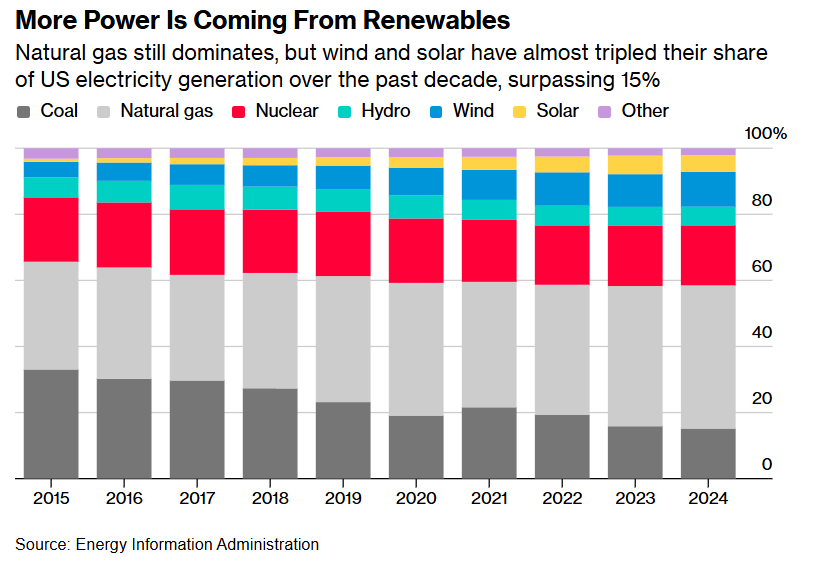
Group 1 - The stock market remains optimistic about the future of renewable energy despite the Trump administration's disinterest, driven by the belief that AI is ushering in a new cycle and that clean energy is the future of the global energy system [1][2] - The S&P Global Clean Energy Index has risen by 32% this year, led by strong performances from U.S. renewable energy giants Bloom Energy and First Solar, while popular clean energy ETFs have also shown significant gains [1] - By 2025, the U.S. is expected to see its largest solar installation capacity and battery storage capacity, contrasting with the S&P 500 Energy Sector Index, which has only increased by 5.5% this year [1] Group 2 - Fortescue Ltd. asserts that Trump's stance on climate change will not significantly suppress the long-term demand for clean electricity resources in the U.S., driven by AI's massive power needs and the pressure for emissions reduction [2][3] - The economic benefits of renewable energy are expected to outweigh political factors, as renewable energy has become more cost-effective than coal or natural gas in the U.S. [2][3] - Fortescue's CEO highlighted that the demand for clean energy will grow significantly due to cost pressures and the increasing scale of AI applications [3] Group 3 - The share of renewable energy in the global power mix has been expanding, with wind and solar systems in the U.S. nearly doubling their share over the past decade, surpassing 15% [7] - Since Trump's return to the presidency, significant delays and cancellations of renewable energy projects have occurred, amounting to nearly $42 billion [7] - Over 90% of new renewable power projects launched last year were more cost-effective than any new fossil fuel alternatives, with potential savings of up to $19 trillion in fuel costs by mid-century [7][4] Group 4 - The demand for electricity from AI data centers is expected to surge, with predictions indicating that global data center electricity demand will more than double by 2030, driven primarily by AI applications [9][10] - Major tech companies like Microsoft and Google are entering long-term power purchase agreements for renewable energy, indicating a strong demand for clean energy solutions [10][11] - UBS analysts note that the demand for utility-scale solar projects in the U.S. is gradually exceeding supply, providing significant growth potential for the solar industry [11]


计量器具型式评价证书互认,京津冀企业跨省迁址“搬家不搬证”
Xin Jing Bao· 2025-09-26 01:50
Core Insights - The 2025 North China National Metrology Testing Center Work Symposium was held in Hohhot, focusing on building a new regional metrology service system through policy collaboration, standard co-construction, regulatory linkage, and data sharing to support high-quality economic and social development in the region [1] Group 1: Regional Collaboration and Infrastructure Development - The market regulatory departments of Beijing, Tianjin, Hebei, Shanxi, and Inner Mongolia have successfully established a collaborative metrology support system, significantly enhancing service efficiency [1] - The three regions of Beijing, Tianjin, and Hebei have achieved mutual recognition of "measuring instrument type evaluation certificates," facilitating cross-regional business operations [1] - A total of 9,229 public measurement standards have been co-constructed among the five regions, improving the value transmission system [1] Group 2: Industry-Specific Measurement Centers - Various regions have established industry metrology testing centers focusing on their advantageous industries, such as graphene and aerospace materials in Beijing, and rail transportation in Hebei [2] - Beijing is planning to build the first national automotive autonomous driving metrology data application base, while Tianjin is preparing a smart power metering data base [2] Group 3: Green Transition Initiatives - The North China region has taken the lead in establishing a carbon measurement laboratory and a regional carbon emission monitoring system [2] - Specific carbon measurement tasks have been identified, with Shanxi outlining 44 key tasks and Inner Mongolia applying core equipment developed by the national carbon measurement center [2] Group 4: Public Welfare and Consumer Protection - The five regions have intensified the regulation of consumer metrology, with initiatives such as promoting fair scale management in Beijing and implementing IoT anti-cheating scales in Hebei [2] - Inner Mongolia has effectively addressed fuel dispenser cheating issues through a smart regulatory platform, ensuring consumer protection [2]
专访马石油中国首席代表李焱:中国和东盟将引领全球绿色能源转型
2 1 Shi Ji Jing Ji Bao Dao· 2025-09-25 23:48
Group 1 - The core partnership between Malaysia's national oil company and Yuchai Group has led to the establishment of Yuchai Petronas, which has been recognized as one of the top ten lubricant brands in China for ten consecutive years, exemplifying China-ASEAN industrial cooperation [1] - Petronas has established a presence in China since 2003, with offices and production bases in nine cities, focusing on LNG, petrochemicals, and lubricants, thereby creating a sustainable energy supply chain [1] - The strategic cooperation between Petronas and Chinese companies, including Sinopec and PetroChina, aims to enhance technological sharing and sustainable development, particularly in clean energy and carbon capture [2][3] Group 2 - The year 2024 marks significant anniversaries for both Malaysia-China diplomatic relations and Petronas, highlighting the importance of their strategic cooperation in the energy sector [2] - Petronas and PetroChina's collaboration focuses on upstream oil and gas development, LNG value chain, and innovative fields such as renewable energy and green hydrogen technology [3][5] - The partnership with Sinopec encompasses various sectors, including bulk and specialty chemicals, crude oil and LNG trade, and digital solutions, emphasizing a commitment to energy supply resilience and sustainability [5] Group 3 - Asia, home to 60% of the global population, is crucial for achieving net-zero emissions, as it accounts for 75% of its energy demand from fossil fuels, necessitating urgent low-carbon development [7][8] - The energy transition in Asia must balance energy security and sustainability, requiring coordinated actions in policy, investment, and technology to enhance energy system efficiency [8] - Petronas is committed to diversifying its LNG supply sources and enhancing market flexibility, with significant projects like LNG Canada contributing to its global growth strategy [9][10] Group 4 - Petronas aims to improve LNG delivery models to enhance supply reliability for the Chinese market, including innovative solutions like containerized LNG transport to remote areas [11] - The company is expanding its LNG fleet and investing in high-efficiency dual-fuel vessels to support the shipping industry's transition to cleaner fuels [11] - Long-term partnerships in LNG, lubricants, and specialty chemicals have established a solid foundation for ongoing collaboration with Chinese enterprises [10]

中曼石油:拟5.63亿元收购昕华夏迪拜49%股权 提升油气资源量
Zheng Quan Shi Bao Wang· 2025-09-25 12:02
Core Viewpoint - Zhongman Petroleum (603619) announced the acquisition of a 49% stake in Rising Energy International Middle East FZCO from its subsidiary, aiming to enhance its oil and gas resource volume and production rights [1] Group 1: Acquisition Details - The acquisition amount is 563 million yuan [1] - Upon completion of the acquisition, Zhongman Haibay will hold 100% equity in Rising Energy International Middle East FZCO [1] - This acquisition will indirectly grant Zhongman Haibay 100% rights in the Jiange Block [1]

中曼石油:拟5.63亿元收购昕华夏迪拜49%股权
Xin Lang Cai Jing· 2025-09-25 11:54
Core Viewpoint - The company aims to enhance its oil and gas resource volume and production rights through the acquisition of a 49% stake in Rising Energy International Middle East FZCO from China Rising Energy International (Cayman) Co., Limited for 563 million yuan, resulting in full ownership of the Dubai subsidiary and indirect control of 100% rights in the Jange block [1] Group 1 - The acquisition is part of the company's strategy to increase its oil and gas resources [1] - The total transaction amount for the stake acquisition is 563 million yuan [1] - Upon completion of the acquisition, the company will hold 100% equity in Rising Energy International Middle East FZCO [1]
中曼石油(603619.SH):中曼海湾拟收购昕华夏迪拜49%股权
Ge Long Hui A P P· 2025-09-25 11:06
Core Viewpoint - Zhongman Petroleum (603619.SH) announced the acquisition of a 49% stake in Rising Energy International Middle East FZCO from its subsidiary, China Rising Energy International (Cayman) Co., Limited, for a total consideration of 56,316.03 thousand RMB (approximately 7.93 million USD) [1] Group 1 - The acquisition will result in Zhongman Gulf holding 100% of Rising Energy International Middle East FZCO, thereby indirectly owning 100% rights to the Gengge Block [1] - The transaction is classified as a related party transaction due to the controlling shareholder, Shanghai Zhongman Investment Holding Co., Ltd., and the actual controller, Mr. Li Chundi, collectively holding 58.57% of China Rising Energy International [1]
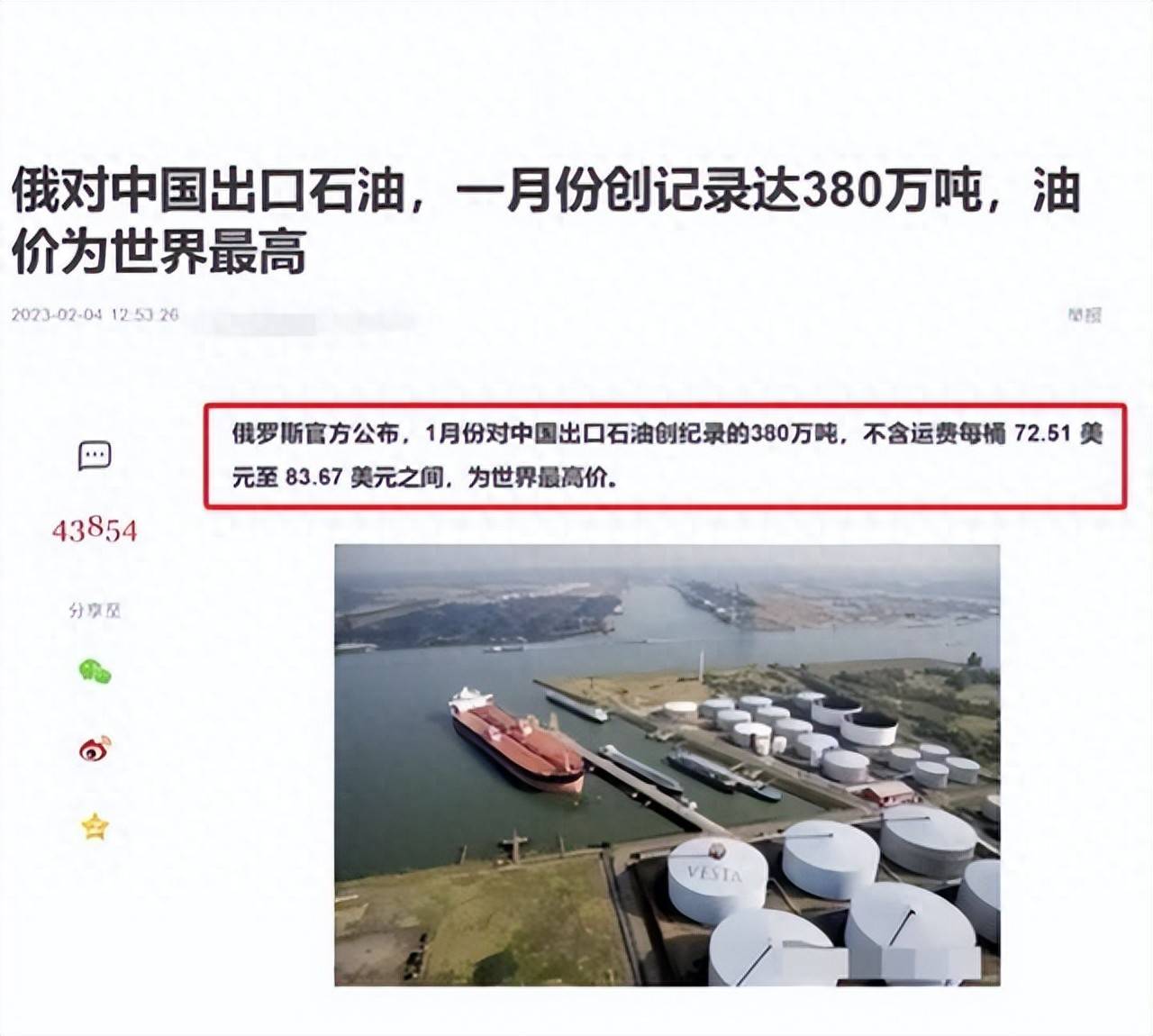
中国买俄石油全球最贵?别傻了,普京38个字评价中国:太会压价了
Sou Hu Cai Jing· 2025-09-25 09:17
Core Insights - The article discusses the complexities of China's oil imports from Russia, highlighting that while the price per barrel appears higher than India's, the overall value and strategic benefits are more favorable for China [3][4][12]. Group 1: Pricing and Import Dynamics - In January 2023, China imported 3.8 million tons of oil from Russia at a price of $72 to $83 per barrel, while India paid $30 to $35 per barrel, including shipping costs [3]. - China's average import price for Russian oil in 2024 is around $77 per barrel, which is competitive compared to prices from Saudi Arabia and Iran [12]. - The pricing structure for Russian oil involves long-term contracts with fixed pricing formulas, which include a base price minus discounts and transportation costs [4][10]. Group 2: Transportation and Supply Security - China primarily relies on pipeline and rail transport for Russian oil, which incurs higher maintenance and operational costs compared to India's maritime transport [3][4]. - The China-Russia oil pipeline has a capacity of 15 million tons per year, ensuring stable supply and energy security for China [4]. - The reliance on maritime transport by India has led to increased costs due to sanctions and rising shipping rates, affecting their import volumes [5][9]. Group 3: Strategic Negotiations and Market Position - China's negotiation strategy has been effective, allowing it to secure favorable terms despite not always obtaining the lowest market prices [6][12]. - Russian President Putin acknowledged China's negotiation skills, indicating that the relationship is mutually beneficial, especially given Russia's need for stable buyers amid Western sanctions [6][12]. - The long-term energy agreements between China and Russia are seen as a strategic partnership, with China maintaining a significant share of Russian oil imports [10][12]. Group 4: Future Outlook and Market Trends - By 2024, China is expected to import 5.53 million tons of oil, with Russia accounting for 20% of this volume, while India's imports from Russia are projected to decline [9][10]. - The ongoing geopolitical dynamics and energy market fluctuations suggest that China's position as a major buyer will continue to influence pricing and supply strategies in the region [12]. - Future projects, such as the Siberian Power 2 pipeline, are anticipated to further solidify China's energy security and pricing power in negotiations with Russia [12].