在线旅游

Search documents
斥资3亿元,同程旅行拿下一张支付牌照
Huan Qiu Lao Hu Cai Jing· 2025-09-26 09:57
Group 1 - The core point of the news is that Tongcheng Group's subsidiary, Yilong Network Information Technology, has acquired 100% of Newborn Payment for approximately 300 million yuan, allowing the company to enter the payment sector indirectly through the acquisition of a payment license [1] - The acquisition is expected to benefit the company by leveraging opportunities in the Hainan Free Trade Port, focusing on cross-border trade and cultural tourism consumption, and aiding the digital upgrade of tourism consumption scenarios [1] - Newborn Payment, established in early 2008 and under HNA Group, is one of the first third-party payment companies in China to obtain a full payment license, with its license valid until May 2026 [1] Group 2 - After acquiring Newborn Payment, Tongcheng Travel can reduce payment costs and create synergies with its main business, which includes accommodation booking and transportation ticketing services [2] - The value of payment licenses has been increasing, with companies like JD.com, Meituan, and ByteDance acquiring licenses through similar means, while competitors like Ctrip have developed their own payment solutions [2] Group 3 - In the first half of 2025, Tongcheng Travel reported revenue of 9.05 billion yuan, a year-on-year increase of 11.5%, with adjusted EBITDA of 2.34 billion yuan, up 35.2%, and adjusted net profit of 1.56 billion yuan, an increase of 28.6% [3] - Revenue from transportation ticketing for the same period was 3.88 billion yuan, growing by 11.6%, while accommodation booking revenue reached 2.56 billion yuan, up 18.8% [3]
同程集团收购支付牌照,回应来了
Zhong Guo Ji Jin Bao· 2025-09-26 06:49
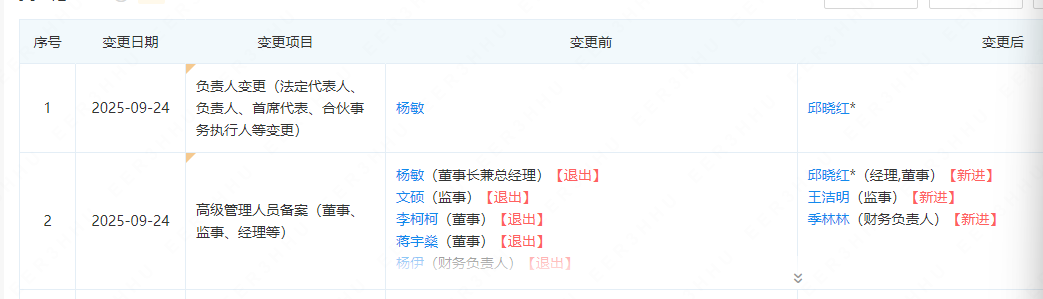
Group 1 - Tongcheng Group's subsidiary, Yilong Network, has acquired 100% equity of Newborn Payment for approximately 300 million yuan [1][2] - This acquisition allows Tongcheng Group to indirectly obtain a payment license and officially enter the payment sector [2][3] - Newborn Payment is one of the first third-party payment institutions to receive a payment business license from the People's Bank of China and is the only licensed payment entity in Hainan Province [3][4] Group 2 - The acquisition is expected to leverage opportunities from the development of Hainan Free Trade Port, enhancing cross-border trade and cultural tourism consumption [2][7] - Newborn Payment's business scope includes internet payment, prepaid card issuance, and acceptance, as well as cross-border RMB payment capabilities [4][7] - The recent changes in corporate structure indicate a shift towards aligning with Tongcheng Group's strategic interests, with new management closely linked to the group [5][6] Group 3 - The payment industry is entering a phase where acquiring licenses through acquisition is becoming a common strategy due to regulatory constraints [7][8] - Having a payment license will enable the platform to reduce costs associated with external partnerships and enhance user experience through integrated services [8]

同程集团收购支付牌照,回应来了
中国基金报· 2025-09-26 06:42
Core Viewpoint - Tongcheng Group's acquisition of 100% equity in Newborn Payment marks its entry into the payment sector, allowing it to indirectly obtain a payment license and leverage opportunities in cross-border trade and digital tourism consumption [2][3]. Summary by Sections - **Acquisition Details** - Tongcheng Group's subsidiary, Yilong Network, acquired Newborn Payment for approximately 300 million yuan [2]. - Newborn Payment is one of the first third-party payment institutions to receive a payment business license from the People's Bank of China and is currently the only licensed payment institution in Hainan Province [5]. - **Business Opportunities** - The acquisition positions Tongcheng Group to benefit from the development opportunities presented by the Hainan Free Trade Port, particularly in cross-border commerce and digital upgrades in tourism consumption [3][8]. - Newborn Payment's business scope includes internet payment, prepaid card issuance, and cross-border RMB payment, with potential for future expansion into cross-border RMB exchange [8]. - **Management Changes** - Recent changes in management at Newborn Payment include the appointment of new executives closely associated with Tongcheng Group, indicating a strategic alignment post-acquisition [6][5]. - **Industry Context** - The payment industry is transitioning into a phase where acquiring licenses through acquisition is becoming a common strategy due to regulatory constraints on new licenses [8]. - Having a payment license allows platforms to reduce costs associated with external partnerships and enhances user experience through integrated payment solutions [9].

收购牌照 同程旅行进军支付
Bei Jing Shang Bao· 2025-09-25 16:53
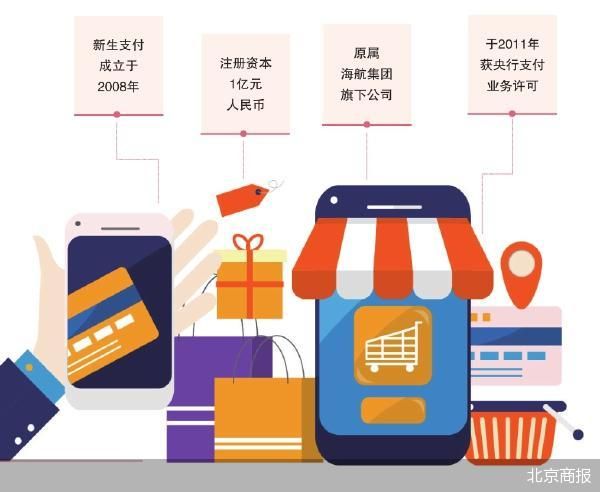
Core Viewpoint - Tongcheng Group's subsidiary, eLong, has acquired 100% of Newborn Payment Co., Ltd., gaining a payment license to capitalize on opportunities in cross-border trade and cultural tourism in the Hainan Free Trade Port [1][3][4] Group 1: Acquisition Details - The acquisition of Newborn Payment was executed through a full acquisition by eLong, which is a subsidiary of Tongcheng Group [3] - Newborn Payment, established in 2008 with a registered capital of 100 million RMB, was previously under HNA Group and has held a payment business license since 2011 [3][4] - The payment license allows Newborn Payment to conduct various payment services, including internet payment, prepaid card issuance, and bank card acceptance, with a license validity until May 2026 [3][4] Group 2: Strategic Considerations - The acquisition aligns with Tongcheng's strategy to leverage the development of the Hainan Free Trade Port, enhancing its capabilities in cross-border commerce and cultural tourism [1][6] - Newborn Payment is the only licensed payment institution in Hainan, positioning it to benefit from the region's favorable policies as it approaches the 2025 deadline for becoming a high-level free trade port [4][5] Group 3: Industry Context - The payment industry is transitioning into a phase where acquiring licenses through acquisition is becoming a common strategy due to regulatory constraints on new applications [3][7] - The importance of having a complete payment license is emphasized, as it allows companies to reduce costs associated with partnering with external licensed payment institutions [6][8] Group 4: Future Opportunities - The acquisition is expected to enhance Tongcheng's service offerings, allowing for better integration of financial services within its existing travel platform [8][9] - The move is seen as a step towards building a comprehensive financial ecosystem, which is crucial for maintaining competitiveness in the digital economy [9][10]
又一OTA平台筹谋支付牌照 同程子公司将全资收购新生支付
Zhong Guo Jing Ying Bao· 2025-09-25 15:23
Core Viewpoint - The online travel agency (OTA) platform Tongcheng Travel's subsidiary, Yilong Network, is acquiring 100% of the shares of Newborn Payment to obtain a payment license, aiming to leverage opportunities in the Hainan Free Trade Port and enhance digital upgrades in cultural and tourism consumption [2][3]. Group 1: Acquisition Details - Yilong Network confirmed the acquisition of Newborn Payment, which is the only licensed payment institution in Hainan, providing a strategic advantage to access favorable policies in the Free Trade Port [2][3]. - Newborn Payment, established in 2008 with a registered capital of 100 million RMB, is one of the first third-party payment companies to obtain a full payment business license from the People's Bank of China [2][3]. Group 2: Business Capabilities - Newborn Payment holds comprehensive payment qualifications, including internet payment, bank card acquiring, prepaid card issuance, and cross-border RMB payment, with potential for future cross-border RMB exchange qualifications [3]. - The acquisition is expected to enhance the synergy between payment functions and the main business, providing users with a smoother and safer payment experience [3]. Group 3: Market Context - The competition for payment licenses has intensified among major internet platforms, with companies like JD.com, Meituan, and ByteDance acquiring payment licenses through similar means [3]. - Ctrip, another major OTA, acquired a licensed payment institution in 2020, indicating a trend among OTAs to integrate payment capabilities into their services [4].
京东、高德低价揽客!酒旅预订迎黄金周“惨烈一战”
Qi Lu Wan Bao Wang· 2025-09-25 11:41
Group 1: Market Overview - The tourism market is heating up as the National Day holiday approaches, with consumers actively planning trips and making reservations on various online travel agency (OTA) platforms [1] - A competitive landscape is emerging among OTAs, with major players like Ctrip, JD.com, Meituan, and others engaging in aggressive marketing strategies to capture market share [2] Group 2: JD.com's Entry and Strategy - JD.com has entered the hotel booking market with a strong promotional strategy, including a "zero commission" policy that attracted 50,000 hotels within two days of its announcement [3][4] - JD.com's core competitive advantage lies in its robust supply chain capabilities, aiming to reduce industry costs to one-third of current levels [4] Group 3: Ctrip's Challenges - Ctrip is facing significant challenges, including regulatory scrutiny and a decline in market share from 67% in 2019 to 56% currently, a drop of 11 percentage points [5] - Despite a year-on-year revenue growth of 16.21% in the first half of 2025, Ctrip's growth momentum is slowing, particularly in its core accommodation booking business [5][6] Group 4: Competitive Responses - In response to market pressures, Ctrip has introduced measures such as lowering membership requirements and offering exclusive pricing with a double compensation guarantee [6][7] - Other OTAs like Tongcheng and Qunar are leveraging their unique strategies to capture market share, particularly in lower-tier cities [8] Group 5: Emerging Players - New entrants like Douyin, Gaode Map, and Xiaohongshu are making significant inroads into the travel market, utilizing innovative marketing strategies such as content-driven promotions and local advantages [9] - The competition is intensifying as these platforms focus on addressing cost concerns for businesses and enhancing user experience, indicating a shift in the OTA landscape [9]
独家丨这一头部OTA拿下支付牌照!赛道玩家再添一员
Bei Jing Shang Bao· 2025-09-25 10:44
Group 1 - The core viewpoint of the article is that Tongcheng Group's subsidiary, Yilong Network, has acquired 100% of Xinxing Payment to obtain a payment license, aiming to leverage opportunities in cross-border trade and cultural tourism consumption, particularly benefiting from the development of Hainan Free Trade Port [1][5][4] Group 2 - Xinxing Payment, established in 2008 with a registered capital of 100 million RMB, was previously under HNA Group and has been granted various payment business licenses, including internet payment and prepaid card issuance [3][4] - The acquisition of Xinxing Payment is significant as it is the only licensed payment institution in Hainan and plays a crucial role in the digital RMB pilot for cross-border e-commerce [4][5] - The payment license allows Yilong Network to reduce costs associated with external licensed payment partners and enhances its ability to accumulate user data and cross-sell financial services [5][6] Group 3 - The acquisition reflects Tongcheng's strategy to capitalize on opportunities in cross-border commerce and cultural tourism, with a focus on digital upgrades in consumption scenarios [5][6] - Compliance is a critical factor, as the financial regulatory environment emphasizes licensed operations, and the company must establish a robust compliance and internal control system post-acquisition [6][7] - The payment license is seen as a foundational infrastructure for financial operations, enabling the company to expand its service boundaries within a compliant framework [7][8] Group 4 - The integration of payment capabilities is essential for building a financial ecosystem and enhancing business synergy, allowing the company to connect consumer and merchant transactions effectively [8] - In the context of increasing digitalization, having a complete license system is becoming a standard for leading companies, providing a competitive edge in the evolving digital economy [8][9]

又一OTA平台进军支付领域 同程拿下支付牌照
Ge Long Hui A P P· 2025-09-25 10:31
Core Viewpoint - Another OTA platform, Tongcheng Group's affiliate, eLong, has entered the payment sector by acquiring 100% equity of Newborn Payment Co., Ltd, thereby obtaining a payment license [1] Group 1: Company Developments - eLong has completed the acquisition of Newborn Payment, with changes in business registration already partially updated [1] - The acquisition will allow eLong to benefit directly from the development of Hainan Free Trade Port [1] Group 2: Strategic Opportunities - eLong aims to leverage payment services as a link to seize strategic opportunities in cross-border trade and cultural tourism consumption [1] - The company plans to support the digital upgrade of cultural tourism consumption scenarios through this acquisition [1]
携程集团副总裁秦静:做好入境游,做大国内旅游市场
Zhong Guo Jing Ying Bao· 2025-09-25 02:19
Core Insights - The fastest way to address the issue of "involution" in the tourism industry is to expand the domestic tourism market by attracting more consumers, particularly through inbound tourism [1][3] Group 1: Market Dynamics - The supply of high-end hotels in China has been growing steadily at an annual rate of 12% to 13% over the past two years, with an expected increase to 14% this year [3] - There is a significant imbalance between supply and demand in the domestic tourism market, leading to intensified homogeneous competition, which is a phenomenon the government aims to mitigate [3] Group 2: Company Strategies - The company is focusing on three main strategies to effectively capture customers in the international market: 1. **Operational Localization**: Unlike many overseas apps that only switch languages, the company tailors its services to meet local user preferences, such as providing specific hotel features for Japanese users and halal dining options for Muslim travelers [3][4] 2. **Service Capability**: The company employs approximately 15,000 customer service staff globally, offering 24/7 human support and has integrated AI technology to enhance the efficiency of addressing issues faced by inbound travelers [4] 3. **Supply Chain Empowerment**: The company assists businesses in better capturing inbound tourism opportunities by translating hotel information into over 20 languages and integrating AI plugins to enable real-time responses to inquiries in multiple languages [4] Group 3: Industry Goals - The company aims to continuously expand the domestic tourism market, support ecosystem partners in attracting international traffic, and promote high-quality growth in the industry while avoiding low-level competition [4]


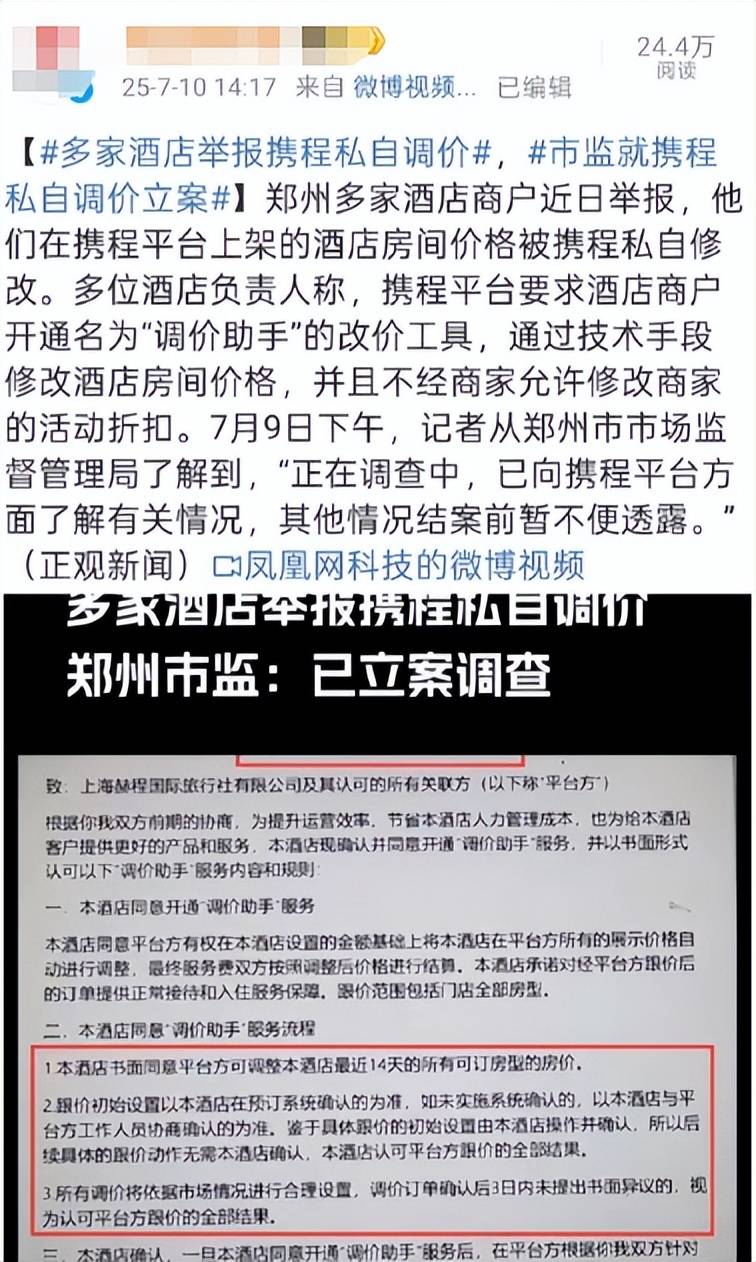
携程被约谈,多家酒店举报其私自调价,旅游业要变天?
Sou Hu Cai Jing· 2025-09-25 01:58
Core Viewpoint - The automatic price adjustment feature of Ctrip has caused significant frustration among hotel operators, leading to regulatory scrutiny and potential changes in the online travel industry landscape [2][10][18]. Group 1: Ctrip's Automatic Price Adjustment - Hotel operators have reported that Ctrip's "automatic price adjustment" feature frequently alters room prices without their consent, often resulting in prices that do not even cover costs [2][6]. - The process to disable this feature is complicated and time-consuming, leading to further dissatisfaction among hotel managers [10][12]. - Regulatory bodies have taken notice, with the Zhengzhou Market Supervision Administration recently addressing Ctrip for violating e-commerce laws by unreasonably restricting merchants' pricing rights [11][18]. Group 2: Regulatory Actions and Industry Response - Ctrip has faced multiple regulatory meetings, indicating a growing intolerance from authorities regarding its practices [3][5]. - The regulatory body has mandated Ctrip to rectify its practices, including revising contract terms and optimizing its pricing tools to protect merchant rights [11][18]. - New competitors like JD.com and Douyin are entering the market, offering favorable terms to hotel operators, which could shift the balance of power away from Ctrip [13][14][17]. Group 3: Market Dynamics and Future Outlook - The entry of new players is seen as a positive development for hotel operators, providing them with more options and reducing reliance on a single platform [17][20]. - The competitive landscape is expected to evolve, focusing more on service quality, technological innovation, and ecosystem development [18][20]. - As the market transforms, consumers may benefit from more transparent pricing and improved service quality, marking a shift away from the previous dominance of platforms like Ctrip [20].