
芯片

Search documents
龙芯中科1月26日获融资买入4.13亿元,融资余额13.39亿元
Xin Lang Cai Jing· 2026-01-27 01:30
Group 1 - On January 26, Longxin Zhongke's stock fell by 7.88%, with a trading volume of 3.32 billion yuan [1] - The financing data for Longxin Zhongke on the same day showed a financing purchase amount of 413 million yuan and a financing repayment of 404 million yuan, resulting in a net financing purchase of 8.97 million yuan [1] - As of January 26, the total margin balance for Longxin Zhongke was 1.344 billion yuan, with the financing balance accounting for 1.88% of the circulating market value, indicating a high level compared to the past year [1] Group 2 - As of September 30, Longxin Zhongke had 28,200 shareholders, an increase of 25.97% from the previous period, while the average circulating shares per person decreased by 20.62% to 14,203 shares [2] - For the period from January to September 2025, Longxin Zhongke reported an operating income of 351 million yuan, a year-on-year increase of 13.94%, but a net profit attributable to the parent company of -394 million yuan, a decrease of 14.89% year-on-year [2] - Among the top ten circulating shareholders as of September 30, 2025, Hong Kong Central Clearing Limited was the tenth largest shareholder with 6.2578 million shares, marking its entry as a new shareholder [2]

难以置信,芯片也开始涨价了
Xin Lang Cai Jing· 2026-01-27 01:16
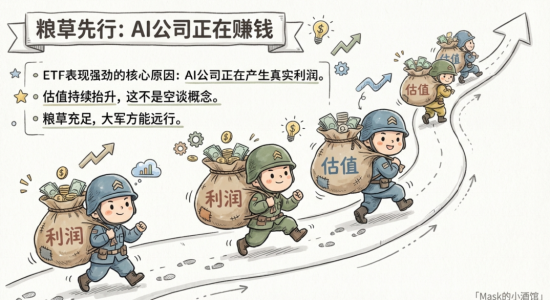
所以这个产品从发行到上市到现在,我是一直跟踪着的,看着 创业板人工智能ETF(159363,场外联接C:023408)的量价一路走高,规模从最初的7亿,一直升到 现在60多亿。这个ETF是双创赛道规模最大、流动性最佳的人工智能ETF。 来源:Mask的小酒馆 来说说科技。 我应该是全网第一批说创业板人工智能的博主了,如果大家还有记忆的话,我第一次说是在2025年7月 16号,文章还在'我去,新高了!',后面至少说了七八次。 我相信应该也有朋友在这个过程中有所收获了。 首先这个ETF表现得比较好的原因就是因为现在AI公司在赚钱,估值一直都在抬升,而这个ETF是把一 堆的AI公司打包在一起,芯片、光模块、算力基建、AI应用,几十上百家AI公司都包含了。 AI涨的时候能够分享涨幅,跌的时候也不会因为某一家暴雷而出现巨亏。 它的仓位配置很聪明:六成押注算力(光模块为主),四成押注AI应用。 什么意思?就是它不赌单一方向,而是把整条产业链都覆盖了——既有光模块、数据中心这些"卖铲 子"的算力公司,也有做AI应用落地的软件公司。AI应用火的时候能吃肉,光模块涨的时候也能跟上。 从数据看,它标的指数跑赢科创AI、人工智能等 ...

纳芯微:与RT-Thread达成战略合作 共建实时控制MCU软硬件生态
Zhong Guo Qi Che Bao Wang· 2026-01-27 01:13
近日,纳芯微与国内知名嵌入式操作系统厂商RT-Thread睿赛德正式达成战略合作,双方聚焦实时 控制MCU领域,携手深化生态布局,以技术协同推动国产芯片与自主操作系统的深度融合,为高端制 造领域注入创新动能。 纳芯微始终以降低客户开发门槛、加速方案落地为核心目标,依托此次与RT-Thread的合作,进一 步完善全链条服务体系,从工具、方案、供应链多维度为客户赋能: - 工具适配层面,借助RT-Thread成熟的软件生态与纳芯微硬件优势,客户可通过基于开源GCC编译 器的纳芯微自研免费IDE NovoStudio实现快速迁移,有效降低开发成本,大幅缩短产品上市周期; - 场景落地层面,针对工业、汽车、能源等对实时性、可靠性要求严苛的领域,双方联合打造的软 硬件一体化解决方案,将进一步提升系统运行效率与稳定性,满足高端场景需求; - 供应链保障层面,依托纳芯微全国产供应链体系,可实现方案的稳定交付与快速迭代,为客户长 期合作提供坚实支撑。 RT-Thread创始人熊谱翔表示,纳芯微在实时控制MCU领域的进展令人瞩目,2024年发布的 NSSine™系列不仅快速完成从单核到双核M7产品的布局并实现量产,更在光储、新 ...

早报 | 美军称林肯号航母打击群正部署中东;黄金白银大幅回调;宇树宣布第三次上春晚;我国尼帕病毒检测能力如何? 张文宏发声
虎嗅APP· 2026-01-27 01:09
Group 1 - The U.S. military's Abraham Lincoln aircraft carrier strike group is being deployed to the Middle East to promote peace and stability in the region [2] - The European Commission has launched a formal investigation into X platform, focusing on the potential risks associated with its AI chatbot, Grok, and whether appropriate measures have been taken [2] - Microsoft has released its second-generation AI chip, Maia 200, which is designed to reduce reliance on Nvidia chips and improve efficiency, achieving a 30% performance increase per dollar compared to its latest hardware [4] Group 2 - Apple has launched an upgraded version of AirTag, featuring a 50% increase in tracking distance and a louder speaker, while maintaining the same price of $29 [5][6] - Alibaba has introduced its flagship reasoning model Qwen3-Max-Thinking, which has over one trillion parameters and outperforms top international models in various evaluations [8] - Trump announced an increase in tariffs on various South Korean goods from 15% to 25% due to the failure of the South Korean legislature to ratify a trade agreement [9] Group 3 - The price of silver has seen a significant fluctuation, erasing a 14% gain, while gold has dropped below $5000 per ounce [11] - Yuhui Supermarket in Beijing has temporarily closed due to issues with the property management, despite having reopened after renovations less than a year ago [13][14] - The founder of Miaokelan Duo has been removed from his positions, with the company's stock price dropping by 1.77% following the announcement [15] Group 4 - KFC has made a slight price adjustment of an average of 0.8 yuan for its delivery products, while maintaining in-store prices unchanged [19] - Baicaowei has faced criticism for misleading consumers regarding the contents of its nut gift boxes, which contain significantly less nuts than advertised [20][21] - Tencent's CEO Ma Huateng emphasized the importance of saving users' time and improving efficiency through AI integration in their products during the company's annual employee meeting [30]

特朗普大动作!宣称对韩国加征关税;美股收涨藏隐忧,芯片股已现“疲软”信号,金银上演“过山车”行情
Jin Rong Jie· 2026-01-27 00:37
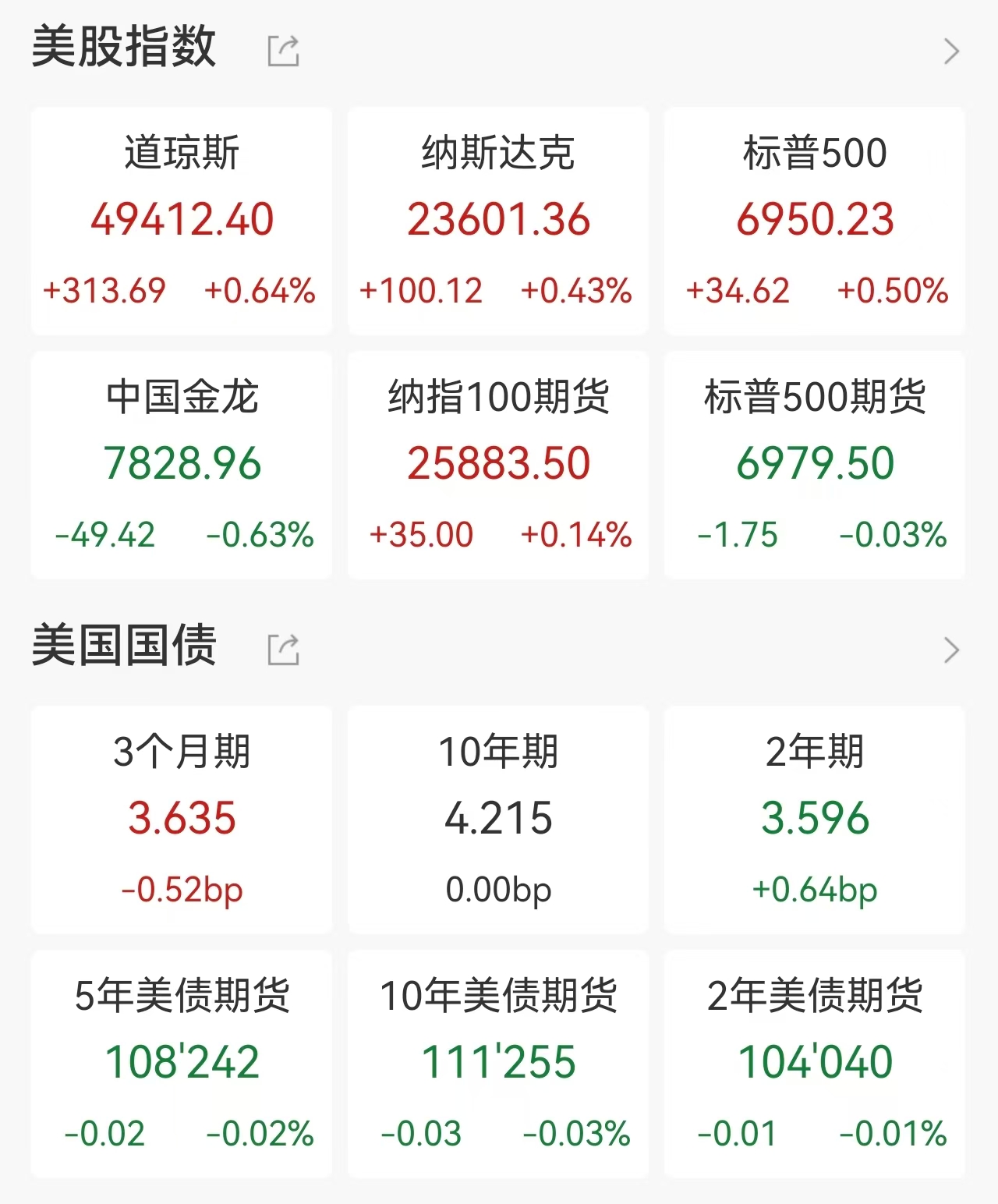
当地时间1月26日,美股三大指数在波动中集体收涨,道琼斯指数上涨313.69点,涨幅0.64%,报49412.40点;标普500指数涨0.50%,报6950.23点;纳斯达克 指数涨0.43%,报23601.36点。 | 道琼斯 | 纳斯达克 | 标普5( | | --- | --- | --- | | 49412.40 | 23601.36 | 6950.1 | | +313.69 +0.64% +100.12 +0.43% +34.62 + | | | | 中国金龙 | 纳指100期货 | 标普500 | | 7828.96 | 25883.50 | 6979 ! | | -49.42 -0.63% +35.00 +0.14% | | -1.75 | | 美国国债 | | | | 3个月期 | 10年期 | 2年前 | | 3.635 | 4.215 | 3.59 | | -0.52bp | 0.00bp | +0.64b | | 5年美债期货 | 10年美债期货 | 2年美债! | | 108'242 | 111'255 | 104'04 | | -0.02 -0.02% | -0.03 -0.03% ...
微软(MSFT.US)新一代自研AI芯片“Maia 200”出鞘! 推理狂潮席卷全球 属于AI ASIC的黄金时代到来
智通财经网· 2026-01-27 00:34
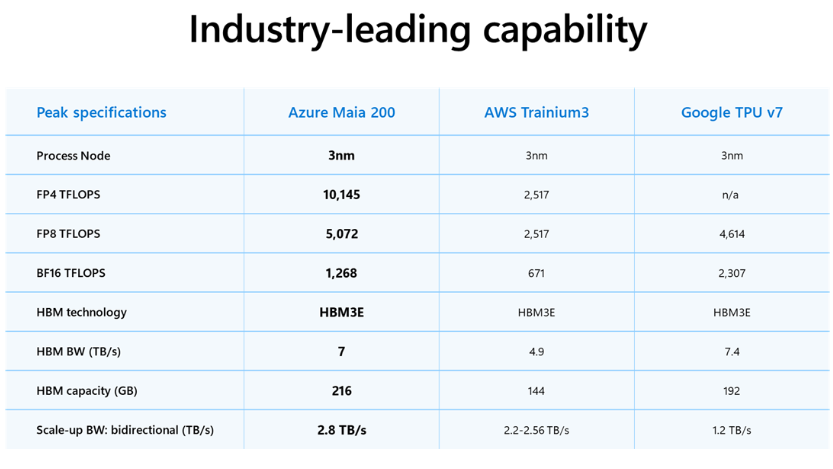
Core Viewpoint - Microsoft has launched its second-generation AI chip, Maia 200, aimed at providing a cost-effective alternative to NVIDIA's AI GPU series for cloud AI training and inference tasks [1][3]. Group 1: Product Launch and Specifications - The Maia 200 chip, manufactured by TSMC, is designed for high-performance AI inference tasks and is being deployed in Microsoft's AI data centers [1][3]. - The chip features over 1.4 trillion transistors and is built on a 3nm process, offering more than 10 petaFLOPS of performance at FP4 precision and over 5 petaFLOPS at FP8 precision, all within a power consumption of 750 watts [5][6]. - Maia 200's performance per dollar is reported to be 30% better than Microsoft's current hardware, and it outperforms Amazon's Trainium by three times in FP4 performance [5][8]. Group 2: Competitive Landscape - The launch of Maia 200 positions Microsoft as a strong competitor against Amazon's Trainium and Google's TPU, with claims of superior performance in AI inference tasks [3][4]. - Major chip design companies like Marvell and Broadcom are increasingly focusing on developing custom AI ASIC solutions for cloud giants, indicating a competitive shift in the industry [2]. Group 3: Strategic Importance - The development of Maia 200 reflects Microsoft's serious commitment to in-house chip engineering, driven by the growing energy demands of large AI data centers and the need for cost-effective solutions [9]. - The AI ASIC technology route is becoming crucial for major tech companies, as they aim to enhance the cost-effectiveness and energy efficiency of their AI computing systems [10][11].

“五小龙”齐聚资本市场,燧原科技能平替英伟达?
阿尔法工场研究院· 2026-01-27 00:06
Core Viewpoint - Suiryan Technology has officially initiated its IPO process on the Sci-Tech Innovation Board, aiming to raise 6 billion yuan for the development and industrialization of fifth and sixth-generation AI chips, as well as advanced AI hardware and software projects [1][5]. Company Overview - Founded nearly eight years ago, Suiryan Technology has completed iterations of four architectures and five cloud AI chips, capturing approximately 1.4% of the domestic AI accelerator card market and entering the core computing power supply system of major internet companies [1][9]. - The company has a strong focus on R&D, with a high proportion of its workforce dedicated to research and development, and has accumulated 262 domestic invention patents [10][18]. Financial Performance - Despite rapid revenue growth, Suiryan Technology has not yet achieved profitability, reporting cumulative revenues of approximately 1.654 billion yuan and cumulative net losses of about 5.179 billion yuan from 2022 to the first three quarters of 2025 [10]. - The company’s revenue figures for the years 2022, 2023, 2024, and the first three quarters of 2025 are 90 million yuan, 301 million yuan, 722 million yuan, and 540 million yuan, respectively [10]. Funding and Shareholder Structure - The IPO aims to secure 6 billion yuan, which is crucial for supporting the R&D and mass production of future products [5]. - Tencent is the largest shareholder, holding approximately 20.26% of the company, contributing over 70% of its revenue [4][7]. Market Position and Competition - Suiryan Technology is positioned as a potential alternative to NVIDIA in the AI chip market, although it currently faces challenges due to its non-compatibility with NVIDIA's CUDA ecosystem, which may lead to higher migration costs for customers [3][12]. - The company’s market share in the AI accelerator card segment is currently 1.4%, while NVIDIA dominates with approximately 70% of the domestic market [14]. R&D and Product Development - The company has a high R&D expenditure, with a research expense ratio of 181.66% in 2024 and 164.77% in the first three quarters of 2025, indicating a significant investment in technology development [17]. - Suiryan Technology plans to launch its fifth-generation AI chip in 2027 and the sixth generation in 2028, focusing on enhancing its product offerings [17]. Strategic Partnerships - Since 2019, Suiryan Technology has developed a stable partnership with Tencent, transitioning from small-scale validation to large-scale applications and deep strategic cooperation [7].
突发!特朗普:对韩国加征关税
Zheng Quan Shi Bao· 2026-01-26 23:58
苹果收高2.97%,公司将于当地时间周四盘后公布最新财报。近日,摩根大通上调苹果目标价,预测其 iPhone17强劲需求与成本控制将推动业绩超预期。摩根大通表示,iPhone需求好于预期以及运营支出下 降,可能推动苹果业绩超出市场预期。该行重申对这家科技巨头的"增持"评级,并将目标价从305美元 上调至315美元。 微软涨0.93%。继去年底谷歌、亚马逊先后发布自研算力芯片后,同为全球云计算"三巨头"的微软终于 在本周"交卷"——传闻已久的Maia200芯片正式面世。 微软在公告中表示,这款"为推理而生"的芯片在多项测试中超越亚马逊的第三代Trainium和谷歌第七代 TPU。因此,微软将Maia200公开称为"所有超大规模云服务商中性能最强的自研芯片"。 特朗普再发关税威胁。 当地时间1月26日(周一),美股三大指数集体收涨,纳指涨0.43%,道指涨0.64%,标普500指数涨0.5%。 苹果、Meta Platforms和微软等公司普遍上涨,这几家公司均将在本周公布财报。具体来看,微软、 Meta Platforms和特斯拉将于当地时间周三公布财报,苹果紧随其后于当地时间周四公布。 其他消息方面,美国总统 ...

美国拟推出严厉芯片出口管制新规,直指中国AI
制裁名单· 2026-01-26 23:50
Core Viewpoint - The "AI OVERWATCH Act" aims to impose strict licensing requirements on the export of advanced integrated circuits (chips) to "concerned countries," particularly targeting China's AI industry and military modernization efforts [1] Group 1: Legislation Overview - The act mandates the U.S. Department of Commerce to implement stringent licensing management for the export, re-export, or domestic transfer of "specific integrated circuits" to "concerned countries," with China being the primary focus [2] - The list of "concerned countries" includes China (including Hong Kong and Macau), Iran, North Korea, Russia, and Venezuela [2] Group 2: Definition of Targeted Integrated Circuits - The act defines "specific integrated circuits" as advanced computing chips essential for modern AI development, specifically targeting the latest GPUs and AI accelerator chips used for training large AI models [3] - The government is authorized to update the parameters of these chips based on technological advancements to ensure the regulations remain relevant [3] Group 3: Licensing Approval Process - The act establishes a nearly insurmountable approval process for exporting controlled chips to "concerned countries," particularly China [4] - It specifies that any integrated circuit meeting or exceeding certain performance thresholds will fall under regulatory control, including total processing performance and memory bandwidth requirements [4] Group 4: Congressional Oversight and Strategic Assessment - The act requires the Department of Commerce to submit detailed application materials to Congress at least 30 days before approving any licenses, including security risk certifications [5] - A temporary comprehensive ban on export license applications to "concerned countries" will be in place until a national security strategy report is submitted to Congress [7] - The act mandates a strategic report assessing the implications of "concerned countries" acquiring advanced chips on U.S. national security, particularly focusing on China's capabilities [7]

思特威三领域收入增长净利倍增 新品大量出货供应小米吉利终端
Chang Jiang Shang Bao· 2026-01-26 23:47
Core Viewpoint - The company, Sitoway (688213.SH), is expected to achieve significant growth in 2025, with projected revenue of approximately 9 billion yuan and a net profit of around 1 billion yuan, marking a doubling of profit compared to the previous year [1][2][3]. Financial Performance - For the fiscal year 2025, Sitoway anticipates revenue between 8.8 billion yuan and 9.2 billion yuan, representing a year-on-year increase of approximately 47% to 54% [2]. - The expected net profit attributable to shareholders is projected to be between 976 million yuan and 1.031 billion yuan, reflecting a year-on-year growth of 149% to 162% [2]. - The company has shown a history of fluctuating profits, with the highest net profit in previous years being less than 400 million yuan [1][4]. Business Growth Drivers - The anticipated growth in 2025 is attributed to a significant increase in product shipments in the smartphone, automotive electronics, and smart security sectors [1][5]. - Sitoway's revenue and profit growth are supported by its strong research and development efforts, with R&D investment reaching 427 million yuan in the first three quarters of 2025 [1][6]. Product Development and Market Position - Sitoway specializes in high-performance CMOS image sensor chips, with applications across various high-tech fields including security, machine vision, smartphones, and automotive electronics [6]. - The company has developed a diverse range of products to meet different market needs, focusing on high, medium, and low-end segments [6][7]. - Sitoway's customer base includes well-known brands such as Hikvision, Xiaomi, BYD, and others, contributing to a robust customer resource system [7].
