
Autos

Search documents
Levi & Korsinsky Launches Fraud Investigation on Behalf of Stellantis N.V. (STLA) Shareholders
TMX Newsfile· 2026-03-16 04:10
Core Insights - Stellantis N.V. is under investigation for potential violations of federal securities laws following a significant decline in stock value after a major announcement regarding its electric vehicle (EV) strategy [1][4]. Group 1: Timeline of Events - On January 31, 2026, Wall Street Zen downgraded Stellantis to Sell, followed by Morgan Stanley's downgrade to Equal-Weight on February 3, citing an "investment lag" [2]. - A report on February 5 indicated Stellantis was seeking European cash to mitigate tariff-related challenges, suggesting cash-flow stress [2]. - The last earnings call prior to the February 6 announcement was on October 30, 2025, and no updates were provided during the three months leading up to the write-down disclosure [2]. Group 2: February 6 Announcement - The February 6 announcement revealed that management had overestimated the pace of EV adoption, leading to a strategic reset that included suspending the 2026 dividend [3]. - Following this announcement, Stellantis shares plummeted approximately 28% in a single trading session, marking one of the worst trading days in the company's history [3]. Group 3: Investigation Focus - The investigation is centered on whether Stellantis' public communications between the Q3 2025 earnings call and the February 6 disclosure accurately reflected the company's internal understanding of its EV assets' viability and valuation [4].



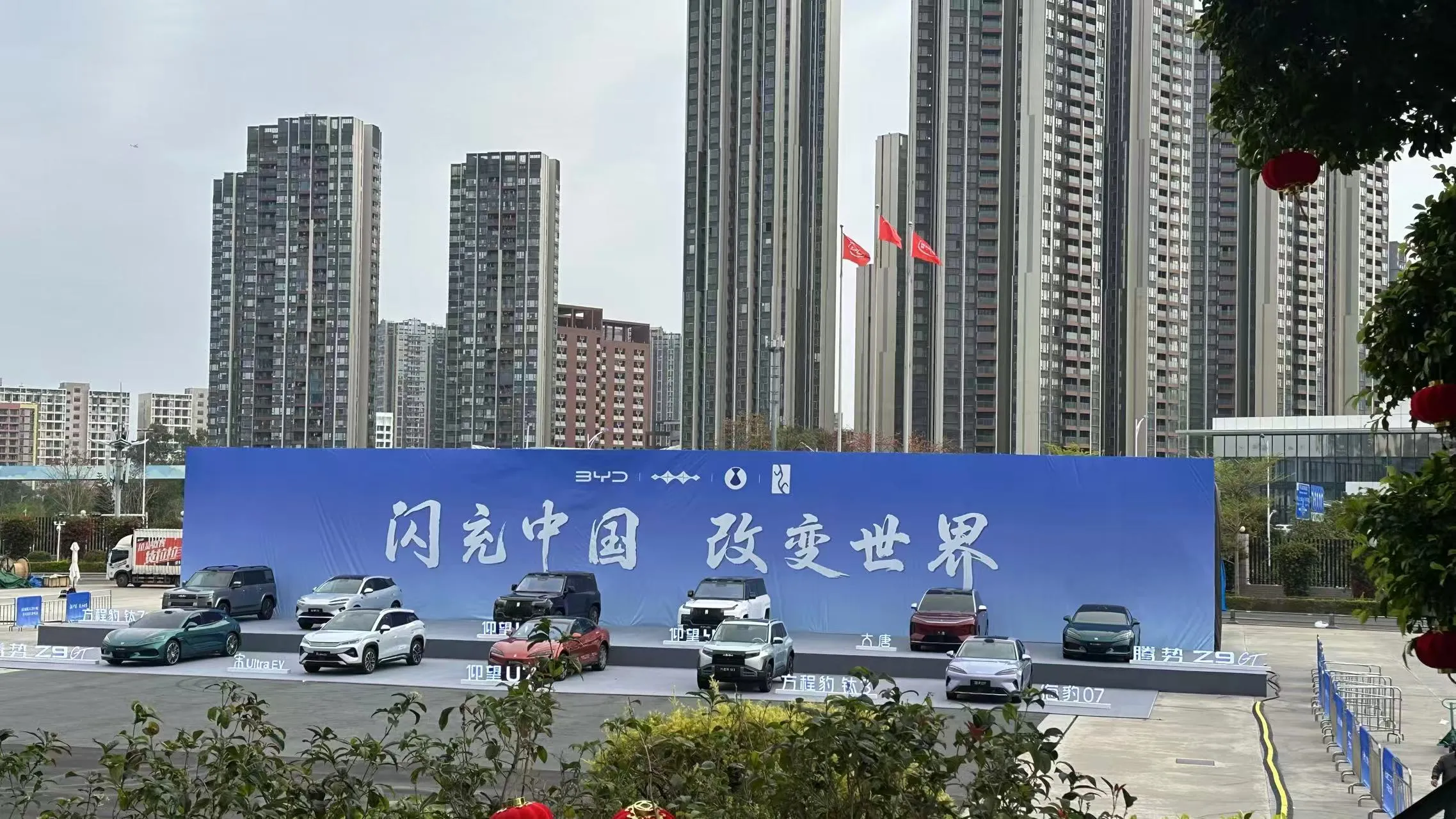
比亚迪两地 “闪充”实测观察丨第二代刀片电池充电时长压缩至10分钟级
Cai Jing Wang· 2026-03-16 04:06
Core Viewpoint - The recent charging tests conducted by BYD in Beijing and Harbin demonstrate significant improvements in electric vehicle charging efficiency in low-temperature environments, addressing a major pain point for northern users during winter [1][5][13]. Group 1: Charging Performance in Low Temperatures - In Beijing's low-temperature environment, 8 models charged from 19%-20% battery level in a time range of 9 minutes 42 seconds to 10 minutes 22 seconds, with the Song Ultra taking 9 minutes 42 seconds and the Tengshi N9 taking 10 minutes 22 seconds [3][9]. - In Harbin at -20°C, 10 models charged from 18%-20% battery level to 97% in 10 minutes 21 seconds to 11 minutes 34 seconds, with the Song Ultra at 10 minutes 21 seconds and the Tengshi N9 at 11 minutes 34 seconds [3][9]. - The tests indicate a shift from "hour-level" to "minute-level" charging efficiency, significantly reducing the time cost for winter charging, making it comparable to refueling traditional gasoline vehicles [3][10]. Group 2: Testing Methodology and Sample Diversity - The tests were designed to simulate real-world conditions, with vehicles left in extreme cold for 24 hours to ensure batteries were fully frozen, reflecting the worst-case scenarios for northern users [5][8]. - The testing included a diverse range of models from BYD's various brands, enhancing the reliability of the results and showcasing the performance consistency across different vehicle types [8][9]. Group 3: Technological Integration and User Experience - The improvement in charging efficiency is attributed to the integration of the second-generation blade battery and flash charging technology, which together form the core of the low-temperature fast charging capability [10][11]. - The T-type flash charging station design addresses user pain points by simplifying the charging process and reducing physical strain, thus enhancing the overall user experience in harsh winter conditions [11][13].

Iran war bloodbath: Over 400 Indian stocks see double digit fall since conflict began
The Economic Times· 2026-03-16 03:53
Market Overview - Indian equities are experiencing one of their sharpest corrections in recent years, with over 400 stocks falling in double digits since the onset of the Iran conflict, indicating a significant risk-off sentiment in the market [1][24] - The benchmark Nifty has fallen nearly 8% in March 2026, marking the second sharpest monthly decline in the last decade, while the BSE Sensex has lost nearly 4,000 points in the past week [9][10] Sector Performance - The sell-off has affected largecaps, midcaps, and smallcaps across various sectors, with notable declines in technology, financials, automobiles, and consumer goods [8][24] - Specific stocks such as Infobeans Technologies have dropped over 40%, while others like Aqylon Nexus and SEPC have seen declines of more than 30% and 29% respectively [2][24] - Automobile and auto component companies, including Lumax Industries and Rico Auto Industries, have experienced declines between 18% and 20% [6][24] - Financial institutions like City Union Bank and IndusInd Bank have registered losses ranging from 14% to 18% [7][24] Geopolitical Impact - The ongoing conflict involving Iran is identified as the central trigger for the recent market turbulence, with fears of disruption in global energy supplies leading to a surge in crude oil prices [11][24] - India, which imports nearly 85% of its crude oil, faces significant risks related to energy security and macroeconomic stability due to potential disruptions in the Strait of Hormuz [12][24] Foreign Investment Trends - Heavy foreign institutional investor outflows have intensified the sell-off, with nearly Rs 50,000 crore worth of Indian equities sold this month [14][25] - Global investors are shifting towards safer assets amid rising geopolitical uncertainty, contributing to capital outflows from emerging markets [15][25] IT Sector Concerns - Structural concerns in the IT sector, particularly regarding the impact of artificial intelligence on growth prospects, have led to reassessment of demand visibility for outsourcing services, negatively affecting technology stocks [16][25] Market Outlook - Analysts expect continued volatility in the near term, driven by geopolitical developments and crude oil price trajectories [18][25] - Technical indicators suggest immediate support around the 22,900 level, with potential further declines if this level is breached [21][25] - A cautious investment strategy is recommended, with a focus on avoiding aggressive leverage and maintaining strict risk management [22][25]

2026年1月OTA监测月报
乘联分会· 2026-03-16 03:35
Investment Rating - The report does not explicitly provide an investment rating for the industry Core Insights - In January 2026, the industry updated a total of 1,969 features, a significant increase from 1,397 in the previous month, driven by 32 brands focusing on enhancing travel experience and safety during the Spring Festival [4] - New force brands updated 839 features, a substantial rise from 216 in the previous month, with significant upgrades in intelligent driving capabilities and user experience enhancements [7] - Domestic brands updated 1,080 features, showing a slight decrease from 1,144 in the previous month, indicating a trend towards a layered technology system [10] - Joint venture and luxury brands updated 50 features, an increase from 37 in the previous month, focusing on central control ecology and general settings [13] Summary by Sections Industry Overview - The industry saw a total of 1,969 feature updates in January 2026, with a focus on improving travel experiences and safety during the Spring Festival [4] - The updates included enhancements in entertainment and interaction for multi-passenger scenarios, making family vehicles more user-friendly [4] New Force Brands - New force brands collectively updated 839 features, marking a significant increase from the previous month [7] - Key upgrades included improvements in intelligent driving capabilities and the introduction of features aimed at enhancing the festive atmosphere for families [7] Domestic Brands - Domestic brands updated 1,080 features, slightly down from the previous month [10] - The first-tier brands (BYD, Geely, Great Wall) are entering a harvest period with significant advancements in their high-end brands' intelligent capabilities [10] Joint Venture and Luxury Brands - Joint venture and luxury brands updated 50 features, with a focus on central control ecology and general settings [13] - Notable updates included Nissan's N7, which introduced personalized intelligent driving features [13] OTA Frequency Overview - In January, 9 new force brands pushed OTA updates, with a focus on intelligent driving as a core competitive area [17] - 19 domestic brands also pushed OTA updates, indicating a shift towards a self-research and ecological cooperation technology system [18] - Only 2 joint venture brands pushed OTA updates, with Buick focusing on system stability and Nissan enhancing intelligent driving experiences [20] User Feedback - Users reported significant improvements in intelligent driving efficiency and decision-making capabilities following OTA updates, with a notable increase in satisfaction levels [41]



2026年1月价格指数报告
乘联分会&CAM· 2026-03-16 03:30
Investment Rating - The report does not explicitly provide an investment rating for the automotive industry Core Insights - The overall passenger car market price index for January 2026 shows a decrease of 0.26%, with an average transaction price of 165,800 yuan [7][9] - The SUV market continues to dominate with a sales share of 55%, while the sedan and MPV markets hold 40% and 5% respectively [9] - The overall market discount index increased by 24.17% month-on-month, with an average discount of 35,300 yuan [24] - The new energy vehicle market saw a significant price increase of 8.8%, with an average transaction price of 190,900 yuan [39] Summary by Sections 1. Overall Passenger Car Market Price Index - The overall market price change index for January is -0.26, with a transaction price of 165,800 yuan [7] - The monthly sales volume reached 1.476 million units, with SUVs leading at 811,000 units [9] - The average price for sedans increased by 3.91% to 137,600 yuan, while MPVs saw a decrease of 6.02% to 252,900 yuan [12][18] 2. Overall Passenger Car Market Discount Index - The overall market discount index for January is 4.14, with an average discount of 35,300 yuan [24] - Discounts increased across all segments, with sedans experiencing the largest increase of 34.4% [27] - The SUV market's discount increased by 18.41%, reaching an average of 30,300 yuan [30] 3. New Energy Passenger Car Market Price Index - The new energy market price change index for January is 8.8, with an average transaction price of 190,900 yuan [39] - The SUV segment in the new energy market saw a price increase of 5.14%, with an average price of 221,700 yuan [45] - The overall sales volume for new energy vehicles reached 532,000 units, with SUVs accounting for 60.9% of the market share [39] 4. New Energy Passenger Car Market Discount Index - The overall new energy market discount index is -0.61, with an average discount of 10,200 yuan [54] - Discounts in the SUV segment decreased significantly, contributing to the overall decline in discounts [54]
EV变局(2)美国政策反转
日经中文网· 2026-03-16 03:06
Core Viewpoint - General Motors (GM) is significantly reducing the production capacity of its electric vehicle (EV) dedicated factory "Factory Zero" due to declining EV demand, resulting in substantial layoffs and operational challenges [2][4][11]. Group 1: Production and Employment Changes - In January, GM announced a 50% reduction in the production capacity of "Factory Zero," leading to approximately 1,100 employees leaving their positions [2][4]. - The factory, which was expected to create over 2,200 jobs during its transition to an EV facility, is now facing a stark reality of layoffs and reduced operations [7][11]. - By October 2025, GM plans to lay off a total of 3,300 employees across its EV and battery plants in the U.S., including the 1,100 in Michigan [11]. Group 2: Investment and Financial Performance - GM invested $2.2 billion to convert an old car factory into "Factory Zero," marking it as the largest investment among its production sites [7]. - Despite the initial optimism, GM's EV-related business is projected to incur a loss of $7.6 billion by 2026, exceeding the initial investment amount [13]. - The total losses for the three major U.S. automakers (GM, Ford, Stellantis) in their EV operations have reached 8 trillion yen [13]. Group 3: Market Dynamics and Policy Impact - The EV market in the U.S. is experiencing a downturn, exacerbated by policy shifts under different administrations, which have led to a bleak outlook for EV demand [11][19]. - The U.S. has attracted $188 billion in EV and battery-related investments over the past decade, with 60% of this occurring after the Inflation Reduction Act (IRA) was enacted [16]. - The projected battery production capacity in North America is expected to quadruple by 2030, potentially leading to significant overcapacity if demand does not increase [16]. Group 4: Industry Collaborations and Challenges - Ford has partnered with China's CATL to reduce EV costs, indicating a shift in strategy amidst declining demand [21]. - The initial goal of U.S. EV policies to reduce reliance on Chinese supply chains has paradoxically led to increased collaboration with Chinese companies [21]. - Other international companies, such as Panasonic and Honda, are also delaying or adjusting their EV and battery projects in response to the changing market conditions [21].



大行评级丨花旗:预期3月比亚迪国内外销量均会按月扩张,评级“买入”
Ge Long Hui· 2026-03-16 03:01
Group 1 - The core viewpoint of the report is that BYD is expected to see both export and domestic sales expand month-on-month in March, reaching approximately 220,000 to 250,000 units combined [1] - The company is likely to focus on inventory reduction in March and April, controlling production before the next product cycle begins in mid-April [1] - BYD recently launched the Fangchengbao Titanium 3 fast-charging version, with expected monthly sales of 8,000 to 9,000 units once the model matures [1] Group 2 - The Leopard 7 model is set to officially launch in April [1] - Citigroup has set a target price of HKD 174 for BYD and maintains a "Buy" rating [1]
招商证券国际:维持理想汽车(02015)目标价74港元 维持“中性”
智通财经网· 2026-03-16 03:00
Core Viewpoint - The report from China Merchants Securities International maintains a target price of HKD 74 for Ideal Automotive (02015) and USD 19 for LI.US, while keeping a "Neutral" rating, reflecting a decline in the company's competitiveness amid high investments in AI [1] Group 1: Financial Performance - The company has lowered its non-GAAP net profit forecast by 82% and 20% for the upcoming periods [1] - The first quarter is characterized as a product transition and profit recovery period, with the second quarter's new L9 model's competitiveness still under observation and limited incremental contribution expected, leading to significant performance pressure in the first half of the year [1] - The company's fourth-quarter performance fell short of expectations, with product structure decline and industry competition negatively impacting average selling price (ASP) and profit margins [1] Group 2: Strategic Focus - The company is increasing investments in AI and embodied intelligence, which is seen as a correct direction, although the product line is not yet fully developed [1] - Despite the weak performance in the first half due to a weakened product line, there is an expectation for improvement in the second half of the year as the company actively expands into the AI sector [1]

中国股票策略-全球投资者的可行多元化选择-China Equity Strategy-A viable diversification option for global investors
2026-03-16 02:26
Summary of Key Points from the Conference Call Industry Overview - **Industry**: Chinese Equities, specifically A-shares - **Context**: Recent geopolitical events, particularly the Iran conflict, have influenced market performance, with MSCI China outperforming global indices by 1.4% and A-shares remaining resilient with the CSI 300 broadly flat during this period [2][3] Core Insights and Arguments - **Diversification Benefits**: Chinese equities, especially A-shares, are seen as a viable diversification option for global investors due to their low correlation with global indices and potential downside protection from geopolitical events [2][3] - **Geopolitical Resilience**: China's low exposure to oil (approximately 20% of total energy usage) and sufficient oil inventory reserves (4 months or 1.3 billion barrels) provide a buffer against rising oil prices [2] - **Government Support**: Potential government fund purchases and supportive policies announced during the National People's Congress (NPC) are expected to provide downside support for A-shares [3] - **Sector Preferences**: Preferred sectors within A-shares include hardware technology, non-ferrous metals, internet, electrical equipment, brokers, and companies with international exposure [2][9] Market Dynamics - **Equity Risk Premium**: The equity risk premium for A-shares remains significantly higher compared to global indices, indicating potential undervaluation [3] - **Trading Volume Correlation**: Historically, there is a high correlation between market performance and trading volume in A-shares, suggesting that elevated trading volumes could support market performance [3] - **Impact of Input Costs**: Higher input costs may not negatively impact Chinese companies as severely as in other regions, with rising Producer Price Index (PPI) potentially leading to accelerated revenue growth [4] Historical Context - **2022 Oil Price Hike**: In 2022, despite a sharp rise in oil prices, MSCI China managed to achieve earnings growth of 3%, indicating resilience in the face of rising costs [5][7] - **Sector Performance in 2022**: A-shares outperformed MSCI China by approximately 2% in 2022, with the best-performing sectors being education, energy, and shipping [7] Analyst Survey Insights - **Cost Impact on Earnings**: An analyst survey indicated that it takes an average of 3 months for rising input costs to impact company margins, with commodity and shipping costs comprising about 27% of total costs [8] - **Cost Pass-Through**: Companies can pass through approximately 55% of cost inflation to customers, with a 5% rise in global commodity prices reducing earnings by 7% if not passed through [8] Risks and Considerations - **Market Risks**: Risks facing China's equities include a potential hard landing in the property market, capital outflows due to currency depreciation, and slow structural reforms [50] - **Government Policy Risks**: Inadequate government policies could lead to market shocks, particularly if stimulus measures do not effectively transition the economy from investment-driven to consumption-driven [50] Conclusion - **Investment Outlook**: The current environment presents opportunities in Chinese equities, particularly A-shares, supported by government policies and sector-specific growth potential, while also highlighting the importance of monitoring geopolitical developments and market risks [2][50]
特斯拉_解读特斯拉能源存储业务的核心信息
2026-03-16 02:20
Summary of Tesla, Inc. Energy Storage Business Conference Call Company Overview - **Company**: Tesla, Inc. - **Industry**: Energy Storage and Automotive Key Points Energy Storage Business Performance - Tesla's Energy Storage business (ESS) has experienced significant growth, with deployments increasing over 10 times from 4 GWh in 2021 to 47 GWh in 2025, indicating strong demand and capacity expansion [1][6][34] - In 2025, ESS accounted for 13% of Tesla's total revenue, contributing to offsetting declines in automotive revenue [5][34] - Revenue from ESS is projected to grow at a compound annual growth rate (CAGR) exceeding 20% through the end of the decade, providing a growth bridge as the automotive business stabilizes [5][36] Market Position and Competitive Landscape - Tesla held the largest global market share in ESS in 2025, with approximately 20% of the market, significantly ahead of competitors like BYD and Huawei [25][30] - The U.S. market is expected to see demand for ESS grow from 42 GWh in 2025 to 80 GWh by 2030, with Tesla positioned to capture a significant share [26][30] Product Offerings - Tesla's ESS products include the consumer-oriented Powerwall and the commercial-sized Megapack, with over 1 million Powerwalls installed globally [12][21] - The Megapack is particularly targeted at utility-scale deployments, with significant sales to data centers, including a notable $430 million in sales to xAI in 2025 [22][19] Financial Metrics - Tesla's ESS generated approximately $12.8 billion in revenue in 2025, with a gross margin of around 30%, significantly higher than competitors like Fluence [34][30] - The average selling price (ASP) for storage was about $250 per kWh in 2025, with projections suggesting a potential revenue opportunity of $22 billion annually by 2027/28 if capacity ramps up as planned [13][34] Future Growth Opportunities - The total addressable market (TAM) for stationary storage is projected to reach approximately $100 billion annually by 2030, driven by increasing demand from data centers and utility-scale projects [23][24] - Tesla's ESS is expected to benefit from political pressures on data centers to manage their power needs, creating additional market opportunities [24][19] Capacity Expansion - Tesla's battery capacity is set to increase from approximately 85 GWh in 2025 to 135 GWh by 2027, driven by new facilities in Houston and Shanghai [7][13] - Current capacity constraints are expected to ease as production ramps up, allowing Tesla to meet growing demand [6][7] Margin Analysis - Tesla's gross margins in the ESS segment are supported by scale, vertical integration, and software capabilities, with margins expected to stabilize in the mid-20% range moving forward [30][36] - The vertical integration strategy allows Tesla to maintain higher margins compared to competitors who rely more on third-party components [30][31] Conclusion - Tesla's Energy Storage business is positioned for robust growth, driven by increasing demand, strategic capacity expansions, and a strong market position. The company is expected to leverage its competitive advantages to capture a significant share of the expanding ESS market, particularly in utility-scale and data center applications [1][5][36]