
支付

Search documents
支付机构又少一家!河南聚宝支付宣布终止支付业务
Bei Jing Shang Bao· 2026-01-30 12:43
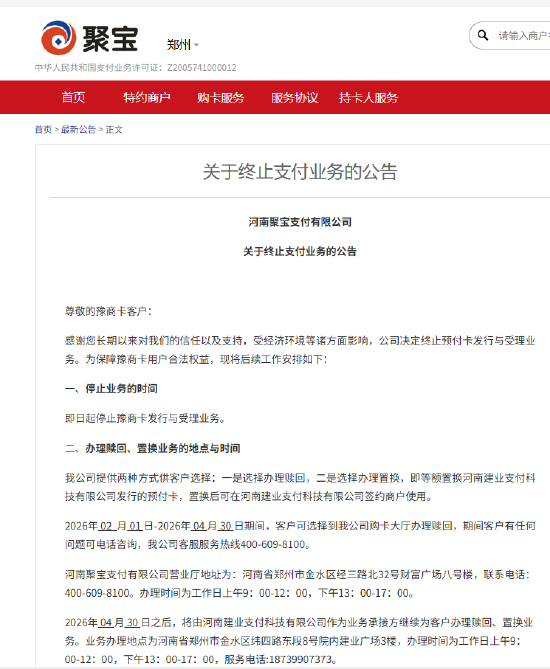
就后续工作,该公司称可提供两种方式供客户选择:一是选择办理赎回,二是选择办理置换,即等额置 换河南建业支付科技有限公司发行的预付卡,置换后可在河南建业支付科技有限公司签约商户使用。 北京商报讯(记者 刘四红)又一家支付机构退出市场。1月30日,河南聚宝支付有限公司发布关于终止 支付业务的公告,受经济环境等诸方面影响,公司决定终止预付卡发行与受理业务,即日起停止豫商卡 发行与受理业务。 ...
美股前瞻 | 三大股指期货齐跌 特朗普提名沃什掌舵美联储 金银“高台跳水”
智通财经网· 2026-01-30 12:23
Market Movements - US stock index futures are all down, with Dow futures down 0.32%, S&P 500 futures down 0.37%, and Nasdaq futures down 0.49% [1] - European indices show positive movement, with Germany's DAX up 1.04%, UK's FTSE 100 up 0.45%, and France's CAC40 up 0.76% [2][3] - WTI crude oil is down 0.61% at $65.02 per barrel, while Brent crude oil is down 0.73% at $69.08 per barrel [3][4] Market News - Trump's nomination of Kevin Warsh for the next Federal Reserve Chair may face hurdles due to ongoing investigations, with some Republican lawmakers indicating they will block any Fed nominations until legal issues are resolved [4] - Financial markets perceive Warsh as a more hawkish candidate compared to current Chair Powell, potentially leading to tighter monetary policies that could impact stock and bond market liquidity [4] - Gold and silver prices have seen significant declines, with gold dropping over 5% to $5,099 per ounce and silver down over 12% to $101.4 per ounce, raising concerns about the sustainability of recent price increases [5] Company Earnings - Apple reported record Q1 earnings of $143.8 billion, a 16% year-over-year increase, driven by a 23% increase in iPhone revenue to $85.3 billion, with Greater China sales up 38% [8] - Sandisk's Q2 revenue is projected to grow 61.2% year-over-year to $3.03 billion, exceeding market expectations, with a strong performance in data center and consumer segments [10] - Western Digital's Q2 revenue increased by 25% to $3.02 billion, with net profit soaring 296% to approximately $1.8 billion, also surpassing analyst expectations [11] - KLA Corporation's Q2 revenue grew 7.2% to $3.3 billion, benefiting from AI infrastructure expansion, although concerns about valuation risks have emerged [12] - Visa's Q1 adjusted earnings were $3.17 per share, a 15% increase, with total payment volume reaching $3.87 trillion, exceeding expectations [13] - ExxonMobil's Q4 adjusted net profit was $1.71 per share, driven by increased oil production and refining margins, despite lower oil prices [14] - Chevron's Q4 adjusted earnings were $1.52 per share, with plans to increase production in Venezuela without significant capital expenditure changes [15] Mergers and Acquisitions - Coterra Energy and Devon Energy are reportedly in advanced talks for a merger, which could become one of the largest oil and gas deals in recent years, enhancing their competitive position in the Permian Basin [15][16]



河南聚宝支付:终止预付卡发行与受理业务
Xin Lang Cai Jing· 2026-01-30 11:57
就后续工作,该公司称可提供两种方式供客户选择:一是选择办理赎回,二是选择办理置换,即等额置 换河南建业支付科技有限公司发行的预付卡,置换后可在河南建业支付科技有限公司签约商户使用。 1月30日金融一线消息,河南聚宝支付有限公司发布关于终止支付业务的公告称,受经济环境等诸方面 影响,公司决定终止预付卡发行与受理业务,即日起停止豫商卡发行与受理业务。 责任编辑:王馨茹 1月30日金融一线消息,河南聚宝支付有限公司发布关于终止支付业务的公告称,受经济环境等诸方面 影响,公司决定终止预付卡发行与受理业务,即日起停止豫商卡发行与受理业务。 就后续工作,该公司称可提供两种方式供客户选择:一是选择办理赎回,二是选择办理置换,即等额置 换河南建业支付科技有限公司发行的预付卡,置换后可在河南建业支付科技有限公司签约商户使用。 | 关于终止支付业务的公告 | | | --- | --- | | 河南聚宝支付有限公司 | | | 关于终止支付业务的公告 | | | 尊敬的豫商卡客户: | | | 感谢您长期以来对我们的信任以及支持,受经济环境等诸方面影响,公司决定终止预付卡发行与受理业 | 务。为保障豫商卡用户合法权益,现将后续工 ...
美股再迎6只新股上市 今晚还将有3只
Sou Hu Cai Jing· 2026-01-30 06:46
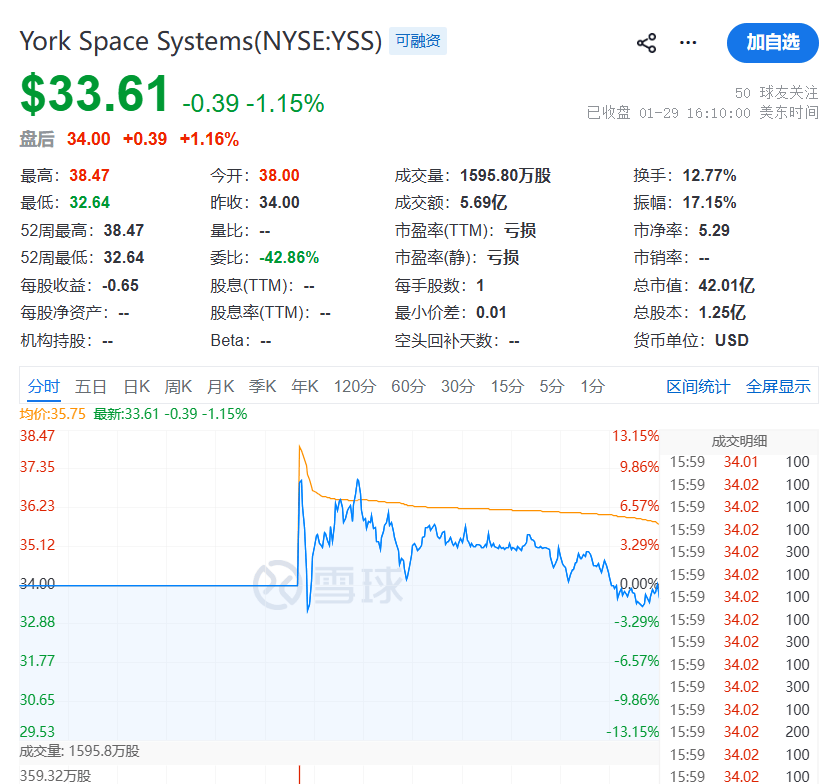
Summary of Key Points Core Viewpoint - Six new stocks entered the US capital market on January 29, 2026, raising approximately $1.783 billion, with three additional companies set to list that evening, all of which are SPACs [1]. Group 1: Newly Listed Stocks - **York Space System (YSS)**: - Opened at $38 per share, up 11.76% from the offering price, but closed at $33.61, down 1.15%, with a total market capitalization of $4.201 billion [2]. - Issued 18.5 million shares at $34 each, raising $629 million. The company provides end-to-end critical solutions for space missions in the aerospace and defense sectors, reporting $281 million in revenue and a net loss of $56.04 million for the first nine months of 2025 [4]. - **Ethos Technologies (LIFE)**: - Opened at $19 per share, unchanged from the offering price, and closed at $16.85, down 11.32%, with a total market capitalization of $1.061 billion [5]. - Issued 10.53 million shares at $19 each, raising $200 million. The company operates a technology platform connecting consumers, agents, and insurance companies, reporting $277 million in revenue and a net profit of $46.59 million for the first nine months of 2025 [7]. - **Picpay (PICS)**: - Opened at $19.5 per share, a slight increase of 2.63%, and closed at $19, with a total market capitalization of $2.462 billion [7]. - Issued 22.86 million shares at $19 each, raising $434 million. The company serves the Brazilian market across various sectors, reporting $1.122 billion in revenue and a net profit of $59 million for the first nine months of 2025 [10]. Group 2: SPACs - Three SPACs listed: - **Xsolla SPAC 1 (XSLLU)** raised $200 million, targeting the video game industry and related sectors [10]. - **United Acquisition I (UACU)** raised $100 million, with no specific acquisition target yet identified, focusing on companies with strong management and competitive advantages [10]. - **K2 Capital Acquisition (KTWOU)** raised $120 million, concentrating on humanoid robotics, physical AI, and advanced energy sectors, particularly small modular nuclear reactors [10].

中泰二维码支付全面对接 中国游客成泰国最大数字消费群体
Shang Wu Bu Wang Zhan· 2026-01-29 16:47
(原标题:中泰二维码支付全面对接 中国游客成泰国最大数字消费群体) 据星暹日报1月29日报道,泰国国家支付系统基础设施提供商NITMX公司 近期持续推进国际合作,已与银联国际、蚂蚁国际及财付通支付科技三家中国 主要支付服务商达成合作,旨在全面实现泰中两国跨境支付系统对接,标志着 泰国向成为亚洲数字支付中心迈出关键一步。 NITMX公司最新数据显示,2025年12月,跨境二维码支付入境交易总值 高达8.0974亿泰铢,较去年同期大幅增长143%,反映了外国游客数字支付消费 的飞跃式增长。 2025年12月,入境交易总值排名前三的国家分别为:第一,中国,交易额 4.0992亿泰铢;第二,马来西亚,交易额1.7499亿泰铢;第三,老挝,交易额 7056万泰铢。 NITMX与银联国际、蚂蚁国际(Alipay+)及财付通支付科技(WeChat Pay)的合作,不仅是泰中两国支付基础设施的联通,更是泰国金融系统对接 全球支付网络的起点,有助于提升泰国在安全、稳定且符合国际标准的体系 下,迈向亚洲数字支付中心的角色。 中国游客使用泰国二维码的消费额位居首位,这一重要里程碑表明,泰中跨境 支付合作已超越政策协议范畴,成为切实 ...
万事达卡(MA.US)Q4业绩超预期 消费韧性支撑支付巨头强势收官
Zhi Tong Cai Jing· 2026-01-29 13:48
万事达卡公司(MA.US)第四季度盈利表现超出市场预期,这得益于消费者在复杂宏观环境下对其支付网 络的持续依赖。 根据周四发布的财报,这家总部位于纽约州帕切斯的支付巨头2025年最后三个月实现净营收88.1亿美 元,略高于分析师预期的87.8亿美元。公司调整后净利润达43亿美元(合每股4.76美元),显著高于分析 师此前预估的38.3亿美元(合每股4.25美元)。 本月早些时候,美国总统特朗普提议将信用卡利率上限设定为10%,为期一年,此举曾对万事达卡及其 竞争对手股价形成压力。虽然利率上限可能不直接影响万事达卡盈利,但若银行因此收缩信贷投放导致 消费者信贷渠道收窄,可能间接影响消费支出。特朗普近期已敦促国会推进该提案。 万事达卡的支付网络竞争对手维萨公司定于周四盘后公布业绩。去年11月,两家支付巨头曾尝试以约 2000亿美元规模和解与商户之间围绕刷卡手续费的长期法律纠纷,但目前尚不确定该方案能否彻底解决 问题。 截至发稿,万事达卡股价盘前上涨2.23%。该股在过去12个月累计下跌5%。 公司全年营收总额近330亿美元,同比增长16%,此前公司在去年10月曾预测2025年净营收增速将位 于"中高双位数区间的高 ...

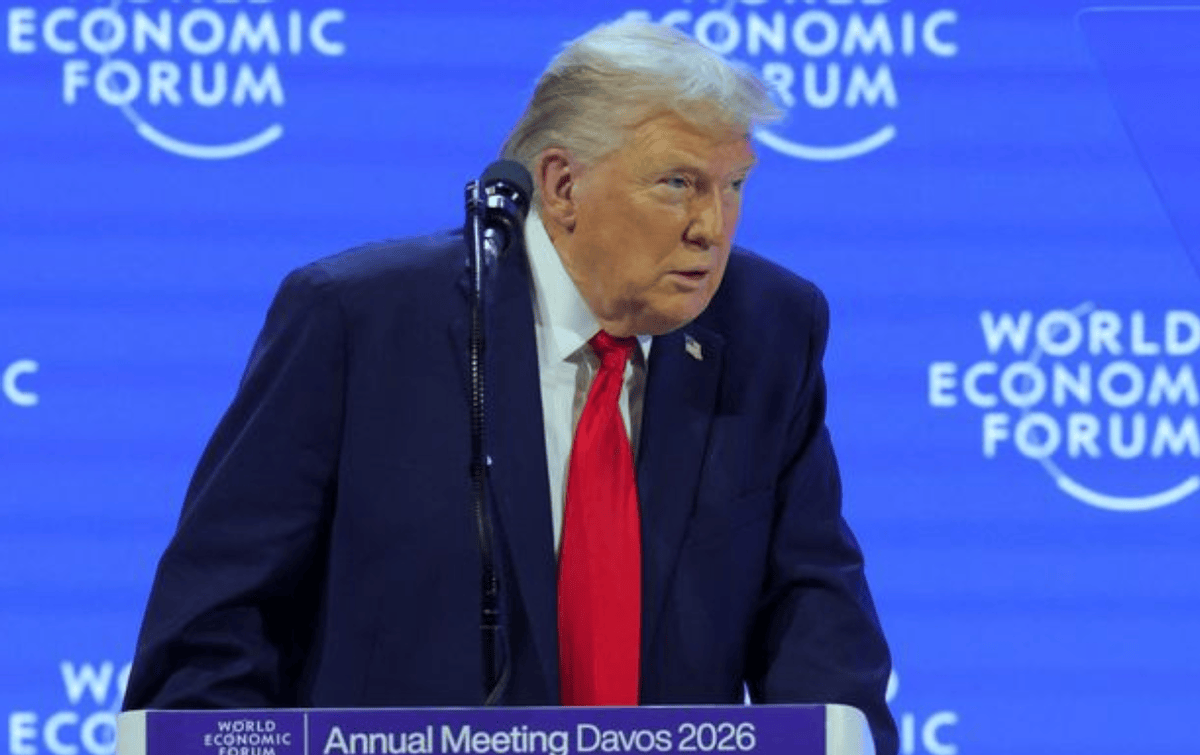
美元贬值,特朗普:这很棒,有助于提振制造业,石油和天然气行业
Sou Hu Cai Jing· 2026-01-29 07:27
Group 1 - The weakening of the US dollar raises concerns about its impact on the purchasing power of American businesses and consumers, potentially leading to higher inflation [1][3] - Trump argues that a weaker currency benefits industries he aims to develop, particularly manufacturing, oil, and gas, as it allows US multinational companies to report stronger earnings when converting overseas revenue back to a depreciated dollar [3] - The dollar has recently fallen to its lowest level in nearly four years, exacerbated by Trump's comments and his administration's trade policies, which have contributed to a narrative of "selling off US debt" [3][4] Group 2 - Trump's trade war has diminished the influence of the US dollar as the world's reserve currency, compounded by broader foreign policy actions that have not been beneficial [4] - Concerns about the independence of the Federal Reserve and significant increases in public spending have led to doubts about Congress's ability to reach a budget agreement, raising uncertainty in economic policy [4] - Recent consumer confidence data indicates a significant shift towards negative sentiment, with market strategies reflecting increased uncertainty and a reluctance to invest in the dollar [4]
东莞举行2026电商产业跨境出海大会,助企业开拓海外市场
Sou Hu Cai Jing· 2026-01-28 14:17
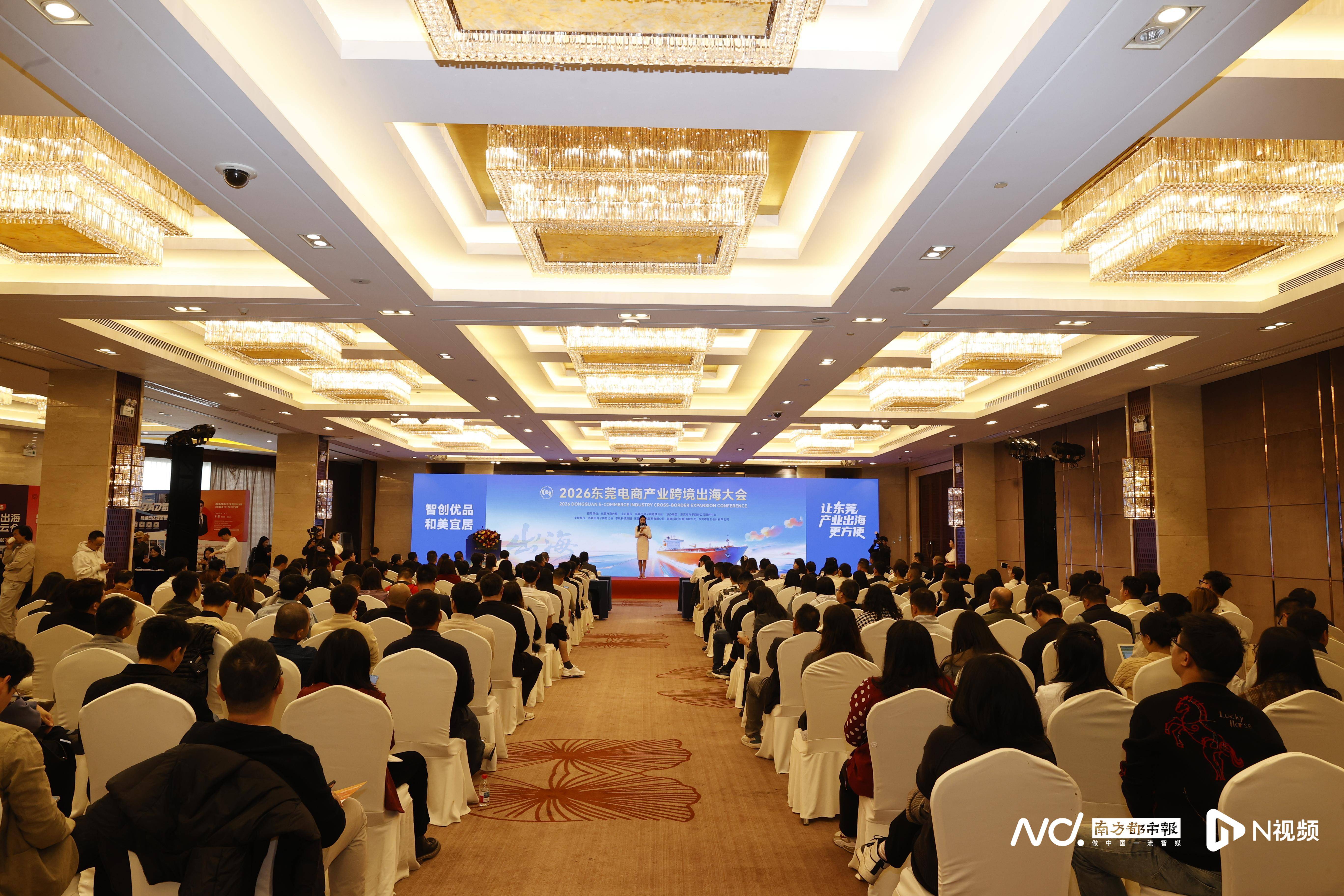
Core Viewpoint - Dongguan is enhancing its cross-border e-commerce capabilities through the 2026 Cross-Border E-commerce Conference, aiming to provide a one-stop service ecosystem for businesses to access quality resources and overcome challenges in international markets [5]. Group 1: Conference Overview - The 2026 Dongguan Cross-Border E-commerce Conference is designed to build an efficient platform for policy guidance, resource aggregation, and precise matching, improving the cross-border e-commerce ecosystem [5]. - The conference integrates resources across the entire cross-border e-commerce chain, optimizing a one-stop service system to support Dongguan enterprises in their international ventures [5]. - Activities at the conference include policy interpretation, ecosystem co-construction, practical sharing, and experience exchange, with the establishment of a new cross-border service ecological alliance [5]. Group 2: Strategic Goals and Measures - Dongguan's development strategy for the "14th Five-Year Plan" includes the goals of "Intelligent Creation of Quality Products" and "Beautiful and Livable City," with nine targeted measures to stimulate economic growth [5]. - The Dongguan Municipal Bureau of Commerce aims to leverage "Bay Area Opportunities" by expanding the global marketing network for Dongguan products, enhancing air logistics hub construction, and strengthening supply chain resilience [6]. - The establishment of the "Dongguan Enterprises Going Abroad Service Center" is a key initiative, focusing on emerging markets such as ASEAN, the Middle East, Central Asia, Latin America, Africa, and Russia [6].
北京两支付机构获批更名,公司名称增加“支付”字样
Bei Jing Shang Bao· 2026-01-28 13:10
北京商报讯(记者 董晗萱)1月28日,据人民银行北京市分行非银行支付机构重大事项变更许可信息, 同意易智付科技(北京)有限公司变更公司名称为北京首信易支付科技有限公司。此外,同意北京恒信 通电信服务有限公司变更公司名称为北京恒信通支付服务有限公司。 ...
极豆科技、智谱、中国银联三方联合发布座舱原生支付Agent
Zheng Quan Ri Bao Wang· 2026-01-28 10:47
Core Viewpoint - The launch of the "Native Payment Agent for Cabin" by Shanghai Jidou Technology, Beijing Zhipu Huazhang Technology, and China UnionPay represents a significant advancement in integrating payment capabilities into smart vehicle ecosystems, enhancing user experience during travel [1][3]. Group 1: Product Overview - The Native Payment Agent is designed as a core component of the cabin service chain, moving beyond traditional payment integration to create a seamless travel experience [1]. - The product leverages Jidou Technology's self-developed cabin intelligence architecture, enabling collaborative operations from service triggering to payment completion based on user intent and vehicle status [1][2]. Group 2: Technical Framework - The system employs a "model base + scenario intelligence" layered architecture, with Zhipu providing the GLM large model as a stable cognitive and reasoning foundation [2]. - Jidou Technology has developed an intelligent agent capability system tailored for in-vehicle environments, including modules for intent parsing, task decomposition, service orchestration, and execution control [2]. Group 3: Payment Capabilities - China UnionPay contributes the Model Context Protocol (MCP) payment service, allowing the Native Payment Agent to interface with various payment scenarios while adhering to financial regulations and security standards [3]. - The system can operate smoothly in high-frequency travel scenarios, reducing user operational burden during in-vehicle payments and enhancing overall travel experience continuity [3]. Group 4: Future Directions - Jidou Technology aims to further enhance the intelligent agent capability system and collaborate with Zhipu, China UnionPay, and other ecosystem partners to promote the product's application across more vehicle models [4]. - The company is also exploring partnerships with local businesses to accelerate the evolution of smart cabins into comprehensive travel and lifestyle service platforms [4].