
智能制造

Search documents
第二十八届北京科博会5月启幕 聚焦“人工智能+”引领产业创新
Zhong Guo Jing Ji Wang· 2026-01-29 02:52
Core Insights - The 28th Beijing International Science and Technology Industry Expo (Beijing Sci-Tech Expo) will be held from May 8 to 10, focusing on "Technology Leading the Future" and emphasizing the "Artificial Intelligence+" initiative [1][2] - The expo has been successfully held 27 times since its inception in 1998, attracting over 1,000 foreign delegations and more than 40,000 domestic and foreign institutions and enterprises, with total contracts and agreements exceeding 1 trillion RMB [1] Exhibition Overview - The exhibition will cover an area of approximately 50,000 square meters, featuring six thematic exhibition areas: Information Technology, Health and Medicine, Intelligent Manufacturing, Green Dual Carbon, Technology Finance, and Regional Innovation [2] - The organizing committee has established a three-tiered structure for event management, combining government guidance with market operations, with Beichen Group as the main operator [2] Key Features - The expo will highlight industry leadership by focusing on cutting-edge fields such as artificial intelligence, robotics, and aerospace economy, with a dedicated area for showcasing leading enterprises' technological innovations and industry ecosystems [3] - An expert advisory committee, including several academicians, will provide decision-making support for the expo's design and long-term development, offering targeted services to participating enterprises [3] - A "1+N" trade and investment promotion activity system will be created, including a conference on emerging technologies and future industries, facilitating deep connections between technology, market, industry, and capital [3][4] Digital Transformation - The expo will feature an upgraded digital platform to enhance core functions such as business meetings and online negotiations, aiming to create a year-round engagement platform, termed "the never-ending Sci-Tech Expo" [4] Countdown to the Event - With 100 days remaining until the expo, the organizing committee is intensifying preparations to enhance the event's international influence and professional characteristics [5]
全国首个跨省域的国家级高新区要来了?
3 6 Ke· 2026-01-29 02:50
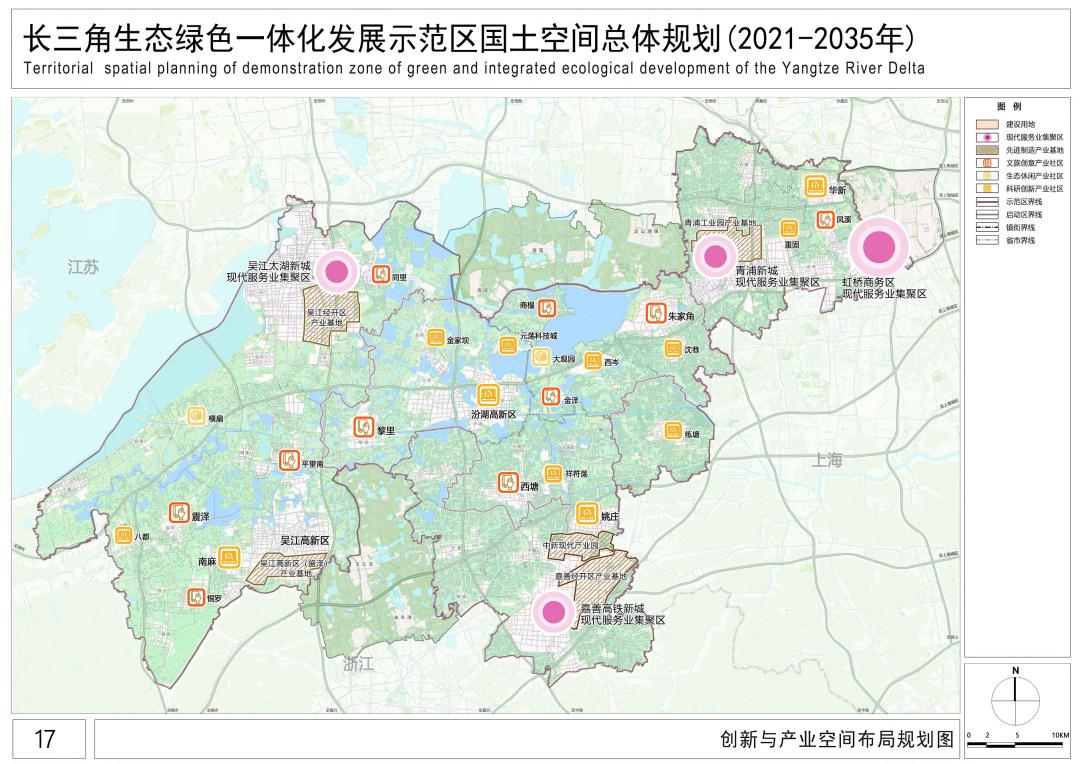
Core Viewpoint - The establishment and official naming of the "Yangtze River Delta Qingwu Jia High-tech Industrial Development Zone" marks a significant step towards the integration of the Yangtze River Delta region, aiming to become the first cross-provincial national high-tech zone in China [1][9]. Group 1: Background and Significance - The cross-provincial high-tech zone was established as part of the Yangtze River Delta Ecological Green Integrated Development Demonstration Zone, representing a move towards institutionalizing and standardizing innovative models [2]. - The strategic positioning of the Qingwu Jia High-tech Zone emphasizes "reduction development," requiring a decrease of 15.7 square kilometers in construction land, which encourages innovation within limited space [2][6]. - The area covers 19.54 square kilometers, spanning Shanghai's Qingpu, Jiangsu's Wujiang, and Zhejiang's Jiashan, facilitating natural conditions for cross-provincial cooperation due to geographical proximity and complementary industries [2][5]. Group 2: Strategic Layout and Management - The high-tech zone aims to create a strategic spatial layout characterized by "one core leading, two corridors driving, three areas collaborating, and multiple points supporting," focusing on innovation and economic density [3]. - A three-tier management structure has been established to ensure unified planning and coordination while respecting the unique circumstances of each area, providing organizational support for cross-provincial collaboration [6]. Group 3: Industry Focus and Investment Mechanisms - The industrial layout focuses on a "3+2" leading industry system, including digital industries, intelligent manufacturing, and green new materials, along with headquarters economy and green innovation services [7]. - An investment fund of 500 million yuan has been established to support the development of the cross-provincial high-tech zone, facilitating capital flow across regions [7]. Group 4: Policy and Future Prospects - The demonstration zone's executive committee has introduced 12 specific measures to promote high-quality development, focusing on reform integration, technological innovation, and resource sharing [7]. - The Qingwu Jia High-tech Zone aims to achieve national high-tech zone status by 2025, with a clear goal of meeting high standards for evaluation indicators [9][10]. - The successful establishment of this zone could serve as a model for regional cooperation and development, potentially influencing broader national strategies for balanced regional growth [11].

“精准警务”护航区域数智经济发展
Jiang Nan Shi Bao· 2026-01-28 23:16
针对这一特点,相城公安分局组织各警种、属地派出所组建"企业安全服务队",服务队以治安、经侦等 部门骨干及派出所民警为核心,联动相关企业安全联络员,形成专业服务合力。通过查隐患整改落实、 查安全需求更新、查服务满意度等,确保服务精准高效。 此前,园区内某物流科技企业反映因数据存储量大、跨境业务频繁,受困于数据泄露、网络攻击等风 险。"企业安全服务队"走访获悉后,立即启动"定制化防护"流程,为企业开展为期3天的全面安全体 检,精准排查出员工安全意识薄弱等6处隐患。自服务队成立以来,累计走访数智企业90余家,整改网 络安全、生产防护等各类隐患48处,企业安全满意度达98.6%。 前置警务室 靠前化解行业纠纷 相城区蠡口家具城作为华东地区首屈一指的家居产业集聚区,正处于从传统销售向数字化、智能化家居 转型的关键阶段。面对超4600家厂商、年销售额超150亿元的庞大市场,产业升级带来的新型消费纠纷 日益凸显,数据安全与体验安全成为智能家居产品消费纠纷的新焦点。 苏州相城高新区(元和街道)是数智经济的重要集聚区,这里不仅有苏州人工智能产业园,汇聚了138 家智能制造、健康医疗、数字金融等企业,形成"上下楼就是上下游"的产 ...
共谋出海东盟新机遇 开启协同发展新篇章
Xin Lang Cai Jing· 2026-01-28 22:02
Group 1 - The core event was the "Tide Rising Wuxiang, Embracing ASEAN" AI and Cross-Border Industry Development Symposium held in Hangzhou, aimed at deepening industrial collaboration with the Yangtze River Delta and exploring new opportunities in AI and cross-border industries targeting ASEAN [1] - Over 40 companies from the AI, cross-border e-commerce, and intelligent manufacturing sectors participated in the symposium, discussing cooperation and development [1] - The event showcased Wuxiang New District's favorable investment environment, generous policies, and livable ecosystem, highlighting its development potential and attractiveness for collaboration [1] Group 2 - A special session for enterprise roadshows was organized, where companies intending to settle in Wuxiang New District to expand into the ASEAN market presented their plans [1] - Wuxiang New District facilitated on-site connections between investment funds and participating companies to understand their products, technological innovations, and specific needs, leveraging capital to support project implementation [1] - The event established a solid foundation for future cooperation between enterprises in Nanning and the Yangtze River Delta in areas such as technological collaboration, market sharing, and ecological co-construction [2]
让更多天津品牌“走出去”
Xin Lang Cai Jing· 2026-01-28 22:02
本次洽谈会由天津市贸促会主办,吸引了我市50余家科技型企业参会,来自俄罗斯、乌兹别克斯坦、哈 萨克斯坦等上合组织国家的约100名采购商和工商机构代表出席活动。洽谈会采用了"行业分区+精准匹 配"的模式,通过精准筛选、定向匹配实现高效对接。活动中,我市20余家企业与外方达成了初步合作 意向,部分外商有计划赴天津实地考察。 天津市贸促会相关负责人表示,结合我市重点行业的特点和实际需求,市贸促会将继续举办系列专场活 动,为企业"走出去"提供全链条支持,让更多天津品牌、中国产品通过多元渠道走向全球。 (来源:天津日报) 转自:天津日报 本报讯(记者 马晓冬)日前,"津帆出海·贸促护航"——天津科技企业"走出去"贸易投资洽谈会在北京 国家会议中心举办,150余名中外嘉宾会聚一堂。参会企业涉及新能源、智能制造、生物医药、农业、 食品、物流等多个行业。 ...
“智造”创新引领 产业焕新升级
Xin Lang Cai Jing· 2026-01-28 22:02
(来源:天津日报) 转自:天津日报 "以数智赋能、技改绿改、市场化合作为抓手,增强存量增量项目后劲支撑,促进传统产业加快升级、 新兴和未来产业培育壮大。""推动产业数智化转型赋能。"政府工作报告和"十五五"规划纲要草案中多 次提到"智能化""数智化"等内容。市两会中,以智能制造为引领、推动产业焕新升级,持续成为代表委 员的关注议题,大家结合自己的深入调研、行业思考、科研实践,纷纷为天津"智造"建言献策。 市人大代表,市政府副秘书长,天津滨海高新区党委书记、管委会主任杨柳 打造国家自主创新示范区"升级版" 市人大代表,一飞智控(天津)科技有限公司创始人、首席科学家齐俊桐 为智能制造注入创新动能 "政府工作报告紧扣'高质量发展'主线,其中对培育新质生产力、升级建设天开园以及推动制造业转型 升级的部署,精准务实、鼓舞人心。"市人大代表,一飞智控(天津)科技有限公司创始人、首席科学 家齐俊桐表示。 作为国家自主创新示范区,天津滨海高新区聚集了一批高能级创新平台和众多创新型企业,科技型上市 企业全市占比近30%,涌现了大量高水平成果,创新生态持续优化。 "创新为高新区高质量发展提供了不竭动力,我们积极推动科技创新与产业 ...
锐明技术:2025年开始二期工厂投资建设,目前进入逐步投产阶段
Zheng Quan Ri Bao Zhi Sheng· 2026-01-28 14:12
Core Viewpoint - The company has established an overseas factory in Vietnam as a smart manufacturing base, focusing on high-standard design and construction for automation and warehousing automation [1] Group 1: Factory Development - The first phase of the factory was put into operation in 2023 and is running well [1] - After the first phase reaches full capacity, the investment for the second phase will begin in 2025, with the current phase gradually entering production [1] Group 2: Operational Efficiency - The Vietnam factory has shown good operational efficiency after nearly three years of development [1] - It has become an important foundation for the company's global layout and is capable of handling manufacturing demands beyond the company's main business [1]

欧洲领导人排队访华,英国期望“一起干事儿”
Di Yi Cai Jing· 2026-01-28 13:28
Group 1 - The visit of UK Prime Minister Starmer to China marks the first official visit by a UK Prime Minister in eight years, with a large delegation of over 50 executives from major UK companies [1][2] - The visit aims to enhance bilateral relations through stable cooperation and pragmatic actions, focusing on establishing structured dialogue mechanisms and achieving concrete business outcomes [1][2] - The UK government expresses a desire for a consistent and long-term relationship with China, moving away from previous volatility, and emphasizes the importance of high-level interactions [3][4] Group 2 - The UK and China are significant economic partners, with bilateral trade expected to reach $103.7 billion by 2025, and service trade projected to exceed $30 billion [5] - There is a strong emphasis on expanding cooperation in various sectors, including green energy, healthcare, creative industries, and smart manufacturing, to create new growth points in bilateral trade [4][6] - The UK aims to encourage small and medium-sized enterprises to explore the Chinese market, aligning with China's policies to boost consumption and imports [5][6] Group 3 - The recent wave of European leaders visiting China indicates a strategic shift in international relations, with Europe seeking to redefine its position in a multipolar world [7][8] - The UK government acknowledges the importance of engaging with China, viewing it as a critical market for global enterprises, and aims to avoid a binary choice between the US and China [8] - Strengthening UK-China economic cooperation is seen as a way to mitigate the negative impacts of US protectionist policies and enhance global economic stability [8]
海联金汇拟出资1060万元参与投资基金
Ge Long Hui· 2026-01-28 12:55
格隆汇1月28日丨海联金汇(002537.SZ)公布,为充分借助专业投资机构的力量及资源优势,进一步推动 公司在智能制造产业的长期布局和稳健发展,公司于2026年1月28日与专业投资机构厦门纵横金鼎私募 基金管理有限公司(以下简称"纵横金鼎")以及江苏博俊工业科技股份有限公司、深圳市奋达科技股份有 限公司、厦门奥佳华机器人科技有限公司、共青城超凡探索创业投资合伙企业(有限合伙)共同签署合伙 协议,参与投资共青城青耕创业投资合伙企业(有限合伙)(以下简称"合伙企业"或"基金"),合伙企业投资 方向为对星海图(北京)人工智能科技股份有限公司或其未来实际上市主体进行投资。合伙企业拟认缴出 资额为人民币7,425万元,其中公司作为有限合伙人拟以自有资金认缴出资人民币1,060万元,认缴出资 占比为14.2761%。 ...

加快城市群一体化和都市圈同城化
Qi Lu Wan Bao· 2026-01-28 11:05
Group 1 - The core viewpoint of the article emphasizes the integration and collaborative development of the Jinan and Qingdao urban agglomerations, aiming to enhance connectivity and economic cooperation by 2026 [2] - The Shandong provincial government plans to implement the "Strong Provincial Capital" strategy for Jinan and the "Strong Leading Role" strategy for Qingdao, while supporting Yantai's development as a green and low-carbon high-quality demonstration city [2] - By 2025, 130 collaborative demonstration projects between the two urban areas are expected to complete investments exceeding 160 billion yuan, with key projects like the Weichai Qingdao Smart Heavy Industry Project and Jinan CRRC Sifang Liangwang Vehicle Base being completed [2] Group 2 - The transportation network is being optimized with the opening of the Weifang-Yantai high-speed railway and the acceleration of the Weifang-Suzhou high-speed railway connection, contributing to the formation of a 1-1.5 hour commuting circle [2] - A "Cloud Hand-in-Hand Alliance" for government services has been established between Qingdao and Jinan, enabling 27 government service items to be processed across cities [3] - The establishment of the Shandong Modern Marine Higher Education Community, involving 83 universities, research institutes, and enterprises, aims to enhance educational collaboration and public service sharing [3]