
水路运输

Search documents
2026年春运琼州海峡新能源车运输能力将大幅提升
Zhong Guo Xin Wen Wang· 2025-12-30 08:02
Core Insights - The transportation capacity for new energy vehicles across the Qiongzhou Strait is expected to significantly increase during the 2026 Spring Festival travel season, with a projected overall enhancement of 5% compared to 2025 [1][2] Group 1: Transportation Capacity - In 2025, the Qiongzhou Strait is expected to transport a total of 18.84 million passengers and 5.52 million vehicles, maintaining stable transport volumes [1] - During the 2026 Spring Festival, the daily transport capacity for new energy vehicles will rise from 3,500 units to 5,000 units [1] - A total of 57 passenger and roll-on/roll-off (RoRo) ships, along with 4 deck cargo ships for new energy vehicles, will be deployed during the 2026 Spring Festival [1] Group 2: Operational Enhancements - The overall number of scheduled sailings for the new routes from Xinhai Port to Xuwen Port and from Xiuying Port to Hai'an New Port will reach 10,800 voyages [1] - Daily ferry services will include 32 sailings, achieving a total operational capacity of 350 sailings per day during peak travel days, which can accommodate the demand for 42,000 vehicles [1] - The ticket pre-sale period for passenger transport will be set at 15 days for inbound and 30 days for outbound travel, allowing travelers to plan their trips more effectively [2] Group 3: Emergency Response Measures - The Pearl River Navigation Administration has revised the emergency response mechanism for congestion during the Spring Festival, incorporating procedures for adverse weather conditions [2] - The updated measures include protocols for information dissemination regarding service interruptions, emergency transport organization, vessel safety, and port control to ensure smooth operations during peak times [2]
四川“十四五”完成水路投资311亿元
Zhong Guo Xin Wen Wang· 2025-12-29 12:01
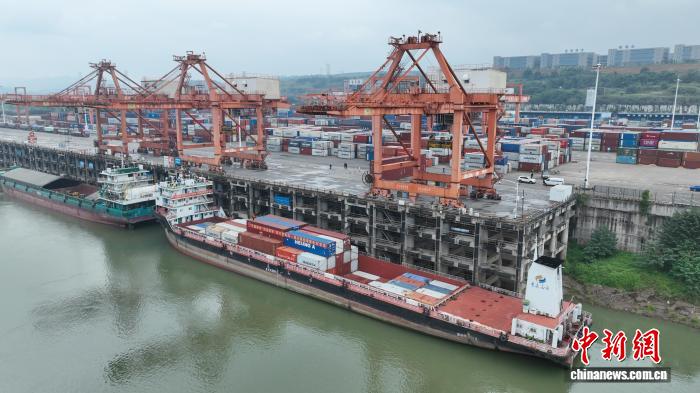
Core Insights - Sichuan Province has completed a total investment of 31.1 billion yuan in waterway transportation during the "14th Five-Year Plan" period, with an expected investment of 6.09 billion yuan in 2025 [1] Group 1: Investment and Infrastructure - The total fixed asset investment in Sichuan's waterway transportation is projected to reach 31.1 billion yuan by the end of the "14th Five-Year Plan" [1] - As of now, the high-grade waterway mileage in Sichuan has reached 2,054 kilometers [1] Group 2: Cargo and Transportation Volume - The expected waterway cargo volume in Sichuan for 2025 is 75 million tons, with a cargo turnover of 32.6 billion ton-kilometers [2] - Long-distance transportation of bulk goods has exceeded 27 million tons, showing a year-on-year increase of 42% [2] - The average transport distance for goods has extended to 480 kilometers, highlighting the cost-effectiveness of water transport for long-distance and bulk logistics [2] Group 3: Port and Trade Performance - Port throughput in Sichuan is expected to exceed 51 million tons in 2025, with container throughput nearing 400,000 TEUs, both reaching new highs during the "14th Five-Year Plan" [2] - From January to November 2025, Sichuan's foreign trade container throughput has increased by over 22%, with exports of new energy vehicles reaching 2,352 TEUs [2] Group 4: Environmental Initiatives - Sichuan has built 110 new energy vessels and established 22 "zero-carbon" ferry terminals, achieving zero discharge of ship pollutants in four major navigable rivers [2]

盛航股份:聘任乔中华担任公司财务总监
Mei Ri Jing Ji Xin Wen· 2025-12-29 10:28
Group 1 - The company announced the resignation of its Chief Financial Officer, Liu Yongqiang, due to work adjustments, and he will no longer hold any position in the company or its subsidiaries after his resignation [1] - The board of directors approved the appointment of Qiao Zhonghua as the new Chief Financial Officer, effective from the date of the board's approval until the end of the current board's term in 2025 [1] - For the first half of 2025, the company's revenue composition is as follows: waterway transportation accounts for 99.35%, while other businesses account for 0.65% [1] Group 2 - The company's market capitalization is currently 3.3 billion yuan [2]

交通运输业当好发展先行官
Jing Ji Ri Bao· 2025-12-28 21:56
Core Insights - The transportation sector in China is projected to exceed 3.6 trillion yuan in fixed asset investment, with cross-regional passenger flow expected to surpass 66 billion trips and freight volume exceeding 58 billion tons, all reflecting a year-on-year growth of approximately 3.5% [1] - The overall performance of the transportation industry has been stable and progressive, successfully meeting annual targets [1] Investment and Infrastructure Development - Significant infrastructure developments include the addition of over 2,000 kilometers of high-speed rail, approximately 8,000 kilometers of highways, and about 900 kilometers of high-grade waterways, along with the certification of five new civil transport airports [1] - The total fixed asset investment in transportation reached 18.8 trillion yuan, with substantial improvements in comprehensive capacity and operational efficiency [3] Service Enhancement and Capacity Growth - The transportation sector has seen a remarkable increase in service capabilities, with record passenger numbers during peak travel periods, including 9 billion trips during the Spring Festival and over 2.4 billion during the National Day holiday [2] - The port's foreign trade container throughput grew by approximately 9.6%, while international air freight increased by 20% and express delivery volume rose by about 13.5% [2] Technological Advancements - The introduction of artificial intelligence (AI) in transportation projects, such as the Guangzhan High-Speed Railway, showcases the integration of smart construction systems and AI applications, enhancing efficiency and safety [5][6] - The Ministry of Transport plans to implement AI across various transportation sectors, aiming to establish a national comprehensive transportation information platform and promote innovative applications in logistics and smart ports [6] Consumer Experience and New Market Opportunities - The transportation sector is expanding consumer scenarios, particularly in self-driving travel and cruise tourism, with cruise passenger transport reaching 1.265 million, a year-on-year increase of 27.8% [7][8] - The small and micro car rental market is projected to grow significantly, with an estimated annual growth rate of around 15% during the 14th Five-Year Plan period [8]
元旦假期四川高速公路网总流量预计同比增长11.5%
Zhong Guo Xin Wen Wang· 2025-12-25 23:38
Core Insights - The total traffic volume on Sichuan's highway network during the 2026 New Year holiday is expected to reach 8.731 million vehicles, representing a year-on-year increase of 11.5% [1] Highway Traffic - The interprovincial traffic volume is projected to be approximately 813,000 vehicles, showing a year-on-year growth of 9.7% [1] - The highest traffic flow is expected in the Sichuan-Chongqing direction, followed by Sichuan-Shaanxi, Sichuan-Guizhou, Sichuan-Yunnan, Sichuan-Gansu, and Sichuan-Qinghai directions [1] - Traffic volume is notably concentrated in the Chengdu Plain and southern Sichuan regions [1] Ordinary National and Provincial Highways - The average daily traffic volume on ordinary national and provincial highways is estimated to be around 9,633 vehicles, reflecting a year-on-year increase of 0.8% [1] - Key areas for this traffic include Meishan, Chengdu, Zigong, Leshan, Panzhihua, Deyang, Guangyuan, Suining, Mianyang, and Luzhou [1] Road Passenger Transport - The total volume of road passenger transport is expected to be 2.839 million people, indicating a year-on-year decline of 4.0% [1] - Major concentrations of this transport are in Chengdu, Leshan, Nanchong, Dazhou, Luzhou, Bazhong, Meishan, Panzhihua, and Yibin [1] Waterway Passenger Transport - The total volume of waterway passenger transport is projected to be 174,000 people, which represents a year-on-year increase of 7.4% [1] - Key areas for waterway transport include Leshan, Liangshan, Bazhong, Dazhou, Nanchong, Neijiang, Suining, Zigong, and Guang'an [1]
我国超25万辆老旧货车淘汰,1.2万艘船舶更新
Zhong Guo Xin Wen Wang· 2025-12-24 00:24
Core Viewpoint - The transportation sector is undergoing a significant upgrade and modernization process, driven by new policies aimed at enhancing equipment efficiency, safety, and environmental sustainability [1][2]. Group 1: Policy Initiatives - The Ministry of Transport has implemented a comprehensive policy framework to guide equipment upgrades, including the issuance of guidelines for the scrapping and replacement of old freight vehicles [1]. - A collaborative mechanism has been established among national and local governments to facilitate the large-scale equipment update process, ensuring effective coordination and communication [1]. - Financial support has been reinforced through the issuance of special loans for equipment updates, with 6,230 projects submitted to the People's Bank of China [1]. Group 2: Equipment Upgrades Achievements - Over 450 old railway diesel locomotives have been replaced with new models [2]. - A total of 114,000 new energy city buses and battery sets have been scrapped and updated, along with the elimination of over 250,000 diesel freight vehicles meeting the National III and IV emission standards [2]. - Approximately 12,000 old operating vessels have been supported for scrapping and updating in the waterway sector [2]. - The aviation sector has initiated updates for airport ground vehicles, while the postal and express delivery sectors have upgraded over 80,000 last-mile delivery vehicles and sorting equipment [2].
“十四五”时期,交通固定资产投资达十八点八万亿元 国家综合立体交通网主骨架基本贯通(权威发布)
Ren Min Ri Bao· 2025-12-23 22:23
Core Insights - The transportation sector in China has shown stable economic performance in the past year, achieving key targets and demonstrating growth in various indicators [2][3] Group 1: Economic Performance - Total fixed asset investment in transportation is expected to exceed 3.6 trillion yuan, maintaining a high level of operation [2] - The volume of commercial freight is projected to surpass 580 billion tons, reflecting a year-on-year growth of approximately 3.5% [2] - Port foreign trade container throughput has increased by about 9.6%, while international air freight has grown by 20% [2] - The total cross-regional personnel flow is expected to exceed 66 billion person-times [2] Group 2: Infrastructure Development - Over the past five years, the national comprehensive three-dimensional transportation network has been largely completed, connecting over 80% of county-level administrative regions [3] - Key urban agglomerations have achieved two-hour connectivity between major cities, enhancing transportation service strategies [3] - Significant infrastructure projects completed during the 14th Five-Year Plan include the Shenzhen-Zhongshan Corridor and the Beijing-Harbin Expressway [7] Group 3: Safety and Efficiency - The number of railway traffic accidents has decreased by 18.4% year-on-year, while accidents in the road and waterway sectors have dropped by 25.8% [2] - The transportation sector is focusing on enhancing monitoring, early warning, and emergency response capabilities to prevent major accidents [3] Group 4: Consumer Services and Demand Expansion - The cruise passenger transport volume reached 1.265 million person-times from January to November, marking a year-on-year increase of 27.8% [4] - The small and micro car rental market is expected to grow at an annual rate of around 15% during the 14th Five-Year Plan period [4] - The development of self-driving tourism routes is being promoted to enhance consumer experiences and drive spending [5] Group 5: Equipment Modernization - The transportation sector is undergoing a significant update of equipment, with over 450 old railway diesel locomotives replaced by new models [8] - The sector has also seen the retirement and replacement of over 114,000 old urban buses and more than 250,000 diesel trucks [8] - The implementation of large-scale equipment updates aims to enhance service quality and support domestic demand [8]
2025年全国将完成交通固定资产投资超3.6万亿元
Bei Jing Shang Bao· 2025-12-23 15:57
Core Insights - The Chinese Ministry of Transport anticipates that by 2025, inter-regional passenger flow will exceed 66 billion trips, and the volume of commercial freight will surpass 580 million tons, both reflecting a year-on-year growth of approximately 3.5% [1][2] - The ministry aims to enhance investment stability, reduce costs, promote reforms, strengthen innovation, improve public welfare, and ensure safety in the transportation sector during the 14th Five-Year Plan period [3] Group 1: Economic Indicators - Expected transportation fixed asset investment will exceed 3.6 trillion yuan, with the addition of over 2,000 kilometers of high-speed rail, approximately 8,000 kilometers of expressways, and about 900 kilometers of high-grade waterways by 2025 [2] - Port foreign trade container throughput is projected to grow by around 9.6%, international air freight is expected to increase by 20%, and express delivery services are anticipated to grow by 13.5% [2] Group 2: Development Strategies - The transportation sector is transitioning to a new development phase, focusing on cross-regional coordination, integrated modes of transport, and deep sectoral integration [2] - The growth model is shifting from large-scale expansion to quality-oriented development, emphasizing structural optimization, digital empowerment, and green transformation [2] Group 3: Consumer Trends - The Ministry of Transport plans to expand consumption scenarios and models, particularly in yacht and cruise consumption, which has seen an annual growth rate of over 40% in new yacht registrations over the past three years [4] - Measures will be developed to promote yacht consumption, including revising safety regulations and enhancing infrastructure for public docks and berths [4] Group 4: Innovations in Transportation - The sector is accelerating the development of new productive forces, including the implementation of "Artificial Intelligence + Transportation" initiatives and the digital transformation of approximately 1,700 kilometers of highways [6][7] - The ministry is focusing on building a national comprehensive transportation information platform and promoting the application of AI in various transportation sectors [7][8] Group 5: Future Initiatives - The ministry will enhance the quality of small and micro car rental services, with an expected annual growth rate of around 15% in the short-term rental market during the 14th Five-Year Plan [5] - Plans include optimizing rental vehicle supply during peak times and improving the infrastructure for self-driving routes [5]
交通运输部:预计今年中国跨区域人员流动量超660亿人次
Xin Lang Cai Jing· 2025-12-23 11:53
Group 1 - The core viewpoint of the article highlights the expected increase in cross-regional personnel flow in China, projected to exceed 66 billion trips this year [1] - The Ministry of Transport anticipates stable growth in key economic indicators for transportation, with fixed asset investment expected to surpass 3.6 trillion yuan, and the addition of over 2,000 kilometers of high-speed rail and approximately 8,000 kilometers of expressways [1] - The number of operational civil transport airports is set to increase by 5, and the total freight volume is expected to exceed 58 billion tons, reflecting a year-on-year growth of around 3.5% [1] Group 2 - The article notes that travel during peak periods such as the Spring Festival and National Day has reached historical highs, with over 90 million daily users of urban rail transit [1] - The integration of artificial intelligence in transportation is being promoted, with initiatives like the implementation of a comprehensive transportation model and digital upgrades of highways and related facilities [1] - Safety in transportation has improved, with a significant decrease in accident rates across various modes of transport, including an 18.4% drop in railway accidents and a 25.8% reduction in road and waterway incidents [2]
交通运输部:预计全年将完成交通固定资产投资超3.6万亿元,新增高速铁路超2000公里
Mei Ri Jing Ji Xin Wen· 2025-12-23 08:57
Core Viewpoint - The Ministry of Transport of China is focusing on enhancing the quality of transportation services to support high-quality economic and social development, with specific goals set for the upcoming year and beyond [1]. Group 1: Economic Indicators and Achievements - In 2025, the transportation sector is expected to achieve a fixed asset investment exceeding 3.6 trillion yuan, with over 2,000 kilometers of new high-speed railways, approximately 8,000 kilometers of new expressways, and about 900 kilometers of new high-grade waterways [1]. - The total cross-regional passenger flow is projected to exceed 66 billion trips, with a freight volume of over 58 billion tons, both showing a year-on-year growth of around 3.5% [1]. - The urban rail transit system has expanded to over 11,000 kilometers across 54 cities, with daily ridership exceeding 90 million and an airport rail transit access rate of 83.3% [1]. Group 2: Digital Transformation and AI Integration - The Ministry has issued implementation opinions on "Artificial Intelligence + Transportation," initiating the construction of a comprehensive transportation model [2]. - Approximately 1,700 kilometers of highways and over 2,200 road and waterway facilities have undergone digital transformation, and 60 automated container and bulk cargo terminals have been established [2]. - The domestically manufactured C919 passenger aircraft has safely transported over 3 million passengers [2]. Group 3: Consumer Growth Areas - The small and micro car rental market is identified as a significant consumer growth point, with the total number of small and micro rental cars reaching 4 million and an expected annual growth rate of around 15% during the 14th Five-Year Plan [3][5]. - The Ministry plans to enhance the quality of small and micro car rentals by addressing supply issues during peak times and optimizing the rental experience at transportation hubs [5]. - The yacht and cruise sectors are also anticipated to be growth areas, with yacht registrations increasing at an annual rate of over 40% in the past three years [4]. Group 4: Infrastructure Development and Future Projects - The 14th Five-Year Plan has seen significant progress in the construction of a comprehensive transportation network, with major projects like the Shenzhen-Zhongshan Bridge and the Beijing-Harbin Highway expansion completed [6][7]. - The Ministry aims to continue advancing the construction of key projects during the 15th Five-Year Plan, including the Lion's Mouth Channel and the Zhangjingao Yangtze River Bridge [7]. - The overall investment in transportation fixed assets reached 18.8 trillion yuan, significantly enhancing the sector's capacity and operational efficiency [6].