
电气设备

Search documents
港股迎马年首个交易日 机器人板块逆势大涨
Zhong Guo Zheng Quan Bao· 2026-02-20 06:05
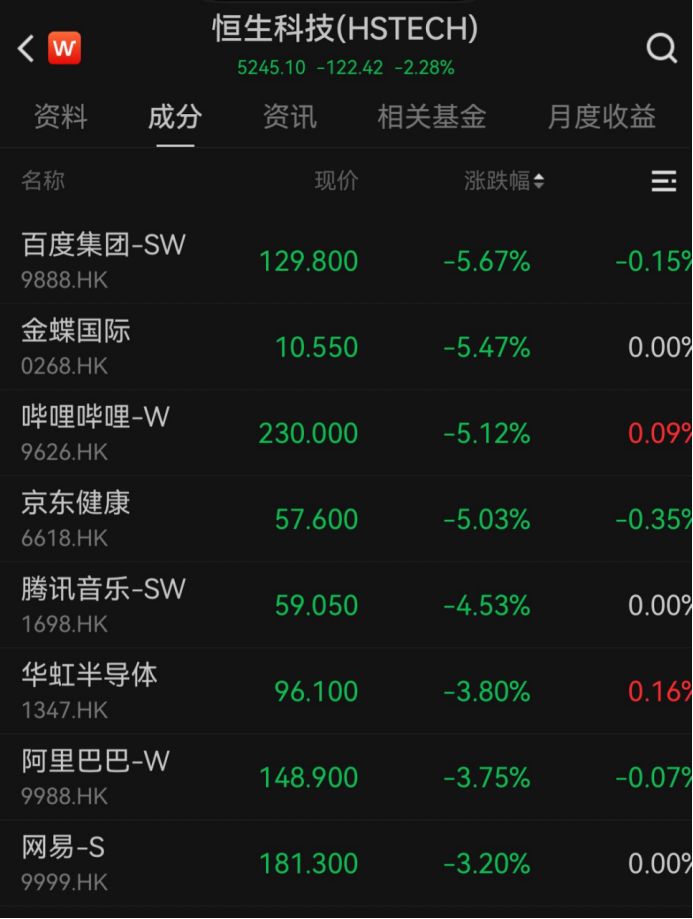
Market Overview - The Hong Kong stock market opened lower on the first trading day of the Year of the Horse, with the Hang Seng Index down 0.6%, the Hang Seng Tech Index down 2.28%, and the Hang Seng China Enterprises Index down 0.59% [1] - There was a noticeable sector rotation from large tech stocks to AI application stocks, with major tech stocks under pressure [1] AI Application Sector - AI application stocks showed strong performance, with companies like Zhizhu and Haizhi Technology Group rising over 19%, and MiniMax-WP increasing over 10% [3] - International investment banks, including Morgan Stanley and UBS, have a positive outlook on MiniMax, giving it a buy rating [3] Robotics Sector - The robotics sector surged due to the appearance of robots at the Spring Festival Gala, with companies like Yujian rising over 19%, and Sutech and Ubtech increasing over 9% and 6% respectively [5] Electric Equipment Sector - The electric equipment sector also performed well, with China High-Speed Transmission up over 17%, Shanghai Electric up over 6%, and Harbin Electric and Northeast Electric up over 4% and 3% respectively [7][9] Semiconductor Sector - The semiconductor sector saw a mid-session rally, with companies like Lanke Technology and Tianshu Zhixin reaching historical highs before retreating, with Lanke Technology up nearly 2% and Tianshu Zhixin down over 6% by midday [9] Investment Recommendations - Huatai Securities suggests focusing on three key areas in the Hong Kong stock market: semiconductor hardware, improving consumer sectors, and electric equipment [10] - The semiconductor sector is expected to benefit from a continued super cycle, while the consumer sector may see potential catalysts from platform subsidies and improved expectations for innovative drugs [10] - The electric equipment sector is anticipated to maintain a positive outlook due to rising demand for power system upgrades and the inclusion of Ningde Times in the Hang Seng Index, which may lead to passive fund inflows [10]


华泰 | 海外看中国:海外上市公司如何看中国修复
Xin Lang Cai Jing· 2026-02-20 01:40
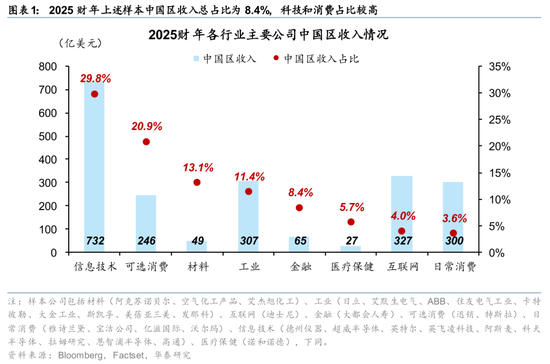
Core Insights - Domestic demand recovery is ongoing, with technological advancements and emotional consumption as structural highlights [1] - 45% of multinational companies reported improved performance in Q4 2025, while 33% expect further improvement [1][5] - The real estate sector continues to drag down growth, but there are notable structural strengths, particularly in technology and service consumption [1][5] Domestic Demand - Overall domestic demand remains weak, but there are structural highlights such as optimistic prospects for renovation in coatings and elevators [2][12] - Service and emotional consumption are experiencing high demand, with companies like Estée Lauder and Procter & Gamble reporting double-digit growth in specific product lines [2][12] - Companies are adapting to trade friction by increasing localization, with ABB reporting over 85% localization in China [2][12] Trade Friction - Localization strategies are being adopted by companies to mitigate the impact of trade tensions, with some firms shifting to local development and sales models [2][12] - Companies like SKF are facing supply chain pressures due to trade policy uncertainties, but are implementing measures to manage these risks [34] Technology - There is a slight decline in external demand for technology products, with a trend towards domestic substitution becoming evident [3][13] - Traditional companies are benefiting from increased demand driven by technological advancements, particularly in the semiconductor sector [3][13] - U.S. export restrictions and domestic competition are impacting overseas companies' revenues in China [3][13] Industry Summaries Materials and Industrial - Demand for materials and industrial products is generally weak, but there are structural demands in electronic gases due to the semiconductor industry [14][26] - The coatings sector is showing resilience due to renovation demand, while traditional electrical and elevator businesses are facing declines [14][27] Consumer Sector - The consumer sector shows significant differentiation, with companies like Uniqlo experiencing revenue declines due to increased competition [20][21] - High-end products in the beauty sector are performing well, while food and beverage sectors are facing slight declines [21][22] Financial Services - MetLife's operations in China are showing strong recovery, with a focus on optimizing distribution channels and enhancing service offerings [19][41] - The company is transitioning away from telemarketing and focusing on high-end customer segments [41] Technology Hardware - Semiconductor companies maintain a high revenue share in China, but face challenges from export controls and supply chain adjustments [23][30] - Companies like Intel and AMD are experiencing delays and increased competition from local manufacturers [30][31] Machinery - Caterpillar anticipates positive growth in the Chinese market, particularly in larger excavators, while SKF is facing challenges in the automotive sector [32][33] - Companies are adjusting their strategies to focus on local development and sales, with a shift in production towards Southeast Asia [39]
90后企业家的“出海经”
Xin Lang Cai Jing· 2026-02-15 21:13
Core Viewpoint - The company has successfully expanded its international presence, achieving significant sales growth and establishing overseas operations, demonstrating resilience and adaptability in the face of challenges [1][2][3]. Group 1: Company Performance - The company achieved a sales revenue of over 150 million yuan, representing a year-on-year growth of approximately 40% [1]. - The company has established an overseas warehouse in Thailand and registered a sales company in Malaysia, indicating a strategic move to enhance its international footprint [3]. Group 2: Challenges and Strategies - The company faced challenges such as being a new brand in the market, which led to the cancellation of a project order in Thailand. However, the CEO's persistence resulted in securing a 7 million yuan order after directly engaging with a client [2]. - The CEO has a history of overcoming significant obstacles, including financial struggles and operational setbacks, which has shaped the company's resilient culture [2]. Group 3: Future Plans - The company plans to accelerate its international expansion by establishing a production base in Thailand and further exploring markets in Vietnam [3]. - The company emphasizes investing in its workforce, with facilities designed to support employee well-being and development, reflecting a commitment to nurturing young talent [3].
最后的倔强?欧盟内忧外援:德国强迫波兰使用欧元、中国必须行动
Sou Hu Cai Jing· 2026-02-15 06:57
Group 1 - The EU is under pressure to stockpile natural gas urgently as concerns rise over the maintenance of the Nord Stream 1 equipment by Russia, which has led to significant worries in Germany [1] - Canada has seized critical equipment manufactured by Siemens in Canada, prompting Germany to demand its return, highlighting the importance of natural gas for Germany's economy and the stability of the Euro [1] - The Euro is facing unprecedented pressure due to recent interest rate hikes by the Federal Reserve, with the exchange rate nearly reaching parity with the US dollar, which has severely impacted market confidence [1] Group 2 - The stability of the Euro is crucial for the military and economic stability of Europe, necessitating external support, which is why Croatia's recent accession to the EU is seen as a potential growth point despite its GDP being under $68 billion in 2021 [2] - Poland, as the strongest country in Central and Eastern Europe with a GDP ten times that of Croatia, is under pressure from Germany to join the Eurozone, but has shown reluctance [4][6] - Poland's inflation rate is nearing 15%, almost double the EU average, indicating significant economic challenges, while its military cooperation is heavily reliant on the US rather than traditional Western European powers [4] Group 3 - Despite Germany's strong demands, Poland's central bank governor has stated that Poland will not join the Eurozone as long as he is in office, reflecting the challenges Germany faces in its strategic ambitions [6] - Only 20 out of 27 EU member states have adopted the Euro, with countries like Poland and Denmark preferring closer ties with the US over integration into the Eurozone [6] - The EU's stability relies on unity, and it is seeking to negotiate with China to enhance trade relations and stabilize supply chains amid various crises, including energy, inflation, and food supply issues [6]

2月第2周全球外资周观察:策略周报:节前南向资金加速流入港股
Guoxin Securities· 2026-02-14 07:50
Group 1: Northbound and Southbound Capital Flows - Northbound capital estimated net inflow of 3 billion CNY in the recent week, compared to a net outflow of 8.2 billion CNY in the previous week[1] - Southbound capital accelerated inflow into Hong Kong stocks, with a total of 26.7 billion HKD flowing into the market in the recent week[2] - Southbound capital outflow included 10.4 billion HKD from stable foreign capital and 25.1 billion HKD from flexible foreign capital[2] Group 2: Market Trends and Sector Performance - In the recent week, the top active stocks in the Northbound trading included Ningde Times with a total transaction amount of 20.4 billion CNY, accounting for 18% of the total trading amount for that stock[1] - In the Hong Kong market, significant foreign capital inflows were observed in sectors such as electrical equipment, food and beverage, and textiles[2] - In the Asia-Pacific market, Japan saw a net inflow of 248.7 billion JPY from overseas investors, while India experienced an outflow of 3.98 billion USD in January[2][3] Group 3: Global Market Insights - In December, the US equity market saw a net inflow of 32.2 billion USD from global mutual funds, up from 9.2 billion USD in the previous month[3] - European equity markets also experienced inflows, with net inflows of 1.74 billion USD, 0.97 billion USD, and 2.16 billion USD into the UK, Germany, and France respectively[3] - Cumulative net inflows into the US market since 2020 reached 723.7 billion USD[3]
2月第2周全球外资周观察:策略周报:节前南向资金加速流入港股-20260214
Guoxin Securities· 2026-02-14 06:12
Group 1 - The core conclusion indicates that northbound funds may have experienced a slight net inflow recently, with flexible foreign capital likely seeing a significant net inflow [1] - In the Hong Kong stock market, stable foreign capital saw an outflow of 10.4 billion HKD, while flexible foreign capital had an outflow of 25.1 billion HKD, with a net inflow of 49.8 billion HKD through the Stock Connect [1][2] - In the Asia-Pacific market, foreign capital flowed into Japan while there was an outflow from India in January [2][3] Group 2 - For A-shares, the estimated net inflow of northbound funds was 3 billion CNY during the week of February 9-13, 2026, compared to an estimated net outflow of 8.2 billion CNY the previous week [11] - The top active stocks in the northbound trading included Ningde Times with a total transaction amount of 20.4 billion CNY, accounting for 18% of the stock's weekly trading volume [11] - In the Hong Kong market, a total of 26.7 billion HKD flowed into the market during the week of February 4-10, 2026, with significant inflows into sectors such as electrical equipment, food and beverage, and textiles [13] Group 3 - In the US market, global mutual funds saw a net inflow of 32.2 billion USD into the US equity market in December, compared to a net inflow of 9.2 billion USD the previous month [20] - In Europe, global mutual funds had net inflows into the equity markets of the UK, Germany, and France amounting to 1.74 billion USD, 0.97 billion USD, and 2.16 billion USD respectively in December [20]
先驱电气股价震荡走低,机构维持买入评级
Jing Ji Guan Cha Wang· 2026-02-13 14:13
Group 1 - The stock price of Pioneer Power Solutions (PPSI.OQ) has shown significant volatility, with a price range fluctuation of 14.65% over the past week from February 6 to February 12, 2026 [1] - On February 6, the stock rose by 7.20% to close at $4.17, but on February 12, it dropped sharply by 4.60% to close at $3.94, resulting in a cumulative decline of 5.52% over five days and a year-to-date decline of 16.70% [1] - The trading volume on February 12 was $415,900, with a volume ratio of 1.15, indicating short-term capital divergence [1] - During the same period, the broader U.S. stock market faced pressure, with the Nasdaq index declining by 2.03%, and the electrical equipment parts sector falling by 0.61%, suggesting that individual stock fluctuations were influenced by market sentiment [1] Group 2 - Analyst H.C. Wainwright maintains a "Buy" rating for Pioneer Power Solutions with a target price of $12, indicating a potential upside of approximately 205% from the current stock price [2] - The average target price among institutions is $9.50, reflecting a divergence between long-term value expectations and short-term performance pressures [2]
望变电气:重大投资以公告为准
Zheng Quan Ri Bao Zhi Sheng· 2026-02-13 12:45
Core Viewpoint - Wangbian Electric has clarified that there are no shareholding disputes with Baobian Electric, and it has provided details on its current equity holdings in various subsidiaries [1] Group 1: Company Holdings - The company holds a 35% stake in Shenzhen Nanhai Electric Technology Co., Ltd. [1] - The company owns a 5% stake in Wangbian Wanjia (Guizhou) Technology Co., Ltd. [1] - The company possesses a 30% stake in Chongqing Energy Investment Changshou Economic Development Zone Electricity Sales Co., Ltd. [1] Group 2: Investment Announcements - Major investments will be announced as per official announcements [1]

威胜控股(03393)获纳入恒生综合指数 有望成为港股通标的
智通财经网· 2026-02-13 11:28
威胜控股公布,公司已根据上市规则第15项应用指引就建议分拆向香港联交所提交建议,而香港联交所 已确认公司可继续进行建议分拆。 于2026年1月27日,惟远能源透过其独家保荐人向香港联交所递交上 市申请表格( A1表格),申请惟远能源股份在香港联交所主板上市及买卖。 智通财经APP获悉,2月13日,恒生指数公司宣布截至2025年12月31日之恒生指数系列季度检讨结果, 其中威胜控股(03393)获纳入恒生综合指数。变动将于2026年3月6日(星期五)收市后实施并于2026年3月9 日(星期一)起生效,届时沪深交易所会相应调整港股通可投资标的范围。据中金研报,威胜控股有可能 被调入港股通,因其满足了包括市值、流动性和上市时间等在内的一系列标准。 ...
四方股份跌停后机构抛售,基本面风险与市场情绪共振
Jing Ji Guan Cha Wang· 2026-02-13 10:41
Core Viewpoint - The recent drop in Sifang Co., Ltd. (601126) stock price is attributed to internal issues and market concerns regarding talent stability and profitability quality, leading to significant institutional sell-offs [1][2]. Group 1: Company Issues - Sifang Co., Ltd. experienced a 10.01% drop in stock price, closing at 36.42 yuan on February 5, 2026, due to internal talent stability concerns and multiple departures of incentive targets, which may impact business innovation capabilities [1]. - The company's Q3 2025 report showed a net profit growth of 15.57%, which was lower than the revenue growth of 20.39%, raising doubts about the quality of profitability [1]. Group 2: Institutional Selling - On the day of the stock's drop, institutional investors sold a net amount of 289 million yuan, with the Shanghai-Hong Kong Stock Connect recording a net sell of 43.16 million yuan, totaling 21.9% of the day's trading volume of 1.519 billion yuan [2]. - Three institutions were involved in selling, with one institution alone accounting for a significant portion of the total sell-off, indicating a strong collective intention to reduce holdings [2]. Group 3: Market Conditions - Following a historical high on February 3, technical indicators showed overbought signals, prompting some investors to take profits [3]. - The solar energy sector, which Sifang recently entered, faced a general market pullback, negatively impacting the company's stock performance [3]. - The stock experienced a turnover rate of 4.96% on the day of the drop, with trading volume increasing to 1.519 billion yuan, exacerbating liquidity concerns [3]. Group 4: Recent Stock Performance - Despite a subsequent price increase on February 12, where the stock hit a limit up with a net inflow of 137 million yuan, it faced a 3.23% decline on February 13, closing at 41.40 yuan, indicating ongoing divergence in investor sentiment [4]. - Over the past five days, the financing balance decreased by 3.34%, while the margin balance increased by 66.96%, reflecting a continued bearish outlook among some investors [4].
