硬件设备

Search documents
今年以来A股再融资规模逾8000亿元 较去年全年增幅高达258.7%
Cai Jing Wang· 2025-09-12 10:54
Group 1 - The A-share refinancing market has seen significant activity in 2023, with total funds raised reaching 800.21 billion yuan, a 258.7% increase compared to last year's total of 223.12 billion yuan [1] - The surge in refinancing is attributed to a combination of policy and market factors, including the optimization of the refinancing process through the registration system reform and increased funding needs in sectors like new energy and semiconductors [1][2] - The private placement market has been particularly strong, with 108 projects completed, raising 756.43 billion yuan, marking a 337.1% increase from the previous year [1] Group 2 - Three main factors driving the refinancing market's growth include improved macro policy environment, increased internal demand from companies due to economic recovery, and ample market liquidity with institutional investors actively participating [2] - The number of disclosed private placement plans has reached 424, with an average expected fundraising of 1.10 billion yuan per project [2] - The manufacturing and high-tech industries are the primary drivers of refinancing, with significant activity in sectors such as chemicals, machinery, and semiconductors [3] Group 3 - The characteristics of the refinancing market in 2023 include a notable rebound in private placements and a targeted flow of funds towards technological innovation [3] - The active refinancing market enhances the capital market's ability to serve the real economy, supporting companies in expanding investments and upgrading technology [3] - The allocation of refinancing funds towards key areas like technological innovation and green low-carbon initiatives promotes economic structure optimization and fosters new productive forces [3]
今年以来A股再融资规模逾8000亿元
Zheng Quan Ri Bao· 2025-09-11 16:45
Group 1 - The A-share refinancing market has seen significant activity in 2023, with total funds raised reaching 800.21 billion yuan, a 258.7% increase compared to last year's total of 223.12 billion yuan [1] - The surge in refinancing is attributed to policy and market resonance, including the optimization of the refinancing process through registration system reforms and increased funding needs in sectors like new energy and semiconductors [1][2] - The private placement market has been particularly strong, with 108 projects completed, raising 756.43 billion yuan, marking a 337.1% increase from the previous year [1][2] Group 2 - Three main factors driving the refinancing market's growth include improved macro policy environment, increased internal demand from companies, and ample market liquidity [2] - The number of disclosed private placement plans has reached 424, with an average expected fundraising of 1.10 billion yuan per project [2] - The manufacturing and high-tech industries are the primary drivers of refinancing, with significant activity in sectors such as chemicals, machinery, and semiconductors [3] Group 3 - The active refinancing market enhances the capital market's ability to serve the real economy, supporting companies in expanding investments, upgrading technology, and facilitating mergers and acquisitions [3] - The allocation of refinancing funds is increasingly directed towards technology innovation and green low-carbon initiatives, promoting economic structure optimization [3] - The refinancing market provides diverse investment tools for investors, attracting long-term capital and contributing to a multi-tiered capital market system [3]
错怪微软?SSD掉盘原因被找到了!
猿大侠· 2025-09-11 04:11
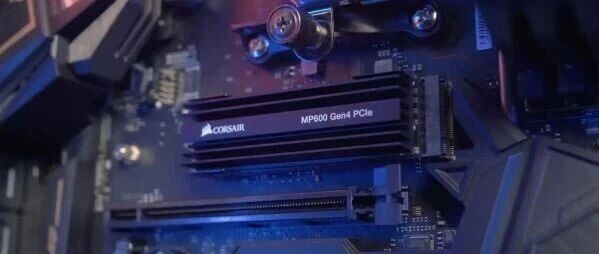
Core Viewpoint - The article discusses the issue of SSDs being formatted to RAW after Windows 11 updates, identifying that affected SSDs were using engineering firmware rather than official firmware [2][7]. Group 1: SSD Issues and Testing - The SSDs tested included Corsair MP600 2TB, SP US70 2TB, and Apacer AS2280F4 2TB, with issues such as drive dropouts and performance degradation during stress tests [4]. - The problems were replicated during a 100GB file stress test, with specific models experiencing drive dropouts and crashes, while others showed speed degradation [4][6]. - Initial tests by the manufacturer, Phison, did not replicate the issues, leading to further investigation [5][6]. Group 2: Firmware Investigation - The investigation revealed that the problematic SSDs were using engineering firmware, which is not intended for consumer use, while the same models with official firmware did not exhibit issues [7]. - It is suggested that users experiencing these problems likely purchased SSDs through non-standard retail channels, such as second-hand markets [7]. Group 3: Performance Degradation Explanation - The Apacer AS2280F4's performance drop was attributed to its SLC cache being filled, leading to slower speeds during heavy write operations [8]. - SSDs utilize mechanisms like Over-Provisioning and Garbage Collection to maintain performance, which can be affected when data storage exceeds 50% capacity [9]. - Windows formatting does not fully erase data, and users experiencing slow write speeds are advised to use dedicated SSD erasure tools for better performance recovery [9]. Group 4: Broader Implications - The article hints that the issue may not be limited to Phison controllers, suggesting that if other controllers are affected, Microsoft may share some responsibility due to potential bugs triggered by their updates [10].

A股及港股2025年中报分析:整体业绩稳健,科技板块延续高景气
EBSCN· 2025-09-07 13:11
Group 1 - A-shares show resilience with notable performance in the midstream and technology sectors, as the overall revenue growth for A-shares turned positive in 2025H1, with cumulative year-on-year revenue growth of 0.2% for all A-shares and 0.2% for non-financial A-shares [15][33][76] - The profit growth for A-shares in 2025H1 has slowed but remains positive, with cumulative year-on-year net profit growth of 2.6% for all A-shares and 2.8% for non-financial A-shares, reflecting a slight decline compared to 2025Q1 [33][43][76] - The midstream sector's performance has improved significantly, with a profit growth rate of 11.3% in 2025H1, while the technology sector maintained a high profit growth rate of 17.1% [2][43][44] Group 2 - The return on equity (ROE) for all non-financial A-shares has slightly rebounded, with a TTM ROE of 7.5% in 2025Q2, showing a minor increase from 7.4% in 2025Q1 [48][56] - The midstream and technology sectors have shown significant ROE recovery, with midstream ROE at 4.8% and technology ROE at 6.4% in 2025Q2, indicating improvements from the previous quarter [58][66] - Industries such as food and beverage, home appliances, and non-ferrous metals have demonstrated notable ROE improvements, with food and beverage ROE reaching 20.9% in 2025Q2 [67][70] Group 3 - Hong Kong stocks have maintained stable performance, with non-financial profit growth slightly improving in 2025H1, and the Hang Seng Technology Index showing a high profit growth rate of 20.8% [4][5][32] - The profit growth for the Hang Seng Index and Hang Seng Non-Financial Index in 2025H1 was 2.5% and 4.0%, respectively, indicating a recovery compared to 2024H2 [4][5][27] - The sectors with higher profitability in Hong Kong include durable consumer goods, building materials, media, and hardware equipment, with significant improvements in net profit growth and ROE in 2025H1 [5][32][37]
二季度新进重仓股超800只,QFII调仓瞄准这几个方向
第一财经· 2025-09-04 06:21
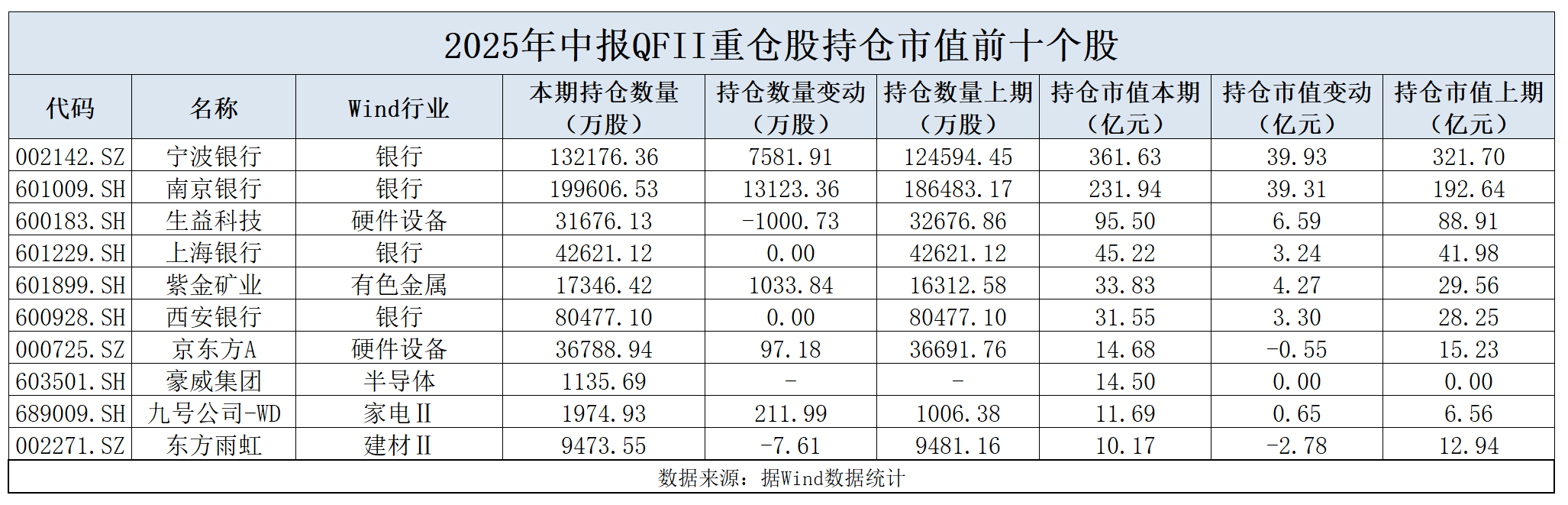
Core Viewpoint - The article discusses the significant movements of foreign institutional investors (QFII) in the A-share market as of the end of Q2 2025, highlighting their investment strategies and sector preferences [3][4]. Summary by Sections QFII Holdings Overview - As of the end of Q2 2025, QFII held shares in 1,145 A-share companies, with a total market value exceeding 1,400 billion yuan [4]. - In Q2, QFII initiated positions in 813 new stocks, increased holdings in 173 stocks, reduced holdings in 126 stocks, and maintained positions in 33 stocks [5][11]. Sector Distribution and Adjustments - QFII showed notable adjustments in sectors such as machinery, hardware equipment, chemicals, and electrical equipment, while increasing holdings in banking, textiles, and non-ferrous metals [5][12]. - New investments were made in the industrial trade and telecommunications sectors, whereas coal and building materials saw overall reductions [12]. Top QFII Holdings - The top ten QFII holdings by market value include: - Ningbo Bank (361.63 billion yuan) - Nanjing Bank (231.94 billion yuan) - Shengyi Technology (95.50 billion yuan) - Shanghai Bank (45.22 billion yuan) - Zijin Mining (33.83 billion yuan) [9][10]. - The highest number of QFII holdings were in banking stocks, with Nanjing Bank and Ningbo Bank seeing increases in Q2 [7][10]. New Entrants and Market Movements - Among the new QFII heavyweights, the top three by market value were: - Haowei Group (1.45 billion yuan) - Jianghuai Automobile (675 million yuan) - Guai Bao Pet (493 million yuan) [11]. - QFII's new heavyweights included companies like Tianfeng Securities and Shengyi Technology, with significant movements in their stock values [8][11]. Sector Performance - Over 60% of QFII's heavy stocks were concentrated in machinery, hardware equipment, chemicals, electrical equipment, automotive parts, pharmaceuticals, and software services [13]. - The hardware equipment sector had the highest new investment value at 40.79 billion yuan, followed by machinery at 30.07 billion yuan and chemicals at 27.65 billion yuan [14][15].







二季度新进重仓股超800只,QFII调仓瞄准这几个方向
Di Yi Cai Jing· 2025-09-03 13:01
Group 1 - As of the end of Q2 2023, QFII held shares in 1145 A-share companies with a total market value exceeding 140 billion yuan [1][3] - In Q2, QFII initiated positions in 813 new stocks, increased holdings in 173 stocks, reduced holdings in 126 stocks, and maintained positions in 33 stocks [2][6] - The banking sector remains a primary focus for QFII, with the top four holdings being banks, including Nanjing Bank and Ningbo Bank, both of which saw increased QFII holdings in Q2 [3][6] Group 2 - Significant adjustments were observed in QFII's holdings in sectors such as machinery, hardware equipment, chemicals, and electrical equipment, while coal and building materials saw reductions [2][7] - The top sectors by QFII holdings include banking (670.35 billion yuan), hardware equipment (181.97 billion yuan), and machinery (67.28 billion yuan) [9] - New QFII heavyweights in Q2 included companies like Haowei Group and Jianghuai Automobile, with respective market values of 1.45 billion yuan and 675 million yuan [6][8] Group 3 - The distribution of QFII's new heavyweights shows a preference for hardware equipment, machinery, and chemicals, with hardware equipment leading at 40.79 billion yuan in market value [8][9] - The top ten QFII holdings by market value include Ningbo Bank (36.16 billion yuan) and Nanjing Bank (23.19 billion yuan) [6][9] - QFII's new positions in sectors like industrial trade and telecommunications indicate a diversification strategy [2][7]
新质生产力成共识!公募、券商、社保集体加码
Huan Qiu Wang· 2025-09-03 04:21
Group 1 - Institutional investors are increasingly focusing on "new quality productivity" stocks, with 89 out of 145 stocks held by public funds, brokerages, and social security funds falling into this category, indicating a significant trend towards new developments [1] - As of the end of Q2, social security funds appeared among the top ten shareholders of 568 listed companies, with a total holding value of 165.07 billion yuan, and significant investments in companies like Sany Heavy Industry and Transsion Holdings [2] - Public funds held stocks in 5,205 A-share companies with a total market value of 6.03 trillion yuan, while brokerages held stocks in 820 companies valued at 85.02 billion yuan, showing a broad investment base across various sectors [2] Group 2 - The consensus among the three types of institutions regarding new quality productivity stocks stems from their shared investment focus, despite differing core objectives and operational styles [4] - New quality productivity aligns with national strategies for technological innovation and industrial upgrading, with sectors like high-end manufacturing and artificial intelligence receiving resource support [4][5] - The 89 new quality productivity stocks held by these institutions are primarily concentrated in high-growth industries such as hardware equipment, machinery, and biomedicine, reflecting a positive outlook on these sectors [6]
公募、券商与社保基金“同框”145只个股 向“新”集聚趋势显著
Zheng Quan Ri Bao· 2025-09-02 23:29
Core Insights - Institutional investors, including public funds, securities firms, and social security funds, are increasingly focusing on stocks related to the "new quality productivity" concept, with a total of 145 stocks held collectively by these institutions as of the end of Q2 2023 [1] - The social security fund has emerged as a significant player, being among the top ten shareholders in 568 companies, with a total market value of holdings reaching 165.068 billion yuan [2] - The investment strategies of social security funds differ from public funds and securities firms, with a focus on long-term value and stability [3] Group 1: Institutional Holdings - As of the end of Q2 2023, social security funds have invested in 130 new companies, with significant holdings in firms like Sany Heavy Industry and Sanan Optoelectronics [2] - Public funds hold shares in 5,205 A-share companies, with a total market value of 6.03 trillion yuan, while securities firms hold shares in 820 companies valued at 85.02 billion yuan [2] Group 2: Investment Focus - The consensus among institutional investors on the "new quality productivity" stocks aligns with national strategies for technological innovation and industrial upgrading, focusing on sectors like high-end manufacturing and biotechnology [4] - The emphasis on innovation, particularly in artificial intelligence, is seen as a key area for long-term growth, with expectations for companies to start realizing profits within three to five years [4] Group 3: Industry Distribution - The 89 stocks held by the three types of institutions are primarily distributed across industries such as hardware equipment, machinery, and pharmaceuticals [5]
公募、券商与社保基金“同框”145只个股
Zheng Quan Ri Bao Zhi Sheng· 2025-09-02 16:44
Group 1 - Institutional investors, including public funds, securities firms, and social security funds, have shown a consensus in holding stocks related to the new quality productivity concept, driven by shared judgments on policy direction, industry trends, and long-term value [1][4] - As of the end of Q2, social security funds were among the top ten shareholders in 568 listed companies, with a total holding value of 165.068 billion yuan, indicating a significant presence in the market [2] - Public funds held stocks in 5,205 A-share companies with a total market value of 6.03 trillion yuan, while securities firms held stocks in 820 companies valued at 85.02 billion yuan, reflecting their extensive investment reach [2] Group 2 - The investment styles of social security funds differ from public funds and securities firms, with a focus on safety, yield, and liquidity, while public funds adjust holdings based on market trends and securities firms emphasize capturing market opportunities [3] - The consensus on investing in new quality productivity stocks aligns with national strategies for technological innovation and industrial upgrading, with sectors like high-end manufacturing and biotechnology receiving policy support [4] - The significant characteristic of new quality productivity is innovation, particularly in the application of artificial intelligence, which is expected to yield results for domestic companies in the next three to five years [5]
A股中报透视:AI驱动科技股百花齐放,传统行业借势破局 |看财报
Tai Mei Ti A P P· 2025-09-01 15:39
Core Insights - A-shares' 2025 mid-year report shows 5,424 listed companies achieved total revenue of 34.9 trillion yuan, a year-on-year growth of 0.03%, and a net profit of 2.99 trillion yuan, up 2.44% [2] - The banking sector remains the most profitable, with Industrial and Commercial Bank of China earning 168.1 billion yuan, while Vanke A reported a loss of 11.947 billion yuan, highlighting ongoing challenges in the real estate sector [2] - AI has emerged as a key driver of economic growth in China, with the semiconductor and electronic hardware sectors experiencing double-digit revenue growth due to surging demand for AI computing power [2][3] Revenue Growth - In the first half of the year, 3,122 listed companies reported positive revenue growth, accounting for 57.55% of the total, with 1,954 companies growing over 10% and 327 over 50% [4] - The top three companies in revenue growth were Zhixiang Jintai-U (+358,429.65%), Haichuang Pharmaceutical-U (+11,899.08%), and Cambrian-U (+4,347.82%), with two from the pharmaceutical sector [4] - The semiconductor industry led with a revenue growth rate of 19.88%, followed by hardware equipment at 17.08%, while coal and real estate sectors saw declines of 19.46% and 11.99%, respectively [4] Semiconductor Sector Performance - Among 181 listed companies in the semiconductor sector, 141 achieved positive growth, with two companies exceeding 100% growth [7] - Cambrian reported a revenue of 2.881 billion yuan, a year-on-year increase of 4,347.82%, and a net profit of 1.038 billion yuan, up 295.82%, driven by AI computing demand and high R&D investment [7] - Semiconductor companies with over 10 billion yuan in revenue included SMIC, Changdian Technology, and Northern Huachuang, all achieving double-digit growth [9] Steel and Software Services - The steel sector saw a significant profit recovery, with a net profit growth rate of 263.77%, while the software services sector achieved a 176.19% growth rate [12][14] - In the steel sector, 33 out of 45 listed companies reported profits, with 31 showing positive net profit growth [16] - The software services sector had 313 listed companies, with 160 achieving profitability, and six companies reporting over 1,000% net profit growth [17] AI Impact on Industries - The integration of AI in traditional industries like steel has led to unexpected profit improvements, with companies benefiting from policy incentives and digital transformation [16] - The software services sector's recovery is attributed to AI-driven cost reduction and efficiency improvements, with companies optimizing product structures and focusing on high-margin AI-related services [17][18]