
AI

Search documents
Anthropic突然封锁中国企业,我们该从中学到什么?
Hu Xiu· 2025-09-06 03:06
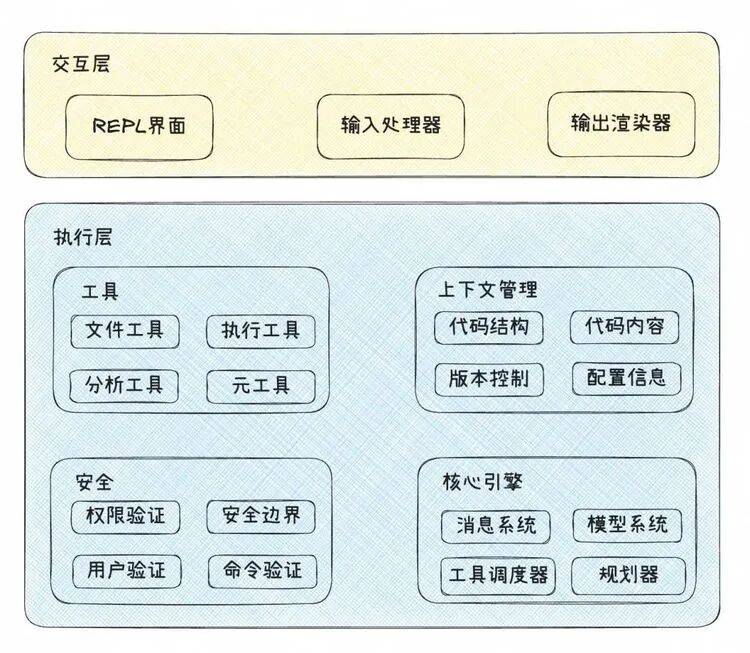
Core Insights - Anthropic has announced stricter regional restrictions on its services, prohibiting companies with over 51% ownership controlled by restricted regions, such as China, from using its services [1][2] - This marks the first instance of a U.S. AI company implementing such comprehensive restrictions on Chinese enterprises [2] Product and Market Analysis - Despite the restrictions, China's large model ecosystem has not fallen behind, with products like DeepSeek, Kimi, and Qwen showing competitive performance in certain metrics [3] - However, a significant gap remains in the area of programming agents, particularly with the introduction of Claude Code, which integrates deeply with development environments [4][5] - Claude Code has seen a rapid increase in active users, tripling in a short period, and generating an annual revenue of approximately $500 million [6] Competitive Landscape - The U.S. leads not only in technology but also in the commercialization and ecosystem surrounding programming agents, which poses a competitive threat to other countries [7] - Claude Code represents a potential new paradigm in development, emphasizing the need for Chinese companies to find alternative paths in light of service restrictions [8] Technical Differentiation - Claude Code operates as a complete automation pipeline rather than just a code-writing model, allowing users to input requirements and receive a structured plan and execution [12][13] - The architecture of Claude Code includes a scheduling engine and tool system that enables it to interact with the system environment effectively [15][16] SDK Development and Ecosystem - The release of the Claude Code SDK transforms it from a standalone tool into a foundational platform for developers to build their own agents [22][24] - The SDK allows for the creation of various industry-specific agents, showcasing its versatility and potential for widespread adoption [25] Cost Considerations - While Claude Code demonstrates unprecedented automation capabilities, the associated costs can be substantial, especially for complex projects [31][32] - Developers have reported high expenses related to token consumption, prompting Anthropic to implement usage limits to control costs [32][34] Opportunities for Domestic Alternatives - The high costs associated with current models present an opportunity for domestic alternatives to optimize inference frameworks and reduce token costs [34] - Initiatives like Qwen Code aim to explore domestic pathways for programming agents, indicating a shift towards self-reliance in coding solutions [34][35]

全球份额调查:日企在增长市场处于劣势
日经中文网· 2025-09-06 00:34
Core Viewpoint - Japanese companies dominate the global market in 9 categories but are struggling in rapidly growing markets, particularly in AI-related sectors, highlighting a significant challenge for the industry [2][4][5]. Market Share Analysis - A survey by Nikkei identified that Japanese firms hold the top position in 9 categories, a decrease of 1 from the previous year, ranking third globally behind the US (27 categories) and China (18 categories) [4]. - The categories where Japan leads include automotive, motorcycles, CMOS image sensors, lithium batteries for mobile phones, digital cameras, A3 laser copiers, silicon wafers, photoresists, and mask blanks [4]. Market Growth and Decline - Japanese companies are facing difficulties in both shrinking and growing markets, with 16 categories experiencing a decline in market size compared to the previous year [5]. - In expanding markets, Japanese firms account for only 14% of the top 266 companies, while they represent 23% of the 79 companies in shrinking markets [5]. Specific Product Performance - The A3 laser copier market shrank by 7.1% year-on-year, with Canon, Ricoh, Konica Minolta, and Kyocera all showing declines in shipment volumes [6]. - Despite Canon's market share increasing by 0.9 percentage points to 18.6%, its shipment volume fell by 2.3% to 590,000 units [6]. Emerging Market Trends - The fastest-growing market is for text-generating AI tools, which saw a staggering growth rate of 18,700% year-on-year, with OpenAI's market share increasing by 12.7 percentage points to 81.7% [6][7]. - In the semiconductor materials sector, Japanese companies are noted for their strong presence, which is crucial for advanced semiconductor manufacturing processes [7][9]. Investment and Future Outlook - Japanese companies are investing significantly in semiconductor-related equipment, with total investments from the top 10 global semiconductor firms expected to reach $135 billion (approximately 20 trillion yen), a 7% increase from the previous year [8]. - Companies like Tokyo Ohka Kogyo and Fujifilm Holdings are planning substantial investments to expand their production capabilities in the semiconductor sector [8].

Anthropic agrees to pay $1.5 billion to settle author's class action lawsuit over AI training
CNBC Television· 2025-09-05 20:28
Legal Settlement - Anthropic 将支付 15 亿美元以和解一起版权诉讼,该诉讼由作者提起,他们声称这家 AI 初创公司下载了数百万本盗版书籍 [1] - 如果不和解,Anthropic 可能面临超过 1 万亿美元的损害赔偿风险 [1] - 旧金山法官仍需批准该协议 [2] - 地区法院于 6 月份发布了一项关于 AI 开发和版权法的具有里程碑意义的裁决,裁定 Anthropic 训练 AI 模型的方法构成合理使用,这对 AI 行业来说是一个重大胜利 [2] Company Information - Anthropic 是一家成立四年的公司 [3]

[9月5日]指数估值数据(A股港股大幅上涨,回到4.3星;未来会有3星么;港股指数估值表更新;抽奖福利)
银行螺丝钉· 2025-09-05 14:42
Market Overview - The market has shown strong momentum, recovering from a recent decline of approximately 6% and closing at 4.3 stars [1][2] - Growth stocks that previously experienced significant declines have rebounded strongly [3] - The leading sectors in the market have shifted, with the ChiNext board experiencing substantial gains [4][5] Sector Analysis - The ChiNext and Sci-Tech Innovation boards, while both growth-oriented, have different industry compositions [6] - The Sci-Tech board is closely related to chips and AI, whereas the ChiNext is more associated with new energy, pharmaceuticals, and technology [7] - The Sci-Tech 50 index has reached high valuations earlier this year, while the ChiNext has recently started to catch up [8] Investment Cycles - The market operates in cycles, alternating between bull and bear markets due to economic cyclicality [23] - Three main cycles influence the stock market: fundamental cycle, liquidity cycle, and sentiment cycle [25] - The fundamental cycle reflects the growth rate of corporate earnings, which has been slow from 2022 to 2024 but is expected to recover by 2025 [26][28] - The liquidity cycle is influenced by interest rate changes, with anticipated rate cuts by the Federal Reserve likely to boost markets [30][31] - The sentiment cycle is characterized by investor emotions, which can lead to extreme optimism or pessimism [32][34] Investment Strategy - Investors should recognize that opportunities arise during market declines, while risks often emerge during market rallies [36] - Smart investors can capitalize on these cycles by buying during downturns and selling during upswings, while remaining patient during neutral periods [41] Valuation Insights - The article provides a summary of Hong Kong stock index valuations, which can serve as a reference for investors [43] - Various indices are listed with their respective price-to-earnings ratios, price-to-book ratios, and dividend yields, indicating the current market valuation landscape [45][46][47][48]
X @THE HUNTER ✴️
GEM HUNTER 💎· 2025-09-05 13:02
Aped big $ in $SNSY 🚀At under <$10M MC, @asksensay is building the first Web3-native enterprise AI chatbot platform – already solving real problems in customer support, lead qualification & sales for Fortune 500s like Amazon, Meta & Google.📍 40K+ users📍 20K+ AI bots📍 500K+ daily interactions📍 $3.5M raised w/ ex-Meta, Uber & Google talentThis is not just hype – 10+ enterprise clients closed in 7 days proves product-market fit. In a $9T AI market, Sensay’s niche in AI chatbots is only getting started.My targe ...
宁德时代“老树开新花”,热点开始切换了吗
Mei Ri Jing Ji Xin Wen· 2025-09-05 09:24
Group 1 - The core focus of the market has shifted to the new energy sector, particularly solid-state batteries, with CATL leading the charge [1] - On September 5, CATL's stock rose by 6.93%, with a trading volume of nearly 20 billion yuan, while other companies in the solid-state battery sector, such as EVE Energy and Guoxuan High-Tech, also saw significant gains [1] - Recent technological breakthroughs in the solid-state battery field have been reported, with CATL expecting to achieve small-scale production by 2027 and EVE Energy announcing the launch of its all-solid-state battery production base [1] Group 2 - The new energy sector, represented by battery technology, was one of the hottest sectors from 2020 to 2021, but faced adjustments post-2022 until the "924" policy in 2024 reignited growth [2] - CATL's stock performance has been steady, approaching its historical high of 370.89 yuan, while AI and chip sectors, represented by companies like Cambricon and "Yi Zhongtian," have also shown signs of recovery [2] - The market has transitioned from a single focus on AI stocks to a dual focus on both AI and new energy sectors, indicating a potential shift in market style [2] Group 3 - The core logic supporting the current market rally remains unchanged, with a focus on structural rather than rhythmic growth [3] - The new energy sector is expected to attract funds seeking yield flexibility, particularly as it enters a critical catalytic period with new technologies like solid-state batteries [3] - The industry is currently in a phase where it is less sensitive to negative news and more responsive to positive developments, indicating potential for significant recovery [3]

全线飘红!沪指重回3800点 超4900股上涨 百股涨停!宁德时代大涨 寒武纪也涨了
Mei Ri Jing Ji Xin Wen· 2025-09-05 07:55
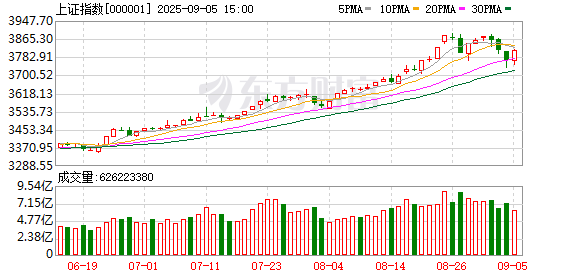
Core Viewpoint - The A-share market experienced a significant rally on September 5, 2025, with the Shanghai Composite Index rising 1.24% to reclaim the 3800-point mark, driven primarily by the strong performance of the new energy sector, particularly solid-state battery stocks [2][4][6]. Group 1: New Energy Sector Performance - The new energy sector, led by CATL, saw a robust increase, with CATL's stock rising by 6.93% and a total trading volume of 22.44 billion yuan [2][4]. - The solid-state battery segment gained attention, with EVE Energy's stock surging over 16%, reaching a new high for the year [2][4]. - Recent technological breakthroughs in the solid-state battery field have been reported, with CATL announcing that key scientific issues have been resolved and small-scale production is expected by 2027 [4][6]. Group 2: Market Dynamics and Trends - The market has shifted from a focus on AI stocks like Cambricon to a dual focus on both new energy and AI sectors, indicating a potential change in market style [6][7]. - Analysts suggest that the current market rally is characterized by increased volatility and a need for short-term consolidation to maintain a healthy upward trend [6][7]. - The investment logic for the new energy sector is seen as favorable, with potential for recovery driven by new technologies and supportive policies, particularly in the solid-state battery space [7].

以竞争政策重塑中国市场经济新优势——兼论高水平对接国际经贸规则的中国方案
Zheng Quan Shi Bao· 2025-09-05 04:50
Group 1 - During the "14th Five-Year Plan" period, China established a competitive policy framework, transitioning from concept to institutionalization, emphasizing the need for stronger and more effective competition policies in the face of domestic and international challenges [1][2] - The importance of competition policy has been recognized at the highest levels of government, with significant legislative changes such as the 2022 revision of the Anti-Monopoly Law, which included the establishment of a fair competition review system [2][3] - The ongoing reforms in industries with natural monopolies, such as telecommunications and energy, have led to increased competition and market efficiency, with notable achievements like the 90% sharing rate of 5G base stations and the introduction of market-based pricing in the electricity sector [3] Group 2 - The phenomenon of "involution" in competition has emerged, characterized by insufficient competitive space and excessive subsidies, particularly in the solar and electric vehicle sectors, leading to unsustainable business practices [5][6] - The misalignment between industrial policy and competition policy has resulted in a proliferation of similar AI models and price wars, with government subsidies causing resource misallocation and inefficiencies in the market [6][7] - International trade rules, such as the EU's Foreign Subsidies Regulation and the US Inflation Reduction Act, pose significant challenges for Chinese companies, requiring them to adapt to stringent compliance measures and competitive pressures [8] Group 3 - The "15th Five-Year Plan" aims to elevate competition policy to a central role in macroeconomic governance, ensuring that it is integrated with other policies such as industrial, fiscal, and trade policies [9][10] - A robust legal framework for competition policy is essential to foster innovation and market efficiency, with recommendations for impact assessments and long-term accountability for government projects [11][12] - High-level alignment with international trade rules, such as the CPTPP, is crucial for China to enhance its competitive position globally, necessitating a deeper understanding of the underlying principles and values of these agreements [13][14]
以竞争政策重塑中国市场经济新优势——兼论高水平对接国际经贸规则的中国方案
证券时报· 2025-09-05 04:22
Group 1 - The article emphasizes the transition of China's competition policy from a basic framework to a more robust governance tool during the "14th Five-Year Plan" period, highlighting the need for a shift from merely having competition policies to ensuring their strength and effectiveness [1][2][3]. - It outlines the systematic integration of the legal framework for competition policy, noting significant developments such as the first revision of the Anti-Monopoly Law in 2022, which included the establishment of a fair competition review system [3][4]. - The article discusses the ongoing reforms in industries with natural monopoly characteristics, such as telecommunications and energy, showcasing specific achievements like the 90% sharing rate of 5G base stations and the introduction of market mechanisms in electricity pricing [4][5]. Group 2 - The article identifies the challenges of "involutionary" competition, where excessive competition leads to price drops and reduced profitability, particularly in sectors like solar energy and new energy vehicles, where government subsidies have distorted market dynamics [6][7]. - It highlights the misalignment between industrial policies and competition policies, particularly in the AI sector, where aggressive subsidies have led to market saturation and reduced R&D investment among companies [8][9]. - The article warns of the implications of international trade rules, such as the EU's Foreign Subsidies Regulation and the US Inflation Reduction Act, which pose challenges for Chinese companies seeking to compete globally [9][10]. Group 3 - The article outlines the vision for the "15th Five-Year Plan," advocating for a stronger foundational role for competition policy in economic governance, emphasizing the need for coordination between competition and industrial policies [10][11]. - It suggests enhancing the implementation framework for competition policy, including mandatory competition impact assessments for industrial planning and fiscal policies [12][13]. - The article calls for a robust legal framework to support competition principles, particularly in emerging sectors like digital economy and AI, to ensure fair competition and innovation [14][15]. Group 4 - The article stresses the importance of aligning with high-standard international trade rules, such as the CPTPP, to enhance China's competitive position in the global market [15][16]. - It concludes that the focus of competition policy should shift from merely preventing monopolies to fostering a competitive environment that encourages innovation and sustainable growth [16].

拍我AI宣布接入谷歌Nano Banana,创意视频生成免费6天
Xin Lang Ke Ji· 2025-09-05 03:22
Group 1 - The core point of the article is that the AI video generation platform "拍我AI" has integrated with Google's Nano Banana (Gemini 2.5 Flash Image) and is launching a six-day free trial event for users to experience its features [1] - During the free trial period, users can create dynamic wallpapers, short skits featuring their pets, and other creative short videos without any cost [1] - Since its launch in China on June 6, the platform has surpassed 100 million global users, indicating significant growth and adoption in the market [1] Group 2 - The recent release of PixVerse V5 and the Agent creation assistant introduces new functionalities, allowing users to generate complete short videos of 5 to 30 seconds by simply selecting a template and uploading an image [1]