
进出口贸易

Search documents
美国宣布对巴西征收50%关税 巴西:美方毫无正当性可言
news flash· 2025-07-31 00:56
当地时间7月30日晚,巴西总统府官网发表题为《巴西是一个主权和民主国家》的声明。声明提到,巴 西政府认为,美国政府针对巴西出口产品所宣布的贸易措施,是以政治为理由的行为,毫无正当性可 言。近年来,巴西与美国在商品与服务贸易上始终维持显著逆差。美国针对巴西的措施是出于政治动机 的,是对巴西主权的侵犯,也损害了两国之间一贯的历史关系。当地时间7月30日,美国白宫表示,美 国总统特朗普签署行政命令,对巴西加征40%关税,使总关税额达到50%。(央视新闻) ...
进出口额4125.3亿元同比增长26.2% 河南外贸"破风"前行
Zhong Guo Chan Ye Jing Ji Xin Xi Wang· 2025-07-31 00:54
政策与服务"双轮驱动"是取得这份成绩的密码。一方面,政策工具箱持续扩容。一季度,河南省出台加 强金融支持促进外贸稳定增长的指导意见,向金融机构推送外贸重点企业、潜力增长企业、对美贸易受 阻企业清单,助力企业渡过难关、开拓市场;二季度,出台促进外贸稳量提质若干措施,健全重点外贸 企业联系机制,支持企业拓展国内与非洲、美洲市场。 另一方面,企业服务更趋精细化。河南省多次召开重点企业座谈会,摸底调研、梳理分析对美出口情 况,指导帮助企业积极应对。对进出口亿元以上骨干企业实施分级包联,及时解决生产经营中存在的困 难问题。及时兑现支持新郑综保区专项资金,支持区内重点企业保订单、稳经营、扩外销。 此外,河南发布了300个国际性展会推荐名录,支持企业参加展会,新签订单超300亿元,第137届广交 会现场成交超5亿美元,同比增长7.97%。举办2025郑州跨境电商大会暨外贸优品中华行(河南站)活 动,吸引1100余名境内外嘉宾、1000余名采购商到会,成交额超3000万元,有效帮助企业拓展了内销市 场。 下半场:稳量提质 锻造开放新优势 在2025郑州跨境电商大会暨外贸优品中华行(河南站)活动现场,一款看似普通却暗藏玄机的钧 ...
关税突发!特朗普宣布:50%、25%、15%!
券商中国· 2025-07-30 23:33
Group 1 - The U.S. will impose a 15% tariff on South Korean goods and a 25% tariff on Indian imports starting August 1, 2023, with additional penalties for both countries [1][3] - A comprehensive trade agreement has been reached between the U.S. and South Korea, where South Korea will provide $350 billion for U.S.-controlled investment projects and purchase $100 billion worth of liquefied natural gas or other energy products [2] - The U.S. will also impose a 40% tariff on Brazilian goods, raising the total tariff to 50%, excluding certain products like wood pulp and oil [3] Group 2 - The U.S. will impose a 50% tariff on imported semi-finished copper products and copper-intensive derivatives starting August 1, 2023, as part of a national security measure [4] - Following the announcement of these tariffs, copper prices in New York experienced a significant drop of nearly 20% [5]


特朗普:对印度商品征收25%关税
智通财经网· 2025-07-30 22:48
Group 1 - The U.S. will impose a 25% tariff on goods from India starting August 1, which is lower than the previously threatened 26% but significantly higher than the average import tariff of 2.4% on Indian goods in recent years [1] - In 2022, the total value of U.S. imports from India was nearly $90 billion, with major imports including smartphones, chemicals, plastics, leather products, agricultural products, and metal products [1] - The Indian government is currently assessing the impact of the announced tariffs and remains committed to negotiating a fair and balanced bilateral trade agreement with the U.S. [1] Group 2 - Trump indicated that dozens of countries may face a baseline tariff level of up to 20%, which is an increase from the previously announced 10% [2] - Economists have questioned the motivation behind Trump's tariff policies, suggesting that importing goods from countries with lower labor costs allows U.S. consumers to purchase finished products at lower prices [3] - A report from Yale University indicates that the actual tariff rate faced by U.S. consumers is currently 18.2%, the highest since 1934, with potential losses of up to $2,400 per household by 2025, not accounting for the new 25% tariff on Indian goods [3]
国内联播快讯
Yang Shi Wang· 2025-07-30 12:19
Group 1: Cultural Industry - In the first half of the year, the revenue of large-scale cultural enterprises in the country reached 71,292 billion yuan, representing a year-on-year growth of 7.4% [1] - The revenue from new cultural formats increased by 13.6% year-on-year, contributing 76.8% to the overall growth of large-scale cultural enterprises [1] Group 2: Aquatic Resources - The overall water quality evaluation of the Yangtze River basin in 2024 is rated as excellent, with 98.6% of water quality sections classified as grade I-III [2] - The resource quantity of the four major fish species in the middle reaches of the Yangtze River reached 8.32 billion larvae, which is 6.2 times that of the pre-fishing ban in 2020 [2] Group 3: Trade and Transportation - In the first half of the year, the import and export scale along the Western Land-Sea New Corridor reached 456.77 billion yuan, marking a year-on-year increase of 17.1% and setting a historical high for the same period [3] - Strong growth was observed in exports of electrical equipment, integrated circuits, and automobiles [3] Group 4: Infrastructure Development - The Beijing direction of the Jingtong Expressway expansion project has been opened, with a total length of 238 kilometers, expanding from a dual six-lane to a ten-lane highway, making it the first long-distance ten-lane expressway in the country [4] - The project is expected to achieve dual-direction opening by the end of September [4]
浙江上半年度出口首破2万亿元 占全国份额15.9%
Zhong Guo Xin Wen Wang· 2025-07-30 09:08
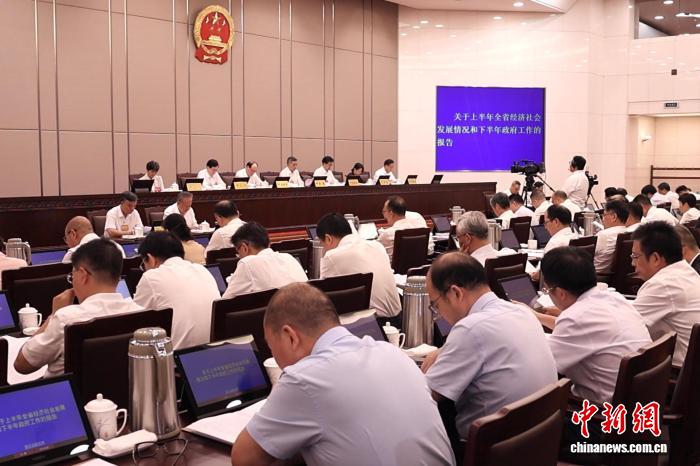
中新网杭州7月29日电 (钱晨菲)29日,浙江省十四届人大常委会第十八次会议在杭州举行,记者从会上 获悉,该省上半年度出口首次突破2万亿元,占全国份额15.9%。 为着力建强开放枢纽,上半年,浙江加快世界一流强港、交通强省、民航强省建设,宁波舟山港集装箱 吞吐量2104.8万标箱、增长9.8%,金华(义乌)中欧班列集结中心获批建设,"义新欧"班列开行1601列、 增长11.5%;全省机场旅客吞吐量增长5.9%。 上半年,浙江全力应对美国关税战贸易战冲击,高能级开放强省建设扎实推进。 此外,报告指出,浙江稳步扩大制度型开放。高标准建设大宗商品资源配置枢纽,获批离岸贸易印花税 优惠政策试点,浙江国际大宗商品交易中心揭牌成立;新一轮义乌国际贸易综合改革全面深化;金砖国 家特殊经济区中国合作中心揭牌运行,成功举办第四届中国—中东欧国家博览会。(完) 具体来看,该省坚定不移打好外经贸"稳拓调优"组合拳。第一时间组建省市支持外经贸高质量发展指挥 部,制定实施加力支持外经贸高质量发展20条举措。全力稳住欧美传统市场,对涉美影响较大行业、对 美出口1亿元以上重点企业实施"一业一方案、一企一帮扶"。实施失业保险稳岗返还和社保费 ...
浙江义乌联合多地在高铁站“抢人”
Zheng Quan Shi Bao Wang· 2025-07-30 02:12
Group 1 - The core event is a joint recruitment activity held in Yiwu, involving over 1,000 job positions, organized by the local human resources and social security bureau along with departments from Zhangjiagang, Wenzhou, and Shaoxing [1] - Yiwu is a significant export hub in China, with a total import and export value of 405.83 billion yuan in the first half of 2025, representing a year-on-year growth of 25% and accounting for 14.9% of Zhejiang province's total [1] - The export value reached 358.63 billion yuan, showing a year-on-year increase of 24.6% [1]
全岛封关后——进口商品“零关税”政策相比封关前有何变化?
Hai Nan Ri Bao· 2025-07-30 01:09
Core Viewpoint - The "zero tariff" policy is a significant feature of the Hainan Free Trade Port, aimed at reducing costs for enterprises related to importing raw materials and customs clearance, thereby promoting more free and convenient trade [1] Group 1: Policy Changes - The coverage of "zero tariff" products has significantly increased, expanding from 1,900 tax items to approximately 6,600 tax items, which accounts for about 74% of all product tax items, an increase of nearly 53 percentage points compared to before the closure [2] - The range of beneficiaries for the "zero tariff" policy has been notably expanded, allowing various enterprises, institutions, and non-enterprise units with actual import needs across the island to benefit from the policy [2] - The restrictions on the policy have been further relaxed, allowing "zero tariff" products and their processed goods to circulate freely among beneficiaries without the need to pay import taxes [2] Group 2: Future Adjustments - The Ministry of Finance will collaborate with relevant departments to optimize and adjust the "zero tariff" policy based on the actual needs of Hainan's industrial development and regulatory conditions, aiming to further expand the types and scope of "zero tariff" products [2]
厦门市民营企业进出口连续20个季度同比增长
Zhong Guo Chan Ye Jing Ji Xin Xi Wang· 2025-07-30 00:38
Group 1 - The core viewpoint of the articles highlights the continuous growth of private enterprises in Xiamen, Fujian Province, with import and export activities increasing for 20 consecutive quarters, outpacing the overall city growth by 7.1 percentage points in the first half of 2025 [1][2] - In the first half of 2025, Xiamen's private enterprises achieved an import and export value of 242.75 billion yuan, marking a 7.6% increase and accounting for 53.1% of the total import and export value, establishing them as the main force in the city's foreign trade [1] - Xiamen Customs has implemented policies focusing on better regulation, higher security, greater convenience, and stricter enforcement against smuggling, aimed at addressing the challenges faced by private enterprises and promoting high-quality development [1] Group 2 - Private enterprises in Xiamen are accelerating industrial upgrades and enhancing product competitiveness, with high-tech product exports reaching 11.61 billion yuan, a 12% increase, surpassing the city's overall export growth rate of 9.3% [2] - Notable growth in specific sectors includes a 171.1% increase in automobile exports, a 142.2% increase in computers and components, and a 61% increase in integrated circuits during the first half of 2025 [2] - Private enterprises are not only stabilizing traditional markets such as the EU and Taiwan but are also expanding into emerging markets, achieving double-digit growth in imports and exports with countries involved in the Belt and Road Initiative, RCEP member states, and other BRICS nations [2]
通关更便利!中国与泰国、贝宁AEO互认安排自8月1日起正式实施
Jing Ji Guan Cha Wang· 2025-07-29 09:12
互认安排实施后,中国海关与泰国海关、中国海关与贝宁海关相互认可对方的"经认证的经营 者"(AEO);在进口货物通关时,相互给予对方AEO企业较低查验率、优先查验和通关、指定海关联络 员等便利措施。 经济观察网据央视新闻客户端消息,海关总署今天(7月29日)发布公告,中国海关与泰国海关、贝宁海 关"经认证的经营者"制度互认安排将自2025年8月1日起正式实施。 ...