
航空航天

Search documents
早新闻|这些消息将影响股市
Zheng Quan Shi Bao· 2025-12-07 23:37
Macroeconomic Highlights - The State Council held a meeting on December 5 to discuss further energy conservation and carbon reduction efforts, emphasizing the importance of these initiatives in achieving carbon peak and carbon neutrality goals [1] - The meeting highlighted the need for higher quality and more effective energy conservation and carbon reduction work, enhancing internal motivation and improving market mechanisms [1] Securities Industry - On December 6, the Chairman of the China Securities Regulatory Commission (CSRC), Wu Qing, addressed the eighth member meeting of the China Securities Association, emphasizing the responsibility of the financial sector in national development [2] - Wu Qing indicated that regulatory policies would encourage differentiated supervision, with a focus on loosening capital space and leverage limits for high-quality institutions to improve capital efficiency [2] Insurance Sector - On December 5, the Financial Regulatory Bureau announced adjustments to risk factors for insurance companies, lowering risk factors for long-term holdings of stocks in the CSI 300 index and STAR Market [3] - The new regulations also reduce premium and reserve risk factors for export credit and overseas investment insurance, while requiring insurers to enhance internal controls and strengthen solvency management [3] Gold Reserves - As of November 2025, China's gold reserves reached 74.12 million ounces (approximately 2,305.39 tons), marking an increase of 30,000 ounces (about 0.93 tons) and continuing a streak of 13 consecutive months of gold accumulation [4] Regulatory Developments for Listed Companies - On December 5, the CSRC released a draft for public consultation on the "Regulations on the Supervision and Management of Listed Companies," aimed at enhancing corporate governance, information disclosure, and investor protection [5] - This draft represents the first specialized administrative regulation for the supervision of listed companies in China [5] Pharmaceutical Sector - The 2025 National Medical Insurance Drug List and the first version of the commercial insurance innovative drug list were released, adding 114 new drugs, including 50 innovative drugs, with an overall success rate of 88%, up from 76% in 2024 [6] - The new lists include advanced treatments such as CAR-T and T-cell therapies, as well as drugs for rare diseases that are not currently covered by basic medical insurance [6] Company News - Muxi Co., Ltd. reported a final online issuance success rate of 0.03348913% [10] - China Pacific Insurance's Vice President Yu Ze is under investigation for serious violations of discipline and law [10] - Guolian Aviation's controlling shareholder and chairman Wang Zengduo has been released from detention [10] - Annie Co., Ltd. is planning a change in control, with stock resuming trading on December 8 [10] - ST Tianrui has terminated plans for a change in control, with stock resuming trading on December 8 [10] - Several pharmaceutical companies, including Heng Rui Medicine and Junshi Bioscience, have successfully added multiple drugs to the national medical insurance directory [10]
12月8日周末要闻:市场聚焦美联储会议 贝森特称美国今年GDP增速将达3% 奈飞拟720亿美元...
Xin Lang Cai Jing· 2025-12-07 23:31
来源:环球市场播报 欲览更多环球财经资讯,请移步7×24小时实时财经新闻 上周市场回顾 韩国预计今年全年出口额将首次超过7000亿美元 公司 马斯克否认"SpaceX 拟通过股份出售寻求8000亿美元估值"的传闻 苹果接连遭遇高管离职 自研芯片战略关键人物可能成为下一位离任者 奈飞是如何拿下华纳兄弟探索的? 波音公司称特朗普的股权计划不适用于美国大型国防企业 消息人士:三星电子拟于第四季度重夺全球DRAM市场榜首 12月6日收盘:美股收高道指涨100点 三大指数本周均录得涨幅 12月6日美股成交额前20:英伟达称大模型厂商多是其间接客户 12月6日热门中概股普涨 百度涨5.85%,腾讯音乐跌0.72% 原油期货周四上涨,降息预期与乌克兰和谈停滞支撑油价 白银价格创新高 欧洲股市连续第二周上涨 市场看好美联储12月降息 宏观 特朗普下令调查食品行业潜在价格操纵行为 贝森特称美国今年GDP增速将达3%,认为假日季表现"非常强劲" 美国财政部长贝森特称已出售其大豆农场 马克龙呼吁重新审视欧洲央行货币政策思路 佩斯科夫:美国家安全战略不再将俄称为"直接威胁"是积极举措 乌总统与美特使通话 讨论乌克兰和平进程 法国、德 ...


培育创新生态 合肥秀出未来产业“繁星图”
Zhong Guo Zheng Quan Bao· 2025-12-07 20:59
Group 1 - The "2025 Science and Technology Investment Conference" held in Hefei showcased over 70 quality enterprises in fields such as new energy, integrated circuits, and advanced equipment, with 12 hard-tech companies presenting their innovations [1][4] - Hefei's innovation ecosystem is highlighted as a high-level cycle of "technology-industry-finance," demonstrating the city's commitment to fostering a vibrant tech industry [1][4] - The event attracted nearly 100 investment professionals from across the country, indicating strong interest and engagement from the investment community in Hefei's tech enterprises [1][3] Group 2 - Hefei Lanyiy Aviation, a participant in the roadshow, focuses on urban air mobility (UAM) and has achieved significant milestones in eVTOL development, including the acceptance of its type certification application by the Civil Aviation Administration of China [2] - Guokexiang Optical aims to miniaturize large scientific devices into desktop models, enhancing accessibility for semiconductor testing and new material research [2] - Other notable companies include Ruishi Medical with its digital PET technology, and Shuduo Optical, which has developed a leading intraoperative fluorescence guidance system [3] Group 3 - The roadshow represents a systematic display of hard-tech achievements and reflects Anhui Province's strategy to convert technological innovation into high-quality economic growth [4][5] - Hefei has established itself as a national strategic science and technology hub, with 13 major scientific facilities and a stable industrial output from emerging industries [4][5] - The collaboration between local government and industry capital is crucial, providing not only initial funding but also long-term strategic support for companies transitioning from technology to market [5]
十五五规划十大投资机会:未来产业有哪些?
材料汇· 2025-12-07 15:30
Core Insights - The article emphasizes the development of emerging pillar industries and strategic emerging industry clusters such as new energy, new materials, aerospace, and low-altitude economy, which are expected to create several trillion-yuan markets [1][9]. - It also highlights the forward-looking layout of future industries, promoting quantum technology, biomanufacturing, hydrogen energy, nuclear fusion energy, brain-computer interfaces, embodied intelligence, and sixth-generation mobile communication as new economic growth points, with the potential to recreate a high-tech industry equivalent to another China in the next decade [1][9]. Group 1: Future Industries Overview - Future industries include six major focus areas and ten innovative flagship products, which are crucial for investment direction [2]. - The article outlines four key directions for capital market focus during the 14th Five-Year Plan period: future information, future space and security, future energy, and future health [10]. Group 2: Strategic Emerging Industries - The article discusses the acceleration of strategic emerging industries such as new generation information technology, biotechnology, new energy, new materials, high-end equipment, new energy vehicles, green environmental protection, and aerospace [6]. - It emphasizes the integration of the internet, big data, and artificial intelligence with various industries to foster advanced manufacturing clusters and cultivate new technologies, products, business formats, and models [6]. Group 3: Investment Opportunities - The article identifies ten major investment opportunities, including AI, aerospace, and renewable energy, with specific focus on the development of advanced materials, quantum information, integrated circuits, and intelligent manufacturing technologies [5][14]. - It highlights the importance of the aerospace sector, noting the increasing strategic layout in both China and the US, with initiatives aimed at enhancing commercial aerospace development and reducing regulatory barriers [14][16]. Group 4: Nuclear Fusion and Energy - The article discusses the potential of controlled nuclear fusion as a future energy source, outlining the industry chain that supports its commercialization, including upstream raw materials, midstream equipment manufacturing, and downstream power generation [29][31]. - It contrasts nuclear fusion with nuclear fission, highlighting the safety, sustainability, and environmental advantages of fusion energy [33][35].

【公告臻选】超材料+航空航天+国防军工!公司产品已在我国新一代航空航天装备中批量应用
第一财经· 2025-12-07 14:48
Group 1 - The article emphasizes the importance of efficiently navigating through a large volume of announcements each night, highlighting the role of "Announcement Selection" in providing key insights and investment opportunities [1] - The company has successfully delivered complex functional components made of metamaterials, which are now being applied in various new-generation aerospace equipment in China [1] - The company has achieved mass production and sales of new energy carbon materials, including supercapacitor carbon and porous carbon, which are relevant for air treatment and energy storage [1] - The company plans to acquire a robotics technology development firm specializing in embodied intelligent robots, aligning with trends in smart cities and artificial intelligence [1]
马克龙访华行程结束,法媒:中国已成发达国家,我们才是发展中国家
Xin Lang Cai Jing· 2025-12-07 12:33
来源:沉浮欧罗巴 作者声明:该文章由AI辅助创作 据观察者网12月5日报道,马克龙新一轮访华行程,不仅是中法外交的重要里程碑,更成为映照全球力 量格局变迁的清晰棱镜。 法国舆论场上"中国已成发达国家,我们才是发展中国家"的感慨,虽带着几分自嘲与无奈,却精准自嘲 与无奈,却精准道破了全球产业链、技术格局的历史性反转,预示着世界经济秩序正经历深刻重构。 法国的困境并非个例,而是整个欧洲面临的共同挑战。正如诺贝尔经济学奖得主菲利普·阿吉翁所言, 欧洲虽仍保有顶尖科研实力,论文发表量稳居世界前列,但在"从实验室到市场"的关键转化环节已然掉 队。 中国则凭借强大的工程化落地能力、庞大市场的试错空间以及产学研一体化的高效协同,构建起独特的 创新应用生态,形成了"欧洲出科学原理、中国出创新产品"的分工新格局。这种差异背后,是中国对新 兴产业的战略远见与持续投入,而这正是欧洲在固守传统优势中逐渐缺失的核心竞争力。 值得玩味的是,法国在寻求对华合作时,始终陷入矛盾的双重心态:既渴望中国技术与投资带来的就业 岗位和税收增长,又以"战略主权""国家安全"为由,对华为等中国企业设置重重壁垒。 这种看似谨慎实则僵化的双重标准,不仅制约 ...

12月7日周末公告汇总 | 光启技术签订7亿元航空超材料产品合同;多家公司创新药进入医保目录
Xuan Gu Bao· 2025-12-07 12:13
Group 1: Stock Resumption and Suspension - Jiahua Technology plans to acquire 90% of Shudun Technology, focusing on domestic cryptography technology research and information security solutions, leading to stock resumption [1] - Annie Co. will have Shengshi Tianan as its controlling shareholder, resulting in stock resumption [1] - ST Tianrui has terminated plans for a change in company control, leading to stock resumption [1] - Gu'ao Technology's actual controller is planning a change in control, resulting in stock suspension [1] Group 2: Share Buybacks and Increases - Meilixin's controlling shareholder intends to increase company shares by 50 million to 100 million yuan [2] Group 3: Investment Cooperation and Operational Status - Shangwa New Materials plans to purchase software code usage rights for 26 million yuan [3] - Hengdian East Magnet's chip inductors have entered major enterprises, achieving rapid shipment growth [3] - Roman Co.'s subsidiary signed a contract worth approximately 448 million yuan for computing power equipment sales and services [3] - Guangqi Technology's subsidiary signed a contract worth 696 million yuan to deliver metamaterial aerospace structural products [3] - Yanshan Technology's subsidiary Nullmax (Cayman) plans to introduce a leading domestic automotive-grade chip company as a strategic investor [3] - Aerospace Electric's subsidiary Suzhou Huazhan Investment is investing 57.25 million yuan to build production capacity for high-speed modules and liquid cooling interconnect products [3] - East China Pharmaceutical's wholly-owned subsidiary's products have been included in the national medical insurance and commercial insurance innovative drug catalog [3] - Fosun Pharma has multiple drugs newly included in the national medical insurance and commercial insurance innovative drug catalog [3] - Ailis's innovative drugs have been included in the new version of the national medical insurance catalog [3] - Aidi Pharmaceutical's two anti-HIV innovative drugs have renewed their entry into the national medical insurance catalog [3] - Dongcheng Pharmaceutical's 177Lu-LNC1009 injection clinical trial has been approved, with no similar products currently on the market [4] - Weike Technology primarily provides products such as robot motor insulation ends and has achieved mass sales, collaborating with global companies like DANFOSS [4] - Double Star New Materials has reached a consensus on production reduction in the BOPET industry under the "Industry Self-Discipline Initiative" [4] - Wanliyang has invested in production lines for precision transmission products for robot joints, expected to reach mass production by May 2026 [4]
驱动万亿市场新机遇,空天海产业破瓶颈建生态
Bei Jing Ri Bao Ke Hu Duan· 2025-12-07 09:35
Core Insights - The 2025 Aerospace and Marine Technology Achievement Transformation and Investment Conference aims to bridge the gap between R&D, application, and capital, focusing on the theme "Expanding Horizons and Integrating Leapfrogging" [1] Group 1: Industry Challenges and Opportunities - Current challenges in the low-altitude economy include insufficient regulatory measures, communication network blind spots, and inadequate spatiotemporal information service guarantees [1] - The established Beidou navigation system, remote sensing satellite constellation, and rapidly developing low-orbit broadband communication constellation are positioned to address these challenges, creating a new ecosystem for the low-altitude economy [1] Group 2: Investment Potential - The aviation and aerospace technology sector is expected to drive significant industrial transformation, with an investment of 10,000 yuan in aviation industry potentially generating 800,000 yuan in revenue over ten years [2] - The low-altitude economy has a high investment-output ratio of 1:12, indicating that every 1 yuan invested can generate 12 yuan in economic output, highlighting its strategic value [3] Group 3: Standardization and Innovation - The need for a robust standardization framework in the commercial aerospace sector is emphasized, with efforts underway to create a coordinated commercial aerospace standard system and an innovative "Tianjun" standardization service platform [2] Group 4: Entrepreneurial Guidance - Entrepreneurs seeking investment should present a logically sound "proof statement" rather than a narrative filled with assumptions to attract investor interest [4]
“稀世珍宝”现身我国,西方想拿先进技术来换,被我国直接拒绝
Sou Hu Cai Jing· 2025-12-07 03:51
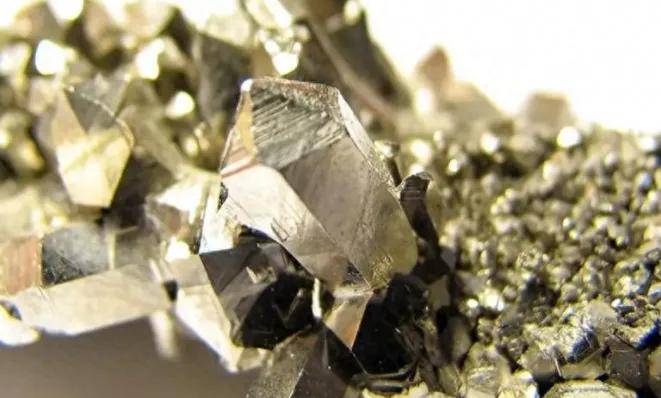
Core Insights - The discovery of a large rhenium deposit in Shaanxi, China, with reserves of 176 tons, positions China as the fourth-largest rhenium resource country globally, leading to geopolitical tensions centered around Beijing [1] - Rhenium is essential for manufacturing single-crystal turbine blades in aerospace engines, making it a critical industrial resource [3] - The negotiation dynamics between China and Western countries involve a strategic exchange of rhenium for advanced technology, which could undermine China's aerospace industry if not handled carefully [5] Industry Dynamics - The Western military-industrial complex is attempting to leverage outdated technology blueprints to acquire valuable rhenium resources from China at low prices, potentially turning China into a raw material supplier for Western aerospace [5] - The lack of advanced single-crystal furnace technology in China poses a significant challenge for producing rhenium in single-crystal form, which is crucial for high-performance turbine blades [7] - Despite recent advancements in rhenium processing, such as Jiangxi Copper's achievement in producing 99.99% pure rhenium powder, China still lags behind in the extensive data and experience accumulated by leading global aerospace companies [7][9] Strategic Considerations - The 176 tons of rhenium is viewed as a vital resource for China's industrial advancement rather than a mere asset to be exploited [9] - There is a pressing need for China to maintain its technological independence and avoid becoming overly reliant on foreign technology, which could jeopardize its aerospace ambitions [5][9] - The innovative approaches taken by Chinese engineers, such as adapting semiconductor-grade equipment for aerospace applications, highlight the challenges and risks involved in overcoming technological barriers [7]
话优势——习近平经济思想指引中国经济行稳致远
Ren Min Ri Bao· 2025-12-06 23:50
Group 1 - The article emphasizes the unique advantages of China's economic system, including the socialist system, large market size, complete industrial system, and rich talent resources, which are crucial for economic development [1][3][10] - The "Two Major" construction projects focus on urgent development needs that require central government support, showcasing the institutional advantage of concentrating efforts on significant tasks [2][3] - China's market is highlighted as a significant resource, with online retail sales ranking first globally for 12 consecutive years and a vast consumer market driven by over 1.4 billion people [3][4][5] Group 2 - The article discusses the importance of a modern industrial system as the material and technical foundation for a modernized nation, emphasizing the need to focus on the real economy [7][10] - Innovations in materials, such as ultra-thin electrical steel, are crucial for high-end equipment supply chains, demonstrating the potential for domestic production to overcome technological barriers [6][7] - The talent pool in China is vast, with over 250 million people having higher education and more than 220 million skilled workers, positioning the country as a major talent resource [9][10]