
互联网平台

Search documents
更好保护消费者的知情权选择权
Xin Lang Cai Jing· 2025-12-21 20:41
一是规范价格竞争秩序。根据现行法律法规规定,细化实化监管要求,为平台经营者、平台内经营者提 供明确的价格行为指引,推动形成优质优价、良性竞争的市场秩序。 二是保护经营者自主定价权。完善对平台内经营者自主定价权的保护规定,明确平台经营者不得对平台 内经营者的价格行为进行不合理限制或者附加不合理条件。 三是保护消费者合法权益。落实明码标价制度,推动动态定价、差别定价等规则公开,规范免密支付、 自动续期、自动扣款等服务,更好保护消费者的知情权、选择权。 (来源:中国妇女报) 转自:中国妇女报 据新华社北京12月20日电(记者 魏弘毅 魏玉坤) 为深入贯彻落实党的二十大和二十届历次全会精神, 推动平台经济创新和健康发展,国家发展改革委、市场监管总局、国家网信办联合印发的《互联网平台 价格行为规则》20日对外发布。 据了解,三部门于2025年8月23日至9月22日就行为规则公开征求社会意见。根据各方意见,进一步修改 完善行为规则,着力规范价格行为、推动公开透明、增强各方协同,构建良好平台生态。 行为规则将于2026年4月10日起实施,为经营者留出必要的规范调整时间。 ...
国家发展改革委等部门联合发布《互联网平台价格行为规则》
Xin Lang Cai Jing· 2025-12-21 18:36
Core Viewpoint - The newly released "Internet Platform Pricing Behavior Rules" aims to regulate pricing behaviors of platform operators and protect consumer rights, set to take effect on April 10, 2026 [1][4]. Group 1: Regulation of Pricing Behavior - The "Behavior Rules" consist of 7 chapters and 29 articles, outlining the norms for pricing behaviors by platform operators and internal operators [1]. - Pricing behavior includes actions related to setting or changing prices, price marking, charging fees, and implementing subsidies [1]. - The rules are designed to ensure that pricing practices do not disrupt the normal business models of platform economies while promoting fair competition [4][5]. Group 2: Protection of Consumer Rights - The rules emphasize the importance of transparency in pricing, requiring clear marking of prices and related product or service information [6][7]. - Specific provisions are made to prevent unfair pricing practices, such as price collusion and misleading promotions, ensuring consumers are informed and protected from deceptive pricing strategies [7][9]. - The rules also address issues like automatic renewals and unauthorized price increases, encouraging platforms to establish mechanisms for resolving pricing disputes [8][9]. Group 3: Stakeholder Engagement and Implementation - The development of the "Behavior Rules" involved public consultation to gather feedback, ensuring a comprehensive approach to regulation [5]. - The rules aim to balance the interests of platform operators and consumers, maintaining stability in regulatory requirements while fostering a healthy pricing order [5][6].


七章二十九条三大核心内容 三部门发文规范互联网平台价格行为
Zheng Quan Ri Bao· 2025-12-21 16:10
Core Viewpoint - The release of the "Internet Platform Pricing Behavior Rules" marks a new phase of refined and normalized price regulation in China's platform economy, aiming to reshape the responsibilities and rights among platforms, merchants, and consumers, and promote a market focused on quality and service [1][2]. Group 1: Regulatory Framework - The "Behavior Rules" consist of seven chapters and 29 articles, providing clear guidelines for pricing behavior of platform operators and merchants [1]. - The rules aim to standardize price competition, protect the pricing autonomy of operators, and safeguard consumer rights by enforcing transparent pricing practices [2][3]. Group 2: Implementation Timeline - The implementation date for the "Behavior Rules" is set for April 10, 2026, allowing time for platform operators to align their internal compliance systems with the new regulations [3]. - During the interim period, major platform operators will conduct self-assessments to ensure adherence to the rules, focusing on consumer price rights and the autonomy of platform merchants [3]. Group 3: Expected Impacts - The introduction of the "Behavior Rules" is expected to purify the market competition environment, curb unfair pricing practices, and create a fair competitive space for small and medium-sized operators [5]. - The rules will enhance consumer protection by preventing practices like data-driven price discrimination and false discounts, thereby increasing consumer trust [5]. - The guidelines will encourage platform companies to invest in technological innovation, service upgrades, and quality improvements, facilitating a shift from scale expansion to quality enhancement [5].
中国多领域深入“反内卷”,为平台企业价格竞争划定红线
Di Yi Cai Jing· 2025-12-21 13:52
Core Viewpoint - The article emphasizes the need to shift competition from "price wars" to "value wars" in order to escape the phenomenon of "involution" in various industries, particularly in the context of internet platforms and sectors like photovoltaic, automotive, and battery manufacturing [2][10]. Group 1: Regulatory Developments - The National Development and Reform Commission, the State Administration for Market Regulation, and the National Internet Information Office have jointly issued the "Internet Platform Pricing Behavior Rules" to regulate pricing behaviors on platforms and protect the rights of consumers and operators [2][3]. - The new rules prohibit practices such as predatory pricing, price discrimination, collusion to raise prices, price fraud, and price gouging, establishing clear boundaries for competition [3][4]. - The rules aim to enhance transparency, promote collaboration among stakeholders, and create a healthy platform ecosystem, providing clear guidelines for pricing behavior [3][5]. Group 2: Industry-Specific Actions - The photovoltaic industry has made significant progress in addressing "involution," with the establishment of a platform for the consolidation of polysilicon production capacity, aimed at mitigating vicious competition [8]. - The photovoltaic sector reported a loss of 31.039 billion yuan in the first three quarters, with a reduction in losses in the third quarter compared to the second quarter, indicating a potential stabilization in the industry [8]. - The National Energy Administration has emphasized the need for self-regulation within the photovoltaic industry to address issues of "involution" and low-price bidding, while also implementing policies to stabilize prices and improve competition order [9]. Group 3: Consumer Protection - The new rules include provisions to protect consumer rights, focusing on the right to information and the right to choose, requiring operators to clearly display pricing options and provide easy cancellation methods for services [6][7]. - The rules mandate transparency in promotional activities, such as subsidies and discounts, to prevent misleading practices like "false discounts" and "price hikes before discounts" [6][9]. Group 4: Future Directions - The central economic work conference highlighted the need for deeper governance of "involution" in competition, indicating that future policies will continue to focus on this issue [10][11]. - The emphasis on systematic approaches to address "involution" includes enhancing industry self-regulation, standard-setting, and utilizing various regulatory tools to ensure a fair competitive environment [12].
支付不再“暗箱操作”,三部门出手!互联网平台应提前通知扣款、简化取消流程
Bei Jing Shang Bao· 2025-12-21 13:41
Core Viewpoint - The newly released "Internet Platform Pricing Behavior Rules" aims to regulate the practices of platform operators regarding pricing, including the use of password-free payments and automatic renewals, emphasizing consumer rights and transparency [1][2][3]. Group 1: Regulatory Framework - The "Behavior Rules" consist of 7 chapters and 29 articles, detailing requirements for platform operators regarding pricing, including clear pricing standards and consumer rights protection [1][2]. - The rules will take effect on April 10, 2026, allowing time for operators to adjust to the new regulations [1]. Group 2: Consumer Rights Protection - The rules mandate that platform operators must prominently inform consumers about payment details, including timing, amounts, and cancellation options for password-free payments and automatic renewals [2][4]. - Consumers must be allowed to cancel automatic renewals and payments at any time, with operators required to notify them of any changes in charging standards [2][5]. Group 3: Industry Impact - The introduction of these rules signals a shift towards more refined and regularized price regulation in the platform economy, aiming to eliminate long-standing issues related to consumer exploitation [3][4]. - The rules are expected to enhance consumer awareness and control over payment services, thereby promoting a healthier competitive environment in the internet platform sector [5][6].
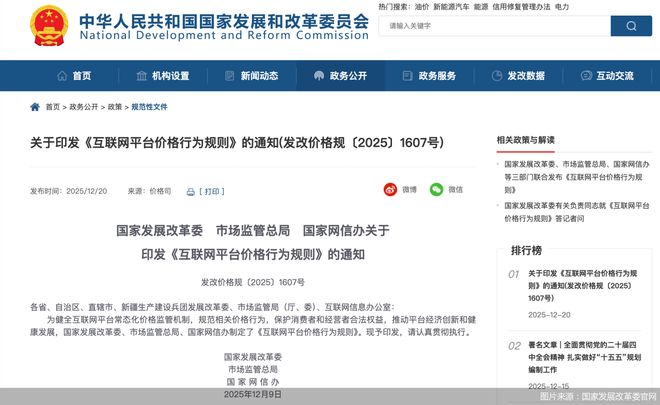
不得“大数据杀熟”、价格欺诈……三部门规范互联网平台价格行为
Xin Lang Cai Jing· 2025-12-21 12:29
每经记者|周逸斐 每经编辑|文多 为推动平台经济创新和健康发展,12月20日,国家发展改革委、市场监管总局、国家网信办联合发布 《互联网平台价格行为规则》(以下简称《行为规则》)。《行为规则》共计7章29条,规定了平台经 营者、平台内经营者实施价格行为应当遵守的规范,对平台的价格行为划定了清晰的"红线"。 此前,很多网友在不少社交平台反映,有平台的自动续费关闭按钮隐藏得很深。 针对类似情况,《行为规则》在保护消费者合法权益方面,聚焦保护消费者知情权、自主选择权,规定 了经营者提供免密支付服务时,搭售保险、交通等服务或者商品时,设置自动续期、自动扣款时,应当 以显著方式向消费者展示相关选项,并提供便捷的取消途径。鼓励平台经营者建立价格争议在线解决机 制、商品质量承诺和担保制度。 比如,《行为规则》强调,平台经营者、平台内经营者不得违反《中华人民共和国消费者权益保护法实 施条例》第九条规定,在消费者不知情的情况下,基于支付意愿、支付能力、消费偏好、消费习惯等信 息,运用数据和算法、平台规则等手段,对同一商品或者服务在同等交易条件下设置不同的价格或者收 费标准。 明确经营者不得低价倾销、哄抬价格 近年来,随着互联网 ...
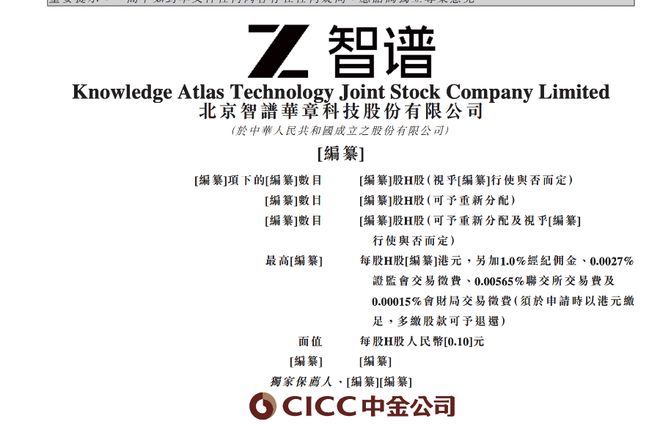
智谱招股书透露风险:“我们可能无法保护用户数据”丨合规周报
2 1 Shi Ji Jing Ji Bao Dao· 2025-12-21 04:03
AI Dynamics - The prospectus of Zhipu, the first domestic large model company, reveals significant financial losses, with net losses of 143 million yuan in 2022, 788 million yuan in 2023, and projected losses of 2.958 billion yuan in 2024, totaling over 6.2 billion yuan by mid-2025 [1][2] - The prospectus highlights the importance of low hallucination rates as a key indicator of model reliability, with Zhipu's GLM-45 ranking second globally and lowest in China for hallucination rates by September 2025 [1][2] - Regulatory changes and compliance issues are emphasized as potential risks, with the prospectus noting that future laws may impose additional obligations that could adversely affect business operations and financial performance [2][3] - User data compliance is a critical concern, as the prospectus acknowledges the uncertainty surrounding the interpretation and application of data protection laws, which may impact the company's ability to safeguard user data [3][4] - Training data compliance is identified as an unstable factor, with the prospectus indicating that Zhipu may source training data from third-party vendors and public datasets, raising concerns about the legality and compliance of such data [4][5] - The potential misuse of AI technology by users poses a reputational risk to the company, as any negative outcomes could significantly impact business performance and financial outlook [5] Platform Governance - The newly issued "Internet Platform Pricing Behavior Rules" prohibit platforms from forcing or indirectly compelling operators to adopt automatic pricing systems or engage in unreasonable pricing practices [7][8] - TikTok has announced the establishment of a new joint venture in the U.S. focused on data protection, algorithm security, content review, and software assurance, named "TikTok USDS Joint Venture LLC" [8] - The Supreme People's Court has updated the civil case categories to include data and virtual property disputes, reflecting a growing focus on legal frameworks surrounding digital assets and intellectual property [9]
《互联网平台价格行为规则》发布 推动平台经济健康发展
Yang Guang Wang· 2025-12-21 01:27
《行为规则》还明确,平台经营者、平台内经营者应当对销售的商品或者提供的服务实行明码标 价,不得在标价之外加价、收取任何未予标明的费用。同时开展价格促销活动,应当以方便消费者认知 的方式标明促销价格或者价格促销规则,不得虚假、夸大宣传补贴金额和力度。 国家信息中心信息化和产业发展部处长于凤霞:针对平台经济领域复杂多样的"满减""红包""限时 秒杀"等活动,《行为规则》提出了平台需要对补贴、促销规则进行公示的要求,以规则透明化遏制"虚 假满减""先涨后降"等行为。 《行为规则》对价格竞争行为也进行了规范,遏制不正当竞争。 央广网北京12月21日消息(记者李思默 周尧 王逸群)据中央广播电视总台中国之声《新闻和报纸 摘要》报道,国家发展改革委、市场监管总局、国家网信办制定的《互联网平台价格行为规则》(以下 简称《行为规则》)昨天(20日)对外发布,推动平台经济创新和健康发展。 《行为规则》共计7章29条,规定了平台经营者、平台内经营者实施价格行为应当遵守的规范。 中国人民大学法学院院长杨东:包括平台自动比价,以及竞价排名等一系列问题,让定价权回归给 经营者,避免经营者的定价权被一些超级平台、超级企业所控制。 据了解 ...
国内首块!“渝AD0001Z”
Zhong Guo Zheng Quan Bao· 2025-12-21 00:48
Industry News - The National Development and Reform Commission, the State Administration for Market Regulation, and the National Internet Information Office jointly released the "Internet Platform Pricing Behavior Rules" to promote innovation and healthy development in the platform economy. The rules consist of 7 chapters and 29 articles, aiming to establish a balanced ecosystem with clear responsibilities and orderly competition. In the short term, platforms and merchants will need to adapt, while in the long term, the focus will shift from "subsidies for traffic" to "innovation and quality improvement" for sustainable high-quality development [1][2][3] - The People's Bank of China, along with other local authorities, has introduced a work plan for the "Five Major Financial Articles" in Fujian Province, outlining 18 specific measures to enhance support for technology finance, green finance, inclusive finance, pension finance, and digital finance [2][3] - The first L3-level autonomous driving license plate "渝AD0001Z" was issued in Chongqing to Changan Automobile, marking the start of the L3 autonomous driving era in China. Changan's L3 autonomous driving system has completed over 5 million kilometers of real-road testing in Chongqing [3][4] Company News - Zhiyuan Robotics announced a press conference for its "Qingtian Rental Platform" on December 22, aiming to transform robot leasing into an ecosystem. The company plans to collaborate with various partners to create a new leasing mechanism, allowing users to rent robots on demand [3][4] - ByteDance is reported to have achieved approximately $40 billion in net profit in the first three quarters of 2025, with an expected annual profit of around $50 billion. However, insiders have disputed these figures, indicating significant discrepancies [3][4] - Moore Threads held its first MUSA Developer Conference, focusing on full-function GPUs. The company plans to release a new GPU architecture called "Huagang" in 2026, which will enhance computing power density by 50% and energy efficiency by ten times [3][4] - Beijing Tongrentang Group expressed deep concern over recent media reports regarding "Antarctic Krill Oil" and has initiated an investigation into its subsidiary, Beijing Tongrentang (Sichuan) Health Pharmaceutical Co., Ltd. The company has apologized to consumers and is cooperating with regulatory authorities [4] Research Highlights - CITIC Securities reported that liquid cooling solutions are becoming the mainstream technology for energy saving in data centers, driven by increased power consumption in AI servers and chips. Domestic manufacturers are expected to benefit significantly from the rising demand for liquid cooling in AI data centers [5]
经济日报财经早餐【12月21日星期日】
Jing Ji Ri Bao· 2025-12-21 00:26
Group 1 - During the "14th Five-Year Plan" period, China's biomanufacturing industry has steadily expanded, reaching a total scale of 1.1 trillion yuan, with bioproducts accounting for over 70% of global production [1] - The annual output value of sub-sectors such as food and additives, and biopharmaceuticals exceeds 400 billion yuan, positioning biomanufacturing as a new economic growth point [1] - The Ministry of Agriculture and Rural Affairs has registered 1,048 new varieties of specialty crops, with domestic self-bred varieties accounting for 98.5% [1] Group 2 - The National Development and Reform Commission, the State Administration for Market Regulation, and the National Internet Information Office have jointly issued the "Internet Platform Pricing Behavior Rules," which will take effect on April 10, 2026 [1] - The global first commercial supercritical carbon dioxide power generation unit has successfully commenced operation, marking the commercial application of this technology [1] - The People's Bank of China, along with the National Development and Reform Commission and the Financial Regulatory Bureau, has released regulations on cash payment services, effective February 1, 2026, prohibiting arbitrary refusal of cash payments [1] Group 3 - The Ministry of Commerce and the Ministry of Finance have initiated pilot projects for new consumption formats in 50 cities, aiming to create new high grounds for innovative consumption development [1]