
数字产业

Search documents
东盟贸促会会长波尚琅:新兴领域正成为中国与东盟合作的新增长点
Zhong Guo Jing Ji Wang· 2025-07-25 08:09
Core Insights - The ASEAN Secretary-General's roundtable in Beijing emphasized the theme of "shared opportunities, co-creating prosperity, and initiating a new journey of cooperation" [1] - ASEAN and China have seen continuous growth in bilateral trade, with China remaining ASEAN's largest trading partner for 16 consecutive years and ASEAN being China's largest trading partner for 5 years [1] - The completion of the China-ASEAN Free Trade Area 3.0 negotiations and the implementation of RCEP provide a solid institutional framework for economic cooperation [1] Group 1 - ASEAN's trade promotion association, led by President Bo Shanglang, highlighted the importance of policy communication, enterprise connection, and ecosystem building in enhancing cooperation [1] - The association aims to integrate expert resources to help businesses leverage policy benefits and mitigate risks, while also promoting trade facilitation and a fair business environment [1] - The focus on cultural exchanges aims to strengthen youth friendships, providing a soft support for deepening economic and trade relations [1] Group 2 - The ASEAN trade promotion association plans to focus on the "Digital Silk Road" and green transformation to advance cooperation [2] - ASEAN countries are actively developing digital infrastructure, and China is positioned to lead in digital technology and industries, promoting collaboration in areas like 5G and artificial intelligence [2] - The association intends to establish more regular and multi-level mechanisms for industry and enterprise-level exchanges, facilitating deeper cooperation in specific fields [2]
向稳、向新、向优——工业和信息化部有关负责人详解上半年工业经济
Xin Hua Wang· 2025-07-18 15:15
Core Viewpoint - The industrial economy in China showed steady growth in the first half of the year, with significant contributions from key industries and advancements in technology and innovation [2][4]. Group 1: Industrial Economic Performance - The industrial added value of large-scale enterprises increased by 6.4% year-on-year, with the manufacturing sector's contribution to GDP remaining stable at 25.7% [2]. - Key industries such as electrical machinery, automotive, electronics, general equipment, chemicals, and non-ferrous metals experienced rapid growth, enhancing their contribution to overall industrial growth [2]. - All 31 provinces reported growth in industrial added value, with eight major industrial provinces exceeding the national average profit growth rate [2]. Group 2: New Growth Drivers - The equipment manufacturing sector maintained a strong growth trend, accounting for 35.5% of the total industrial added value [2]. - The digital industry saw a business revenue increase of 9.3% year-on-year, with a 3.4 percentage point acceleration compared to the previous year [2]. - Green factories contributed over 20% to the total manufacturing output, and energy consumption per unit of industrial added value continued to decline [2]. Group 3: Innovation and Technology Integration - The Ministry of Industry and Information Technology supported the high-quality development of 1,241 specialized "little giant" enterprises [3]. - The number of registered technology contracts reached nearly 410,000, with a transaction value exceeding 3 trillion yuan, marking a 14.2% year-on-year increase [4]. - The establishment of 33 national manufacturing innovation centers was reported, with a focus on key strategic areas [4]. Group 4: Industrial Transformation and Upgrading - The added value of high-tech manufacturing increased by 9.5% year-on-year, contributing 23.3% to the overall industrial growth [5]. - As of June, the total number of 5G base stations reached 4.55 million, with 5G applications integrated into 86 out of 97 major categories of the national economy [5]. - Software business revenue reached 55.788 billion yuan from January to May, reflecting an 11.2% year-on-year growth [6].
重大利好!汽车、钢铁等十大重点行业稳增长方案即将出台
证券时报· 2025-07-18 09:30
Core Viewpoint - The article highlights the significant growth in China's industrial and information technology sectors in the first half of 2023, emphasizing advancements in digital technology and manufacturing, as well as the government's initiatives to ensure stable economic growth and promote innovation. Group 1: Industrial Growth - In the first half of 2023, China's industrial added value increased by 6.4% year-on-year, with the manufacturing sector accounting for 25.7% of GDP [1] - The number of large-scale industrial enterprises reached 520,000, and profits in the manufacturing sector grew by 5.4% year-on-year [1] - The digital industry saw a business revenue increase of 9.3%, with a growth rate improvement of 3.4 percentage points compared to the previous year [1] Group 2: Equipment Manufacturing - The equipment manufacturing sector accounted for 35.5% of the total industrial added value, acting as a stabilizer for industrial development [2] - Fixed asset investment in key manufacturing sectors such as railways, shipbuilding, aerospace, and automobiles experienced double-digit growth [2] - In the automotive industry, production and sales reached 15.62 million and 15.65 million units, respectively, with year-on-year growth of 12.5% and 11.4% [2] Group 3: Future Initiatives - The Ministry of Industry and Information Technology plans to introduce growth stabilization plans for key industries such as steel, non-ferrous metals, petrochemicals, and building materials [3] - The ministry will also implement digital transformation plans across various sectors, focusing on 82 typical scenarios for intelligent upgrades [4] - Future initiatives will include fostering new industries and technologies, such as biomanufacturing and humanoid robots, to drive innovation and economic growth [4]


大长沙·城长记——一座人民城市的幸福叙事
Chang Sha Wan Bao· 2025-07-16 02:46
Core Viewpoint - The Central Urban Work Conference highlighted the achievements and challenges of urban development in China, emphasizing the need for a people-centered approach in city planning and governance [1][30]. Urban Development Achievements - Over the past decade, Chinese cities, exemplified by Changsha, have undergone significant transformations, achieving remarkable progress in urban development [2]. - Changsha has seen a net population inflow of over 3 million, with a permanent population reaching 10.6165 million, supported by a modern industrial system focused on advanced manufacturing [3][4]. - The urbanization rate in Changsha has reached 83.99%, indicating a trend towards intensive growth [6]. Urban Planning and Governance - Changsha's first comprehensive land spatial planning (2021-2035) was approved, emphasizing strategic guidance and sustainable development [5]. - The city has implemented a compact urban renewal strategy, focusing on efficient space utilization and avoiding large-scale demolitions [7]. - Changsha has transformed 2,296 old urban communities, benefiting over 130,000 households, and plans to invest 8.705 billion yuan in 70 urban renewal demonstration projects over the next three years [10]. Environmental Quality - Changsha has maintained an air quality good rate of 83.1% in 2024, with over 300 days of good air quality annually, supporting high-quality urban development [11]. Transportation Infrastructure - Changsha's Huanghua International Airport surpassed 30 million passengers in 2023, with a 120% increase in international travelers [15]. - The city has developed a diverse public transportation system, including intercity railways and metro lines, enhancing connectivity and accessibility [16]. Urban Management Innovations - The city has adopted advanced technologies like big data and AI to improve urban management and service delivery [21][22]. - Changsha has focused on enhancing public safety and urban infrastructure, including street lighting and park accessibility, to improve residents' quality of life [20]. Cultural and Social Development - Changsha has been recognized as a "National Civilized City" and a "City with the Most Happiness," reflecting its commitment to improving residents' well-being [24]. - The city has developed a comprehensive elderly care service network, covering 91.5% of communities, and is expanding educational resources to meet growing demands [28][29].
靠游客“救场”?日本旅游顺差抵消数字逆差
日经中文网· 2025-07-11 08:16
Core Viewpoint - The article discusses how Japan's tourism surplus is helping to offset its digital trade deficit, highlighting the importance of tourism in the country's economy [1] Group 1: Tourism Impact - Japan's tourism surplus reached a record high of 4.8 trillion yen (approximately 43.5 billion USD) in 2022, significantly contributing to the economy [1] - The influx of international tourists, particularly from countries like China and South Korea, has been a key driver of this surplus [1] - The tourism sector is seen as a vital component in balancing Japan's overall trade, especially in light of ongoing digital trade challenges [1] Group 2: Digital Trade Deficit - Japan's digital trade deficit was reported at 1.5 trillion yen (around 13.7 billion USD) in 2022, indicating a growing gap in digital goods and services [1] - The article emphasizes that while the digital sector is expanding, it is not yet sufficient to cover the losses incurred from the digital trade deficit [1] - The reliance on tourism to mitigate this deficit underscores the need for Japan to enhance its digital economy [1]

特朗普发起关税战,结果中美握手言和,真正付出代价的反而是欧洲
Sou Hu Cai Jing· 2025-07-08 09:07
Group 1 - The US-China trade war ended with the US suffering significant losses while China emerged victorious, highlighting the misjudgment of Trump's assessment of China's economic resilience [1] - Following the resolution of the US-China conflict, Trump quickly shifted focus to imposing a 50% tariff on EU goods, demonstrating the principle of "America First" and revealing the harsh realities of international trade [1][3] - The EU has become a victim of the trade war, as the US's aggressive tariff policies have left Europe in a vulnerable position, unable to effectively counteract [1][3] Group 2 - China responded to the US's tariffs, which reached a historical high of 145%, by diversifying its market dependencies and increasing imports from ASEAN countries by 23%, thereby reducing reliance on the US [3] - The US's energy strategy has allowed it to dominate the EU market, with American liquefied natural gas accounting for 46% of total EU imports, further solidifying US control over Europe's economic lifeline [4] - The digital sector in Europe is heavily dominated by US companies, with firms like Google and Meta controlling 90% of the European data market, contributing to Europe's industrial hollowing [5] Group 3 - The EU's leadership, particularly Ursula von der Leyen, has adopted a dual approach, seeking to strengthen ties with China while also engaging closely with the US, reflecting the complex dynamics of the trade environment [7] - Germany's internal assessments indicate that an escalation of the US-EU trade war could result in economic losses of up to €250 billion between 2025 and 2028, equivalent to 6.8% of Germany's GDP [7] - The ongoing trade dynamics have left Europe in a passive position, unable to confront China or negotiate effectively with the US, leading to a gradual loss of competitive capital [7]

以数观势|乘“数”而上 中国数字经济动能澎湃
Xin Hua She· 2025-07-07 02:27
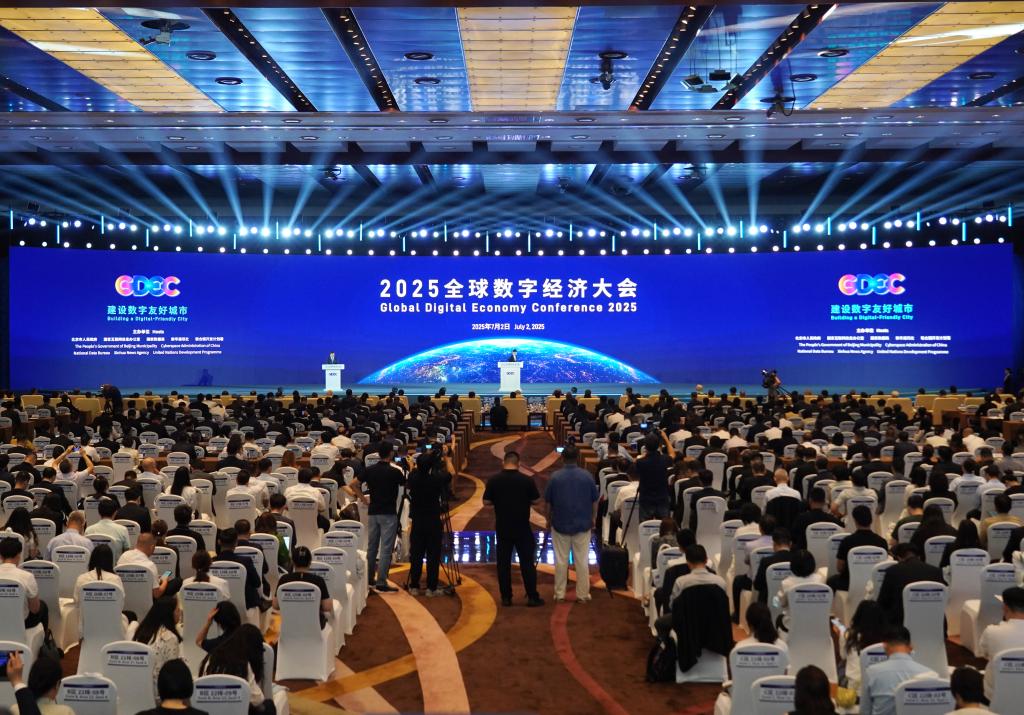
Group 1 - The development of the digital economy is a strategic choice to seize new opportunities in the technological revolution and industrial transformation, with the core industry value added expected to account for about 10% of GDP in 2024, maintaining the world's second-largest scale [1] - In the first quarter of 2025, the digital industry achieved a business revenue of 8.5 trillion yuan, a year-on-year increase of 9.4%, with manufacturing and service sectors growing by 10.4% and 8.2% respectively, indicating significant digital empowerment effects [2] - As of the end of March this year, over 4.395 million 5G base stations have been built, and 86 cities have initiated pilot deployments of 10G optical networks, showcasing continuous optimization and upgrading of digital infrastructure [2] Group 2 - The 2025 Global Digital Economy Conference opened in Beijing, focusing on building digital-friendly cities and highlighting four key aspects: openness and sharing, frontier focus, industrial integration, and enhanced experience [4] - Data shows that over 30,000 basic-level smart factories and more than 1,200 advanced-level smart factories have been established, accelerating the integration of digital and physical industries [5] - In May, the added value of the digital product manufacturing industry grew by 9.1%, significantly higher than the overall industrial growth rate, demonstrating the increasing impact of digital economy on industrial production [6] Group 3 - The digital economy is increasingly penetrating various sectors, enhancing the quality of life through digital cultural resources, upgraded smart education platforms, and nationwide remote medical service networks [7] - A series of data highlights new features and breakthroughs in China's digital economy, leveraging rich data resources and a complete industrial system, indicating a promising future for digital China [9]
数聚上合 津门共赢——2025上合组织数字经济论坛即将在津启幕
Zhong Guo Xin Wen Wang· 2025-07-05 08:04
Group 1 - The 2025 Shanghai Cooperation Organization (SCO) Digital Economy Forum will be held from July 10 to 11, 2025, focusing on the theme "Digital Economy New Link, Expanding Cooperation New Space" with over 600 guests from SCO member countries [1] - The forum aims to enhance the "Shanghai Spirit," showcase development achievements, and share digital dividends, featuring new topics on digital economy and AI applications, practical discussions on project signings, and multi-level cooperation mechanisms [1][2] - The forum will target three goals: preparing for the SCO summit, showcasing national development achievements, and sharing the benefits of digital economy development [1][2] Group 2 - Tianjin's digital economy is significantly developed, with complete digital infrastructure, abundant talent resources, and rich digital application scenarios, providing a solid foundation for international cooperation [2] - In Q1 2025, Tianjin's core digital economy industries achieved revenue of 132.9 billion yuan, a year-on-year increase of 12.2%, while platform economy revenue reached 157.8 billion yuan, growing by 23% [2] - Over 100 typical cases of digital economy cooperation between China and SCO countries have been collected, covering all SCO member states and six key areas, demonstrating the depth and breadth of cooperation in digital technology [2] Group 3 - The forum is seen as a high-level international exchange event and an important opportunity to elevate regional digital cooperation, aiming to inject strong momentum into the SCO's "Sustainable Development Year" [3]
东城区新智算力与大模型研究院揭牌
Xin Jing Bao· 2025-07-03 06:03
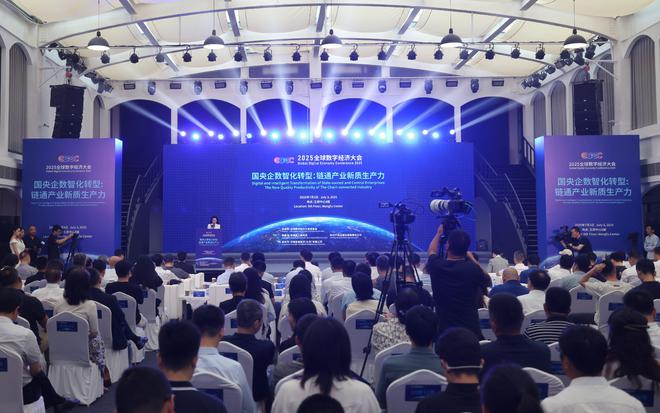
Core Viewpoint - The forum on "Digital Transformation of State-Owned Enterprises" emphasizes the importance of digital transformation in enhancing productivity and innovation within state-owned enterprises, with a focus on collaboration between government, industry, and academia [1][3]. Group 1: Forum Overview - The 2025 Global Digital Economy Conference forum was held on July 3, focusing on the digital transformation of state-owned enterprises and the integration of new productivity [1][3]. - The forum was co-hosted by the Dongcheng District Government and the Intellectual Property Publishing House, highlighting the collaboration between public and private sectors [3]. Group 2: Key Initiatives and Goals - Dongcheng District aims to create a "Beijing model" for digital transformation by leveraging the advantages of state-owned enterprise headquarters, promoting deep integration of policies, technology, and capital [3]. - The establishment of the Beijing Dongcheng New Intelligent Computing and Large Model Research Institute marks a significant step in fostering innovation and collaboration among over 20 entities, including the government and Jinju Group [1][3]. Group 3: Industry Insights - Industry leaders at the forum discussed the need to avoid inefficient investments in technology and instead focus on collaborative projects like the "East Data West Computing" initiative [4]. - A roundtable discussion featured experts from various sectors, emphasizing the importance of building an industrial ecosystem for mutual benefit [4]. Group 4: Innovation Showcase - The forum included a "Digital Economy Experience Zone," where seven innovative companies showcased their technologies and solutions, allowing participants to engage with future experiences [4].
越南加快开放试点对冲贸易风险
Jing Ji Ri Bao· 2025-07-01 22:10
Group 1: Free Trade Zone in Da Nang - The Vietnamese National Assembly has approved the establishment of the country's first free trade zone in Da Nang, covering approximately 1,881 hectares and encompassing various functional areas such as production, logistics, trade, services, digital industry, and information technology [1] - The Vice Prime Minister of Vietnam expressed hopes that the free trade zone will become a global economic hub, driving local and national economic growth [1] - Da Nang has been merged with Quang Nam Province, increasing its area to 11,000 square kilometers, with plans for a regional financial center and significant infrastructure investments [1] Group 2: Economic Growth and Challenges - Vietnam's GDP is projected to reach approximately $476.3 billion in 2024, with a growth rate of 7.09%, and foreign direct investment is expected to hit a record $25.35 billion, a year-on-year increase of 9.4% [2] - The total goods import and export value is anticipated to reach $786.29 billion, reflecting a year-on-year growth of 15.4% [2] - However, external factors such as U.S. trade policies and weakened global demand pose significant risks to Vietnam's economy, with projections indicating a potential decline in growth rates by 2025 [2][3] Group 3: Structural Reforms and Trade Negotiations - The establishment of the Da Nang free trade zone is seen as a key measure in Vietnam's structural reforms aimed at mitigating external risks [3] - As the U.S. approaches the deadline for imposing high tariffs, Vietnam is intensifying negotiations with the U.S. to address trade disputes [3] - Recent trade talks in Washington have shown significant progress, with both parties agreeing to continue discussions online [3] Group 4: Regional Trade Agreements - The completion of the China-ASEAN Free Trade Area 3.0 negotiations is expected to enhance economic cooperation and address global challenges [4] - Vietnam's inclusion as the tenth partner in the BRICS cooperation mechanism highlights its significant role in the global value chain and commitment to a more inclusive international order [4] - Long-term benefits for Vietnam from various trade agreements will depend on its ability to implement pilot projects like the Da Nang free trade zone to deepen and expand its openness [5]