
石油天然气

Search documents
俄罗斯断供,欧洲两国急了!
Xin Lang Cai Jing· 2026-02-17 16:31
"我们请求克罗地亚允许通过亚得里亚管道向匈牙利和斯洛伐克输送俄罗斯石油,因为根据我们的制裁 豁免规定,管道输送中断时可通过海运进口俄罗斯石油。"他写道,"一个国家的能源供应安全绝不应成 为意识形态问题。因此,我们期望克罗地亚不会像乌克兰那样,出于政治原因危及匈牙利和斯洛伐克的 石油供应安全。" 克罗地亚经济部长安特·舒什尼亚尔回应:"克罗地亚不会允许中欧的燃料供应受到威胁。我们已准备好 帮助解决这一紧急问题。" 按路透社说法,亚得里亚输油管道起自克罗地亚港口奥米沙利,通往克罗地亚及欧洲南部和中部的炼油 厂。 匈牙利石油和天然气公司16日说,已联系政府,要求启动战略原油储备投放,以维持该地区的供应安 全。 石油输送中断 匈、斯归咎乌克兰 近日,由于途经乌克兰的俄罗斯石油输送中断,匈牙利和斯洛伐克两国对此表达不满,并将责任归咎于 乌克兰方面。匈牙利外交部长16日说,匈、斯两国已请求克罗地亚允许通过海运输入的俄罗斯石油过 境。 据路透社报道,经"友谊"管道乌克兰段向欧洲输送的俄罗斯石油自1月27日起暂停。乌克兰外交部上周 称,断供由俄罗斯对乌境内管道设施发动袭击所致。乌外交部长安德烈·瑟比加在社交媒体X平台发布了 ...
俄石油断供,这两国急了!
Xin Lang Cai Jing· 2026-02-17 08:02
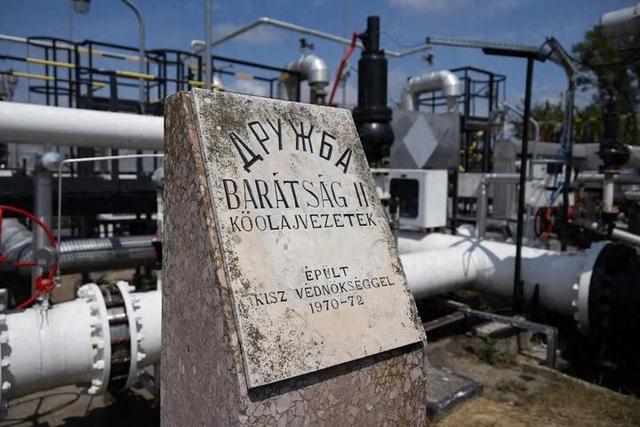
近日,由于途经乌克兰的俄罗斯石油输送中断,匈牙利和斯洛伐克两国对此表达不满,并将责任归咎于 乌克兰方面。匈牙利外交部长16日说,匈、斯两国已请求克罗地亚允许通过海运输入的俄罗斯石油过 境。 据路透社报道,经"友谊"管道乌克兰段向欧洲输送的俄罗斯石油自1月27日起暂停。乌克兰外交部上周 称,断供由俄罗斯对乌境内管道设施发动袭击所致。乌外交部长安德烈·瑟比加在社交媒体X平台发布了 一张消防员和其所称"友谊"管道基础设施燃烧的照片,并指责曾表达亲俄立场的匈牙利对此事保持沉 默。 这是2022年5月24日在匈牙利萨兹豪隆包陶多瑙河炼油厂拍摄的连接匈牙利和俄罗斯的"友谊"输油管道 入口点。新华社发(弗尔季·奥蒂洛摄) 匈牙利迅速回应,指责乌克兰切断了该段管道的电源。15日,斯洛伐克总理罗贝尔特·菲佐指责乌克兰 拖延重启管道,意在向匈牙利施压,要求其放弃反对乌克兰加入欧盟。俄罗斯克里姆林宫16日表示认同 菲佐的观点。 匈牙利是欧盟和北约成员国,匈总理欧尔班政府对欧盟向乌克兰提供军事援助持质疑态度,同时反对乌 克兰加入欧盟。匈牙利外交与对外经济部长西雅尔多·彼得16日在X平台上发文称,匈牙利和斯洛伐克已 请求克罗地亚允许俄 ...

石油输送中断 匈、斯归咎乌克兰
Xin Hua She· 2026-02-17 06:12
近日,由于途经乌克兰的俄罗斯石油输送中断,匈牙利和斯洛伐克两国对此表达不满,并将责任归咎于 乌克兰方面。匈牙利外交部长16日说,匈、斯两国已请求克罗地亚允许通过海运输入的俄罗斯石油过 境。 据路透社报道,经"友谊"管道乌克兰段向欧洲输送的俄罗斯石油自1月27日起暂停。乌克兰外交部上周 称,断供由俄罗斯对乌境内管道设施发动袭击所致。乌外交部长安德烈·瑟比加在社交媒体X平台发布了 一张消防员和其所称"友谊"管道基础设施燃烧的照片,并指责曾表达亲俄立场的匈牙利对此事保持沉 默。 匈牙利迅速回应,指责乌克兰切断了该段管道的电源。15日,斯洛伐克总理罗贝尔特·菲佐指责乌克兰 拖延重启管道,意在向匈牙利施压,要求其放弃反对乌克兰加入欧盟。俄罗斯克里姆林宫16日表示认同 菲佐的观点。 按路透社说法,亚得里亚输油管道起自克罗地亚港口奥米沙利,通往克罗地亚及欧洲南部和中部的炼油 厂。 匈牙利石油和天然气公司16日说,已联系政府,要求启动战略原油储备投放,以维持该地区的供应安 全。 匈牙利和斯洛伐克均依赖俄罗斯的石油和天然气供应,并一直反对欧盟为切断俄能源收入而试图终止相 关能源输送的举措。欧盟委员会发言人16日证实,"友谊"管 ...
特朗普支持以色列空袭伊朗,中东局势升温,港股石油板块集体走强
Jin Rong Jie· 2026-02-16 04:42
Group 1 - The oil sector in Hong Kong showed overall strength on February 16, with major stocks like CNOOC (00883.HK), CNOOC Services (02883.HK), and PetroChina (00857.HK) recording varying degrees of increase [1] - Geopolitical tensions in the Middle East, particularly the U.S. President Trump's support for Israel against Iran, have become significant catalysts for the oil and gas sector [1] - According to a report from Everbright Securities, the long-term supply-demand dynamics for crude oil remain favorable, maintaining a positive outlook on the "Big Three" oil companies and the oil service sector [1] Group 2 - CNOOC Services has recently submitted multiple patent applications to the National Intellectual Property Administration, focusing on core technologies in oil and gas development, which strengthens its technical reserves in the oilfield service sector [2]



金十数据全球财经早餐 | 2026年2月16日
Jin Shi Shu Ju· 2026-02-15 23:16
男生普通话版 下载mp3 女声普通话版 下载mp3 粤语版 下载mp3 西南方言版 下载mp3 东北话版 下载mp3 上海话版 下载mp3 今日优选 英媒:若美解除制裁,伊朗已准备考虑做出妥协以达成核协议 美军被曝正为潜在的"持续数周"的对伊军事行动作准备 美国1月核心CPI创近5年新低 美政府或削减钢铝关税?纳瓦罗:毫无事实依据 美财长:参院同意推进沃什美联储主席任命听证 据悉欧佩克+正倾向于从4月起恢复石油增产 国投瑞银白银LOF赔偿方案出炉 豆包大模型宣布正式进入2.0阶段 深圳出手规范黄金市场 中国宣布对加拿大、英国实施阶段性免签政策 市场盘点 上周一,美元指数维持横盘,日内基本持平,最终收报96.85。由于科技股抛售潮延续支撑了美债的避险吸引力,美债收益率延续跌势,基准的10年期美债 收益率收报4.05%,对美联储政策利率敏感的2年期美债收益率收报3.41%。 温和的1月美国CPI报告提升了美联储年中前降息的可能性,现货黄金盘中拉升,重回5000美元大关,日内涨超120美元,最终收涨2.5%,报5043.11美元/盎 司;现货白银两度触及79美元关口后回落,最终收涨2.97%,报77.43美元/盎司 ...

特朗普关税裁决即将出炉,1月PCE是否扰动降息前景丨下周外盘看点
Di Yi Cai Jing Zi Xun· 2026-02-15 09:52
Market Overview - The U.S. stock market experienced a decline, with the Dow Jones down 1.23%, Nasdaq down 2.10%, and S&P 500 down 1.39% for the week [2] - European indices showed gains, with the FTSE 100 up 0.74%, DAX 30 up 0.78%, and CAC 40 up 0.46% [2] - Upcoming key data includes U.S. GDP, PCE inflation data, and the Federal Reserve's meeting minutes, which will help assess the likelihood of future interest rate cuts [2][3] Federal Reserve Insights - The recent non-farm payroll report indicated strong U.S. employment, with 130,000 jobs added in January, suggesting limited short-term rate cut potential [3] - However, lower-than-expected inflation data has reignited expectations for a rate cut, with the market fully pricing in a 25 basis point cut by July [3] - The Federal Reserve's meeting minutes are expected to clarify the debate between maintaining rates and supporting rate cuts [3] Legal and Trade Developments - The U.S. Supreme Court is set to announce a decision on the legality of the Trump administration's tariffs on February 20, with a 28% probability of supporting the tariffs according to market predictions [4] - A negative ruling could lead to over $130 billion in tariff refunds and reshape U.S. trade policy [4] Commodity Market Trends - International oil prices fell, with WTI down 1.04% to $62.89 per barrel and Brent down 0.44% to $67.75 per barrel, amid concerns over Middle Eastern tensions and OPEC+ production outlook [5] - Gold futures rose 1.43% to $5022.00 per ounce, and silver futures increased 1.45% to $77.851 per ounce, driven by expectations of lower interest rates [5][6] Economic Indicators in Europe - Upcoming PMI data for France, Germany, and the Eurozone will be crucial for assessing economic outlook, with expectations of slight improvements in services but a contraction in manufacturing [7] - Key indicators include Eurozone industrial output and Germany's ZEW economic sentiment index [7] UK Economic Data - The UK is set to release significant employment data and January CPI, with inflation remaining above the Bank of England's target at 3.4% [8] - The market anticipates a 63% probability of a rate cut by March, especially if inflation shows further signs of easing [8]
伯克希尔13F即将揭盅 巴菲特的最后一季会有哪些操作?
智通财经网· 2026-02-15 06:07
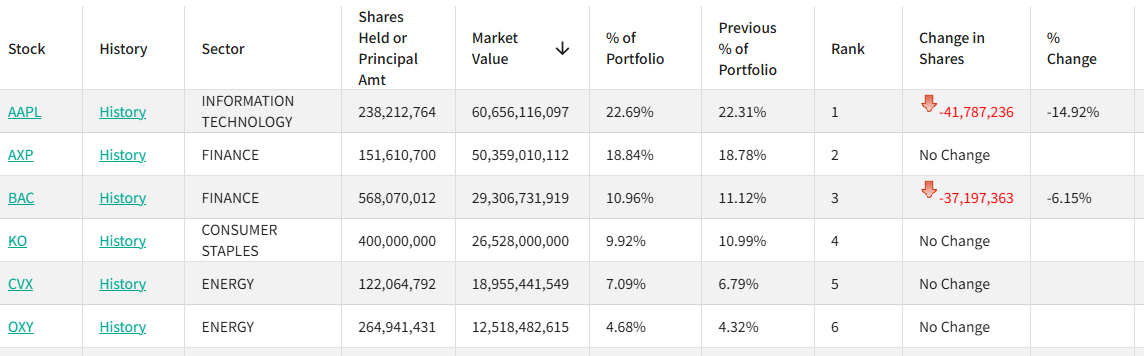
Core Viewpoint - The upcoming 13F quarterly filing deadline for Berkshire Hathaway is generating significant interest, particularly following Warren Buffett's resignation as CEO, with market participants eager to understand the investment decisions made during his final quarter in charge [1]. Group 1: Berkshire Hathaway's Holdings - Berkshire Hathaway's major holdings include Apple, American Express, Bank of America, Coca-Cola, Chevron, and Occidental Petroleum, which are believed to be primarily influenced by Buffett himself [2]. - As of the end of the third quarter, Berkshire's largest position is in Apple, valued at approximately $60.66 billion, representing 22.69% of the portfolio [2]. - The second-largest holding is American Express, valued at about $50.36 billion, making up 18.84% of the portfolio [2]. Group 2: Changes in Holdings - Significant reductions in holdings were observed for Apple and Bank of America, with Apple shares decreasing by nearly 42 million (approximately 15%) and Bank of America shares down by 37 million (over 6%) compared to the previous quarter [3]. - Apple's holdings have shrunk by about 75% from their peak, while Bank of America's holdings have nearly halved since the summer of 2024 [3]. - Berkshire's cash reserves have reached a new high, indicating a potential shift in investment strategy [3]. Group 3: Leadership Transition and Investment Strategy - Greg Abel has officially taken over as CEO of Berkshire Hathaway, following Buffett's departure, with Todd Combs previously seen as a strong candidate for the role [1]. - There is speculation regarding whether Berkshire will divest some positions established under Combs, particularly in companies like Amazon, Verizon, First Capital Credit, Visa, and Mastercard [3]. - Historical precedents suggest that when investment managers leave Berkshire, the company often sells off the majority of their managed holdings [3].


情况突变!委石油未到中国?一架专机紧急出动,机上官员身份特殊
Sou Hu Cai Jing· 2026-02-15 05:02
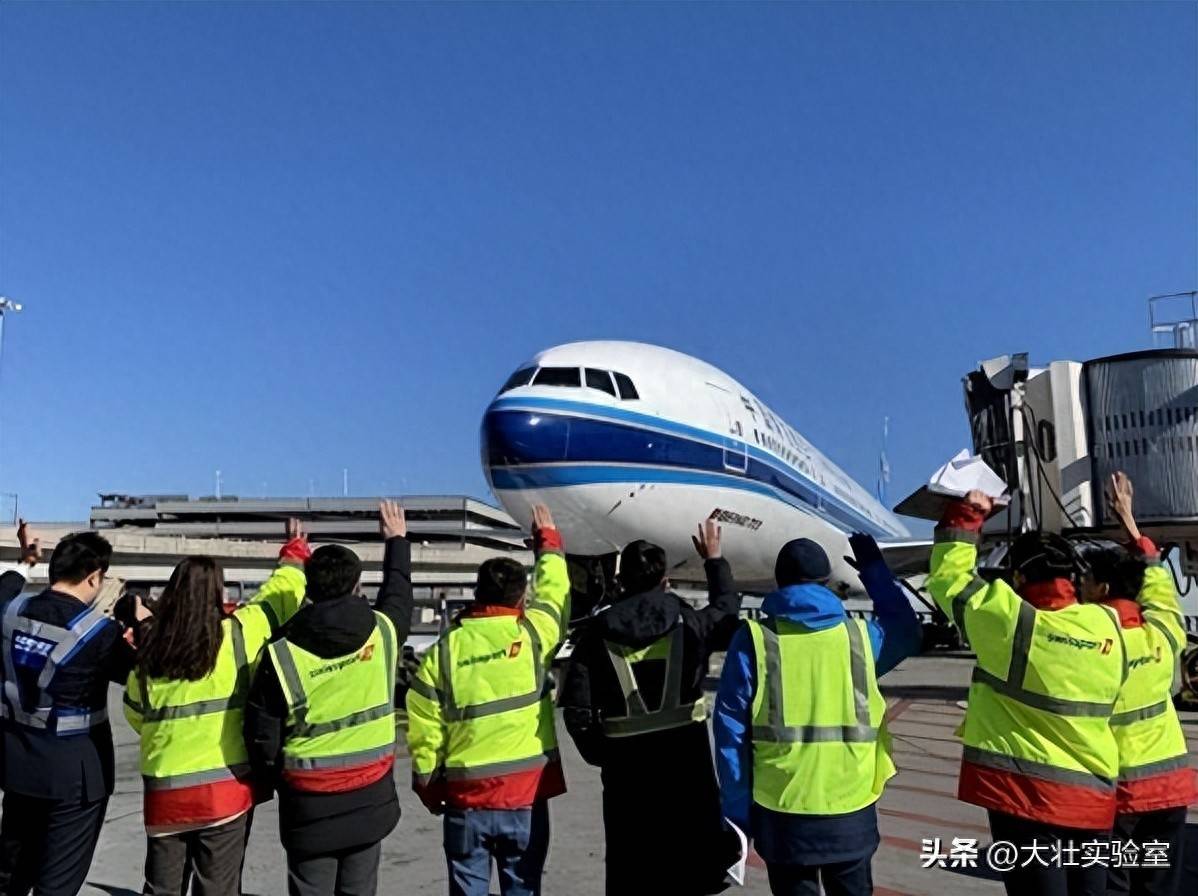
Core Viewpoint - The visit of U.S. Energy Secretary Chris Wright to Venezuela has sparked speculation about the future of Venezuelan oil exports to China, with concerns that these exports may cease [1][3][5]. Group 1: U.S. Involvement in Venezuelan Oil - Wright's visit marks the highest-level U.S. official engagement with Venezuela since actions were taken against the country, indicating a strategic interest in Venezuelan oil resources [3]. - The U.S. aims to regain control over Venezuela's energy system through high-level exchanges, potentially limiting China's involvement in the region [5][12]. - The rumors of Venezuelan oil no longer entering the Chinese market may stem from misinterpretations of the situation, exacerbated by the presence of the U.S. official [12][20]. Group 2: China-Venezuela Oil Cooperation - China and Venezuela have established a robust oil cooperation model based on long-term mutual benefits, which is unlikely to be disrupted by a single U.S. visit [14][20]. - The oil-for-loan model has been beneficial for both countries, with Venezuela supplying oil to China to repay loans, while China provides funding and technology for oil extraction [8][10]. - China's involvement in Venezuela's oil sector has led to increased production and efficiency, demonstrating the depth and mutual benefits of their cooperation [8][14]. Group 3: Implications for Energy Security - For Venezuela, exporting oil to China not only aids in loan repayment but also supports domestic economic recovery [10][16]. - China benefits from diversifying its energy imports, reducing reliance on any single region, which enhances national energy security [10][17]. - The U.S. attempts to interfere in global energy cooperation are increasingly met with resistance from other nations, highlighting a shift towards more autonomous energy partnerships [16][20].
俄罗斯能源收入骨折坐地不起,川普阳谋斩断乌俄战争利益链
Sou Hu Cai Jing· 2026-02-14 15:59
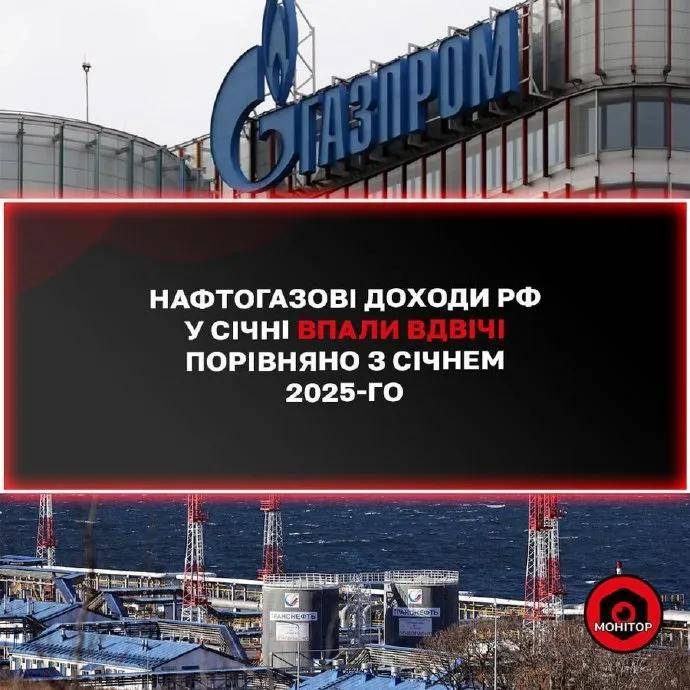
2026年第一个月,俄罗斯能源收入较去年同期下降一半,减少了3960亿卢布(-50.2%),也是2020年7月以来的最低水平。 1月份,俄罗斯石油和天然气收入为3933亿卢布(51亿美元),去年12月,这一数字为4478亿卢布(58.1亿美元)。 俄罗斯石油收入降低到2020年7月的水平,而2020年正是上个川普任内执政末期的疫情大流行期间,大流行期间整个世界经济遭 重创,需求减少,因而重创了国际油价,当时国际油价保持低位运行,是普京自2000年执掌俄罗斯大权之后罕见的低油价痛苦时 期,以至于俄罗斯人开始上街抗议养老金发放不出,这也是普京首次遭遇到的执政危机,而以往,都是欧洲买俄罗斯能源,买出 俄罗斯的繁荣发达,让莫斯科有了开疆拓土的野心和实力,而俄罗斯人穷则休养生息猫着忍者,富则开疆拓土的本性被普京总统 拿捏的死死的,因此趁机开启了对周边的劫掠入侵,从格鲁吉亚到克里米亚,一路胜利。 随着川普继续大规模推动美国传统能源的使用,不但大规模开采石油天然气,而且加大了对煤炭开采的力度,导致美国能源价格 一路走低,与此同时,和川普关系良好的中东国家也在努力增加产能配合,拉低能源价格,美国和印度达成的贸易协议,也让印 ...
三部门发布“十五五”期间能源资源勘探开发利用进口税收优惠政策
Jin Rong Jie· 2026-02-14 08:33
Core Viewpoint - The Ministry of Finance, General Administration of Customs, and State Taxation Administration have announced tax incentives for energy resource exploration and development during the "14th Five-Year Plan" period, specifically targeting oil and gas exploration in China's marine areas [1][2]. Group 1: Tax Incentives for Exploration and Development - Projects engaged in oil and gas exploration and development in China's marine areas, including self-operated projects and emergency rescue projects for offshore oil and gas pipelines, will be exempt from import duties on equipment that cannot be produced domestically or does not meet performance requirements [2][3]. - For Sino-foreign cooperative projects in oil and gas exploration and development, including "old projects" approved before December 31, 1994, there will be exemptions from both import duties and import value-added tax for necessary equipment [2][3]. Group 2: Tax Refunds for Natural Gas Imports - For cross-border natural gas pipelines and imported LNG receiving and storage projects approved by the National Development and Reform Commission, a certain percentage of the import value-added tax will be refunded. Specifically, 70% of the import VAT will be refunded for natural gas imported under long-term contracts signed before the end of 2014 [3]. - For other natural gas imports, if the import price exceeds the reference benchmark, 80% of the VAT will be refunded based on the price difference, calculated quarterly [3]. Group 3: Implementation and Duration - A list of exempted equipment and tools will be jointly issued by the Ministry of Industry and Information Technology, Ministry of Finance, General Administration of Customs, State Taxation Administration, and National Energy Administration [3]. - The tax incentive policy will be effective from January 1, 2026, to December 31, 2030 [4].