货币金融服务

Search documents
宜宾纸业: 关于对四川省宜宾五粮液集团财务有限公司的风险持续评估报告
Zheng Quan Zhi Xing· 2025-08-29 11:44
Core Viewpoint - The announcement provides a risk assessment report on Sichuan Yibin Wuliangye Group Finance Co., Ltd., detailing its financial status, internal control mechanisms, and compliance with regulatory requirements as of June 30, 2025 [1][24]. Company Overview - Sichuan Yibin Wuliangye Group Finance Co., Ltd. was established on May 5, 2014, as a non-bank financial institution approved by the China Banking Regulatory Commission [1]. - The company is located in Yibin City and operates under the monetary financial services industry, holding a financial license and business license [1]. Shareholding Structure - As of June 30, 2025, the shareholding structure of the finance company is as follows: - Sichuan Yibin Wuliangye Group Co., Ltd.: 130,388.73 million RMB (42.25%) - Yibin Wuliangye Co., Ltd.: 125,173.19 million RMB (40.56%) - Other shareholders include Agricultural Bank International Holdings Limited and several local companies [1]. Internal Control Overview - The finance company has established a governance structure including a shareholders' meeting, board of directors, and supervisory board, with clear responsibilities for risk management [1][3]. - The internal control system is designed to ensure effective risk management and compliance with regulations [1][22]. Financial Performance - As of June 30, 2025, the finance company reported the following financial metrics: - Total assets: 6,658,348.55 million RMB - Loans and discounts: 3,277,240.08 million RMB - Deposits: 5,956,208.64 million RMB - Net operating income for the first half of 2025: 21,543.82 million RMB [22]. Risk Management and Compliance - The finance company has implemented a comprehensive risk management framework, adhering to national financial regulations and internal policies [22][24]. - As of June 30, 2025, all regulatory indicators met the required standards, indicating a sound risk management and internal control system [24].

工银科技取得授信业务数据处理相关专利
Sou Hu Cai Jing· 2025-08-26 02:15
Group 1 - The State Intellectual Property Office of China has granted a patent to Industrial and Commercial Bank of China (ICBC) and ICBC Technology Co., Ltd. for a method, device, equipment, and medium for credit business data processing, with the authorization announcement number CN115834492B and application date in November 2022 [1] - ICBC, established in 1985 and headquartered in Beijing, primarily engages in monetary financial services, with a registered capital of 35,640.6257 million RMB [1] - ICBC has invested in 1,112 companies, participated in 5,000 bidding projects, holds 988 trademark information, and has 5,000 patent information, along with 77 administrative licenses [1] Group 2 - ICBC Technology Co., Ltd., founded in 2019 and located in Shijiazhuang, focuses on software and information technology services, with a registered capital of 900 million RMB [1] - ICBC Technology has invested in 2 companies, participated in 310 bidding projects, and holds 670 patent information [1]

新力金融(600318)8月19日主力资金净流出2076.30万元
Sou Hu Cai Jing· 2025-08-19 17:28
Group 1 - The core viewpoint of the news is that Xinli Finance (600318) has shown a positive performance in its latest financial results, with significant growth in revenue and net profit [1] - As of August 19, 2025, Xinli Finance's stock closed at 10.87 yuan, reflecting a 0.28% increase, with a turnover rate of 16.03% and a trading volume of 821,900 hands, amounting to 893 million yuan [1] - The company's latest financial report indicates total operating revenue of 171 million yuan, a year-on-year increase of 9.97%, and a net profit attributable to shareholders of 23.74 million yuan, up 30.71% year-on-year [1] Group 2 - Xinli Finance has a current liquidity ratio of 1.532 and a quick ratio of 1.532, with a debt-to-asset ratio of 52.94% [1] - The company has made investments in 12 enterprises and participated in 63 bidding projects, along with holding 4 administrative licenses [2] - Xinli Finance was established in 2007 and is primarily engaged in monetary financial services, with a registered capital of approximately 5.13 billion yuan [1][2]

浙江金海高科股份有限公司关于使用部分闲置募集资金进行现金管理的公告
Shang Hai Zheng Quan Bao· 2025-08-18 19:45
Core Viewpoint - The company, Zhejiang Jinhai High-Tech Co., Ltd., has announced the use of part of its idle raised funds for cash management, aiming to enhance fund utilization efficiency and increase returns while ensuring that it does not affect the construction of fundraising projects [2][10]. Group 1: Cash Management Overview - The cash management trustees are China Merchants Bank Shaoxing Zhuji Branch and Ningbo Bank [2]. - The total investment amount for cash management is RMB 65 million [2][3]. - The purpose of the cash management is to improve fund utilization efficiency and protect shareholder interests [2]. Group 2: Fundraising Background - The company raised a total of RMB 313.97 million through a non-public offering of 25,883,907 shares at a price of RMB 12.13 per share, with a net amount of RMB 306.51 million after deducting issuance costs [4]. - The raised funds were confirmed to be in place on December 19, 2022, and were subject to a special account storage system [4]. Group 3: Investment Products - The company has entered into cash management contracts for structured deposits with China Merchants Bank and Ningbo Bank [7]. - The selected investment products are low-risk, high-safety, and have liquidity, ensuring the principal is protected [6][8]. Group 4: Compliance and Risk Control - The investment in financial products complies with national laws and regulations, ensuring the safety of raised funds and not affecting the normal progress of fundraising projects [7]. - The company will maintain close contact with the banks to monitor the operation of the invested funds and strengthen risk control [8]. Group 5: Financial Impact - The use of idle raised funds for cash management is expected to generate certain investment returns, thereby improving the overall performance of the company and providing more returns to shareholders [10]. - The principal of the invested financial products will be recorded as trading financial assets on the balance sheet, while interest income will be recognized in the profit statement [10].

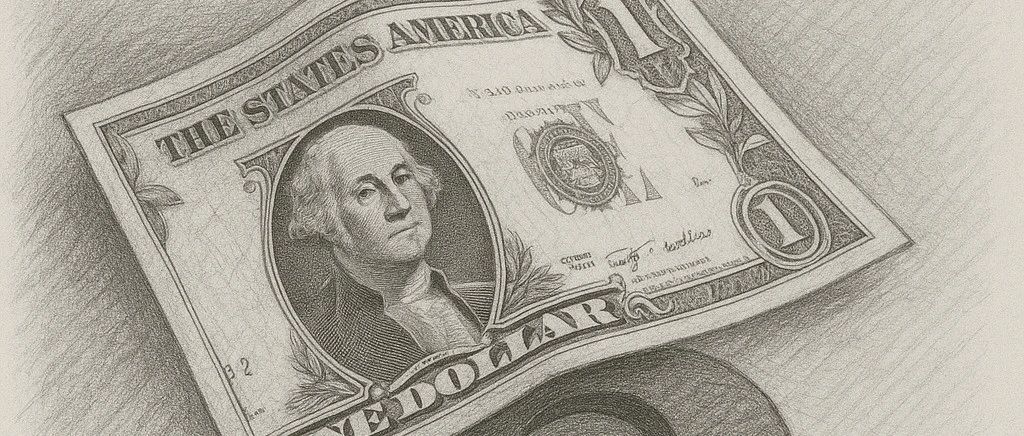
美元霸权遇暗战 中国手握三张牌 引弓不发藏玄机
Sou Hu Cai Jing· 2025-08-17 04:57
Core Insights - China's holding of US Treasury bonds has decreased to $800 billion, only 60% of its peak, while the global payment share of the renminbi has only slightly increased to 2.5% [1] - Despite the expectation for China to lead the "de-dollarization" movement, it maintains a strategic balance by signing currency swap agreements with 39 countries while keeping over 50% of its foreign trade settled in US dollars [2] Group 1: Strategic Considerations - The US dollar serves as a protective shield for China, as its capital account is not fully open and its domestic financial market lacks depth, making a hasty challenge to the dollar potentially risky [2] - High-profile moves towards de-dollarization could provoke a united response from the US and Europe, as seen in the 2024 chip blockade against China, which reflects the ongoing struggle for monetary sovereignty [2] - China is waiting for technological breakthroughs, such as quantum computing and satellite internet, to enhance the capabilities of its digital currency [2] Group 2: Defensive Measures - China is building a monetary sovereignty defense line through a gold and resource anchoring system, with gold reserves projected to exceed 2,200 tons by 2025, and control over 60% of global rare earth and 45% of lithium production [5] - The Cross-Border Interbank Payment System (CIPS) has been established to facilitate direct fund clearing, processing RMB transactions worth 120 trillion yuan in 2024, covering 180 countries [5] - A closed-loop settlement system is emerging in trade with Russia, where RMB transactions account for 65%, allowing trade without reliance on the dollar [5] Group 3: Long-term Vision - The timeline favors the renminbi, as the US dollar's dominance is supported by military, oil, and technology, but China's advancements in military and renewable energy could shift the balance by 2030 [7] - The US's monetary policies, including the expansion of its balance sheet and the freezing of foreign reserves, undermine the perceived safety of the dollar, prompting countries like the Philippines to consider local currency settlements [7] - China's initiatives to promote the use of Special Drawing Rights (SDR) and support regional currency settlements aim to dismantle the dollar-centric system, positioning the renminbi as a key player in a multipolar currency landscape [7]


全球支付占比提升 人民币彰显避险货币特征
Xin Hua Wang· 2025-08-12 06:31
Core Insights - The recent SWIFT report indicates that the share of the Renminbi (RMB) in global payment currencies rose to 3.2% in January 2022, marking a 0.5 percentage point increase from the previous month and reaching a four-year high, making it the fourth most active currency globally [1] - The increase in the RMB's share since 2021 is attributed to effective pandemic control measures in China and a stable economic recovery, which has supported international payments and trade surpluses [1] - The RMB's internationalization is a natural outcome of market dynamics, with the People's Bank of China reducing intervention in the foreign exchange market and implementing reforms to enhance the RMB's exchange rate formation mechanism [2] Group 1 - The RMB's rising share in global payments reflects its growing internationalization, supported by China's economic stability and strong export performance [1][2] - The RMB has shown characteristics of a safe-haven currency, maintaining stability against the backdrop of tightening U.S. monetary policy and geopolitical tensions [2] - The increase in the RMB's global payment share is expected to provide strong support for maintaining the stability of the RMB exchange rate [3] Group 2 - Direct investment in China saw a significant increase, with net inflows reaching $204.8 billion in 2021, doubling from 2020 [1] - The RMB's exchange rate has become more elastic since the "8·11" reform, with a daily average historical volatility of 3.9% from 2018 to 2021, compared to 2.2% from 2014 to 2015 [2] - The RMB's ability to reflect changes in the international environment and domestic supply-demand conditions enhances its resilience as an international currency [2]
美元的“超额特权”还能维持多久?
伍治坚证据主义· 2025-08-12 02:57
Core Viewpoint - The article discusses the potential decline of the US dollar's dominance as a global reserve currency, drawing parallels to historical events that reshaped the financial landscape, particularly during the Nixon Shock and the Plaza Accord [2][9]. Economic Pressures - The current economic pressures in the US mirror those of the 1970s and 1980s, characterized by large fiscal deficits, expanding debt, and increasing trade deficits, compounded by frequent sanctions that have led to a new level of "abuse" of the dollar [3][4]. Trade Policies - Trump's administration has implemented tariffs on countries like China and the EU to reduce trade deficits, which has inadvertently weakened other nations' motivations to stabilize their currencies against the dollar, thus harming global trade liquidity and diminishing dollar demand [3][4]. Trust in Dollar Assets - Sanctions and asset freezes against countries such as Russia and Iran have eroded trust in holding dollar-denominated assets, raising concerns among nations like China, which holds approximately $2 trillion in dollar reserves, about the safety of these assets [4][5]. Policy Implications - Proposals like the "Mar-a-Lago Agreement," which suggest converting foreign-held US debt into non-tradable bonds, could undermine trust in dollar assets, risking a significant shift in global currency reserves away from the dollar [4][5]. Inflation and Interest Rates - The US government's tax cuts and deficit spending have led to inflationary pressures, forcing the Federal Reserve to maintain high interest rates, while presidential interference in the Fed's independence could further erode confidence in the dollar [4][5]. Decline of Dollar's Reserve Status - According to IMF data, the dollar's share of global official foreign exchange reserves has declined from approximately 66% in 2015 to about 57% by 2025, indicating a shift towards other currencies [7][8]. Future Outlook - The dollar's dominance is weakening, and the decline in the dollar index reflects diminishing market confidence. The emergence of a multipolar currency system, with increased internationalization of the yuan and innovations in EU finance, poses a threat to the dollar's status [9]. Historical Context - The article draws historical parallels, suggesting that the current situation may lead to a restructuring of the dollar's role in the global financial system, similar to past events that preceded significant shifts in monetary power [9].
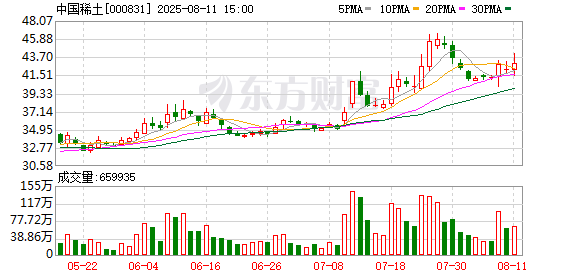
中国稀土集团 严正声明
Zhong Guo Ji Jin Bao· 2025-08-11 14:30
Group 1 - The company has issued a statement denying any collaboration or plans regarding the so-called "Rare Earth RMB Stablecoin" with Ant Group or the People's Bank of China, labeling the information as malicious fabrication by criminals [2][5]. - The company warns the public and investors to be vigilant against illegal financial activities and to take precautions to prevent financial losses [2][5]. - The company has reported the matter to relevant authorities and demands that the involved parties cease any infringing or fraudulent activities, reserving the right to pursue legal action for any damage to its image and interests [2].

中国稀土集团 严正声明!
Shang Hai Zheng Quan Bao· 2025-08-11 14:27
Core Viewpoint - The news highlights that both China Rare Earth Group and Ant Group have denied the existence of any collaboration to create a rare earth RMB stablecoin, labeling the circulating information as false and misleading [2][4][6]. Group 1: China Rare Earth Group's Response - China Rare Earth Group has stated that it has never engaged in any form of cooperation or discussions regarding the so-called "rare earth RMB stablecoin" with any related institutions, emphasizing that the information is fabricated by malicious individuals [2][4]. - The company has warned the public and investors to be vigilant against illegal financial activities and to be cautious to prevent financial losses [2][4]. - China Rare Earth Group has reported the matter to relevant authorities, demanding that the involved parties cease any infringing or fraudulent activities, and reserves the right to pursue legal action against any actions that harm its image and interests [2][4]. Group 2: Ant Group's Statement - Ant Group has also addressed the rumors, clarifying that it has no plans or collaborations with the People's Bank of China or China Rare Earth Group regarding the creation of a rare earth RMB stablecoin, urging the public to discern the truth and avoid being deceived [6].

中国稀土集团发布严正声明
财联社· 2025-08-11 12:09
Group 1 - The company has issued a statement denying any collaboration or plans regarding the so-called "Rare Earth RMB Stablecoin" with Ant Group or the People's Bank of China, labeling the information as malicious fabrication [1][3] - The company warns the public and investors to be vigilant against illegal financial activities and to prevent potential financial losses [1][3] - The company has reported the matter to relevant authorities, demanding an immediate cessation of infringement and fraudulent activities, and reserves the right to pursue legal action against any actions that harm its image and interests [3]