造船业

Search documents
韩国三大船企业绩“爆发”
Sou Hu Cai Jing· 2025-11-20 20:14
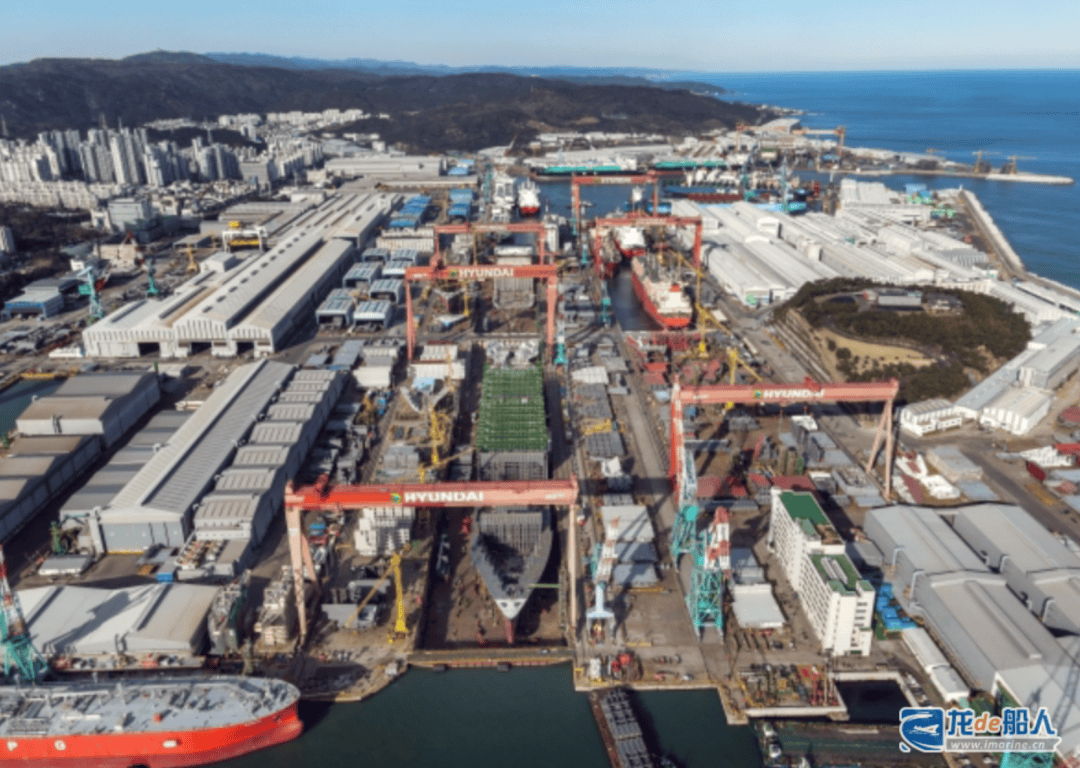
Core Viewpoint - The three major South Korean shipbuilding companies—HD Hyundai, Samsung Heavy Industries, and Hanwha Ocean—achieved a combined operating profit of 1.5 trillion KRW (approximately 73.8 billion RMB) in the third quarter, tripling the profit from the same period last year. However, from the fourth quarter onwards, managing "non-manufacturing risks" such as exchange rate fluctuations and policy changes will be crucial for performance [1][4]. Group 1: Financial Performance - HD Korea Shipbuilding & Marine Engineering reported third-quarter operating revenue of 7.5815 trillion KRW (approximately 377.5 billion RMB), a year-on-year increase of 21.4%, with operating profit reaching 1.0538 trillion KRW (approximately 51.85 billion RMB), up 164.5% [3]. - The cumulative operating profits for the first three quarters of the year for HD Korea Shipbuilding & Marine Engineering, Hanwha Ocean, and Samsung Heavy Industries were 2.8666 trillion KRW, 920.1 billion KRW, and 566 billion KRW, respectively, totaling 4.3527 trillion KRW [4]. - The combined operating profit of the three companies for the third quarter reached 1.5817 trillion KRW, significantly improving from 543.9 billion KRW in the same period last year [3][4]. Group 2: Factors Driving Growth - The positive performance in the shipbuilding industry is attributed to multiple factors, including an increase in orders for high-value LNG carriers, growing demand for eco-friendly vessels, accelerated replacement of aging ships, and supply chain disruptions caused by geopolitical tensions [5]. - The shift to a strategy focused on high-value ship types has significantly enhanced profitability, as low-priced orders from previous years have mostly been fulfilled [6]. - The share of LNG carriers in the order book for the three companies is approximately 70% for HD Korea Shipbuilding, 60% for Hanwha Ocean, and Samsung Heavy Industries has also secured orders for six LNG carriers [7]. Group 3: Future Outlook and Risks - The demand for LNG carriers is expected to rise significantly, with projections indicating a new demand of 57 million tons starting in 2029, potentially leading to over 100 new orders [9]. - Despite the record performance, the companies emphasized the importance of risk management due to increasing impacts from external variables such as exchange rate fluctuations and policy changes [9][10]. - The global new ship order volume has decreased by 47% year-on-year, indicating a shrinking investment willingness among shipowners, which could affect future orders [10].

诸多完整产业链“世界之最”强底气 如何用好超大规模市场?
Yang Shi Wang· 2025-11-19 08:16
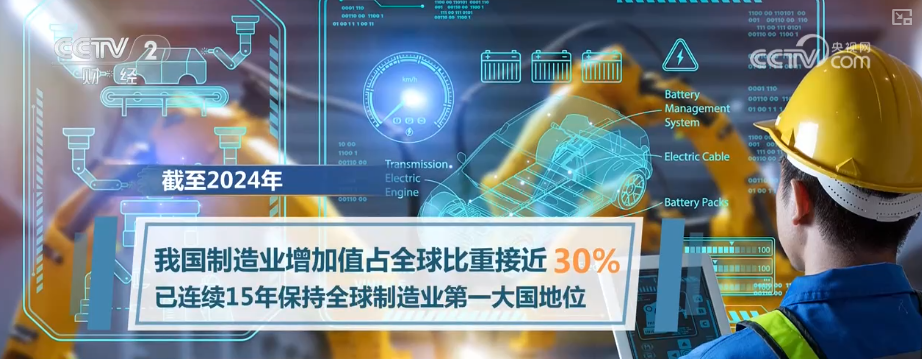
Core Insights - China's modernization is characterized by its unprecedented scale, with over 1.4 billion people, making it the only country with all industrial categories recognized by the United Nations [1] - By 2024, China's manufacturing value added is expected to account for nearly 30% of the global total, maintaining its position as the world's largest manufacturing nation for 15 consecutive years [1] - China leads in the production of over 220 major industrial products, with more than 50% of global output in crude steel, cement, and electrolytic aluminum [1] - The country produces over 80% of the world's photovoltaic components and 70% of wind power equipment, with new energy vehicle production leading globally for 10 years [1] - China's shipbuilding industry ranks first globally in completion volume, new orders, and orders on hand, holding over 50% of the global market share [1] - The renewable energy sector boasts a total installed capacity of 2.16 billion kilowatts, accounting for over 40% of the global total [1] - China has the largest and most complete information and communication network globally, leading in 5G base stations, mobile phone users, and fixed broadband network scale [1] - The number of "lighthouse factories," representing the highest level of smart manufacturing and digitalization, is the highest globally, accounting for over 40% [1] - Industrial robot installations account for over 50% of the global total [1] Industry Development - The super-large market advantage provides continuous support for industrial development, ensuring autonomous and rapid response in production and manufacturing through a complete supply chain system [2] - In Suzhou, a service robot manufacturing company is experiencing a busy logistics scene, with nearly 30,000 service robots produced daily, showcasing the efficiency gained from intelligent supply chain optimization [2] - The local supply chain, with over half of its components sourced within a one-hour transport radius, has achieved near-zero inventory management for frequently used parts [2] - Collaborative innovation among upstream and downstream enterprises in the supply chain enhances technological resource sharing and capability complementarity [3] Market Dynamics - The closed-loop model of "market demand—joint R&D—mass production" significantly shortens the R&D cycle, aligning products more closely with practical application scenarios [4] - The robot and artificial intelligence industry in Suzhou has gathered over 1,600 related enterprises, with service robots accounting for over 60% of national production, and the industry scale expected to exceed 200 billion yuan by 2025 [4] Strategic Insights - Experts emphasize the need to convert the super-large market advantage into a competitive edge for the industrial chain, highlighting the importance of a unified national market to facilitate resource flow [5] - The vast domestic market provides unique opportunities for innovation and growth, particularly in the manufacturing sector, driving it towards higher-end and greener development [5] - Addressing local protectionism and market segmentation is crucial for enabling effective resource allocation across regions [5]
诸多完整产业链“世界之最”强底气!如何用好超大规模市场?| 观察↓
Yang Shi Wang· 2025-11-19 07:20
Core Insights - China's modernization is characterized by a scale unprecedented globally, with a population exceeding 1.4 billion, making it the only country with all industrial categories recognized by the United Nations [1] - By 2024, China's manufacturing value added is expected to account for nearly 30% of the global total, maintaining its position as the world's largest manufacturing nation for 15 consecutive years [1] - China leads the world in the production of over 220 out of 500 major industrial products [1] Manufacturing and Industrial Production - The production of new energy vehicles has ranked first globally for ten consecutive years [3] - China produces over 50% of the world's crude steel, cement, and electrolytic aluminum, as well as over 80% of global photovoltaic components and 70% of wind power equipment [4] Information and Communication Technology - China has the largest information and communication network globally, leading in metrics such as the number of 5G base stations, mobile phone users, and fixed broadband network scale [6] Shipbuilding and Renewable Energy - China's shipbuilding industry has led the world in completion volume, new orders, and hand-held orders for several years, holding over 50% of the global market share [7] - The total installed capacity of renewable energy generation in China has reached 2.16 billion kilowatts, accounting for over 40% of the global total [7] Smart Manufacturing and Robotics - China has the highest number of "lighthouse factories," representing the pinnacle of smart manufacturing and digitalization, accounting for over 40% globally [9] - The installation of industrial robots in China accounts for over 50% of the global total [11] Supply Chain and Market Advantages - The super-large market advantage provides continuous and strong support for industrial development, ensuring autonomous and rapid responses in production and manufacturing through a complete supply chain system [12] - The efficiency improvements in supply chains are evident in the case of a service robot manufacturing company in Suzhou, which produces nearly 30,000 service robots daily, benefiting from local supply chain collaboration [15] Industry Innovation and Collaboration - The collaborative innovation process among upstream and downstream players in the industrial chain allows for shared technology resources and complementary capabilities, significantly shortening R&D cycles [16] - The "market demand—joint R&D—mass production" closed-loop model enhances product relevance to actual application scenarios, supported by the vast space for trial and error in R&D [16] Economic Growth and Market Dynamics - The vast domestic market in China is seen as a fertile ground for nurturing the entire industrial chain, providing strong backing for enhancing competitive advantages [19] - To convert the super-large market advantage into industrial chain competitiveness, it is crucial to facilitate market circulation and ensure the free flow of resources and factors [20]
新买家现身!又一家造船巨头吹响复活号角
Sou Hu Cai Jing· 2025-11-19 06:48
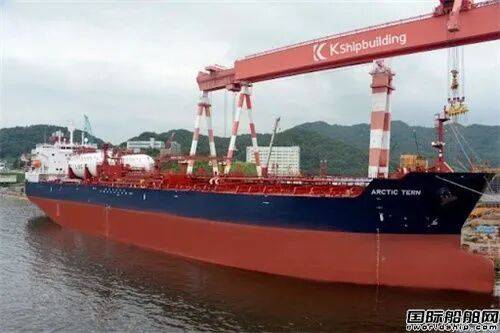
业绩"狂飙突进"!K造船迎来"新买家" 凭借盈利能力大幅改善以及在中型油船市场的强势表现,曾在全球排名第三、历经破产重组与行业低谷 的韩国K造船(原STX造船海洋)正加速走向全面"复活"。 近日,韩国泰光(Taekwang)集团与美国私募股权投资公司德克萨斯太平洋集团(TPG)组成的联合体提 交了K造船的收购意向书(LOI),计划收购韩国最大不良债务清算机构United Asset Management Company(UAMCO)和韩国私募股权基金KH Investment(KHI)目前持有的K造船99.58%股份及公司 债券,收购价格预计在5000亿韩元(约合25亿元人民币)左右。 泰光集团参与K造船收购战的原因在于:K造船已步入业绩快速好转的轨道,继去年扭亏为盈后,今年 实现营业利润有望超过1000亿韩元(约合5亿元人民币),在中小型油船市场保持着强势地位;同时, K造船在参与韩美造船业合作项目"MASGA"时承担美国海军舰艇MRO(维护、维修和大修)业务的可 能性也越来越大。基于此,泰光集团判断收购K造船可为集团增加新的核心增长点。 据悉,泰光集团的主营业务石油化工及纺织等遭遇市场不振,经营状况持续恶 ...
两天拿下10艘!恒力重工油船订单全面爆发
Sou Hu Cai Jing· 2025-11-19 06:48
Core Viewpoint - Guangdong Songfa Ceramics Co., Ltd. announced the signing of contracts for two 306,000-ton VLCCs with a European shipowner, with a total contract value of approximately $200-300 million (RMB 1.422-2.132 billion), scheduled for delivery in the first half of 2028 [2][3] Group 1 - The contracts were signed with a well-known European shipowner, and specific details about the shipowner are exempt from disclosure under relevant regulations [2] - The current price for a new VLCC of 315,000-320,000 tons is approximately $126 million (RMB 897 million), showing a slight decrease from $129 million in the same period last year [2] - The 306,000-ton VLCC is designed for large oil transportation, featuring high loading capacity, strong endurance, and operational efficiency, meeting the latest international shipping market demands for large-scale and low-carbon transportation [2] Group 2 - This is the second VLCC order secured by Hengli Heavy Industry within the week, following another announcement of contracts for two 306,000-ton VLCCs and six 114,000-ton oil/product tankers [3] - Hengli Heavy Industry, formerly STX Dalian, was once the largest foreign-funded shipyard in China and has transformed into a world-class high-end shipbuilding base after acquiring idle assets for RMB 2.11 billion [3] - Hengli Heavy Industry has commenced the construction of over 60 vessels, with a backlog of approximately 170 orders scheduled for production until 2029, aiming to achieve an annual production capacity of over 150 large vessels and 180 marine engines upon full capacity [3]

美国图谋破产,中国决定暂停反制措施,2个细节表明中方奉陪到底
Sou Hu Cai Jing· 2025-11-19 06:37
Core Viewpoint - The recent suspension of maritime sanctions by both the US and China reflects a strategic retreat by the US, highlighting China's determination to counteract US pressures and protect its interests [4][15][27] Group 1: US Intentions and Actions - The US claims to restore its shipbuilding competitiveness and ensure national security, but it has resorted to administrative measures like the "301 investigation" to impose trade barriers against China [3][5] - The US has enacted a law imposing port fees and tariffs up to 100% on Chinese vessels and equipment, establishing significant trade barriers [3][5] Group 2: China's Response - China has implemented reciprocal measures against the US, aligning its fees with those imposed by the US and expanding the scope to include vessels with over 25% US ownership [6][12] - The Chinese response is structured to minimize global supply chain disruptions, with flexible terms such as limiting fees to five voyages per year and charging only at the first port of call [10][12] Group 3: Impact on US Companies - The measures have financially impacted US companies, with statistics showing that Matson Navigation Company incurred $640,000 in special port fees within a month, potentially leading to an annual cost of $8 million [9][10] - The economic pressure on US firms is significant, especially in light of existing economic challenges [9] Group 4: Global Implications - The suspension of sanctions has broader implications for global trade dynamics, challenging the US's dominant position and raising doubts among allies about US leadership [17][20] - The situation reflects a growing skepticism towards administrative interventions in market competition, with calls for fair competition and multilateral trade reforms gaining traction [19][20] Group 5: Future Outlook - The current suspension of sanctions is seen as a temporary measure, with potential for continued negotiations in maritime and logistics sectors [23][25] - The ongoing competition between the US and China is expected to persist, with China poised to respond firmly to any future US sanctions [27][29]
潍柴重机:全资子公司常州玻璃钢造船厂有限公司主要研发及生产30米以下复合材料、钢质、铝质等各类船艇
Mei Ri Jing Ji Xin Wen· 2025-11-19 03:46
Core Viewpoint - The company is expanding its capabilities in the shipbuilding industry by investing in new projects and subsidiaries to produce larger vessels, specifically targeting the market for boats over 30 meters in length [1] Group 1: Company Developments - Weichai Heavy Machinery's wholly-owned subsidiary, Changzhou FRP Shipyard Co., Ltd., primarily focuses on the research and production of various types of vessels under 30 meters, including composite, steel, and aluminum boats [1] - In 2022, Changzhou FRP Shipyard established a wholly-owned subsidiary, Bohai Star Ship Technology (Qingdao) Co., Ltd., to invest in the Weichai (Qingdao) Marine Equipment Manufacturing Center project, which aims to expand the business into vessels ranging from 30 to 80 meters [1]

莫迪狂言冲前五?印度造船梦碎!中国船厂早把技术焊死赢麻了
Sou Hu Cai Jing· 2025-11-17 11:11
全球造船行业的变迁,就像是一场大型的接力赛。二战后,英美国家曾是全球造船的领头羊,到了60年代,日本接过了这个接力棒,80年代时,韩国迅速超 车,2010年以后,中国一举崛起,牢牢占据了世界造船业的领导地位,堪称"江山代有才人出"。 如今,轮到印度开始兴奋了!中美博弈让印度看到了潜在的机会窗口,莫迪总理喊出了"十年内进入全球前五"的口号,不仅投入资金设立基金,还收购了斯 里兰卡的船厂,表现得相当雄心勃勃。印度自己总结了不少优势:海岸线漫长,人工成本极低,科钦造船厂还获得了法国的订单,印度似乎已经准备好复制 中国、日韩的成功之路。 总的来说,莫迪总理的雄心值得肯定,但造船业的成功从来不是靠喊口号就能实现的。如果印度能真正静下心来,花上15年时间逐步积累,或许还有机会。 但如果仍抱着"抄作业"的心态,恐怕只能在"全球前五"的门口徘徊了。 与中国的顺风顺水相比,印度则错失了很多机会。虽然苏联在当年给予了印度102项援助,但这些援助只是成品的转交,并没有提供核心技术。印度在与西 方国家建立关系时,也比中国晚了近20年,等到2010年代西方国家终于开始重视它时,全球化的红利早已过去,许多高科技技术都已经被严密封锁,印度 ...
2.2亿订单成印度造船高光?实则是靠补贴加外包
Sou Hu Cai Jing· 2025-11-16 13:49
印度天鹅防务与重工业近期抛出了一则让本土舆论亢奋的消息!挪威老牌船东Rederiet Stenersen抛来橄榄枝,委托其建造6艘1.8万载重吨的IMO II型化学品 船,合同总价2.2亿美元,对方还攥着6艘同型船的优先下单权。 其实这单生意能成,更离不开印度政府的托底。这笔2.2亿美元的订单,光政府补贴就接近5500万美元。即便印度造船工人薪资仅为中国的三分之一,低效 也把成本优势啃得精光。航运咨询机构Clarkson 2025年的报告显示,印度工人的单日产能仅为中国同行的50%,一艘普通商船的建造周期要18个月,比中国 船厂慢了整整半年;而IMO II型船工艺更复杂,工期拖宕的风险只会更高。 全球市场的差距更是直观。2025年印度造船业的全球份额仅0.06%,排名在20名上下徘徊;中国却占了近60%的市场,从船舶设计软件到动力系统实现全产 业链自主,全年产能是印度的884倍。此前印度花17年造好的维克兰特号航母,还曝出甲板平整度不足、舰载机调度不畅等缺陷,正是这种产业积累鸿沟的 缩影。 但这高光时刻的底色,是甩不开的外援依赖的。这批船的全套设计由挪威Marinform公司包揽,从液货舱防渗漏结构到船舶稳性 ...
美军高官明说就是冲着中国来的,还引了句《蜘蛛侠》
Guan Cha Zhe Wang· 2025-11-16 11:25
Group 1 - South Korea and the United States have finalized a document titled "Joint Situation Statement," agreeing to advance South Korea's construction of nuclear submarines, which is seen as part of the U.S. strategy to counter China [1][4] - U.S. Navy Chief of Operations, Daryl Caudle, stated that the nuclear submarines built by South Korea should be used to "counter the Chinese Navy," emphasizing that South Korea has a responsibility to transition from a regional navy to a global navy [1][2] - The U.S. has formally approved South Korea's plan to build nuclear submarines and supports South Korea's pursuit of uranium enrichment and nuclear waste reprocessing capabilities [4][5] Group 2 - There are still disagreements between South Korea and the U.S. regarding the construction site, submarine models, and whether the U.S. should receive submarines for free through agreements, indicating that building a nuclear submarine will take many years [5] - The current U.S.-South Korea Atomic Energy Agreement, effective until 2035, restricts South Korea's ability to enrich uranium and process spent fuel, which South Korea seeks to amend to address energy security concerns [5] - South Korea plans to provide $33 billion in aid to U.S. forces stationed in South Korea and aims to strengthen cooperation at the alliance level, which highlights the U.S. call for South Korea to contribute to "containing China" [5][6] Group 3 - The Chinese government has expressed concerns regarding the U.S.-South Korea nuclear submarine cooperation, urging both parties to adhere to nuclear non-proliferation obligations and promote regional peace and stability [6] - Chinese Ambassador to South Korea, Dai Bing, indicated that the nuclear submarine cooperation goes beyond commercial interests and is related to the global nuclear non-proliferation regime and regional stability [6]