茶饮

Search documents
淘宝500亿元入局掀外卖大战高潮 “0元购”带动港股茶百道、古茗、奈雪大涨
Zhong Guo Jin Rong Xin Xi Wang· 2025-07-07 03:54
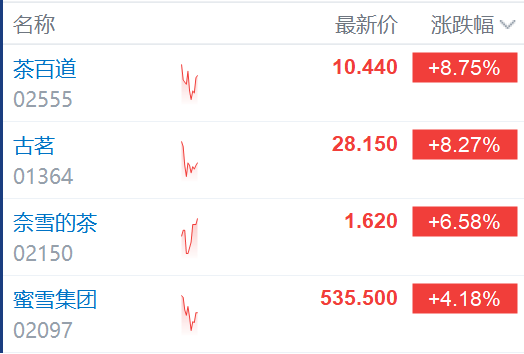
Group 1 - Multiple tea beverage stocks in Hong Kong experienced significant gains, with Cha Bai Dao rising by 8.75%, Gu Ming by 8.27%, Nai Xue's Tea by 6.58%, and Mi Xue Group by 4.18% [1] - In the A-share market, related stocks also saw movements, with Hai Rong Technology and Guotou Zhonglu hitting the daily limit, and Jiahe Food increasing by 6.53% [3][4] Group 2 - On July 2, Taobao Flash Sale announced a substantial subsidy plan of 50 billion yuan, intensifying competition with Meituan and JD in the takeaway market [4][6] - On July 5, Taobao Flash Sale and Ele.me reported over 80 million orders in a single day, with non-food orders exceeding 13 million, while Meituan announced over 120 million instant retail orders, including over 100 million food orders [4][6] - Industry experts noted that the competition among Meituan, Taobao, and JD is significantly increasing the market share of fast-moving consumer goods in instant retail, presenting a strategic opportunity for traditional retail [6]

AH股震荡下跌!创业板跌1%,稳定币概念活跃,恒科指跌1%,阿里京东美团齐跌,国债上涨,商品下跌
Hua Er Jie Jian Wen· 2025-07-07 02:00
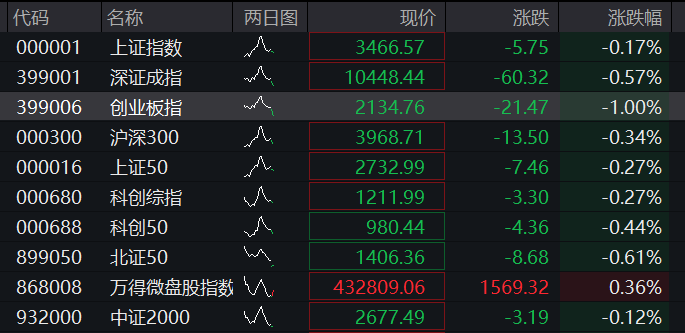
Market Overview - A-shares opened lower on July 7, with the three major indices experiencing slight declines; the ChiNext index fell by 1% [1] - The Hang Seng Index also opened lower, with the Hang Seng Tech Index down by 1.04% [2][3] - The bond market saw an increase in government bond futures, with the 30-year main contract rising by 0.10% [3][4] A-share Performance - As of the report, the Shanghai Composite Index decreased by 0.17%, the Shenzhen Component Index fell by 0.57%, and the ChiNext Index dropped by 1.00% [1] - Over 2900 stocks in the Shanghai, Shenzhen, and Beijing markets experienced declines [5] Hong Kong Stock Performance - The Hang Seng Index was down by 0.78%, while the Hang Seng Tech Index fell by 1.04% [2] - Major tech stocks such as JD.com, Meituan, and Alibaba saw declines of 1.61%, 3.48%, and 2.47% respectively [9][10] Sector Highlights - The stablecoin concept gained traction, with stocks like Jingbeifang rising over 7% [12][13] - The medical device sector showed strong performance, with Baolait rising over 15% and several other stocks gaining more than 5% [8] - Power stocks continued their strong performance, with Huayin Electric and Shaoneng Shares both achieving significant gains [14][15] Commodity Market - Domestic commodity futures experienced a decline, with synthetic rubber dropping over 2% [18] - Cotton futures saw a slight increase of 0.44% [18]

港股“外卖”概念盘初走低,美团(03690.HK)跌3.39%,京东(09618.HK)跌1.53%,阿里巴巴(09988.HK)跌2.47%。茶百道(02555.HK)、古茗(01364.HK)涨超7%,奈雪的茶(02150.HK)涨超5%。
news flash· 2025-07-07 01:49
港股"外卖"概念盘初走低,美团(03690.HK)跌3.39%,京东(09618.HK)跌1.53%,阿里巴巴(09988.HK)跌 2.47%。茶百道(02555.HK)、古茗(01364.HK)涨超7%,奈雪的茶(02150.HK)涨超5%。 ...



港股新消费概念开盘走高,茶百道(02555.HK)涨超9%,奈雪的茶(02150.HK)涨超9%,古茗(01364.HK)、沪上阿姨(02589.HK)、蜜雪集团(02097.HK)等个股跟涨。
news flash· 2025-07-07 01:36
港股新消费概念开盘走高,茶百道(02555.HK)涨超9%,奈雪的茶(02150.HK)涨超9%,古茗 (01364.HK)、沪上阿姨(02589.HK)、蜜雪集团(02097.HK)等个股跟涨。 ...
港股茶饮股走强 茶百道涨15%
news flash· 2025-07-07 01:30
截至发稿, 茶百道(02555.HK)涨15%、 奈雪的茶(02150.HK)涨5.92%、 古茗(01364.HK)涨5.38%、 沪上 阿姨(02589.HK)涨2.99%。 ...
港股开盘:恒生指数低开0.36%,恒生科技指数低开0.46%
news flash· 2025-07-07 01:21
港股开盘,恒生指数低开0.36%,恒生科技指数低开0.46%。茶饮股多数高开,茶百道涨15%,奈雪的茶 涨近10%,古茗涨超5%。 ...
外卖电商平台补贴,咖啡茶饮和广告渠道直接受益
SINOLINK SECURITIES· 2025-07-06 13:53
Investment Rating - The report maintains an optimistic outlook for the Hong Kong stock market, particularly for new IPOs and sectors like new consumption and innovative pharmaceuticals [8]. Core Insights - The report highlights that the recent subsidies from food delivery e-commerce platforms directly benefit coffee, tea, and advertising channels [8]. - The education sector remains robust, with leading institutions expanding market share and developing AI products for international education [3][19]. - The luxury goods sector is experiencing slight pressure from macroeconomic factors, but brands with strong innovation capabilities are still seeing growth [20]. - The coffee and tea industry is in a growth cycle, with coffee demand remaining strong, while tea faces short-term challenges due to increased competition [27]. - E-commerce is under pressure with slowing growth rates, but instant retail is emerging as a new battleground [31]. - The travel and OTA sectors are seeing limited impact from recent subsidies, with a focus on undervalued leading players [8]. - Music streaming platforms are identified as quality internet assets driven by domestic demand, with ongoing developments in subscription services [36]. - The virtual asset market is on an upward trend, supported by traditional financial institutions entering the space [40]. - The real estate market is under pressure, particularly in major cities, with a focus on opportunities in companies like Beike [8]. - The automotive service market is experiencing a decline, with a continued focus on ecosystem changes [8]. Summary by Sections 1. Education - The K12 education sector remains highly prosperous, with leading institutions reporting good summer enrollment progress and a focus on AI product development [3][19]. - The education index saw a decline of 1.78% during the reporting period, outperforming the Hang Seng Technology Index but underperforming other major indices [10]. 2. Luxury Goods - The luxury goods sector is slightly pressured by macroeconomic factors, with notable growth in brands with strong innovation [20]. - Key luxury stocks showed positive performance, with Samsonite and Prada increasing by 5.61% and 6.09% respectively [20]. 3. Coffee and Tea - The coffee sector remains in a growth cycle, with strong demand and a high frequency of consumption [27]. - The tea sector faces short-term challenges due to increased competition and supply growth [27]. 4. E-commerce - The e-commerce sector is experiencing a slowdown, with significant competition impacting profitability [31]. - Instant retail is becoming a new focus, with major platforms launching aggressive subsidy plans [31]. 5. Travel and OTA - The travel sector is seeing limited impact from subsidies, with a focus on undervalued leading players [8]. 6. Music Streaming - Music streaming platforms are identified as high-quality assets driven by domestic demand, with ongoing developments in subscription services [36]. 7. Virtual Assets - The virtual asset market is on an upward trend, with traditional financial institutions increasingly entering the space [40]. 8. Real Estate - The real estate market is under pressure, particularly in major cities, with a focus on opportunities in companies like Beike [8]. 9. Automotive Services - The automotive service market is experiencing a decline, with a continued focus on ecosystem changes [8].



一杯茶饮的品牌使命
Mei Ri Jing Ji Xin Wen· 2025-07-06 13:52
Core Viewpoint - The rise of Chinese tea brands in international markets reflects a broader transition from "Made in China" to "Brand from China," showcasing cultural and emotional connections with consumers [1][3][5] Group 1: Market Dynamics - Chinese tea brands are gaining popularity overseas, driven by technological innovation, cultural depth, and emotional value [1] - The growth of new tea brands is a response to the saturation of the domestic market, with annual growth rates slowing from over 20% to 5.7% [3] - The global market presents a new battleground for these brands, as they seek to establish a competitive edge through pricing strategies and supply chain efficiencies [3][4] Group 2: Cultural Significance - The emergence of tea brands abroad is not just about market expansion but also about cultural resonance, as these brands serve as cultural ambassadors [5] - The narrative surrounding tea brands can transform them into social currency and identity markers, enhancing their acceptance in diverse markets [2] - The cultural journey of tea brands is seen as a new trend in China's service trade, with significant potential for growth [4] Group 3: Competitive Landscape - Despite the rise of Chinese brands, many Western brands continue to dominate the market, capturing significant brand premiums [3] - The disparity in profit retention highlights the need for Chinese brands to strengthen their global presence and brand equity [3] - The success of brands like Mixue Ice City in overseas markets illustrates the effectiveness of low-cost strategies supported by a robust global supply chain [3]
头部茶饮品牌海外门店合计超5000家
Mei Ri Jing Ji Xin Wen· 2025-07-06 12:58
Core Insights - Chinese tea brands like Mixue Ice City and Bawang Chaji are gaining popularity overseas, transitioning from "Made in China" to "Chinese brands" [1] - The Chinese tea industry has achieved global leadership in supply chain integration, product innovation, and digital operations [2] Group 1: Reasons for Going Global - There are currently six listed new tea brands in China, with over 5,000 overseas stores collectively among the leading brands [2] - The global beverage market is one of the largest consumer sectors, and the tea industry has yet to see a world-class tea brand [2] - New Chinese tea brands are driven by three core factors: the large global consumer base, advanced supply chain capabilities, and the representation of China's consumption and industrial upgrades [2] Group 2: Market Strategies - Different regions require personalized operational strategies for Chinese tea brands [4] - Mixue Ice City focuses on extreme cost-performance strategies, while Heytea emphasizes high-end and localized innovations [4] - Key factors for success in international markets include supply chain integrity, scientific planning, market research, and refined operational management [4] Group 3: Cultural Considerations - Cultural elements play a significant role in the overseas expansion of Chinese tea brands [5] - Brands are reconstructing Western cultural symbols with Eastern cultural elements, as seen in Heytea's tea room designed for the 2024 Paris Olympics [4][5] - Companies are encouraged to leverage local cultural symbols and resources for effective communication and marketing [6]
外卖大战白热化,有骑手日送超百单赚了1700多元
Qi Lu Wan Bao· 2025-07-06 12:03
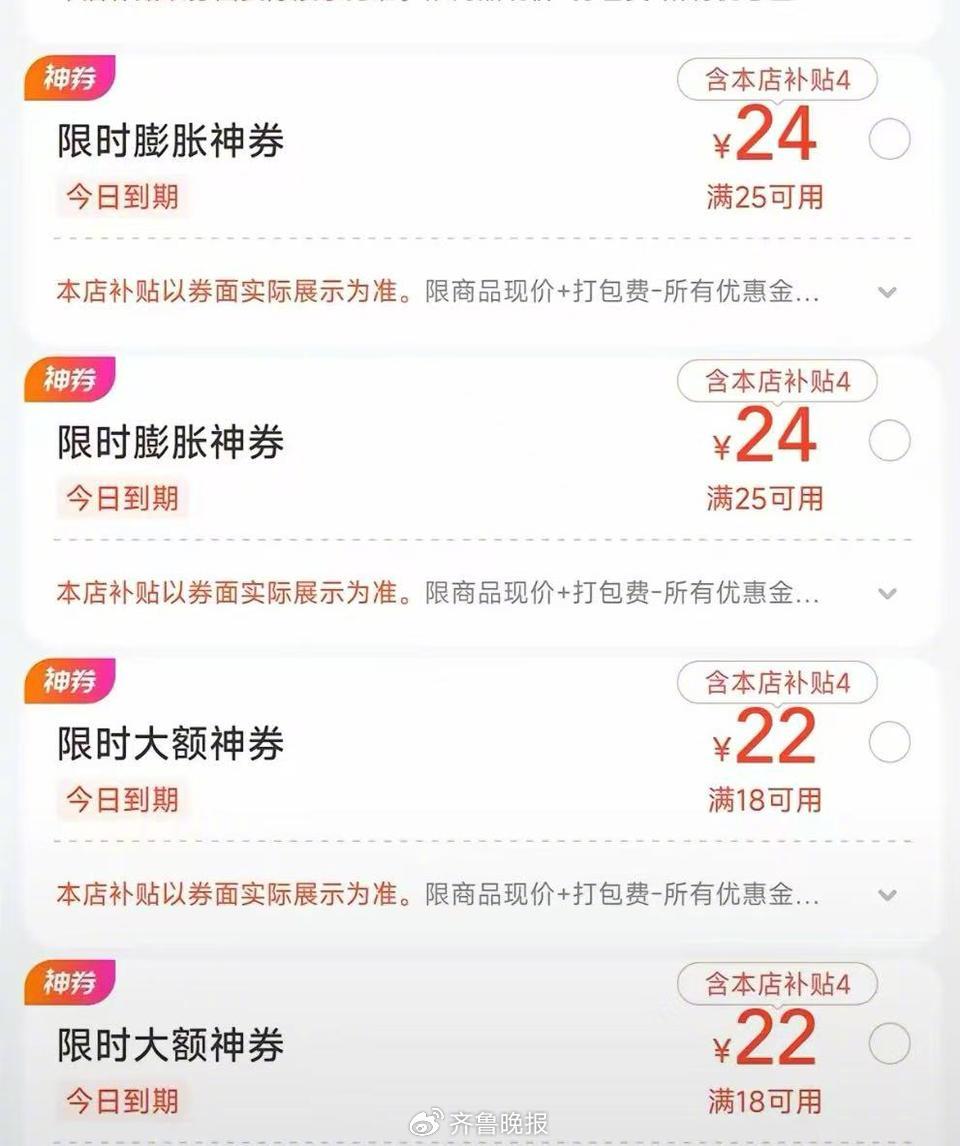
Core Insights - The recent promotional battle between Meituan and Alibaba has led to a significant surge in food delivery orders, particularly for beverage shops, with some stores reporting order volumes more than double their usual amounts [2][5][6] Group 1: Promotional Activities - Meituan and Alibaba released a variety of high-value discount coupons, such as "Spend 25 get 24 off" and "Spend 15 get 15 off," which stimulated consumer demand and led to a record-breaking number of orders [3][6] - The promotional activities resulted in Meituan's daily order count exceeding 1.2 billion, with over 1 billion being food delivery orders [6] Group 2: Impact on Businesses - Many beverage shops experienced overwhelming order volumes, with some reporting up to 3,000 drinks made in a single day, significantly higher than their typical daily output [5][9] - Despite the high sales volume, many businesses faced financial strain due to the cost of fulfilling orders and the need to offer discounts, leading to situations where they were losing money on each sale [9] Group 3: Delivery Personnel Earnings - Delivery personnel reported substantial earnings during the promotional period, with some making over 1,700 in a single day due to increased order volumes and higher platform subsidies [7][8] - The delivery fees doubled, and the high volume of orders allowed many delivery workers to exceed their usual daily earnings significantly [8] Group 4: Consumer Experience - While consumers benefited from the discounts, the overwhelming demand led to service delays, with some customers experiencing significant wait times for their orders [10][11] - The promotional activities created a mixed experience for consumers, as those in urgent need of food faced challenges due to the high volume of orders and system crashes [10][11]