
高等教育

Search documents
陕西金叶:教育与资本双向奔赴,专注建设应用型大学,有望迎来黄金发展期
Zheng Quan Shi Bao Wang· 2025-07-29 10:15
Core Viewpoint - The "Education Strong Nation Construction Plan Outline (2024-2035)" emphasizes the classification and advancement of higher education reform, marking the beginning of a competitive race for private universities, with a focus on transforming local universities into application-oriented institutions to enhance the effectiveness of technology transfer [1] Group 1: Institutional Development - Xi'an Mingde Polytechnic College, under Shaanxi Jinye, is aligning its educational offerings with national strategies and industry needs, focusing on cultivating application-oriented talents [2] - The college has established a comprehensive academic structure with 11 secondary colleges, 32 undergraduate programs, and 19 associate degree programs, primarily in engineering, management, economics, literature, and arts [2] - The college's aerospace-related programs, such as Aircraft Manufacturing Engineering, are among the few in the country, showcasing its strong professional and practical capabilities [2] Group 2: Market Opportunities - The aging population in China is projected to exceed 300 million by the end of 2024, creating significant opportunities in the health and wellness market, which is currently valued at approximately 7 trillion yuan and expected to reach 30 trillion yuan by 2035 [3] - In response to this demographic shift, Xi'an Mingde Polytechnic College is establishing a medical school and applying for nursing and health-related programs, creating a closed-loop ecosystem for recruitment, training, and employment [3] Group 3: Technological Integration - The college is integrating AI into its educational framework, enhancing traditional engineering disciplines and fostering interdisciplinary collaboration between engineering and arts [3][4] - The institution aims to develop a core feature of cross-disciplinary education by incorporating new engineering, liberal arts, and business studies into its curriculum [4] Group 4: Financial Performance - Shaanxi Jinye's education sector reported a revenue of 500 million yuan in 2024, a year-on-year increase of 9.9%, accounting for 34.71% of the company's total revenue [5] - The college's infrastructure has been significantly upgraded to accommodate over 20,000 students, enhancing its capacity for growth and development [5][6] Group 5: Strategic Vision - The chairman of Jinye Education Group emphasizes that the next decade will focus on quality and uniqueness in education, with a commitment to translating market needs into cutting-edge curricula [7] - The college's transformation into an application-oriented institution is supported by Shaanxi Jinye's strong industrial foundation and capital capabilities, contributing to the long-term development of both the college and the group [7]

创新,要善于拆“墙”搭“桥”(纵横)
Ren Min Ri Bao· 2025-07-28 22:51
Group 1 - The core idea emphasizes the importance of breaking down barriers between disciplines to foster innovation and collaboration, particularly in the context of new energy storage technologies [1][2] - The initiative at Tianjin University involves creating interdisciplinary teams that combine expertise from various fields such as electrical engineering, materials science, and mechanical engineering to address industry needs [1] - The article highlights the shift from traditional educational approaches to a more integrated model that aligns teaching with industry demands, thereby enhancing the innovation ecosystem [2] Group 2 - The interaction between education ("teaching") and industry ("production") is likened to a symbiotic relationship where both elements must adapt and respond to each other's needs for effective innovation [2] - Reforming teacher performance evaluation mechanisms is crucial for encouraging educators to engage more actively with industry, facilitating a transition from educators to entrepreneurs [2] - The reduction of barriers and the increase in collaborative opportunities are expected to lead to a robust development of new productive forces driven by innovation [2]
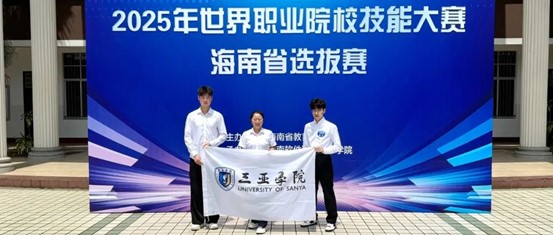
三亚学院二十周年:与海南自贸港同频共振 书写高等教育新篇章
Yang Shi Wang· 2025-07-28 09:00
Core Viewpoint - Sanya University is positioned as a key player in supporting the development of Hainan Free Trade Port through innovative educational practices and industry integration, marking a significant milestone in its 20-year history [1]. Group 1: Educational Alignment with Industry Needs - Sanya University aligns its academic programs with the "4+3+3" modern industrial system of Hainan Free Trade Port, focusing on digitalization in finance and automotive industries, modern services, urban governance, and health industries [2]. - The university has established three academic workstations to strengthen its research capabilities and has been approved to grant master's degrees, becoming the first private university in Hainan to do so, with plans to increase master's programs to ten by 2025 [3]. Group 2: Industry Collaboration and Talent Development - The university collaborates with major companies like Geely, JD.com, and Alibaba to create ten modern industry colleges, covering fields such as new energy, artificial intelligence, and financial technology [4]. - A "four-dimensional education" system is implemented, focusing on project-based learning, course restructuring, school-enterprise collaboration, and outcome transformation, ensuring seamless integration of education and industry [5]. Group 3: Employment and Career Opportunities - Sanya University has been recognized as one of the top 50 institutions for employment and innovation by the Ministry of Education, with a high graduate placement rate, having trained nearly 90,000 graduates since its establishment [7]. - The university's graduates have been acknowledged as influential figures in employment and entrepreneurship, reflecting the institution's strong employment outcomes [7]. Group 4: Institutional Strengths and International Collaboration - The university has consistently ranked first among private universities in China since 2022 and has received numerous accolades for its educational excellence [8]. - It has established partnerships with over 90 universities in more than 30 countries and has been a leader in promoting cross-border educational collaboration, including the establishment of the China-ASEAN Private University Alliance [9]. Group 5: Campus Environment and Future Aspirations - Sanya University boasts a beautiful tropical coastal campus, providing an ideal environment for learning and personal growth [9]. - The institution aims to continue its role as a "talent engine" for the Hainan Free Trade Port, fostering students to engage on the global stage [10].

高校博物馆离破圈还差几步
Zhong Guo Qing Nian Bao· 2025-07-28 04:00
Core Viewpoint - The article highlights the increasing public interest in museums during the summer, particularly in popular museums, while emphasizing the need for university museums to engage more actively with the community and address key questions about their exhibitions and audience [1][5]. Group 1: University Museums' Role - There are approximately 450 university museums in China, representing a significant force within the museum industry [3]. - University museums serve as important venues for inquiry-based learning and participatory teaching, evolving from their origins as specimen or artifact rooms [1][5]. Group 2: Community Engagement - The "breaking the circle" concept refers to transforming university museums from exclusive collections into accessible community spaces [1][5]. - The Ministry of Education has emphasized the importance of university museums serving both educational and public needs, indicating that their openness is a measure of a university's social responsibility [5][7]. Group 3: Challenges and Opportunities - Despite some successes, university museums face challenges such as a lack of alignment with educational standards, uneven development compared to public museums, and limited engagement with the public [7]. - There is a call for universities to invest resources, update their operational philosophies, and collaborate with social entities to enhance the capabilities and outreach of their museums [7][10]. Group 4: Examples of Collaboration - Collaborative efforts, such as the partnership between Sichuan University and the Chengdu government, aim to establish university museums as cultural landmarks [10]. - Jilin University has developed a new museum in collaboration with Changchun city, featuring various exhibitions to enrich the cultural life of the public [10].

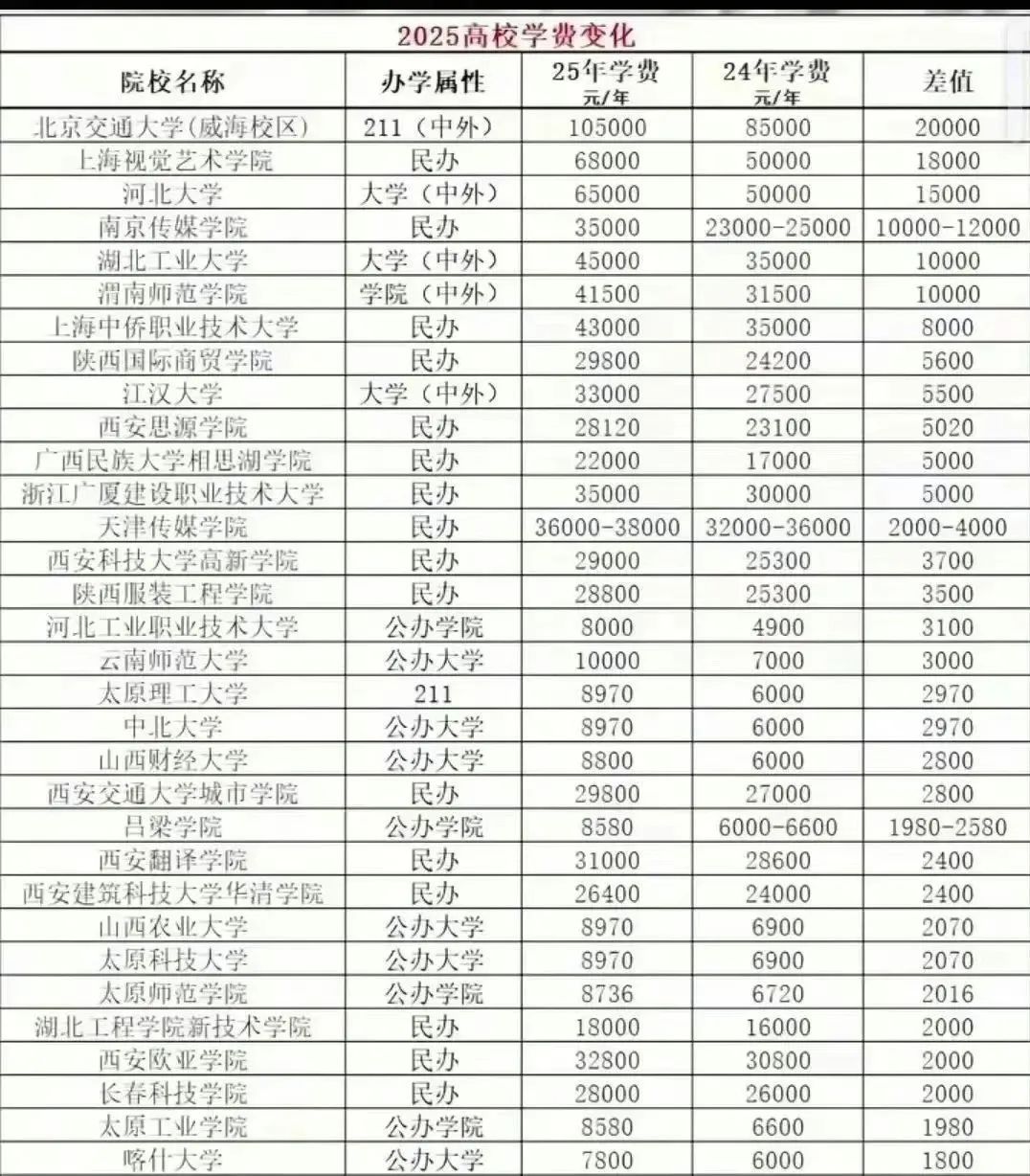
新信号出现,大学学费“集体涨价”
3 6 Ke· 2025-07-28 00:14
Core Viewpoint - The rising tuition fees in Chinese universities are becoming a significant burden for families, with increases ranging from 500 to 20,000 yuan per year by 2025, despite the devaluation of degrees in the job market [1][2][3]. Tuition Fee Changes - Numerous universities are increasing their tuition fees for 2025, with notable increases at institutions like Beijing Jiaotong University (20,000 yuan increase), Shanghai Visual Arts College (18,000 yuan increase), and Hebei University (15,000 yuan increase) [2]. - Private universities tend to have higher tuition fee increases compared to public universities, with some public universities showing more modest increases [3]. Historical Context - The trend of rising tuition fees is not new; many universities had already raised fees in 2023, with increases of up to 54% for certain programs at East China University of Science and Technology [5][8]. - The government had previously implemented a tuition fee cap in 2006, but its effectiveness has been limited, leading to a gradual increase in fees since 2014 due to rising operational costs [10][11]. Financial Implications for Families - The increase in tuition fees is causing financial strain on families, with data indicating that a 1,000 yuan increase in fees correlates with a 1.2 percentage point drop in rural enrollment rates [5]. - The average disposable income for urban residents in 2024 is 49,302 yuan, while for rural residents it is 19,605 yuan, highlighting the financial burden of tuition fees on families [5][8]. Strategies for Families - Families are encouraged to apply for government assistance programs, utilize student loans, and seek scholarships to mitigate the impact of rising tuition fees [13][14]. - Choosing public universities and evaluating the job market for specific majors can help families make more informed decisions regarding education investments [14]. Employment Market Trends - The increasing number of university graduates is leading to a decline in the value of higher education in the job market, with the premium for college-educated workers dropping significantly over the decades [16][18]. - Skills are becoming more critical than degrees in the labor market, emphasizing the need for practical abilities that can create value and solve problems [22].
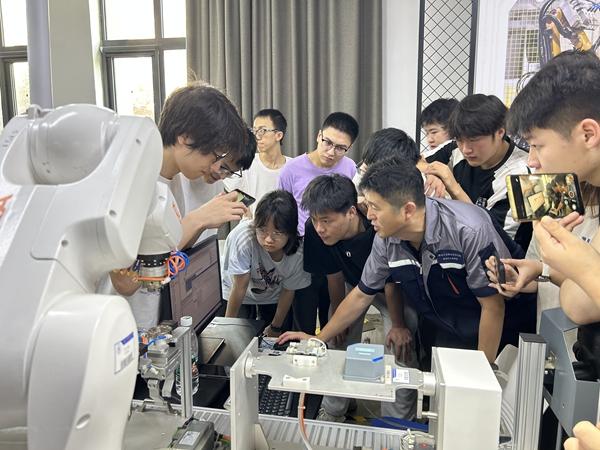
“双一流”高校学生缘何赴职业本科高校实习
Zhong Guo Qing Nian Bao· 2025-07-27 22:34
Core Viewpoint - The collaboration between Beijing Jiaotong University and Tangshan Vocational Technical University focuses on enhancing practical training in industrial robotics, bridging the gap between theoretical knowledge and real-world application [1][5]. Group 1: Collaboration and Historical Context - Beijing Jiaotong University has historical ties with Tangshan, dating back to the establishment of the Northern Transportation University, which contributed significantly to railway construction in New China [2]. - The partnership aims to leverage Tangshan's strong industrial base, particularly in steel, equipment manufacturing, and chemical industries, to facilitate the transformation of basic research outcomes into practical applications [2]. Group 2: Educational Innovations and Practical Training - The vocational university has recently upgraded to a vocational undergraduate institution, offering six undergraduate programs, including railway technology and automation [2][4]. - The collaboration has led to the development of a "menu-style" training model, allowing students to engage with cutting-edge equipment and practices in robotics and programming [4]. - The practical training resources at Tangshan Vocational Technical University complement the theoretical strengths of Beijing Jiaotong University, effectively merging classroom learning with industry practices [5]. Group 3: Future Prospects and Strategic Goals - The ongoing internship program is expected to deepen the strategic partnership between the two universities, promoting resource optimization and collaborative talent cultivation in the context of the Beijing-Tianjin-Hebei coordinated development [5]. - Future initiatives will focus on enhancing research cooperation and talent training, aiming to produce versatile professionals who are well-versed in both theory and practice for the smart manufacturing industry [5].
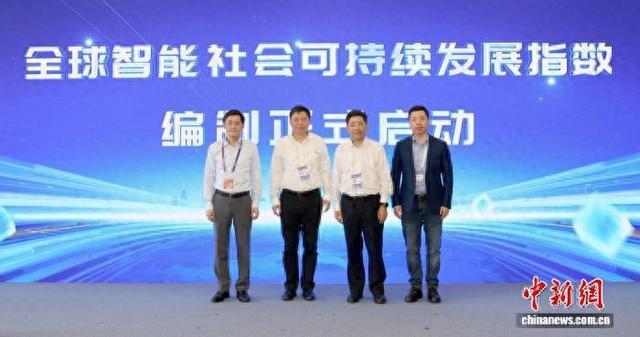
“全球智能社会可持续发展指数”在WAIC2025上启动编制
Huan Qiu Wang Zi Xun· 2025-07-27 14:11
Group 1 - The "Global Intelligent Society Sustainable Development Index" was launched to scientifically diagnose and assess the sustainable development levels of various intelligent societies globally, promoting AI-enabled sustainable development [1][3] - The 2025 World Artificial Intelligence Conference's Intelligent Society Forum focused on "AI Empowering Social Governance and Sustainable Development," highlighting the importance of collaboration between academia and judicial practice [3][5] - The establishment of the "Digital Court Research Base" aims to create a platform for integrating theoretical research and practical experience in judicial intelligence, supporting the implementation of digital strategies [3][5] Group 2 - The forum emphasized the need for a balanced approach to AI development, addressing ethical, legal, and social governance challenges while promoting responsible AI for the benefit of society [6][7] - Multiple innovative achievements in digital empowerment were showcased, including the launch of a city governance intelligent system and various AI-driven community health initiatives [6][7] - Experts discussed the importance of creating an open and inclusive governance framework to ensure that technological advancements are equitable and controllable, merging technological progress with humanistic care [7]
美国多家联邦和科研机构向政府提出抗议
Xin Hua Wang· 2025-07-27 11:41
Group 1 - Multiple federal and research institutions in the U.S. have expressed concerns over significant cuts to research funding and the dismantling of federal research agencies under the Trump administration, which they believe undermines the nation's innovation capacity and public interest [1][2] - The proposed budget for the fiscal year 2026 includes a nearly 40% reduction in the budget for the National Institutes of Health and over 50% cut for the National Science Foundation, along with substantial cuts to NASA's science budget and the cancellation of several space exploration projects [2] - There is a prevailing atmosphere of fear among researchers, with many choosing to remain anonymous when signing protest letters due to concerns about retaliation, as evidenced by reports of employees at the Environmental Protection Agency facing job actions after signing dissent statements [2] Group 2 - The protests aim to compel the government to reconsider its policy direction, although experts express skepticism about the likelihood of any substantial change in the administration's approach [2]
研究称人民币国际化指数波动向上趋势不变
Sou Hu Cai Jing· 2025-07-27 07:02
研究称人民币国际化指数波动向上趋势不变 研究显示,2024年四个季度末RII数值分别为4.84、7.4、6.3和5.68,全年的季度平均值为6.06。RII波动 向上的整体趋势保持不变,比2023年的季度平均值5.46增长了约11%。 据悉,中国人民大学"人民币国际化课题组"于2011年成立,为了动态追踪人民币国际化进程,课题组编 制了RII,自2012年起每年定期发布。该指数综合考虑了人民币在贸易计价结算、金融交易和官方储备 等方面执行国际货币职能的发展动态。 研究称,2024年RII增长的主要动力仍然来自于直接投资交易和跨境贸易结算,贡献度分别达到83.48% 和27.25%。从三级指标表现看,人民币贷款和人民币直接投资在全球占比的增长率最高,分别达到 46.65%和16.82%,成为人民币国际化的年度亮点。 研究还显示,截至2024年底,美元、欧元、英镑、日元的国际化指数分别为51.13、24.07、3.69和4.47。 过去5年,美元、欧元、英镑、日元、人民币的国际化指数季度平均值的年复合增长率分别 为-0.24%、-1.65%、0.00%、-0.32%和17.41%。 中国人民大学国际货币研究所副所 ...
多所高校宣布延长研究生学制
Di Yi Cai Jing· 2025-07-26 09:46
在延长学制之外,探索专硕的培养模式和方法十分重要。 近期以来,多所高校宣布延长研究生学制。 宁波大学发布的《关于我校2026年硕士研究生招生部分变更信息的公告》显示,法律(法学)(专业代 码035102)的学制由2.5年变更为3年(包括全日制、非全日制)。 6月30日,华中师范大学发布了《关于华中师范大学社会学院全日制社会工作专业硕士研究生学制变更 的公告》,其中明确提到,自2026年起拟将全日制社会工作专业(035200)硕士研究生培养学制由2年 变更为3年。 江西财经大学发布的《关于发布我校2026年硕士研究生招生专业目录的通知》显示,应用统计和金融2 个专硕学制由2年调整为3年。 厦门大学经济学系副教授丁长发对第一财经分析,现在很多专硕还是偏理论,实操方面欠缺。我国培养 研究生的大学非常多,在激烈的竞争下,把研究生学制延长,也是提高就业竞争力的体现。 不过,在延长学制之外,探索专硕的培养模式和方法十分重要。 丁长发说,有些大学专硕和学硕在课程设置、培养内容和方法本质上区别不大,在整体的培养方式、方 法、内容、课程设置等方面,与国民经济和社会发展的需要还是有一定的落差,所以在学制之外,在培 养模式、课程设 ...