装备制造

Search documents
推动城市高质量发展 开启内涵式转型新征程
Shang Hai Zheng Quan Bao· 2025-08-13 17:48
Core Viewpoint - The promotion of high-quality urban development is a strategic layout that aligns with the trends of major country competition, a necessary demand as urbanization enters a new development stage, and a key battleground for expanding domestic demand in China [1][2][3] Group 1: Strategic Significance of High-Quality Urban Development - High-quality urban development is a strategic layout that responds to the trends of major country competition, as cities will become the main battleground for competition in new technologies, industries, and sectors [4] - It is a necessary demand as urbanization enters a new development stage, with urbanization rate projected to reach 67% by 2024, requiring a shift from traditional land expansion to quality enhancement [5] - High-quality urban development serves as a core engine for expanding domestic demand, with urbanization of rural populations expected to significantly boost consumption [6][7] Group 2: Policy Framework and Practical Experience - A solid policy framework and rich practical experience have been established to support high-quality urban development, with continuous improvement in the top-level design of new urbanization strategies [8][9] - The expansion of urban renewal pilot projects has been ongoing, with cities like Xi'an and Shenyang selected for urban renewal trials [10] Group 3: Key Tasks for High-Quality Urban Development - The central urban work conference outlined "five transformations" and six dimensions for modern urban construction, focusing on innovation, livability, beauty, resilience, civilization, and intelligence [2][3] - Key tasks include optimizing urban systems, enhancing connections within urban clusters, and promoting coordinated development among large, medium, and small cities [15][16] Group 4: Collaborative Efforts for Urban Development - Promoting high-quality urban development requires collaboration among central and local governments, enterprises, and various stakeholders, emphasizing the need for top-level design and tailored local strategies [25][26] - The focus is on discovering differentiated development paths, enhancing urban resilience, and leveraging technology for urban governance [29][30]
超长期特别国债支持设备更新补助资金下达完毕
Zheng Quan Shi Bao· 2025-08-13 17:43
Group 1 - The National Development and Reform Commission (NDRC) has allocated 188 billion yuan in investment subsidies for equipment upgrades, supporting approximately 8,400 projects across various sectors, leading to a total investment exceeding 1 trillion yuan [1] - In the first half of the year, the industrial added value of large-scale industries increased by 6.4% year-on-year, with the equipment manufacturing sector seeing a significant growth of 10.2%, driven by a new wave of equipment upgrades and the "two new" policy [1] - Domestic investment in the purchase of equipment and tools rose by 17.3% year-on-year, contributing 86% to the overall investment growth, indicating strong demand for equipment upgrades in industries such as shipbuilding and motor manufacturing [1] Group 2 - The NDRC is promoting energy-saving and carbon-reduction transformations, encouraging enterprises to build ultra-efficient and zero-carbon factories, and exploring a "green manufacturing" model [2] - The NDRC plans to enhance coordination and project management to ensure effective use of central funds and maximize the impact of the "two new" policy [2]
携手奔跑 成德眉资交出高含金量半年“答卷”
Si Chuan Ri Bao· 2025-08-13 06:45
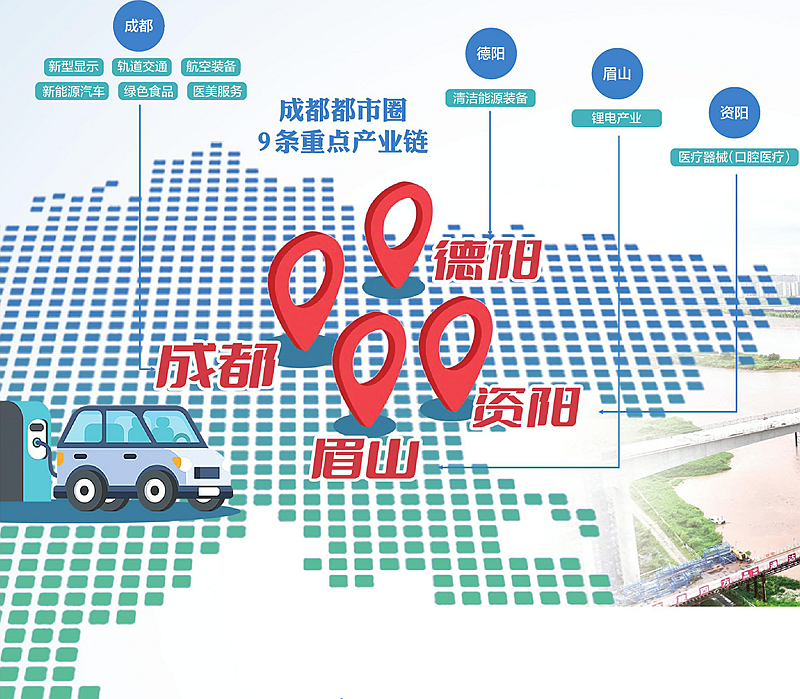
Core Insights - The Chengdu metropolitan area has become a key driver of high-quality economic development in Sichuan, contributing 47.5% to the province's GDP with a total output of 15,171.8 billion yuan in the first half of the year, reflecting a year-on-year growth of 6.1% [4][6] - The four cities within the metropolitan area—Chengdu, Deyang, Meishan, and Ziyang—are collaborating effectively to enhance economic growth, with significant contributions from industrial sectors and fixed asset investments [5][6][10] Economic Performance - The combined GDP of Chengdu, Deyang, Meishan, and Ziyang exceeded 1.51 trillion yuan in the first half of the year, up from 1.39 trillion yuan in the same period last year, showcasing the area's economic significance despite occupying only 6.8% of the province's land [6][10] - Chengdu's GDP growth rate of 5.8% places it among the top cities in the nation, while Deyang and Meishan achieved the highest growth rates in the province [8][10] Industrial Development - The metropolitan area saw a 9.1% increase in industrial added value, significantly supporting Sichuan's overall industrial growth, which reached a three-year high of 7.3% [6][10] - The four cities have developed nine key industrial chains, with a total output value exceeding 1.2 trillion yuan, and several sectors, such as new energy vehicles and solar batteries, reported growth rates above 100% [10][11] Investment and Collaboration - A global investment conference held in June led to the signing of 14 low-altitude economy projects, enhancing resource sharing and collaborative development within the metropolitan area [6][7] - The release of the first investment guide for the Chengdu metropolitan area aims to optimize the investment environment and foster long-term cooperative mechanisms among the four cities [7][11] Service Sector Growth - The service sector, particularly in Chengdu, has shown robust growth, with the third industry's added value reaching 8,654.2 billion yuan, accounting for 71.5% of Chengdu's total economic output [14] - Cultural and tourism integration has been a significant growth driver, with various events and international competitions boosting local consumption and tourism [14][15] Transportation and Connectivity - Improved transportation infrastructure has facilitated greater connectivity among the four cities, enhancing economic interactions and operational efficiencies [16][17] - The opening of new theme parks and the increase in passenger traffic on local rail lines have demonstrated the tangible benefits of enhanced transportation links [15][16] Future Prospects - The Chengdu metropolitan area is focusing on collaborative innovation and the establishment of a regional innovation community to address challenges such as homogenization and insufficient collaborative innovation [17] - Ongoing projects and investments are expected to further strengthen the economic framework and achieve the target of a total economic output of 3.3 trillion yuan by the end of the year [17]

国产首台套45万吨/年聚丙烯造粒机组出厂
Zhong Guo Hua Gong Bao· 2025-08-13 06:37
Core Viewpoint - The successful factory acceptance of the first domestically produced 450,000 tons/year polypropylene blending extrusion granulation unit by Dalian Heavy Industry marks a significant advancement in China's equipment manufacturing capabilities, particularly in the petrochemical sector [1][2]. Group 1: Equipment and Technology - The 450,000 tons/year polypropylene blending extrusion granulation unit has passed all performance tests and meets design requirements, showcasing its advanced layout and quality [1]. - The unit's standard load capacity is 56.5 tons/hour, with a maximum load capacity of 67.5 tons/hour, placing its overall performance among the international advanced ranks [2]. - The project team overcame multiple technical challenges over 14 months, achieving autonomy in key technologies such as high-torque transmission stability and high-temperature, high-pressure melt precision blending [2]. Group 2: Strategic Importance - The Tarim 1.2 million tons/year ethylene project is a demonstration of China National Petroleum's commitment to green low-carbon development and high-value resource utilization [1]. - The successful acceptance of this unit signifies a historic breakthrough in the design, manufacturing, and integration of large-scale blending extrusion granulation equipment in China, transitioning from a "follower" to a "runner" in the industry [2]. - The project supports the national strategy for major equipment autonomy and domestic production, providing a foundation for future large-scale ethylene and polypropylene project construction [2].

真空镀膜设备突破超预期,洪田股份触及涨停
Zheng Quan Zhi Xing· 2025-08-13 06:04
Group 1 - The core viewpoint of the news highlights the significant technological breakthrough achieved by Hongtian Technology in the vacuum coating field, which has led to increased market attention and a notable rise in Hongtian Co., Ltd.'s stock price [1] - Hongtian Technology has launched the world's first vacuum magnetron sputtering evaporation integrated machine, which possesses completely independent intellectual property rights, filling a technological gap in the industry [1] - The advanced vacuum coating technology offers high coating efficiency, uniformity, and strong operational stability, quickly gaining market recognition and opening up application spaces in emerging fields such as composite materials, semiconductor packaging, optical coating, and AI intelligent manufacturing [1] Group 2 - The internationalization strategy of Hongtian Co., Ltd. has made substantial progress, with the successful delivery of a high-end copper foil full-system customized production line to Israel in 2024, marking a new phase in overseas expansion [1] - The equipment manufacturing industry is characterized by long customer verification cycles and strong order continuity, and this overseas delivery is expected to bring long-term high-growth order flows to the company [1] - According to GGII, the global composite material market is projected to reach 30 billion yuan by 2025, with the corresponding equipment market space exceeding 10 billion yuan, indicating a high-growth opportunity for Hongtian Technology due to its technological first-mover advantage [2] Group 3 - Hongtian Co., Ltd. has announced a shareholder return plan for the next three years, committing to a cash dividend ratio of no less than 30% of the annual distributable profit, reflecting its stable operating philosophy and shareholder value-sharing orientation [2] - The combination of technological breakthroughs, market expansion, and industry dividends has catalyzed the stock price performance of Hongtian Co., Ltd., with institutions believing that the acceleration of the commercialization process of vacuum coating equipment and the realization of overseas orders will provide long-term growth momentum for the company [2]

北京首台(套)装备保险费补贴申报启动
仪器信息网· 2025-08-13 03:58
特别提示 微信机制调整,点击顶部"仪器信息网" → 右上方"…" → 设为 ★ 星标,否则很可能无法看到我们的推送。 关于开展 2025年北 京市首台(套) 重大技术装备保险费补贴项目申报的通知 各有关单位: 为推动北京市首台(套)重大技术装备示范应用,按照《中关村国家自主创新示范区提升企业创新能力支持资金管理办 法》(京科发〔2024〕13号),现组织开展北京市首台(套)重大技术装备保险费补贴项目受理工作。有关事项通知 如下: 支持内容 对北京市首台(套)重大技术装备给予保险费补贴支持,推动市场应用。 采取后补助方式,对已投保或续保的企业按照相关险种保险费80%的比例给予保费补贴,每家企业每年支持金额不超 过200万元。 支持对象 北京市首台(套)重大技术装备的研制单位。 支持条件 (一)投保首台(套)装备应为有效期内北京市首台(套)重大技术装备。 (二)支持险种包括:质量保证保险、产品责任险、设备运输保险、安装工程一切险及第三者责任险、设计责任险、财 产一切险、机器损坏险、产品保证险、财务损失险、产品召回险、首台(套)重大技术装备综合险。 (三)投保时间须为2024年8月1日(含)到2025年7月31日( ...

数十架中资公司飞机被扣俄 租赁公司获保险赔偿
Di Yi Cai Jing· 2025-08-13 03:51
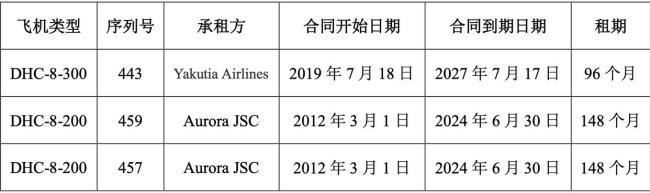
山河智能收到了来自保险公司的赔偿,因为其全资子公司AVMAX曾与俄罗斯客户签订三份飞机租赁合 同。自2022年2月地缘政治冲突以来,尽管AVMAX多次尝试召回上述租赁在俄罗斯的飞机,但未能成 功收回。近日,AVMAX与飞机保险承保人就赔付方案达成一致意见,确认可从保险承保商获得的保险 理赔款为2900万美元,扣除律师费用等后的保险赔付款净额为2296.51万美元。截至目前,AVMAX已全 额收到这笔款项,折算人民币约1.64亿元。保险赔付款项扣税后对公司净利润影响金额为1.26亿元,会 计核算计入营业外收入,占公司上一年度归母净利润的172.92%。 | 飞机序列号 | 合作开始日期 | 合同到期 | 合作终止 | 租期内合同金额 | 租期 | | --- | --- | --- | --- | --- | --- | | | | 日期 | 日期 | (万新西兰元) | | | MSN25731 | 2018年8月 | 2024年11月 | 2022年3月 | 2, 572. 83 | 6年零70天 | | NSN25696 | 2019年1月 | 2025 年4月 | 2022年3月 | 2, 572. 8 ...

辽宁已累计制定77项国际标准
Liao Ning Ri Bao· 2025-08-13 01:06
Group 1 - The provincial market regulatory bureau has made significant progress in standardization, with 9 new international standards, 246 national standards, and 98 local standards added this year, totaling 77 international standards, 7545 national standards, and 2229 local standards in the province [1] - The establishment of the ISO/TC81 technical committee in Liaoning marks a breakthrough in international standardization, enhancing the competitiveness of local pesticide manufacturers [1] - The province is focusing on the manufacturing and service industries' development and transformation, with 2 national service standardization pilot projects and 3 intelligent manufacturing standard application pilot projects approved this year [2] Group 2 - The province has initiated a special action to streamline local standards, aiming to reduce redundancy and improve quality, with an evaluation of 1668 existing local standards underway [2] - A total of 80 standards related to "two new" initiatives have been revised or developed, with 77 national standards completed, supporting high-quality economic development [3] - The provincial market regulatory bureau plans to add 300 national standards and 120 local standards by the end of 2025, further enhancing the role of standardization in building a modern industrial system [3]
倪欣深入企业调研 纾困解难强信心 产业升级添动能
Sou Hu Cai Jing· 2025-08-12 15:06
Group 1 - The core focus of the article is on the efforts made by local government officials, led by Ni Xin, to support and enhance the development of enterprises in the region through direct engagement and problem-solving initiatives [2][7] - Ni Xin emphasized the importance of accelerating intelligent transformation in companies to improve product quality and efficiency, ensuring a stable supply chain to support local economic development [4] - The article highlights the need for companies to increase investment in technological innovation and market expansion to enhance their competitiveness and contribute to high-quality local economic growth [7] Group 2 - Dazhou Zhenxi Agricultural Products Co., Ltd. is a key player in the agricultural sector, providing over 20,000 tons of quality food ingredients annually to various institutions, and is currently constructing an intelligent sorting and processing facility [4] - Dazhou Jiaxing Industrial Co., Ltd. is recognized for its "Jiaxing" brand belt conveyor, which holds a strong reputation in the industry, and is encouraged to continue investing in technology and market development [4] - Dazhou Daba Mountain Selected Trade Co., Ltd. operates in the e-commerce sector, focusing on local specialty products and cultural industries, achieving a record of zero negative reviews and returns, and is advised to enhance brand building and integrate with e-commerce live streaming [5]

上海电气股价微涨0.36% 公司斥资3318万元回购400万股
Jin Rong Jie· 2025-08-12 11:27
最新公告显示,上海电气于8月12日实施股份回购,回购数量400万股,耗资3318万元。这一回购操作显 示出公司对自身发展前景的信心。 上海电气是我国大型综合性装备制造集团,业务涵盖能源装备、工业装备和集成服务三大领域。公司 2025年一季度实现营业收入222.45亿元,净利润2.92亿元。 截至2025年8月12日收盘,上海电气股价报8.39元,较前一交易日上涨0.03元,涨幅0.36%。当日成交量 为3139.9万手,成交金额达26.34亿元。 风险提示:股市有风险,投资需谨慎。 从资金流向来看,8月12日主力资金净流入8056.16万元,近五个交易日累计净流入5.06亿元。 ...