
天然气

Search documents
英国宣布:禁止!
中国能源报· 2025-11-12 11:53
Core Viewpoint - The UK plans to phase out shipping and insurance services for Russian liquefied natural gas exports starting in 2026, aiming to further restrict Russian energy exports and cut off funding channels for Russia amid the ongoing Ukraine conflict [3]. Group 1 - The UK Foreign Secretary, Cooper, announced the new measures on November 11, 2023, before attending a G7 foreign ministers' meeting in Canada [3]. - The ban will prevent UK companies from providing transportation, insurance, and related services for Russian liquefied natural gas exports to third countries [3]. - This announcement follows previous sanctions imposed on two major Russian oil companies, Rosneft and Lukoil, indicating a continued effort to target the Russian energy sector [3].


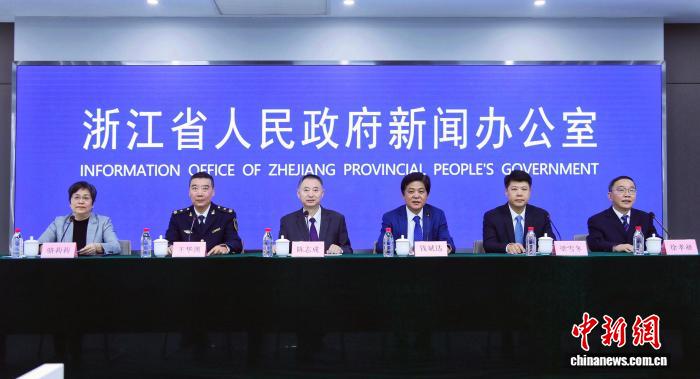
浙江今年已通过船舶运输进口液化天然气超559万吨
Zhong Guo Xin Wen Wang· 2025-11-12 08:30
Core Insights - Zhejiang Province has imported over 559.1 million tons of liquefied natural gas (LNG) through ship transportation this year, with 81 vessel trips recorded [1][3] - The establishment of the first national bulk commodity resource allocation hub in Zhejiang has been officially approved by the State Council, marking a significant milestone in the province's maritime service capabilities [3][4] Group 1: LNG Transportation - The average capacity of each LNG vessel is 69,000 tons, which is sufficient to supply gas for 243,000 households for a year [3] - The maritime authority has implemented 17 measures to enhance the efficiency of LNG transportation, including optimizing traffic flow and reducing approval times [3][4] Group 2: Maritime Services and Innovations - Zhejiang Maritime Bureau has introduced customized maritime services for enterprises, significantly increasing the export of new energy vehicles, with 122,700 units shipped in the first three quarters, a 5.6-fold increase from the previous year [4] - The maritime financial service platform has transformed maritime safety inspection data into credit certificates for enterprises, benefiting 1,564 shipping companies and 5,715 vessels, with a total of 3.465 billion yuan in secured loans [5]
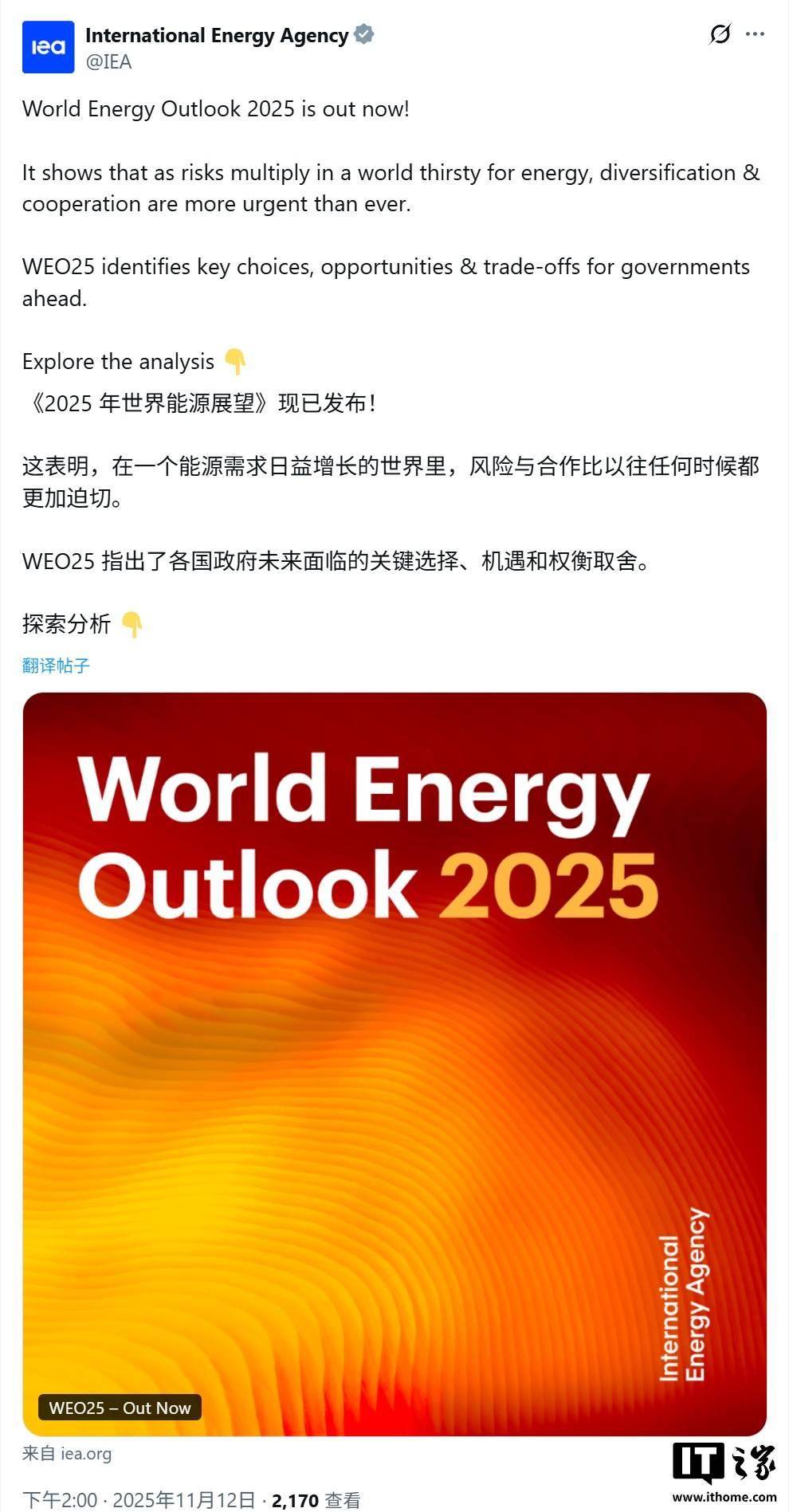
油价迎来反弹希望?IEA关键报告“恢复”看涨情景:石油与天然气需求或延迟至2050年才见顶
Zhi Tong Cai Jing· 2025-11-12 08:29
(原标题:油价迎来反弹希望?IEA关键报告"恢复"看涨情景:石油与天然气需求或延迟至2050年才见 顶) 智通财经APP获悉,国际能源署(IEA)改变了其对于石油需求即将见顶的看法,重新提出全球石油消费 量将持续增长至本世纪中叶的情景。在周三发布的年度《世界能源展望》报告中,尽管国际能源署去年 研究的三种情景都预计本十年石油需求将趋于平稳或下降,但最新报告重新引入了"当前政策情景"(即 CPS),在这种情景下,到 2050 年石油消费量将较2024年增长 13%至1.13亿桶/日。这种更为乐观的前景 取决于电动汽车普及速度放缓。 在CPS情景中,全球石油消费量从约 1 亿桶/日攀升至 2050 年的 1.13 亿桶/日,因为电动汽车在全球汽 车总销量中的占比在 2035 年后基本趋于平稳。而在STEPS情景中,预计到 2030 年电动汽车销量占比将 翻一番,五年后超过 50%。CPS 情景显示了风能和太阳能的增长受到拖累,而天然气的增长势头则更 为强劲。 不可避免的是,这两条路径对世界石油市场和价格会产生不同的影响。在CPS情景下,"更高的需求会 更快地消化掉任何过剩的石油和液化天然气供应",到 2035 年 ...
广汇能源(600256):价格下跌叠加缴纳水土保持费,Q3业绩承压
Changjiang Securities· 2025-11-12 08:12
Investment Rating - The investment rating for the company is "Buy" and is maintained [8] Core Views - The company reported a revenue of 22.53 billion yuan for the first three quarters of 2025, a year-on-year decrease of 14.63% - The net profit attributable to shareholders was 1.01 billion yuan, down 49.03% year-on-year - In the third quarter alone, revenue was 6.78 billion yuan, a decline of 25.81% year-on-year, with net profit at 159 million yuan, down 71.01% year-on-year - The decline in performance is attributed to falling coal prices and increased water and soil conservation fees, alongside pressure on natural gas prices and a decrease in long-term contract gas sales - The approval and progress of the Marang coal mine project are expected to support future production growth, while the Zaisang oil and gas project is set to become a significant growth point after coal and natural gas [2][5][11] Summary by Sections Financial Performance - For the first three quarters of 2025, the company achieved a total revenue of 22.53 billion yuan, a decrease of 14.63% year-on-year - The net profit attributable to the parent company was 1.01 billion yuan, down 49.03% year-on-year - In Q3 2025, the company reported revenue of 6.78 billion yuan, a decline of 25.81% year-on-year, and a net profit of 159 million yuan, down 71.01% year-on-year [2][5] Market Conditions - The domestic coal market saw a rebound in prices in Q3 2025, with the average price for 5000 kcal coal at 599.48 yuan/ton, up 6.77% quarter-on-quarter but down 20.32% year-on-year - The average price for 5500 kcal coal was 673.68 yuan/ton, up 5.16% quarter-on-quarter but down 20.95% year-on-year - Despite a 75.97% year-on-year increase in coal sales volume in the first half of 2025, Q3 saw a decline in both production and sales volume due to previous low prices [11] Future Growth Prospects - The Marang coal mine has received necessary approvals and is progressing well, which is expected to enhance production capacity - The Zaisang oil and gas project is advancing, with geological research and drilling activities ongoing, positioning it as a future growth driver [11]

阿曼综合天然气公司签署19项天然气协议,总额达34亿里亚尔
Shang Wu Bu Wang Zhan· 2025-11-12 07:45
Core Viewpoint - Oman Gas Company has signed 19 strategic gas agreements and memorandums of understanding with domestic and international companies, establishing extensive partnerships with investors from India, China, the United States, France, and Kuwait [1] Group 1: Agreements and Financials - The signing ceremony included 14 gas sales agreements with a total value exceeding 3.4 billion Omani Rials [1] - New investments amounting to over 2 billion Omani Rials were also announced during the ceremony [1] Group 2: Key Partnerships - Three gas purchase agreements were signed with major producers: Occidental Oman (covering blocks 62 and 65) and Energy Development Oman (covering block 6) [1] - Two memorandums of understanding were signed with subsidiaries and projects of OQ Group, including the Duqm petrochemical complex and OQ alternative energy projects [1]

每日 1.13 亿桶:国际能源署预测全球油气需求将持续增长至2050年
Sou Hu Cai Jing· 2025-11-12 07:41
Core Insights - The International Energy Agency's World Energy Outlook 2025 emphasizes the urgent need for diversification and cooperation in the face of rising energy risks and demand [1][2][5] Energy Demand and Supply - Global oil and gas demand is projected to continue growing until 2050, diverging from previous expectations of a rapid transition to clean energy, indicating potential challenges in meeting climate goals [5] - Under the Current Policies Scenario, global oil demand is expected to reach 113 million barrels per day by mid-century, a 13% increase from 2024 levels [5] - Overall energy demand is anticipated to rise by 90 exajoules by 2035, a 15% increase from current levels [5] Liquefied Natural Gas (LNG) Market - The report highlights explosive growth in the LNG market, with a surge in final investment decisions for new LNG projects in 2025 [6][11] - Approximately 300 billion cubic meters of new annual LNG export capacity is expected to come online by 2030, increasing global supply by 50% [6][11] Electricity Demand and Transition - The report indicates that the world has entered the "Age of Electricity," with electricity demand growth accelerating across various scenarios [19][25] - Electricity is now the key energy source for sectors accounting for over 40% of the global economy [19] Climate and Emissions - The report warns that global warming is likely to exceed 1.5°C by 2030 across all scenarios, with emissions rising in the Current Policies Scenario and plateauing in the Stated Policies Scenario [35][36] - Only the updated net zero scenario is projected to bring temperatures back below 1.5°C in the long term [36] Renewable Energy Growth - Renewables are expected to grow faster than any other major energy source, led by solar PV, with nuclear capacity also set to increase by at least one-third by 2035 [39][40] - Natural gas is projected to play an increasingly significant role in power generation [39]
美银证券:料中国天然气需求增长放缓降昆仑能源评级至“跑输大市”偏好中国石油股份
Xin Lang Cai Jing· 2025-11-12 07:36
Group 1 - The core viewpoint of the report is that China's natural gas demand growth is expected to slow down to 2% to 3% annually from 2025 to 2027, compared to a 9% compound annual growth rate over the past decade, due to weak industrial demand and the continued economic advantage of coal as a fuel source [1] - Bank of America maintains a "Buy" rating on China Petroleum & Chemical Corporation (00857) as it keeps natural gas average prices relatively stable, and the losses from imported natural gas are narrowing with the decline in oil prices [1] - The target price for PetroChina H-shares has been raised by 12% to HKD 9.5, while the A-shares (601857.SH) are also positively viewed [1] Group 2 - Kunlun Energy (00135) has had its rating downgraded from "Neutral" to "Underperform" due to the fact that industrial customers account for 75% of the company's retail natural gas sales, necessitating price reductions to maintain customer appeal amid stable costs [1]


首华燃气:截至2025年11月10日首华燃气普通股股东总数为20079户
Zheng Quan Ri Bao Wang· 2025-11-12 07:15
证券日报网讯首华燃气(300483)11月11日在互动平台回答投资者提问时表示,截至2025年11月10日, 首华燃气普通股股东总数为20,079户。 ...

美银证券:料中国天然气需求增长放缓 降昆仑能源评级至“跑输大市” 偏好中国石油股份
Zhi Tong Cai Jing· 2025-11-12 06:24
Core Viewpoint - Bank of America Securities forecasts that China's natural gas demand growth will slow to 2% to 3% annually from 2025 to 2027, compared to a 9% compound annual growth rate over the past decade, due to weak industrial demand and the continued economic advantage of coal as a fuel source [1] Group 1: Industry Outlook - The slowdown in natural gas demand is attributed to weak industrial demand and the higher levelized cost of electricity (LCOE) for gas power generation, making the transition from coal to renewable energy more attractive [1] - The petrochemical industry in mainland China is experiencing limited progress in "anti-involution," with no significant improvement expected in fundamentals before the second quarter of next year [1] Group 2: Company Ratings and Price Targets - China Petroleum (601857) maintains a "Buy" rating due to stable average natural gas prices and reduced losses from imported gas as oil prices decline; target price for PetroChina H-shares raised by 12% to HKD 9.5, and A-shares target price increased by 10% to RMB 11 [1] - Kunlun Energy's rating has been downgraded from "Neutral" to "Underperform" due to its reliance on industrial customers for 75% of retail gas sales, necessitating price reductions to maintain customer appeal; target price decreased by 16% to HKD 7 [1]
美银证券:料中国天然气需求增长放缓 降昆仑能源(00135)评级至“跑输大市” 偏好中国石油股份
智通财经网· 2025-11-12 06:23
Group 1: Industry Outlook - The demand for natural gas in China is expected to slow down to an annual growth rate of 2% to 3% from 2025 to 2027, compared to a compound annual growth rate of 9% over the past decade, due to weak industrial demand and the continued economic advantage of coal as a fuel source [1] - The levelized cost of electricity (LCOE) for gas-fired power generation remains the highest, making the transition from coal to renewable energy more attractive [1] Group 2: Company Ratings and Price Targets - Bank of America maintains a "Buy" rating on China Petroleum & Chemical Corporation (00857), citing stable average selling prices for natural gas and a reduction in losses from imported natural gas as oil prices decline; the target price for PetroChina H-shares is raised by 12% to HKD 9.5, and for A-shares (601857.SH) by 10% to RMB 11 [1] - The rating for Kunlun Energy (00135) is downgraded from "Neutral" to "Underperform" due to the company's reliance on industrial customers, which account for 75% of its retail natural gas sales; the need to lower prices to maintain customer attraction is highlighted, particularly for price-sensitive clients like glass manufacturers [1] - The target price for Kunlun Energy is reduced by 16% to HKD 7, with limited dividend growth potential as the company has reached a 45% payout guideline and needs to reserve funds for acquisitions [1]