
低空经济

Search documents
如何抢占新兴产业未来产业赛道
Xin Lang Cai Jing· 2026-02-05 22:20
Core Insights - In 2026, China's emerging industries are expected to collectively enter a phase of mass production and ecological construction, with a focus on strategic emerging industries and localized development paths [6] Group 1: Low Altitude Economy - Guangdong is establishing itself as a benchmark for the low altitude economy, leveraging its complete industrial chain and policy framework, aiming for an industry scale exceeding 300 billion yuan by 2026 [7][8] - The province has over 15,000 low altitude industry chain enterprises, accounting for more than 30% of the national total, with over 2,000 drone manufacturing companies [7] - Guangdong is enhancing its infrastructure and policy environment to support low altitude logistics, medical rescue, and agricultural monitoring applications [8] Group 2: Embodied Intelligence - Shanghai is positioning itself as a global innovation hub for embodied intelligence, with plans to achieve significant breakthroughs in core algorithms and technologies by 2027 [9][11] - The city aims to support key projects financially and establish several high-quality incubators for the embodied intelligence sector [11] Group 3: New Energy Storage - Inner Mongolia is leading the development of new energy storage, focusing on attracting leading enterprises and building a comprehensive industrial chain [12][13] - The region has established a capacity to support 28.5 million kilowatt-hours of installed demand, with significant projects underway, including a large-scale energy storage project [13] Group 4: New Materials - Jiangsu is enhancing its new materials industry through a comprehensive innovation system, with 32 provincial key laboratories and 15 national enterprise technology centers established [14][15] - The province's advanced materials industry has surpassed 1 trillion yuan in output value, with significant clusters in Suzhou focusing on nanomaterials and advanced carbon materials [15] Group 5: Deep Sea and Aerospace Integration - Shandong is promoting the integration of deep sea and aerospace industries through a "chain leader" system, enhancing efficiency and fostering a collaborative industrial ecosystem [16][17] - The province is developing key technologies in both fields and establishing a unique layout for manufacturing and launching [17] Group 6: Quantum Technology - Anhui is building a global hub for quantum technology, with over 100 companies in the sector and a focus on practical applications through the "thousand scenarios" initiative [18][20] - The province has established a quantum future industry park and is providing comprehensive support for technology development and industry collaboration [20]

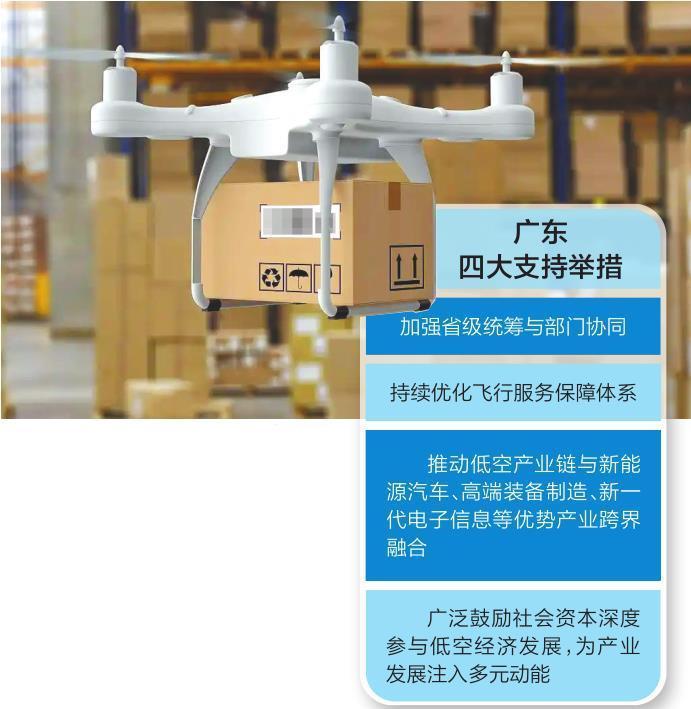
让更多“天津智造”加速飞向蓝天
Xin Lang Cai Jing· 2026-02-05 22:20
(来源:天津日报) 转自:天津日报 岁末春初,走进天开东丽园,创新创业热潮澎湃。开园仅一年多,园区集聚科技型企业超200家,主营 业务覆盖低空制造业、低空运营业、低空基建与信息服务业、低空配套业全部4个低空经济产业大类和 一半以上核心产业中类,累计转化科技成果132项,转化金额超2792.859万元,从昔日空置载体跃升为 京津冀空天产业创新高地。 链式聚合:构建全链条产业生态 "以前我们做风洞实验要远赴深圳,现在同一栋楼里就能完成,研发周期缩短近一半。"高品(天津)电 子科技有限公司技术总监李盖的感慨,道出了园区产业集群的独特优势。作为小米生态链核心企业,高 品科技的入驻,标志着园区低空经济产业链再添关键一环。 从低空新材料、零部件制造,到飞行服务、检验检测,天开东丽园以"链式招商"思路精准布局,聚集了 东腾科技、博源复材、世亚低空等上下游优质企业,构建起"实验室—生产线—市场化"的全链条闭环。 世亚低空研发的国内首款宽温域垂起固定翼无人机,采用碳纤维材料实现减重20%,在零下40摄氏度环 境中可续航6小时,已广泛应用于应急、测绘等领域;航大天开的"灵云甲"热敏型灭火贴片,既适配传 统电器火灾场景,又能满足无 ...
推动低空经济高质量发展
Xin Lang Cai Jing· 2026-02-05 19:12
Group 1 - The new member of the Anhui Provincial Political Consultative Conference, Shi Hong, emphasizes the responsibility of promoting the low-altitude economy as a strategic emerging industry cluster in the "14th Five-Year Plan" [3][4] - Anhui Province has established an industrial spatial layout centered around Hefei and Wuhu, supported by multiple cities including Chizhou, Anqing, Liu'an, Huangshan, and Suzhou, focusing on areas such as drone logistics, urban air traffic, and emergency rescue [3] - Shi Hong identifies several constraints on the development of the low-altitude economy, including insufficient understanding of the relationship between low-altitude economy and general aviation, limited available low-altitude airspace, and challenges in the construction of take-off and landing facilities [3][4] Group 2 - Recommendations include formulating development plans for the low-altitude economy, promoting efficient use of airspace resources, and actively seeking national airspace management reform pilot programs [4] - There is a call to accelerate the construction of infrastructure networks, enhance industrial innovation and cluster competitiveness, and focus on breaking through key core technologies to build a leading, cluster-driven, and innovation-driven industrial ecosystem [4]
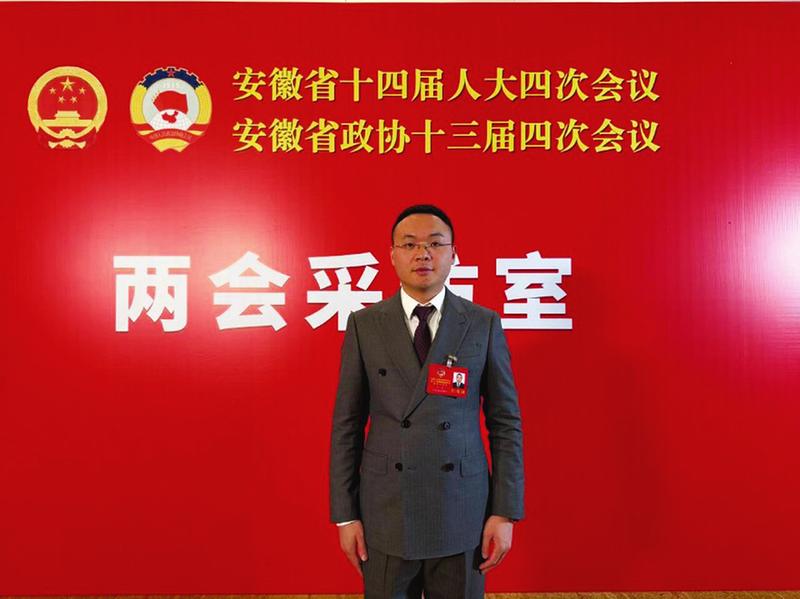
周渊:设立江门低空经济总部强链补链,赋能产业高质量发展
Nan Fang Du Shi Bao· 2026-02-05 14:28
Core Viewpoint - The establishment of a low-altitude economy headquarters in Jiangmen is proposed as a strategic initiative to enhance high-quality development and unlock the potential of a trillion-yuan industry in the region [1][4]. Group 1: Advantages and Current Status - Jiangmen has a solid manufacturing foundation with over 2,800 large-scale manufacturing enterprises, where mechanical manufacturing and electronic components account for 35% [1]. - The low-altitude economy-related output in Jiangmen has reached 320 million yuan, covering 20% of the demand for the Greater Bay Area's low-altitude industry [1]. - The Enping Fengru Low-altitude Economy Industrial Park has become a significant cultural and educational hub, attracting over 120,000 visitors and generating over 200 million yuan in cultural tourism revenue in 2023 [2]. Group 2: Challenges and Shortcomings - The industrial layout in Jiangmen is fragmented, with enterprises and projects dispersed, lacking a central coordinating body to integrate resources and attract investment [3]. - The current investment attraction model is overly simplistic, primarily focusing on individual projects, which limits the ability to absorb industrial overflow from core cities in the Greater Bay Area [3]. - Public awareness of the low-altitude economy remains superficial, primarily associated with drone photography and low-altitude tourism, which affects the willingness of social capital to invest [3]. Group 3: Proposed Solutions and Future Development - The establishment of the low-altitude economy headquarters is seen as a pragmatic approach to address existing challenges, focusing on coordination, resource aggregation, and service empowerment [4]. - The headquarters will not only serve as an office space but will also function as a comprehensive industrial hub, creating an ecosystem that integrates headquarters, bases, and application scenarios [4]. - Future development plans include enhancing infrastructure, establishing a "airport + airspace + logistics hub" system, and innovating investment attraction models to deepen collaboration with Shenzhen [5].
基础设施、产业融合,德州2026低空经济新布局
Qi Lu Wan Bao· 2026-02-05 14:24
Core Insights - The city of Dezhou is making significant advancements in its transportation sector, particularly in the development of low-altitude economy, with successful implementation of drone photovoltaic applications and the establishment of 15 low-altitude takeoff and landing points [1][2] Infrastructure Development - The focus for 2026 will be on a "three-airport linkage" strategy to create a comprehensive low-altitude flight support network. Key projects include: - The construction of Qingyun General Airport, the only A1 class general airport under construction in Dezhou during the 14th Five-Year Plan, covering an area of 407.92 acres, with completion expected by the end of 2026 [1] - Preparatory work for Linyi General Airport, which has completed expert review of the site selection report and aims to obtain industry review opinions within the year, covering 800 acres and planning a 3000-acre low-altitude economic industrial park [1] - Ongoing site selection coordination for Dezhou Civil Transport Airport, with efforts to include it in the national civil transport airport layout planning [1] Industry Integration and Application - The strategy for 2026 emphasizes "scene expansion + ecological construction" to promote deep integration of low-altitude economy with various sectors. Key initiatives include: - Expanding application scenarios, such as emergency rescue and aerial tourism, with plans for a "Sky View Qingyun" tourism route and a medical transfer base at Linyi General Airport to enhance regional emergency medical response capabilities [2] - Building an industrial collaborative ecosystem through the Dezhou Low-altitude Economy Exchange Association to facilitate cooperation among upstream and downstream enterprises in the industry [2] - Optimizing airspace management services to simplify approval processes and enhance efficiency for enterprises utilizing the airspace [2]
聚焦东盟合作 广西政协委员多维度“支招”开放发展
Zhong Guo Xin Wen Wang· 2026-02-05 11:54
Core Insights - The government work report indicates that Guangxi's foreign trade imports and exports grew by 8.4% last year, and the establishment of the China-ASEAN Artificial Intelligence Application Cooperation Center has been approved [1] Group 1: Economic Development and Trade - Guangxi is focusing on deepening cooperation with ASEAN countries and constructing a new pattern of cross-regional collaborative development, emphasizing key areas such as industrial docking, transportation logistics, and empowering the private economy [1] - The proposal includes enhancing logistics efficiency for exports to ASEAN through an integrated foreign trade maritime supervision model [4] Group 2: High-end Equipment Manufacturing - The high-end equipment manufacturing industry in Guangxi is transitioning towards mid-to-high-end production, with rapid developments in robotics, low-altitude economy, and commercial aerospace [1] - There is a suggestion to develop marine engineering equipment and attract high-end ship manufacturing and design enterprises to establish a manufacturing center for new materials and new energy vessels aimed at ASEAN [1] Group 3: Commercial Aerospace - The proposal to accelerate the layout of the commercial aerospace industry includes integrating the Beibu Gulf maritime launch site into the national commercial aerospace launch site planning [3] - The aim is to create a "Southern Gateway" for small satellite launch services targeting Southeast Asia [3] Group 4: Transportation and Logistics - The establishment of a comprehensive transportation network connecting Guangxi with the Guangdong-Hong Kong-Macao Greater Bay Area and ASEAN is emphasized, optimizing port routes and enhancing multi-modal transport integration [3] - Recommendations include promoting customs clearance facilitation reforms through models like "single window" and "one-time declaration, one-time inspection, one-time release" [3] Group 5: Cultural Cooperation - There is a focus on developing a new highland for micro-short film industry cooperation between China and ASEAN, leveraging Guangxi's geographical and cultural advantages [5] - Initiatives include building a micro-short film base and promoting international-themed micro-short film creation and collaboration [5]
低空经济板块2月5日跌1.27%,江顺科技领跌,主力资金净流出43.82亿元
Sou Hu Cai Jing· 2026-02-05 09:25
Core Viewpoint - The low-altitude economy sector experienced a decline of 1.27% on February 5, with Jiangshun Technology leading the drop [1] Market Performance - The Shanghai Composite Index closed at 4075.92, down 0.64% [1] - The Shenzhen Component Index closed at 13952.71, down 1.44% [1] Capital Flow - The low-altitude economy sector saw a net outflow of 4.382 billion yuan from main funds, while retail investors contributed a net inflow of 2.992 billion yuan [1] - Speculative funds recorded a net inflow of 1.39 billion yuan into the sector [1]

APEC嘉宾首访广州叹科创魅力:“未来已来”!“想在广州定居”!
Zhong Guo Xin Wen Wang· 2026-02-05 08:42
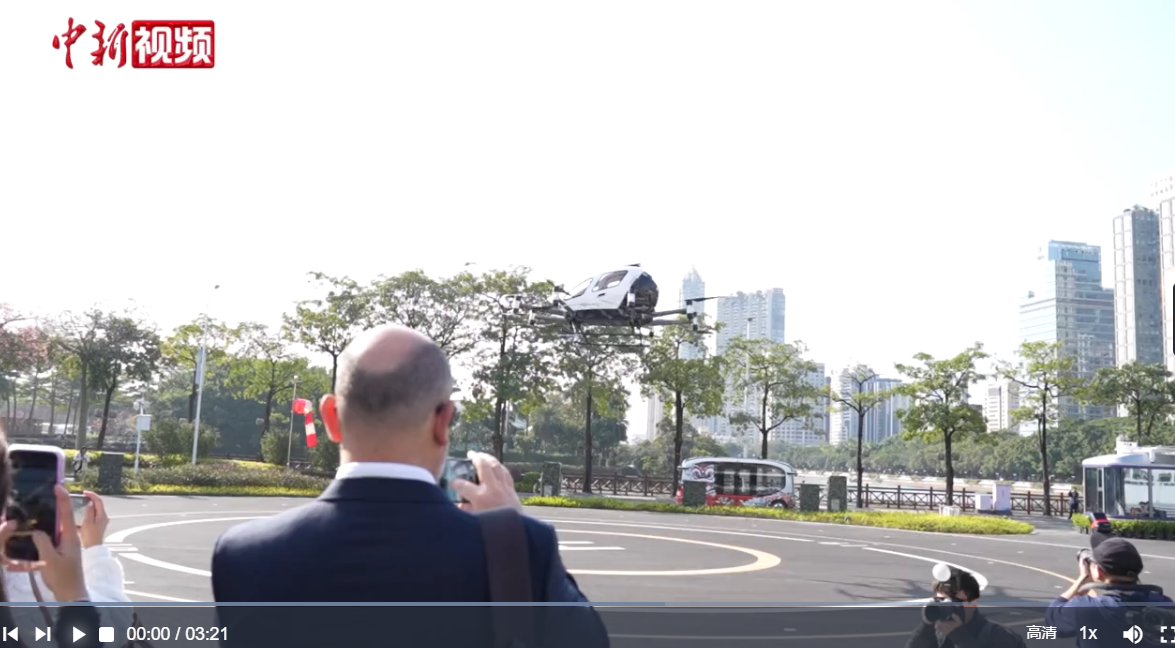
Core Insights - The 2026 APEC First Senior Officials' Meeting and related events will be held in Guangzhou from February 1 to 10, focusing on the theme of the 2026 APEC meeting and discussing specific cooperation to prepare for the informal leaders' meeting in November [2] Group 1 - The event will feature carefully planned city experience routes, including themes such as "Millennium Commerce · Innovative Future City Tour" and "Flower City Green Heart · Central Ecological and Cultural Tour," allowing participants to fully experience the vitality of the old city [2] - During the technology innovation-themed tour, foreign guests visited the Haixinsha All-Space Intelligent Experience Center, showcasing representative achievements in Guangzhou's low-altitude economy, intelligent networking, and embodied intelligence [2] - Guests had the opportunity to witness the convenience of flying cars, interact with intelligent robots, and participate in simulated flights, providing an immersive experience of the technological innovations from Guangdong enterprises [2]
光谷发布400项场景清单,为创新提供“应用土壤”
第一财经· 2026-02-05 08:27
2026.02. 05 本文字数:1015,阅读时长大约2分钟 供给场景清单则整合区域创新资源,筛选出270项技术实力强、服务水准高的优质供给,构建起全链条服务生态。其中新领域新赛道92项,具备低空飞 行平台、机器人交互系统等核心能力;产业升级68项,覆盖半导体检测、智慧工厂整体解决方案;行业应用9项,提供行业大模型、数据安全平台等技 术;社会治理34项,拥有低空安防、交通调控等支撑能力;民生服务67项,涵盖AI诊疗、智慧教育等产品体系。此清单旨在向社会广泛推介"光谷优秀 方案",为光谷企业的新产品、新技术提供明确的应用入口和市场验证空间。 电鹰科技相关负责人认为,此次发布的"三张清单",精准回应了行业共性痛点,为企业新技术、新产品搭起了一座"落地桥",提供了明确的应用入口和市 场验证空间,将大大提高供需对接效率。 东湖高新区发改局有关负责人表示,下一步将建立健全"三张清单"动态更新与管理机制,通过深化场景开放与重点产业融合发展,持续优化光谷产业创 新生态。 微信编辑 | 夏木 第一财经持续追踪财经热点。若您掌握公司动态、行业趋势、金融事件等有价值的线索,欢迎提供。 专用邮箱:bianjibu@yicai.c ...

光谷发布400项场景清单,为创新提供“应用土壤”
Di Yi Cai Jing Zi Xun· 2026-02-05 08:17
供给场景清单则整合区域创新资源,筛选出270项技术实力强、服务水准高的优质供给,构建起全链条 服务生态。其中新领域新赛道92项,具备低空飞行平台、机器人交互系统等核心能力;产业升级68项, 覆盖半导体检测、智慧工厂整体解决方案;行业应用9项,提供行业大模型、数据安全平台等技术;社 会治理34项,拥有低空安防、交通调控等支撑能力;民生服务67项,涵盖AI诊疗、智慧教育等产品体 系。此清单旨在向社会广泛推介"光谷优秀方案",为光谷企业的新产品、新技术提供明确的应用入口和 市场验证空间。 因缺少"第一个吃螃蟹的人","新技术"难以跨越"应用鸿沟",硬被拖成了"老技术"。如何破解这一难 题? 电鹰科技相关负责人认为,此次发布的"三张清单",精准回应了行业共性痛点,为企业新技术、新产品 搭起了一座"落地桥",提供了明确的应用入口和市场验证空间,将大大提高供需对接效率。 2月5日,武汉光谷对外发布首批400项光谷2026年创新应用场景清单。场景清单紧扣"新领域新赛道、产 业转型升级、行业领域深度应用、创新社会治理、丰富民生领域"五大重点方向,包括10项典型应用场 景、120项需求场景、270项供给场景,以打通创新成果转化 ...