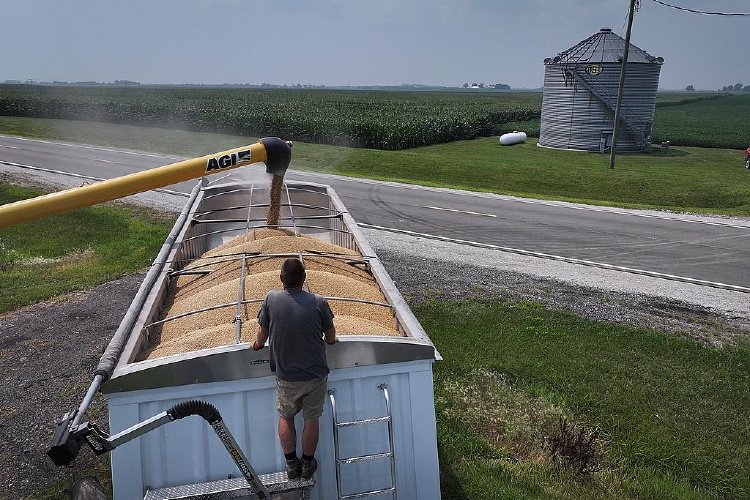
大豆种植

Search documents
特朗普办事不力,美国农民不忍了,递出公开信,要求与华达成协议
Sou Hu Cai Jing· 2025-08-26 00:07
Core Viewpoint - The article highlights the urgent concerns of American soybean farmers regarding the need for a trade agreement with China to regain access to the Chinese market, which is crucial for their survival and economic stability [1][6][13]. Group 1: Trade Relations and Market Dynamics - The fate of the American soybean industry is closely tied to China, the world's largest soybean buyer, with Chinese demand significantly influencing global soybean markets [3]. - Due to strained trade relations, Chinese importers have shifted their focus to Brazil, which has become the largest supplier of soybeans to China, with orders reaching 2.4 million tons in just one week in April 2025 [3][5]. - American farmers have attempted to explore new markets in the EU and Southeast Asia, but these efforts have not compensated for the loss of the Chinese market, leading to a long-term trend of Chinese importers favoring stable suppliers like Brazil [5]. Group 2: Farmers' Concerns and Appeals - American soybean farmers have expressed their desperation in open letters to the Trump administration, emphasizing the critical need for a trade agreement with China to restore significant purchasing orders [6]. - The current market conditions for soybeans are at an unprecedented low, and without a timely agreement, farmers face severe financial difficulties, including heavy loan burdens [6]. - The American Soybean Association has been vocal about the importance of maintaining stable trade relations with China and has urged the government to take concrete actions to resolve trade disputes [6]. Group 3: Government Response and Negotiation Progress - U.S. Treasury Secretary Mnuchin's recent statements have provided a glimmer of hope, indicating satisfaction with the current tariff arrangements and progress in trade negotiations, with expectations for further meetings before November [10]. - Ongoing trade talks between the U.S. and China have shown signs of progress, including a 90-day tariff "truce" and extensions of tariff suspension periods, but farmers remain concerned about whether these negotiations will translate into actual orders from Chinese importers [11]. - The plight of American soybean farmers serves as a microcosm of the broader U.S.-China trade tensions, highlighting the need for pragmatic trade policies that consider the livelihoods of farmers [13].

美国豆农上书特朗普,贸易协议不能再拖,美财长等不及与中方面谈
Sou Hu Cai Jing· 2025-08-23 17:26
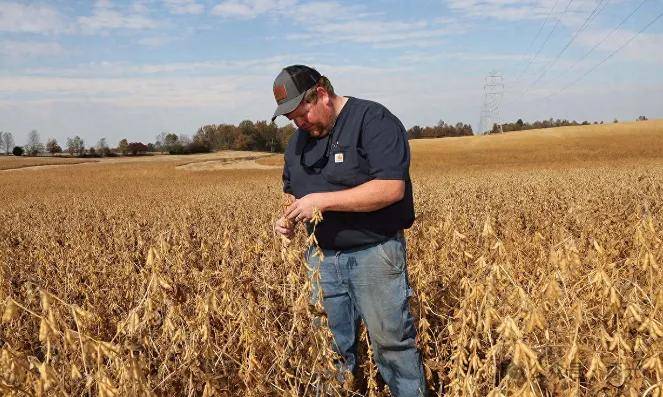
Core Viewpoint - The article highlights the significant impact of the U.S.-China trade war on American soybean farmers, who are facing a drastic decline in orders from China, the largest importer of soybeans globally, leading to financial distress and a surplus of unsold soybeans [3][5][6]. Group 1: Impact on American Soybean Farmers - American soybean farmers, like Johnson, are experiencing a stark contrast to previous years when orders from China were abundant, resulting in a prosperous harvest season [3]. - The trade war initiated by President Trump has led to China imposing tariffs on U.S. soybeans, severely affecting farmers who heavily relied on the Chinese market [3][5]. - The inability to sell soybeans to China has resulted in a significant surplus, with thousands of tons of soybeans piling up, causing financial strain on farmers due to falling prices and mounting loan pressures [5][6]. Group 2: Response from U.S. Government - In response to the crisis, President Trump publicly urged China to purchase more U.S. soybeans, indicating a sense of urgency and desperation [6]. - The U.S. Treasury Secretary has shifted from a hardline stance to expressing eagerness for new negotiations with China, reflecting the pressure felt by the administration due to the farmers' plight [6]. - The article suggests that the U.S. government's previous approach of extreme pressure may not yield the desired results, as it has backfired on the farmers who are now advocating for a resolution [6][7]. Group 3: Future of U.S.-China Trade Relations - China's position remains firm, indicating a willingness to negotiate but not to compromise on core interests, suggesting a prolonged period of tension in trade relations [7].
特朗普终于签字,但希望中国能够掏钱买美国货,不料关键时刻美军出动,在黄岩岛叫板中国!
Sou Hu Cai Jing· 2025-08-23 11:39
Group 1: Trade Relations - The U.S. has postponed the significant increase in tariffs on Chinese goods for an additional 90 days, indicating a strategic maneuver to address trade negotiations with other countries before refocusing on China [1] - Trump has urged China to significantly increase its purchases of U.S. soybeans, aiming to reduce the trade deficit, despite the fact that U.S. soybean sales to China have plummeted to a 20-year low [3] - Brazil has become the dominant supplier of soybeans to China, capturing nearly 70% of China's imports due to zero tariffs and price advantages, while U.S. soybeans struggle under a 23% punitive tariff [3] Group 2: Military Tensions - Following the tariff extension, the U.S. Navy's "Higgins" destroyer entered Chinese territorial waters, escalating military tensions in the South China Sea [5] - The timing of the U.S. military actions appears to be a calculated move to disrupt ongoing negotiations between China and ASEAN regarding the South China Sea Code of Conduct [5] - The U.S. military's provocative actions are increasingly viewed as ineffective, with allies like Japan and Australia showing reluctance to engage in joint military operations in the region [6] Group 3: Regional Dynamics - The Philippines seems to miscalculate its reliance on U.S. military support, overlooking its geographical proximity to China, which could leave it vulnerable in the event of escalated tensions [7]
中美贸易谈判稳了,美国又一软肋浮出水面,特朗普也得小心应对
Sou Hu Cai Jing· 2025-08-22 11:04
Group 1 - The core issue of the US-China trade negotiations is the ongoing stalemate, with both sides agreeing to extend current tariff policies for 90 days to avoid escalating the trade war [1] - The US soybean producers are facing significant pressure due to the trade war, urging the Trump administration to prioritize soybean issues in negotiations with China and to eliminate retaliatory tariffs [3][5] - The pressure from US farmers on the Trump administration highlights the negative impact of the trade war on domestic agriculture, which could affect trade negotiations and the upcoming midterm elections [5][6] Group 2 - The exposure of agricultural vulnerabilities, alongside previous concerns regarding rare earth supplies, indicates that the US has limited leverage in negotiations with China [7] - As time progresses, internal pressures on the Trump administration to reach a resolution with China are expected to increase, limiting the time available for negotiations [7]
中美“关税战”最大牺牲品浮出水面!特朗普突遭晴天霹雳,中国铁了心不再购买美国大豆
Sou Hu Cai Jing· 2025-08-22 06:15
Core Viewpoint - The article discusses the challenges faced by the U.S. soybean industry due to declining exports to China, highlighting the impact of political decisions on agricultural cash flow and market dynamics [1][3][10] Group 1: U.S. Soybean Exports and Market Dynamics - U.S. soybean exports heavily rely on China, with approximately 28% of production sold to China before 2018, and nearly 60% of total U.S. soybean exports [3] - In the 2023/24 market year, U.S. soybean exports to China are projected at nearly 25 million tons, while exports to the EU are less than one-fifth of that amount [3] - The delay in Chinese orders for U.S. soybeans is the latest in nearly two decades, with China locking in significant purchases from Brazil instead [1][3] Group 2: Factors Influencing China's Purchasing Decisions - China's reluctance to purchase U.S. soybeans is driven by three main factors: price competitiveness, stable supply chain, and risk management [4] - The increase in South American soybean production and lower shipping costs have made Brazilian soybeans more attractive to China [4] - Political tensions have led China to diversify its sourcing strategy, incorporating alternative oils and reducing reliance on U.S. soybeans [4][7] Group 3: Implications for U.S. Farmers - U.S. farmers face significant financial risks due to the potential disruption of cash flow from contract farming, which is tightly linked to market conditions and political decisions [3][4] - The article emphasizes that U.S. farmers are becoming "tools" in political negotiations, with their economic stability jeopardized by the intertwining of agricultural trade and political agendas [7][10] - Historical data shows that U.S. agricultural losses can be substantial, as seen in 2018 when tariffs led to a drop in exports to China, resulting in an estimated $2 billion loss [4][10] Group 4: Recommendations for U.S. Agricultural Policy - The article suggests that the U.S. government should focus on creating predictable trade rules and reducing political noise to regain market share in China [5][8] - Specific recommendations include establishing a clear timeline for tariff handling, improving logistics and inspection processes, and separating agricultural issues from broader political discussions [8] - By addressing these areas, the U.S. soybean industry could potentially restore its competitive edge and improve cash flow stability for farmers [8][10]
扛不住了!中国转向巴西大豆,美国豆农致信:尽快对华达成协议
Sou Hu Cai Jing· 2025-08-22 05:58
Core Viewpoint - The article highlights the significant decline in U.S. soybean exports to China, which have dropped from 22 million tons to just 3 million tons, marking a 86% decrease, primarily due to trade policies and tariffs imposed by the Trump administration [1][4][19]. Group 1: Trade Dynamics - China has signed a substantial soybean order of 12 million tons with Brazil, leaving U.S. farmers without any sales [1][7]. - From January to August, China's total soybean imports reached 78 million tons, a 12.5% increase year-on-year, with Brazilian soybeans accounting for 78.3% of this total, while U.S. share fell to 4.2% [1][4]. - Brazil's soybean planting area is set to expand by 15%, with expected production reaching 160 million tons by 2026, establishing a robust supply chain to China [4][13]. Group 2: Price and Market Impact - Soybean prices at the Chicago Mercantile Exchange have fallen to $8.22 per bushel, which is 15% below production costs, indicating a significant market shift [5][9]. - Following the announcement of agricultural subsidies, soybean prices dropped by 1.5%, reflecting market skepticism about the effectiveness of such measures [9]. Group 3: Policy and Economic Consequences - Trump's tariffs on Chinese imports, intended to pressure China, resulted in a retaliatory 10% tariff on U.S. soybeans, eliminating any price advantage for U.S. farmers [7][18]. - The agricultural subsidy of $61 billion primarily benefited large farms and urban investors, leaving small farmers with insufficient support [9][14]. - The U.S. agricultural sector is witnessing a rise in farm bankruptcies, with 88 farms filing for bankruptcy in April 2025, a 76% increase from the previous year [14]. Group 4: Future Outlook - China aims to increase its soybean self-sufficiency to 25% by 2030, reducing reliance on imports, while Argentina and Uruguay are also expanding soybean exports to China [17]. - Brazil has initiated currency settlements in RMB for 35% of its soybean trade, mitigating dollar exchange rate risks and enhancing trade efficiency [16].
宁愿赔钱也要把粮食卖中国!美国的粮食垄断梦,如何被中国瓦解?
Sou Hu Cai Jing· 2025-08-21 15:36
Core Viewpoint - The article discusses the significant decline of U.S. soybean exports to China due to trade tensions and China's strategic efforts to boost its domestic soybean production and diversify its import sources, particularly from South America [1][25]. Group 1: Trade Relations and Historical Context - In 2018, the Trump administration initiated trade tensions by imposing tariffs on soybeans, which were among the first products targeted [3]. - At that time, China imported 32.85 million tons of soybeans from the U.S., accounting for 34.4% of its total imports, making the U.S. a major supplier [4]. Group 2: China's Response and Domestic Production - In response to U.S. tariffs, China launched a "Soybean Revitalization Plan," significantly increasing domestic soybean planting and production [7][9]. - The area planted with soybeans in Northeast China has remained above 15 million acres for three consecutive years, with domestic production rising from 12 million tons to 20 million tons, achieving a self-sufficiency rate of nearly 20% [9]. Group 3: Technological Innovations and Efficiency - Chinese feed companies have adopted low-protein diets, reducing soybean meal usage by over 1 million tons annually, equivalent to a decrease in the need for 1.4 million tons of imported soybeans [11]. - Advanced processing techniques have reduced waste in soybean oil production, increasing output by 300,000 tons annually [13]. Group 4: Shifts in Import Sources - By January to July 2025, 65% of China's soybean imports came from Brazil, with U.S. soybeans accounting for less than 6% of imports in June [15]. - Brazil's soybean exports to China increased from 66.08 million tons in 2018 to 74.65 million tons in 2024, capturing over 71% of the market share [15]. Group 5: Impact on U.S. Farmers - U.S. farmers are facing significant economic challenges, with a backlog of 7 million tons of soybeans at risk of spoilage, translating to a potential loss of $4.3 billion in revenue [19]. - The ongoing trade war has made the economic situation for U.S. agriculture more difficult than during the initial trade tensions in 2018 [17]. Group 6: Global Agricultural Cooperation - China is expanding its agricultural cooperation globally, including establishing large-scale soybean planting bases in Africa and enhancing agricultural ties with countries like Japan and South Korea [22][23]. - The strategic partnerships and investments in agricultural infrastructure are reshaping the global food supply chain, reducing reliance on U.S. soybeans [25].
不到48小时,美国终于对印交底,贝森特再出招,莫迪做了两手准备
Sou Hu Cai Jing· 2025-08-21 12:43
Group 1 - The core viewpoint of the article highlights the escalating trade tensions between the US and India, with the US imposing a 25% tariff on India, which Modi's efforts to negotiate have failed to mitigate [1][5]. - The US is strategically using pressure on India to assert its stance against China, while simultaneously showing a cooling relationship with India since the India-Pakistan conflict [5][9]. - The US's actions include a phased approach to increase tariffs on India, undermining India's attempts to reduce tariffs and forcing the Indian government to respond [5][9]. Group 2 - The article discusses the significant increase in India's oil imports from Russia, which now account for 42% of its oil procurement, raising concerns about potential US sanctions against India [7]. - Modi faces a dilemma of either maintaining a strong stance with the "Make in India" initiative or making concessions to the US, such as temporarily canceling the 11% tariff on cotton imports to signal goodwill [9]. - The outcome of the trade negotiations heavily depends on whether the US will reciprocate India's gestures, particularly regarding agricultural tariffs, which are crucial for India's economy [9].
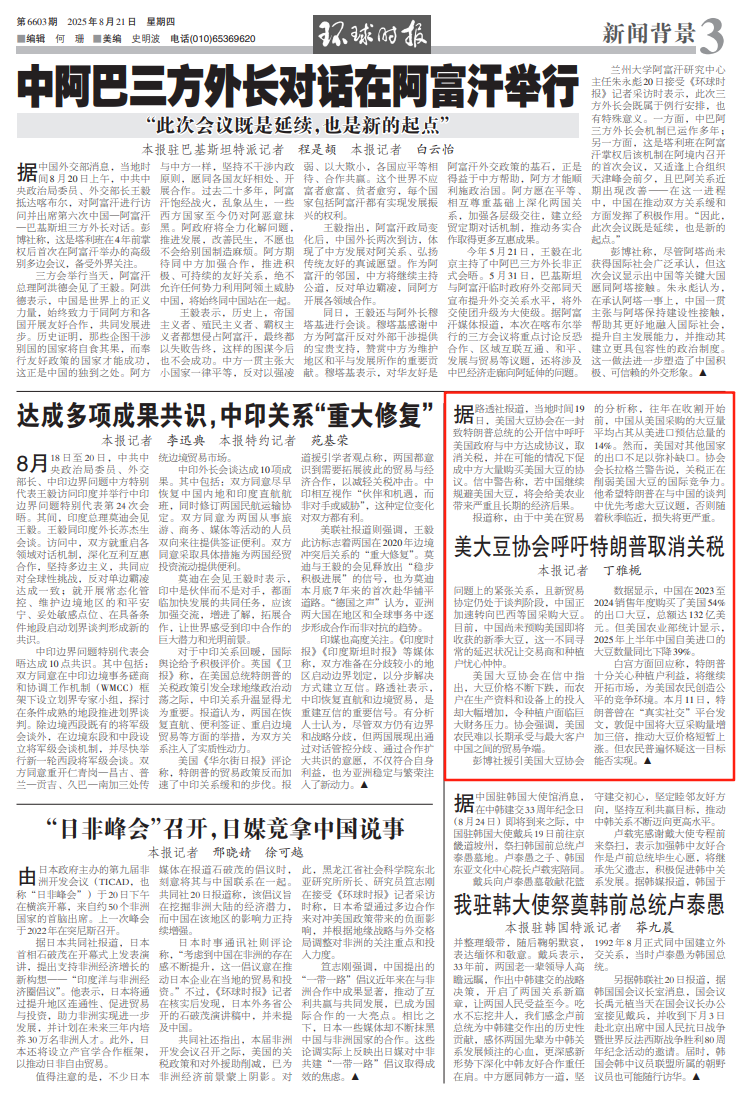
中国尚未预购,美种植户忧心忡忡!
Huan Qiu Shi Bao· 2025-08-21 00:43
Group 1 - The American Soybean Association urges the U.S. government to reach an agreement with China to eliminate tariffs and encourage significant purchases of U.S. soybeans, warning of severe long-term economic consequences for U.S. agriculture if China continues to avoid U.S. soybeans [1][6][7] - Due to ongoing trade tensions between the U.S. and China, China is accelerating its soybean purchases from Brazil and has not pre-purchased the upcoming U.S. soybean harvest, causing concern among traders and farmers [1][6][7] - The soybean prices are declining while farmers face increased costs for production materials and equipment, leading to significant financial pressure on U.S. farmers [1][6][7] Group 2 - The U.S. soybean exports to China have significantly decreased, with a reported 39% drop in soybean quantities compared to previous years, raising concerns about the ability to fill export gaps [6][7] - The American Soybean Association highlights that the ongoing trade dispute with China is unsustainable for U.S. farmers, who are struggling to cope with the financial implications of the tariffs [1][6][7]
美大豆协会呼吁尽早同中国达成协议,缓解豆农危机
Yang Shi Xin Wen Ke Hu Duan· 2025-08-20 23:26
Core Viewpoint - The American Soybean Association is urging President Trump to prioritize soybean issues in trade negotiations with China due to significant financial pressure faced by U.S. soybean farmers as harvest season approaches [2] Group 1: Financial Pressure on Soybean Farmers - U.S. soybean farmers are experiencing "extreme" financial pressure as soybean prices continue to decline while production and equipment costs rise significantly [2] - The prolonged trade dispute with China is severely impacting U.S. soybean farmers, who are unable to sustain their operations without a resolution [2] Group 2: Export Statistics - Prior to 2018, an average of 28% of U.S. soybeans were exported to China, accounting for 60% of total U.S. soybean exports during that period [2] - For the 2023-2024 marketing year, U.S. soybean exports to China are projected to be nearly 25 million tons, significantly exceeding the 4.9 million tons exported to the European Union [2]