
电网

Search documents
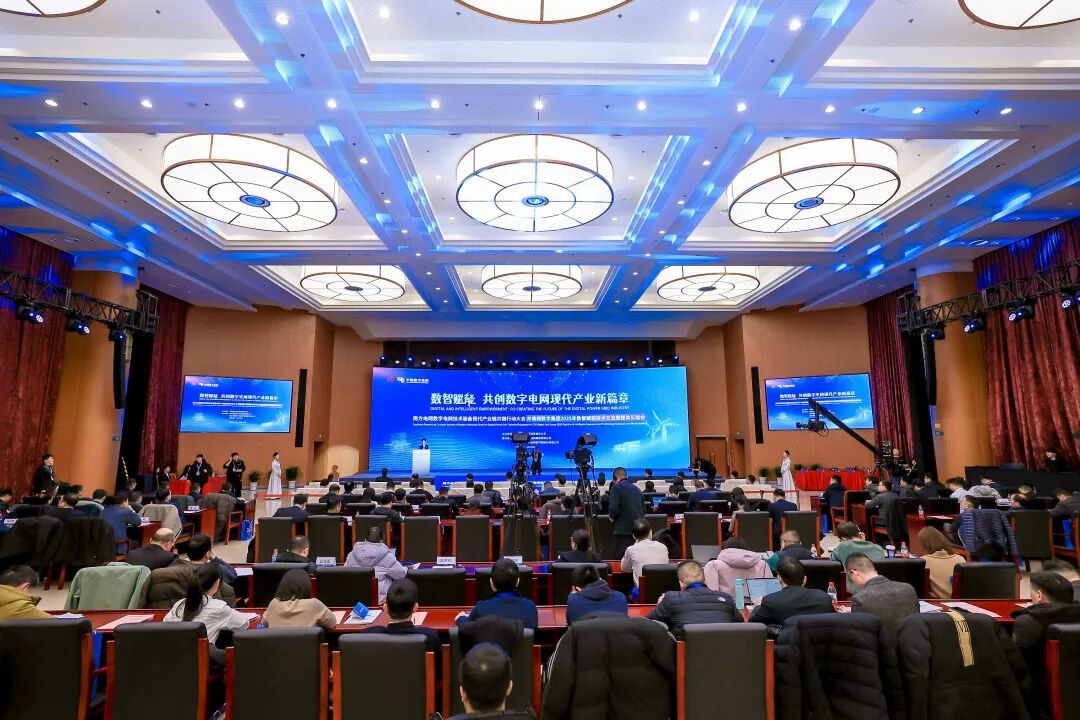
数字电网技术装备现代产业链共链行动大会并南网数字集团2025数智赋能技术交流暨媒体见面会在京举行
Zhong Guo Neng Yuan Wang· 2026-01-07 02:56
Core Viewpoint - The conference organized by China Southern Power Grid Company focused on the integration of digital technology and energy power, emphasizing the importance of digital grid technology in building a new power system and promoting collaborative innovation across the industry chain [2][3]. Group 1: Digital Grid Technology and AI Integration - The conference highlighted the release of the collaborative action plan and supply-demand matching list, showcasing the company's achievements in digital grid, artificial intelligence, and trusted data space [3]. - The official launch of the AI innovation platform marked a significant step towards large-scale and systematic application of AI in the energy sector, injecting strong momentum into collaborative innovation across the industry chain [3][4]. - The AI platform has achieved over 10 billion calls since its launch, with an average of over 40 million calls per day, demonstrating its leading position in the energy sector [5]. Group 2: Collaborative Action and Industry Integration - The "Collaborative Action" plan aims to deepen integration across the industry chain, providing clear cooperation guidelines for stakeholders [7]. - The initiative has engaged over 247 units, creating a comprehensive digital grid ecosystem that emphasizes resource sharing and collaborative development [7]. - The company is transitioning from being a technology provider to an organizer of industry collaboration and co-creation of ecological value [7]. Group 3: Carbon Management and Green Infrastructure - The integration of carbon management into core operations is a strategic focus, with initiatives aimed at creating a green supply chain and enhancing international competitiveness [10]. - The company has established an internal carbon market system to incorporate carbon emissions costs into performance assessments, promoting a culture of carbon reduction [10]. - Collaborative efforts with partners have led to the development of a cross-regional carbon and computing collaborative operation system, showcasing the potential for deep integration of energy and computing industries [9]. Group 4: Future Outlook and Strategic Goals - Looking ahead, the company aims to leverage the new power system's demands to drive technological innovation and establish a new infrastructure for AI and carbon collaboration [13]. - The focus will be on enhancing open collaboration and ecological co-construction to maximize the multiplier effect of digital empowerment across the energy sector [13].

中邮证券:电网投资进一步加大 看好电网智能化的发展
Zhi Tong Cai Jing· 2026-01-06 06:21
Group 1 - The report from China Post Securities indicates that by December 31, 2025, the National Development and Reform Commission and the National Energy Administration will promote high-quality development of the power grid, with the "West-to-East Power Transmission" scale exceeding 420 million kilowatts by 2030, and an additional inter-provincial power exchange capacity of around 40 million kilowatts, supporting renewable energy generation to account for approximately 30% [1] - The report emphasizes the need for the integration of main and distribution networks in the new power system, suggesting an open attitude towards various technologies for high proportions of renewable energy consumption, while advocating for increased investment in the power grid [1] - The report highlights the importance of balancing safety and efficiency in the power grid, with a focus on enhancing transmission efficiency and economic viability while maintaining reasonable planning and construction rhythms for transmission channels [2] Group 2 - The report outlines the necessity for advanced planning of distribution facilities, indicating that the distribution network must evolve into a bidirectional interactive system, which is crucial for supporting distributed renewable energy and improving asset utilization [2] - It discusses the role of smart microgrids in reducing the complexity of flow calculations and their potential to minimize impacts on the grid, while stressing that overall safety must remain a priority [2] - The report recommends focusing on companies such as Guodian NARI (600406.SH), Sifang Co., Ltd. (601126.SH), Guodian Nanzhong (600268.SH), and Jinzhitech, as they align with the trends of grid safety and renewable energy consumption [2]
中信证券:“十五五”时期电网基本建设投资或达3.8万亿元 建议关注特高压、电网数智化、互联互济等环节
Zheng Quan Shi Bao Wang· 2026-01-06 00:41
Core Viewpoint - The National Development and Reform Commission and the National Energy Administration released guidelines to promote high-quality development of the power grid, addressing challenges related to the high integration of renewable energy and optimizing resource allocation efficiency [1] Group 1: Investment Outlook - It is projected that during the 14th Five-Year Plan period, the total investment in power grid infrastructure may reach 3.8 trillion yuan, driven by continuous growth in electricity consumption [1] Group 2: Key Focus Areas - The guidelines provide clear directives on areas such as total investment in the power grid, coordination between main and distributed microgrids, and the application of new technologies [1] - Emphasis is placed on segments like ultra-high voltage, digitalization of the power grid, and interconnectivity [1]

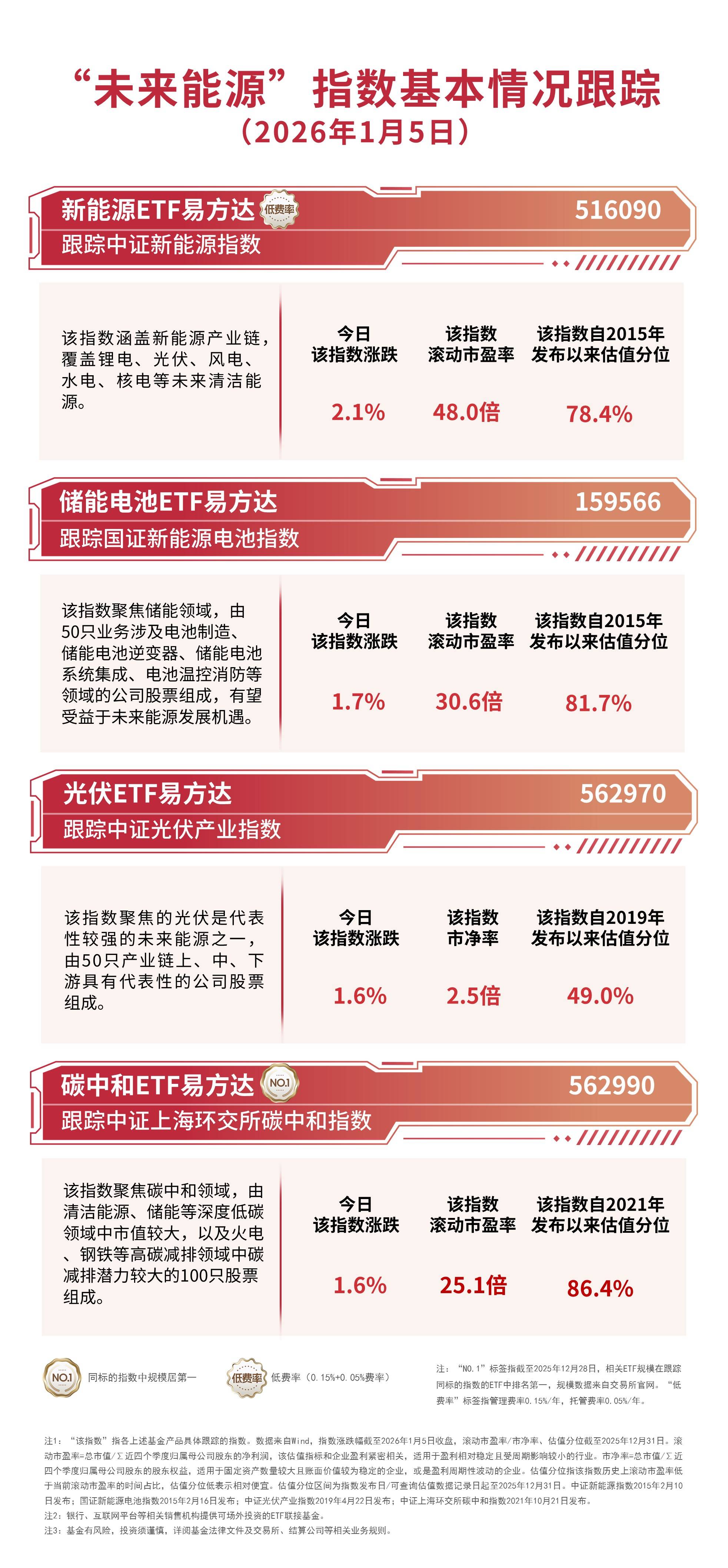
新能源板块全线走强,储能电池ETF易方达(159566)全天净申购达5600万份
Sou Hu Cai Jing· 2026-01-05 12:11
Group 1 - The new energy sector showed strong performance today, with the China Securities New Energy Index rising by 2.1%, the National Securities New Energy Battery Index increasing by 1.7%, and both the China Securities Photovoltaic Industry Index and the China Securities Shanghai Carbon Neutrality Index up by 1.6% [1] - The E Fund Energy Storage Battery ETF (159566) saw a net subscription of 56 million units throughout the day, indicating strong investor interest in related ETFs [1] - Huatai Securities emphasized the importance of accelerating the construction of a new energy system during the 14th Five-Year Plan, focusing on the development of new energy storage and the acceleration of smart grid construction [1] Group 2 - The index focusing on the energy storage sector consists of 50 companies involved in battery manufacturing, energy storage battery inverters, energy storage battery system integration, and battery temperature control and fire protection, which are expected to benefit from future energy development opportunities [4] - The E Fund Photovoltaic ETF tracks the China Securities Photovoltaic Industry Index, which includes 50 representative companies across the upstream, midstream, and downstream of the photovoltaic industry chain [6]
电力设备行业跟踪周报:锂电价格快速联动,太空光伏远期空间大-20260105
Soochow Securities· 2026-01-05 01:45
Investment Rating - The report maintains an "Accumulate" rating for the electric power equipment industry [1] Core Views - The lithium battery prices are rapidly linked, and there is significant long-term potential in space photovoltaic technology [1] - The energy storage sector is expected to see substantial growth, with a projected increase of over 60% in 2026 due to rising demand and supply constraints [3][7] - The electric vehicle market is anticipated to grow by 15% in 2026, supported by continued subsidies and a strong export contribution [26] Industry Trends - The electric power equipment sector experienced a decline of 2.18%, underperforming the market, with specific segments like wind power and new energy vehicles showing slight increases [3] - The report highlights the release of independent energy storage capacity compensation in Hubei Province at 165 RMB/kW·year, indicating government support for energy storage development [3] - The report notes that the global energy storage market is expected to grow significantly, with the U.S. projected to see a 60% increase in energy storage installations in 2025 [7] Market Prices and Changes - Lithium carbonate prices are reported at 112,500 RMB/ton, showing a slight decrease of 0.9% [3] - The average price of polysilicon is reported at 53.00 RMB/kg, with no change, while N-type silicon wafers have seen a price increase of 20% [3] - The report indicates that the average bidding price for onshore wind power is 1,800 RMB/kW, reflecting a competitive market environment [3] Company Performance - Companies like Ningde Times and BYD are highlighted for their strong performance, with Ningde Times expected to see a net profit of 11-16 billion RMB in 2025, representing a year-on-year increase of 127%-230% [3] - Tianqi Lithium and Ganfeng Lithium are noted for their strategic partnerships and production capacity expansions, positioning them well in the lithium supply chain [3] - The report emphasizes the strong growth potential for companies involved in energy storage and lithium battery production, recommending investments in leading firms such as Ningde Times and Yiwei Lithium Energy [3][6]






两部门发文促进电网高质量发展
Ke Ji Ri Bao· 2026-01-04 10:48
Core Viewpoint - The "Guiding Opinions" issued by the National Development and Reform Commission and the National Energy Administration aim to systematically clarify the overall thinking and tasks for the development of the power grid in the near future, accelerating the construction of a new type of power grid platform that integrates main, distribution, and micro grids, thereby promoting high-quality development of the power grid [1][2][3] Group 1: Development Goals - By 2030, a new type of power grid platform will be initially established, with the capacity for "West-to-East Power Transmission" exceeding 420 million kilowatts, and the ability to accommodate distributed renewable energy reaching 900 million kilowatts [1] - The share of renewable energy generation is expected to reach around 30%, with support for over 40 million charging infrastructure units [1] - By 2035, the development of main, distribution, and micro grids will be fully coordinated, enhancing the safety governance mechanisms across all levels of the power grid [1] Group 2: Planning and Construction - The "Guiding Opinions" emphasize unified planning and construction of power grids, promoting the coordinated development of main, distribution, and micro grids, and enhancing the structure of the main grid [2] - It calls for orderly advancement of cross-provincial and cross-regional transmission channel planning and construction, as well as increased investment in power grids [2] Group 3: Technological Innovation - The "Guiding Opinions" require strengthening key technological breakthroughs for the power grid, focusing on stability analysis and control technologies for new power systems, and promoting the integration of artificial intelligence and digital technologies into power grid operations [2] - It aims to enhance the flexibility and adaptability of power dispatching, transitioning the control model from a focus on the main grid to a collaborative approach involving main, distribution, and micro grids [2]
电力设备与新能源行业研究:假期间积极催化密集、港美股强势,电新2026开门红可期
SINOLINK SECURITIES· 2026-01-04 09:39
Investment Rating - The report maintains a positive outlook on the electric new energy sector, particularly highlighting the potential for strong performance in 2026 [5][10]. Core Insights - The electric new energy sector is experiencing significant catalysts, including the rapid IPO progress of companies like Blue Arrow Aerospace and price increases in solar components by Trina Solar, indicating a recovery in profitability [1][5]. - The report emphasizes the importance of space photovoltaics and commercial aerospace as key investment themes, alongside the rising prices in energy storage and lithium batteries [5][10]. - The report suggests that the photovoltaic industry is on track for a recovery, driven by price increases and improved profitability across the supply chain [9][10]. Summary by Relevant Sections Photovoltaics & Energy Storage - The report highlights the acceleration of IPOs in the commercial aerospace sector, particularly for space photovoltaics, with significant growth potential [6][8]. - Trina Solar has set a new price range for distributed solar components at 0.82-1.06 CNY/W, which is significantly higher than recent market prices, indicating the start of a price recovery [8][9]. - The report notes ongoing efforts to strengthen intellectual property protections in the photovoltaic industry, which supports the trend of profitability recovery [6][9]. Wind Power - In December, new wind turbine tenders in China reached approximately 10.6 GW, marking a year-on-year increase of 37% and a quarter-on-quarter increase of 36% [2][11]. - The report anticipates continued growth in domestic demand for wind power in 2026, with significant overseas orders expected to materialize [12][15]. - The average bidding price for land-based wind turbines has remained high, with all power segments achieving over 10% price increases year-on-year [15][16]. Lithium Batteries - January production data indicates a slight decrease in domestic battery production, with a total of 142.54 GWh, down 4.23% month-on-month [22][23]. - Tianqi Lithium has forecasted a substantial increase in net profit for 2025, driven by strong demand in the electric vehicle and energy storage markets [22][23]. - The report highlights the ongoing price recovery in lithium battery materials, with significant growth in sales volumes contributing to improved profitability [22][23]. AIDC (Artificial Intelligence Data Center) - The report notes a sustained high market interest in the liquid cooling sector, driven by industry trends and the penetration of leading domestic companies [30][31]. - Investment opportunities are identified in companies that provide comprehensive liquid cooling solutions, particularly as demand for data center infrastructure grows [30][31]. Power Grid - The report mentions the approval of significant high-voltage projects, indicating a rapid acceleration in approvals and tenders for high-voltage equipment [32][33]. - The total tendering amount for the State Grid in 2025 is projected to reach 454.4 billion CNY, reflecting a 4% year-on-year increase [32][39]. - The report emphasizes the importance of transformer technology and the expected supply-demand imbalance in the North American market, presenting opportunities for companies with strong delivery capabilities [34][35].



中电联规划发展部主任张琳解读《关于促进电网高质量发展的指导意见》
Zhong Guo Dian Li Bao· 2026-01-04 01:31
Core Viewpoint - The article discusses the release of the "Guiding Opinions on Promoting High-Quality Development of the Power Grid," which outlines a strategic framework for the development of a new type of power grid in China, emphasizing the integration of main, distribution, and micro grids to enhance energy security and support the transition to a unified national electricity market [1][3]. Group 1: Overall Direction for High-Quality Development - China's power grid has achieved remarkable historical accomplishments, becoming the world's strongest in transmission capacity and the highest in operational voltage levels, with a significant scale of renewable energy integration [2]. - The guiding opinions set a clear direction for future power grid development, addressing the need for a safe, reliable, flexible, and efficient new power grid platform by 2030 and 2035 [3]. Group 2: New Concepts for Power Grid Development - The new power grid platform is essential for ensuring energy security, requiring collaboration between main, distribution, and micro grids to enhance overall capacity and stability [4]. - The guiding opinions propose practical measures for improving power supply reliability in urban areas and enhancing the infrastructure for distributed energy resources [4]. Group 3: Systematic Deployment of New Tasks - The guiding opinions emphasize unified planning for the development of main, distribution, and micro grids, with specific tasks outlined for investment and construction [7]. - A focus on coordinated operation and control is highlighted, aiming to adapt to the rapid development of various new energy business models [8]. - The document stresses the importance of safety governance across all grid levels, advocating for a comprehensive risk prevention mechanism [9]. - Innovation in technology management is prioritized, with a focus on developing key technologies and enhancing regulatory frameworks to support high-quality grid development [10].
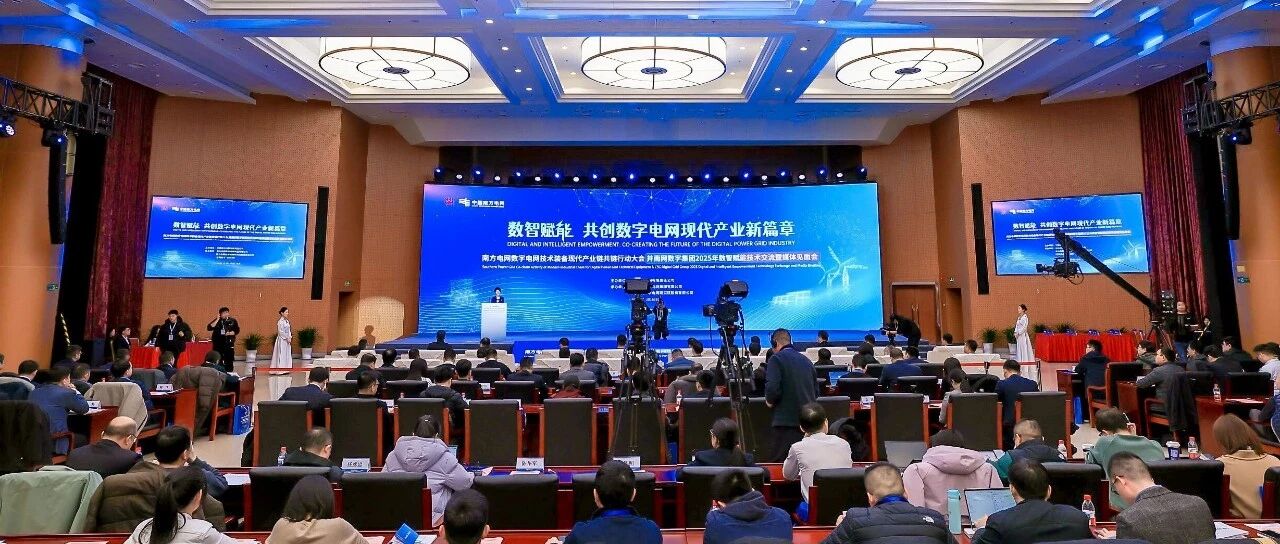
数字电网技术装备现代产业链共链行动大会并南网数字集团2025数智赋能技术交流暨媒体见面会在京举行
中国能源报· 2025-12-31 15:47
Core Viewpoint - The conference organized by China Southern Power Grid Company focuses on the integration of digital technology and energy power, aiming to promote collaborative innovation and large-scale application of digital grid technology, thereby constructing a modern industrial system for digital grids [2][3]. Group 1: Digital Grid and AI Innovation - The conference highlighted the release of the collaborative action plan and supply-demand matching list, showcasing the company's achievements in digital grids, artificial intelligence, and trusted data spaces [3][4]. - The launch of the AI innovation platform marked a significant milestone, indicating a new phase of large-scale, systematic, and ecological development of AI applications in the energy sector [4][5]. - The AI platform has achieved over 10 billion calls, with an average of more than 40 million calls per day, demonstrating its leading position in the energy sector [7][8]. Group 2: Collaborative Action and Industry Integration - The "Collaborative Action Plan" was officially released, outlining the implementation paths and specific measures for deep integration of the industry chain, marking a transition from a technology provider to an organizer of industry collaboration [10][11]. - The "Sunshine Collaborative" platform has engaged over 247 units, creating a comprehensive digital grid ecosystem with shared resources and collaborative innovation [11][12]. - The AI platform's capabilities are expected to enhance the digital grid's intelligent foundation and support collaborative innovation across the industry chain [8][19]. Group 3: Carbon Management and Green Infrastructure - The concept of "Electricity-Carbon-Computing Collaboration" is crucial for integrating the new power system with a nationwide computing network, showcasing the potential for deep collaboration between energy and computing industries [13][14]. - The company is implementing a carbon management system that integrates carbon emissions into core operations, establishing a market for carbon trading and promoting a green supply chain [14][19]. - The focus on digital management innovation emphasizes the importance of both internal and external improvements, contributing to the overall digital transformation of the company [17][19]. Group 4: Future Outlook - Looking ahead, the company aims to leverage the demands of the new power system to drive technological innovation, focusing on AI-native applications and autonomous key technology systems [19]. - The commitment to open collaboration and ecological co-construction is expected to release multiplier effects in the energy and power industry, supporting high-quality development and modernization of the industrial system [19].
中国力争到2030年初步建成新型电网平台
Zhong Guo Xin Wen Wang· 2025-12-31 13:31
Core Viewpoint - China aims to establish a new type of power grid platform by 2030, focusing on high-quality development and supporting the transition to a green and low-carbon energy system [1][2] Group 1: Development Goals - By 2030, the new power grid platform will include a backbone grid and distribution networks as key foundations, with smart microgrids as beneficial supplements [1] - The capacity for resource optimization in the power grid is expected to be significantly enhanced, with the "West-to-East Power Transmission" capacity exceeding 420 million kilowatts [2] - The share of renewable energy generation is targeted to reach approximately 30%, with distributed renewable energy capacity expected to accommodate 900 million kilowatts [2] Group 2: Infrastructure and Safety - The guidelines emphasize the importance of ensuring the safe operation of the large power grid and reliable electricity supply to meet high-quality electricity demands [1] - By 2035, the development of backbone grids, distribution networks, and smart microgrids will be fully coordinated, with improved safety governance mechanisms across all levels of the grid [2] - The digitalization and intelligence of grid facilities throughout their lifecycle are expected to be significantly enhanced, supporting the stable operation of the new power system [2]