种植业

Search documents
中央气象台:全国农业气象周报(2026年02月09日)
Xin Lang Cai Jing· 2026-02-09 00:44
Weather Characteristics and Agricultural Impact Analysis - The average temperature in most agricultural areas of the country is 1-2°C higher than the same period in previous years, with some regions like southeastern Northwest, western Huanghuai, and southern Jiangnan experiencing increases of 2-4°C, and northern Xinjiang seeing increases of 4-6°C [1][5] - Precipitation is scarce in most agricultural areas, with some regions like southern Jiangsu and northern Zhejiang receiving 25-50 mm, which is 30% to 200% more than the historical average [1][5] - Sunshine hours are close to historical averages in most northern agricultural areas, while southeastern Jiangnan and central-southern Hunan see sunshine hours increase by 80% to 200% [1][5] Future Weather Impact on Agriculture - The temperature in the central and eastern regions is expected to gradually rise, with most areas being 1-3°C higher than the historical average, benefiting the growth of winter wheat, rapeseed, and economic fruit trees [5] - Cumulative precipitation in regions like southwestern Huanghuai, Jianghuai, and most of Jiangnan is expected to be 5-20 mm, with some areas receiving 25-45 mm, which will help increase soil moisture but also poses a risk of waterlogging in poorly drained fields [5] - The next ten days will see multiple rainy days in western Jiangnan and eastern Southwest regions, with precipitation in northern Xinjiang and northeastern regions expected to be 3-6 mm, which may negatively impact facility agriculture and animal husbandry [5] Recommendations for Agricultural Management - Northern winter wheat areas should enhance field management based on seedling and moisture conditions to ensure safe overwintering of wheat [6] - Southern regions should manage water and fertilizer for winter wheat, rapeseed, and open-field vegetables, while areas with excessive rainfall should clear drainage channels to mitigate waterlogging [6] - Regions like Northeast, Xinjiang, and western Jiangnan should reinforce facility greenhouses and prepare feed reserves, while southern regions should focus on clearing and maintaining irrigation facilities in preparation for spring agricultural activities [6]


今年春耕备耕期间兰州市将巡回开展“田间课堂”
Xin Lang Cai Jing· 2026-02-09 00:43
Group 1 - The core initiative for this spring's agricultural preparation in Lanzhou is the "Field Classroom" program, which aims to provide technical training on major crops like wheat, corn, and potatoes, targeting all cooperatives, family farms, and large households [1] - The city will focus on key aspects of spring farming, ensuring the implementation of various tasks to enhance agricultural production and food security [1] - A total of 174 leading crop varieties and 35 supporting technologies will be promoted, including high-yield and resilient wheat varieties such as "Longchun 30" and "Ningchun 4" [1] Group 2 - The city plans to promote green production models, aiming for a 65% coverage rate of green pest control technologies and an 80% recovery rate of pesticide packaging waste [2] - The agricultural department will collaborate with market regulation authorities to ensure stable supply and pricing of agricultural materials, combating price gouging and illegal practices [2] - The city has over 40,000 agricultural machines, with maintenance and repair efforts already 80% completed to ensure readiness for the spring farming season [2]
红马奔腾策略系列2:从老红利到新红马之红马组合
Changjiang Securities· 2026-02-08 08:56
Core Insights - The Red Horse strategy emphasizes a diversified and sustainable income structure, focusing on future dividend growth potential rather than just current dividend levels [4][7] - The strategy combines qualitative and quantitative methods to screen for Red Horse industries and stocks, requiring healthy cash flow, good profit quality, and low capital expenditure [4][9] - The performance of the Red Horse portfolio has significantly outperformed major indices during the backtesting period, with a cumulative return of 59.41% compared to 27.03% for the CSI 300 index [9] Red Horse Industry Screening - The screening framework for Red Horse industries focuses on sectors where long-term capital expenditure trends are declining, leading to improved cash flow [7][16] - Potential Red Horse industries are identified based on moderate net profit growth rates and declining long-term averages, while excluding industries with rapidly declining recent performance [8][32] - Emerging Red Horse industries include energy metals, special steel, cement, logistics, general equipment, automotive services, and cosmetics, among others [8][32] Red Horse Stock Selection - The selection of Red Horse stocks prioritizes companies with healthy cash flows, strong profit quality, and low capital expenditures, indicating a solid financial foundation and sustainable dividend potential [9][24] - The Red Horse portfolio is divided into two categories: the Red Horse portfolio and the Red Horse preemptive portfolio, with different rebalancing dates based on earnings report disclosures [9][37] - The Red Horse preemptive portfolio achieved a cumulative return of 70% from April 15, 2025, to January 12, 2026, outperforming other major indices [9][37]
2026年中央一号文件在农业领域的新提法与新任务:提升农业综合生产能力和质量效益
Xin Lang Cai Jing· 2026-02-08 08:12
Core Viewpoint - The 2026 Central Document emphasizes the importance of enhancing agricultural comprehensive production capacity and quality efficiency as a critical task for achieving agricultural modernization by 2035 [8] Group 1: Agricultural Production Goals - The document sets a target for grain production to stabilize around 1.4 trillion jin in 2026, following projected outputs of 1.41 trillion jin in 2024 and 1.49 trillion jin in 2025, aligning with national food security needs [2] - It emphasizes the integration of good farmland, good seeds, good machinery, and good practices to enhance grain yield through comprehensive measures [2] - The document highlights the need for optimizing agricultural production structure and regional layout based on geographical differences across the country [2] Group 2: "Vegetable Basket" Industry Focus - The document elevates the status of the "vegetable basket" industry to the second task after grain production, reflecting the central government's focus on increasing farmers' income and transforming urban and rural consumption structures [3] - It introduces measures to support the development of silage corn and alfalfa to promote the transformation of grassland animal husbandry [3] - The document expands support for vegetable production to include all regions, aiming for stable development without geographical restrictions [3] Group 3: Land Optimization and Quality - The document stresses the importance of optimizing agricultural land layout and improving land quality, including strict adherence to arable land protection and addressing issues related to abandoned and saline-alkali land [4] - It introduces the concept of coordinated optimization of agricultural land layout to enhance comprehensive production capacity [4] - The document emphasizes the need for high-standard farmland construction, focusing on soil productivity and the establishment of a management mechanism for permanent basic farmland [4] Group 4: Agricultural Technology Innovation - The document highlights the need to enhance the effectiveness of agricultural technology innovation, addressing low conversion rates of agricultural research results [5] - It calls for the development of suitable agricultural machinery and equipment to address shortages in hilly and mountainous areas [5] - The document emphasizes the reform of agricultural research institutions and the promotion of agricultural technology dissemination at the grassroots level [5] Group 5: Agricultural Trade and Coordination - The document outlines new tasks for agricultural trade, emphasizing the diversification of agricultural imports and the cultivation of internationally competitive agricultural enterprises [6] - It supports the expansion of exports of advantageous and characteristic agricultural products, contributing to the balance of agricultural trade [6] - The document encourages participation in international agricultural governance to improve the global agricultural trade environment [6] Group 6: Policy Support and Mechanism Innovation - The document outlines policy support for enhancing farmers' income through market-oriented purchasing and policy-based storage to maintain reasonable prices for important agricultural products [7] - It emphasizes the need for a comprehensive approach to developing technology-driven, green, quality, and brand agriculture to improve production quality and efficiency [7] - The document introduces a pilot program for extending land contracts for another 30 years, aiming to enhance the operational capacity of family farms and the quality of farmers' cooperatives [7]
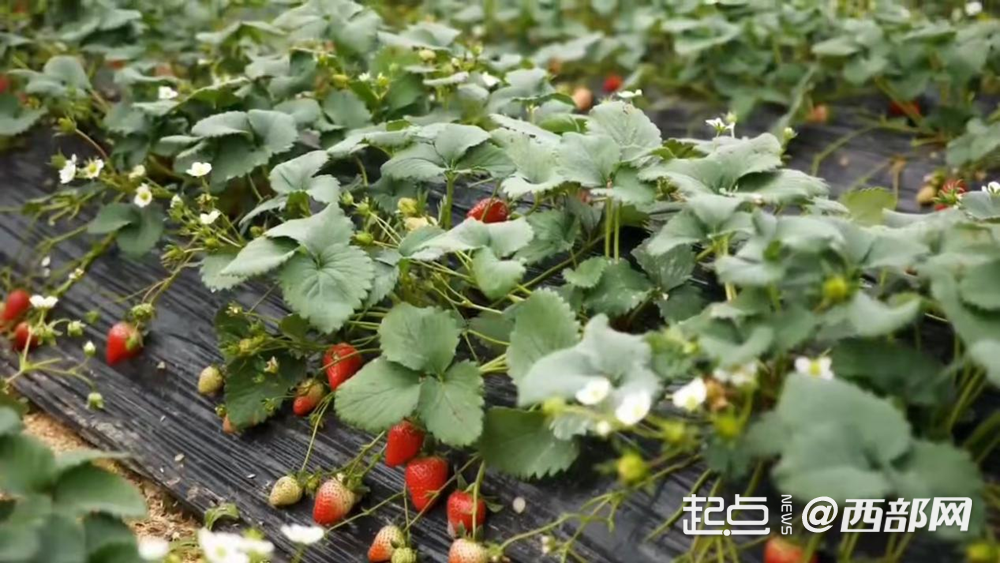
春节档“莓”好丰收 田间地里日子红
Xin Lang Cai Jing· 2026-02-08 07:09
Core Insights - The article highlights the successful transformation of a strawberry farm in Xi'an, which has evolved from traditional farming to a modern, technology-driven agricultural model, emphasizing quality and consumer trust [4][5][11] Group 1: Farming Practices - The farm covers over 50 acres with 12 greenhouses, cultivating high-quality strawberry varieties such as Hongyan, Huihuang, and Yuexuefei [4] - Advanced agricultural techniques are employed, including precision water and fertilizer management and intelligent monitoring of temperature and humidity, creating a "digital file" for each strawberry [4] Group 2: Sales and Marketing - The farm has upgraded its sales strategy by registering trademarks, launching live streaming, and utilizing multiple online sales channels, resulting in significant revenue, with a single greenhouse generating sales of 50,000 to 60,000 yuan [5] - The farm's strawberries are in high demand, with logistics vehicles queuing outside during peak seasons, indicating a robust market presence [5][9] Group 3: Community and Economic Impact - The farm's success is supported by local government initiatives, including technical guidance and low-interest loans, which have helped shift the focus from traditional farming to a more technology and policy-driven approach [7][11] - The strawberry industry in the Baqiao District has seen over 20 years of development, integrating agricultural and tourism sectors to enhance local economic growth and increase farmers' incomes [11]
科技赋能产业,华南农业大学农村科技特派员团队赴河源调研
Nan Fang Nong Cun Bao· 2026-02-07 14:30
Group 1 - The core objective of the research team from South China Agricultural University is to implement the rural revitalization strategy by integrating university technological achievements with local agricultural industries [2][4] - The research team, led by Professor Liu Hongbin, aims to identify industry fundamentals and address development bottlenecks through a "technology + culture" dual-drive approach to support local agricultural modernization and high-quality development [3][5] - The team conducted a two-day field study in Heyuan City, focusing on various agricultural sectors, including traditional breeding and crop cultivation [3][18] Group 2 - The research team visited the Jingshun Duck Farm in Dahu Town, which has been exploring a "family farm + company" cooperation model since 2020, establishing stable partnerships for meat duck breeding [7][8] - Experts provided on-site recommendations for farmers to secure financial support and explore digital management methods to enhance sustainable development [10][11] - The team also visited the Hongsheng Agricultural Cooperative, which has a solid foundation in chicken breeding, offering technical guidance on disease prevention and quality improvement [13][15] Group 3 - The team examined the Dexin Food Company and Yixin Agriculture's Niudali base, which integrates planting, processing, and sales, focusing on the economic value of "medicinal food homology" [18][19] - To address the issue of limited sales channels, the team suggested leveraging digital economy trends to create a "planting + processing + e-commerce" closed-loop model [24][25] - This model aims to expand sales reach and enhance product value through branding, thereby breaking sales bottlenecks and supporting rural revitalization [26] Group 4 - The research team emphasized the importance of integrating cultural heritage with rural tourism, visiting various cultural heritage sites and discussing the fusion of intangible cultural heritage with agricultural development [34][35] - The team also assessed agricultural development companies and cooperatives in the region, providing insights for enhancing local specialty agriculture [36][37]

各地春耕春管陆续展开
Yang Shi Wang· 2026-02-07 11:55
河南超8500万亩小麦将陆续进入返青期,受前期晚播影响,大部分麦田苗情偏弱。为全力推动小麦促弱 转壮、夯实夏粮丰收基础,河南多个农技专家小组,分赴各地指导农户科学开展田间管理,精准施策护 航小麦稳健生长。为抢抓春季田间管理黄金窗口期,山东省在6000万亩小麦即将返青之即,也组织专家 深入田间,围绕科学施肥、灌溉管理、病虫草害防控开展现场指导,帮助农户做好田间管理。在甘肃庆 阳,目前,冬小麦总体长势良好,当地建立"分片包干、跟踪到田"的工作机制,因地因苗施策,科学高 效指导。在四川,冬小麦逐渐进入拔节期,水肥需求量大。村民在农技人员指导下科学追施拔节肥水, 预防"倒春寒"冻害。 在新疆玛纳斯,眼下,农户们正在开展机械化破雪作业。针对春季田间积雪较厚的情况,当地农业部门 统一调配农机设备,开展机械化作业,为春播打好基础。 央视网消息(新闻联播):立春过后,农事渐忙。各地抢抓农时、科学施策,春耕备耕、春季田管等陆 续展开。 ...
河南印发《方案》 加强春管夺夏季油粮丰收
Zhong Guo Xin Wen Wang· 2026-02-07 08:21
广告等商务合作,请点击这里 《方案》称,河南省粮食生产专家指导组、18个小麦专家指导组以及小麦产业技术体系,要指导市县农 业农村部门因地制宜制定小麦、油菜春季田管技术方案,会同基层农技人员下沉一线,全过程开展田间 指导服务,及时指导落实关键技术措施,帮助解决生产中遇到的技术问题。(完) 河南印发《方案》 加强春管夺夏季油粮丰收 来源:中国新闻网 中新网郑州2月7日电 (记者 韩章云)2月7日,记者从河南省农业农村厅获悉,《奋战140天强春管促壮苗 抗灾夺夏粮丰收行动方案》(以下简称《方案》)已于近日印发,指导农户、各单位切实抓好小麦、油菜 春季促弱转壮、防灾减灾等各项措施落细落地,全力夺取夏季粮油丰产丰收。 编辑:董湘依 "立春一年端,种地早盘算"。立春已过,河南省小麦、油菜进入春季田管重要时期。该省是中国小麦主 产区,8500多万亩小麦在保障国家粮食安全特别是口粮安全中的地位十分重要。 河南省农业农村厅表示,截至今年1月底,小麦一二类苗占比59.3%,差于常年、差于上年,苗情类型 复杂,春季促弱转壮难度大、任务重。气象部门预测,今年2月下旬至3月河南可能出现倒春寒天气,3 月至5月发生阶段性干旱的风险较高。 ...
海盐打通城乡融合“最后一公里”
Xin Lang Cai Jing· 2026-02-06 23:02
Core Insights - The article highlights the ongoing reforms in Haiyan County aimed at breaking down barriers between urban and rural areas, leading to improved living standards and economic opportunities for rural residents [1] Group 1: Urban-Rural Integration - Haiyan has invested a total of 18.67 billion yuan to promote balanced urban-rural infrastructure, enhancing transportation and access to quality education, culture, and healthcare in rural areas [1] - By 2025, the agricultural sector in Haiyan is projected to achieve a growth rate of 3.7%, with rural residents' per capita disposable income expected to grow by 4.9%, and low-income households seeing an increase of 8.8% [1] Group 2: Resource Utilization and Economic Development - The county has transformed idle rural resources into sustainable assets through innovative operational models, such as converting vacant houses into guesthouses and coffee workshops, which has improved the local environment and generated profit-sharing for residents [2] - Haiyan has established a multi-faceted operational system to enhance competitiveness, integrating resources into a "development community" and implementing profit-sharing mechanisms that have led to nearly 1 billion yuan in annual revenue for 20 strong village companies [3] Group 3: Industry Integration and Economic Empowerment - The county focuses on deep integration of primary, secondary, and tertiary industries, promoting local specialties to enhance agricultural viability and increase farmers' income [4] - Haiyan has attracted 22 agricultural projects with investments exceeding 10 million yuan each, totaling over 1.021 billion yuan, and has successfully integrated various agricultural and tourism activities to boost local economies [4][5] Group 4: Quality of Life Improvements - Haiyan has implemented reforms to enhance public services, including healthcare and education, ensuring that rural residents have access to quality services without needing to travel to urban centers [6] - The county has made significant investments in infrastructure, including the construction of natural gas pipelines and heating networks, positioning itself as a leader in southern heating solutions [6] Group 5: Efficient Resource Flow and Policy Innovation - The county has initiated comprehensive land reforms to optimize land use, facilitating the transition of residential land into industrial land to support large-scale agriculture and project development [7] - Haiyan has established a county-level rural operation working group and implemented policies to streamline services for market participants, fostering a supportive environment for urban resources to flow into rural areas [7]
广州去年在国内一线城市中率先将城乡居民收入比降至2以下
Sou Hu Cai Jing· 2026-02-06 12:50
Core Insights - Guangzhou aims to reduce the urban-rural income ratio to below 2 by 2025, marking a significant step towards common prosperity, driven by the "Sui Nong Ben Fu" initiative and a collaborative effort during the 14th Five-Year Plan [1] Group 1: Agricultural Empowerment - The introduction of "technology + green" strategies in agriculture has revitalized over 600 acres of previously unused land, leading to sustainable income for local communities through innovative crop cultivation and mechanization [2] - In the Zengcheng District, a sales system for lychee has been established, resulting in the sale of approximately 300,000 pounds of lychee, generating over 3.6 million yuan in revenue [3] Group 2: Support System Construction - Guangzhou has developed a comprehensive support system involving various local government units and private enterprises to ensure effective assistance to economically weaker villages, achieving full coverage of 197 weak collective economy villages by 262 private enterprises [4] - The "Aotou Rural Revitalization" initiative has successfully generated nearly 8 million yuan in sales of agricultural products through order agriculture [4] Group 3: Industry and Employment Development - The city has invested over 8 billion yuan in building modern agricultural industrial parks, benefiting over 130,000 farming households [7] - Skill training programs have been conducted for over 60,000 individuals, resulting in the addition of more than 1,600 high-quality farmers [7] Group 4: Rural Economic Reforms - Reforms in rural collective property rights have led to the establishment of a regulatory framework for collective assets, enhancing income sources for farmers through land rental [9] - Initiatives to revitalize idle rural housing and pilot programs for rural managers are being explored to strengthen the new rural collective economy [9] Group 5: Quality of Life Improvements - Comprehensive agricultural policies have been implemented, providing over 1,000 yuan in subsidies per acre of farmland, ensuring full coverage of agricultural insurance for major products [10] - The integration of educational resources and social services in rural areas has improved living standards, with 100% coverage of public boarding schools and social insurance services [10] Group 6: Future Directions - Guangzhou plans to continue the "Hundred-Thousand-Ten Thousand Project," shifting from "blood transfusion" to "blood production" in its support efforts, aiming for a more sustainable agricultural and rural development model [11]