
租赁和商务服务业

Search documents
报告:我国优质中小企业不断涌现 科技和创新型超60万家
Zhong Guo Xin Wen Wang· 2025-11-07 07:33
Core Insights - As of September 2025, the number of small and medium-sized enterprises (SMEs) in China is projected to reach 63.487 million, indicating stable growth and breakthroughs in high-quality development [1][2] - SMEs play a crucial role in stabilizing economic growth and supporting social development [1] Quantitative Aspects - Among the 63.487 million SMEs, 98.2% are privately owned, and 98.1% are classified as micro-enterprises [1] - In the first nine months, nearly 6 million new SMEs were established [1] - The top five provinces by SME count are Guangdong, Jiangsu, Shandong, Zhejiang, and Henan, aligning with their GDP rankings [1] - The leading industries for SMEs include wholesale and retail, rental and business services, scientific research and technical services, manufacturing, and construction, collectively accounting for 76.5% [1] Qualitative Aspects - A total of 14,600 "little giant" enterprises have been cultivated, with over 140,000 specialized and innovative SMEs and more than 600,000 technology and innovation-driven SMEs [1] - As of September 2025, over 1.78 million SMEs hold patents, and more than 1.23 million have software copyrights [2] - In 2024, "little giant" enterprises are expected to have an average R&D investment accounting for 7% of their revenue, with an average of 22 authorized invention patents, reflecting a 30% year-on-year increase [2]
龙华区今年前三季度GDP增6.1%
Nan Fang Du Shi Bao· 2025-11-04 23:10
Economic Performance - Longhua District's GDP reached 236.12 billion, with a year-on-year growth of 6.1%, ranking fourth in the city [1] - The tertiary industry showed remarkable performance, with an added value of 123.53 billion and a growth rate of 7.6% [1] - The secondary industry achieved an added value of 112.56 billion, demonstrating a steady growth of 4.4% [1] Industrial Development - The industrial added value in Longhua District grew by 5.5% year-on-year, with a notable increase in profits of 24.7% for large-scale industrial enterprises [2] - Key sectors such as electrical machinery and equipment manufacturing saw a significant increase in added value by 27.5% [2] - The production of industrial robots, integrated circuits, and 3D printing equipment increased by 26.9%, 33.6%, and 27.6% respectively, highlighting Longhua's advantages in strategic emerging industries [3] Infrastructure Investment - Fixed asset investment in Longhua District grew by 37.5%, with industrial transformation and upgrading investments increasing by 65.2% [4] - Land preparation efforts resulted in 937 hectares being prepared, supporting the development of quality industrial projects [4] Service Sector Growth - The added value of the service sector increased by 7.6%, ranking second in the city, driven by emerging fields like cloud computing and artificial intelligence [5] - The real estate market showed robust growth, with a 46.6% increase in sales area of commercial housing [5] - The retail market experienced a 3.8% year-on-year growth in total retail sales of consumer goods, indicating a recovery in consumer spending [5] Cross-Border E-commerce and New Business Formation - Longhua District saw a significant increase in cross-border e-commerce, with 15 companies obtaining used car export qualifications, leading to a 752.6% increase in used car exports [6] - In the first nine months, 49,800 new business entities were established in the tertiary sector, accounting for 96% of all new registrations [6]
保持稳中向好,今年第三季度中国企业信用指数为161.66
Xin Jing Bao· 2025-11-04 09:45
Core Insights - The corporate credit index in China for Q3 2025 is reported at 161.66, indicating a stable and improving credit level overall [1] - The index decreased by 0.63 points from Q2 but is still 0.85 points higher than Q1, reflecting a resilient credit environment despite external pressures [1] - In September, the corporate credit index was 162.29, showing a slight decline of 0.31 points from August, yet the number of companies listed in the operational anomaly directory decreased [1] Regional Analysis - The top five provinces in terms of credit index for Q3 are Anhui, Beijing, Chongqing, Tianjin, and Shaanxi, with most regions showing slight fluctuations [1] - In September, the leading provinces shifted slightly to Anhui, Chongqing, Shaanxi, Beijing, and Zhejiang, with Guangdong showing a significant increase in its index ranking [1] Industry Analysis - The top five industries by credit index in Q3 are leasing and business services, accommodation and catering, manufacturing, information transmission, software and IT services, and culture, sports, and entertainment [2] - Notably, the agriculture, forestry, animal husbandry, and fishery sectors, as well as the mining industry, saw significant increases in their credit indices compared to Q2 [2] - In September, the leading industries were finance, electricity, heat, gas, and water production and supply, education, water conservancy, environment and public facilities management, and manufacturing [2]
GDP同比增5.5% 民用无人机产量增46.9%
Nan Fang Du Shi Bao· 2025-10-30 23:13
Economic Overview - Shenzhen's GDP for the first three quarters of 2025 reached 27,896.44 billion yuan, with a year-on-year growth of 5.5% at constant prices [1] - The primary industry added value was 17.45 billion yuan (0.0% growth), the secondary industry was 9,946.06 billion yuan (3.5% growth), and the tertiary industry was 17,932.93 billion yuan (6.6% growth) [1] Industrial Performance - The city's industrial added value for the first three quarters grew by 5.0%, accelerating by 0.7 percentage points compared to the first half of the year [2] - Notable growth in manufacturing sectors included general equipment manufacturing (16.6%), instrument manufacturing (7.5%), and computer and electronic equipment manufacturing (6.0%) [2] - High-tech product output saw significant increases, with civil drones, industrial robots, and 3D printing equipment growing by 46.9%, 38.2%, and 33.6% respectively [2] Service Sector Growth - The service sector's added value reached 17,932.93 billion yuan, with a year-on-year increase of 6.6%, which is 0.5 percentage points faster than the first half of the year [2] - Key service industries such as finance (14.5% growth), information transmission, software and IT services (9.7% growth), and leasing and business services (5.6% growth) contributed to this growth [2] Investment Trends - Fixed asset investment in Shenzhen decreased by 17.4%, with real estate development investment down by 24.8% [3] - Industrial technology transformation investment surged by 42.7%, while infrastructure investment grew by 6.8% [3] - Significant investment growth was observed in the resident services sector (83.0%) and information transmission, software and IT services (72.9%) [3] Consumer Market Insights - The total retail sales of consumer goods reached 7,560.81 billion yuan, with a year-on-year growth of 3.6% [3] - Retail in essential goods showed strong performance, with food and daily necessities growing by 8.4% and 7.5% respectively [3] - Online retail sales through the internet increased by 17.8% [3] Trade and Financial Indicators - The total import and export volume was 33,643.29 billion yuan, with a slight year-on-year increase of 0.1% [4] - Exports totaled 20,382.04 billion yuan (down 4.7%), while imports reached 13,261.25 billion yuan (up 8.4%) [4] - By the end of September, the balance of deposits in financial institutions was 143,649.54 billion yuan (up 5.6%), and loans amounted to 99,404.44 billion yuan (up 5.0%) [4]
前三季度陕西GDP同比增长5.3%
Shan Xi Ri Bao· 2025-10-28 22:43
Economic Overview - The GDP of Shaanxi Province reached 25,771.37 billion yuan, with a year-on-year growth of 5.3% at constant prices [1] - The overall economic operation is stable, with production supply growing steadily and internal demand potential being continuously released [1] Agriculture - The total output value of agriculture, forestry, animal husbandry, and fishery increased by 3.2% year-on-year, with a growth acceleration of 0.2 percentage points compared to the first half of the year [1] - The output of garden fruits reached 7.2237 million tons, growing by 4.3% year-on-year, with apple production at 3.5777 million tons, also up by 4.2% [1] Industry - The added value of industrial enterprises above designated size grew by 8.5% year-on-year [1] - Key industries such as coal mining and washing saw an increase of 11.5%, while equipment manufacturing rose by 11%, with electrical machinery and equipment manufacturing increasing by 35.4% and automobile manufacturing by 24.8% [1] - Automobile production increased by 11.5% year-on-year, with new energy vehicle production growing by 9.8% [1] Services - The added value of the service industry grew by 5% year-on-year, with wholesale and retail, as well as transportation, storage, and postal services, both increasing by 5.1% [2] - Modern service sectors like leasing and business services saw a growth of 9.6%, while scientific research and technical services increased by 6.8% [2] Investment - Fixed asset investment rose by 2.9% year-on-year, with industrial investment growing rapidly at 17.8%, surpassing the overall investment growth rate by 14.9 percentage points [2] - Manufacturing investment increased by 19.7%, and industrial technological transformation investment surged by 31.6% [2] - Private investment remained active, growing by 9.8%, particularly in information transmission, software, and IT services, which saw a 32.8% increase [2] Consumption - The total retail sales of consumer goods reached 8,381.77 billion yuan, with a year-on-year growth of 6.1% [2] - Retail sales of consumer goods from above-designated size enterprises increased by 7.6% [2] - The "old-for-new" consumption policy showed significant effects, with retail sales of household appliances and audio-visual equipment rising by 38.8%, and energy-efficient products seeing a 63.1% increase [2] Foreign Trade - The total import and export value reached 3,780.78 billion yuan, with a year-on-year growth of 12% [3] - Exports grew by 14.8%, while imports increased by 6.2% [3] - The trade structure improved, with general trade imports and exports rising by 14%, accounting for 38.4% of the total [3] - Exports of electromechanical products increased by 15.7%, making up 85.7% of total exports, while "new three samples" products saw a 32.6% increase in exports [3]
湖北宜化新设商贸公司,注册资本5000万
Qi Cha Cha· 2025-10-27 06:09
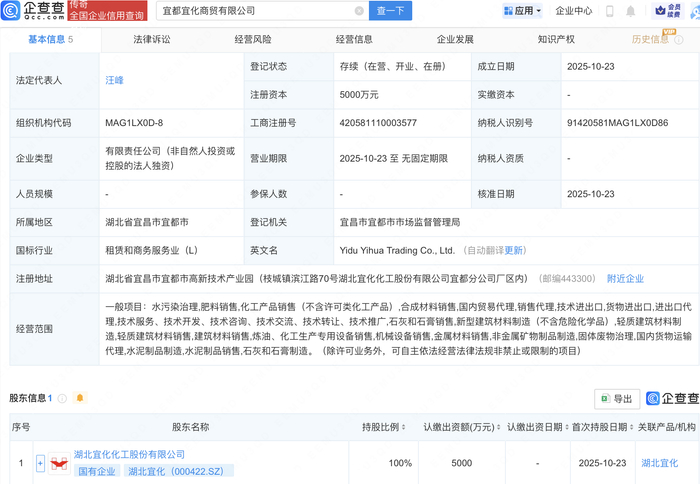
Core Insights - Yidu Yihua Trading Co., Ltd. has been established with a registered capital of 50 million yuan, focusing on various business activities including machinery equipment sales and solid waste management [1] Company Information - The company is wholly owned by Hubei Yihua (000422) [1] - The registered address is located in the High-tech Industrial Park of Yidu City, Hubei Province [2] - The legal representative is Wang Feng, and the company is classified as a limited liability company [2] Business Scope - The business scope includes sales of machinery equipment, metal materials, non-metallic mineral products manufacturing, and solid waste management [1][2] - Additional activities encompass water pollution control, fertilizer sales, chemical product sales (excluding licensed chemical products), and new building materials manufacturing [2]


2025年前三季度宏观政策“三策合一”研究报告
Sou Hu Cai Jing· 2025-10-24 08:51
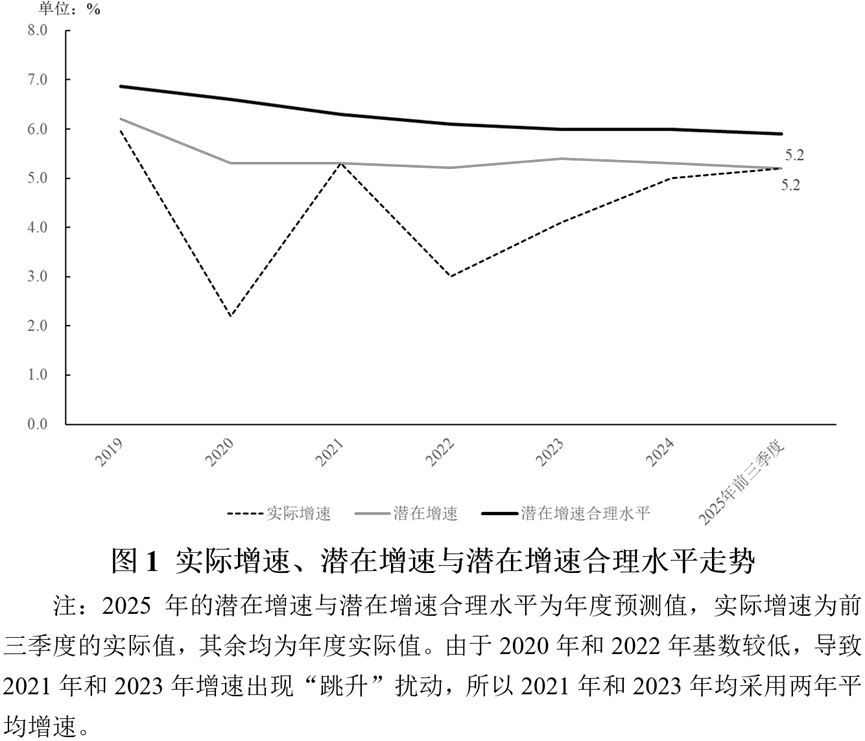
Core Viewpoints - The main contradiction in the current macroeconomic environment is insufficient domestic demand, particularly in consumer spending, highlighting the strategic importance of enhancing consumption [2][9] - It is recommended to maintain the actual GDP growth rate above the potential growth rate of 5.2% for 2025 and set the 2026 GDP growth target around 5% to signal stability [2][37] - A gradual approach to price level control is suggested, aiming for a three-step process to achieve a core CPI growth target of 2% over two to three years [2][38] Macroeconomic Overview - The GDP growth rate for the first three quarters of 2025 is 5.2%, aligning closely with the potential growth rate, indicating a stable economic operation [6] - Industrial profits have shown positive improvement, with a 0.9% year-on-year increase in profits for large industrial enterprises from January to August 2025 [7] - The service sector has also experienced growth, with a 5.4% year-on-year increase in value added, particularly in modern service industries [8] Current Economic Contradictions - The primary contradiction in the macroeconomy is on the demand side, characterized by insufficient consumer demand, with retail sales growth slowing to 4.5% year-on-year in the first three quarters [9][11] - Investment demand has also declined, with fixed asset investment showing a -0.5% year-on-year growth, a drop of 3.3 percentage points from the first half of the year [9] Macroeconomic Policy Evaluation - The monetary policy index for the first three quarters of 2025 is 44.0, indicating a slight increase in policy strength, with M2 growth at 8.4% by the end of September [12] - The fiscal policy index stands at 57.9, reflecting an increase in fiscal policy strength, with public budget expenditure growing by 3.1% year-on-year [13] - The overall efficiency of stabilization policies is rated at 50.0, showing a positive trend in policy effectiveness [26] Policy Recommendations - It is advised to enhance stabilization policies to address the lack of effective domestic demand, with a focus on both monetary and fiscal measures [38] - Growth policies should prioritize the development of new productive forces, with an emphasis on employment-friendly industrial policies [39] - Structural policies need to optimize investment, industrial, and income distribution structures to better balance total supply and demand [39]
前三季度浙江GDP同比增长5.7%
Guo Ji Jin Rong Bao· 2025-10-24 06:06
Economic Overview - Zhejiang Province's GDP for the first three quarters reached 68,495 billion yuan, with a year-on-year growth of 5.7% at constant prices [1] - The primary industry added value was 1,735 billion yuan, growing by 3.7%; the secondary industry added value was 26,086 billion yuan, growing by 5.2%; and the tertiary industry added value was 40,674 billion yuan, growing by 6.0% [1] Agricultural Sector - The agricultural, forestry, animal husbandry, and fishery sectors saw a value-added growth of 3.8% [1] - Vegetable production increased by 3.7%, while total meat production (pork, beef, lamb, poultry) decreased by 5.2% to 855,000 tons [1] - Egg production rose by 11.0% to 322,000 tons, and milk production increased by 4.2% to 166,000 tons [1] - Total aquatic product output was 4,258,000 tons, growing by 5.2% [1] Industrial Sector - The industrial added value for large-scale enterprises grew by 7.1%, with private enterprises contributing 76.2% to this growth [2] - Among 37 major industrial categories, 28 saw an increase in added value, with a growth rate of 75.7% [2] - Key manufacturing sectors such as automotive, computer communication electronics, and instruments saw increases of 17.7%, 16.5%, and 13.6% respectively [2] - High-tech manufacturing and digital economy core industries grew by 12.4% and 11.6% respectively [2] Investment Trends - Fixed asset investment decreased by 3.8%, but excluding real estate development, it grew by 7.7% [3] - Manufacturing investment increased by 10.7%, with significant growth in automotive (34.2%) and general equipment (24.9%) [3] - Infrastructure investment rose by 7.9%, accounting for 27.5% of total investment, an increase of 3.0 percentage points year-on-year [3] Consumer Market - Total retail sales of consumer goods reached 28,408 billion yuan, with a year-on-year growth of 5.2% [3] - Retail sales through public networks grew by 23.4%, indicating a strong shift towards online shopping [3] - Significant growth was observed in the sales of home appliances (57.0%) and communication equipment (64.2%) [3] Price Trends - The Consumer Price Index (CPI) decreased by 0.2% year-on-year, with four categories of goods and services experiencing price increases [4] - The Producer Price Index (PPI) for industrial producers fell by 2.0% year-on-year [4] Employment and Income - The urban surveyed unemployment rate averaged 4.7%, with 925,000 new urban jobs created [5] - Per capita disposable income for residents reached 54,653 yuan, a nominal increase of 4.7% [5] - Urban residents' income was 63,079 yuan, while rural residents' income was 36,383 yuan, reflecting a nominal growth of 4.2% and 5.3% respectively [5]
前三季度全省经济运行总体平稳
Liao Ning Ri Bao· 2025-10-24 01:19
Economic Overview - The province's GDP for the first three quarters reached 24,283.9 billion yuan, with a year-on-year growth of 4.3% at constant prices [1] - The primary industry added value was 1,611.5 billion yuan, growing by 4.3%; the secondary industry added value was 8,367.7 billion yuan, growing by 2.1%; and the tertiary industry added value was 14,304.7 billion yuan, growing by 5.4% [1] Industry Performance - The industrial added value for large-scale enterprises increased by 2.2% year-on-year, with high-tech manufacturing growing by 6.1% [1][2] - Among 40 major industrial categories, 24 saw a year-on-year increase in added value, resulting in a growth rate of 60.0% [2] - Notable product growth included transformers, civilian steel ships, synthetic ammonia, and new energy vehicles, all showing double-digit growth [2] Service Sector - The service sector's added value grew by 5.4% year-on-year, with wholesale and retail, and accommodation and catering sectors increasing by 6.0% and 5.4%, respectively [2] - The transportation and postal sectors also showed growth, with cargo turnover increasing by 4.3% and postal business volume growing by 20.9% [2] Consumer Trends - Social retail sales totaled 7,866.0 billion yuan, with a year-on-year growth of 4.1% [3] - Urban retail sales reached 6,835.5 billion yuan, growing by 4.2%, while rural retail sales were 1,030.4 billion yuan, growing by 3.3% [3] - Significant growth in retail sales was observed in home appliances (51.0%), furniture (49.2%), and communication equipment (33.2%) [3] Investment Insights - First industry investment grew by 12.1%, while second industry investment increased by 1.6%, with manufacturing investment rising by 12.0% and high-tech manufacturing investment by 11.7% [3] Fiscal Performance - General public budget revenue reached 2,309.1 billion yuan, growing by 0.7%, while expenditure increased by 3.0% to 4,960.3 billion yuan [4] - Per capita disposable income for residents was 31,441 yuan, with urban residents at 37,493 yuan (4.5% growth) and rural residents at 18,691 yuan (5.1% growth) [4] Price Trends - Consumer prices remained stable, while industrial producer prices declined [5]
前三季度北京地区生产总值同比增5.6%
Zhong Guo Xin Wen Wang· 2025-10-22 06:30
Economic Growth - Beijing's GDP for the first three quarters reached 38,415.9 billion RMB, with a year-on-year growth of 5.6% [1] - The primary industry saw a decrease in value added by 1.1%, while the secondary industry grew by 4.0% to 5,055.9 billion RMB, and the tertiary industry increased by 5.8% to 33,282.0 billion RMB [1] Sector Performance - The information transmission, software, and IT services sector achieved a value added of 9,225.5 billion RMB, growing by 11.2%, contributing significantly to the tertiary industry's growth [1] - The financial sector's value added reached 6,700.0 billion RMB, with a growth rate of 9.0%, together with the information sector, accounting for nearly 80% of the tertiary industry's growth [1] - The rental and business services sector grew by 3.9% to 2,114.8 billion RMB, while transportation, warehousing, and postal services increased by 7.9% to 1,056.0 billion RMB [1] Investment and Consumption - Fixed asset investment in Beijing (excluding rural households) grew by 9.0%, with equipment purchase investment surging by 83.1%, now accounting for 29.3% of total fixed asset investment [2] - Total market consumption in Beijing increased by 0.5%, driven by a 4.8% rise in service consumption, while retail sales of consumer goods totaled 9,803.1 billion RMB, declining by 5.1% [2] - The per capita disposable income of Beijing residents reached 67,206 RMB, marking a growth of 4.5%, with a real growth of 4.9% after adjusting for price factors [2]