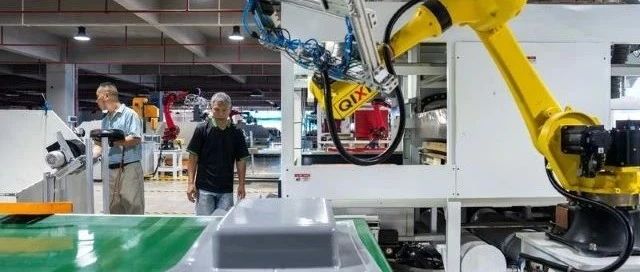
航空航天器及设备制造业

Search documents
锐财经丨多种经营主体稳定增长
Ren Min Ri Bao Hai Wai Ban· 2025-08-13 00:42
Core Insights - The National Market Supervision Administration reported that in the first half of the year, 13.278 million new business entities were established, including 4.62 million new enterprises, 8.629 million new individual businesses, and 29,000 new farmers' cooperatives, indicating a stable growth trend across various business types [1] Group 1: Business Growth and Investment - The development of private and foreign enterprises is strong, supported by the accelerated construction of a high-standard market system and continuous optimization of the business environment [2] - In the first half of the year, 4.346 million new private enterprises were established, a year-on-year increase of 4.6%. Additionally, 33,000 new foreign enterprises were established, growing by 4.1% year-on-year [3] - Actual foreign investment in the manufacturing sector reached 109.06 billion yuan, while the service sector attracted 305.87 billion yuan. High-tech industries received 127.87 billion yuan in foreign investment, with significant growth in e-commerce services (127.1%), chemical manufacturing (53%), aerospace manufacturing (36.2%), and medical equipment manufacturing (17.7%) [3] Group 2: Economic Structure and Innovation - The growth in the number of business entities is accompanied by qualitative changes, with 601,000 new entities in the primary industry, 965,000 in the secondary industry, and 1.1712 million in the tertiary industry. By the end of June, there were 25.361 million "new economy" enterprises, accounting for 40.2% of the total [4] - The added value of the "new economy" in 2024 is projected to be 24.2908 trillion yuan, growing by 6.7% year-on-year, which is 2.5 percentage points higher than the GDP growth rate [4] - The value added in the equipment manufacturing and high-tech manufacturing sectors grew by 10.2% and 9.5% respectively, outperforming the overall industrial growth rates [4] Group 3: Cultural Industry Performance - The cultural industry showed significant growth in the first half of the year, with new enterprises in the "cultural, sports, and entertainment" sector increasing by 17.5%, leading all sectors of the national economy [6] - Revenue from large-scale cultural and related industries reached 71.292 billion yuan, a year-on-year increase of 7.4%, while total profits grew by 19.3% to 6.298 billion yuan [7] - New cultural business models demonstrated rapid development, with 16 sub-sectors achieving a revenue increase of 13.6%, surpassing the overall growth rate of large-scale cultural enterprises by 6.2 percentage points [7]
江苏十三市“半年报”出炉 苏州GDP超1.3万亿继续领跑
Zheng Quan Shi Bao Wang· 2025-08-06 14:12
Economic Overview - Jiangsu province has five cities with GDP exceeding 500 billion yuan, seven cities with growth rates surpassing the provincial average of 5.7%, and three cities maintaining a growth rate of 5.7% [1] - Overall, the province demonstrates strong economic resilience and vitality, indicating a positive trend towards high-quality development [1] City Performance - Suzhou leads the province with a GDP of 1,300.235 billion yuan, being the only city in Jiangsu to surpass 1 trillion yuan in GDP for the first half of the year [1] - Nanjing, the provincial capital, achieved a GDP of 917.918 billion yuan, ranking second in the province [2] - Wuxi's GDP stands at 773.515 billion yuan, placing it third in Jiangsu [2] - Nantong and Changzhou also exceeded 500 billion yuan in GDP, with figures of 658.119 billion yuan and 507.913 billion yuan, respectively [2] - Xuzhou's GDP reached 450.930 billion yuan, positioning it as a potential sixth "trillion-yuan city" in Jiangsu [2] Industrial Growth - Suzhou's industrial production saw a significant increase, with a total industrial output value of 2,339.36 billion yuan, reflecting a year-on-year growth of 4.6% [1] - The city's industrial added value grew by 8.0% year-on-year, with key sectors such as electronic information and electrical machinery contributing to this growth [1] - Nanjing's high-tech industry accounted for 55.8% of the total industrial output value, with a year-on-year increase in high-tech manufacturing added value of 6.8% [2] - Notable growth in specific sectors in Nanjing includes pharmaceutical manufacturing (11.6%), aerospace equipment (18.5%), and computer equipment (78.2%) [2] - In Huai'an, the industrial added value increased by 8.9%, with a broad growth across 30 out of 34 industrial categories, indicating a growth rate of 88.2% [3]
决胜“十四五” 打好收官战|加力稳外资!我国全力打造全球投资强“磁场”
Xin Hua She· 2025-08-05 11:35
外资,联通国内国际,对构建新发展格局、推动高质量发展意义重大。 复杂严峻的国际经贸环境下,我国吸引外资交出亮眼答卷——"十四五"以来,累计吸收外资超7000亿美 元,提前半年完成目标,新设外资企业比"十三五"期间多出2.5万家。 7亿元人民币升级改造广州生产基地,4亿元人民币升级数字化智能化基础设施;5亿元人民币升级遍布 全国的100多家体验馆体验店……深耕中国市场30年,安利自前年起启动为期5年、金额达21亿元人民币 的在华投资计划。 投资中国,就是投资未来。面对经济全球化深度调整,我国全力打造全球投资强"磁场",以全方位、多 维度的战略优势为跨国公司构筑投资热土。 外商加码投资 折射中国市场强磁力 今年以来,首家外商独资三级综合医院在天津开诊,欧洲空中客车公司等外资企业获批增值电信业务扩 大开放试点,拜耳、辉瑞、阿斯利康等跨国医药企业纷纷入驻北京医药创新公园…… 面对不确定性增多的外部环境,中国市场持续释放"磁吸效应": 商务部数据显示,今年上半年,全国新设立外商投资企业30014家,同比增长11.7%。截至今年6月底, 全国累计新设外资企业22.9万家,比"十三五"期间增加了2.5万家。 毕马威在《20 ...
加力稳外资!我国全力打造全球投资强“磁场”
Xin Hua She· 2025-08-05 08:08
新华财经北京8月5日电(记者谢希瑶、周蕊)外资,联通国内国际,对构建新发展格局、推动高质量发 展意义重大。 毕马威在《2025年宏观经济十大趋势展望》中强调,中国在全球供应链中的关键地位和消费市场潜力, 是外资持续加码的核心动力。许多跨国公司表示,中国是跨国投资"理想、安全、有为"的目的地, 是"确定性的绿洲和投资热土"。 从着力抓好"四稳",到出台"稳外资20条";从制定外国投资者对上市公司战略投资管理办法,到实施鼓 励外商投资企业境内再投资若干措施……我国打出稳外资政策"组合拳"。 中国社会科学院世界经济与政治研究所副研究员潘圆圆说,我国经济基础稳、优势多、韧性强、潜能 大、长期向好的支撑条件和基本趋势没有改变。我国超大规模市场、完备高效的产业链供应链体系、持 续优化的创新环境,为跨国公司投资中国提供了良好的发展条件和土壤,稳外资依然具备坚实基础。 引资结构优化世界工厂叠加创新枢纽 7亿元人民币升级改造广州生产基地,4亿元人民币升级数字化智能化基础设施;5亿元人民币升级遍布 全国的100多家体验馆体验店……深耕中国市场30年,安利自前年起启动为期5年、金额达21亿元人民币 的在华投资计划。 复杂严峻的国际 ...
决胜“十四五” 打好收官战 | 加力稳外资!我国全力打造全球投资强“磁场”
Xin Hua She· 2025-08-05 08:08
Core Viewpoint - China is actively enhancing its attractiveness to foreign investment, achieving significant milestones in foreign capital absorption and establishing itself as a global investment hub [1][2][3] Group 1: Foreign Investment Growth - Since the beginning of the 14th Five-Year Plan, China has absorbed over 700 billion USD in foreign investment, surpassing its target six months ahead of schedule [1] - In the first half of this year, 30,014 new foreign-invested enterprises were established, marking an 11.7% year-on-year increase [2] - By the end of June, the total number of newly established foreign enterprises reached 229,000, an increase of 25,000 compared to the 13th Five-Year Plan period [2] Group 2: Investment Structure Optimization - High-tech industries attracted 127.87 billion RMB in actual foreign investment in the first half of this year, with significant growth in sectors such as e-commerce services (127.1%), chemical pharmaceuticals (53%), and aerospace manufacturing (36.2%) [4] - By 2024, the proportion of foreign investment in high-tech industries is expected to reach 34.6%, an increase of 6 percentage points from 2020 [4] Group 3: Policy Support and Business Environment - The Chinese government has implemented a series of policies to stabilize foreign investment, including the "20 measures to stabilize foreign investment" and the establishment of a foreign investment roundtable meeting system [2][7] - The negative list for foreign investment access has been continuously reduced, with all restrictions in the manufacturing sector eliminated [7] - The investment environment is characterized by a market-oriented, legal, and international approach, enhancing the speed and quality of service for foreign enterprises [7] Group 4: Multinational Companies' Commitment - Multinational companies are increasingly viewing China as an ideal investment destination, citing its key position in global supply chains and market potential as core drivers for continued investment [2][6] - Research funding from multinational companies in China has increased by 86.5% from 2013 to 2023, indicating a shift towards innovation-driven investment [6]
深市公司积极分红:14家上市企业公布中期方案,回报投资者成常态
Huan Qiu Wang· 2025-08-01 08:09
Group 1 - As of July 30, 14 companies in the Shenzhen market have announced mid-term profit distribution plans, with a total dividend amount of 10.251 billion yuan [1] - By July 15, 775 listed companies in the Shenzhen market had disclosed their mid-term performance forecasts for 2025, with 453 companies expecting a year-on-year increase in net profit, accounting for nearly 60% [3] - The awareness of regular returns to investors among Shenzhen-listed companies has been increasing, with 8 out of the 14 companies announcing mid-term dividends for the first time [3] Group 2 - Since the release of the new "National Nine Articles," the capital market has seen continuous improvement in basic systems, leading to a market environment where companies are willing to distribute dividends regularly [4] - In 2023, 165 companies in the Shenzhen market have published shareholder dividend return plans for the next three years, indicating a commitment to stable returns for investors [4] - A total of 216 companies in the Shenzhen market announced medium to long-term shareholder dividend return plans in 2024, with some companies already fulfilling their commitments this year [4]




上半年全市经济稳中提质
Zheng Zhou Ri Bao· 2025-07-30 00:26
Economic Overview - The city's GDP reached 732.93 billion yuan in the first half of the year, with a year-on-year growth of 5.2% at constant prices [1] - The primary industry added value was 7.82 billion yuan, growing by 2.7%; the secondary industry added value was 271.02 billion yuan, growing by 5.6%; and the tertiary industry added value was 454.09 billion yuan, growing by 4.9% [1] Production and Supply - Industrial output above designated size increased by 8.5% year-on-year, with manufacturing output growing by 8.7%, contributing 88.5% to the industrial growth [1] - The scale of service industry revenue increased by 9.5% from January to May, with 90% of the 10 industry categories showing positive growth [1] Investment Trends - Fixed asset investment grew by 4.3% year-on-year, accelerating by 0.6 percentage points compared to the first quarter [2] - Investment in industrial sectors surged by 31.5%, with manufacturing investment rising by 36.6% [2] - Private investment increased by 10%, outpacing the overall investment growth by 5.7 percentage points [2] Consumer Market - The total retail sales of consumer goods reached 333.74 billion yuan, with a year-on-year growth of 6.6%, accelerating by 0.9 percentage points from the first quarter [3] - Retail sales of sports and entertainment products surged by 110% and 94.9%, respectively, significantly contributing to retail growth [3] - The "old-for-new" policy stimulated substantial growth in related consumer goods, with wearable smart devices and communication equipment seeing retail sales growth of 140% and 130%, respectively [3] Emerging Industries - High-tech industries showed robust growth, with value added in high-tech manufacturing and strategic emerging industries increasing by 10.3% and 10.2%, respectively [4] - Investment in computer and office equipment manufacturing surged by 163.3%, while aerospace and pharmaceutical manufacturing investments grew by 62.6% and 38.4%, respectively [4] - Online retail sales through public networks increased by 40.8%, indicating strong demand in e-commerce [4]
行进中国|0.1毫米 看飞机的“皮肤文身术”
Ren Min Wang· 2025-07-29 09:17
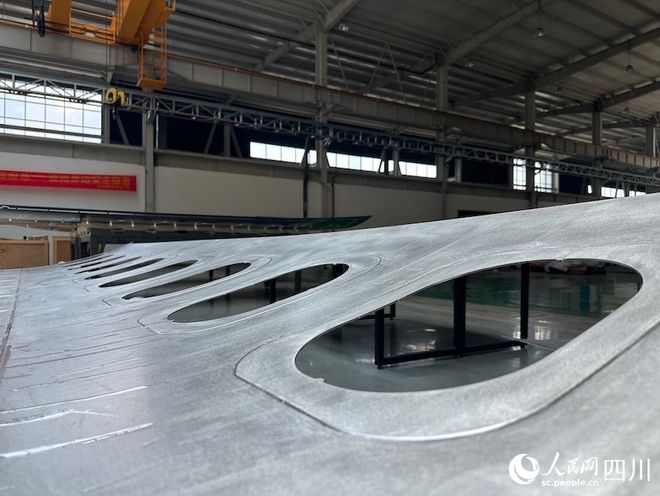
Group 1 - The article discusses the manufacturing process of aircraft skin, highlighting its critical role as the outer shell of the aircraft, which requires high strength, precision, and low weight [4][5]. - The thickness of the aircraft skin typically ranges from 3mm to 6mm, with the thinnest parts being just over 1mm [4]. - The company has invested 138 million yuan to introduce mirror milling technology, establishing the largest mirror milling production line cluster in China, which enhances precision to 0.1mm [5][6]. Group 2 - The mirror milling process allows for simultaneous machining on both sides of the skin, significantly improving precision and reducing production time compared to traditional chemical milling [5]. - A precision improvement of 0.2mm can lead to a weight difference of over 100 kilograms for an entire aircraft, which is significant given the importance of weight in aircraft design [5][6]. - The company has successfully delivered its first domestic aircraft skin, meeting the production needs for the C919 aircraft, indicating a shift towards domestic manufacturing capabilities in the aerospace sector [6].
【宏观经济】一周要闻回顾(2025年7月16日-7月22日)
乘联分会· 2025-07-22 14:28
Core Viewpoint - In the first half of 2025, China attracted foreign investment amounting to 423.23 billion RMB, reflecting a year-on-year decrease of 15.2% despite an increase in the number of newly established foreign-invested enterprises by 11.7% [3][5]. Group 1: Foreign Investment Overview - In the first half of 2025, a total of 30,014 new foreign-invested enterprises were established, marking an 11.7% increase year-on-year [3]. - The actual foreign investment utilized was 423.23 billion RMB, which represents a decline of 15.2% compared to the previous year [3][5]. Group 2: Sector Analysis - The manufacturing sector attracted 109.06 billion RMB in foreign investment, while the service sector received 305.87 billion RMB [5]. - High-tech industries saw a total of 127.87 billion RMB in foreign investment, with notable growth in specific sectors: e-commerce services (127.1%), chemical pharmaceuticals (53%), aerospace manufacturing (36.2%), and medical instruments (17.7%) [5]. Group 3: Source of Investment - Investment from ASEAN countries increased by 8.8%, while investments from Switzerland, Japan, the UK, Germany, and South Korea grew by 68.6%, 59.1%, 37.6%, 6.3%, and 2.7% respectively [6]. Group 4: Electricity Consumption - In June 2025, the total electricity consumption in China reached 867 billion kWh, showing a year-on-year growth of 5.4% [7]. - Cumulatively, from January to June 2025, total electricity consumption was 48,418 billion kWh, reflecting a 3.7% increase year-on-year [7].

中三省上半年GDP超7.2万亿
第一财经· 2025-07-22 08:05
Core Viewpoint - The economic performance of the central provinces of Hunan, Hubei, and Jiangxi in the first half of the year shows significant growth, with a combined GDP of 72,528.71 billion yuan, an increase of 4,999.06 billion yuan compared to the same period last year, indicating a robust recovery and development potential in the region [1][2]. Economic Growth - Hubei's GDP reached 29,642.61 billion yuan, growing by 6.2%, surpassing the national average by 0.9 percentage points [1] - Hunan's GDP was 26,166.50 billion yuan, with a growth rate of 5.6%, while Jiangxi also grew by 5.6% to 16,719.6 billion yuan, both exceeding the national growth rate by 0.3 percentage points [1] Industrial Development - Hunan's high-tech industry investment increased by 6.3%, with high-tech manufacturing value-added growing by 13.7%, outpacing overall industrial growth by 5.5 percentage points [3] - Hubei's high-tech industry investment rose by 8.8%, with high-tech service investment surging by 24.6%, and high-tech manufacturing value-added increased by 14.4% [3] - Jiangxi's high-tech manufacturing value-added grew by 13.7%, driven by policies promoting equipment upgrades and automotive subsidies [4] Consumer Market - The total retail sales of consumer goods in the three provinces reached 29,560.44 billion yuan, with Hubei at 13,073.93 billion yuan (up 6.9%), Hunan at 10,391.81 billion yuan (up 6.2%), and Jiangxi at 6,094.7 billion yuan (up 5.3%) [6] - Hubei's per capita living consumption expenditure was 13,991 yuan, a 2.4% increase, reflecting a shift towards higher quality living and increased spending on health, culture, and entertainment [6] Foreign Trade - The central region's foreign trade growth rate reached 11.1%, significantly higher than the national average of 2.5% [10] - Hubei's exports of computers, mobile phones, and integrated circuits saw substantial growth, with lithium-ion battery exports increasing by 108.7% [11] - The establishment of logistics networks, such as the Ezhou Huahu International Airport, has improved logistics efficiency and contributed to the region's export growth [11][12]