
芯片

Search documents
港股芯片股领涨市场,ASMPT涨超7%
Mei Ri Jing Ji Xin Wen· 2026-01-22 01:57
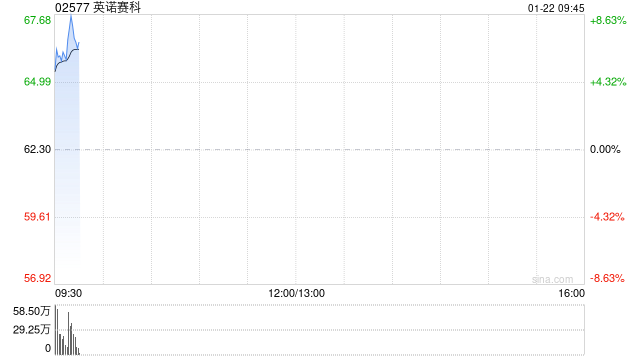
每经AI快讯,1月22日,港股芯片股领涨市场,ASMPT涨超7%,公司与三星电子讨论供应事宜;英诺 赛科涨超5%,天数智芯涨超4%,壁仞科技涨超3%。 ...

财报前瞻 英特尔(INTC.US)Q4营收预计下滑6%难挡分析师乐观 AI能否点亮转型曙光
Jin Rong Jie· 2026-01-22 01:53
投资者和分析师现在更加乐观,认为人工智能(AI)的推动加上转型战略将产生成效。 智通财经获悉,英特尔(INTC.US)将于周四市场收盘后公布第四季度业绩。华尔街预计这家芯片制造商 的每股收益(EPS)为0.08美元,营收为133.9亿美元,这意味着该季度营收将下降6%。 该公司股价去年上涨超过80%,跑赢了同期上涨近17%的广泛标普500指数。 总部位于加州圣克拉拉的英特尔在个人电脑(PC)市场份额上被竞争对手AMD蚕食已有一段时间。然 而,在首席执行官陈立武的领导下,公司正在实施一项转型战略,其中包括大幅度的成本削减措施,以 及去年从英伟达和软银获得的一系列引人注目的投资。 去年来自特朗普政府约10%的所有权,以及美国政府111亿美元的巨额投资,也增强了公司的资产负债 表。 过去两年中,英特尔有63%的时间超过了每股收益预期,有75%的时间超过了营收预期。 过去三个月里,每股收益预期经历了16次上调,相比之下有11次下调;而营收预期经历了15次上调,相 比之下有16次下调。 Seeking Alpha、Seeking Alpha的量化评级和华尔街分析师均持谨慎态度,给予该股"中性"评级。 本文源自:智通财经 ...

恒科指涨1%
Jin Rong Jie· 2026-01-22 01:46
Core Viewpoint - The Hang Seng Technology Index increased by 1%, while the Hang Seng Index rose by 0.72%, indicating a positive market sentiment towards technology stocks [1] Group 1: Market Performance - The Hang Seng Technology Index saw a rise of 1% [1] - The Hang Seng Index experienced an increase of 0.72% [1] Group 2: Stock Performance - Chip stocks showed strong performance, with兆易创新 (Zhaoyi Innovation) rising by 9% [1] - 英诺赛科 (InnoCare) increased by over 6% [1] - ASMPT saw a rise of nearly 6% [1] - 华虹半导体 (Huahong Semiconductor) gained 4% [1]


港股芯片股全线走强,英诺赛科涨超8%,AI导致存储市场供需结构发生根本性逆转
Xin Lang Cai Jing· 2026-01-22 01:46
Group 1 - The Hong Kong chip stocks have shown strong performance, with InnoPhase rising over 8%, ASMPT increasing over 7%, and other companies like Tenstorrent and WallenTech rising over 4% [1][6] - InnoPhase announced that its chairman and controlling shareholder, Dr. Weiwei Luo, has committed not to sell his beneficially owned 154.7 million shares for 12 months starting from January 22, 2026 [3][8] - Samsung Electronics is diversifying its supply chain for high bandwidth memory (HBM) critical equipment by discussing supply matters with ASMPT [3][8] Group 2 - Multiple brokerages have raised target prices for SanDisk and Micron, citing strong enterprise SSD demand and tight NAND flash supply driving up product prices [3][8] - Analysts believe that the demand for high-performance storage driven by AI infrastructure development, combined with major manufacturers' production cuts to maintain prices, has fundamentally reversed the market supply-demand structure [3][8]

港股开盘:恒指涨0.62%、科指涨0.85%,科网股、芯片股走高,创新药概念股活跃,黄金股回调
Jin Rong Jie· 2026-01-22 01:30
Market Overview - The Hong Kong stock market opened higher on January 22, with the Hang Seng Index rising by 0.62% to 26,750.51 points, the Hang Seng Tech Index increasing by 0.85% to 5,795 points, and the National Enterprises Index up by 0.55% to 9,173.54 points [1] - Major tech stocks mostly rose, with Alibaba up 1.72%, Tencent Holdings up 0.33%, JD Group up 0.98%, and Xiaomi Group up 0.9% [1] - Chip stocks opened high, with Zhaoyi Innovation rising over 7% [1] - The innovative drug concept was active, with WuXi Biologics rising over 1% [1] - Gold stocks generally fell, with Shandong Gold down over 2% [1] - Longqi Technology's IPO on the Hong Kong stock market saw a nearly 13% increase on its first day [1] Company News - Shanghai Electric (02727.HK) expects a net profit of RMB 1.1 billion to RMB 1.32 billion for 2025, an increase of approximately 47% to 76% year-on-year [2] - Kingdee International (00268.HK) anticipates total revenue of approximately RMB 6.95 billion to RMB 7.05 billion for 2025, a year-on-year growth of about 11.1% to 12.7% [2] - Beijing Machinery Electric (00187.HK) expects a net loss of RMB 46 million to RMB 55.2 million for 2025, primarily due to intensified international trade frictions affecting its gas storage and transportation export business [2] - Chow Tai Fook (01929.HK) reported a retail value growth of 17.8% for the three months ending December 31, 2025, with mainland China retail value increasing by 16.9% [2] - Zai Lab (09911.HK) anticipates a cumulative download of approximately 970 million for its social business by 2025, a year-on-year increase of about 5.9% [2] Strategic Developments - Ruiri Medical Technology (01696.HK) signed a letter of intent for cooperation with Stryker Medical to establish localized production in China [3] - Cathay Pacific (00293.HK) and Hong Kong Express expect to carry over 36 million passengers in 2025, a year-on-year increase of 27% [4] - Shenyang Public Development (00747.HK) has initiated edge computing infrastructure and service business [5] - Flat Glass Group (06865.HK) plans to absorb and merge with Zhongda Quartz Development [6] Share Buybacks - Xiaomi Group (01810.HK) repurchased 7 million shares for HKD 248 million at prices between HKD 35.22 and HKD 35.48 [7] - Pop Mart (09992.HK) repurchased 500,000 shares for HKD 96.49 million at prices between HKD 191.1 and HKD 194.9 [8] - Sunny Optical Technology (02382.HK) repurchased 970,000 shares for HKD 61.39 million at prices between HKD 62.30 and HKD 63.95 [9] - Geely Automobile (00175.HK) repurchased 2.376 million shares for HKD 39.62 million at prices between HKD 16.62 and HKD 16.81 [10] Financial Instruments - Huaneng International Power (00902.HK) completed the issuance of RMB 2 billion medium-term notes [11] - CICC (03908.HK) plans to issue up to RMB 5 billion in bonds for technology innovation companies [12] Institutional Insights - Dongwu Securities noted that despite a general reduction in the Fed's interest rate cut expectations in overseas markets, domestic investors remain optimistic [13] - Orient Securities highlighted that recent U.S. measures against Venezuela and Greenland have increased geopolitical risks, supporting gold prices [14] - Zheshang Securities suggested that the humanoid robot sector has formed an ecological closed loop, recommending attention to component suppliers and undervalued transformation targets [14] - CITIC Securities indicated that new policies from the National Medical Insurance Administration will accelerate the promotion of surgical robots in China [14]

全线大涨!中国资产大爆发!
天天基金网· 2026-01-22 01:02
上天天基金APP搜索777注册即可领500元券包,优选基金10元起投!限量发放!先到先得! 昨夜今晨,又有很多大事发生。 美国三大股指全线收涨,中国资产大幅上涨,大型科技股多数上涨。在达沃斯论坛上,特朗 普明确表示,不会武力夺取格陵兰岛;黄仁勋称AI是"人类历史最大规模基建"的基石,刺激 芯片股普遍上涨。 美国三大股指全线收涨 美国三大股指全线收涨,道指涨1.21%,报49077.23点;标普500指数涨1.16%,报 6875.62点;纳指涨1.18%,报23224.82点。 安进涨3.81%,英伟达涨2.87%,耐克涨2.80%,领涨道指成份股。 | 序号 名称 | | 代码 | 现价 | | 涨跌 涨跌幅▼ | 年初至今 | 时间 | | --- | --- | --- | --- | --- | --- | --- | --- | | 1 | 安进(AMGEN) | | AMGN 343.600 | 12.600 | 3.81% | 4.98% | 16:00 | | 2 | 英伟达(NVIDIA) | | NVDA 183.180 | 5.110 | 2.87% | -1.78% | 16:00 | ...


纤维芯片:把大规模集成电路装进“头发丝”
Xin Lang Cai Jing· 2026-01-22 00:44
(来源:千龙网) 说起芯片,人们脑海中一般会浮现科技感十足的片状结构。 能否把它做成柔软的纤维状结构?"我们在大约10年前萌生了这个想法,觉得很有趣,就开始做了。"中 国科学院院士、复旦大学教授彭慧胜说。 经过多年攻关,彭慧胜和复旦大学教授陈培宁领衔的科研团队利用自主设计的多层旋叠架构,在弹性高 分子纤维内实现了大规模集成电路。为便于理解,团队给它取了个别名"纤维芯片"。1月22日,这项跳 出以往集成电路框架的研究成果发表于《自然》。 "有趣"之余,纤维芯片也很有用。它既有良好的信息处理能力,又有高度柔软、适应拉伸扭曲等复杂形 变、可编织等独特优势,有望为发展脑机接口、电子织物、虚拟现实等新兴产业提供有力支撑。 此外,与传统硬质芯片相比,纤维芯片还具有优异的柔性,可耐受弯曲、拉伸、扭曲等复杂形变,甚至 在经过上百次水洗、置于100摄氏度高温环境、卡车碾轧后,仍能保持性能稳定。 引领纤维器件领域 纤维器件是我国具有领先优势的领域之一,并引发国际学术界和产业界关注。而提出这一概念的,正是 彭慧胜团队。 自2008年成功研制"纤维变色器件"以来,彭慧胜团队在纤维器件领域持续深耕,迄今已创建出30多种具 有发电、储能 ...
财联社1月22日早间新闻精选
Xin Lang Cai Jing· 2026-01-22 00:25
Group 1 - The Ministry of Finance and three other departments announced a tax policy for innovative enterprises, stating that from January 1, 2026, to December 31, 2027, individual investors will be temporarily exempt from personal income tax on capital gains from the transfer of innovative enterprise CDRs [2] - The Ministry of Finance issued a notice regarding the establishment of duty-free shops at 41 ports, including Wuhan Tianhe International Airport, allowing residents from Macau to purchase duty-free goods up to 15,000 yuan [3] - The Ministry of Housing and Urban-Rural Development emphasized the need for policy support and reform innovation to ensure a smooth transition in the real estate sector, focusing on establishing foundational systems for development, financing, and sales [4] Group 2 - The Suzhou Municipal Committee released suggestions for the 15th Five-Year Plan, highlighting the promotion of digital development and the implementation of the "Artificial Intelligence +" initiative [5] - The Ministry of Finance issued a notice to address abnormal low-price issues in government procurement, urging procurement entities to set reasonable maximum prices and clear requirements [6] - Guangdong Province introduced policies to promote high-quality development in transportation through artificial intelligence, encouraging enterprises to innovate in core technologies and applications [7] Group 3 - Baiwei Storage indicated that storage product prices are expected to continue rising in the first and second quarters of 2026 [8] - Moore Threads announced projected revenues of 1.45 to 1.52 billion yuan for 2025, representing a year-on-year growth of 230.70% to 246.67%, despite a net loss of 950 million to 1.06 billion yuan [9] - Demingli expects a net profit of 650 million to 800 million yuan for 2025, an increase of 85.42% to 128.21% year-on-year [10] Group 4 - The stock of Tianfu Communication is projected to have a net profit of 1.881 to 2.15 billion yuan for 2025, reflecting a year-on-year growth of 40.00% to 60.00% [10] - Zhongchao Holdings stated that its subsidiary Jiangsu Precision Casting is focused on high-temperature alloy precision casting for aerospace and medical applications, recently receiving an order for 40 sets of thrust chamber tops [11] - Han Jian Heshan is planning to acquire a 52.51% stake in Liaoning Xingfu New Materials, with stock suspension in effect [12] Group 5 - JinkoSolar announced an expected net loss of 5.9 to 6.9 billion yuan for 2025 [13] - Xinda Real Estate anticipates a net loss of 7.6 to 8.2 billion yuan for 2025 [13] - The US stock market saw all three major indices rise, with the Dow Jones up 1.21%, Nasdaq up 1.18%, and S&P 500 up 1.16%, while the Nasdaq Golden Dragon China Index rose by 2.21% [14]
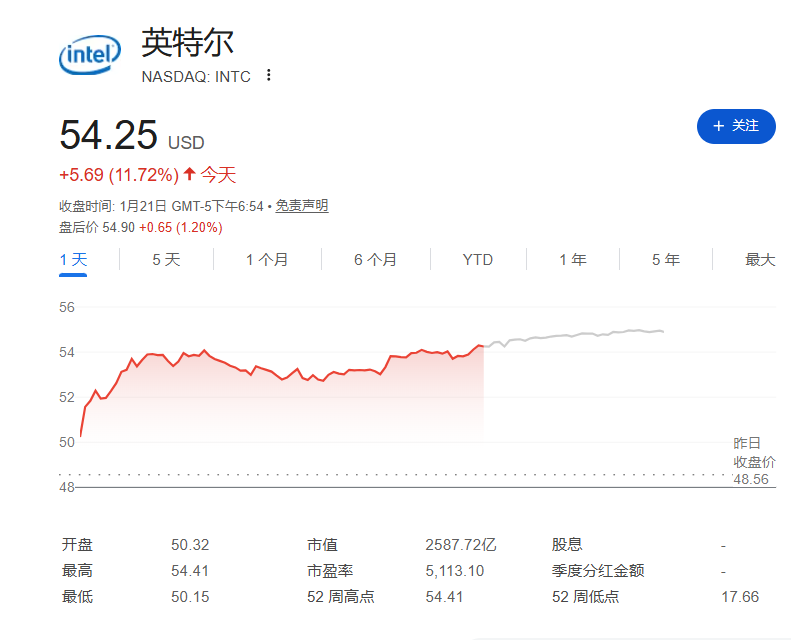
长久以来最乐观的时候!财报前夜英特尔股价暴涨
Hua Er Jie Jian Wen· 2026-01-22 00:13
Core Viewpoint - Intel is regaining favor on Wall Street due to strong demand expectations in the data center segment and significant external investments, leading to a notable increase in stock price and market capitalization [1][2]. Group 1: Stock Performance and Market Sentiment - Intel's stock surged over 11% on Wednesday, reaching its highest point since January 2022, with a market capitalization surpassing $250 billion for the first time since 2022 [1]. - The stock has increased approximately 35% year-to-date in 2026 and has seen a cumulative rise of 149% over the past 12 months [1]. - Analysts express optimism about Intel's recovery, highlighting favorable recent developments and the upcoming earnings report as a critical test for the company's resurgence [1]. Group 2: Revenue Expectations and Business Performance - Intel's data center and AI business revenue is projected to surge nearly 29% to approximately $4.4 billion [5]. - Analysts from KeyBanc have upgraded Intel's stock rating to "buy" with a target price of $60, noting that server CPUs may be sold out this year, indicating potential price increases [5]. - There is an expectation of significant demand from large cloud computing firms, which is seen as a major tailwind for Intel's data center business [5]. Group 3: Strategic Investments and Business Vision - Intel's turnaround is supported by a restructuring of its capital and ambitions in the foundry business, with significant investments from external stakeholders [6]. - The U.S. government has become Intel's largest shareholder after investing $8.9 billion, partly due to Intel's unique capability to manufacture advanced chips domestically [6]. - Nvidia has invested $5 billion and is collaborating with Intel to integrate Intel's CPUs into Nvidia systems, while SoftBank has also invested $2 billion [6]. Group 4: Challenges in the PC Market and Profit Margins - Despite positive market sentiment, Intel faces challenges, with fourth-quarter revenue expected to decline by 6% to $13.4 billion [7]. - The PC segment is experiencing mixed results, with revenue projected to grow only 2.5% to $8.21 billion, amid rising memory prices and competition from AMD and Arm-based designs [7]. - Profit margins are under pressure, with adjusted gross margins expected to drop by approximately 6 percentage points to 36.5% due to high costs associated with repairing manufacturing operations [7].
中国资产,大爆发!
中国基金报· 2026-01-22 00:09
【导读】特朗普表示不会武力夺取格陵兰岛;黄仁勋称AI是"人类历史最大规模基建"的基 石,刺激美股及中国资产大涨 中国基金报记者 郭玟君 美国三大股指全线收涨,道指涨1.21%,报49077.23点;标普500指数涨1.16%,报 6875.62点;纳指涨1.18%,报23224.82点。 | 49077.23 | | 昨收 | 48488.59 | 成交额 | 0.00 | | --- | --- | --- | --- | --- | --- | | +588.64 | +1.21% | 今开 | 48546.03 | 成交量 | 0 | | 上涨 | 24 | 20 12 | 0 | 下跌 | 6 | | 最高价 | 49295.03 | 市留学 | 30.39 | 近20日 | 1.96% | | 最低价 | 48546.03 | 而浮率 | 8.75 | 今年来 | 2.11% | | स्त्रेस्य | モ日 | 目K | | 周K 月K 更多 | | | 叠加 | | | | | 均价: | | 49295.03 | | | | | 1.66% | | 47682.15 | | | | | - ...
