跨境电商

Search documents
Shopee 9.9超级购物节亮眼,Live直播观看破8亿激活增长动能
Jin Tou Wang· 2025-10-17 04:36
Core Insights - The 2025 9.9 Super Shopping Festival by Shopee has successfully ignited consumer enthusiasm in Southeast Asia and Latin America, showcasing impressive results with over 800 million views on Shopee Live and significant engagement in cross-border live streaming and short videos [1][3] Group 1: Sales Performance - In Brazil, cross-border e-commerce consumption potential has been fully unleashed, with sales of popular categories like home audio, waist bags, and fashion clothing increasing sevenfold compared to regular days [3] - ShopeeMall's sales during the event grew five times, with local brands gaining popularity due to high cost-performance ratios [3] - Specific brands like INTOYOU and ZANZEA saw remarkable sales increases of 22 times and 18 times, respectively, driven by localized fulfillment services and effective live streaming strategies [3][4] Group 2: Fulfillment and Support - Efficient fulfillment services and diverse welfare policies were crucial for achieving high growth during the shopping festival, with sales in various categories and official warehouses soaring five times [4] - The cross-border "X-Day Delivery" service significantly improved conversion rates by five times and overall sales by four times, alleviating consumer anxiety regarding delivery times [4] - Sellers benefited from multiple support policies, reducing operational costs by up to 52% and enhancing cash flow efficiency through Shopee's official wallet [4] Group 3: Brand Strategies - Brands leveraged Shopee's content ecosystem to achieve dual breakthroughs in sales and brand awareness, with 361 Degrees seeing a 12-fold increase in sales through content-driven marketing strategies [5] - XPPen utilized a "traffic linkage" strategy, achieving a sevenfold increase in sales through internal promotions and a sixfold increase via external advertising [5] - Other brands like Ulike and LOGESKI also experienced significant sales growth through live streaming, with increases of 10 times and 21 times, respectively [5] Group 4: Future Outlook - The 9.9 Super Shopping Festival not only provided a shopping feast for consumers but also highlighted the immense potential for cross-border sellers in Southeast Asia and Latin America [6] - As the platform ecosystem continues to optimize, Shopee aims to offer more efficient growth tools and comprehensive support for brands seeking long-term growth in overseas markets [6]



2026中国跨境电商及新电商交易博览会展会资料
Sou Hu Cai Jing· 2025-10-17 04:07
Core Insights - The 2026 Sixth China Cross-Border E-Commerce Fair will be held from March 18 to 20, 2026, at the Fuzhou Strait International Conference and Exhibition Center, serving as a platform for industry practitioners, brands, and service providers to exchange and collaborate [2][3] Group 1: Exhibition Basic Information - The fair focuses on cross-border e-commerce and new e-commerce sectors, gathering well-known domestic and international companies, supply chain service providers, logistics companies, and payment institutions [3] - The event will feature product displays, industry forums, and supply-demand matching, providing participants with valuable industry information and business opportunities [3] Group 2: Main Content of the Exhibition - Product displays will include various categories such as electronics, home goods, apparel, and food and beverages, allowing exhibitors to showcase their latest products and technologies [4] - Industry forums will invite experts and company representatives to share market trends, operational strategies, and policy interpretations, aiding practitioners in understanding development directions [4] - Supply-demand matching will facilitate efficient communication between brands, manufacturers, cross-border e-commerce platforms, and buyers, promoting transaction cooperation [4] - Supporting service displays will cover logistics, payment, warehousing, and digital marketing, helping companies optimize operational efficiency [4] Group 3: Development Trends in Cross-Border E-Commerce and New E-Commerce - The integration of social e-commerce and live streaming has become a significant sales channel, with many companies reaching consumers directly through social platforms [6] - The rise of independent site models is noted, as some brands choose to build their own sites to reduce reliance on third-party platforms and enhance brand autonomy [6] - Companies are increasingly focusing on supply chain efficiency, utilizing digital management to lower costs and improve response times [8] - Emerging markets in Southeast Asia and the Middle East are becoming new growth points for cross-border e-commerce, with companies actively expanding into these regions [8] Group 4: Value and Opportunities for Exhibiting Companies - Participating in the fair allows companies to expand customer resources by directly connecting with domestic and international buyers and platforms [8] - Companies can stay updated on industry dynamics through forums and peer exchanges, gaining insights into the latest market trends and technology applications [8] - The fair provides an opportunity to enhance brand influence through exposure, increasing recognition within the industry [8] - Companies can optimize supply chain collaboration by communicating face-to-face with logistics, payment, and other service providers to find more efficient solutions [8] Group 5: Recommendations for Visitors - Visitors are advised to clarify their goals and focus on product displays, forums, or matching sessions based on their needs [9] - It is recommended to make advance reservations for certain forums or activities that may require prior registration [9] - Visitors should prepare materials such as company introductions and product catalogs to facilitate effective communication regarding procurement or collaboration needs [9]

欢迎访问 2026中国(宁波)出口跨境电商博览会 官方网站!
Sou Hu Cai Jing· 2025-10-17 03:40
Core Insights - The Ningbo Export Trade Fair will take place from May 27 to 29, 2026, showcasing the largest scale of cross-border e-commerce exhibitions in China with a total exhibition area of 90,000 square meters [1] - The event will feature over 2,000 exhibitors from more than 50 countries and regions, highlighting the full supply chain of cross-border e-commerce [1] - The fair aims to strengthen Ningbo's leading position in the cross-border e-commerce sector and facilitate efficient connections between global buyers and quality Chinese suppliers [7] Event Highlights - The introduction of a "Cross-Border E-Commerce Live Streaming Zone" featuring top influencers for live sales [3] - The addition of an "RCEP Country Pavilion" to promote regional economic and trade cooperation [3] - A "Cross-Border E-Commerce Talent Job Fair" to address the hiring needs of companies [3] - A "Digital Trade Experience Zone" to showcase the latest technological applications [3] Attendance and Engagement - The fair is expected to attract over 100,000 professional visitors, including more than 3,000 international buyers from Europe, North America, and Southeast Asia [5] - More than 20 high-level forums and matchmaking events will be held during the fair, featuring industry experts sharing the latest trends [5] Logistics and Accessibility - The event will adopt a "hybrid" model, allowing remote participation through an official mini-program for those unable to attend in person [7] - Free shuttle buses will be provided between the two exhibition venues, along with multilingual reception services [10] - Reception points will be set up at Ningbo Lishe International Airport and major high-speed train stations to facilitate international buyers [10] Industry Context - The fair is timely amid the global digital transformation of trade, serving as a crucial platform for Chinese manufacturing to reach international markets and for global buyers to find quality suppliers [10] - The successful hosting of the event is expected to further promote high-quality development in Ningbo and the national cross-border e-commerce industry [10]
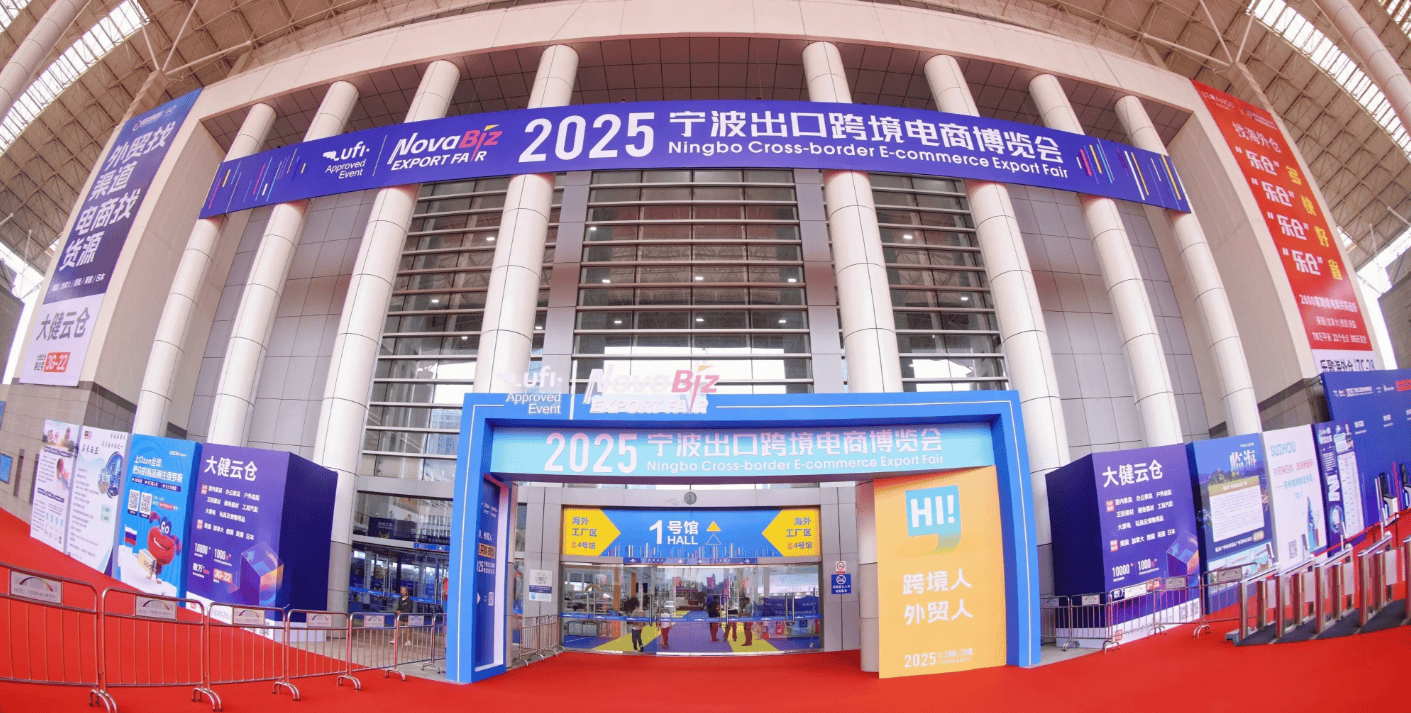
2026福州跨境电商展:自贸赋能・数贸枢纽・链接全球
Sou Hu Cai Jing· 2025-10-17 01:52
Core Insights - The sixth China Cross-Border E-commerce Fair will be held from March 18 to 20, 2026, in Fuzhou, focusing on digital trade and global connectivity [1] - The fair aims to provide a Chinese solution for the digital transformation of global trade, leveraging Fuzhou's unique geographical advantages and policy benefits [1] Group 1: Event Overview - The fair is the first cross-border e-commerce exhibition in China certified by the International Exhibition Industry Association (UFI) [1] - The event theme is "Free Trade Empowerment, Digital Trade Hub, Linking the World" [1] Group 2: Logistics and Infrastructure - Fuzhou features a logistics network with direct access to the exhibition center via Metro Line 4, 12 cross-border cargo routes from Changle Airport, and full coverage of RCEP shipping routes from Jiangyin Port [4] - The "Cross-Border Bonded Warehouse" in the Free Trade Zone enables rapid customs clearance within 72 hours, supported by new policies for cross-border trade [4] Group 3: Exhibition Highlights - The exhibition area spans 72,000 square meters, showcasing new products in 3C electronics, smart home, and green products, catering to the trend of global consumption upgrades [6] - AI tools for product selection and virtual digital sales assistants will enhance customer engagement and conversion rates [8] Group 4: Strategic Forums - High-level forums such as the "National Goods Going Global Strategy Summit" and "Brand Globalization Forum" will discuss the practical application of AI in logistics and marketing [8] Group 5: Economic Impact - The fair is expected to generate over 10 billion USD in transaction volume, highlighting its role as a platform linking RCEP markets and emerging trade hubs [11] - The event is positioned as a testing ground for the deep integration of digital technology and global trade [11]

杭州自贸片区这项全国创新举措 获评“最佳实践案例”
Mei Ri Shang Bao· 2025-10-16 22:31
Core Insights - The Ministry of Commerce has released the sixth batch of "best practice cases" for free trade pilot zones, focusing on trade facilitation, government function transformation, free flow of factors, open channel construction, and high-quality industrial development [1] - The "cross-border e-commerce online shopping bonded retail imported goods cross-border return" case from Qiantang District is the only selected case from Zhejiang Free Trade Pilot Zone [1] Group 1 - Previously, cross-border e-commerce returns had to be processed within a single customs area, requiring goods to be returned to the original customs supervision site within a specified time [1] - The new cross-border return model allows companies to apply for returns to customs outside the original declaration location, streamlining the return process [1][2] - A unified platform for cross-border return declarations automatically links and updates original import list information, reducing the need for back-and-forth trips to customs [1] Group 2 - The innovation expands the new generation of customs tax electronic payment systems to the cross-border e-commerce retail import sector, simplifying processes for companies [2] - Companies can establish return warehouses in one location to handle returns from consumers nationwide, effectively lowering operational costs and improving return efficiency [2] - Since the pilot program's launch on September 20, 2023, Qiantang District has processed 377,300 cross-border return declarations, with a total of 474,500 returned items valued at 138 million yuan, saving medium-sized companies approximately 80,000 yuan annually [2]
边境节点变电商枢纽
Jing Ji Ri Bao· 2025-10-16 22:15
Core Insights - The "Suifenhe Good Goods Carnival" event in Suifenhe City, Heilongjiang Province, utilized an innovative model of "1 main venue + 15 sub-venues" to enhance consumer engagement and stimulate market vitality through a combination of e-commerce and physical sales [1] Group 1: Event Overview - The event featured over 200 enterprises and aimed to boost consumption quality and capacity, marking a significant initiative for the city's economic development [1] - The cross-border e-commerce model, supported by government and business collaboration, is designed to enhance the city's consumer appeal [1] Group 2: Cross-Border E-commerce Development - Suifenhe City has established a "dual procurement and dual sales, dual warehouse and dual clearance" service system to optimize the cross-border e-commerce ecosystem [1] - This model facilitates both domestic procurement for overseas sales and overseas procurement for domestic sales, leveraging domestic and overseas warehouses for efficient logistics and cost reduction [1] Group 3: Logistics and Trade Growth - The Tianfu Sheng'e Ping Longjiang No. 1 Warehouse has integrated functions for import transshipment, online retail, and rapid delivery, achieving an average daily shipment volume of 18,000 orders [2] - From January to September 2023, the e-commerce net retail sales of Russian goods reached 1.66 billion yuan, with a volume of 100 million items, both marking historical highs for the same period [2] - The cross-border e-commerce trade scale in Suifenhe has experienced over 30% year-on-year growth for three consecutive years, supported by an efficient logistics system [2]
“在这里,真的可以和全球做生意!” 百名青年达人为鄂州代言
Sou Hu Cai Jing· 2025-10-16 12:49
Core Points - The event "Youth Representing Hometown" and the promotion of the China (Ezhou) Cross-Border E-Commerce Industrial Park were successfully held, gathering over a hundred young influencers and business representatives to discuss leveraging Huahu International Airport as a global trading hub [2][3] Group 1: Cross-Border E-Commerce Development - Huahu International Airport has opened 24 new cargo routes this year, totaling 109 routes, making it the fourth busiest cargo airport in China, establishing itself as a central "air outlet" for the region [8] - The China (Ezhou) Cross-Border E-Commerce Industrial Park, launched in April, has attracted over 300 companies and achieved a trade volume exceeding $330 million [8] - Major platforms like Douyin and Amazon have set up operations in the park, providing a comprehensive service model that allows young entrepreneurs to easily enter the market [8] Group 2: Youth Engagement and Support - Ezhou has established a comprehensive youth talent service system, issuing loans of 418 million yuan through projects like "Youth Innovation Loan" and "Talent Strong Enterprise," and building nine youth talent stations [10] - The city has integrated 585 service providers to offer a full range of support, including accommodation, education, and entertainment, and has formed nearly 600 talent service alliances, attracting around 1,200 talents to local enterprises [10] - Young representatives expressed enthusiasm for promoting local products globally, highlighting the vibrant and appealing nature of Ezhou [12]

小行动大改变 | 三个人,三条路:中小卖家的新品突围
商业洞察· 2025-10-16 11:05
Core Insights - The article discusses the experiences of three sellers on Amazon, highlighting their unique strategies and approaches to succeed in the competitive e-commerce landscape [1][2][29]. Group 1: Seller Strategies - Seller "月下小薰" focuses on leveraging data from top sellers' reviews to identify improvement opportunities, leading to a successful product launch and sales growth from 2 to nearly 10 orders daily within two weeks [7][8]. - "月下小薰" adopts a cautious inventory strategy, keeping stock low at around 300 units per new product, allowing for quick adjustments based on market feedback [8][9]. - Seller "Shirley" employs a multi-category testing approach, launching products in four categories simultaneously and using data to determine which categories to pursue further, ultimately identifying toys as a high-margin category [14][15]. - "Shirley" emphasizes the importance of user experience in product design, ensuring that every detail, from packaging to instructions, enhances customer satisfaction [17][18]. Group 2: Market Insights and Adaptation - Seller "黄煜" utilizes insights from eBay to identify product opportunities in Amazon's marketplace, focusing on gaps where demand is high but supply is low [22][23]. - "黄煜" emphasizes the importance of patenting products to protect unique designs and maintain a competitive edge in a crowded market [23][24]. - The article highlights the significance of building a brand that can share reviews across different markets, which helps in establishing trust and reducing entry barriers in new regions [25][26]. Group 3: Financial Strategies - "月下小薰" gradually increased her advertising budget from 8% to 14% of sales as her store's natural traffic improved, indicating a strategic approach to scaling marketing efforts [10][11]. - "Shirley" allocates most of her advertising budget to product promotion ads, focusing on immediate sales impact during the store's early stages [18][19]. - "黄煜" also invests over 95% of his budget in product promotion ads, targeting high-profit potential products to maximize returns [26][27].

十五运会高景太阳能深海采火;横乐获近亿元意向投资丨横琴财报?
2 1 Shi Ji Jing Ji Bao Dao· 2025-10-16 10:11
Group 1: Highview Solar's Innovations - Highview Solar achieved a global first with "deep-sea fire collection" by customizing a photovoltaic solution for the 15th National Games [1] - The photovoltaic components were installed on the container tops of the ship, avoiding spatial limitations and preserving the ship's structure [1] - The team utilized a photovoltaic rotating bracket to adjust the component angles in real-time, ensuring optimal alignment with the sun [1] - The BC technology photovoltaic components used are among the future mainstream technologies in the photovoltaic field, with Highview Solar being one of the few domestic companies capable of mass production [1] Group 2: Company Overview - Highview Solar was established on July 3, 2019, with a registered capital of 375 million yuan, focusing on the integrated business of research, manufacturing, and sales of large-size silicon rods, wafers, modules, and power stations [2] - The company has set up four major production bases in China, including 50GW large-size monocrystalline silicon wafers in Zhuhai, 50GW monocrystalline pulling rods in Xining, 50GW monocrystalline pulling rods and 30GW monocrystalline slicing in Yibin, and 16GW modules in Guangzhou [2]

俄罗斯出新规,跨境卖家成本要暴涨
Sou Hu Cai Jing· 2025-10-16 09:45
Core Viewpoint - Russia is implementing a significant tax reform for cross-border e-commerce, introducing a phased VAT system starting from 2027, with rates increasing from 5% to 20% by 2030, which will drastically reshape the operational landscape for foreign sellers, particularly those from China [2][4][6]. Tax Rate Changes - Starting January 1, 2027, foreign goods purchased through e-commerce platforms will be subject to VAT, beginning at 5% in 2027, increasing to 10% in 2028, 15% in 2029, and reaching 20% by 2030 [4][6]. - The tax exemption threshold will be significantly reduced, from 200 euros to 100 euros in 2026, then to 50 euros in 2027, with potential elimination of all exemptions by 2030 [6][8]. Impact on Sellers and Platforms - The new VAT regulations will require platforms like Ozon, Wildberries, and Yandex Market to directly calculate, collect, and report taxes, making it impossible for sellers to bypass the system [6][9]. - Sellers not registered for VAT who exceed a monthly sales threshold of 2 million rubles will face a 20% tax deduction from their sales, along with potential back taxes for the past three years [6][9]. Market Dynamics - The reform aims to address a fiscal gap of approximately 1 trillion rubles annually and to level the playing field between local retailers and foreign sellers, who have gained market share due to previous tax advantages [6][11]. - Cross-border e-commerce, while only accounting for about 3% of the Russian e-commerce market, is growing rapidly and is now under increased regulatory scrutiny [11][12]. Strategic Adjustments for Sellers - Sellers will need to reassess their pricing and profit models, potentially shifting some inventory to local warehouses to mitigate tax and logistics risks [7][12]. - The logistics and warehousing challenges are expected to increase, prompting platforms to invest in new logistics centers to enhance delivery efficiency and manage tax implications [9][11]. Long-term Market Evolution - The introduction of VAT signifies a shift from a price-driven market to one focused on brand and service quality, with compliance becoming a fundamental requirement for success [12][13]. - Companies that adapt their operations and enhance their brand presence are likely to secure a more stable position in the evolving market landscape [13][14].