量子科技

Search documents
创业不是“有钱人的游戏”:北京千亿基金+政策红利,青年创业“爽文”照进现实
Xin Lang Cai Jing· 2026-01-10 17:26
Core Insights - The entrepreneurial landscape in Beijing has significantly evolved in 2025, with a shift towards low-cost, light-asset investment models among young entrepreneurs, driven by an optimized business environment and supportive policies [1][2][3] Group 1: Entrepreneurial Trends - The number of newly established technology companies in Beijing exceeded 100,000 in 2025, with an average of 300 new companies formed daily, and 62% of these projects were initiated by young entrepreneurs [3] - Young investors are increasingly favoring small angel investments over heavy asset investments, reflecting a trend towards lower barriers and higher flexibility in investment [4] - The "specialized, refined, distinctive, and innovative" enterprises have become a focal point for young investors, with 1,200 new such small and medium enterprises established in 2025, 45% of which were founded by youth [4] Group 2: Government Support and Policies - The "University Student Entrepreneurship Loan" program, offering loans up to 500,000 yuan at an annual interest rate as low as 3.85%, has supported over 1.2 billion yuan in loans for more than 1,200 student entrepreneurship projects in 2025 [5] - The implementation of the "Package Management 2.0" policy is expected to enhance the entrepreneurial enthusiasm of young researchers by allowing them to manage research funds more flexibly [9] - The upcoming "Youth Entrepreneurship Collaborative Support Plan" aims to unify support policies across the Beijing-Tianjin-Hebei region, providing various benefits such as venue subsidies and tax incentives for young entrepreneurs [9] Group 3: Key Sectors for Investment - The leading sectors for young entrepreneurs in 2025 include AI applications (35%), biomedicine (28%), and cultural tourism (22%), showcasing a clear trend of "technology leading and cultural creativity empowering" [6] - In the AI sector, young entrepreneurs are focusing on niche applications, leveraging their understanding of new technologies to meet market demands [7] - The biomedicine sector is thriving due to strong research support from institutions like Tsinghua University and Peking University, with young teams making significant advancements in gene testing and medical device innovation [7] Group 4: Future Outlook - In 2026, the entrepreneurial environment is expected to further improve with additional policies aimed at reducing barriers for young entrepreneurs, including enhanced financial support and resource integration [8][12] - Emerging industries such as quantum technology, synthetic biology, and commercial aerospace are anticipated to become new hotspots for investment, providing broader opportunities for young entrepreneurs [10][11]

上海图灵智算量子科技有限公司获“B+轮”融资,金额数亿人民币
Sou Hu Cai Jing· 2026-01-10 15:04
通过天眼查大数据分析,上海图灵智算量子科技有限公司共对外投资了7家企业,知识产权方面有商标 信息273条,专利信息221条。 天眼查信息显示,上海图灵智算量子科技有限公司的股东为:上海思量量子科技有限公司、上海羿穹企 业管理咨询合伙企业(有限合伙)、从火科技(上海)合伙企业(有限合伙)、珠海君联明远股权投资 企业(有限合伙)、苏州星梵创业投资合伙企业(有限合伙)。 来源:市场资讯 1月8日,天眼查融资历程显示,上海图灵智算量子科技有限公司近日获得"B+轮"融资,涉及融资金额 数亿人民币,投资机构为图灵量子半年完成两轮数亿元融资。 资料显示,上海图灵智算量子科技有限公司法定代表人为金贤敏,成立于2021年,位于上海市,是一家 以从事专业技术服务业为主的企业。企业注册资本152.7668万人民币,并已于2026年完成了B+轮,交易 金额数亿人民币。 ...
稳中求进、提质增效 实现“十五五”良好开局|坚持协调发展,促进城乡融合和区域联动
Ren Min Ri Bao· 2026-01-09 03:29
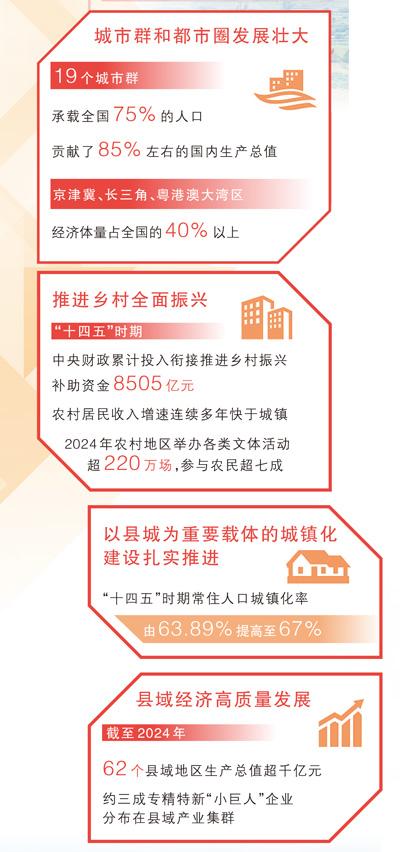
Core Viewpoint - Regional coordinated development is an inherent requirement of Chinese-style modernization, emphasizing the need for urban-rural and regional integration to enhance domestic circulation [1][4]. Group 1: Regional Development Strategies - The Central Economic Work Conference highlights the importance of promoting coordinated development and urban-rural integration, implementing regional coordination strategies, and leveraging multiple national development strategies [1][7]. - Key urban agglomerations like Beijing-Tianjin-Hebei, Yangtze River Delta, and Guangdong-Hong Kong-Macao Greater Bay Area are crucial for driving high-quality national development, contributing to 75% of the population and approximately 85% of GDP [7]. Group 2: Infrastructure and Connectivity - "Hard connectivity" through major transportation networks supports regional development, with 1-2 hour traffic circles established in key regions, covering about 90% of the national economy and population [5]. - "Soft connectivity" initiatives, such as ecological protection agreements and shared public services, are enhancing collaborative governance and breaking down administrative barriers [6]. Group 3: Agricultural Modernization - Agricultural modernization is accelerating, with a focus on food security and poverty alleviation, as highlighted by the Central Economic Work Conference [8][10]. - The resilience of agricultural supply chains has improved, with grain production achieving high yields despite adverse weather conditions, and average yield per mu increasing by 4.4 kg [10]. Group 4: Rural Development and Quality of Life - Rural living conditions are improving, with sanitation facilities reaching a 76% coverage rate and over 90% of villages having waste management systems [11]. - The "14th Five-Year Plan" emphasizes tailored rural revitalization strategies to address regional disparities and enhance living standards [12]. Group 5: Economic Growth in Counties - County-level economies are experiencing significant growth, with the number of counties exceeding 100 billion yuan in GDP increasing to 62, and those nearing this threshold reaching 21 [14]. - Counties are diversifying their economic activities, focusing on industries such as light manufacturing, new energy, and tourism, leading to unique development paths [14]. Group 6: Urban-Rural Integration - The urbanization rate is projected to reach 67% by the end of 2024, with policies being implemented to facilitate the integration of rural populations into urban areas [15]. - The establishment of integrated medical systems in over 90% of counties by the end of 2025 is expected to enhance the overall capacity of county-level services [15].

坚持协调发展,促进城乡融合和区域联动
Ren Min Ri Bao· 2026-01-09 01:19
Group 1: Regional Development Strategy - The core viewpoint emphasizes that regional coordinated development is an inherent requirement of Chinese-style modernization, as highlighted by President Xi Jinping [5][6] - The Central Economic Work Conference stresses the importance of promoting urban-rural integration and regional linkage to enhance domestic circulation [5][6] - Various regions are implementing strategies to advance urbanization and rural revitalization, focusing on building a high-quality regional economic structure [6][10] Group 2: Infrastructure and Connectivity - "Hard connectivity" is being accelerated through the construction of cross-regional transportation networks, facilitating economic and population movement across major urban clusters [8][10] - Major urban clusters like Beijing-Tianjin-Hebei, Yangtze River Delta, and Guangdong-Hong Kong-Macao Greater Bay Area are becoming key drivers of high-quality national development [10] - The establishment of a national comprehensive transportation network is nearly complete, serving about 90% of the country's economic and population total [8] Group 3: Agricultural Modernization - Agricultural modernization is crucial for the overall modernization of China, with a focus on ensuring food security and consolidating poverty alleviation achievements [11][13] - The resilience of the agricultural supply chain has improved, with grain production achieving high levels despite adverse weather conditions, resulting in an increase in average yield by 4.4 kg per mu [13] - The development of agricultural industries in major grain-producing areas is transforming them from "value depressions" to thriving economic zones [14] Group 4: Rural Development and Quality of Life - Rural living conditions are improving, with sanitation facilities reaching a coverage rate of approximately 76% and over 90% of villages having access to waste collection services [15] - Cultural and recreational activities in rural areas are flourishing, with over 70% of farmers participating in cultural and sports events in 2024 [15] - The "14th Five-Year Plan" suggests a tailored approach to rural revitalization, promoting quality living spaces and addressing regional disparities [15] Group 5: Economic Growth and County Development - The county-level economy is experiencing significant growth, with the number of counties exceeding 100 billion yuan in GDP increasing to 62 [17] - Counties are diversifying their economic activities, focusing on industries such as light manufacturing, new energy, and tourism to enhance local development [17] - The integration of urban and rural areas is being facilitated, with policies aimed at improving the living conditions of migrant workers and enhancing their sense of belonging in cities [19]

坚持协调发展 促进城乡融合和区域联动——着力推进全年经济工作八大重点任务⑤(稳中求进、提质增效 实现“十五五”良好开局)
Ren Min Ri Bao· 2026-01-08 23:09
Group 1 - The core viewpoint emphasizes that regional coordinated development is an inherent requirement of Chinese-style modernization, as highlighted by Xi Jinping's statement on the importance of urban-rural and regional coordination for expanding domestic circulation [1] - The Central Economic Work Conference advocates for promoting urban-rural integration and regional linkage, with a focus on implementing regional development strategies and enhancing urbanization and rural revitalization [1][5] - The development of key urban agglomerations is crucial, as they currently house 75% of the population and contribute approximately 85% of the GDP, with regions like Beijing-Tianjin-Hebei, Yangtze River Delta, and Guangdong-Hong Kong-Macau Greater Bay Area leading high-quality development [5] Group 2 - "Hard connectivity" is being accelerated through the establishment of cross-regional transportation networks, creating 1 to 2-hour travel circles in major regions, which supports economic and population mobility [3] - "Soft connectivity" is expanding with collaborative agreements among provinces for ecological protection and shared public services, breaking down administrative barriers to enhance coordinated development [4] - The agricultural modernization process is advancing, with a focus on food security and the continuous improvement of rural living conditions, as evidenced by increased grain production and infrastructure development [6][8][9] Group 3 - The county-level economy is increasingly recognized as a vital unit for socio-economic development, with initiatives to promote urbanization and rural revitalization through industrial support [11] - Specific counties are implementing strong chain projects in various industries, showcasing successful local economic strategies and growth [12] - The integration of urban and rural areas is being facilitated by policies aimed at improving the living conditions of migrant populations, contributing to a rising urbanization rate [13]
【“十五五”开好局起好步】新年开新局 实干促发展
Yang Shi Wang· 2026-01-08 12:38
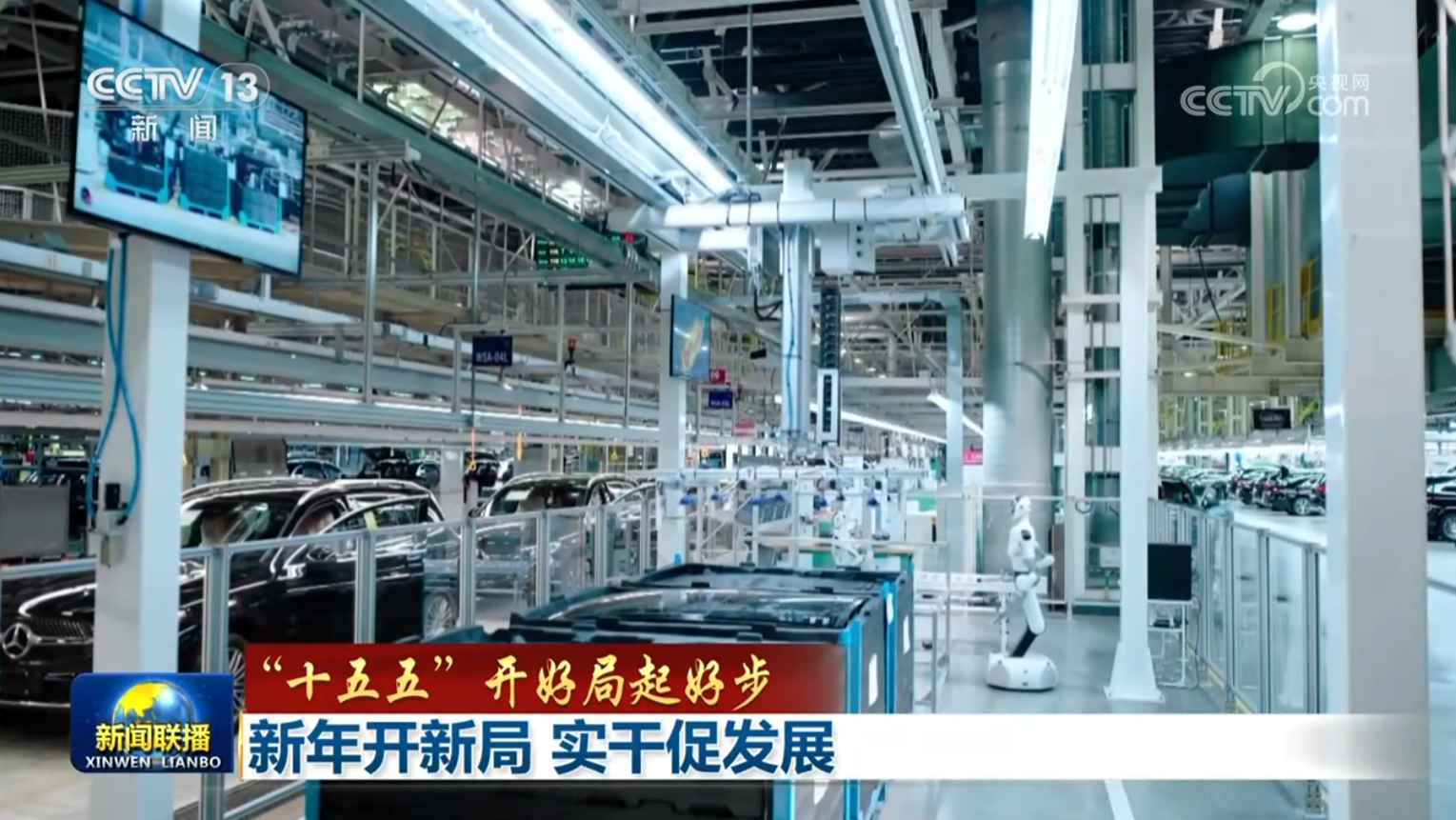
Group 1 - The core viewpoint of the articles emphasizes the implementation of practical measures across various regions to achieve a strong start for the "14th Five-Year Plan" and promote high-quality economic development [1] Group 2 - Beijing has launched a significant initiative for the new year with the release of an action plan for building an artificial intelligence innovation hub, which includes nine aspects such as technological innovation and full-domain application empowerment, aiming to establish a 100,000-card-level domestic intelligent computing cluster within two years and achieve a core AI industry scale exceeding 1 trillion yuan [3] Group 3 - Jiangsu is focusing on creating a globally influential industrial technology innovation center, concentrating on key areas like biomanufacturing and future energy, with plans for 40 provincial-level major technological breakthroughs and 80 frontier technology research projects in quantum technology and brain-computer interfaces [5] Group 4 - Liaoning aims to enhance its business environment by proposing 123 specific measures to create a favorable business ecosystem, while Shanghai has released its action plan for the ninth consecutive year to accelerate the development of a world-class business environment, focusing on government services, market competition, industrial ecology, and social governance with 26 practical measures [7] Group 5 - Anhui is prioritizing high-quality development in the new energy vehicle industry through technological innovation, ecological improvement, and consumption stimulation, while Fujian is accelerating the creation of several 100 billion yuan-level marine industry clusters, and Yunnan is focusing on major projects to improve investment efficiency through nine key initiatives [9]
机构:量子科技产业正从实验室研发迈向产业化应用
Zheng Quan Shi Bao Wang· 2026-01-08 03:36
Group 1 - The Hefei Municipal Committee emphasizes the importance of quantum technology in driving economic growth and innovation in areas such as quantum communication, quantum computing, and quantum precision measurement [1] - The industry is transitioning from laboratory research to industrial application, with a focus on high-tech barriers and clear commercialization paths in upstream core components and midstream system integration [1] - The downstream applications of quantum technology are identified in three main areas: quantum computing, quantum security, and quantum precision measurement, each offering distinct commercial pathways [1] Group 2 - CITIC Securities highlights the significant advantages of quantum technology over classical information tools, particularly in computing, communication, and measurement [2] - The industry is expected to see rapid development in the quantum computing market between 2028 and 2030, with ongoing attention recommended for the quantum technology sector [2] - The Chinese government prioritizes quantum technology in its 14th Five-Year Plan, indicating a strong commitment to its industrialization and development [2]
合肥“十五五”规划建议:推进氢能、氨能等技术迭代应用,布局小型堆等先进核能技术
Zheng Quan Shi Bao Wang· 2026-01-08 01:31
Core Viewpoint - The Hefei Municipal Committee emphasizes the development of future industries with a focus on "quantum intelligence" and aims to drive innovation in sectors with technological advantages and development foundations [1] Group 1: Quantum Technology Industry - The plan includes promoting breakthroughs and applications in quantum communication, quantum computing, and quantum precision measurement [1] - There is a focus on accelerating the research and industrialization of key materials, devices, and equipment [1] - The initiative aims to expand "quantum+" demonstration projects in government, finance, energy, and meteorology sectors [1] Group 2: Nuclear Fusion and Hydrogen Energy Industry - The development of compact fusion energy experimental devices is highlighted as a key infrastructure project [1] - The plan aims to accelerate the development of superconducting materials, equipment, and smart sensors [1] - There is an emphasis on advancing the application of hydrogen and ammonia energy technologies and laying out advanced nuclear energy technologies like small reactors [1] Group 3: Biomanufacturing Industry - The focus is on biobased chemicals and materials, new food products, bio-agriculture, and non-food biomass raw materials [1] - The initiative aims to expand large-scale applications in these areas [1] Group 4: Embodied Intelligence Industry - The plan promotes the integrated development of intelligent decision-making systems, high-precision control systems, and innovative structural design [1] - It aims to construct a full-chain innovation ecosystem encompassing precision processing, data training, evaluation, and competitive testing [1] Group 5: Emerging Technologies - The strategy includes tracking and laying out plans in niche areas such as brain-computer interfaces, sixth-generation mobile communication, and deep space and deep sea exploration [1] - The goal is to promote more technological research and industrialization to achieve "parallel running" and "leading" positions in these fields [1]
银河证券:量子科技发展超预期 超前投资领跑可期
Di Yi Cai Jing· 2026-01-08 00:21
Group 1 - The National Development and Reform Commission (NDRC) aims to promote quantum technology and sixth-generation mobile communication as new economic growth points [1] - The quantum technology industry is transitioning from laboratory research to industrial application [1] - Current investments should focus on upstream core components with high technical barriers and clear commercialization paths, as well as midstream system integration [1]

未来产业竞速,各地如何抢占新增长极
Bei Jing Shang Bao· 2026-01-07 14:59
近期,多个省份陆续公布地方版"十五五"规划建议,勾勒新质生产力培育、产业创新图景。当人工智能、低空经济、商业航天渗透到千家万户,未来产业已 成为各省"十五五"规划的"必争赛道"。未来产业作为现代化产业体系的重要组成,以其前瞻性、引领性、颠覆性等特点,成为培育新质生产力的重要抓手。 从广东的"AI+机器人"、浙江的低空经济到海南"种业+深海+航天"等特色布局,各地立足资源禀赋与产业基础,走出差异化发展路径,推动未来产业从概念 落地为区域经济增长极。 前瞻布局发展未来产业,四川则聚焦第六代移动通信、量子科技、生物制造、氢能和核聚变能、深空深地、脑机接口、具身智能、前沿半导体等领域,提出 加快突破前沿关键核心技术,建设一批未来产业孵化器和先导区。推动新技术新产品新场景应用示范,完善产业生态,建设新场景推广应用中心,建立未来 产业投入增长和风险分担机制,加快新兴产业规模化发展。促进中小企业专精特新发展,培育瞪羚企业、独角兽企业。 布局策略:从选对方向到跑好赛道 如果说赛道选择是"选对方向",那么系统的布局策略则是"跑好赛道"的关键。部分省、直辖市将建设国家实验室、大科学装置等顶级平台作为关键路径。例 如北京规划着力建 ...